mkirchhoff
M
Posted 8 years 5 months ago
t
9 min read
Michael Kirchhoff, one of BrightEdge's top SEO minds, wrote this series of articles on the semantic web and what it means for SEO. It is one of the best set of advanced SEO content we have, so we updated it and are publishing them again for the community. Be sure to read all three:
- Semantics and the Future for SEO
- Content Silo-Value for SEO
- Taxonomies and Technical SEO and UX Strategy
BrightEdge Marketing Since its birth in 1998, Google has been continually evolving and improving its ability to match users with the websites that answer their needs. The Internet has grown from just over an estimated 17,000 websites in 2000 to well over a billion now. This tremendous growth has put an enormous amount of pressure on Google and the other major search engines to be able to interpret what people are looking for and better understand the value and depth of the websites available. This pressure pushed Google to introduce semantic search into its algorithm.
Beginning with the Knowledge Graph in 2012 and the Hummingbird Update in 2013, Google stopped looking at strings of letters in a sequence and trying to match them to the strings of content on a website. Instead, the algorithm began to understand the ‘meaning’ within the query and on the website.
The search engine was working to understand context and intent and then match the idea that the user was looking for with the best website, rather than just matching the words.  While Google has been working on improving its algorithm, there has also been simultaneous growth in the content marketing industry and the number of people who use the Internet when researching products and services.
An estimated 94% of B2B buyers and 81% of customers currently use online research while determining what product they want to purchase. Within the marketing sphere, an estimated 88% of B2B marketers and 76% of B2C marketers use content marketing.
This exponential growth in competition and demand - an estimated 90% of the data available has been produced in the past two years alone - along with the improvement of digital technology has also led to increased expectations on behalf of the search engine users.
People now require sophisticated and user-friendly sites that quickly meet their needs. If you fail in this task, they will just click off and go to the next one on the SERP.
For sites to meet the needs of these users and the modern Google algorithm, we believe that logical organization (taxonomy) and content silos are the key.
This structural system allows you to organize and classify your available content in a way that helps both search engines and users navigate your content and understand the depth of your knowledge on the topic at hand.
Silo Structuring and LSI
Silo structuring ties closely with Latent Semantic Indexing (LSI), which has been around for several years. A few notable resources that can introduce you to LSI and the role it plays in site building can be found on SEOBook’s excellent post on LSI or Bruce Clay’s post. In short, and to paraphrase SEOBook, the benefits of LSI and its ties to semantics and silo structuring are the following:
- The LSI system will first record the keywords contained within a document
- It will then record the keywords used throughout the silo
- It will then compare the keywords used in the document with those used throughout the silo
- The documents that contain large amounts of common keywords are considered semantically similar, those that do not are considered semantically different.
There is some debate as to whether or not the major search engines directly use LSI in their algorithms; however based on studies and my personal experience, I believe they do. Regardless, silo structuring and LSI work from the audience perspective. Therefore, the question of, “does Google use LSI?” becomes less significant. When you add the value of silos and content organization to your website and products for improved UX, you have created a meaningful and purpose-driven website that aligns content to the audience. This is what Google has been telling us is the key to success from the beginning. Constructing an efficient silo therefore requires a careful look at your user experience, your content coverage, the linking structure between content and pages in the silo, the keywords used in the silo, and your taxonomy. This is just part 1 of a 3-part series that will break down for you the principles of content silos and how you can use this strategy to boost your click-through rate, conversions, and ranking.
How Google is pushing semantics forward
LSI, the Knowledge Graph and Hummingbird laid the foundation, but Google continues to push the issue of semantics forward, calling on webmasters to conform to improve or maintain their rankings. In 2015 they introduced RankBrain, their first leap into the world of artificial intelligence. The engineers for the search engine aimed to create a system that not only would be able to understand how different concepts were related because of manual inputs, but would actually be able to learn how different concepts relate.
RankBrain was specifically designed to help Google return useful results for the roughly 450 million completely unique queries it receives each day. Shortly after RankBrain, Google stopped participating in the announcement and naming of algorithm updates and encouraged the community to focus on quality and relevance with the implication that RankBrain would be able to recognize and reward that focus.
Learn about the impact of SEO topic clusters. 
This push towards semantics has changed the way SEO is done. Now, rather than trying to match the keywords and vocabulary that your targeted audience is using, you want to match to the topics that they are asking about. Suddenly, related vocabulary terms are not only relevant but often important as a way to demonstrate your depth.
Establishing silos on your site takes a little effort, but it will prepare you for the changes Google continues to make to the algorithm. Each section of this series will help you understand the topic on a deeper level and will make it easier to understand how to build your silos yourself.
Here is what we will cover in each section the this blog series. Look for future posts.
Part 2 - Technical SEO and Content Strategy
In this part, we will explore how semantic search helps Google understand your site organization and how site silos influence Google’s idea of your domain authority and competence. As you create your content silos, you will also work on aligning each step to the buyer’s journey and a keyword group. Here we will explore the value of using technical SEO as a part of your overall authority and why it can help influence your rank. Read Part 2
Part 3 - Creating a UX and SEO-Based Taxonomy
In part 3 we will dive deeply into the taxonomy - your classification categories - of your project. We will see how you can use your terms to align your content and then manage your created system. You will look at how to do a taxonomy markup and how create a system that works specifically for your needs. Learn more about SEO technology in the BrightEdge platform.
Read Part 3 Login to the BrightEdge platform to get started today, or request a demo to learn more.





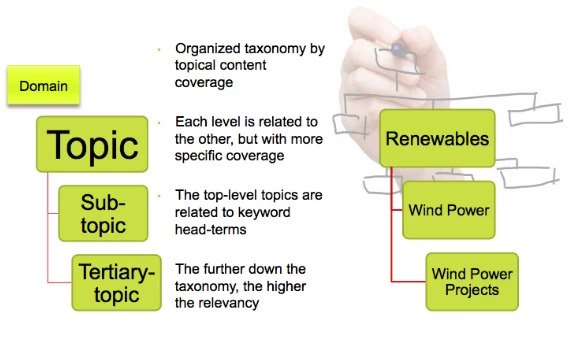 Taxonomies provide good mechanisms for search engines and users to understand the significance of a particular topic and piece of content for your website. Pages at the top of the taxonomy tend to be broader variations of a topic, while diving further into each taxonomy provides refinement. From an SEO standpoint, because the top of the taxonomy funnel is architected closer to the domain, those pages have a higher authority and SEO value for head-terms. On the other hand, subtopics in a taxonomy may have less authority for the head-term but higher relevance for a long-tail target. Both are equally essential for building your SEO and website architecture. The relationship of the taxonomy is tied to the website’s silo structuring and crawl path. When done correctly, it will help both the human audience and search engine spiders understand the relationships within the taxonomy hierarchy and themes for the site.
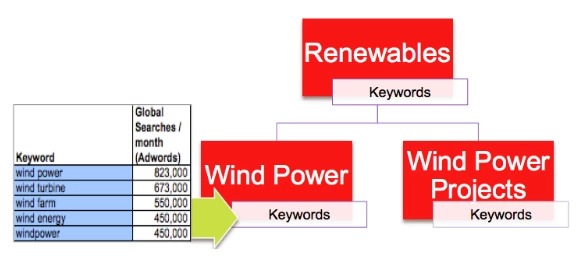 The organization of the content within each of the silo structures helps to improve the rankings of each page. The display of the content assets on the page are all directly related to the taxonomy topic, which helps provide context to the material. These on-page keywords assist with the ranking ability for the page. In a Google Hangout, John Mueller pointed out that the user experience improves because users have landed on a page that is full of content based on a particular topic or taxonomy level. Since they have a better experience, their engagement and CTR improves. In my experience I have noticed an increase in CTR of over 21% by displaying semantically-related content types within a taxonomy page. Google and the other major search engines want to see websites that visitors appreciate and that provide them with value. The importance of the site can therefore be judged based on how people engage with it, such as the

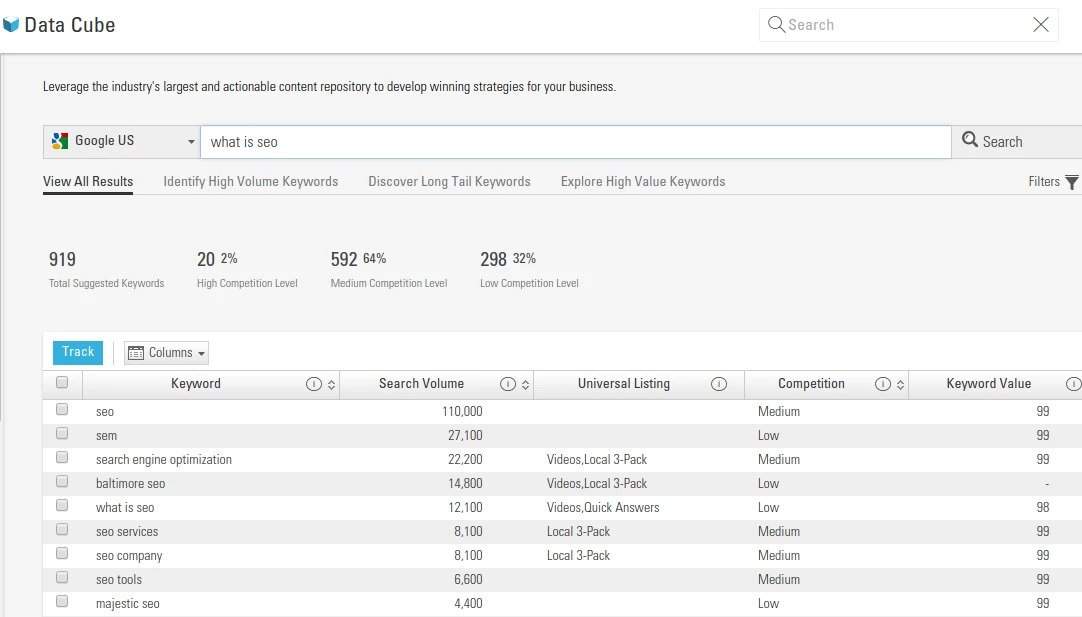
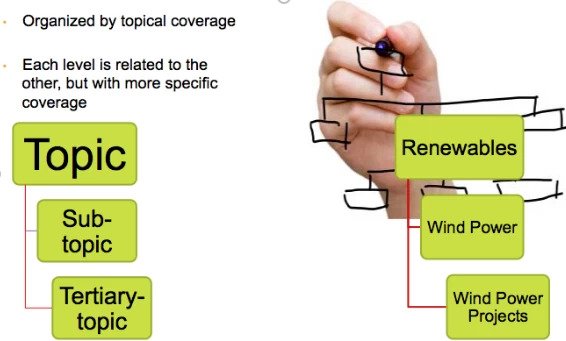 Your “What is SEO?” silo might be divided into “On-Page SEO” and “Off-Page SEO.” On the third level, your “On-Page SEO” might be divided into pages that deal with topics related to keyword research or alt tags, while “Off-Page SEO” will look at topics related to influencer marketing, building backlinks, and social media. A content silo allows you to organize content based upon user needs and search behavior so you can maximize the traffic you capture and your brand reach. You will research the topics that matter the most to your audience and be able to create an organized grouping of content that will explore their topic of interest thoroughly, allowing them to click on different links and learn about related ideas. This will firmly establish your brand as an authority in the field.