Today, there is an endless list of strategies and tactics marketers can employ to drive success, but one thing is for sure -- to maximize success for SEO and social the two areas must be attached at the hip. Your SEO programs must employ social tactics and your social programs must be infused with SEO octane.
So how is this done when SEO and social teams are typically operate separately and neither group has defined the actual strategies and tactics that bring SEO and social media marketing together? Find out by viewing our presentation on 17 Ways to Integrate Social and SEO for 2017.
In this 45-minute webinar, Overdrive Interactive CEO Harry J. Gold shows you 17 social and SEO integration tactics you can start using right away. Specific topics and tactics covered include:
How success in social is often realized through search
How social media content powers the branded search experience and the Google Knowledge Graph
How to infuse your social content with SEO octane so it pops in the searches and conversations that matter most
How social content is shared and weaved into the fabric of the web
How social sharing drives quality inbound links as well as traffic, leads, and revenue
Speakers:
Overdrive Interactice CEO Harry J. Gold
BrightEdge VP Demand Gen and Head of SEO Erik Newton
"I would absolutely say that BrightEdge is an innovative company. They’re leading the SEO reporting industry completely."
To provide BrightEdge customers with closed-loop solutions for search engine optimization and content marketing, we developed a strong partnership with Adobe. BrightEdge is an Adobe Accredited Application Partner with a five-year history of developing integrated offerings.
Adobe Data Warehouse Integration
Bring your analytics data into BrightEdge and align organic search performance with key website metrics. Identify underserved user intent, prioritize SEO opportunities, and accelerate website traffic, conversions, and revenue. Learn about our Adobe Data Warehouse integration.
Over 250 brands have integrated their Adobe web analytics data with BrightEdge!
Content Optimizer in Adobe Experience Manager
Pull BrightEdge Content Optimizer’s intelligence seamlessly into Adobe Experience Manager and optimize content as it’s being created. Identify topics that are high in demand and low in competition and pair them with targeted web pages to improve organic search and customer reach.
Case Study: Adobe
Learn how Adobe uses the BrightEdge platform to drive successful SEO programs and accomplish double-digit growth in organic search.
As the micro-moment takes center stage in modern marketing, brands can no longer ignore the value of hybrid marketing and finding ways to elevate SEO within their organizations.
A recent survey by the Content Marketing Institute found that 89 percent of B2B marketers and 86 percent of B2C marketers say that they use content marketing to promote their brands. More than 70 percent of marketers in both groups also say that they plan to produce more content in 2017 than they did in 2016.
The competition within the digital space is about to become even more stiff, forcing brands to pay attention to how they can improve the effectiveness and efficiency of their marketing programs. Content is only useful to an organization if it provides value for the right users and if it is optimized correctly so that it can be found.
Note that over 60 percent of the traffic on most sites arrives from the search engines. Fifty one percent of that traffic arrives through organic clicks, and another 10 percent comes from paid search. Since these two drivers work together for such a large percentage of site traffic, all marketers should consider the value of hybrid marketing or integrated search marketing and how they can be optimized to maximize the opportunity.
Why paid search still matters
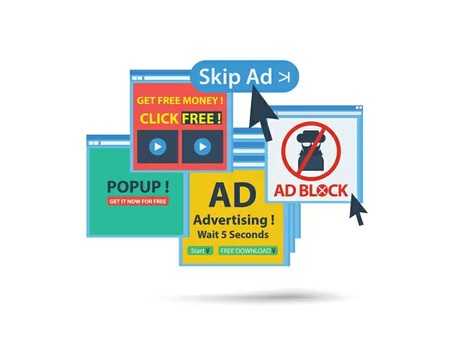
Not only does paid search play an important existing role in how much traffic arrives on your site, but Google has also been showing signs that ads will be even more prominent moving forward. In early 2016, the search engine eliminated the ads that once appeared along the sides of the SERPs and increased the number of slots available above the organic results for certain queries.
Our latest research indicates that as many as 23 percent of all searches have 4 spaces available for ads, and queries that contain purchase intent are 6x as likely to have all 4 spaces available. When users land on a page with 4 paid results, the ads often push the organic results below the fold, limiting their visibility and impact.
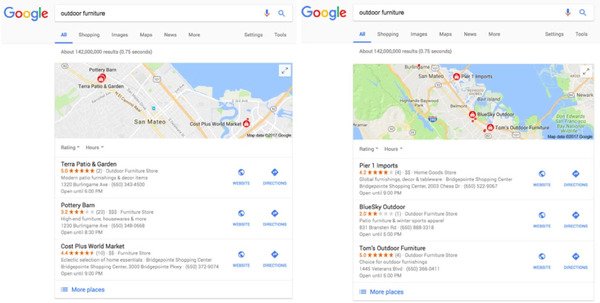
Google has introduced a paid search result into the local 3-packs that appear for local search. This means paid results will also have a greater impact on local search strategy and how brick-and-mortar businesses attract their customers online, forcing hybrid marketing to the forefront.
The customer journey in 2017
Modern consumer behavior has shattered the customer journey. It is no longer a linear path. Instead, it has fragmented into countless micro-touch points that Google refers to as micro-moments. These micro-moments have been divided into four main categories:
The I-want-to-go moment
The I-want-to-buy moment
The I-want-to-know moment
The I-want-to-do moment
These micro moments can occur in any order throughout the buyer’s journey. They all present opportunities for organizations to build relationships with the prospects and encourage them to enter the sales funnel so that they can become leads and then customers.
Google works to understand these micro-moments and provide SERPs that address the intention of the user. That is why certain SERPs return results that heavily feature different types of content, such as videos images, textual content, or paid advertisements. The better that brands are able to understand the intentions of their users and how Google thus responds to a particular query, the easier it will be to use hybrid marketing and produce the right content to be optimized for that particular prospect’s micro-moment.
Remember also that customers today are largely channel agnostic. They interact with brands on multiple devices and on a variety of different platforms. They expect their desired brands to answer their needs on all of these different channels. When brands create hybrid marketing campaigns, they are able to effectively develop content that addresses the needs of the modern consumer across micro-moments and regardless of device.
Elevating the importance SEO and hybrid marketing in your organization
To build this type of mature, effective hybrid marketing program at your organization, you will need to increase the prevalence of SEO in marketing and evangelize its importance to people throughout the business, particularly decision makers in the C-suite or the board room. Promoting SEO throughout your organization, however, requires having the manpower to complete the task correctly. You want to invest in your personnel and find high-quality employees who understand the importance of hybrid marketing and have the insights needed to stretch across specialty lines.
This will allow your team to better visualize cross-channel campaigns and create them more effectively. Internally, you also want to take the time to invest in the training for your existing employees. Offer workshops, meetings, and training sessions to help ensure that everyone begins to gain a more diverse understanding of online marketing and their role within the larger picture.
As you create these campaigns, you will then need to use analytics to monitor your progress. Make sure you have a complete vision of the success of your campaigns. Watch SEO-specific metrics, such as keyword rankings and site engagement as well as the metrics that reveal the impact on the larger organization, including revenue and conversions.
As you then prepare to speak with your organizational leaders, remember their priorities. They prefer to hear about how the hybrid marketing campaigns you run impact the business rather than keyword positions. Be able to explain how your efforts have positively impacted the share of voice of your organization, revenue, and how you perform compared to key competitors. Building a strong case for the importance of your role with these leaders will help you secure the buy-in you need to further promote your brand.
These resources will allow you to further mature your optimization strategy, nurture hybrid marketing efforts, and thus digitally build your brand. We are seeing the industry mature across the spectrum as marketers, technology, and consumers become more sophisticated in how they interact with each other and their expectations.
For brands to succeed on the modern competitive landscape, they need to have a keen understanding of the direction of digital hybrid marketing and how they can incorporate the micro-moment into their strategy while elevating SEO at their organization to secure the buy-in they need. Online marketing and optimization has the potential be a tremendous powerhouse for brands who use it correctly, and brands planning their 2017 strategy need to pay attention.
In this webinar, learn about the new micro-moments and how the BrightEdge platform helps you identify and capitalize on them
Available on-demand
The buyer’s journey has transformed from a fairly predictable linear progression to a faster and more dynamic user experience where buying decisions are made in micro-moments. The change makes SEO and organic local and mobile skills and results even more important.
In this webinar, learn about the new micro-moments and how the BrightEdge platform helps you identify and capitalize on them. SEO, content marketers, and digital marketers will all gain insight from this 30-minute webinar followed by a Q&A session with the presenters.
Speakers:
BrightEdge SVP of Marketing Kevin Bobowski
BrightEdge VP Demand Gen and Head of SEO Erik Newton
Marketing throughout the customer lifecycle is an essential part of a growing and maintaining business. In today’s digital marketing environment, deploying a scaled marketing operation and revenue creation engine requires a broad team of talent. Specialization of function allows for areas of excellence to develop maximum efficiency and effectiveness.
At BrightEdge our management experience comes from some of the most successful SaaS companies in Silicon Valley, most notably Salesforce.com, so our departments are designed to scale fluidly as we continue to grow at a formidable rate. Demand generation sits at the intersection of sales and marketing, and as the number of team members involved in the B2B purchase process grows - 34% according to the Eloqua demand generation survey - so does the need to acquire and develop a multitude of marketing and demand generation skill sets. Marketing jobs are all about understanding the user journey and understanding how different roles on your team support that journey to becoming a customer. Understanding clearly the broad spectrum of roles in your marketing organization will also help people evaluate their career options and make an effective career plan.
Below are 12 key marketing jobs and positions essential to the scale and success of a demand-led organization. Note that the positions are also in the order of products rolling into the market to customers.
Product Manager specifies what to make: owns the target market, market sizing, gross margin plan, schedule, and value proposition.
Product Marketing Manager describes what the product manager made on the web site and in collateral: owns the description.
Marketing Acquisition (advertising) gets people to notice and consider the product: owns the leads and the top of the funnel. Often co-owns the website with corporate marketing. Content marketing manager largely fits in this category.
Public Relations Manager generates interest in the products, message, and the company with the offline and online press. Social media manager falls largely in this category.
Corporate Marketing and marketing communications define and defend the brand: owns the brand, logo, and tagline. Often co-owns the website with marketing acquisition.
Inside Sales works the leads created by marketing acquisition to create sales appointments: owns the middle of the funnel.
Outside Sales hunts for leads: owns the cold calls and a quota.
Account Executive works the leads brought in by inside and outside sales: owns the bottom of the funnel and a revenue quota.
Sales Engineer helps with the product demonstration and trial: co-owns closing from the trial.
Customer Service, Customer Support, Customer Success supports the customers’ use of the product: co-owns retention and renewal goals.
Customer Marketing supports renewal, upsell, and expansion campaigns: owns engagement, renewal, and upsell campaign development, deployment, and tracking.
Strategic Account Manager executes the renewal, upsell, and expansion efforts: owns a revenue quota and the retention goal.
If you want to improve your own resume and expand your skill set consider some of these opportunities for continued education. If you are interested in a career in customer marketing, management, and sales, look over the list of marketing jobs and match your talents with the primary activity, your personality with what parts of the work you would like to own, and what types of people you like to interact with: developers, marketers, sales people, press, prospects, or customers. It takes a combination of all the skill sets associated with most of these 12 positions to build a scaled marketing engine. Learn the importance of combining marketing functions as a hybrid marketer to further advance on the career path. If you are committed to marketing, then consider joining us on our marketing journey as BrightEdge is hiring!
Overdrive Interactive is a BrightEdge agency client and an agency co-marketing partner. Jeff Selig is Overdrive's VP of Earned Media and Analytics.
It’s not easy to keep up with all the changes in the social media ecosystem. Trends shift, social sites are updated, and some of the best social media websites and apps come while others go. Just last year, for instance, we lost the popular platforms, Vine, Meerkat, and Blab.
To help users get the most recent snapshot of the best social media websites in the social media ecosystem, Overdrive Interactive has updated its popular Social Media Map.
This downloadable pdf is an excellent resource for marketers that covers the very best social media websites, apps, and tools. It has 231 live links, so users can easily explore them, and it is broken down into 23 categories. Some of these categories and sites are for individual use and not applicable for businesses.
Therefore, to guide you through the Social Media Map, here’s a breakdown of the most relevant categories and sites for business marketing needs.
Networks
First and foremost, if your business doesn’t have a company profile on Facebook, Twitter, and Google+, you should reconsider. Facebook, the most famous and largest social network, has 1.79 billion monthly active users (MAU) and offers highly-targeted paid advertising options. Twitter gets 317 million MAU, also sells paid ads, and its streams are often displayed in Google’s search results.
Though there’s debate on the necessity of a Google+ account, Google+ gets 300 million MAU. Most of their activity comes from India, Thailand, and Mexico, so they are worth considering depending on your targeted audience.
The new entrant in the Social Media Map is vTime, the world’s first mobile virtual reality social network, but still ranks among the best social media websites. Businesses can use vTime to conduct virtual meetings. Their tools can read Excel spreadsheets and convert data into 3D models and graph visualizations.
There aren’t a lot of marketing options in vTime for now, but businesses should follow the general conversation around VR. VR can be used for product launches or demos, facility and operational tours, and visualization of complex data.
Messaging
Businesses can use these messaging apps for internal communications, and, in some cases, marketing. Businesses can advertise on Skype through AOL Advertising. Facebook Messenger bots can be used for customer service and brand awareness. It’s common for businesses in India and Brazil to offer their WhatsApp numbers for customer service inquiries. In fact, 29% of users like to receive business communications via WhatsApp or WeChat. Therefore, you may be able to reach or help your audience through these messaging apps.
Professional
The sites in this category are a mix of networks you should use for B2B marketing, platforms you can use to grow your workforce, and tools to help your workforce collaborate across your organization. LinkedIn (106 million MAU) and SlideShare (70 million MAU) are very important professional networks for B2B marketing and are always considered in the list of best social media websites. If your business is looking for talent in Europe, XING and Viadeo are very popular platforms for recruiting besides LinkedIn.
International
Depending on your audience demographic (especially age and location) and the type of services you offer, you may want to have a social presence in these international social networks. When creating your international social strategy, make sure that your team understands local environments and how international audiences use those social channels so that your communications don’t miss the mark.
Music
Many of these streaming service platforms offer various advertising solutions, ranging from display and audio ads to sponsorship deals. Let’s look at Spotify for instance. With 70 million free subscribers, Spotify offers a large pool to target. Their advertising can be very targeted – listeners’ moods, habits, mindsets, tastes, activities, demographic, and device, to name a few. This ensures that your messaging finds the right audience and is relevant to their needs.
Commerce and Payment
Most of the tools listed in this category are peer to peer. But, PayPal and Dwolla are great tools for facilitating e-commerce transactions. Venmo, though owned by Paypal does not yet work with Paypal and is the dominant payment app among millennials.
Crowdfunding
Crowdfunding doesn’t have to be just for start-up B2C organizations. Indiegogo offers Enterprise Crowdfunding to service established companies. These companies can use crowdfunding to get feedback and fine-tune their product and marketing message before it hits the production line or stores. This is also a great way for businesses to discover new ideas and innovate. B2B companies can also use crowdfunding: Bitvore, a B2B technology corporation, used Crowdfunder to close new investor commitments and get $435,000 in capital.
Listening, Management and Tracking
Both categories contain tools for monitoring and improving your social media presence. Tools such as Overdrive Interactive’s SocialEye can help you schedule your content ahead of time, monitor engagements, and review your social analytics. The listening tools should help businesses track conversations around your brand, industry, and your competitors, and develop strategies to respond or participate in those conversations.
News & Content
These news and content apps should be a constant part of your social media marketing and content creation strategy. Use them to follow and participate in current conversations, understand how your users’ needs might be changing, and adapt quickly to help them. You should also consider using platforms like BuzzFeed, Medium, and Flipboard to publish or share your business content.
Podcasting
“According to results of a new comScore study, ads within a podcast were found to be the least intrusive when compared with other types of digital ads. And not only do listeners not mind hearing them—they act on them…The study of 2,000 U.S. respondents ages 18 to 49 found that two-thirds of listeners have acted on ads they heard in a podcast either by researching a product or service or by actually purchasing something they first heard about in an episode.”
Podcast listenership grew by 23% between 2015 and 2016 and its growth doesn’t seem to be slowing down. For now, before the bubble bursts and while supply is relatively low, businesses should consider either creating their own podcasts or looking for sponsorship opportunities with relevant partners.
Blogging
76% of B2B marketers blog. It’s great for SEO, branding, content marketing, and sales. If your business doesn’t have a blog, these tools will help you develop and manage one, or find new mediums to publish your content.
Livestreaming
Livestreaming is hot in social media but is still underutilized by marketers: in 2016, only 14% of marketers used live video. You don’t need expensive equipment or long hours of production to publish these videos. You should outline your presentation beforehand but keep it flexible and interact with your audience.
Make sure that you are offering value and promote your livestreaming session ahead of time. It’s highly recommended that businesses livestream because it’s a great way to create more video content. For platforms like Facebook where organic reach is dying, live streams are more visibly promoted than standard organic posts. Here are some examples of how brands can use Facebook Live.
Photo sharing
There’s no reason why you shouldn’t include great visuals with all your content, from social media posts to your individual website pages. We are visual creatures and more likely to remember text accompanied with visuals. You can use the tools in this category to curate images or ideas for images you can create.
Video sharing
Along with sharing images for visuals, it is also important to have a strong video strategy. This year, video content will represent 74% of all internet traffic. Your business can create various types of videos- product demos, moving text with visuals, interviews with your talented employees, etc. You can use the platforms in this category to publish your videos, or curate videos for sharing.
Local & Location
If your business can benefit from location-based advertising, apps like foursquare offer targeted advertising options. Depending on your business and business needs, you can use Eventbrite to host public events for a wider reach (if you want more control, Eventbrite may not be your best option). You should also claim your business in these apps. Even if your company doesn’t use them, other users may find you there and get the wrong or incomplete information about your business.
Dating
Not every business will be able to advertise in dating apps. If you can find a way to relate your ad campaigns in the dating world context like these businesses did on Grindr and Tinder, you may be able to capture new leads there.
Reviews
What are people saying about your business or your competitors? It’s very beneficial for companies to review these apps for opportunities to create FAQs, improve your solutions or customer service, even find potential customer testimonials to share in other platforms. You should also review these apps to make sure that your profile information is accurate.
Reference
Similar to the reviews category, the reference category offers tools to help businesses find new content ideas or new leads. You can use these reference sites to learn more about your industry, or to identify questions that others have that you can answer. If possible, update or respond to inquiries, and create or update your company profile.
Whichever social media strategies and tactics you currently employ, the Social Media Map is a great tool to help you explore and create new strategies. Download Overdrive Interactive’s 2017 Social Media Map for free here.