How to Succeed with YouTube SEO

lpark
lpark
M Posted 9 years 7 months ago
t 9 min read

Videos have grown dramatically in their popularity with audiences - in 2017, an estimated 74 percent of all online traffic will be for videos. YouTube itself is the second-largest search engine, behind only Google. YouTube SEO is essential to help you succeed in your marketing efforts on this video platform. SEO tips for YouTube - brightedge 78% of people watch at least one video a week.

Promoting a video in an email subject heading increases open rates by 19% and click-through rates by 65%, videos help customers feel confident in their purchases and they even have the power to inspire more potential customers to visit a store online or in person. Marketers should develop video content and video SEO strategies to take advantage of the interest.

Understanding the role of YouTube SEO

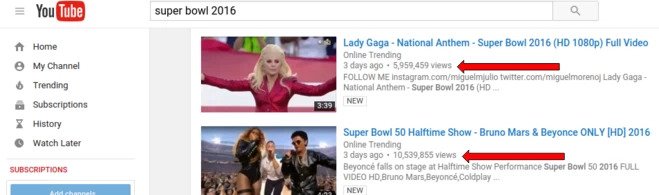
People generally visit YouTube because they want to be entertained or learn something new from the videos they watch - this explains the incredible popularity of all those Super Bowl videos you see passed around your Facebook feed in the days and weeks after the game. Aside from all the animal videos which seem to dominate the platform, however, there is plenty of space for brands and video SEO techniques.

YouTube has an incredibly large audience - over a billion users or 1/7th of the world's population. This means videos on the site are an opportunity to introduce new people to a brand, increasing brand awareness, and building an audience of interested potential customers. Accomplishing that requires a good strategy for YouTube SEO.

take your video to the next level with youtube seo - brightedge

YouTube videos can also be embedded right on other social media sites by using the embedded player code. This makes it easy for viewers to watch your videos right on their feeds without having to click off and go to the YouTube site. 

By embedding the videos, you can increase engagement on your other social media pages. This helps you boost your interactions with customers throughout your digital presence to build your reputation.

What should be posted for YouTube SEO

It is important to note that not every video your brand produces should be posted on YouTube. The videos on this page should be designed for a broad audience. Remember that most people coming across your channel are not arriving from a branded website. They are watching a video for entertainment or to learn, not to make a purchase.

Your video should generally be able to stand alone: it should be completely understandable and add value for viewers who are not familiar with your brand or the speaker. The company should focus on providing high-value videos that users can appreciate on their own. Videos that help users to understand complicated topics related to your industry, breakdown news events so they are understandable or put forth new theories or ideas related to your field can be very popular.

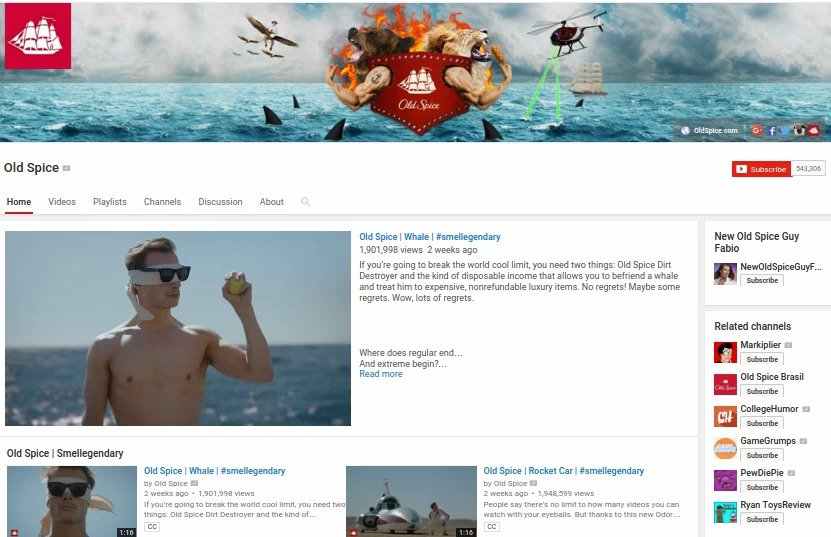
Use other types of helpful videos with educational options, such as how to’s - videos that help viewers understand how to complete certain tasks or succeed within your industry. You can even create successful video channels based around engaging storytelling surrounding your brand using YouTube SEO. Think about the example put forth by the company Old Spice. Useful SEO tips for YouTube - brightedge These videos tell a story about the brand and how their product works for customers in a humorous and entertaining fashion.

All of these types of videos work for YouTube SEO because they provide value even for users who are just browsing on the video platform, regardless of whether they have a connection or knowledge of the brand.

The role of YouTube SEO in your marketing efforts

In addition to boosting brand recognition and awareness, YouTube SEO can also play a more direct role in your marketing efforts. To begin, brands can drive traffic towards their YouTube channels through paid YouTube advertising. There are three types of ads available through Google TrueView video advertising:

  • You can select to create an ad that is played at the beginning, middle or end of a partner YouTube video. This is known as an in-stream ad.
  • You can create ads that are displayed in the search results for particular queries. This is called an in-search ad.
  • You can create an ad that appears on the YouTube watch page. This is an in-display ad.

The video developed should not be too long and it should be engaging from the first few seconds. This is particularly true for the in-stream ads, which users are often given the choice to skip after just a few seconds. The video should be oriented to the platform as well.

Remember that people are not generally on YouTube to buy, they want to learn or be entertained. That same mantra applies to ads. Educational ads that are relevant to the keywords and the business as well as ads that incorporate the human connection through testimonials tend to be successful.

There are also other types of advertising available on YouTube. For example, you can create interactive videos through CTA overlays. The overlay can contain links back to your website, making it easy for interested parties to engage more directly with your brand. Adding rich snippets to your video can help with indexing and ranking.

Finally, YouTube SEO has the potential to impact your rankings in search if you do video SEO properly. Google owns YouTube and often displays videos in relevant search results. Although video SEO rich snippets have largely been eliminated from brand platforms, for relevant queries, they do appear with YouTube results.

A well-ranked video and well done YouTube SEO can help to increase exposure even in standard SERPs. A popular video that inspires many people to click over to the brand website can also indirectly help to raise the rankings of your site itself. The additional traffic, particularly from these engaged users who have already expressed an interest in your business, can help improve your site metrics for the search algorithm. YouTube SEO also allows you to include links in the comment section of videos, so taking advantage of this opportunity can make it even easier for interested viewers to click over to your site.

Making your YouTube channel a success

strategize for Youtube seo with these tips - brightedgeCreating a successful YouTube channel requires a strategy that will get the videos noticed, including YouTube SEO. Like any other aspect of online marketing, before you get started, you need to have an idea of where you want to go.

Know what you want your channel to rank for and the types of videos that are most likely to be appreciated by the intended audience. Keep in mind that YouTube success is not built upon one-hit-wonders. Video channels that attract large followings and convert to revenue for brands are the ones that continue to produce quality video after quality video.

Digital marketing as a whole has been shifting strongly towards the value of quality over quantity. With the intense competition that marketers face - an estimated 300 hours of video are uploaded every minute - poor quality videos not only do not attract the desired positive attention, but they can also hurt the brand perception as a whole.

Your goal should be to continuously produce quality, engaging videos and maintain video SEO. When someone finishes one video and clicks through to your channel page, they should be met with several options for more, equally helpful and valuable videos. This is a helpful YouTube SEO tip that will build channel followers. Creating these successful videos requires creativity and a keen understanding of what visitors want to see.

  1. Get started with the length of the video. The ideal duration of a YouTube video is estimated to be 2 minutes and 54 seconds. This allows you enough time to engage and enlighten your visitors without stretching on so long that you lose their attention.
  1. Make sure your videos start strong. You will have about 10 seconds to grab a viewer’s attention. You will then lose 33 percent of visitors by 30 seconds, 45 percent by 1 minute and 60 percent by 2 minutes. You want to maximize your time to maximize your impact with YouTube SEO.
  1. Select the right thumbnail. The thumbnail, along with the title, is generally one of the deciding factors for viewers when choosing a video and part of YouTube SEO. To find the right frame, you want to focus on conveying the content and emotions in the video. Eye contact can be a powerful motivator, so selecting a thumbnail that includes the subject looking at the viewer can be a good choice.
  1. Make sure your video is in the best format. Using the wrong format can result in the video not appearing as crisp and clear, and thus less engaging which can hurt video SEO. The best video format for YouTube SEO is generally MPEG-4 and you want to keep your resolution around 1280 x 720 (16:9 HD) and 640 x 480 (4:3 SD) when possible.
  1. Optimize the video to rank well. Like any other type of online content, you want to create material around consumer interests. This means uncovering meaningful topics and keywords and creating videos that answer these needs. Use the keywords in the title and description of the video to implement video SEO tactics.


    You also want to use tags on your videos to properly use YouTube SEO. These tags should include your keywords as well as the video categories, information about the content, and any significant insight about the creation of the video or the people in it. To execute video SEO for exposure, make sure to target your demand by building the following assets with searchable keywords, topics, and context:

    • The video Title
    • The video Description
    • A valid link to related information on your website
    • The video tags
    • Use playlists to get serialized recommendations between your videos
    • Drive up watch time, which is a YouTube SEO ranking factor

How to know if your efforts are successful

As you implement your video SEO strategy, you do need to make sure that you are monitoring your progress to see how well your efforts on YouTube are succeeding and what is having the biggest positive impact. There are a number of different ways you can gauge your YouTube SEO success.

Branded Traffic and Share of Voice

One of the primary goals for many for a YouTube SEO strategy is to increase brand awareness. Monitoring part of video SEO is looking at your branded traffic and your share of voice is a great way to see growth in this area.

Referral Traffic from YouTube SEO

discover youtube seo analytics - brightedgeKeep in mind that the number of users who click from a YouTube video through to a brand website or YouTube channel page will be very small compared to the total number of people who watch and enjoy your video. At the same time, monitoring video SEO growth in this area will be a good indicator if your videos are finding the right audience and if they appreciate what you have to say.

Leverage Robust YouTube SEO Analytics

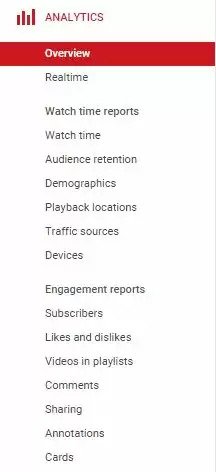
Here is an index of the analytics offered for playlists and each video. One example is insights into watch time, which is an important measure of YouTube SEO engagement for ranking. Below are the daily watch time and views stats followed by audience demographic information.

Currently, the vast majority of video thumbnails showing up in Google SERPs are from YouTube SEO, so brands need to extend their video SEO efforts to YouTube and master YouTube SEO to capture more organic traffic. BrightEdge customers can see reports on the blended or universal video positions that they and their competitors control in the SERPs, which allows them critical tactical insight and visibility.

YouTube is a powerful tool in the hands of experienced marketers and especially if they do YouTube SEO. The video platform has grown in popularity as people have come to realize the value of entertainment and learning opportunities through videos. Brands that learn how to capitalize this organic channel can further grow their traffic and results.


BrightEdge Announces Next Wave of Organic Search Innovation with ContentIQ And HyperLocal Releases

BrightEdge Talks Wave of Organic Innovation for ContentIQ & HyperLocal

SAN MATEO, CA – February 28, 2017 - BrightEdge, the global leader in enterprise organic search and content performance, today launched ContentIQ and HyperLocal, innovations designed to drive marketers’ organic search revenue conversions. As search and content marketing disciplines converge it has become clear that marketers need to maximize the value of technology and the insights derived to deliver both compelling content and a great user experience.

Google’s desktop and mobile SERP results are constantly changing in line with changing consumer behavior. And according to new BrightEdge research 76% of Google search results show different results on mobile devices compared to desktop. This is because content which is believed to be optimized for high rankings on desktops may in fact rank differently or poorly on smartphones. Evolving organic search practices for both desktop and mobile, in line with Google change, is essential to modern day search marketing success.

“In a world where visibility and performance are keys to marketing success, BrightEdge ContentIQ and HyperLocal innovations help search marketers stay ahead of the changing search and content marketing landscape”, said Boaz Ronkin, VP of Product Marketing at BrightEdge. “This is especially important in a mobile-first world where mobile-friendly site structure and mobile specific content are essential for increasing traffic, conversions, and revenue”.

Introducing BrightEdge ContentIQ

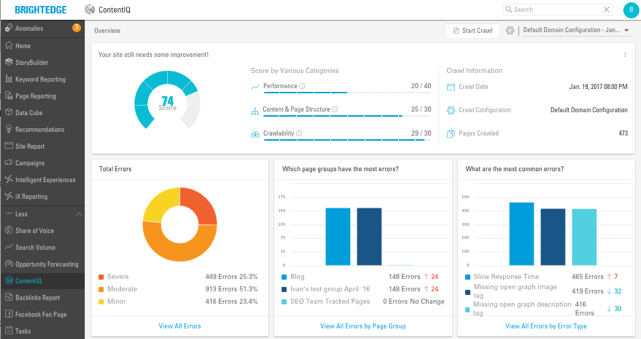
BrightEdge ContentIQ Overview interfaceAs companies adapt to a mobile-first world, they must create web experiences that are responsive and driven by rich experiences. However, without understanding or adhering to SEO best practices, content creators can inadvertently cause technical errors, duplicate content, or orphan pages. These issues severely impact organic search performance resulting in decreased traffic, conversions, and revenue.

BrightEdge ContentIQ, a revolutionary site auditing solution, minimizes revenue loss attributable to poor user experience and organic performance caused by site errors. BrightEdge ContentIQ is the only solution that delivers a comprehensive website audit natively within an SEO platform.

“ContentIQ represents a tremendous leap forward in content auditing for BrightEdge customers. It enables you to monitor site performance in an intuitive interface, helping to identify and prioritize areas of opportunity. Capabilities like crawling JavaScript-rendered pages, trended reporting, and fully customizable crawl settings make it easier than ever to drive actionable improvements that yield the biggest impact for our site.” Matt Saunders, Director, SEO, Resolution Media

Built for the mobile web era, BrightEdge ContentIQ crawls and inspects progressive web applications, single page applications, JavaScript frameworks, schemas, and social tags.

  • ContentIQ helps identify, prioritize, fix, and monitor critical site errors – all within a single workflow
  • BrightEdge ContentIQ is fully integrated into the BrightEdge platform and integrates seamlessly with other key platform innovations StoryBuilder and Anomaly Detection

BrightEdge customers can adjust audits to match their organization’s unique digital standards with BrightEdge ContentIQ. Customers can choose to inspect just a few sections of their websites or crawl the domain for hundreds of millions of pages.

“ContentIQ empowers us to detect, prioritize, and monitor for new issues before they impact our revenue. As an integral part of the BrightEdge platform, it’s a best-in-class enterprise solution, giving us peace of mind while allowing us to focus on growth.”  Jason Stevens, Director, SEO and Program Management, Food Network

Introducing BrightEdge HyperLocal Enhancements

Google has taken the next step in providing the most relevant results to consumers – contextualizing SERPs to small geographical locations. Now, the same search query performed in nearby cities could result in different SERP experiences across different devices. According to BrightEdge research mobile results in local SERPs can vary dramatically – mobile results in San Francisco vs. mobile results in NYC are 68% different.

Using an aggregated view to assess organic performance, marketers can get a skewed view of how their customers experience search locally. To prioritize SEO and content marketing investments effectively, they need a higher resolution picture of where and when customers see their brands in organic search results.

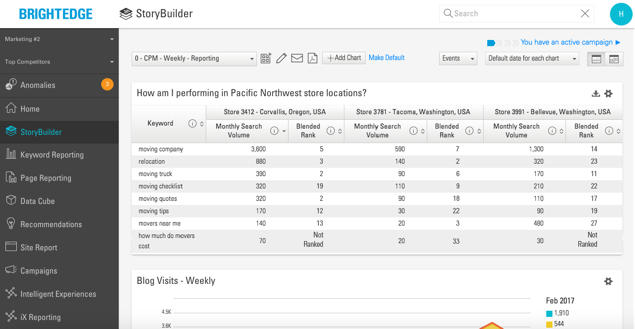
BrightEdge ContentIQ StoryBuilder local keyword trackingBrightEdge’s HyperLocal enhancements enables search marketers to identify topics and understand how content performs in more than 68K local search engines so marketers can track organic performance down to specific locations, pinpoint search demand and performance across the US and around the world.

By extending the volume and granularity of search insights, BrightEdge is the only search and content solution that allows customers to understand how topics and content perform for the specific locations that are most critical to their business success.

HyperLocal capabilities within the BrightEdge platform now allow customers to understand how topics and content perform for searches conducted in every corner of the globe.

  • With BrightEdge’s HyperLocal enhancements customers can track topic and content performance for more than 32K US and 36K non-US city search engines.  HyperLocal even supports the ability to track custom locations, like individual retail store addresses, to get an even more granular view of organic performance
  • BrightEdge’s HyperLocal enhancements follow the recent successful introduction of BrightEdge Intent Signal, which helps marketers prioritize topics that have greater organic opportunity to increase brand visibility above and below the fold


About BrightEdge

BrightEdge, the global leader in enterprise organic search and content performance, empowers marketers to transform online content into business results such as traffic, conversions, and revenue. The BrightEdge S3 platform is powered by a sophisticated deep learning engine, and is the only company capable of web-wide, real-time measurement of content engagement across all digital channels, including search, social, and mobile. BrightEdge’s 1,500+ customers include global brands such as 3M, Microsoft, and Nike, as well as 57 of the Fortune 100. The company has eight offices worldwide and is headquartered in Foster City, California.

PR Inquiries: brightedge@theabbiagency.com

Press Release Date

Thank you for registering for this webinar. Access the assets by clicking on the link below. For more information, please visit our resource center or schedule a demo.


Download the on-demand video here


For more information, please visit our Resource Center and read our Case Studies.

Safeguard Your Website Against Errors with Comprehensive Site Auditing

An intro to BrightEdge's next-generation solution for impactful site audits

Safeguard Your Website Against Errors with Comprehensive Site Auditing

An intro to BrightEdge's next-generation solution for impactful site audits

Available on-demand now

Technical errors and unplanned site changes can severely impact user experience and organic performance. A site audit is a critical step in assessing your website’s health and identifying, prioritizing, and fixing content issues and markup errors.

boaz ronkin vp brightedge        erik newton vp brightedge

Join Boaz Ronkin, VP of Product Marketing, and Erik Newton, VP of Marketing Demand Generation, as they discuss BrightEdge ContentIQ, our revamped site audit solution, and the different applications for site auditing, including:

  • Domain migrations
  • Content and pricing governance
  • Improving user experience
  • International expansion 


BrightEdge ContentIQ

Safeguard your website against errors with comprehensive site auditing

"ContentIQ empowers us to detect, prioritize, and monitor for new issues before they impact our revenue. As an integral part of the BrightEdge platform, it's a best-in-class enterprise solution, giving us peace of mind while allowing us to focus on growth."


Technical errors and unplanned site changes can severely impact user experience and organic performance. A site audit is a critical step in assessing your website’s health and identifying, prioritizing, and fixing content issues and markup errors.

BrightEdge ContentIQ is an advanced site auditing solution, built for the mobile era. It minimizes revenue loss attributable to bad user experience and poor SERP visibility by enabling marketers to catch, prioritize, and fix website errors and issues before they impact site visitors.

BrightEdge ContentIQ site auditing solution

Address audit issues faster with native platform integration

Ensure critical content stays SEO healthy

Quickly identify important website pages that contain errors to ensure your content remains search engine- and visitor-friendly. Browse total number of errors by defined page groups or the existing site structure, and apply filters by types of errors or by web folders, to pinpoint and address errors quickly.

Incorporate audit reports into StoryBuilder dashboards

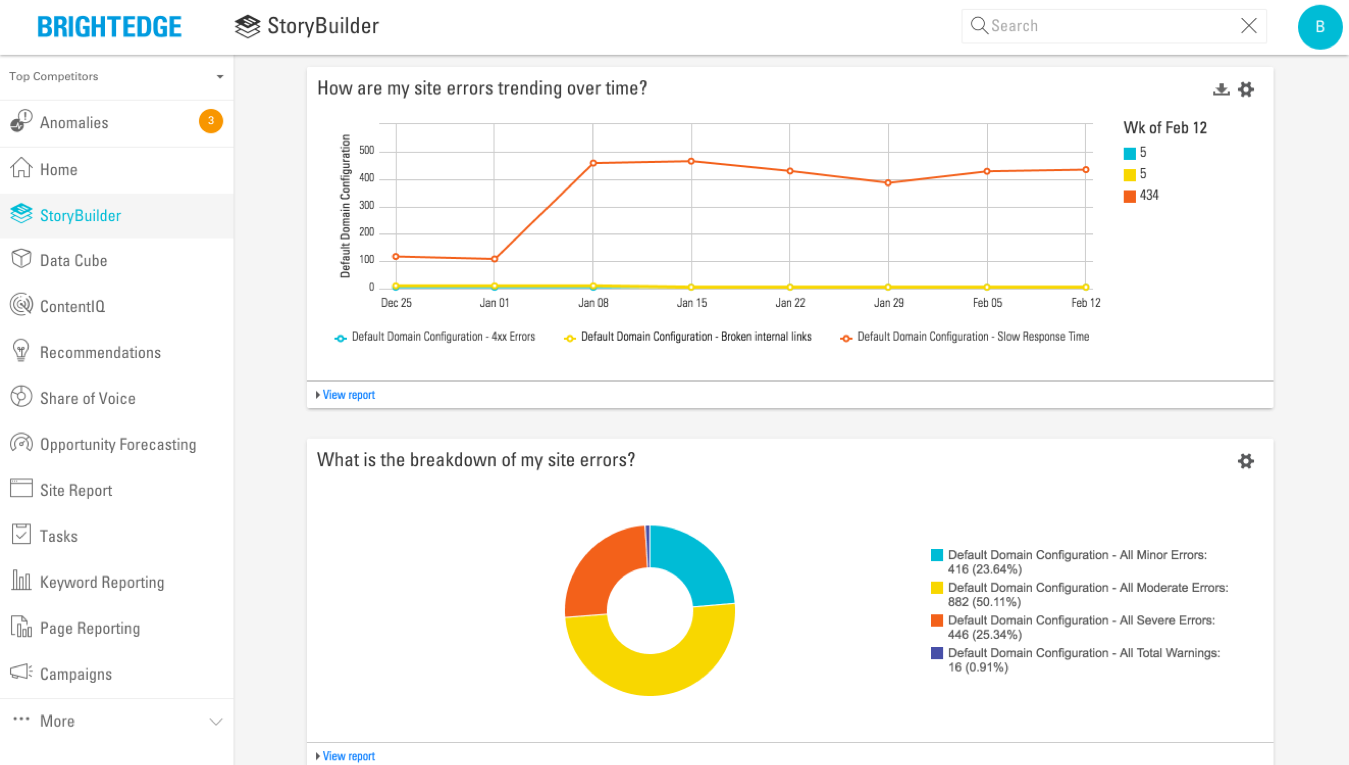
Pull audit reports into your StoryBuilder dashboards to trend audits and visualize the impact of errors and error resolution on business results.

Get notified quickly with Anomaly Detection integration

Set up audit error thresholds to be notified quickly when new audit errors are reported.

Pinpoint site errors with best-in-class crawls and audits

Crawl and audit dynamic content and other elements used in today’s web experiences, including progressive web applications, single-page applications, schemas, and social tags.

Customize your site crawl

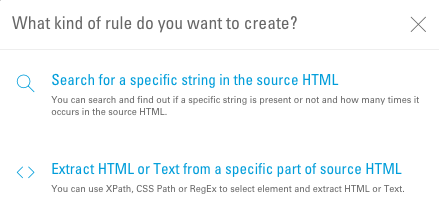
Adjust crawl according to your needs – from just a few pages to hundreds of millions of pages of your website. Customize crawl settings to comply with your organization’s digital standards, including content governance, web accessibility standards, and website architecture.

"ContentIQ represents a tremendous leap forward in content auditing for BrightEdge customers. It enables you to monitor site performance in an intuitive interface, helping to identify and prioritize areas of opportunity. Capabilities like crawling JavaScript-rendered pages, trended reporting, and fully customizable crawl settings make it easier than ever to drive actionable improvements that yield the biggest impact for our site."

Enhance user experience and organic performance with site audits

Site migration

Perform an audit before or after your new site goes live, to discover missing content or broken links that may have occurred in the process.

Web governance

Ensure that your site is compliant with organizational brand guidelines, content rules, and naming conventions.

Cross-team QA

Conduct ongoing site audits to ensure that newly created content is optimized for search and to monitor that web development requests have been completed.

Recovery from a penalty

Alongside ongoing SEO, get a baseline understanding of site health to identify the errors that may be obstructing performance.

Pricing

Customize crawl to extract pricing listed, to ensure consistent and accurate pricing levels and methodologies across your site.

International expansion

Perform QA on international pages – such as hreflang tags to ensure the right versions of the site are displayed for international audiences.

User experience

Identify links driving to 404 pages or 500 errors, to redirect site visitors to active pages and ensure a better user experience.

Social engagement

Ensure that sites are properly tagged according to Facebook Open Graph standards.

Providing customizable settings, best-in-class crawl technology, and integration within an SEO platform, ContentIQ gives you peace of mind as you identify, target, fix, and monitor the site violations that most threaten traffic, conversions, and revenue.


International Search Engines You Should Optimize For

enewton@brightedge.com
M Posted 9 years 7 months ago
t 9 min read

For marketers and SEOs interested in succeeding on a global scale, knowing the list of international search engines should be a priority.

When it comes to digital marketing, for many, search seems nearly synonymous with Google. Within the United States, this major search engine distinctly dominates the market with updates made to the algorithm or layout of the site drawing conversation and news articles for weeks.

This does not mean, however, that other search engines do not deserve consideration. In the US, Google holds a powerful 67% of the mobile and desktop combined search market, but that still leaves nearly a third of the searches performed occurring on other search engines. In other countries, local search engines can outnumber Google. For example, in China, a country with about 688 million internet users, Google is nonexistent as it withdrew from China.

Other countries also boast local search engines that outrank Google, including Russia, a country with 84 million internet users, and South Korea with more than 45 million users. International brands that want to succeed on a global scale need to understand the variety of international search engines found globally and how to optimize for the popular ones in their desired areas.

List of Search Engines 

  1. Google
  2. Bing
  3. Yahoo
  4. Baidu
  5. Qihoo360
  6. Yandex
  7. Naver
  8. DuckDuckGo
  9. Ask.com
  10. AOL

Google

List of search engines - brightedge

Google is one of the most obvious international search engines, but when it comes to producing content for other countries, there are still some important steps to take into account.

In addition to focusing on relevance and quality, brands should also use hreflang tags for international content. This ensures that Google correctly interprets the language and the intended country for the content, such as a local site for Argentina versus one for Mexico.

It is also impossible to mention Google without talking about YouTube. The video service is actually the second-largest search engine in the world. Optimizing video content for the platform involves including keywords in the video description, tagging well, and working on building a successful channel as a whole.

Google has reduced or eliminated the signal weight on meta keywords and meta descriptions, but other sites around the world still use them, so keep that in mind for pages that serves multiple markets and need to appeal to the variety of search engines operating.

Bing

Google vs Bing ranking factors - brightedge

Bing is the second-most popular search engine in the US. On a global scale it has also earned a position as the second-largest of the international search engines.

Many optimization strategies for Bing are similar to those for Google, including claiming local businesses, tagging and categorizing sites, as well as including relevant content and natural keywords.

When it comes to Google vs Bing for social media, social rankings have a definite role in Bing rankings where the role of social sites remains less obvious.

Bing also does a better job of indexing flash media than Google, opening up the opportunity for site owners to use flash on their sites.

To better understand the difference between the two search engines, check out this post on everything you need to know Google vs. Bing.
Yahoo

Yahoo is an international search engine - brightedgeYahoo is the third largest search engine in the US, commanding about 12% of search, resulting in millions of opportunities to engage customers. 

The Bing algorithm powers Yahoo itself, so optimizing for Bing will also allow you to optimize for Yahoo.

Baidu: Search Engine in China
Baidu is the search engine in China - BrightEdge

The #1 search engine in China, Baidu, is the third most popular search engine worldwide, receiving roughly 60% of domestic search traffic. This is an enormous marketplace for companies who want to grow overseas and engage with new prospective customers.

Given the size of the Chinese audience, anyone who wants to succeed in the region needs to be intimately familiar with Baidu. Succeeding on this search engine requires working with a native speaker. To rank well, write content using Simplified Chinese, use a .cn domain, and host the site in China.

Businesses that want to do work in China should have some kind of local contact information, such as a local branch address, which should be featured on the site.

Within the content, Baidu looks for title tags, meta descriptions, meta-keywords, alt-tags, and H tags. Since Baidu is such a major international search engine in China, we add extensive additional tactical advice for it below:

Baidu's URL submission process

  1. Submit sitemap using Baidu’s sitemaster http://ziyuan.baidu.com/linksubmit/url.
  2. Use Robots.txt to specify the pages you do not want Baidu to crawl with a Disallow command.

Reasons why web pages do not show up on Baidu

  1. Your web server is not stable when the Baidu spider attempted to crawl. Once your web server returns to normal, the Baidu spider will crawl your page again.
  2. Your web pages have content that violates guidelines and policies by the Chinese government.
  3. Your web pages do not provide a good user experience.
  4. Other technical issues.

Additional SEO best practices to rank well on Baidu

  1. Review international search engine Baidu’s guide on what web URLs are considered valuable (and how to use Robots.txt to avoid duplicated content being detected) and will be indexed and presented on search results.
  2. Baidu cannot load HTTPS well currently. Baidu does not recommend sites use HTTPS. Google strongly recommends HTTPS.
  3. Submit to Baidu.com the search operator “Site: www.domain.com” to determine an estimated number of pages indexed but not the accurate the number of pages indexed.
  4. Page title is a significant factor in evaluating the SEO performance of a page. It’s not recommended to change page title for a page that ranks well unless absolutely necessary.
  5. Meta description is encouraged to be edited occasionally. However, there is no guarantee that the new meta description can be captured quickly.
  6. Baidu supports “NoFollow” and “NoArchive”.
  7. Good content is evaluated by: high click rate, low bounce rate, and time-on-page. It’s also recommended that website owners analyze exit rate throughout the content paths to improve content quality.

BrightEdge’s SEO support for international search engines in China

  1. BrightEdge provides keyword reporting for both Baidu & so.com based on in-country SEO crawl.
  2. Many websites in China have been stuffed with less-than-perfect quality content
  3. Baidu is infamous as the search engine that is more driven by revenue than quality user experience for search users or website owners. Some people are hoping for Baidu to be replaced by international search engine so.com.
  4. Industry trends and updates: factors that contributed to the secrecy in SEO best practices online.
  5. BrightEdge agency partners, like Merkle and iProspect have hands-on experience with optimizing for Baidu in China.

Read BrightEdge's white paper on succeeding with Baidu for more information.

So.com (360 Search) Qihoo 360: Search Engine in China

So.com and qihoo search engines - brightedge

Although only launched in 2012, Qihoo360 (so.com) has already risen to the prominent position of second-most popular international search engine in China, controlling almost a third of the market.

Since this search engine is relatively young, it continues to mature as do the optimal SEO strategies for it. Some believe that the spiders from Qihoo360 move faster than Baidu’s, making it easier to successfully optimize on the site. Like optimizing for Baidu, users should focus on native-written Simplified Chinese content and using Chinese domains and site hosts. 

It was only launched in 2012, but by 2015 it controlled an estimated 30% of the Chinese search market. Its popularity has likely been influenced by the growth of mobile. By Q3 in 2014, mobile devices were the leading source of searches and revenue for Chinese search engine marketing, and Qihoo 360 has been responsible for building the most popular app store in China.

The tips for the Chinese search market below were published by BrightEdge CEO Jim Yu on Searchengineland.

  1. Optimize for mobile. The vast majority of users, 65%, in China are on mobile devices, so work on mobile optimization first and desktop second.
  2. Do not use automatic translators or inexpensive translation services. Using a native speaker will provide you with an infinitely superior site as you will be able to avoid major grammatical errors, have the content flow more naturally, select more relevant keywords, and use vocabulary that resonates better with the local audience. Your site will fit better overall into the framework of the Chinese digital ecosystem. Translation issues can offend users, hurt your reputation, and cause you to rank lower on the SERPs.
  3. When setting up a website, get a .CN domain. If that is not possible, then seek a .com or .net. Your website should also be hosted in China and you should secure an ICP license from the Chinese Ministry of Industry and Information Technology. Try to avoid having multiple domains or subdomains.
  4. Know the list of blacklisted words that cannot be posted online. Inclusion of these words can cause your site to be de-indexed and even taken down. Remember that your website cannot criticize the government in any way.
  5. Keep your title tags under 35 characters in Simplified Chinese and your meta descriptions below 78 characters in Simplified Chinese.
  6. Website speed is highly valued. Regularly test your site to make sure it loads quickly. Inbound links are also viewed as valuable for search rankings, so finding opportunities to build a strong backlink profile can be very helpful.
  7. All of the links you create should be in plain HTML. In general, avoiding Javascript is preferred because sometimes content in that format will not be indexed.
  8. Chinese search engines value fresh content. Regularly publishing on your page will help boost your reputation and success on international search engines. You should submit your blog posts to the Baidu News Feed, which will help you attract new readers to your material.

For businesses interested in expanding into Asia, understanding how the local search engine market is evolving and changing can be critical to creating sites that rank well on the local search engines.

For a business expanding globally outside of the US, make sure you optimize for premium search engines for key regions such as Naver (South Korea) and Yandex (Russia) also!

Learn more on the state of search engines in China from Michael Bonfil's excellent article from Search Engine Journal.

Yandex: Search Engine in Russia

Yandex remains the dominant international search engine in Russia and parts of surrounding countries, although Google continues to try and secure this position for themselves.

Yandex divides all queries into geo-dependent and geo-independent. Those considered to be geo-dependent will only have sites from a particular region displayed, which can make it easier for many organizations to promote small businesses.

Optimization for this international search engine also takes longer, because the spiders crawl the sites slower than Google does.

The Russian search engine looks at user behavior as a ranking factor, and domain age is also considered important, which can make it challenging for new sites to gain traction.

Fresh content is considered even more important than on Google, and the penalty for duplicate content can be even larger than Google’s.

Naver: Search Engine in Korea

Naver is an international search engine that incorporates content from users, social platforms, and paid search. Brands that gain the most visibility are the ones that have a presence across as many areas of the search results as possible. This is because results are grouped together as paid listings, products, blogs, registered websites, images, organic listings, social results, and more.

Brands need to sign up with the search engine and create accounts for relevant services on Naver to ensure that content appears in the search results.

Write content in the Korean language, submit them to relevant categories, and incorporate basic on-page SEO, such as keywords.

Use the social and user-generated content features to your advantage as well by incorporating a strong social presence and generating blog posts that are up-to-date and well maintained.

DuckDuckGo

DuckDuckGo is a unique international search engine because it does not store any user information. It shows the same results to all users regardless of search history or location -- although paid search may be location dependent as ads are from the Bing-Yahoo network.

This site continues to gain traction as a private alternative to the other major search engines. It uses crowd-sourced sites to provide some no-click answers at the top of the page, similar to Google’s Quick Answers. It also seems to take into account semantic search and quality links when determining rankings.

Ask.com

International search engine Ask.com originally operated under the name AskJeeves. While it does not receive as much traffic as the other sites, a few key moves can help ensure that your page does rank highly when the opportunity comes.

Submit any local businesses to AskCity to help your page appear in local searches. You also want to cultivate your presence in online communities surrounding your industry, particularly drawing links from the respected community back to your site.

AOL

AOL still has 2 million users and has a business partnership with Google, so optimizing for Google seems to also help brands optimize for this international search engine.

While the core of search is consistent globally: matching users with the content most likely to address their needs, there are a number of different international and US search engines that marketers should be aware of as they prepare a global search strategy. The ten listed above dominate most search markets, and these tips should get you started on the right path. Monitor their differences moving forward to expand your global brand reach.

No matter which search engine or country you are targeting be sure to create smart content from the ground up.

For more on International SEO, read HREFlang Tags, XML Sitemaps and HTML Link Elements and International Site Management.

Cleveland's growing role as a hub in the new content marketing world

English, British
News Item Title
Cleveland's growing role as a hub in the new content marketing world
News Item Author Name
John Kosich
News Item Published Date
News Item Summary

Cleveland, Ohio is in the process of coming back as a hub for the growing content marketing industry. BrightEdge has become a central part of that comeback by expanding its presence to the Cleveland area, opening a new office in Terminal Tower to better capitalize on Northeast Ohio's rich pool of talent.

,