Winning on the Content Battleground

A BrightEdger
A BrightEdger
M Posted 11 years 1 month ago
t 9 min read

An evening with BrightEdge

Last night over 25 of the industry’s leading content and search marketers gathered at an exclusive BrightEdge hosted event at the Silicon Valley Capital Club in downtown San Jose. Leading brands from the likes of Adobe and Sony met to discuss strategies and share insights with their peers on how to win on the content marketing battleground. At BrightEdge customer success is our top value and we invest significantly in the content and digital marketing communities. Since 2011 BrightEdge, in addition to our leading industry event (regularly hosts exclusive dinners and community events with many of the industry’s brightest marketers. 

Brad Mattick, VP of Marketing, previewed some game-changing product innovations with the audience that will redefine the way that marketers optimize, measure and attribute content marketing performance.

“Our commitment to customer success, customer feedback on the roadmap and building innovative products enables marketers to win on the content battleground)”


Join The BrightEdge Community At Share15 This year, the industry’s leading, brand-driven, peer-to-peer content marketing and SEO event takes place on September 21 to 23 at the Westin St. Francis, right in the heart of San Francisco. This year at Share15, we are setting the industry bar even higher with a larger venue, multiple tracks, visionary keynotes and numerous networking events and opportunities that only a Share conference can provide. We expect more than 1,000 people to attend this year and already have speakers lined up from the world’s largest brands. Find out more about Share15, here. Hope to see you there. Feel free to test your knowledge with BrightEdge Digital Marketing Quiz or SEO Quiz.

Delivering Insights to Win New Clients

Matt Saunders
Matt Saunders
M Posted 11 years 1 month ago
t 9 min read

Did You Know…

That the BrightEdge platform can give you detailed information about prospective clients without access to their site analytics or Webmaster tools accounts? BrightEdge can help you to beat the competition and win new business opportunities with little upfront setup. Talk with your agency CSM for more ideas on driving BD insights for your next pitch! Utilize Share of Voice for important keyword groups to determine the sites actual organic competitors:

  1. Develop initial priority keywords
  2. Assign keywords to relevant groups
  3. Determine top organic competitors in each keyword group segment

how to win new clients - brightedge Leverage Data Cube to determine content performance relative to top performers:

  1. Analyze content performance for top SOV domains and pages
  2. Compare relative content score for BD site vs. top competitors
  3. Identify new content optimization and expansion opportunities

Data Cube Top Keywords to win new clients - brightedge Perform a Site Audit to uncover both major site issues and quick wins:

  1. Develop list of URLs to spider or kickoff domain crawl
  2. Visualize a summary of major technical and content issues plaguing site
  3. Prioritize list and determine relevant fixes then propose timeline to remedy

Site Audit Crawl Errors and how to win new clients - brightedge Analyze device type and localized ranking visibility:

  1. How does the site perform in mobile search
  2. Determine geo-localization impact on rankings
  3. Develop strategy to improve poor local rankings and local strategy for key markets and show it in SEO reports

Device Type and Local Ranking to win new clients - brightedge

How to Land Your First Job Out of College

enewton@brightedge.com
M Posted 11 years 1 month ago
t 9 min read

Preparing your resume can be a daunting task if you’re a student looking to land your first job post-graduation. It can be difficult to know what information to include, especially when you don’t want to go over that one-page size. As a recruiter who looks at hundreds of resumes every day, here are a few hints on what we’re looking for and how to get started:

1. Deliver the outline. When I look at resumes, I am usually quickly scanning them for relevant information, and the easiest way to do that is by having clearly defined sections. In general, every resume should contain the following information:

  • Name
  • Contact information
  • Education
  • Experience
  • Optional: objective/summary, volunteer experience, honors/awards, extracurricular activities, projects

2. Fill in the content. When building your resume, I’d recommend initially being over-inclusive. This will allow you the ability to edit your resume for each application.

  • Name and contact information: This is the most self-explanatory section but also the most important. I’ve seen a few resumes where an email address or phone number wasn’t included, which makes it more difficult for the recruiter to get in touch. If you’re applying for jobs that are not local, I’d suggest including a note that you’re open to relocation and when you would be available to start.
  • Objective/summary: This section is not required but is a good place to showcase skills or explain why you are interested in a specific position, especially if you are applying for a position that isn’t clear fit from your resume. However, if this is the case for you, I’d also recommend including more information in a cover letter. If present, this section shouldn’t take more than a few lines or about one sentence.
  • Education: If you are a new grad, put your education at the top of the resume. Once you gain work experience, you can begin to move it behind the work experience, but right now you paid big bucks for your education – be proud and let it shine for you! In addition to your school, degree, major and graduation date, be sure to include anything that will make to stand out as recruiters are always looking for top performers. If you have a high GPA, are graduating with honors or have received other academic awards, be sure to include those there.
  • Experience: The key to this section is “less is more.” We want to have a good understanding of your experience from employment and internships in a few concise bullets. Write down your responsibilities and what you accomplished, but avoid vague phrases and stick to concrete examples. For instance, replace “team player with great communication” with “worked closely with two team members writing weekly reports and meeting daily with management to complete the project.”
  • Projects and extracurricular activities: If you don’t have much work experience, think about your projects and/or extracurricular activities. Anything where you can demonstrate teamwork, leadership or understanding of a technology or skill is appropriate resume material, especially if you can demonstrate a successful outcome.

Sucessful Resume Writing to get your first job - brightedge 3. Customize and research. After you’ve gathered all of the above content, your resume is probably much longer than one page. Now is the time to think about the types of jobs you are applying for and edit accordingly. For each application, read the job description carefully and make a list of the experience and skills required for the role. Then, edit your resume to highlight what’s on that list. That doesn’t mean you should delete everything, but definitely edit down the bullets for the less relevant positions. If you are including an objective in your resume, always update that for the position you are applying for. You don’t want to submit a resume for a sales position that has an objective of securing a position in IT! After you’ve edited the content, think if there is anything else you could update or improve to make you stand out as a top candidate.

4. Keep it simple. Before you start applying for jobs, make sure you edit for content and formatting and always remember to keep it simple. For the content, take a less-is-more approach and continue to edit until your resume is only one page. When formatting, make sure each section is clear and concise, and don’t over-include content to the degree that you would need to shrink fonts or sacrifice white space. Also, while substance is more important than fluff and font, be sure to choose a font and size that is easy to read, and avoid using bold colors or graphics that will distract from the content.

5. Edit, edit and edit some more. Finally, make sure you edit multiple times, and don’t just rely on spell-check. When you think your resume is perfect, show it to a friend or take it to your college’s Career Center to review. The more eyes you get on it, the more likely you are to send it out without any mistakes. A typo or spelling error is usually fatal for your prospects for that job.

6. No resume is perfect. Last but not least, remember that you can always go back and revise your resume. Be sure to keep it up-to-date with your academic information, relevant projects and employment. Good luck in your job search. Have a look at the awesome jobs BrightEdge has listed, and if you see one that looks like a fit, tune up your resume as per the above recommendations and submit it. Maybe the next call you get will be from me or one of the other BrightEdge recruiters!

Integrated Marketing: The Fundamental First Steps

enewton@brightedge.com
M Posted 11 years 1 month ago
t 9 min read

Cross-channel marketing, multi-channel marketing, integrated marketing – call it what you like, but each of these terms represents one of the biggest operational challenges brands face today in their marketing. In September 2014 , eMarketer declared cross-channel marketing hot, but not happening. In fact, only 10 percent surveyed said they were able to align messaging across multiple touch points, according to the eMarketer report. discover how to do integrated marketing - brightedge In this post, we’ll look at what it means to market across channels and an example of one brand that got it right.

How to do integrated marketing?

A marketing channel in the traditional sense of the term is a distribution channel; one example of a channel is direct selling to the consumer. This can be realized in a company selling its product on a website or a farmer selling fruit and vegetables at a stand - it’s direct. Multi-channel marketing is a somewhat newer term focused on reaching prospective customers through the use of both traditional forms of marketing like sending direct mail catalogues with new forms of marketing, such as online and interacting in social media. While the distribution of the product and transaction may still happen on the website, the channels that are driving the marketing message and prospects back to the site are numerous. Here are just a couple examples of channels, content types and devices that all can be considered as part of the integrated marketing campaign: Channels

  • Organic Search
  • Paid Search
  • Social Media
  • Display
  • Blog
  • Television
  • Radio
  • Email
  • Direct Mail

Content Types

  • Video
  • Written/text
  • Graphical

Within each of those, you have multiple considerations, depending on the channel, audience and goal of the marketing campaign. Devices

  • Laptop/desktop
  • Smartphone
  • Tablet
  • Wearable technology
  • Television

Today, brands also need to consider how they are marrying their online and in-store experiences, adding complexity to it all. In fact, the trends of “showrooming” (visiting a store before buying online) and “webrooming” (researching online before buying in the store) are growing, and highlight the shifting multi-screen, multi-channel shopping experience consumers engage in today. In a recent report cited by InternetRetailing.net (EU-focused), it showed 77 percent of shoppers researched online before they bought in store, and 22 percent said they wanted to see Wi-Fi in stores. As you’re reading this, you’re probably wondering how anyone pulls off integrated marketing. But there are some brands that get it right – even if it’s just perfecting the use of a couple channels.

Budweiser: an integrated marketing example

You don’t have to master all channels to call yourself a winning integrated marketer. In fact, Budweiser focused only a handful to create a winning Super Bowl ad campaign in 2014, dubbed “Puppy Love.” (You may have seen its predecessor during this year’s Super Bowl – a sort of continuation of the #BestBuds story) Here’s the 2014 commercial: Budweiser paired with Google’s BrandLab for its distribution strategy and ultimately decided to generate buzz by releasing the commercial on YouTube six days prior to it airing at the 2014 Super Bowl. The campaign also leveraged the #BestBuds hashtag to tie in social media discussions. The results, as reported here, included:

  • More than 50 million video views
  • Eighty percent were earned views, not paid
  • Budweiser was the No. 1 brand on January's YouTube Ads Leaderboard and Ad Blitz

And according to VisibleMeasures.com, the commercial was the most shared on social media out of all the Super Bowl commercials studied. Here, the head of media at Anheuser Busch talked about the strategy: And don’t forget that your analytics platform is going to be instrumental in reporting the results as a single unified story or campaign – so it needs to be able to collect and analyze data from a multi-channel, integrated marketing venture. As you can see, succeeding in multichannel, integrated marketing is possible – and manageable. You first need to identify the basics, including the message, channels, content types and target consumption devices and then ensure you’re orchestrating and rolling it out well.


Algorithm Updates: Monitoring the SEO Landscape

Matt Saunders
Matt Saunders
M Posted 11 years 1 month ago
t 9 min read

Did You Know…

That the BrightEdge platform makes it easy to keep a pulse on changes to the SEO landscape? Features such as Share of Voice and Data Cube Time Machine provide insight into how tracked competitors are impacted and bring to light aggregate changes in the SERP landscape. Ask your agency CSM for more info!

Data Cube Time Machine can help to spot evolving trends in the search landscape.

In the example below, we have drilled down to view Universal Search results plotted over time. Between June and July 2014 the site experienced a sharp decline in “video” results appearing in SERPs. This change is indicative of a change Google had teased earlier in the year with regards to scaling back some instances of rich snippets within search results. This insight can help to better prioritize the roll out of structured data on your client’s site. Data Cube Time Machine - brightedge

Trended Share of Voice (SOV) allow you to identify the impact of algorithm updates and/or manual penalties applied by Google.

In the example below, we see a major shift in SOV for a client site compared to a core tracked competitor. This data provides insight into why visibility may have suddenly increased for your client’s site at the expense of a competitor who didn’t fare so well with the latest update. Additionally, this info could help to solidify to your client that the work you’re executing is “white hat” and within the confines of Google’s rules or indicative that the strategy you’re executing is focused on anticipating future changes in the search landscape. Trended Share of Voice - brightedge

Events allow you to track external factors – such as algorithm updates – that influence performance.

Utilizing Events provides a quick reference point for any such updates and can appear in notations within Dashboards and overlaid against visibility and analytics data. Provide your clients better analysis and save time by maintaining a timeline of SEO changes right within the BrightEdge platform. 

Email Marketing Automation: How To Communicate

maspillera
maspillera
M Posted 11 years 1 month ago
t 9 min read

Email Marketing Automation with brightedge There’s been much discussion about marketing automation in the past couple of years, but what is it exactly? Simply put: it’s the process of automating certain marketing activities (like repetitive tasks) for efficiency in order to help a business reach a marketing goal (to convert a lead, for example). Of all the automated marketing channels available, email remains the one most widely used by B2B marketers in particular. Citing data from Regalix’s December 2014 “State of Marketing Automation” B2B industry survey, eMarketer reports that email was the most important marketing automation feature cited amongst B2B marketers worldwide. In this post, we’ll discuss the promise and features of automated email marketing platforms, and tips on how to get started with your own automated email program.

Why automate email marketing?

Once set up properly, automated email marketing requires little to no actual personnel to manage – which is the primary time-saving, cost-effective feature driving its superior return on investment. Other capabilities that make email marketing platforms attractive include integration with customer relationship management (CRM) and sales tools. In its guide to B2B email marketing best practices, Eloqua compares basic email marketing to automated email marketing to illustrate the differences: Email Marketing Automation Differences - brightedge Email marketing company Emma elaborates on the benefits of email automation in the “Automation Demystified” guide. The guide points out the effectiveness of targeted email messages automatically sent in response to a user’s actions (referred to as “triggered” emails), which generate a 70.5 percent higher open rate and a 152 percent higher click-through rate (CTR) than conventional “bulk” email blasts. Email marketing automation isn’t reserved for large firms. A recent case study published by MarketingSherpa shows how a relatively small B2B company, HighQ, realized an astounding 2,500 percent growth in its email list by implementing an automated email marketing program. Other email automation gains reported in the study are equally impressive, such as a 47 percent average open rate and an 18 percent average CTR.

Getting started with email marketing automation

There are several choices out there for email marketing automation. Besides Eloqua and Emma, you can check out Marketo and Salesforce’s email marketing arm, Pardot, to name a few. Depending on your budget and current email list (allowing for growth), there are several automated email marketing platforms from which to choose beyond those mentioned above. Here are some of the more important features to consider when selecting an email marketing automation platform:

  • Ease of integration with other automated marketing technologies, such as CRM and sales. Is the email automation platform compatible with the CRM and sales software already in use? Will it readily integrate with them?
  • Lead nurturing and scoring capabilities. Does the platform allow for lead scoring, and prompt lead nurturing emails accordingly?
  • Real-time reporting and dashboards features. Can email campaign managers access critical metrics at a glance, in real time?
  • Trigger campaign capability. Does the platform send follow-up emails to the list based on recent activity, such as downloading a white paper or filling out a form?
  • Ability to segment and target market sectors. Can the list of subscribers be easily segmented beyond demographics to allow for targeted emails based on their past behavior and expressed interests?
  • Adaptability to mobile. Does the platform’s email render well on tablets and cell phones?

While these considerations are by no means exhaustive, they’re a good starting point when shopping for an email automation platform. So go ahead and take a critical look at how you’re communicating with prospects and customers today, and ask if your business would benefit from automating those communications, and making them more personalized in the coming year. You can start small with just one campaign, and grow your knowledge from there.  

Uncovering Local Rankings: The College Edition

Default avatar
Kelly Krasuna
M Posted 11 years 1 month ago
t 9 min read

Over the past several years Google has placed a heavy emphasis on driving more personalized and contextually relevant search results. One of the main ways it achieves this is through localization of search results based on where a user is located geographically when the query is entered – a fact further compounded by the rapid growth in mobile search. With so many variables likely to impact your organic visibility it has become increasingly more important to understand how a site is performing across different local markets. Even if your institution is a single campus, it’s likely to have an interest in attracting the best and brightest students on a national-level. The following analysis highlights some key strategies for uncovering more about localized performance in key geographic markets and some actionable steps for optimizing your campaign. Local Google Serp Rankings seo for colleges - brightedge

Findings Summary: Tracking Google US Rankings is Just Not Enough

With the help of industry-leading SEO platform BrightEdge, the education SEO team at Fathom recently collected keyword data from five unique local search engines for a traditional university in Michigan. The research’s primary goal was better illustrate the differences in non-branded keyword rankings in Google local search engines vs. Google US over a three-month period. This analysis highlighted that non-branded keywords in Google’s geo local engines, on average, had a ranking difference of 11.06 positions from the Google US engine. Perhaps unsurprisingly, the rankings performance was generally more positive for local engines closer to the University campus (i.e. in Michigan) as compared to Google Chicago. Non-Brand Variance and seo for colleges - brightedge Additionally, an average of 51.94% of the tracked non-branded keywords were shown to have varied rankings across the different local search engines or displayed significant swings in rankings week over week. These swings were defined as volatility. Volatile Keywords for seo for colleges - brightedge  

8 Steps for Improved Local Search

With ranking fluctuation data in hand, Fathom and BrightEdge compiled an 8-point list of action items for colleges to execute in order to improve local search performance:

  1. Track keywords at the local level: Understand that Google’s location-customized search doesn’t always behave in the same way as Google US. Enhancing local campaigns will be much easier when you understand these differences, and platforms like BrightEdge make local monitoring
  2. Set measurable goals: Defining ideal outcomes will help in setting agendas and outlining next steps. If the goal is to increase traffic from a particular location by 10% year-over-year, start by using targeted queries in location-specific content.
  3. Cover the on-site basics: It seems like a no-brainer, but making sure your site loads fast, is tidy and optimized for local search is imperative. Use geographic keyword modifiers and schema markup where possible to set the foundation for local engines to find you.
  4. Tap into universal results: A large part of local search success for universities now involves universal search. Optimizing your social profiles, videos and images as you would written content is a must. This boosts the chances of gaining valuable recognition in Google Images, “carousel” and “places” listings. 
  5. Cater to underperforming areas: Chances are you won’t be seeing the same success in each local search engine; knowing your trouble areas can help you create a plan of attack. You might consider creating geo-specific content like location pages or even investing in offsite advertising like radio spots or billboards.
  6. Build credibility with local institutions: Partnering with local personalities or establishments in mutual areas of expertise can be a great way to build shared content and gain traffic to your site via external links.
  7. Make friends with paid search: Building a sustainable local presence can be a long project. Rely on paid search while in the process of developing content to support organic search. Bidding up in areas of concern allows schools to gain at least some share of a particular results page or dominate it where they already have visibility.
  8. Generate visibility outside your core market: Knowing that higher volatility in rankings exists in search engines outside of the physical location of the school, you’ll want to gain traction in these external markets. You could consider generating additional press around an out-of-state college fair or a feature on an alumnus doing great things in a crucial market.

Interested in learning more? Get the complete case study on local search for colleges and universities.

BrightEdge and the Adobe Summit 2015

A BrightEdger
A BrightEdger
M Posted 11 years 1 month ago
t 9 min read

The Adobe Summit in Salt Lake City is the place to be from March 9-13 to learn how other marketers are succeeding and how they are using Adobe Marketing Cloud. Last year marketing executives from more than 5000 companies participated in this top-tier event. BrightEdge is once again a major sponsor, and we are looking forward to seeing current and future clients there.

Stop by our booth to talk with our team and to see a demo of the industry-leading search and content management platform, BrightEdge S3, and you maybe even win a fun prize. Our team will be showing the latest enhancements to the BrightEdge platform as well as the just-released BrightEdge Content Optimizer 3.0, which integrates with Adobe Experience Manager to help you create high performance, search-optimized content even before it’s first published. Adobe Summit 2015 - brightedge

What to expect at the Adobe Summit

When you’re not hanging out with the BrightEdge team, there’s plenty more to see and do at Adobe Summit this year. There are great keynote speakers such as writers Michael Lewis and Nate Silver and Lauren Bush, founder of FEED Projects. Together, there is quite a baseball connection with the author of MoneyBall, a baseball (and political) statistician and blogger and the niece of George W. Bush, who co-owned the Texas Rangers prior to being the 41st U.S. president, although with all that these folks have going on, I’m not sure if baseball will even be mentioned.

Adobe Summit also has 135 sessions in 10 tracks, including hands-on labs, all of which feature experienced marketers from top companies around the world. Besides speakers, there will be over 5000 innovative marketers from every imaginable industry attending the event. Beyond enhancing your skills and learning about emerging trends, lots of announcements are made at this conference, and you can be amongst the first to know, whether it’s coming from Adobe or even BrightEdge. While the days will be filled with exciting and exhilarating work, there are lots of fun parties at night. In fact, the Summit Bash is featuring the Grammy Award-winning band, Imagine Dragons. If you are able to stay through Friday, your conference pass gives you a ski lift ticket and transportation to the Canyons resort in Park City, Utah with its 19 chairlifts and 4,000 acres of beautiful terrain and great snow.

Preview our latest content technology stack integration for marketers

This year we will share a new enhanced version of Content Optimizer and also be announcing our groundbreaking latest innovation!. It is not be missed so please keep an eye out for more information over the coming weeks. We hope you are able to join BrightEdge at Adobe Summit this year. If you do come, please stop by and say hello or contact us to arrange an exclusive demo of our new technology for content marketers

SERP Algo Change Volatility with eCommerce Keywords

Default avatar
Andre Prudhomme
M Posted 11 years 1 month ago
t 9 min read

Volatility from the recent serp algo change - brightedge You may have noticed or heard about an update to Google’s search algorithm in the first week of February and wondered “what’s going on?” Google claims that the changes are in line with the regular tweaks they make to their algorithm on a near daily basis, but this tweak had a larger effect than many. Because the SERPs for the affected keywords are still shifting, it’s too early to draw definitive conclusions. BrightEdge’s unique resources and perspective enabled an analysis of a broad set of keywords and yielded some interesting preliminary insights.

Key takeaways

  1. Analysis confirms Google’s claim that this update wasn’t Panda or Penguin- related
  2. Changes were not correlated with keyword search volume, head vs. tail type or the associated CPC for keywords
  3. eCommerce keywords were most heavily affected

Panda/Penguin

In response to questions from Search Engine Land, Google claimed that the update wasn’t Panda or Penguin-related, describing it simply as a regular “tweak,” and Brightedge research confirms that it did not impact the types of sites generally affected by Panda or Penguin updates.

eCommerce

Within the analyzed set of keywords, eCommerce related terms showed the greatest increase in volatility, which was measured as the total number of position shifts for URLs on pages 1–3. For the most part SERPs remained similar with nearly all of the shifts involving movement of already-ranking results. There was no clear trend in the types of sites that moved up or down, nor was there a trend in the types of eCommerce keywords that were affected.

What it was not

Changes on affected SERPs weren’t correlated with keyword CPC, keyword search volume or head vs. tail keyword type. Although keywords with measurable CPC showed slightly higher volatility during the update period than ones with no ads, this is likely due to the fact that the keywords with the most volatile SERPs were eCommerce related and almost always have a non-zero CPC.

What you can do

As always, check your BrightEdge dashboards to see how this update affected your site in particular. A combined view of rank and traffic will give you excellent insight into what search terms were most affected. Most importantly, remember that SEO is a long-term game, and continuing to build excellent content and high quality links will always pay dividends, regardless of updates like this one.

Winning the Content Battleground: Content Optimizer

Jim
Jim
M Posted 11 years 1 month ago
t 9 min read

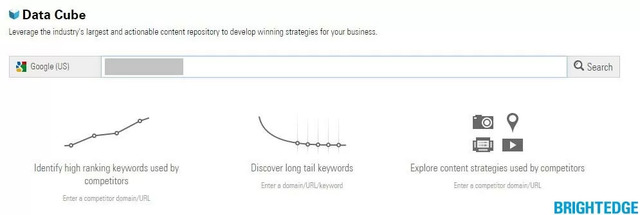
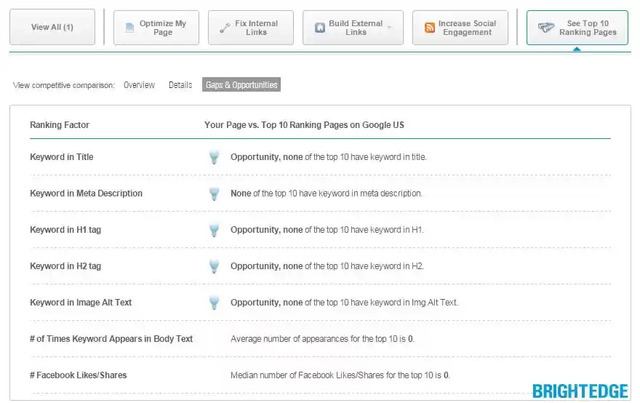
Today, we're excited to announce the release of Content Optimizer 3.0 which integrates with Adobe Experience Manager. As clear leaders in the market BrightEdge has designed this product specifically with our customer feedback in mind to address the challenges they face on the increasingly competitive content battlefield. Content Optimizer 3.0 provides an in-depth snapshot of your competitors' content along with actionable insights into how you can adjust your own content accordingly to gain a competitive edge.  see Content Optimizer 3.0 - brightedge Intrigued? Schedule your demo today. With 27 million pieces of digital content being shared every single day, we believe that understanding your competition is critical. The bottom line is that if you don’t have a competitive view, your content will not thrive in the long run.

With this new technology you no longer have to rely on trial and error to see what works; Content Optimizer 3.0 gives you an unrivaled understanding of the competitive landscape at every step of the process. Last year over 50 household name brands upgraded to the BrightEdge platform as more and more marketers share in the BrightEdge Content Performance Marketing vision. Available today, Content Optimizer 3.0 harnesses Data Cube intelligence to enable marketers to better understand how their content performs against competitors.

Content Optimizer 3.0 is powerful enough to be a standalone solution in its own right. With competitive analysis alongside actionable recommendations, Content Optimizer 3.0 helps marketers to produce quality content that is targeted for the user, optimized at the time of creation and measured at scale. Key features of Content Optimizer 3.0 include:

  • Competitor Analysis: Marketers have access to a detailed analysis of competitors’ digital content. It’s presented in a beautifully designed interface that offers immediate insights to quickly take action. Content Optimizer is the only content marketing technology that looks at competing content, breaks it down in detail, and provides recommendations so marketers can create content that wins from day one.
  • Consumer Demand Targeting: The easy-to-navigate dashboard makes Content Optimizer 3.0 more configurable to the unique needs of every marketer, regardless of industry, geography or scale. Content Optimizer 3.0 guides content authors to better understand consumer demand around specific keywords and topics, so they can take action and boost the performance of their own content.
  • Content Optimization Progress Bar: The new progress bar feature offers marketers a detailed look at the momentum of their content optimization process, while also providing real-time best practices that allow marketers to optimize all content at point of creation.
  • Tailored Content Solutions:Content Optimizer 3.0 operates within the constraints of mobile and stubborn website templates to help content authors generate tailored content solutions to maximize the performance of their content within the boundaries in which they work. 

Join BrightEdge at the Adobe Summit on March 9th-13th The Adobe Summit in Salt Lake City is the place to be from March 9-13 to learn how other marketers are succeeding and how they are using Adobe Marketing Cloud. BrightEdge is once again a major sponsor, and we are looking forward to seeing current and future clients there. We hope you are able to join BrightEdge at Adobe Summit this year. If you do come, please stop by and say hello or contact us to arrange an exclusive demo of our new technology for content marketers.

,