Groupon Finds Up to 60% of Direct Traffic Actually Search

Gene McKenna, Director of Search, Groupon does groundbreaking study by deindexing site temporarily

51%
of visitors come from search
75%
of IE traffic misreported

THE PROBLEM

Understanding what traffic came from what channel is easier in digital marketing than it ever was in offline marketing. Digital marketers make rational decisions on the success and failure of campaigns and what to do with the budget based on reliable information from their web analytics tools. But what if the reporting in two of the largest online channels is less reliable than everyone thought? What if 60% of direct traffic which is usually attributed to PR, social, offline, and brand, is actually traffic from search engines with the domain referrer stripped off? That would mean that search’s contribution would be undercounted.

THE SOLUTION

Gene McKenna, director of search at Groupon, set out to answer this question and was willing to take drastic action. His hypothesis was this: If referrers are 100% accurate for direct traffic, then turning off the search traffic by setting a de-indexing command for the whole site would have no impact on direct traffic.

THE RESULTSgene mckenna director search groupon

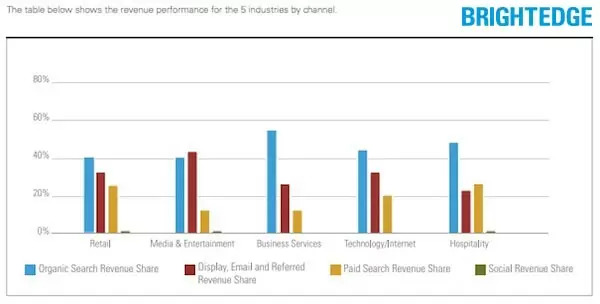
What McKenna found was that direct traffic on interior pages dipped in a highly correlated way with the search engine traffic dip. If direct and search traffic were equal, for every 10 search visitors that were lost after de-indexing, 6 direct visitors were lost also. He found that the effect was more pronounced on interior pages with longer URLs and up to 75% of some Internet Explorer browser search traffic was reported as direct. That means that surveys like BrightEdge’s Channel Performance white paper, which found 51% of visitors coming from search (excluding direct as a channel), is still understating the proportion that comes from search engines. Both research studies confirm the significant opportunity most companies have to increase the business value they derive from search traffic. The decreased reliability of query and referrer information makes having an SEO platform more important than ever.

The referrer is a weak link in SEO reporting.

Request a demo of the BrightEdge platform today!

Epicor Overcomes Penguin Penalty

Dawn Olsen uses BrightEdge to lead campaign to lift Google manual penalty

23%
jump in organic traffic
3x
increase in competitive share

Epicor Overcomes Penguin Penalty

Dawn Olsen uses BrightEdge to lead campaign to lift Google manual penalty

THE PROBLEM

In June of 2013 Epicor Software found that their site had been deindexed and that their organic traffic from Google had dropped over 90%. Most sites get over 53% of their traffic from organic search and over 80% of that traffic is from Google. A significant source of Epicor’s traffic and revenue had been impacted.

THE SOLUTION

Dawna Olsen, Sr. Director of Corporate Marketing at Epicor started researching the problem. First she looked at her BrightEdge dashboards and pinpointed the day the traffic dropped. After considering possibilities, including a black hat link attack on their China site, Dawna concluded that she had been hit and hit hard with a Google Penguin penalty. She also accessed the backlink database and started reviewing her external link quantity and quality and saw that she had a very high number of links from certain affiliate partners. She examined the links and could see that the quantity per partner was too high and that her affiliates looked like the kind of link farms that Google was punishing with Penguin. She also found problematic footer links that needed to be no-followed. She disavowed unwanted links. She also contacted her affiliate partners and instructed them to take down most of the links and increase the diversity of anchor text they were using. They did so, and one month later she submitted a reconsideration appeal to Google and her penalty was lifted.

THE RESULTS

dawna olsen corporate marketing epicor

BrightEdge reports showed rapid organic traffic improvements. Organic traffic jumped 23% and Epicor commanded a 3X increase in share of voice with its competitors. Critical keywords moved from not ranked to Position #8. Within specific key geographies, top keywords went from Rank #43 to Position #3. In this case, having the right tools translated into recovering substantial lost traffic and revenue.

Get the right tools in place... it makes a difference and helps you make informed decisions

Request a demo of the BrightEdge platform today!

3M Captures $300,000 in Organic Value YOY

Craig Berdie, Global Search Marketing Manager, 3M, shows huge potential of SEO across product lines

20%
growth in organic traffic

THE PROBLEM

In 2010, 3M needed to figure out how to effectively manage SEO across 5 major businesses each with multiple divisions (60 in all) in 100 countries and totaling 6000 websites. 45% of 3M’s traffic came from organic sources, so this was a huge undertaking which was not as simple as replicating what worked in the United States across all of the other countries.

THE SOLUTION

Craig Berdie, Global Search Marketing Manager at 3M, was up to the challenge of solving this problem. He knew there were a few things that were already going to be an uphill battle: inconsistency between countries, existing websites were created without SEO consideration, the product set evolves at 35% per year, and a lot of content was locked up in PDFs. To figure out how markets varied, Craig did a lot of landing page testing. He figured out that by testing, he could let the numbers speak and each market would find itself winning pages. To address website changes, he put together an "SEO council" of 5 individuals to start which included IT, data management, UI/UX, and content writers. Using BrightEdge, Craig was able to discover high value keywords to track, develop landing pages around those keywords, and measure the rise in rank. Craig and his team were able to stitch together organic traffic data from analytics with conversion data which ultimately allowed them to calculate how much each organic click was worth.

THE RESULTS

Craig Berdie Global Search Marketing Manager 3M

BrightEdge reports showed that 3M experienced large gains in organic traffic for several years. Specifically, they saw 20% growth in organic traffic YoY for 3 consecutive years. That traffic equates to an incremental $25,000 a month in business value for a single business unit on a single topic. That proof, though small in absolute terms, will be significant when rolled out across more of the thousands of products at 3M.

The opportunity to license BrightEdge has been huge for us, very helpful

Request a demo of the BrightEdge platform today!

How Time Increased Key Search Traffic Over 45%

Page 1 ranking keyword count improved from 620 to 75, leading to a 34% increase in traffic and revenue

3-4
months for SEO success

THE PROBLEM

Time Inc. has 95 iconic media brands that serve 81 million online visitors every month who generate ad inventory they sell to advertisers. Time’s content development effort is vast, varied and complex, so coordinating SEO efforts is extremely difficult. Time’s SEOs face duplicate content, lack of thematic grouping by keyword, non-optimal internal links, and significant crawl and redirect errors. The holidays present a significant opportunity for a media company, but also create narrow time bands in which to enhance and optimize the site for SEO. Travel and Leisure and 4th of July, Halloween, Thanksgiving, and Christmas topics represent 9.7 million+ search query volume.

THE SOLUTION

Binti Pawa, Head of SEO for Time Inc.'s Affluent Media Group, works on such brands as Travel + Leisure and Food & Wine, where she is responsible for leading, developing, and integrating SEO and content strategies. Pawa approached the holiday opportunity by doing a site audit, creating a keyword content model, and using the keyword and content features of the BrightEdge platform. In addition, Pawa resolved over 500 crawl errors. She also executed the kind of fundamental internal link and anchor text recommendations provided by the On-Page Recommendations of the platform. Sitemaps were improved, rich snippets were added, and duplicate landing pages were removed. After doing all the technical work, she found her best keyword opportunities and built content around it. And the results were stunning.

THE RESULTS

In the 4th of July season Time improved its Page 1 Food & Wine 4th of July rankings from 2 keywords to 7, which led to a 30% gain in organic traffic vs. 1 year earlier. Overall Food & Wine Page 1 ranking keyword count improved from 620 to 757, which produced a 34% increase in traffic and ad inventory. Travel and Leisure keywords ranking and traffic increased 45%. Pawa found that tracking, tools, timing, and planning are critical to capture the significant seasonal search volume and that 3-4 months is the appropriate lead time required for SEO success.

Keywords are still important. You have to know what keywords you want to go after. We did so much research and took so many approaches and BrightEdge has really helped us do that and monitor our success”

Request a demo of the BrightEdge platform today!

7 Steps to Effective Online Webinars

enewton@brightedge.com
M Posted 11 years 2 months ago
t 9 min read

Webinars may seem like an easy thing to do: Turn on your computer, upload a slide deck and share your screen, right? Not exactly. With all the details that go into creating a successful online webinar, there is quite a bit to consider from the technology to how you will track and nurture the leads.

According to the CMI marketers consistently rate webinars among the top 12 most frequently used tactics, and among the top five most effective.

Set your company up for success from the beginning by following these 7 webinar best practices:

  1. Find technology that works for you
  2. Plan and create a timeline for the webinar
  3. Decide who will be involved
  4. Make your presentation professional and engaging
  5. Generate registrations
  6. Deliver your online webinar
  7. Track results and nurture leads

Find technology that works for you

While most are familiar with platforms like Cisco’s WebEx, there are several other providers out there today that come in at varying price points and offer different features. Check out this comparison tool by OnStreamMeetings.com, and this list on WebEx alternatives for more information on webinar providers.

Decide if you will use the built-in computer mic, an extended USB mic or the phone audio mic. Test the sound and screen visual in practice sessions with a colleague watching from another room. Determine the best distance between your mouth and mic and the best speaking volume.

If you want to record the webinar, make sure the feature exists in the platform you choose. Ask a colleague to remind you to hit the record button as your mind is focused on speaking right when you start.

Plan and create a timeline for your online webinar

Decide the purpose of the webinar, for example, lead generation, product demo, or training and education. There are a lot of moving parts in a webinar, from getting the actual presentation together to marketing it. Sketch out a timeline that puts dates and assigns people to your tasks.

Consider tasks like setting a registration goal, creating a landing page for people to sign up in exchange for an email, sending out emails and defining how often, and promoting via social, press releases, paid search, your newsletter and your blog.

Decide who will be involved

Pick a speaker who knows the subject matter well, is relaxed when speaking to an audience and who is also engaging. Not every attendee stays to the end, so finding a speaker that fits the bill here may help keep everyone longer.

You may also consider co-presenters, either from the same or different companies, to break up the monotony of one speaker.

Also, a webinar moderator and/or producer as a third (or fourth) person on the event can keep the audience and technology portions running smoothly.

Make your presentation professional and engaging

Decide on a length of your webinar, and make the visual component count. Some believe in the “10 slides in 20 minutes” rule, as endorsed by Guy Kawasaki.

Make sure your slide deck looks professional (as in free from spelling errors and laid out well), and engages people with imagery versus just a bunch of bullets or text. No one wants to sit through a speaker just reading text on the slide.

Create a theme and a story, and guide attendees through it with your words and the imagery on the screen. here is how to create effective webinars for your viewers - brightedge

Generate registrations

At BrightEdge we have been doing 30-minute marketing webinars, which makes it easier for people to fit into their schedules. We do 1-hour webinars for product release updates. Building registrants for the webinar is the most critical step to building value.

Plan for at least two waves of outbound email and expect less than 50 per 10,000 to sign up. Webinars are a great way to change up the conversation sales people have with prospects.

Publish your webinar schedule to your sales team and let them invite their prospects. Expect about 50% of your registrants to attend the webinar. Integrate your webinar platform registration into your CRM to improve tracking and appropriate follow-up.

Deliver your webinar

Plan to deliver your webinar and leave 5-10 minutes for questions. When you deliver your webinar, you should ideally have 2 assistants: one for audio visual check and one for handling the questions. Most platforms have a question ask feature, but it can be stressful for the presenter to both process and answer the questions.

Try having a different person read the questions and ask the questions out loud into the mic. This creates a radio show-style format that can be entertaining and work well.

Track results and nurture leads

Make sure that tracking is set up (at the very least using Google’s URL builder) so you can see which promotional events drove the most conversions through this stage of the buyer's journey. That also means setting up goals to track (and if you’re using Google Analytics, you can learn about setting up goals here). You’ll also want a plan for how to nurture your leads after the webinar.

Now that you have their emails, you’ll want to continue to be helpful to them by providing useful information. This usually starts with a thank-you email, giving them a link to download the full webinar. It continues with an email “drip” campaign that you use to move them to another conversion action over time, like perhaps a live demo of your product.

Below are a few examples of marketing webinars that we do at BrightEdge that bring solid results:

  • SEO and Page Reporting
  • SEO and Site Migration
  • SEO and HTTPs
  • SEO and Global Success
  • SEO and Local Success
  • SEO Backlink Audit
  • SEO and Using Schema

A company’s webinars inevitably get better with time and practice, so don’t let the fear of not having a perfect webinar right out of the gate stop you from using this channel of communication to inform and educate to your target audience.

20%
increase in overall traffic

THE PROBLEM

Seagate is the premier hard drive and storage technology leader in the world and where Ali MacDonald is in charge of content marketing. As content marketing becomes more important for generating organic traffic, it becomes more critical to have a well-defined process for identifying themes, producing content, repurposing content, mapping to the customer journey, and, most importantly, measuring the overall gains from multiple channels.

THE SOLUTION

“SEO is important for Seagate because one of the ways that we explain to people what Seagate does is through creating great content that they’re looking for. Through SEO we help our customers find that content by understanding what their behavior is, how they search for things, and making sure that it’s easy to find on the website. One of the great things about BrightEdge is the fact that they integrate our existing analytics, so we can actually tie the dashboards that we have in BrightEdge back to the real data that we’re pulling out for other sources and other verticals in our markets.”

THE RESULTS

ali macdonald content marketing seagate“We’re focused on making sure that we’re providing the right content and information to the customer and through our partners at every level of our journey - from awareness to loyalty. We’ve seen a 20% increase in our overall traffic growth, and we’re seeing consistently steady increase in new visits to the site.”

We actually switched from a competitor of BrightEdge because of their advanced capability and technologies.

Understanding eCommerce SEO

enewton@brightedge.com
M Posted 11 years 3 months ago
t 9 min read

SEO is critical for eCommerce: organic search is the largest channel for traffic and revenue. In the spirit of the holiday season, we’ve hand-picked five great eCommerce SEO tips and wrapped them up in a bow, so you can ring in the new year with more search visibility. Optimal eCommerce SEO will translate into more traffic and revenue and a good bounce rate.

1. Discover and rank for your target keywords

If you’re not ranking for your target market’s keywords, you’re most likely missing sales from lost Web traffic. Check out this article on the 7 Things You Must Do to Rank for Your Keywords for step-by-step guides on discovering and ranking for your best target keywords.understanding how to do ecommerce seo - brightedge

2. Don’t forget on-page optimization

There are several elements to consider for on-page optimization from keywords to social media. Let’s take a closer look at each:

Keyword Optimization

We’ve identified several crucial elements of your site’s pages that should be optimized for keywords. (For a more detailed explanation of the terms discussed below, refer to part one of our basic SEO concepts).

  • Meta Titles and Descriptions: Also known as Meta data, inform the search engines what Web pages are about overall. The Meta title is the clickable listing in the search engine results pages (SERPs), and the Meta description is the text that follows. Clearly, both the Meta title and description should be unique to each page and optimized with the page’s primary keywords to capture search share. The text should also be compelling and well written.
  • Header tags: These function on a page of content to break up important sections of the content in a user-friendly and search-friendly way. When used well, headers help format the content in a way the search engines can crawl and understand with ease. As a best practice, include at least one of the page’s primary keywords in the H1 and in other header tags throughout the page to reinforce the topic to the search engines.
  • Paragraph copy: Copy is the actual on-page text. Even though your site is geared to eCommerce, this doesn’t mean you should exclude content where it is useful and appropriate for the shopper. Search engines read and index sites via text, so feeding them the content they crave is strongly recommended.

Optimize site structure

Are the sections of your site appropriately themed? Meaning, based on your keyword research, is your site’s content organized well for both users to navigate across and search engines to deem relevant for a particular subject matter?

Creating a well-structured website defined by content and organized around keyword research helps search engines in indexing your site’s content. The easier it is for search engines to understand that your site is about a particular subject matter, the more relevant you can become for a query.

A well organized, optimized website also helps visitors navigate it more easily to find the products they’re seeking.

learn internal backlinks for ecommerce seo - brightedgeInternal linking

An integral part of an optimized site structure is internal linking. Search engine robots crawl the Web via links. Providing your website with a solid framework of internal links that logically lead from one page to another helps search engines in understanding the overall theme. Internal links also assist visitors with navigating your site – where do you want them to go next?

Part of an optimized internal linking strategy is using keywords where appropriate in the anchor text – the clickable words used in a link. You can read more on how to best approach internal linking and anchor text in Part 1 of basic SEO concepts (linked above).

Usability

Aligned with both optimized site structure and internal linking is usability. Essentially, usability refers to the ease with which visitors to your site can navigate it to find the information they’re seeking.

Besides making your site easy to navigate, you can increase conversions with a clear call to action (CTA) that facilitates purchases: don’t hide your sales pages or make it a complicated process for people to buy.

A second critical consideration when optimizing for usability is the growing trend toward mobile, as discussed by BrightEdge CEO Jim Yu at Search Engine Watch. Configuring your website for a mobile-friendly user experience will assist consumers in their shopping and purchase decisions.

Social media integration

There is no doubt that social media influences the search results. Optimizing your site’s content by integrating it with social media campaigns is a smart strategy that can help with your site’s rankings and thereby, eCommerce sales.

When considering your social media integration strategy it’s important to keep in mind the appropriate target audience. One size does not fit all: for some eCommerce businesses, especially those heavy with images, Pinterest may be the best social platform. For others, it may well be Google+ or LinkedIn.

3. Avoid duplicate content and use compelling product descriptions

Product descriptions are very important for eCommerce SEO and should be informed and optimized by your keyword research. Replicating the manufacturers’ descriptions is a common mistake among eCommerce businesses, resulting in duplicate content (which may invite a Google penalty).

A second common, inadvertent source of duplicate content is from repeating Meta titles and descriptions for different Web pages. As emphasized above, it is imperative to create a Meta title and description that is unique to each page of your site.

Generic product descriptions also do little for conversions. Adding details – “warm,” “soft,” “cozy,” “comfortable” – that appeal to your readers’ senses can boost sales. In short, detailed and descriptive product descriptions start with unique Meta information and end with compelling marketing and advertising copy.

product images for ecommerce seo - brightedge4. Optimize product images

When using product images, you’ll want to include image file names and optimized alt text (corresponding descriptions) to inform the search engines of what the image depicts. As discussed in part 1 of our basic SEO concepts, image file names are simple titles that accurately summarize the image’s content, while alt text describes the image in more detail.

Including image file names and alt text helps search engines understand them, as it's currently unclear whether or not Google bot has the ability to read imagery. Image file names also help to explain images to visitors with visual impairments who use screen-reading functionality. Image optimization is a very important part of eCommerce SEO. You'll also want to consider image weight and loading speed. If an image takes too long to load because it's heavy, your page load time will decrease and possibly cause Google to penalize your site. Most SEOs avoid rasterized images.

5. Boost eCommerce SEO - enable reviews and ratings for your products

Finally, enabling reviews and ratings for your products can give your eCommerce business the competitive edge.

A great way to accomplish this is to employ schema on your site’s content – and especially, its key product pages. While it sounds highly technical, Schema is really just a system of code that your Web development team can readily implement that helps search engines better interpret your site’s content.

With schema, search engines can display your Web pages in the search results with richer snippets that even include thumbnail images, reviews and ratings. These rich results are far more compelling – and more likely to be selected by shoppers – than generic SERP listings, giving you the competitive edge. Schema should be one of the first things to consider when doing eCommerce SEO.

So don’t waste another moment! You can readily implement these five tips so this is the year eCommerce SEO increases your organic search traffic and revenue.

5 Ways to Come up with Interesting Blog Ideas

ssharma@brightedge.com
M Posted 11 years 3 months ago
t 9 min read

Why blog? You’ve heard it time and again: producing fresh, quality content that engages your readers is key to building your brand online and driving Web traffic to your site. Doing so on a consistent basis is a challenge for most, especially when it comes to keeping your company blog updated with the most relevant, compelling topics. So how do you come up with interesting blog ideas? How to choose a blog topic? Aside from using marketing analytics software that can give you insights around topics driving demand, we wanted to explore some non-techy options that involve social listening as well as industry forums and news. Read on.

  1. Social Listening

Social listening means just that: keeping an “ear” open for what people are currently discussing on social media channels. You’ll want to focus on your target market’s conversations. This strategy is predicated on knowing where in the social media sphere your likely prospects and customers are. Social demographics and well-honed customer personae can help you cut through the “noise” and direct your social media monitoring efforts. Here are a few of the social platforms to consider:

  • LinkedIn

If your company is primarily B2B (business to business), you’ll likely want to lend an ear to the conversations occurring within LinkedIn groups relevant to your vertical – as well as your own LinkedIn page. (If you haven’t developed your own as a brand, it’s highly recommended you do so). Pay attention to the topics that drive the most heated or otherwise lively conversations. By identifying these, and tracking the original links to the blog posts and industry articles spurring these conversations, you’ll have the material you need to create a blog post that addresses the concerns of your niche market. Jim Yu explains more on ‘Optimizing LinkedIn like A Pro in this article here on Marketing Land

  • Google Plus

As with LinkedIn, if you haven’t yet developed a Google+ page, now is the time to do so. Besides its ties to Google search results, creating a robust G+ community can also provide you with material ripe for blog posts, much like LinkedIn. To fully leverage this platform, you’ll want to share not only your own content, but also other updates that are useful to your target market. This makes your G+ page less about you and more about your readers, which will pay dividends in the long run in terms of establishing authority and credibility, as well as driving traffic to your site. In turn, you’ll have that much more raw material in the way of visitor comments and links from which to create blog posts that will capture your target market’s interest.

  • Facebook

Facebook’s organic reach may be next to nothing, but if you’re primarily B2C (business to customer), you should establish and nurture a Facebook business page. As with Google+, posting useful links not only to your own blog, but also to other (non-competitive) sites can spur discussions that inform your blogging strategy; you can answer questions, provide helpful follow-ups, and elaborate on topics that are driving discussions!

  • Twitter

Twitter Trends is a list on the social platform provides that captures breaking news and real-time trending topics. As its 2010 official blog post explains, Twitter’s Trends are generated by an algorithm “that attempts to identify topics that are being talked about more right now than they were previously.” Obviously, not all of Twitter’s trending topics will prove relevant to your target market. If you’re in the search marketing industry, #search or #SEO discussions trending on Twitter may well be your target niche. Keeping a finger on the pulse of these developments is a great way to keep a step ahead with a blog post that captures the latest and greatest topics being discussed on this platform. interesting blog ideas you should look into for seo and social - brightedge Tiny Prints saw a 47% increase in search rankings by using Twitter and BrightEdge. Read the full case on the Twitter website.

  • SlideShare

Another social media platform that you may want to include in your social monitoring efforts is SlideShare. If you haven’t yet leveraged SlideShare for your presentations, consider doing so. This simple PPT presentation platform drives industry awareness and interest; for those presentation uploads that prove more popular, consider re-purposing the content into a blog post. http://www.slideshare.net/brightedge

  1. Industry Forums and News

Is your brand represented in a professional organization or industry association? Does it publish a regular newsletter or authoritative articles? The topics covered may well be ripe for a blog post, or a series of articles, depending on how in-depth the original content is. Look for an angle on a timely issue or news item introduced by the newsletter or forum, and elaborate on the subject that others in your profession or vertical would likely appreciate (while avoiding plagiarism, of course!).

  1. Blog Post Comments & Questions: Yours and Your Competitors’

While it may seem painfully obvious, your own blog can provide interesting post ideas via reader comments and questions. Pay attention to those posts that foster considerable reader interest as gauged by social sharing, comments, and questions, then create follow-up posts that elaborate on the initial post and/or address specific comments or questions.

  1. Help Section

Contact your Customer Service department and generate a ranked list of what topics and questions come up the most on the phone and in email or the online forums. The Customer Service knowledge base used to answer the questions will give you significant content to use in the post itself. Writing blog posts on customer questions has the additional benefit of providing more exposure of the answer and how to self-solve, which will also help lower CS calls and costs.

  1. BrightEdge Platforminteresting blog topics you should consider - brightedge

A second source of compelling post ideas can be gleaned from your competitors’ blogs. See what topics are driving interest in the way of social sharing and discussions, and beat them to the punch with your own blog post that answers their readers’ questions or concerns. BrightEdge customers have an incredibly powerful resource in the Data Cube.

The Data Cube can provide a comprehensive list of keyword topics that rank on page one, two, or three and which pages on your competitor site they point to. This query for recipe.com returns over 300 blog post topics that rank on page one, two, or three and should help seeds dozens of blog topics for your blog calendar. These five ways to come up with interesting blog ideas only scratch the surface.

Do you have any suggestions? Please share them with us in the comments below.

Leveraging SEO and PPC Synergy for Search Results

enewton@brightedge.com
M Posted 11 years 3 months ago
t 9 min read

There was much discussion about “SEO vs. PPC” this past year, with many search marketing thought leaders arriving at the same conclusion: they need to learn to get along as one not only complements the other, but improves its performance. As Andy Betts wrote here at the BrightEdge blog, when your organization’s paid and organic search teams are competing rather than collaborating, it makes for a no-win overall in terms of search performance and ROI with redundant - and sometimes counterproductive - efforts.

Heading into the New Year, a more profitable and enlightened enterprise search strategy should consider how to corral paid (PPC) and organic (SEO) team efforts for a greater share in the search engine result pages (SERPs) and smarter resource allocation. So here we thought we’d highlight what search marketers had to say about PPC and SEO in 2014.

Frenemies? How SEO and PPC complete each other

It’s seemingly unavoidable with enterprise-level search firms: one department competes with the other as it hopes to win a bigger slice of the annual budgetary pie in a zero-sum game mindset. Heading up your organization’s search marketing, you’re likely well aware that such divisiveness between your SEO and PPC teams doesn’t serve your bottom line well.

In her recent article for Search Engine Watch, Erin Everhart underscores the need for SEO and PPC “to stop being enemies” as both search strategies contribute to the same conversion funnel. She writes that organic search is a research-based “top-of-the-funnel marketing tactic,” while paid search is an action-based strategy that “targets consumers who are further down your marketing funnel and thus further along in the buying process.” Everhart emphasizes a point made by BrightEdge CEO Jim Yu in his column for Search Engine Land back in June, namely that SEO and PPC is not an “either/or” strategy. He writes:

Most marketers would agree that to be competitive, we do not operate in an either/or environment. It’s not a choice between either SEO or social, or SEO and PPC. It’s a requirement that we understand how these channels work together to impact one another and a website’s ability to stay afloat in the growing search results.

Discussing how SEO and PPC work together for site visits (“clicks”) and conversions, Jim refers to research from Google at Search Engine Land, which shows the synergy of the two search strategies. According to the search giant, even for brands that position first in organic SERP rankings, paid ads provide a hefty 50 percent in incremental clicks - meaning that half of the No. 1 site’s visits would not have occurred in the absence of PPC ads. The contribution of PPC to organic SERP incremental clicks increases even more for listings No. 2 and lower, as detailed by Google in its study (noted above).

On the flip side, SEO informs PPC with page-level metrics such as Web traffic, conversion rates and revenue. Crispin Sheridan also recently addressed how SEO helps PPC strategy in his article for ClickZ, writing, “the need for content creation in SEO provides PPC with more landing pages to satisfy the intent of the user. Learning what content is most effective through SEO can provide PPC with new avenues for growth.”

Sheridan also discusses how PPC can inform SEO via immediate results, noting that the “time advantage” of PPC allows for the testing of keywords and “phrase matches” that drive Web traffic, leading to the creation of content that bolsters SEO. He further notes, “having your company displayed in both paid and organic results can be an indicator of trust to a user.” Google Analytics (GA) provides a multi-channel funnel report that shows what channel contributed to your firm’s conversions, including SEO, PPC and social media. Tapping into Google AdWords data here at BrightEdge, we can further determine:

  • Which of your Web pages have a better Quality Score.
  • The keywords on which of your site pages have the best Quality Score.
  • How users “judge” your Web pages via metrics such as bounce and exit rates, as well as time on page.

We hope this post assists you going forward with a healthy, integrated picture of how SEO and PPC work together for search strategy!  

Cabela's Masters Content Performance Marketing and Organic Traffic

Jesse Farley leveraged BrightEdge for analytics and performance and elevated SEO as well as his function

THE PROBLEM

Cabela’s is a national physical and online retailer of hunting, fishing, and camping gear. Jesse Farley, Cabela's online marketing strategist, wants to develop and deploy content that guides customers through their journey to purchase and the user experience they sought. With a large catalog of products, Cabela’s needs to prioritize where to put the content marketing focus to maximize results.

THE SOLUTION

“At the end of the day it’s going to be sales, what drives the dollar. We leverage the BrightEdge platform to look at all of the steps to get to that sale from keyword placement to SERP results, to traffic, and then to sales.

The Data Cube has been phenomenal. It allows us to look at where are we in the mix, where we stack up against our competitors, and informs decisions on, frankly, getting ahead of them.

BrightEdge has been really good at providing us with the statistical data that allows us to drive the business forward. Some of our KPIs are our rankings, traffic and then, ultimately, sales.” See Jesse's Cabela's Testimonial video.

THE RESULTS

Jesse Farley, Online Marketing Strategist for Cabela's“Using BrightEdge allowed us to think outside of ourselves. We want to be able to create unique experiences for our customers that make them feel comfortable and focused in the content they’re consuming.

"BrightEdge enables us to show our executive leadership what we can do and put the metrics behind that that they didn’t necessarily think we would have. So, they hear content marketing and they don’t necessarily know how to monetize that and BrightEdge has allowed us to help get that into their minds. With the BrightEdge platform we’ve been able to communicate the effectiveness of content marketing from the C-Suite up to the board of directors," says Jesse Farley.

"The BrightEdge platform has allowed me to take basically one analyst and treat them as five. It condenses it all into one area to where we can ask the same questions and give the same answers from one platform.”

BrightEdge has given me the ability to elevate not only my program but my career. I’ve been able to really demonstrate to the enterprise how powerful content marketing can be.”

,