Discover SEO Help for Your Business

Nag
Nag
M Posted 13 years 9 months ago
t 9 min read

You probably read the news of our second BrightEdge SEO patent called "Collecting and Scoring Online References," which grants to BrightEdge the exclusive rights to the use of its proprietary "Reverse Index" of the web and novel ways to analyze organic search, social signals, and other data to optimize SEO strategies. Yes, that’s a mouthful and I’ll use the Amazing Race to explain, in plain English, yet another example of market-leading discover seo help for your business - brightedgeBrightEdge SEO innovation.

One of the World’s Most Grueling Races

In the show, The Amazing Race, two-person teams race around the world, each team trying to beat out the other teams in an effort to win the big prize—a million dollars. The race is separated into different legs and teams must use strategy, skill, and speed to reach each pit stop before the other teams in order to avoid being eliminated. The team that reaches the pit stop first is awarded for their efforts with a prize such as a trip to an exotic destination. However, while winning a single leg is a great boost to a team’s morale, the ultimate goal is to be the first to reach the final destination and win the money. This is not unlike the race your company undertakes when it comes to using SEO to win high ranking on search engines.

Know Your Competition

If you have ever watched The Amazing Race, you know that the race for a huge prize takes more than skill. A good team analyzes their competition - discovering what their weaknesses and their strengths are. Maybe one team is not physically strong or perhaps there is discontent occurring between the team members. Perhaps their age is a weakness or their lack of organization. Knowing this allows the teams to tailor their strategies to beat competition. A good team also analyzes their own skills so they know what’s working for them and what needs improvement.

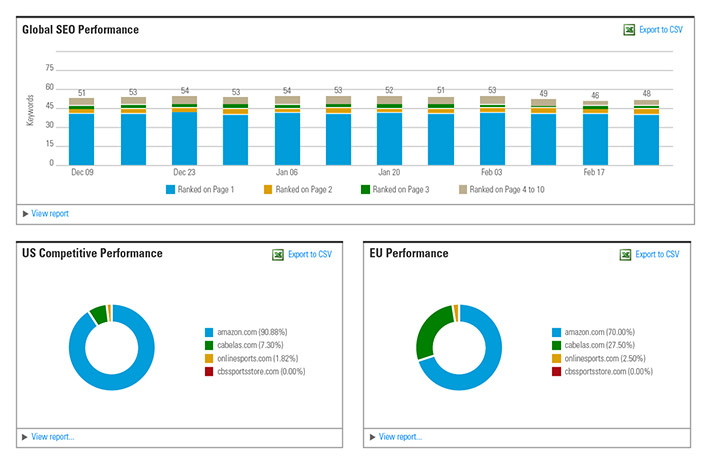
Like the Amazing Race, winning the SEO race requires that you understand your competitors and yourself to the last detail - our patented SEO X-Ray does just that. SEO X-ray presents you with the tools to build your SEO advantage so that you can beat your fellow competitors. You will have the power to track your competitors and use that information to devise a plan that will push you ahead of the pack. Understanding your strengths and having the power to analyze what your competitors are doing gives you a clear advantage in this intense competition.

SEO X-Ray Shines A Spotlight On Your Competition

Imagine having the ability to see everything that you want to know about your competitors when it comes to SEO marketing. Knowledge is power and with this kind of information you can redefine your company’s course on the SEO race. SEO X-ray is designed with the intent of showing you what you have never seen before—the strategies of your competitors. You can discover hidden gems of data and use these gems to take your competitors by surprise, turning the tables to emerge victoriously at the top where it really counts. Specifically, SEO X-Ray allows you to answer questions like: What are your competition’s top-ranked pages? What are the target keywords? Do you track these keywords? If not, does it make sense to optimize your pages for these keywords? What are your competitors’ backlink strategies?

Knowing your competition at this depth helps you make really informed decisions on how you can win the SEO race.

SEO X-Ray Helps You Reflect Upon Yourself, Deeply!

Not only will you see your competitors in a whole new way, but you will also be able to look at your own company with a pair of fresh eyes. SEO X-ray reveals things about your SEO performance that you were not aware of before, bringing your company’s strengths to focus.

What keywords are you ranking on that you are not aware of? What pages are ranking for these keywords? Answering these questions uncovers your strengths and helps you capitalize on what is working well for you.

Take Action

All of the information that SEO X-ray gives you will not be of any worth to you without action . This means that you need to implement a marketing plan with this information, using it to formulate your next steps. Use our powerful workflow engine to help:

  1. Receive recommendations regarding optimization of keywords
  2. Create tasks to implement recommendations
  3. Add due dates
  4. Assign owners
  5. Make your competitive strategies pay off fast!

Our Unique Patent

SEO X-ray is basically a technology that gathers keyword information from the world’s major search engines, providing you with an organic search footprint of your company and your competitors’. Similar to a search engine, it searches through terabytes of data to find keywords that rank high for you and your competition, and corresponding pages. With SEO X-ray you can redefine your amazing race and win the big prize of high search engine rank.

BrightEdge Customers - How I Grew Traffic 4x More

Kevin Hill
Kevin Hill
M Posted 13 years 10 months ago
t 9 min read

Welcome to my 2nd column here, and I want to share with you just how accessible SEO is today to business owners, beginners, and anyone! I read so many articles online about advanced SEO techniques, or articles that assume that the reader knows anything about SEO. I’d like to start off from the beginning with some good old fashioned SEO basics, and share with you some things I have been doing.  

You may or may not know, but Google has been making some pretty large waves recently in the SEO community with the Panda and Penguin updates. These updates are Google’s attempts to remove low quality content, bad links, and in general, manipulation of the Google formulas for how websites rank on the web. But we don’t need to worry about that now. What we are going to do is some good old fashioned SEO, that you should be able to measure results on within in 3-4 weeks, if not sooner.

Setup for the experiment

The 1st thing we need to do is to locate some keywords to work around. Open up your Google analytics account, and go to the Traffic Sources > Search Engine Optimization > Queries section. Set your date range for 2 months and you will see something like this:

Going beyond Google Analytics Standard Reporting for keyword ideas

Now we need to get some data, that while we can gather it via several reports in Google analytics. The best way to do that is to write a Google custom report. Don’t worry, I’ll give you a link so that you can quickly and easily import this into your own Google profile. That link is right here. Click the link, and accept the report, and you will now have a slick little Google Analytics report that will show you keywords and their landing pages. A great way to determine WHERE you want to do SEO work when you are working on a keyword group.


You now have a bunch of keywords ranked by the amount of traffic, and by the revenue generated – this should help you choose 3-5 keywords that you want to operate around. Go ahead and choose 5 of them, they should be somewhat similar, and in your mind, think about how you would talk about these 5 keywords or subjects in the same conversation. In other words, the 3 to 5 keywords that you chose should have a related product or theme to them. Look at the keywords and pick the one with the most visits which we will call the “primary keyword”. Now, you have chosen a good group of keywords for your 1st attempt at SEO!

Take note of the landing pages, in your report, eventually you will be writing content for each of the 3-5 pages that you may find for each of the keywords.  

Measuring SEO progress is key!

Before you start your work, it’s important to know where you currently are. The only value the work we’re about to perform is going to bring is in increased traffic, rank, and conversions. In my case, sales dollars. So it’s vitally critical that you understand if what you are doing actually is having an effect. Any kind of effect. As a user of BrightEdge, I can say that BrightEdge can make that task much easier.  

Using BrightEdge to measure the impact

Log in to your BrightEdge account, go to your settings, and create a Keyword Group via Setup > Keywords > View and Edit my Keyword Groups.  

Once there, create a group called “SEO Work – <KEYWORD NAME>”. Change keyword name to your primary keyword in your group of 3-5 keywords. Once that is done, enter into your group the 3-5 keywords that you just found, and don’t worry about entering a landing page. BrightEdge is so smart; it will find that for you in a few days! Amazing really, and just that simple!

Using other tools to measure results

You don't have to be a BrightEdge customer to do this data collection, it's just going to be much more time intensive, and involve regular tasks every day or week.  I don't know about you but I am often so busy with many projects that I simply don't have the time or forget to collect my data!  Anyway, what you will need to do if you are using Google Analytics (isn't everyone?), is login to your GA account, and export all data around your search engine optimization -> queries tab, and download it to an excel spreadsheet.  Then you'll need to do that at least once a week, for the next 4-5 weeks. (preferably, every week going forward from now on).  Once you have done that, you will then need to pull the data into a chart, and graph the positioning of all the keywords you are interested in individually.  And, keep in mind, this data is for average position, and is not actual positions over time.  Once that is done, you will then need to manually pull traffic information for each keyword over time, and map that as well.  The impressions that GA reports is the number of impressions you were exposed to, not the potential max impressions you could experience. (subtle but important difference!).  See, you can still do it, but in my world, with hundreds or thousands of keywords, the task quickly becomes impossible to do, which forces me to focus in on just a few keywords.

Capturing other keyword ideas

Now, we’re not done, you are going to need to find a tool called “Google Keyword Tool”, and type in your 3-5 keywords that you have just choosing, and click go:

Scroll around, and look at all the keywords, some of them are going to jump out at you as not even related to the group you are working on, and others might be potential relations to what you are working on. Go ahead and add those to your keyword group tracking. It’s always good to know what keywords you might draw in to your web of SEO going forward.  

Finally, you will want to navigate to the Content > Site Content > Landing pages page in Google Analytics, and filter on your primary keywords landing page, and add as a secondary dimension “Keyword” – you now have your final set of keywords to look at. Examine these, skip the insulting (not provided) keyword, and add the more relevant ones to your monitoring group. You will need to wait a few days to collect data - as GA is generally 2 days behind on rank tracking.  

Let’s write some great content!

Google is always saying it’s about the content. And Google’s Panda Update and Penguin update just reinforced this message in a very strong way. If you cut to the chase, both of these updates simply enforced for the 1st time in a really, serious meaningful way that stance from Google. Panda hit spammy links and content, and Penguin definitely hit the spammy content.  So, if you write great content that your users would want to spend time reading (time on page), you’ll be accomplishing one of the goals of Google, which should, help you get more traffic.  

What we want to do is write 3-5 articles of content around the keywords that we’re supporting. Each page is going to have 1 major keyword, and we’re going to put that keyword into the title, Meta description and in the text on the page itself. In every page, we’re going to use the other keywords we're focused on to link out to the other landing pages that we’ve found above to generate a cross linking “web” or “SEO Web” as I refer to it. And, if I have other areas on my website, that happen to be related to the keywords that I am working on, I may also “salt” those pages, with a link to my main page, supporting or voting for that page.  

Some link patterns I might use:

  • <A href=”landing page”>{keyword}</A>
  • Find more about {keyword} <A href=”landing page”>here</A>
  • It’s amazing what a <A href=”landing page”>full complement of {keyword}</A> can do for your day to day activities!
  • <b>{keyword}</b> is a basic item in any shooters bag.

  As you can see, it’s not always about a link with the keyword as anchor text, but it is about having that keyword somewhere around the link, and in such a way that any human (and Google bot) would easily infer that the following link is 100% about that keyword.

In building those links, you’ll end up with a link pattern that looks something like this:  

Using tools like BrightEdge can help!

Once BrightEdge pulls all of your keywords into its system, you can start looking at the recommendations tab, and look for the pages you have been working on. By looking at these recommendations, you can take action on what BrightEdge is recommending, to help improve positioning on each of those landing pages. If you do tie your keyword to a specific landing page, those recommendations for that page, will directly tie to your keyword, and will help you to easily improve your pages. And, BrightEdge has a great “assign task” system that will help you even more, by simply clicking and choosing who needs to act on the requested task.

It doesn’t get much simpler than that!  

My Results : 4x traffic increase with basic SEO tactics

So what happened to my website, when I started this activity? We’ll, let’s take a look at the metrics, and see what we find for my keyword of “Peltor Headsets” – which lands on my websites page of Peltor Headsets. (Yep – I just did a link build there too!)

Here is what Google Analytics says about my keyword now:


I have moved from position 9, to position 5 in about 5 weeks. (I started my concentrated work in April/May). As you can see, I saw a big drop in June, which I could have got discouraged about, but I didn’t and I kept building by SEO Web around that keyword. As I continued my work of developing content, my keyword positioning rose to new highs, which is what we would expect with all that hard work.  

But there is more that we need to check. We improved ranking, but did we improve traffic? Google analytics can tell us that.

In a little less than 5-6 weeks, we’ve taken our traffic and roughly increased it 4x. Add this up across many keywords, and you’ll get significant results in your SEO program, all through a little bit of hard work developing content, and through content that you can control directly!    

How to become an even more efficient SEO Machine!

So, you pulled the traffic and ranking information from Google Analytics or your favorite analytics package, right?  Two reports, easy peasy!  Well, have I got news for you. BrightEdge really makes it even easier through its integration with Google Analytics.

BrightEdge Customers - What Has Changed In Digital Marketing?

Kevin Hill
Kevin Hill
M Posted 13 years 10 months ago
t 9 min read

This is the first post in the BrightEdge Customer Column, a series of SEO best practices shared by thought-leaders among the BrightEdge customer community.

BrightEdge Customer Column - What Changed In Digital Marketing?A Quick Intro

I am Kevin Hill, VP of IT and eCommerce for Guardian Safety and Supply (www.envirosafetyproducts.com). I have been an online marketer for a while and have led online strategy for companies ranging from niche retailers to multi-billion dollar businesses. I have even built eCommerce software from scratch! With my diverse experience, I hope to share with you my experience with SEO, Brightedge, and perhaps we can learn a few things together!  

Ads - My Gateway Into Digital Marketing

When I first heard about digital marketing it was from a small company called www.overture.com – and they wanted me to PAY for keywords.  The cheek! The very idea!  On the other side was a bright cheerful woman, who was trying to convince me that I should PAY for traffic that I was already getting for free!  She mentioned that I could pay about 5 cents for a keyword like “Power Tools” and my ad, carefully crafted by their team, would show up in front of many people – and I’d pay for it if they clicked on it.

My suspicious mind instantly thought of schemes and plots to spin these clicks out of control, and pad the pockets of this new company.  But – marketing is always a risk game, and if I could limit my potential “loss”, I perhaps could learn something.  So I handed over my credit card, authorized a $500 charge, and worked with her to put together some ads, decide on where those ads should land, and craft a call to action in the ads, that would convince customers to click on the ads.  Even then, the call to action was “FREE SHIPPING!”  

SEO Was A Lot Simpler Back In The Day

That was my first jump into real, paid digital marketing.  And it’s paid off ever since.  And, during that process, another type of Search engine marketing was already well under way.  How to give the search engines what they wanted to rank you highly for keywords that would drive traffic to your website. Search Engine Optimization had been born – and Title Tags, and Meta Descriptions were all the rage.  Back then, things were pretty simple – no Panda’s, no Florida and the many others that have come since.  Link building was out there, but was not really understood except by the cutting edge SEO’s – and often times, an onsite link building strategy was all that was needed in the wild west of the internet in those days.  

The Tools Of The Trade Are More Sophisticated Now

The other things that have changed over the years, is the plethora of tools that are now available to help aid in SEO.  In 2001, 2002 – there were no Screaming Frogs, or Brightedge – you had to build that yourself (and I did!) and collect data from multiple sources, and often patchy data at that!  Now, we have great tools out there that can quickly analyze a page for the basic, and give you a red, green or yellow warning flag, and show you exactly what does not fit the rules as we assume them to be.

What are my favorite tools today?What Changed In Digital Marketing - SEO Tools

  1. Google Analytics
  2. Google Adwords Keyword Estimate Tool
  3. Google Ad Planner
  4. Brightedge
  5. Screaming Frog
  6. Firebug
  7. SEO Doctor
  8. Microsoft Excel
  9. MySQL
  10. Xampp/PHP

My Next Post : How I Achieved A Jump In Daily Impressions

What I’d like to accomplish in the following weeks and months of articles with BrightEdge, is to setup experiments that we can all work on together, using the tools above, and perhaps adding more to our understanding of SEO each day. And, I hope, you’ll share in the discussion by posting comments, and emailing me to share your findings and questions.  You can reach me at loneregister01@gmail.com and @CarKevin.  

And here is a little teaser for you.  In early June – I started an experiment in old school SEO that you can do as well.  But, I’ll leave the graph below to pique your interest in how I achieved a jump in daily impressions on Google during these tumultuous times.  

Take our digital marketing quiz to test your knowledge.  

SEO Panel With Facebook, Gap & Microsoft at Share 11

Nag
Nag
M Posted 13 years 10 months ago
t 9 min read

Continuing the recap of our hit industry event BrightEdge Share 11, we'd like to share a fun and informative discussion on the link between search and social. The discussion features some of the most accomplished search marketers:

  1. Mark Fiske, Director of Digital Marketing at The Gap
  2. Derrick Wheeler, Senior SEO Architect at Microsoft
  3. Brian Piepgrass, Internet Marketing Manager at Facebook
  4. Elisabeth Osmeloski from Search Engine Land (moderator)

The panel discussion is a must-see because the diverse background of the panelists brings up different perspectives on making social work in SEO. The discussion deals with issues such as:

  1. The impact of social on  user behavior and search across industries such as retail and B2B
  2. Metrics and tools to capture data on social signals
  3. Understanding attribution where multiple channels like search and social interact
  4. Role of testing in prioritizing social efforts and identifying social channels of opportunity
  5. Actionable tips on jump starting social programs to improve search performance with social


BrightEdge Share 11 Redux - The Keynote

Nag
Nag
M Posted 13 years 11 months ago
t 9 min read

Starting this week, we will take an occasional walk down memory lane to re-visit our immensely successful industry event BrightEdge Share 11. The event featured amazing thought-leadership from the likes of Facebook, Microsoft, Adobe and Gap. Much of the content dealt with the fast-changing nature of digital marketing which should strike a chord with marketers trying to make sense of the changes in user behavior and the resulting response by companies like Google, Facebook and Bing.  Every other week, I'll share a couple of sessions from the heavy-weights at Share 11 including:  

BrightEdge Share 11 Featured Marketing Pioneers  

Jim Yu's keynote on the future of digital marketing

The keynote by our CEO Jim Yu discusses the trends in digital marketing that call for an integrated approach to managing sites, search and social media. Jim talks about the tectonic shifts in search, the phenomenal rise of social signals, and how these present opportunities for marketers. Personally, I find the keynote quite prophetic given the recent spate of search engine algorithm changes like Google's Search, Plus Your World and introduction of Google+ Local. Hope you find this keynote useful. If you do, please share using the buttons below!  

BrightEdge @ 2012 SMX Advanced, Seattle : In Pictures

Nag
Nag
M Posted 13 years 11 months ago
t 9 min read

Here is an update about our participation as a Golf Sponsor at SMX Advanced in Seattle on June 5 and 6, 2012. As promised in the title, this post is in pictures and words are used only sparingly to describe the said pictures!  

Pre-event networking event Meet & Greet sponsored by BrightEdge

Clearly, there was a lot of networking

'Twas a fun evening hanging out with SEO leaders

BrightEdge-sponsored SMX Advanced Meet-and-Greet   

Never was a box for storing business cards so classy!

BrightEdge @ SMX Advanced

A well-deserved ocean-side dinner at sunset

brightedge dinner after smx  

Great Activity At BrightEdge Booth

We promised lots of demos and we kept our word

brightedge booth at smx

Our booth was quite popular, evidently!

brightedge booth at smx

Yes, we DID say 'optimize your laptop'!

brightedge booth at smx advanced

These innocently looking chargers got a lot of attention....

brightedge booth giveaway

   ....and strong endorsements!


A proud Cliff Karklin of Fathom celebrates his victory in the Great MacBook Air give-away

brightedge speakers  

Customer Dinner With Who's Who Of SEO

Dinner with 100+ SEO leaders in our customer community

BrightEdge, a Gold Sponsor at SMX Advanced in Seattle: June 5-6, 2012

Nag
Nag
M Posted 13 years 11 months ago
t 9 min read

We are at SMX Advanced this week on June 5 and 6, 2012. We are excited to rub shoulders with some of the leading minds in search marketing and technology. We are a Gold Sponsor and are proud to be associated with one of the most stellar events in the search space. As always, SMX features a star-studded lineup of search marketing visionaries including Matt Cutts, Head of Webspam at Google and Derrick Connell, Corporate Vice President of Bing’s Search Program Management team. See the complete agenda here – agenda for SMX Advanced at Seattle on June 5-6. Don’t miss this event! 

Come visit us at Booth 18 – get to know us better!

While you are at SMX, we welcome you to visit us at Booth 18. Whether you are a BrightEdge customer or a search marketing professional looking for more information about BrightEdge S3 or simply want to say hello to our cheerful team, please swing by. We are happy to walk you through our solution and/or answer any questions you may have about our platform and company. If you need additional information you'd like to read at leisure or share with your teams, we have tons of resources you can take back with you. You may even take a shiny MacBook Air back with you - we are giving away two MacBook Airs in a raffle. You can register at our booth to enter this raffle. Good luck! Don’t miss the SMX Meet-and-Greet networking event

We are a proud sponsor of the SMX Meet-and-Greet event on June 4 between 6 PM and 7:30 PM at Bell Harbor’s Rooftop Plaza. This is a great opportunity to connect with fellow attendees, speakers and guests in a very informal setting. Apart from the networking aspect, an evening at the Rooftop Plaza is a great place to get breathtaking views of Seattle by the bay. We hope to see you, meet you, and greet you at the SMX Meet-and-Greet! Birds-of-a-Feather - "Boosting Organic Search via Social" We are excited to host the Birds-of-a-Feather during lunch on Tuesday, June 5 between 12:15 and 1:45 PM at Table 14. We all know that search is becoming more social. Based on conversations with our 2000+ brand customers, partnerships with Twitter and Facebook, and our own market research, responding to this trend i.e. driving SEO using social is a huge priority for search marketers. We have shown significant thought-leadership in this area and we are happy to share best practices and case studies. We would love to talk to you at this event and welcome you to join this interactive discussion. Again, we are very excited to be at SMX Advanced and interacting with the search marketing community. We hope to see you in Seattle soon!

Google Penguin update and its impact on SEO

Nag
Nag
M Posted 13 years 12 months ago
t 9 min read

Google released an algorithm change, called the Penguin Update, during the week of April 24th, 2012. With Penguin, Google intends to reduce the rank of “web spam” and increase that of high-quality content. It penalizes sites that violate Google’s search engine guidelines while encouraging web sites to create content that matters to users. The question on everyone’s mind is how it impacts SEO.   The reputed interactive agency Rosetta examined the SEO performance of 35 of their top clients using BrightEdge S3 (pre-, during and post- Penguin). The findings from this exercise are in this insightful study - Search Engine Marketing: Google Penguin Review.   We like this study above anything else we have seen on the impact of Penguin because:

  1. It is based on broad and deep data – Rosetta looked at thousands of keywords for 35 top brands, and analyzed rank, URL structures, back link profiles and competitor performance to come up with their conclusions.
  2. It attempts to isolate the impact of Penguin – Measuring what Penguin does to SEO is not easy due to the sheer number of SEO moving parts. Rosetta looked at SEO performance before, during and after the Google Penguin update while also tracking how multiple variables (backlinks, competitions and domain URLs, among others) changed through the Google Penguin update.

We are proud to see a top interactive agency like Rosetta using BrightEdge S3 data to produce such significant research and improve marketing results for some of the top brands in the world!   If you found this post helpful, please feel free to share using the buttons below. Thank you!

BrightEdge at the Search Insider Summit 2012

Nag
Nag
M Posted 14 years ago
t 9 min read

A couple of weeks ago, we were in sunny Florida for the Search Insider Summit 2012, exchanging notes with the best brains in search marketing. We had the opportunity to talk about how our customers are using Twitter to get real results. Brad Mattick, our VP of Marketing, did the presentation and the session was quite a hit. On popular demand, we are making the video of his session available for your viewing pleasure! For those of you following our blog, you'll notice that we covered these stories in detail in an earlier post -  Tiny Prints and Feeding America boost rank and traffic with Twitter. The session is not a straight-up rehash of these posts - while Brad does touch upon these success stories, he also gives more context on how it reflects the changing nature of search in general. You'll hear us talk more about that (and often)!   

Tiny Prints and Feeding America boost rank and traffic with Twitter

Nag
Nag
M Posted 14 years 1 month ago
t 9 min read

The million-dollar question - does social media matter in marketing?

The world of social media saw a huge milestone this week - Facebook hit 900 million monthly users. Combine that with 340 millions Tweets per day, 1.6 billion daily Twitter search queries and billions of users across other networks and you end up with a massive opportunity for marketers. Marketers have been quick to respond by engaging users across  these networks but questions about the impact of social media persist. Does social media activity improve marketing results? If yes, how and how much? How can I show ROI on social media efforts? How can I integrate social media campaigns with everything else in marketing, including search? Read this post for answers!   Let’s first dispense with the fundamental question - does social media make a difference to marketing?  

Yes, social media makes a difference - ask Tiny Prints and Feeding America!

You may have seen the MediaPost coverage of the joint study by BrighteEdge and Twitter about Tiny Prints' 47% increase in organic search rankings and Feeding America's 2.5X bump in traffic, both using Twitter. Clearly, social media has an impact and we'll look at best practices to get the most out of social, specifically Twitter, in this post. We will also look at the specific BrightEdge tools that helped Tiny Prints and Feeding America make use Twitter to get real results. 

Many thanks to Twitter for working with us on this study, and to Tiny Prints and Feeding America's marketing agency Performics for choosing to partner with us and giving us insight into their sophisticated marketing capabilities!

Apply basic marketing principles to succeed with Twitter

The Tiny Prints and Feeding America success stories highlight the power of marketing ‘basics’. Nothing is rocket science here and you’ll agree when you see the pillars of their success below:

  • Set targeted goals for Twitter activity
  • Identify how Twitter will drive rank, traffic
  • Uncover page and keyword opportunities
  • Deliver the right message through Tweets

 Note: The leading agency Performics manages digital marketing for Feeding America. All the actions and decisions related to Feeding America described below were taken by Performics.

Step 1 - Set targeted goals for Twitter activity

Both TinyPrints and Feeding America were clear about the role of Twitter in marketing. Tiny Prints pursued higher organic rank Tiny Prints wanted to bridge the gap between search and social. It translated this vision-like statement into the specific goal of improving rank for targeted pages and keywords, using Twitter. Conversion rates increased exponentially with rank  and using Twitter to improve rankings  not only made business sense but also helped measure the return on Twitter activity.   Feeding America aimed for greater traffic through Tweets Feeding America, on the other hand, eyed higher traffic because it historically led to greater conversions (donations and volunteer signups). Feeding America’s goal was specific - improve traffic for pages oriented towards specific keywords/trending Tweets.  

Step 2 - Identify how Twitter will drive rank, traffic

Tiny Prints recognized that sharing pages through Twitter is good for SEO and they were clear about the chain of events that would potentially lead to higher rankings for targeted pages and keywords:

  • Tiny Prints would engage users by Tweeting relevant content (see next section) related to its pages and keywords
  • User engagement would trigger social sharing through Tweets and Re-tweets
  • The sharing would result in higher rankings for those pages and keywords

Feeding America believed Twitter sharing leads to direct site traffic Feeding America had a similar idea of using Twitter engagement to achieve its goals. The difference was that Feeding America had an eye on site visits directly through Tweets and not necessarily through search engines.  

Step 3 - Uncover page and keyword opportunities

TinyPrints and Feeding America both recognized that engaging users through Tweets presented opportunities. They also understood that discovering these opportunities amounted to identifying the site pages and keywords that influenced the content of the Tweets. However, they had a different approach towards identifying opportunities. Tiny Prints scanned competition to uncover opportunities and they uncovered opportunities through competitive analysis :

  • It zoomed in on pages which could potentially outrank competition through Twitter activity for the pages, using BrightEdge S3.
  • The key was to look for those pages which were similar to competitor pages in every way aspect except the number of Tweets.
  • The example below shows the West Virginia Mountaineers merchandise page on the sports merchandise site Fans Edge. This page is ranked 10 on Google and is similar in most respects to the pages ranking 1 through 9 (not shown). However, it has no Tweets and increasing Tweets for this page presents an opportunity.

Twitter SEO - Tiny Prints Competitive Analysis Opportunity Feeding America looked towards user interest for new opportunities Feeding America saw opportunity in discovering topics that matter to users and Tweeting about them:

  • It sought to identify the hunger-related topics that mattered to its users and for which it has high-quality site content.
  • It used the Twitter Keyword Volume tool in BrightEdge S3 to identify trending Tweets containing keywords that Feeding America tracked.
  • The Twitter Keyword Volume tool also automatically identified pages on Feeding America's site that were already oriented towards the trending topics.
  • Now, Feeding America knew the topics that mattered to its audience as well as the pages on its site which were right for promoting on Twitter.

Step 4 - Deliver the right message through Tweets

The key outcome of the previous step for both Tiny Prints and Feeding America was knowing which pages could be promoted on Twitter and the keywords that mapped to these pages. The next step was logical - reach out to users through Tweets which contained the following elements:

  • Target keywords or keywords related to trending Tweets (Feeding America)
  • The URL of page which was related to these keywords

Results

The Twitter activity achieved the desired results for Tiny Prints and Feeding America.   Tiny Prints saw a 300% rise in user engagement which, in turn, improved the average rank across keywords for targeted pages by 47%. This was over a four week period. Feeding America's users responded positively to the Tweets since the content of the Tweets ( keywords and pages) matched their interests. This resulted in a 2.5X improvement in traffic for the pages mentioned in the Tweets.

Needless to say...

Here are some guiding principles that Tiny Prints and Feeding America religiously followed - very basic but so critical to their success that calling them out is worth it. Let data be your guide as both companies took a close look at data at every step of the way:

  • Tiny Prints scanned the competitive environment to identify pages which stood a good chance of outranking competition through Twitter activity.
  • Feeding America took a close look at their users to identify topics/keywords that were relevant to them as well  its own cause.
  • Both companies kept  a close watch on the correlation between their Twitter activity and rankings/traffic.

Use technology to enable you Technology is not the be-all end-all of digital marketing. But it does enable you when it presents the right insight - so you can spend time on making the right decisions driven by data without relying on guesswork.

  • Tiny Prints used BrightEdge S3’s competitive intelligence capabilities to identify pages that could benefit from Twitter.
  • Feeding America used Twitter Keyword Volume tool within BrightEdge S3 to identify trending Tweets and spot the best pages oriented towards those keywords.
  • Both used BrightEdge S3 for monitoring success of their efforts by correlating Tweets with rankings (see chart below) and traffic.

Twitter SEO - Tweets vs RankCommunicate and collaborate Tiny Prints stated what's in the hearts and minds of most digital marketing organizations -  reaching that elusive integrated marketing utopia. Whether or not this is a stated goal for you, there are synergies in making search and social work together. If you want to explore these synergies, close cooperation between the two teams is essential.  

Summary

Twitter can make a huge difference to marketing. Tiny Prints and Feeding America proved it by achieving a 47% increase in average ranking for targeted pages and keywords, and a 2.5X increase in traffic respectively. It takes careful planning, meticulous execution, reliance on data and close cooperation to get these results. Hope you found this post useful!  

,