Thank you for registering for this webinar series. You will receive an email with instructions to join the webinar on the day of the event.
To learn more, please visit our Resource Center and read our Case Studies.
THE PROBLEM
Founded in 1998, Delta is an educational services company that is comprised of several career colleges with campuses across the United States. Delta offers degree and diploma programs in some of today's fastest-growing fields, including Business, Legal & Protective Services, Healthcare, Skilled Trades, Beauty & Wellness, Technology, Design & Education, and Commercial Driving License or CDL. Delta's passion is evident in every classroom and department. The faculty and staff of Delta's schools provide students with support throughout their entire educational journeys, with a focus on hands-on learning, small class sizes, and ongoing academic support.
THE SOLUTION
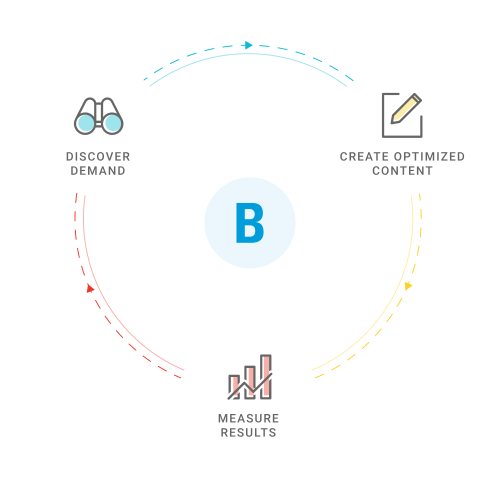
Unkel believes in mapping the right content to the right stage in the customer journey. Within the BrightEdge SEO platform first, she used the BrightEdge Data Cube to identify the attractive keyword opportunities and segment the visitors they represent, based on the intent that each keyword represents. Then she developed content for the topics by considering a few factors.
To make this content creation process scalable, Unkel used StoryBuilder to organize these new content topics along her buyers' journeys. Unkel combines the power of SEO and content to elevate the business impact from the organic channel.
THE RESULTS

Indexed organic keywords have increased 330%, while organic traffic to CDL.com increased by 230%.
BrightEdge helps us identify valuable topics to build content mapped to our customer journey.
Thank you for registering for this webinar series. You will receive an email with instructions to join the webinar on the day of the event.
To learn more, please visit our Resource Center and read our Case Studies.
The Internet evolves at breakneck speed, companies change, technology gets better, and strategies adjust. It’s inevitable that at some point in your marketing career, you’re going to face the challenge of overhauling your website. All of those files, all of that content, all of that technology you and your team has been working on for […]
The post 7-Step Guide to Site Migration and SEO Success appeared first on BrightEdge SEO Blog.
An incredible 50% of local mobile searches will lead to store visits within one day, and 18% of those searches will result in a purchase within that same timeframe. The power of local search optimization to reach customers with the information they want and entice them to try particular local businesses cannot be understated. We have reached a point of near complete digital penetration in the United States. Seventy-seven percent of American adults now own a smartphone - more than double since 2011 - and they use these devices on a regular basis.
Americans now spend an average of 5 hours a day on their devices, and one in ten report that they are "smartphone dependent", meaning that their devices are their primary source of internet access. With nearly every prospective customer for your business now online, the majority of them via mobile device, the era of hyperlocalization and the ultimate personalization has begun. Research indicates that a full 57% of traffic now arrives from mobile devices - a rapid rise considering that mobile only overtook desktop in 2015 - and it shows no sign of slowing down. Customers read and take advantage of what people post online. Retailers estimate that 82% of customers will research products online before making an in-store purchase and 60% of people report that they have used information from local ads. Content created and optimized for local search will be digested and produce strong returns when it is created appropriately and delivered to customers at precisely the right moment.
The key for digital marketers who want to compete in this space is understanding how to speak to customers in their moment of need. They must have a precise understanding of their audience and what they want to see - not just data from the nearest major city - and use that information to generate campaigns that target the micro-moments of consumers on a hyperlocal and hyper-personalized level.
As we already mentioned, mobile search has overtaken desktop. Customers also use their mobile devices for about 5 hours per day, which includes time spent learning about local businesses and finding information about their products and services. Given the rapid rates of smartphone and tablet adoption, along with the rapid increase of mobile searches over desktop, mobile search has begun to drive a considerable amount of marketing innovation and strategy. A large part of mobile strategy also overlaps with local search as customers use their devices to answer their questions and address their needs as they move around their location. This has led to the rise of various trends in consumer behavior and changes in the Google SERPs that marketers must understand to craft an effective location search optimization strategy.
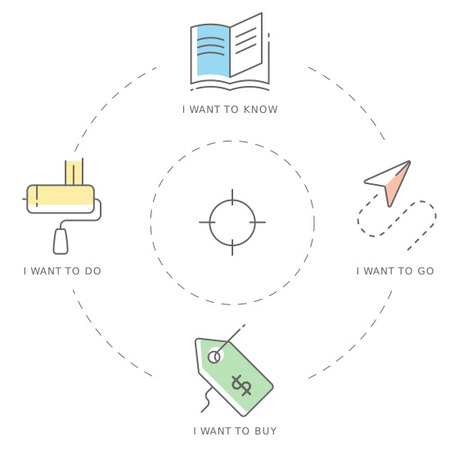
For the past few years, Google has been pushing marketers towards the particular classifications of user intent that they have termed, “micro-moments”. These moments categorize the four main types of queries as categorized by Google:
Google believes that the vast majority of the queries it sees each day fall into one of these categories. It uses this understanding of user intent to adjust the SERP layout accordingly. Google will often include the local-3 pack on the I-want-to-go micro-moment searches, the I-want-to-know micro-moment might include a Quick Answer at the top of the page while the I-want-to-do micro-moment has YouTube videos or step by step instructions depending upon how the search engine interprets the intent. These changes help Google match their users faster with the content they need. In local search optimization, brands need to understand how Google’s emphasis on the micro-moment impacts their content’s ranking and how user intent impacts behavior on the SERP. For example, customers making local mobile searches often look for quick information, such as contact information or phone numbers for the local business. Creating content that emphasizes these particular types of information allows brands to better serve the needs of these users, and thus draw more traffic and engagement from the site visitors. For brands to effectively use local search optimization, therefore, they must be willing to perform the needed research about their targeted keywords to see the likely user intent, as Google understands it, and then begin to create and optimize their content accordingly.
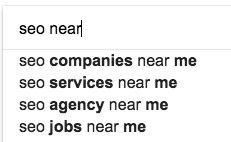
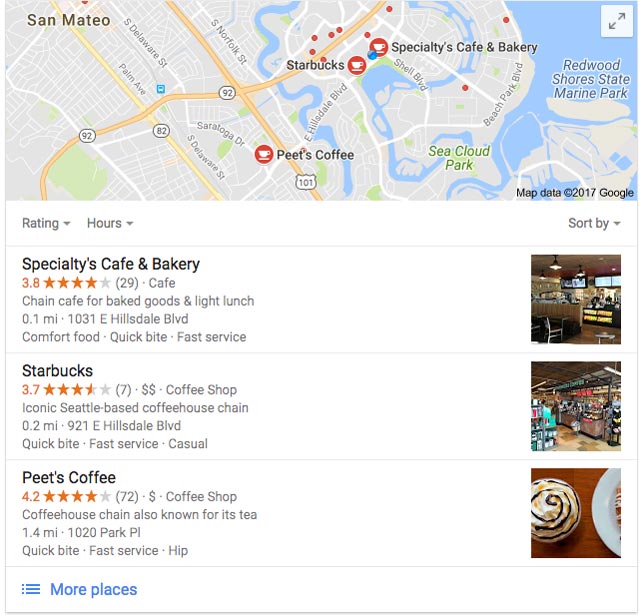
Since 2014, there has been a dramatic increase in the number of "near me" queries on Google. Customers have realized the value of using their mobile devices to find businesses in their exact vicinity and they have been using it at an increasing pace. This has corresponded with a rise in hyperlocal targeting. In hyperlocal marketing, businesses work to reach out to customers based on their exact needs when they are in a precise location. It is not about helping prospects find a pizza parlor within a particular city, it is about helping them find the highest rated pizza parlor that is physically closest to them. To accomplish this, brands need to use a combination of both paid search and organic search to create a presence for those precise customers. They need to have data insights and understanding that relate to their users within exact physical locations. To better accommodate these hyperlocal targeted searches, Google has also been looking for ways to further refine their SERP. Not only do listings change in the local 3-pack depending upon the exact physical location of the user, but there are also generally options to filter the results to help the user find a more exact match for what they seek. This allows consumers to filter based on criteria such as ratings or hours to help them find the locations that best meet their needs. For brands to effectively use hyperlocal targeting, they need to put in the effort to make sure that their content has been pre-optimized and marked up so that it will appear in as many of the filters as possible. They need to also make sure that if they have more than one physical location that each one has representation in Google My Business. This will maximize their chances of showing up in hyperlocal searches for all of their locations instead of being restricted to prospects near their main address.
To understand local search optimization, businesses must also understand how Google constructs their SERP for searches with local intent. Google consistently runs to test to match their SERP with user intent and to make sure they display the desired information to their users. This means that paying attention to what Google focuses on can provide considerable insight into how organizations can maximize their return from their own efforts. On the local 3-pack, for example, Google looks to include information such as ratings, a brief description, and the address. As already discussed, users can then filter their results by factors such as prices or ratings. Google has selected these criteria to display in their local 3-pack because they have found people consistently want to find addresses for businesses to help them determine their proximity to particular options. Not only should this indicate the importance of filling out the Google My Business profile completely, but it should also impact how you construct the rest of the content you produce for the local SERP.
As an example, above most organic query results you will see a series of advertisements. If you want to target particular keywords that regularly carry the I-want-to-go user intent and a local 3-pack, your ad will likely see better returns if you include the same valuable information Google does, including a means to contact you. Similarly, on your other organic content, make sure that customers can clearly find your location, your content information, and other details that would help them if they were interested in shopping at your location at that moment.
When you plug “Seafood in San Francisco” into the search engine, you will likely encounter Anchor Oyster Bar as the first result in the local 3-pack. Given the intensity of the competition for that position, it can help to examine what this business does right. Immediately, you can see that they have nearly 300 reviews and almost 5 stars, indicating their quality. Clicking through to the website and you will see keywords like “seafood restaurant”, “seafood dishes” and “San Francisco” used prominently right in the first paragraph. The site also links to mentions they have received in prominent publications and promotes their address several times.
Old Ebbitt Grill has also demonstrated an excellent local SEO strategy. For anyone interested in having a nice meal after a visit to the White House, the query, “best places to eat near the White House” returns this restaurant right at the top of the local 3-pack. Note that this query uses a local landmark to find a location, and Old Ebbitt Grill delivers. Its physical address is located prominently at the top of the page, clearly indicating its proximity to the famous house address, but the main text on the page also clearly articulates that it is “just steps from the White House”.
If you want to find the best place to play golf in Tucson, Arizona, then the query “best golf course in Tucson” will be helpful. Tucson City Golf, which hosts several of the courses that show up in the local 3-pack has made their way to the top of the listing through cultivating dozens of positive ads and including phrases like, “best courses” on their home page.
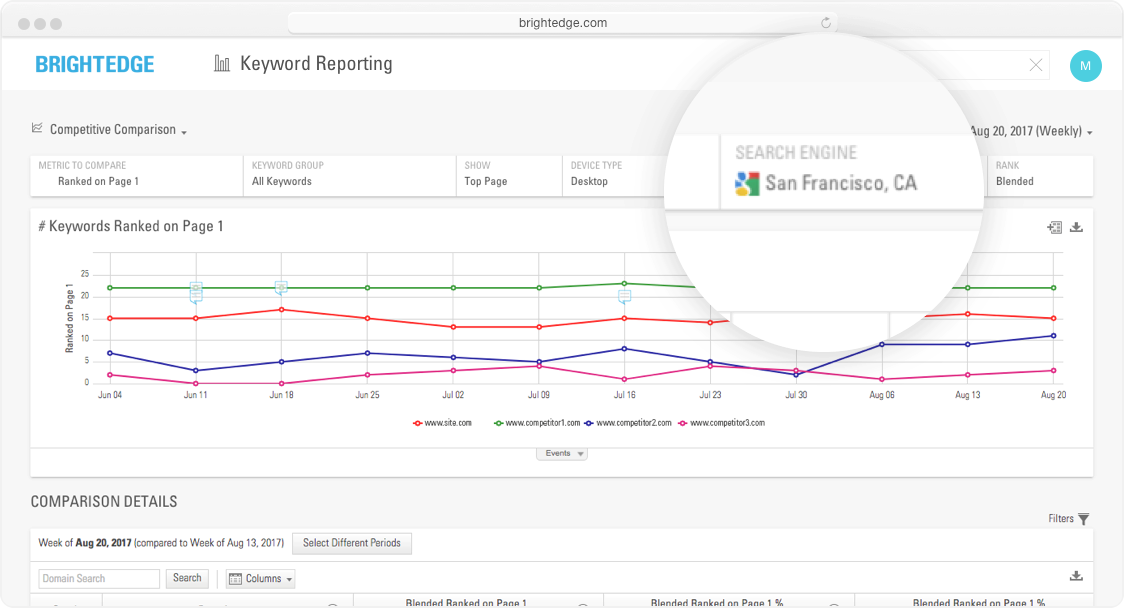
For creating an ideal local search optimization strategy, the BrightEdge platform can benefit partners throughout the entire process. Our recently launched local search power enables partners to refine their keyword research to precise local areas, rather than just using the nearest major cities. This platform currently supports overs over 72,000 locations. While you plan your content development, you can also use the platform to uncover insights about the SERP, including the types of content featured such as local 3-packs, videos, or Quick Answers. You can use this to guide the content creation process. As you develop your content, you can then use the BrightEdge Content features to ensure that the material is properly optimized and ready for usage.
Once you begin to implement your mobile strategy, you can then use the tracking features through BrightEdge to see how your content ranks and engages users through mobile devices specifically. Tracking the mobile searches will give you good insight into how your local optimized content performs for users on-the-go, which comprise a significant portion of your local audience. Not only does BrightEdge support tracking your content performance on specifically mobile devices, you can also track the overall performance and look for changes in rankings and traffic to see how your strategy impacts your pages.
BrightEdge partner Direct Agents wanted to improve the local search results for their client. Through keyword research on the BrightEdge Data Cube they were able to find keyword gaps with the key competitors and then optimize both the Google My Business page as well as the client’s website with those terms. They also used the Data Cube to perform research about the rich answers that would benefit them the most and thus optimized for Quick Answers, local 3-packs, and other important parts of the Google Universal Result. Their intensive site comparisons and local keyword research helped them receive a “huge boost” in local, non-branded traffic. Watch the Direct Agents testimonial video.
The WellBiz brands runs dozens of business locations and wanted to help each franchise boost their local results and revenue. To accomplish this ambitious goal, they set up unique dashboards for each location and then paired them with the location-filtered Data Cube for each location along with the local Google search engine for each location. They were then able to generate local Share of Voice reports for each franchise and thus optimize their content for the keywords in each location. Watch the WellBiz testimonial video.
To gauge the effectiveness of your local search optimization strategy, you will want to track a few different metrics.
Local search optimization opportunities abound as an increasing number of customers turn to their mobile devices to find things to see, buy, and do. The better you understand the trends around hyperlocal targeting and how you drive brand success through this personalization, the easier it will be to grow your foot traffic and revenue through the SERP. Learn more about VSO or Vertical Search Optimization.
An incredible 50% of local mobile searches will lead to store visits within one day, and 18% of those searches will result in a purchase within that same timeframe. The power of local search optimization to reach customers with the information they want and entice them to try particular local businesses cannot be understated. We […]
The post Local Search Optimization: The Opportunity, and How to Compete appeared first on BrightEdge SEO Blog.
<p><strong>多くの企業では、比較的小規模のチームでSEO対策に取り組む必要性に迫られていることが多いのが現状です。しかしたとえSEO対策チームのメンバー数が少なくても、メンバーの才能を適切に見出し、各種トレーニングを効果的に実施することによって、優秀なSEO対策チームを作り上げることは可能です。</strong></p>
<p>小規模の SEO 対策チームで効果的なデジタル マーケティングを展開するのは非常に困難です。しかし、適切な計画、トレーニング、テクノロジーをうまく組み合わせることによって小規模の SEO 対策チームでも成功を収めることは可能です。今回から3回にわたってお届けするシリーズ記事では、小規模なチームで資源を最大活用するためのコツをご紹介します。</p>
<p>各種マーケティングを展開する中で、各企業にとってとりわけデジタル マーケティング業界で強い存在感を構築していなければ、成功を収めることは難しくなるだろうと考えられています。 実に<a data-wpel-link="external" href="https://www.brafton.com/news/94-percent-b2b-buyers-research-online-purc…; rel="nofollow" target="_blank"> B2Bバイヤーの94%</a>が何らかの購買行動をとる前にオンラインで独自調査を行っており、また<a data-wpel-link="external" href="https://www.forbes.com/sites/jimmyrohampton/2017/05/03/does-social-medi…; rel="nofollow" target="_blank">ミレニアル世代の47%</a>は、自身がとる購買行動がソーシャルメディアに影響を受けていると答えています。これらの調査結果からもわかるとおり、検索結果ページやソーシャルメディアなどのデジタルな場で存在感をアピールできない企業は顧客とやり取りする機会を失っていることになり、結果的に収益を伸ばす機会も失っていることになります。</p>
<p>しかし、オンラインでのプレゼンスを高め、維持するのは大変な作業だという印象を受けてしまう方もいらっしゃることでしょう。プレゼンスの強化や維持には、様々な責任が伴います。またオンラインでプレゼンスを構築するには、Web サイトを作成するよりも多くのステップが必要となるのですが、実際にはその点を忘れてしまうことも多くあります。現在では、インターネット上に存在する Web サイトの数は10億を超えています。特定の製品やサービスに興味のあるバイヤーが取引をしたい業者を選ぶように、現在では見込み顧客は、検索を通して求めている企業を探し求めます。したがって、バイヤーズ ジャーニーのあらゆるステップにおいてバイヤーのニーズを適切に満たしている企業がオンラインでのプレゼンスを高めることに成功し、結果的に見込み顧客が将来的に購買行動をとる段階になると、このような企業が選ばれることになるのです。</p>
<p>各種様々な企業が直面する大きな課題は、投資できる資源に限りがある中、様々な側面を持ち、かつ常に大きな変化を続けるSEO対策をどのように展開するかということです。BrightEdge の提携企業の中にも、たった1~3名でSEO対策に取り組んでいる企業が多くありますが、適切なトレーニング、計画、テクノロジーを組み合わせることによって、成功を収めることも可能になります。</p>
<p>小規模なチームで SEO 対策を成功させるための1つ目のステップは、<strong><em>適切な</em></strong>チームメンバーをそろえることです。</p>
<h2>「ハイブリッド」がポイント:ハイブリッドなチームを編成する</h2>
<p>SEO 対策チームのメンバー数が少数に限られている場合、各メンバーが様々な役割を担えることが必要になってきます。オンラインでのプレゼンスを高めるには、効果的な Web サイトとコンテンツを用意することがまず重要です。そして効果的な SEO を実践することによってオーガニック検索でのビジビリティーをさらに高めることができます。また、電子メールやソーシャルメディアを活用することによって、バイヤーズ ジャーニーのあらゆる段階で見込み顧客と首尾一貫したやり取りを続けることができます。同様にペイド サーチも併用することによって、サイトにトラフィックを導くことができ、ランク入りが難しいようなキーワードでもユーザーの注意を引くことが可能になります。ここで紹介した3つのポイントは、それぞれ個別の記事を書くのに値するほど重要で奥が深いポイントです。</p>
<p>これらのポイントを総合して、小規模な SEO チームでは、1人のメンバーが複数の専門的業務を担当することが求められます。例えば、Web サイト コンテンツの作成、コンテンツ マーケティング、SEO 対策をたった1人が担当するということもありえます。</p>
<p>SEO 対策チームが小規模である場合、デジタル マーケティングの様々なタスクを各メンバーが担当することが求められますが、メンバー全員がシームレスに作業できることが極めて重要になります。業界では、他部門と連携を取らず単独で作業を行うようなサイロ化した組織を打ち壊そうとする動きがトレンドになっていますが、小規模なチームではとりわけ、チーム メンバー全員が効果的に協力し、お互いの目的やねらいを把握しながら作業を進めることが重要になります。このような協力が実現されなければ、各メンバーが持つ能力を最大限に生かしてデジタル マーケティングを展開することはできないでしょう。</p>
<p><img alt="Collaboration and cooperation critical with a small team for SEO" class="aligncenter wp-image-16370 size-medium" height="200" sizes="(max-width: 300px) 100vw, 300px" src="https://www.brightedge.com/blog/wp-content/uploads/2017/09/iStock-52126…; srcset="https://www.brightedge.com/blog/wp-content/uploads/2017/09/iStock-52126… 300w, https://www.brightedge.com/blog/wp-content/uploads/2017/09/iStock-52126… 150w, https://www.brightedge.com/blog/wp-content/uploads/2017/09/iStock-52126… 768w, https://www.brightedge.com/blog/wp-content/uploads/2017/09/iStock-52126… 1024w, https://www.brightedge.com/blog/wp-content/uploads/2017/09/iStock-52126… 600w, https://www.brightedge.com/blog/wp-content/uploads/2017/09/iStock-52126… 1254w" width="300" /></p>
<h3>コラボレーションの重要性</h3>
<p>サイロ化したマーケティングを取り壊すことによって、ユーザー エクスペリエンスの改善が可能になります。顧客はプラットフォームを使用する上で首尾一貫した使用法ができることを期待しています。 <a data-wpel-link="external" href="https://www.bulldogreporter.com/channels-are-now-irrelevant-to-consumer…; rel="nofollow" target="_blank">ミレニアル世代の60%</a>が、インターネット上で企業とやり取りをする際、どのような連絡方法を用いたとしても同じようなエクスペリエンスができることを期待しています。このような考えを持つミレニアル世代のバイヤーは電子メールやソーシャルメディア、検索結果ページ(オーガニック、ペイド両方)など様々な方法で企業とやり取りをします。つまり、やり取りの方法が変わったとしても同じ情報を一貫して確認できることが求められているのです。</p>
<p>現在のバイヤーは、<a data-wpel-link="internal" href="https://www.brightedge.com/jp/articles/micro-moment-modern-customer-jou…; rel="follow">様々なマイクロモーメント</a>を経験しながら購買行動に向かってバイヤーズ ジャーニーを進んでいきます。バイヤーが経験するマイクロモーメントには決まった順番があるわけではなく、ユーザーによって経験するタイミングは様々です。ユーザー インテント(ユーザーの意図)を理解し、ユーザーが経験しているマイクロモーメントの種類にかかわらずユーザーのニーズを満たすことができる企業こそがデジタル マーケティングで一番の成功をおさめることができるのです。</p>
<h2>ハイブリッドなスキルを組み合わせて、小規模SEO チームで成功を収める</h2>
<p>デジタル マーケティングに関する専門知識を強化しようと取り組みを続けるSEO 対策チームの多くでは、既にチーム内で各チームメンバーの専門分野が決まっていることが多いのが現状です。このように既にチームメンバーの専門分野が固定されている状況では、前述のようなハイブリッドな専門分野を持つチーム メンバーを育てるのは難しく感じるかもしれません。しかしこのようなSEO チームにおいても、企業内での訓練を実施することによって、専門知識を広めることを目指すことができます。</p>
<p>また、幅広いマーケティング分野に詳しくなるために役に立つ情報を手に入れることができるようなオンライン リソースも存在します。例えば、Google Analytics (GA) では、<a data-wpel-link="external" href="https://analytics.google.com/analytics/academy/" rel="nofollow" target="_blank">無料のオンライン コース</a>が提供されており、専門家を対象に GA プラットフォームの使用方法をはじめ、Web サイトのパフォーマンス データの参照方法や、サイト運営者の役に立つような各種メトリックなどについて学ぶことができます。また、様々なデジタル マーケティングに関する情報を紹介する各種ウェビナーも参考にしましょう。評判の良いウェビナーに参加し、Q&Aの場を活用して業界の専門家から様々な情報を学びましょう。</p>
<p><b>BrightEdge のウェビナーについての詳細は、</b><a data-wpel-link="internal" href="https://www.brightedge.com/resources/webinars" rel="follow"><b> こちら</b></a>からご覧ください(英語のみ)。</p>
<p>チームメンバーのスキルや専門技術を強化するにあたって、各メンバーに求められている職務を各々がしっかり理解していることが欠かせません。小規模な SEO チームでは全員が協力して作業することが必須であるものの、例えばソーシャル分野でリードをとるのは誰か、またペイド サーチのキャンペーン担当は誰かなど、特定の職務を割り当てることによって効率が高まります。チーム内でトレーニングを実施する際にも、この職務割り当てを意識すると良いでしょう。</p>
<p><img alt="For successful small team SEO, collaboration is key" class="aligncenter wp-image-16368" height="360" sizes="(max-width: 540px) 100vw, 540px" src="https://www.brightedge.com/blog/wp-content/uploads/2017/09/iStock-49728…; srcset="https://www.brightedge.com/blog/wp-content/uploads/2017/09/iStock-49728… 1024w, https://www.brightedge.com/blog/wp-content/uploads/2017/09/iStock-49728… 150w, https://www.brightedge.com/blog/wp-content/uploads/2017/09/iStock-49728… 300w, https://www.brightedge.com/blog/wp-content/uploads/2017/09/iStock-49728… 768w, https://www.brightedge.com/blog/wp-content/uploads/2017/09/iStock-49728… 600w, https://www.brightedge.com/blog/wp-content/uploads/2017/09/iStock-49728… 1255w" width="540" /></p>
<p>同時にチームメンバーが協力して一緒に作業を進める方法を構築することも重要です。例えば、定期的にチーム ミーティングを開いて、現在実施中のキャンペーンの進捗状況や各メンバーが関係する職務に関する情報をシェアすることができます。</p>
<p>SEO 対策チームの規模が小さかったとしても、モチベーションを高めることによって、効率的に作業をして成功を収めることは可能です。そのためには、適切な職務割り当てや、デジタル マーケティングの様々な専門知識を組み合わせる能力が必須になります。</p>
<p><strong>【パート2に続く】</strong></p>
The Christmas and holiday shopping season from November through December is a critical time to observe shoppers’ online behavior. With several holidays and the most important shopping days of the year, this eight-week period in the United States, is filled with ubiquitous consumption messaging, massive discounting and general shopping euphoria. For retailers, it is a make or break time of the year.
To help retailers succeed during this critical time, new BrightEdge research provides data, and insight, about when, how and where people shop during the holiday season.
Specifically, the report provides unique insights into where customers make their purchases and when it happens. Brand marketers can better serve their customers and maximize returns this shopping season by familiarizing themselves with the insights BrightEdge has prepared based on the last holiday shopping season.
Register now to download.
ユーザーが入力した検索クエリの種類によって検索アルゴリズムが自動的にランキング要因の重みづけを変更していることを Google は明らかにしました。
2017年10月に入って、Google の Gary Illyes 氏らは対談企画に参加し、自社のアルゴリズムについての一部情報を明らかにし、多くの業界関係者が予想していた内容について認める発言をしました。ユーザーが入力した検索クエリの性質によって、Google アルゴリズムがランキング要因の重みづけを変える可能性が高いことを明らかにしたのです。
Gary Illyes 氏らが述べた内容を理解し、これがデジタル マーケターにどのような影響を与えるのかを把握することによって、SEO 業界で適切なデジタル戦略を構築することができます。

Google の Gary Illyes 氏や John Mueller 氏によると、Google アルゴリズムがランキングを決定する際に参照する要因に関して、「最も重要な三大要因」にように明確な要因があるわけではないことを明言しています。また John Mueller 氏は、検索クエリの内容によってランキング要因の重みづけをアルゴリズムが変えてランキングを決定する方が自然であると認めています。
Gary Illyes 氏および John Mueller 氏の対談詳細については、Google Webmaster Central Office Hour をご参照ください(英語のみ)。
ここで注目すべき点は、前述の内容は Andrey Lipattsev 氏が約18か月前に述べた内容とは真逆のように見えることです。18か月前、Andrey Lipattsev 氏は、アルゴリズムにおいてコンテンツとリンクの内容が二大重要要因で、続いてRankBrainが3番目に重要な要因であることを明言していました。これらを比較してみると、両者の発言は一見真逆のようですが、BrightEdge ではこれらの内容は互いに矛盾しているわけではないと考えています。
例として、「コンテンツ」に注目して考えてみましょう。この場合、たとえアルゴリズムがランキング要因を重視する程度を変えたとしても、コンテンツの品質と価値が最も重要な要因であることに違いありません。しかしコンテンツに関するその他の要因(例:コンテンツの新しさ)では、検索クエリの内容によって加重具合が変更される可能性が高いでしょう。一方外部リンクにおいては、各ページにおける外部リンク数の重要度は変わる可能性もありますが、アルゴリズムはドメイン全体における外部リンクの数に注目する可能性が高いと考えられます。
ユーザーが入力した検索クエリの種類によって、期待する検索結果ページの種類も異なることを考慮すると、アルゴリズムがランキング要因の加重具合を変更することが重要であることは明らかです。例えば、最近起こった出来事について興味を持つユーザーなら、最新の情報を掲載しているサイトや正確な情報を提供しているサイトを期待している可能性が高いため、ページの新しさ(どの程度新しい情報化)がランキングを決定する上でより重視されることが考えられます。
一方で、学術的な内容を探しているユーザーなら、より長期的に情報公開を行っているサイトや、外部リンク数を誇るサイト、各ページの信頼度が高いオーソリティー的存在のサイトを期待しているため、また異なる要因が重視されるわけです。
ユーザーが入力したクエリの種類や、ユーザーの意図によって、Google アルゴリズムがランキング要因に注目する度合いを変えるという事実には、Google がユーザーエクスペリエンスを追及しようとしている姿勢が表れています。例えば、すべての検索結果において外部リンクを重要視されたとしたら、最近起こった出来事に関する最新ページを検索結果ページ上で見つけることが難しくなるはずです。一方で、外部リンクをランキング要因として全く考慮しなければ、不正確な内容や、信頼性に欠ける学術的内容を掲載したページが高ランクを獲得してしまうという可能性も出てきてしまうのです。
特定の業界で Google がどのようなランキング要因を重視しているのか100%間違いのない情報はまだ明らかになっていないため、Web サイトの運営者やデジタル マーケターらは、どのようなランキング要因が重要なのか引き続き推測する必要がありますが、BrightEdge では、「ユーザーが入力したクエリの内容によって、どのようなページが望まれているか」などのデータに基づいて、注目すべきランキング要因について信頼度の高い情報を提供いたします。BrightEdge では、Google がコンテンツ、リンク、RankBrain を三大重要ランキング要因として注目していると考えております。したがって、SEO 戦略においてこれら3つの要因に取り組むことが必要なわけです。しかし、これら3つのカテゴリーにおいても様々な変数が影響しています。各コンテンツにおいて最も適切なランキング要因に注目することが重要です。例えば店舗型の企業では、レビューやローカル SEOなどの要因を、また新しい企業では、更新頻度やページの新しさなどの要因が重要になることがわかります。
BrightEdge では、提携企業や BrightEdge 主催のコミュニティー参加者を対象に、自社サイトにどのようなユーザー インテント(ユーザーの意図)が関係しているかを把握することをお勧めしています。自社サイトにトラフィックをもたらす検索クエリの検索結果ページを分析することによって、そのクエリの背景にあるユーザー インテントを Google がどのように解釈しているのかを明らかにすることができます。このような情報を活用することによって、顧客に向けた最適なコンテンツを作成することができ、また高ランクを獲得する上で重要なランク要因をより正確に把握することも可能になります。
また、BrightEdge プラットフォームを活用して、クイックアンサーに関連するキーワードを確認したり、リッチアンサーに表示されるようなキーワードを明らかにしたりすることによって、ユーザー インテントを重視したSEO 戦略を構築することができます。コンテンツを作成する際には、BrightEdge プラットフォームで進捗状況を逐一確認することができ、自社ページのランク状況の把握や、実際に収益につながるページへのトラフィックを後押しが可能になります。
Google の最終的目標は、ユーザーが望んでいるものと、それに最も関連度の高いコンテンツを結びつけることです。現在では、すべての検索結果ページに例外なく当てはまるような三大ランキング要素はありませんが、特定のユーザー インテントにおいて Google が重視するランキング要因を推測することは可能です。よりよいユーザー エクスペリエンスを追及すれば、Google のランキングにおいてより高ランクを獲得する可能性も確実に高まるでしょう。