

The Holiday Digital Shopping Journey: Trends for Thanksgiving, Black Friday & Cyber Monday

Holiday Shopping: Trends for Thanksgiving, Black Friday & Cyber Monday

Variations in consumer behavior, device preferences and online holiday traffic provide marketers with clues on how - and when - consumers shop online during the holidays

SAN MATEO, CA (November 16, 2017) – BrightEdge, the leader in enterprise organic search and content performance, today released the BrightEdge Digital Holiday Shopping Research Report. The research, compiled using 2016 data points, provides marketers with insights to make the most of 2017 holiday shopping trends. This eight-week holiday shopping season data provides marketer with valuable clues for reaching the online consumers at the right time, on the right device and when the consumer is most likely to purchase.

Key Findings

The BrightEdge Holiday Report confirms Black Friday and Cyber Monday were the most important digital shopping days last year. However, Thanksgiving Day is quickly becoming as important as Black Friday or Cyber Monday, meaning retailers with the goal of delivering a successful holiday season must be prepared for Thanksgiving too. Some of the findings include:

  • Veterans Day is the unofficial start of the Digital Holiday Shopping Season, with online traffic beginning to spike
  • When it comes to consumer behaviors, different devices matter for different days:
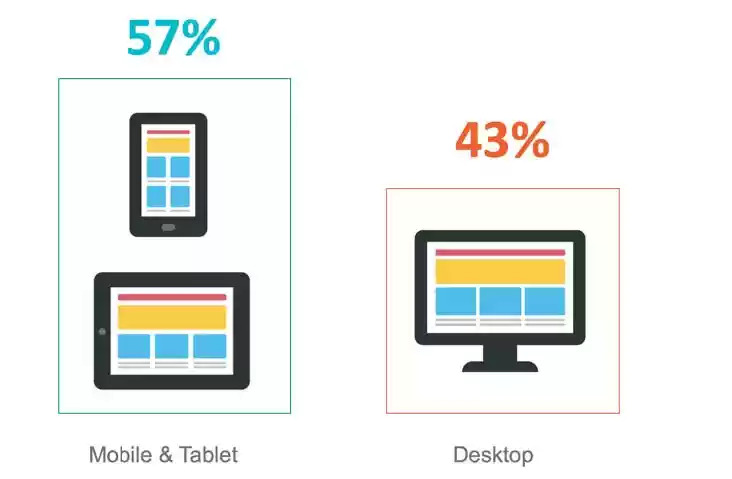
    • Traffic from tablets spikes on Thanksgiving Day but still lags desktop and mobile
    • Mobile traffic dominates Black Friday as on-the-go shoppers research the best deals, locate that perfect gift, and navigate to the store with that product
    • Desktop traffic dominates Cyber Monday as shoppers make their final purchases back in the office
  • Conversion rates peak on Cyber Monday, eclipsing Black Friday by 10%
  • Throughout the entire holiday period, conversion rates are 50% higher, than non-holiday shopping times. However, conversion rates decline to pre-holiday levels roughly one week before Christmas to account for shipping time
  • Bigger screens (i.e. desktop and tablet) equate to bigger holiday orders

“During the busiest and most important time of the year it is essential that marketers make the most of the opportunity in front of them” said Kevin Bobowski, SVP, Marketing of BrightEdge. “Thanksgiving Day is quickly becoming the most important shopping day of the year –– even more important than Black Friday or Cyber Monday. A day of football, family time, and traditional turkey feasts puts consumers in the buying mood. We’ll be tracking the same metrics to monitor the changes in consumer activity from 2016 to 2017.”

The full research report and detailed findings can be downloaded here:

https://www.brightedge.com/resources/research-reports/2017-holiday-shopping-data-new-data-device-trends

In the weeks following Thanksgiving Day 2017, BrightEdge will be analyzing and comparing last year's data with data from the 2017 Black Friday and Cyber Monday to compare year-on-year trends.

About BrightEdge

BrightEdge, the global leader in enterprise organic search and content performance, empowers marketers to transform online content into business results such as traffic, conversions, and revenue. The BrightEdge S3 platform is powered by a sophisticated deep learning engine and is the only company capable of web-wide, real-time measurement of content engagement across all digital channels, including search, social, and mobile. BrightEdge’s 1,500+ customers include global brands such as 3M, Microsoft, and Nike, as well as 57 of the Fortune 100. The company has eight offices worldwide and is headquartered in Foster City, California.

Website: https://www.brightedge.com

Follow us on Twitter: www.twitter.com/brightedge

Follow us on LinkedIn: https://www.linkedin.com/company/brightedge

Like us on Facebook: www.facebook.com/seoplatform

Press Release Date

5 Steps to a Successful Website Audit

koleary
koleary
M Posted 8 years 4 months ago
t 9 min read

Your boss brings in cupcakes on Friday afternoon to celebrate a good quarter of hitting revenue goals… That’s a good surprise. Your boss phoning you at midnight to find why site traffic has suddenly dropped 20%... That’s a bad surprise. The last thing any digital marketer wants is unexpected drops in website key performance indicators (KPIs), particularly when they affect business revenue. These nasty surprises are typically the result of website errors, which are technical issues with your website that have an adverse effect on SEO performance. Site errors can happen at a site-wide level, such as NOINDEX tags that prevent search engines from indexing your content, page load times of more than three seconds, and 4xx errors, which usually mean broken links or blocked content. They also occur on individual pages, if you are missing page titles, H1 tags or meta descriptions, and if you have any duplicate content. Maintaining a healthy, surprise-free website means knowing about all your existing errors, understanding which fixes will have the biggest impact, and ensuring you can get the resources to implement the required changes. An SEO website audit is a critical first step in finding errors and site issues.

Identify and prioritize a website audit and errors with ContentIQ

BrightEdge ContentIQ is a next-generation site auditing solution that brings sanity to the process of reducing website errors that could impact SEO performance. It allows you to identify technical and on-page errors across your entire site, prioritize those errors with the severest impact on SEO performance and user 5 step process for planning website audits infographic - brightedgeexperience, build a business case for allocating resources to these key fixes and showcase your successes to the wider business and executives. ContentIQ works by inspecting your site, whether that’s a few key sections or the entire thing. Depending on the size of your site (ContentIQ can crawl hundreds of millions of pages) and its overall technical health, ContentIQ could highlight thousands of errors. Prioritizing which errors to fix is the key to delivering the biggest impacts up front. Showcasing these wins to the wider business can help you secure additional resources and fix more errors. To help you make the most from your website error resolution work, we’ve collected best practices and insights from BrightEdge users like you as well as our own crack team of SEO experts. The result is a simple five-step process for improving your site and achieving measurable success.

  • Establish a baseline
  • Fix site-wide performance issues
  • Prioritize site errors based on the business impact
  • Communicate your successes

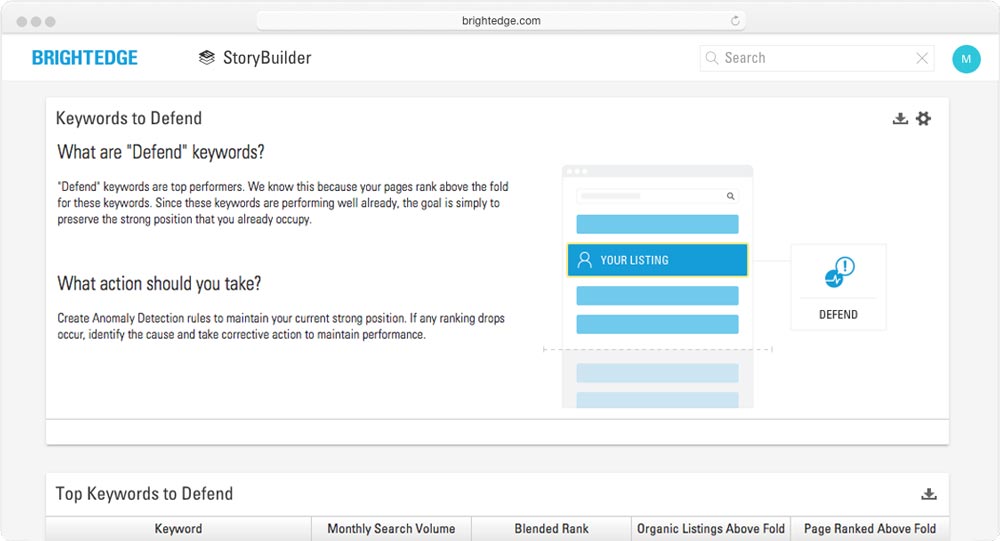
1. Establish a baseline. Before you start fixing errors, it’s important to know where you are. Creating a baseline picture of the current health of your site at the beginning of the process will help you understand exactly which fixes worked best. You can also see how to deliver even better results and tell the story of where your efforts boosted KPIs. First, set up ContentIQ to perform a weekly or monthly crawl of your entire site to create a complete picture. Next, use our reporting product, StoryBuilder, to create a baseline dashboard of charts showing how site errors have impacted website KPIs, using your preferred metrics like traffic, revenue, or conversions correlated to the site errors across your entire domain. A major benefit when you establish your baseline is you can now track any critical deviations using our Anomaly Detection feature. For example, if one of your key revenue-driving pages needs to appear in the top three of search results for optimal performance, you can use Anomaly Detection to alert you by email when it drops position. This ensures you’re all over any potential problems and can resolve them before the impact is too severe. This will allow you time to find the source of the problem and fix it, without having to worry about being caught off guard by frantic phone calls after hours.

contentiq website audit dashboard screen - brightedge

2. Fix site-wide performance issues. With your baseline in place, you’re ready to start fixing errors and seeing positive results. We’ve learned that focusing first on errors that affect your site as a whole is a fast-track to quick and easy wins. These are the kind of errors that prevent people from finding your site in searches or getting a “page not found” or other error when they do click your link. Some examples of errors that you will want to prioritize and correct during this stage are:

  • No index errors

  • Nofollow errors

  • HTTP Status (4xx errors)

  • Slow page load times (above 3 seconds)

3 and 4. Prioritize site errors based on the business impact. ContentIQ integrates with your Google Analytics account, making it easy to see which pages have the greatest impact on your site’s revenue, traffic, or conversions. If ContentIQ reveals errors on these money-making pages, you’ll know that you should prioritize these pages to fix first. In the case of multiple on-page errors, we recommend prioritizing the most severe errors, including:

  • Missing or empty page titles

  • Duplicate page content

  • Missing H1 tags

  • Missing or empty meta description tags

ContentIQ can help when you need to make the business case for more web development resources to fix these errors. Use your baseline dashboard to create charts showing how unresolved errors result in the decline of key site metrics, like revenue, conversion, or traffic, and clearly demonstrate the impact of poor user experience.

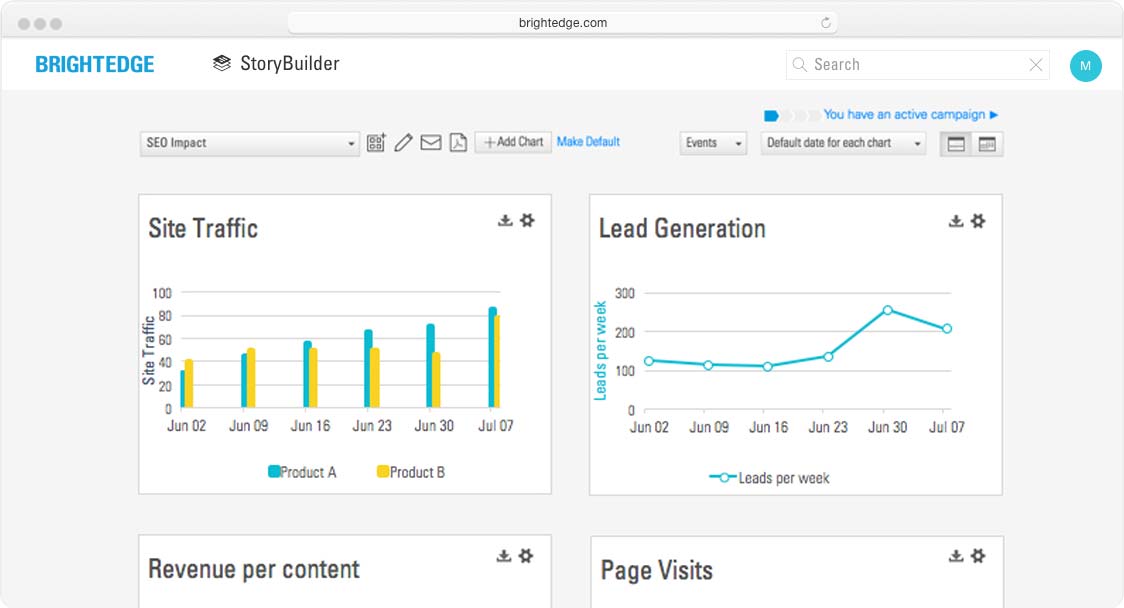
5. Communicate your successes. Nothing supports a business case more than proven success, so it’s important to track how your site’s performance improves as your reduce errors. The baseline dashboard you created in Step 1 will update automatically using data from the weekly or monthly ContentIQ crawls you scheduled. This makes it easy to review and chart your progress at regular intervals. When you complete a batch of significant improvements, such as rectifying issues with 4xx errors, it’s easy to create an event tag for that day so you can see how those efforts correlate to traffic and revenue growth. With StoryBuilder, you can create easy-to-understand charts for your executive teams and wider business that showcase how your efforts directly impact business KPIs. This will not only help promote the good work you’re doing, it’ll also demonstrate the continued value of fixing existing site errors and prioritizing further site enhancements.

contentiq website audit trended line plots screenshot - brightedge 

Following this simple five-step process will help you to reduce the number of critical errors on your website and have a positive impact on your business’s results. ContentIQ puts all the information about your site’s page in one place, saving time and providing a more focused and productive approach to fixing site errors and improving SEO performance. Download the ContentIQ Datasheet to learn more about ContentIQ.

Follow this 5-step process to conducting a website audit, from establishing a baseline all the way to communicating SEO success. Your boss brings in cupcakes on Friday afternoon to celebrate a good quarter of hitting revenue goals… That’s a good surprise. Your boss phoning you at midnight to find why site traffic has suddenly dropped […]

The post 5 Steps to a Successful Website Audit appeared first on BrightEdge SEO Blog.

5 marketing technology trends CMOs need to master for 2018

English, British
News Item Title
5 marketing technology trends CMOs need to master for 2018
News Item Author Name
Jim Yu
News Item Published Date
News Item Summary

As we edge closer to 2018, columnist Jim Yu lays out five martech trends you'll need to monitor to lead your organization to success in the year ahead.

Tracking Integrated Marketing: A Big Data Challenge

enewton@brightedge.com
M Posted 8 years 5 months ago
t 9 min read

Integrated marketing seems a relatively simple concept at first glance: it means integrating your diverse marketing channels into a coordinated and coherent whole. But if integrated (“cross-channel”) marketing were so simple, all brands would be doing it. It’s only when you fully grasp the magnitude of the order that you realize its challenges. Big Data Challenge/Tracking Integrated Marketing-BrightEdge According to survey data reported by Econsultancy and Oracle in the “Cross-Channel Marketing Report 2014,” the biggest challenges brands face in implementing an integrated marketing strategy are a lack of resources, organizational structure (read “silos”) and understanding of the customer journey.

To phrase it another way, while most businesses embrace the concept of integrated marketing, relatively few are equipped to answer the big data challenge and actually execute and manage it. In this post, we’ll discuss some challenges of tracking integrated marketing as well as the metrics you can start to consider to help make sense of it all.

The Challenges of Integrated Marketing

It’s understandable that those companies that are fully equipped and truly grasp tracking integrated marketing and are able to do it well are among the minority. Perhaps the greatest challenge of cross-channel marketing is the sheer number and variety of channels and media involved, including:

  • Blogs
  • eBooks
  • Email marketing
  • Events
  • Presentations
  • Press releases
  • Research reports
  • Search engine marketing (SEM)
  • Search engine optimization (SEO)
  • Social media
  • Speaking engagements
  • Videos
  • Websites
  • White papers
  • TV
  • Radio
  • Print
  • In-store marketing

This translates into a “big data” analytics problem. BrightEdge CEO Jim Yu describes it well in his column for Search Engine Watch:

With all this data, the challenge is and has been for many decades harnessing it in a meaningful way. One such way is through data integration. Data integration works to combine multiple sources of data into one place for more significant reporting and information. To better serve the needs of integrated marketers, the BrightEdge S3 platform can integrate data from Adobe SiteCatalyst, Web Trends, Coremetrics, Google Analytics and custom in-house data sources. So if it is tracked in those platforms it can be imported through an API and viewed in the reports and configurable into the custom dashboards alongside the organic search and keyword data. Just like web marketing strategies don't begin and end in one silo, neither do data sets from multiple networks, channels and devices. Together, they represent user behavior across the lifecycle of engagement with a brand online. But it's not just pulling together multiple sources of data in one place that's the answer; it's being able to do so in a way that yields actionable insight. With data coming from multiple places, it needs to be streamlined into a format that's similar and comparable.

That said, streamlining data within integrated marketing campaigns requires a uniform set of components to define and track. Let’s talk about those next.

6 essential things to define for tracking integrated marketing

Regardless of how your analytics packages report data, at the program level, there are six common areas that when defined and measured, can help paint a picture of integrated marketing performance:

  1. Target audience: This is the ideal market segment for your marketing message. This includes demographics and psychographics that help determine how the message is disseminated.
  2. Reach: This is the percentage of the target audience that is exposed to your marketing message.
  3. Frequency: This is the number of times the target audience is exposed to your marketing message.
  4. Effective frequency: This is the minimum number of exposures to your marketing message required to actually influence target audience behavior.
  5. Effective reach: This is the percentage of the target audience that receives the minimum number of exposures to affect behavior.
  6. Scope: This refers to the number of different channels through which the target audience receives your marketing message.

As a marketing professional who is taking on the task of running a cross-channel marketing campaign, you’ll want to figure out ways that your research and analytics platform can track metrics within each of the areas mentioned. Fortunately today, enterprise-level analytics platforms have built in the ability to track multiple channels and create a single view of a campaign. Having access to this data should put you squarely on the same path as the leading brands that are paving the way with integrated marketing.

Learn how to organize and operate an SEO team in SEO Management. Discover a succinct four-step SEO methodology in How to Maximize SEO ROI.

,