A Beginner's Guide: Understanding SEO Keywords 101

mreinhardson
mreinhardson
M Posted 5 years ago
t 9 min read

Updated March 2022

Keywords are among the first things that budding search engine optimizers learn about. They’re part of the fabric of the internet itself. And they’re fundamental when it comes to building an effective, data-driven strategy for generating organic traffic. 

However, it’s common for SEOs to fall into a trap when they first encounter keywords. They find a straightforward definition, get to grips with the core features of their preferred keyword research software, and memorize the fundamentals of on-page SEO. 

They then assume they’ve learned everything there is to know. But keywords are a vast topic. There are long-tail keywords, geo-targeting, intent, anchor text, advanced research—the list goes on. 

In this guide, we’ll provide you a thorough overview of keywords: what they are, how they work, and how to use them to drive traffic to your site. We don’t cover everything—that would take much more virtual space than a single post—but you’ll be left with a solid foundation from which to develop your knowledge of keywords. 

What Are Keywords? 

When a user enters a query into a search engine—such as “calendar,” “pizza toppings,” “women’s running shoes,” or “best BBQ restaurant near me”—they are served with a list of relevant web pages. This keyword-focused set of results is known as a “search engine results page”  or “SERP.” 

These queries, irrespective of whether they’re made up of a single word or a dozen, are called keywords. Google’s primary job is to figure out the intent of these phrases—to answer the question, “What is this user searching for?”—and provide relevant, helpful content. 

What Is Keyword Intent?

Keyword intent refers to the reason that a person enters a query into Google. It is their desired informational outcome. In general, long-tailed keywords—multi-term keywords with comparatively small search volumes—instruct search engines more clearly of a keyword’s intent than shorter single-word keywords.

For example, if you type “best BBQ restaurant near me,” a search engine can ascertain your intent fairly easily. It knows you want to find a BBQ restaurant nearby so you can eat some tasty ribs. 

In contrast, a broad keyword such as “calendar” carries a myriad of different search intents. Searchers may wish to define the term “calendar,” buy a calendar, open Google calendar, download a calendar app, print a calendar, and so on.

Why Are Keywords Important?

For marketers, web admins and SEO analysts, keywords are important because they provide powerful clues about searcher and customer behavior. They give you the information you need to put together a content strategy that drives targeted traffic to your website. 

Keywords are used to achieve the following outcomes:

  • Determine which topics and sub-topics have high search volu'sthme (number of monthly searches) and are therefore likely to drive traffic to a website. For example, a food blog will be interested in knowing how often a term like “best BBQ restaurant” is searched for. 
  • Optimize the on-page headers and metadata of a piece of content. These are known as on-page ranking factors. Search engines like Google use them to algorithmically sort websites to determine which set of pages best serves the intent of a particular keyword. 
  • Track the popularity of keywords and topics over a set period of time. For example, many businesses maintain a data-driven content calendar that accounts for seasonal terms, like “best Christmas presents,” and fluctuations in the interest of certain topics, like fad diets or new product releases. 

In short, keywords can be thought of as data-driven truth serums that help you understand your target audience and enable you to create your content that serves your website visitors’ needs. 

Types of Keywords

In the following section, we’ll look at three keyword categories: long-tail, geo-targeted, and branded. These keyword types generate different results, and your search strategy should account for this.

Targeting the right keyword types gives you the best possible chance of capturing web visitors that will turn into leads and paying customers. 

Long-Tail Keywords (vs. Short-Tail)

Keywords can be single words or complex multi-word phrases. A keyword with more than three words is usually called a “long-tailed keyword.” They tend to be descriptive phrases with specific intent.

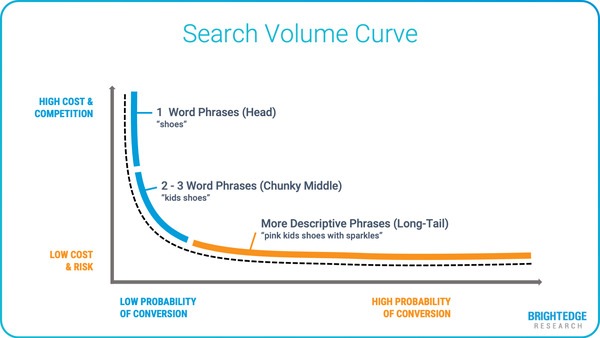
But this isn’t quite the full picture. While many people refer to multi-word phrases as “long-tail keywords,” it is actually search volume that determines whether or not a keyword is long-tail. Longer keyword phrases tend to have lower search volumes. However, this isn’t always the case. 

Long-tail keywords generally have lower monthly search volumes than short-tailed ones because they are specific. But long-tail keywords also tend to drive more conversions than short-tailed keywords and are easier to rank for because competition from other websites is lower. 

Content that is well-optimized and accounts for long-tail keywords better meets its target audience’s needs and, as a result, ranks higher in search engines. 
Geo-Targeted Keywords (Local vs. Global Keywords)

Some keywords carry local search intent. This is the intent to carry out an action or purchase locally. These keywords tend to have specific local qualifiers such as “near me,” “where,” or a specific city name, for example, “top veterinarian Seattle.”

Results for local keywords are always location-specific and appear in a dedicated area above generic listings. This is called the local search 3-pack. Local terms and their monthly search volumes are usually much smaller than global keywords (keywords without local search intent).

Here is an example of a local, geo-targeted keyword, with related global keywords as a comparison:

Keyword Type Keyword Monthly Search Volume
Local best veterinarian near me 8,100
Global best veterinarian 720
Global veterinarian 1,000,000

Branded Keywords (vs. Unbranded Keywords)

Branded keywords are keywords that include an official brand name, like “Nike shoes” and “Starbucks coffee.” 

While branded keywords generate the highest conversions of any type of traffic because searchers are looking specifically for a branded product, it is usually only official retailers that will optimize for them. If you run an ecommerce store, targeting branded keywords will likely be worthwhile. 

One notable exception to this rule applies to review-style websites—for example, a personal blog reviewing Nike running shoes.

It is unusual for smaller sites to compete with large retailers in search engines. This is because it is difficult for comparatively low-authority sites to achieve meaningful rankings for branded keywords with exclusively commercial intent. However, keyword phrases that include brand names alongside words like “review,” “rating,” “buying advice,” and so on are often worth pursuing.

How to Choose the Right Keywords: 

Without the right approach, finding high-traffic keywords and optimizing your content is laborious and confusing. 

Keyword research is the process of uncovering high-volume search terms within your industry. You can then optimize your content for maximum relevance, which will lead to greater visibility in search results. 

Follow the five steps below to find high-volume, targeted keywords:

1. Identify Your Business Goals

What goals are you trying to accomplish with your content strategy? Do you want to generate more leads and sales? Close more deals? Create more visibility and engagement? 

Every goal corresponds to a specific category of web user and search intent. Having a clear sense of your desired outcomes guides you towards the keywords you should be researching, whether long-tailed, short-tailed, local or global.           

2. Analyze Competitors

There’s a famous quote about artists: “Good artists copy but great artists steal.” And it applies to SEOs too! If you see someone else doing something that works, what’s to stop you from copying them?

Look at competitors that are ranking well for keywords you also want to rank for. Then ask, “How have they optimized their content—on-page header tags, keyword density, metadata— for these topics?”

3. Create a Seed List for Keyword Research

Once you have identified your goals and scoped out your competitors, you’ll have a pretty good idea of which topics to target, along with some specific keywords. 

For example, if you are a pet company and want to expand your blog content, you might have target keywords like “dog health insurance,” “dog summer activities,” “healthy cat food,” “cat pet carriers,” and so on.

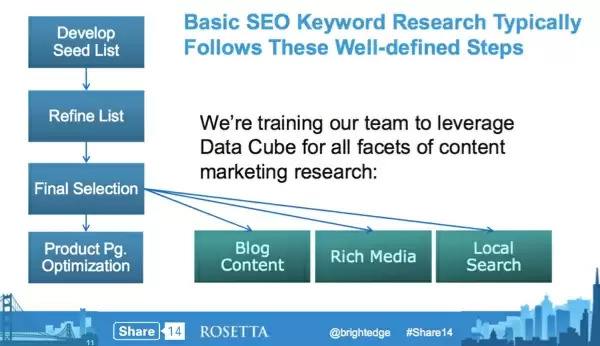
Use these initial target keywords to form your seed list, the core collection of keywords that will guide your future research. Group similar keywords together—for example, all the dog keywords in one group and all the cat keywords in another—and use a keyword research tool, such as the BrightEdge SEO Platform, to generate even more high-volume queries. 

4. Categorize Your Raw Keyword List

After expanding your seed lists, you should have a long list of related keywords. These keywords are the raw materials for your future content. 

If you have broad, short-tailed keywords, like “dogs,” your content will be wide in scope. Content focused on long-tail keywords, like “health insurance for senior dog surgery,” will be more specific. 

Before diving into content creation, however, you need to pare down your list. Many keywords will not be relevant to the business goals you outlined in the first stage.

For example, if your business goal is to drive more conversions for a local line of women’s shoes, you should collect keywords that are long-tailed, branded, and have local intent “Womens’ blue jogging shoes” and “where to buy women’s clog sandals near me” are both examples that fit these criteria. 

5. Determine Your Content Optimization Strategy (Defend, Optimize, or Create)

Now it’s time to put those keywords to work! 

With your pared-down, goal-oriented list of target keywords, it’s time to think about your content strategy. Specifically, you have the choice to defend, optimize, or create. 

Let’s take a look at this approach in a little more depth. 

How to Pick the Right Content Strategy: Defend, Optimize, or Create

There are three strategies to choose from when crafting keyword-focused content:

  • Defend: This approach is useful when you have content that is already optimized for the keywords and topics that best meet your business goals. You are “defending” your content’s rankings, relevance, and authority in the search engines. For example, you may decide to make minor optimization changes to metadata or add up-to-date sections to existing text. 
  • Optimize: If you already have content targeting your chosen keywords and topics but the quality is poor and, as a result, it is underperforming, you should opt for the route of “optimization.” In this strategy, you analyze what is working and what is not with a view to improving and realigning content.
  • Create: If you do not currently have content that targets your selected keywords, you will need to create new web pages. Content may take the form of blog posts, category pages, or landing pages. 

Conclusion

Keywords play a fundamental role in search engine optimization. And they aren’t going away. In fact, search engines are continuously evolving when it comes to understanding user needs and the meaning and intent behind search terms, 

For search engine optimizers, a thorough understanding of how to leverage keywords for traffic, leads and customers is an invaluable asset. 

Links and Resources From BrightEdge


New Product: Keeping A Daily Pulse On Your Search Performance

gregalbuto
gregalbuto
M Posted 5 years 2 months ago
t 9 min read

Daily Pulse is the newest BrightEdge innovation to help our customers gain real-time insights into keywords, performance and competition on a daily basis. 

As Michael Hurley, Director of Product Management at BrightEdge said when asked how Daily Pulse fit into the BrightEdge platform, “It became apparent that having a level of visibility on a daily cadence was important and necessary to our customers.”

Daily Pulse BrightEdge’s response to the questions: 

  • What do our customers need? 

  • How can we help them achieve their SEO goals? 

  • How can we assist in overcoming challenges and beating out competitors?

  • Daily Pulse was created for customers key scenarios

“There was a number of scenarios we heard from our customers which drove us to BrightEdge Daily Pulse,” says Hurley. Customers may need keyword ranking visibility on a daily basis for several reasons. For example, if a customer has a limited number of important keywords that drive a significant traffic volume and revenue to the business, it is important to know when those keywords shift, especially if it’s only for a day. 

If your page is ranking in position one for an important keyword with a high monthly search volume. If your page drops from position one to position two or three, it’ll have an impact on traffic for that day before the site has the opportunity to bounce back. “Given the impact, small moves would have made it necessary to track on a more frequent basis,” Hurley suggests. 

Seasonality is another use case for Daily Pulse. Many e-commerce and services sites have seasonal aspects to their businesses. For some of these sites, there is a need to track specific keywords and keyword clusters during certain times of the year at a granular level. Consider a major retailer in the flower industry, the days and weeks leading up to to Valentine’s Day are an opportune time to understand where you rank for specific keywords when it’s most important for your business. That level of granularity will likely drop-off quickly thereafter, at least until the next major floral-related holiday.

Next, new product launches were an additional reason for establishing Daily Pulse for customers. When brands come out with new products, they add them to their sites and stakeholders often wonder how those pages are doing. Visibility on a monthly basis isn’t enough during the hectic pace of a cross-channel product launch. 

Google’s algorithm updates obviously had a large impact on Daily Pulse making its debut as well. During the December core algo update, we saw winners and losers. “Our customers were able to dig in quickly to be able to ascertain what the impact was to their site,” says Hurley. “Having that visibility on a daily level enabled them to communicate changes internally and explain positive and negative traffic change.”

The functionality of Daily Pulse

  • Tracks keyword on a daily basis and provides visibility into keyword performance

  • Explore specific and macro levels to report information proactively

  • Breaks down page one rankings by groups (e.g. positions 1-3, 4-6, 7-10)

  • Visibility into where there is estimated traffic

  • Perform ad hoc analysis for keywords, keyword groups or sections of your site

  • Explore a full representation of the Google SERP including rankings and a visualization of the SERP screenshot for a particular day

  • Data collection multiple times per day to gain the best representation of the ranking details

  • Insights into when your page lost rank for the top priority position

There is volatility for some business’s rankings in the SERPs as the Google algorithm can constantly change how your pages are listed. These changes can sometimes occur throughout different SERP elements throughout the week. 

“You could rank for an image result, quick answer, web listing, people also ask and back to a web listing,” Hurley states as he paints a picture of search landscape volatility. “How you’re represented in the SERP changes. How your domain is represented in the SERP changes. Your rank for a keyword could be there every day of the week but it could be a different listing type which could translate to a different click through rate or it could have a different page being listed which could impact traffic.”

Daily Pulse offers actionable SEO insights and provides visibility into all the changes that can impact your traffic. Dive into Daily Pulse and all universal SERP categories and uncover opportunities to drive organic results.

Health Provider Ochsner Recommends BrightEdge

Kristin Fletcher relies on the BrightEdge platform and customer service to build content and mobile SEO strategies, using Hyperlocal and Recommendations for optimization

Transcript of Ochsner's SEO Story: 

We use BrightEdge. They help us to find keywords to help incorporate on our web pages, so we can show up in Google. They also help us to find content that our patients are looking for; so we can develop content catered to them.

We're more than just the health care system. We want our communities to be healthy overall, have a healthy lifestyle, and they help us to find the content that our patients want.

I really like the Recommendations. If a page, for instance, if the service line leader is like "we're not showing up on Google," I really like the Recommendations and going there and planning out how we can optimize our pages so we can show up in Google.

Local strategy is just to cater to our local patients and each region. Like I mentioned earlier, wer'e more than just the health care system. We want our patients to be healthy overall. The majority of our users are mobile users. We're very focused on being mobile friendly and BrightEdge has definitely been helping us with that.

We've just mainly been using BrightEdge and we're very happy with their service. BrightEdge has helped us to develop really good content for our patients. Just letting us know what our patients are looking for and searching within our regions.

We have a CSM. And his name is Chris and he is very helpful. If I have any questions within the platform he is always there to help me out to better use it and to get content and keywords to help with our Google listings.

I would definitely recommend BrightEdge to other customers.

Request a demo of the BrightEdge platform and see how you can utilize Recommendations for your company!

Teradata Achieves High Rank and B2B Lead Generation

Teradata's Global SEO Strategist, Ron Weber, utilizes BrightEdge to optimize all aspects of their Content and SEO strategies

Transcript from Teradata's SEO Story:

The current program at Teradata really was when I took over it was a house on fire. We had a lot of technical issues. We had a lot of content issues. And really it was starting from scratch. It was really analyzing what was happening with the site from all angles and figuring out what to do next.

I am the only person in SEO at our company. I do work with a content team. I have a vast array of resources at my disposal. We have a lot of content-rich assets that are already in place - just a lot of pages that needed to be optimized.

My digital team, which was four people back in March, is now eight. The commitment from management is there. We're pulling resources from all other departments. SEO-led, digital-led; is really what the call to arms is at my company.

The house was on fire when I took it over - a lot of technical SEO work had to be done. Now, we're to the point where we are driving leads. B2B lead gen is the sole focus of our website - that's what SEO is driving towards - that's what everything is driving towards.

As an example, when I first took over SEO I realized that that our cloud section was under-served, under-utilized, under-optimized. I took the section, and I had an SEO led strategy which doubled the number of pages. We went from 14 pages to 28 pages within the span of six weeks put up those pages quickly. They all had SEO journeys in mind. They were all SEO optimized.

The number of keywords in the first position have doubled, the number of keywords in our second position have doubled, and the number of keywords, just across the board, have doubled rankings, all the way from page one to page four to 10. The net impact on the leads that we’re gathering specifically to cloud have been three times what they were back in June.

Our company focuses on megadata customers. I can't quantify what that is, but I do know that the number of leads that are coming from our megadata customers are significant; much more so than prior to doing SEO.

ContentIQ and, as I mentioned, our platform was on fire when I first started in and so being able to see that from BrightEdge perspective was great. And seeing that score tick up, week after week has been really part of my winning strategy.

BrightEdge affects my content strategy in the most impactful way which is looking at competitors. That is something that has served me well for the number of years I've had BrightEdge. And being able to know what my competitors are ranking for that we absolutely should be ranking for is one of those things that I can bring to any content team and bring them the reason to believe why they need to produce content.

Request a demo of the BrightEdge platform and see how you can utilize Recommendations for your company!

SEO Email Marketing-Precision Targeting for the Customer Funnel

gregalbuto
gregalbuto
M Posted 6 years 10 months ago
t 9 min read

As marketing moves into more and more personalization, email marketing has taken on renewed importance. Its potential for personalized messaging is high, as brands can segment email lists and send targeted content to prospective and existing customers based on who they are and where they are in the sales funnel. When you optimize email marketing it can foster transaction rates that are 6 times higher than non-personalized alternatives.

Email lists work best when used in conjunction with other types of marketing to foster growth throughout the sales funnel. As brands develop their marketing strategies for the sales funnel, they can use their analysis of where customers are and the types of content they want to see to develop highly personalized strategies. These plans keep prospects moving through the funnel towards conversion.

Download this free paper on how to optimize email marketing and automation.

To maximize this potential, however, brands should understand how email and SEO can work together, and how they can be used to power the customer sales funnel and boost conversions.

How SEO helps inform and optimize email marketing

When creating an effective email marketing strategy, don't neglect the value of SEO. It can be tempting to view them as two channels with no intersections, but if you want to take your marketing efforts to the next you need to understand the importance of integrating them.

SEO can help you uncover popular topics to include when you optimize email marketing. Keyword research makes it easy to see what target audiences search for, and thus the topics they likely want to read about.

You can also look at the traffic rates on your site to determine the most popular pieces for each stage of the sales funnel. This can provide valuable insight into the topics that people on your email list will likely want to read. Use these ideas to both generate content for your email lists and to determine how to construct the segmented email plan.

The targeted keywords and topics that you gather based on SEO rates can also help you construct titles and entice people to open your emails. When someone sees your email in their inbox, they can generally see the title and the first line of the email. Use these spaces to include keywords and terms that you know will attract the attention of your target audience.

For SEO, optimize email marketing so that customers see the title and first line of the email

How SEO benefits when you optimize email marketing

While your SEO research strengthens your email program, you can also use your email strategy to improve the rankings of individual pages within your domain as well as your site as a whole. By boosting engagement, click through rates, and interest in your emails, you will naturally drive more people to your site to visit these high-value pages and they might like the content enough to link to it from their site or blog.

Even more importantly, the people who click through to the site will likely consist of interested prospective customers: an engaged audience. This means that the traffic on your site will also consist of people who will have low bounce rates and good engagement metrics. These factors will all boost the rankings for the page, and help the domain as a whole.

As brands develop content for the entire customer funnel, they find that top-of-the-funnel pieces receive the most search traffic as they tend to focus around the broadest, education-centered topics. Mid-funnel content, on the other hand, while playing a critical role in nurturing customers, tends to not see as much less search volume.

Email can help ensure that this content gets attention from the people it benefits, boosts engagement with the page, and helps brands better see how their mid-funnel strategy performs. Content targeted towards this segment that does not engage people from properly segmented email lists might need to be adjusted.

Optimize email marketing and the quality of email to help with reputation management. Customers register for your email list because of their interest in receiving relevant email. By fulfilling this expectation, you will build the reputation of your brand in their minds. You will help prospective customers see you as a trusted authority.

Similarly, you will boost brand awareness and familiarity. As customers regularly open your emails, encounter your branding, and read your material, your business becomes one they recognize when exposed to your content and advertising elsewhere on the web. This coaxes them through the funnel and keeps them engaged with your messaging.

Combining email marketing and SEO to drive your customer funnel

As you optimize email marketing and use it with SEO to drive your brand’s success, it will tie closely to your customer funnel. As your email strategy gets implemented, watch your open rates to see how well your different segments respond to content at each stage of the funnel. The more data you can collect, the easier it becomes to make data-driven decisions that power growth and development.

Use your email strategy to draw people through the funnel. The content they engage with, information you can research, and information they offer about themselves will all help you classify each prospect into a potential buyer persona category and your estimate of where they fall on the buyer's journey. This insight will then help you to target them with content specifically developed for this persona at this stage of the journey. This email content, along with conversations with sales representatives, will play a large role in nurturing these prospective customers into and through the middle stage of the sales funnel.

Optimize Email marketing and SEO together with brightedge to power customer sales funnel

As customers transition to the middle of the sales funnel, they shift from educating themselves about all their options and begin instead to evaluate the options they see in front of them. Keeping the prospect engaged with your organization through a quality, data-driven email content will keep your brand on their short list and keep them moving towards conversion.

Learn more about content mapping with the free BrightEdge content funnel mapping checklist.

Monitor every stage of your email segmentation to better understand what customers look at and to optimize email marketing. Know the content that interests them and what receives low engagement metrics. Put your research on keywords and terms to work to ensure that the content you build will engage the interested parties and monitor how well the email lists then perform.

Email marketing and SEO can work well together, powerfully driving customers, particularly through the middle of the sales funnel. Understanding how to get these two sectors to work together and power growth will help brands enhance the power of the sales funnel.

brightedge request a demo banner

8 New Vertical SEO Research Reports

enewton@brightedge.com
M Posted 7 years 4 months ago
t 9 min read

BrightEdge has released 8 new industry vertical SEO research reports, which you can download free now. The first 8 industries covered are:

Each of the SEO research reports covers: industry-specific data, top industry trends, primary marketing channels and tactics, content comparison benchmark, industry SEO click curves, and primary SEO use cases and BrightEdge solutions for the industry. They are useful for enterprise SEOs to understand context and plan for SEO success. Here is a quick preview from each of the reports:

Ecommerce

2018 worldwide ecommerce sales are expected to top $2.8 trillion in 2018 with $653 billion expected in the US, according to Statista.

Ecommerce providers need to manage the buyer’s journey and the full customer experience to be successful to develop good bounce rates.  For commerce providers that also have retail presence, customer journey requires both physical and digital elements to maximize potential.

There is a new acronym for something many have been doing before they shop offline, and that is research online. ROPO – Research Online, Purchase Offline – where people are looking for reviews and making sure they are getting a good price.

Download Ecommerce SEO Research Report 

Retail

According to a recent Gartner Digital Business Survey, as few as 3% of retailers are delivering clear results from their digital marketing initiatives.  The survey further finds that there is a lack of clarity by retail marketers concerning their objectives.

We now live in a new world of "omnishoppers" where 81% of shoppers first learn about a product online before they buy in-store.  It is vital to support this new hybrid (online and in-store) shopper with easy access to all the information they need at the moment they need it.  

While the customer journey clearly begins online it has been reported that up to 88% of online shoppers will continue to make the purchase in-store after making the buying decision online.  In order to drive results, marketers in the retail industry should focus on omnichannel marketing strategies.

Download Retail SEO Research Report

Financial Services

71% of financial services brands said they plan to increase digital marketing spend in 2019 according to a study by Econsultancy. In contrast to that large majority, however, the same study found that only 7% of financial services brands place creation of high-quality content as a top marketing priority, compared to 15% in other industries.

The digital channel, and SEO with it, is rapidly becoming a centerpiece of marketing efforts in an industry that has traditionally been seen as a conservative one. The low numbers around prioritization of quality content and SEO research might be discouraging at first glance, but they speak to the pronounced SEO opportunity for financial services brands that exist right now.

Ninety percent of U.S. consumers want personal finance courses to be part of high school education according to a survey from Equifax, suggesting older generations feel unprepared to equip younger people with the financial skills they need. As a result, the potential demand for informational content about financial literacy to fill the gap is great.

Download Financial Services SEO Research Report 

Travel

Like many other service-based industries, travel and hospitality is in the midst of a fundamental shift towards digital transformation. As consumers trend away from absolute brand loyalty and towards a longer conversion funnel, opportunities arise for SEOs and digital marketers in this space to get search visibility with prospective customers.

A full 72% of businesses say improving customer experience is their top priority, according to a Forrester survey. As websites, mobile applications, and progressive web applications (PWA) increasingly become the main place where customers and prospective customers receive the brand experience, this has obvious implications for web owners in the travel and hospitality space. Ever-increasing digital market: The market for online travel sales has grown consistently since 2014. Total digital travel sales worldwide are forecast to reach $817.54 billion by 2020 according to Statista.

Growing budgets for digital marketing: Travel and hospitality brands are responding to the outsized growth of opportunity in the digital space. A 2017 survey of hotel professionals by SiteMinder found that 48% planned to allocate “high spend” towards digital marketing, including website and SEO research.

Download Travel SEO Research Report

Media and Publishing

The birth and growth of the digital ecosystem has had a tremendous impact on the media and publishing industry. Advertisers must counter falling print circulation, which in turn has impacted how they approach the market and invest their budget. Advertisers spent 6.8 percent less in 2016 than they did in the previous year, and it is expected to drop another 6.8 percent in 2018.

As distribution and storage became ubiquitous, instant, and virtually free the pendulum has swung back to “content as king” as can be seen with massive sift to original content creation and licensing. Creating and controlling exclusive content has become a hallmark of successful digital publishers of all types.

The encouraging news is that in the digital era total, ad spend has doubled and new media companies were born and thrived: Google, Facebook, Twitter, Pinterest, Amazon, Netflix, YouTube, Craigslist, and Spotify. Traditional media companies that evolved with the industry include: Time.com, Forbes.com, WallStreetJournal.com, CNN.com, NewsCorp/Fox.com, IAC/HSN, ConsumerReports.com, Latimes.com, WashingtonPost.com, and TheGuardian.com to name a few.

Download Media and Publishing SEO Research Report

Higher Education

In 2015, a survey of college-bound high school juniors and seniors found that over three-quarters of them reported college websites making a difference in their ideas about the institution.

As schools become more focused on becoming successful digital enterprises, they demonstrate a greater understanding of user intent and an ability to enhance the student experience throughout their educational journey. This begins from the moment when the student first begins to explore educational options through their graduation day and beyond as an alumni and potential donor, building loyalty and appreciation for the school.

Download the Higher Education SEO Research Report

Real Estate

2018 is expected to see 6,270,000 homes sold in the US with a total value of $1.73 trillion or 9% of the US gross domestic product. Though the market has slowed some in mid-2018, housing prices are up 6% and volume is expected to be flat to last year.  Commercial real estate sales have declined modestly from their peak in Q4 2015.

With US unemployment dipping below 4%, the demand for commercial real estate is on the upswing in 2018 and expected to remain steady. Job growth bodes well for housing market, but that is also being tempered by rising interest rates. As the market slows, marketing for customers and transactions becomes more important for agents and brokers in both commercial and residential housing.

BrightEdge Research shows that on average 62% of site traffic is now mobile and that 70% of commerce journeys start in the SERPs. Real Estate has very strong mobile use cases because people will be out on the move in the neighborhoods looking around for units.

Download the Real Estate SEO Research Report

Healthcare

The total U.S. healthcare expenditure was more than $3.5 trillion, per the Centers for Medicare and Medicaid Services. At that level, it accounted for 17.9% of gross domestic product (GDP). 85 publicly-traded healthcare companies made $47 billion in profit on $545 billion in global sales. Pharmaceutical companies generated 22% of the revenue and 60% of the profit.

In this industry SEO research report on healthcare marketing, BrightEdge discovers how the healthcare industry can deliver higher degrees of personalization, consistency in care, overall capacity utilization, patient satisfaction, and outcomes.

Key trends

  • Patient-Centered Care- Improving the patient experience throughout the patients’ journey
  • Digitization- Connected devices, sensors, micro-services, and rich applications offer highly efficient options
  • Regulation, Compliance, and Marketing- Public exchanges provide more access to insurance as laws impact services and fees
  • Reputation Management- Encouraging positive reviews as reputation is the #1 criteria for hospital selection

Download the Healthcare SEO Research Report.

These are just some previews of the wealth and depth of information available in these new SEO research reports.

Seizing the Holiday Season: B2B Q4 Optimization

koleary
koleary
M Posted 7 years 7 months ago
t 9 min read

In the B2B world, the hectic atmosphere that dominates the retail sector between Thanksgiving and New Year does not gain as much attention. Businesses in B2B have to coax prospects through longer sales cycles, and typically their clients end up signing longer contracts, both of which help to lessen the scramble that comes throughout the fourth quarter for B2C brands. That does not mean, however, there are no opportunities for B2B Q4 optimization.

An increasing number of brands in this sector have begun to notice that they should not overlook this period altogether. Advertisers saw a year-over-year growth during Q4 for those in B2B. Ad spend increased by 21%, clicks by 4%, and the CPC went up by 16 percent. Although the end-of-the-year scramble might look different for those in B2B, they can still leverage untapped potential throughout the holiday season.

Taking the right steps now to start preparing and mapping out a strategy can not only help you increase your Q4 revenue, but it can also set you up for a strong start in the New Year. If you are in B2B, here are 5 steps we suggest you take to prepare your organization for success.

1. Holiday keyword opportunities important in B2B Q4 optimization

Around the holidays, search, and buying patterns likely change. As you continue to develop and publish content during Q4, you want to make sure to remain abreast of the opportunities that may arise.

Begin by looking at your own Page Reporting and Keyword Reporting analytics. See if any particular pages become more popular (more visits, conversions, search volume, etc.) as the end of the year begins to approach. You can use this insight to guide the material you publish throughout the quarter as well as the material you post about on your social media sites.

holiday keyword research for B2B Q4 optimization - brightedge

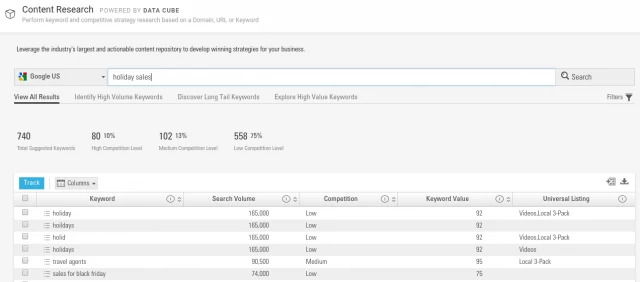
Similarly, use the Data Cube to find more keywords that may pertain to your customers during the holiday season. See if any keywords relate to holiday themes that might offer you ideas about what your audience will be most interested in searching for during the upcoming weeks. Build a content campaign focused on these holiday-themed interests and keywords.

You can also use the keywords you uncover through your research to bolster your paid search strategy. Paid search can be an excellent way to drive additional traffic towards new content, particularly seasonal content that you want to rank highly very quickly before it becomes obsolete. By incorporating more themed keywords into your PPC ads, you will also increase the appeal of your ads and increase the chances of uncovering potential customers on the SERP.

2. Watch for competitor weaknesses with B2B Q4 optimization

B2B Q4 optimization and ranking highly on the SERP is a zero-sum game. In order for you to do well, you must outpace your competitors -- not everyone can be a winner. Keeping a close eye on competitors’ strategies, therefore, can give you an edge.

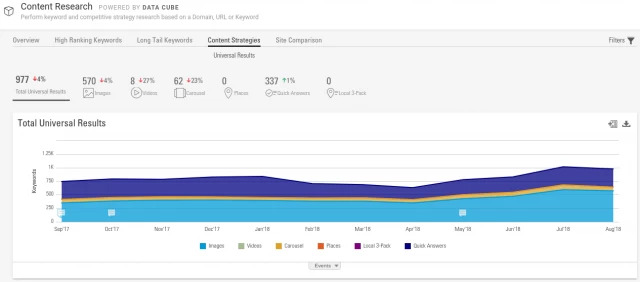
Using a capability like Data Cube, you can monitor the content strategies of your competitors, and see which keywords they rank highly for. This information can then be used to build your own strategies, maximizing your rankings. You can compare their high-ranking keywords with your own list and determine where your best opportunities will be to grow your share of voice for the fourth quarter. You can also then monitor your progress with BrightEdge Share of Voice to see how well the strategy helps you to outpace your competition.

Competitive strategies for B2B Q4 optimization - brightedge

3. Note changes in content engagement

You may notice some changes in content engagement during the holiday season. For example, your audience may find themselves taking more half days to spend time with family, long weekends to visit relatives, or otherwise taking a step back from their work responsibilities. If this impacts your content audience, you may notice differences in your traffic patterns.

Take these changes into account for B2B Q4 optimization as you post material. You may be able to improve your engagement by posting more towards the middle of the week and the morning rather than the afternoon, for example. Keep these insights in mind not only for your site but also for your brand presence on social media.

4. Build excitement for next year with B2B Q4 optimization

For the people who have depleted their budget for 2018 and will not be making any major purchases, your biggest goal will be to build their excitement for next year. You can do this using a few B2B Q4 optimization strategies.

Step 1. Focus on the human connection. Many people find themselves in a festive mood this time of year. Between the company parties, seeing family, vacations, and a more relaxed atmosphere at work, they appreciate more lighthearted material. Tap into this need with your posts on social media and your site. For example, taking holiday-themed pictures of your products or services, posting a few (tasteful!) pictures from company holiday parties, or otherwise building the human connection with your audience can work well.

Holiday-themed posts for B2B Q4 optimization - brightedge

Step 2. Continue to write fresh, engaging content that coaxes people into the sales funnel. Using those keywords you research, continue to produce new, fresh content to keep people engaged with your site. Do not be afraid to add some holiday flavor to your material, but continue to produce high-value content that people appreciate.

holiday flavor to high-value posts for B2B q4 optimization brightedge

Step 3. Write about successes you have seen over the past year. Now that the year begins to wrap up, look back over the past year and the accomplishments of your brand.

Consider producing a few posts with the help of pleased customers who can discuss what they were able to accomplish with your product or service over the past year. This can help to grow people’s enthusiasm about your brand as they prepare for a budget review and company meetings when they kick off the new year.

5. Capture people’s end-of-year budget with holiday-themed offers

Of course, with your holiday keywords, posts, and competitive strategies, you want to really try and capture any of the end-of-year budgets your clients still have and put it words B2B Q4 optimization. Complement your material with some holiday-themed sales and promotions.

Remember that although in the B2B world you offer a product or service that will help a business, making the sale is still about that personal connection. For the people making the buying decisions, enticing promotions and sales, such as Free Shipping Through the Holiday Season, can be as enticing on business purchases as it is on personal ones. Consider the promotions you can run to bolster your end-of-the-year numbers.

The end of the year can be a challenge for B2B brands as they try to maximize their earnings for the fiscal year, but also have to deal with customers who have finished their yearly budget. Focusing on a B2B Q4 optimization strategy that works to find a competitive edge to gather that last bit of leftover budget while also building excitement for next year will help set you up for a strong fourth quarter and a happy new year.

Higher Education SEO: Drive School Success with BrightEdge

maspillera
maspillera
M Posted 7 years 7 months ago
t 9 min read

Our latest research at BrightEdge indicates that for those in higher education, 61% of their site traffic comes from organic search. The research from our individual partners aligns well with these numbers, as UC Davis told us that 56% of their traffic arrives from organic search, and Education Management II reported 50%.

The importance of a strong online presence for higher education SEO can also be seen within the target audience. In 2018, an estimated 12.3 million college and university students will be under the age of 25. This young demographic profile means that a large percentage of the intended audience has grown up with technology. This explains why three quarters of high school juniors and seniors report that college websites influence how they see institutions. Prospective students expect colleges and universities to meet and engage with them online.

To build a strong online presence, educational organizations can use a variety of BrightEdge platform functions to improve their optimization and content production. Here is what you need to know about higher education SEO and the BrightEdge platform.

The importance of site optimization for higher education SEO

Recall the statistics on the importance of higher education SEO for colleges and universities. BrightEdge partner Education Management II reports that not only does organic search drive half of its traffic, but it is also responsible for 40% of their site conversions.

“SEO is a key piece of our digital marketing strategies as Organic Search comprises almost 50% of our site traffic and 40% of site conversion volume.” - Tim Kane, Education Management II

Those in higher education need to optimize content for organic search to ensure that their material can be easily found on the SERP. Higher education SEO in the current age requires brands to carefully plan their strategies around audience interests and technical site requirements.

On the BrightEdge platform, higher education SEO clients have access to the powerful Data Cube technology. The Data Cube can be used for keyword research. At UC Davis, our partners report using this feature to develop their strategies and to find new opportunities.

“I spend about 90 percent of my time on Data Cube, it was basically the main reason we bought BrightEdge. It is very helpful. We use it in our strategies and to find opportunities. It is critical in our content work and in competitive analysis.” - Adam Napolitan, UC Davis

They have been working on projects related to topics such as "health." To successfully reach their higher education SEO goals in these areas, they will need research related to keywords in these areas that also apply to their university.

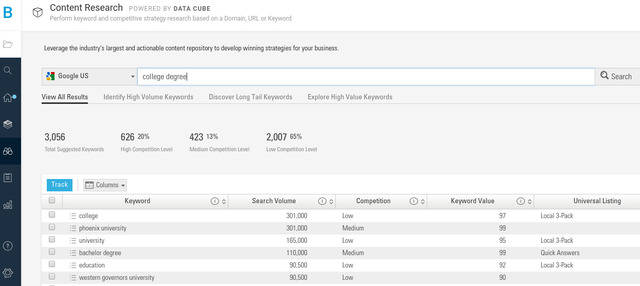
On the Data Cube, you can investigate different keywords and see the types of content that appear on the SERP. For example, higher education organizations will find that there are an estimated 3,000 keywords that appear related to "college diploma." They can then use this insight to find the keywords that appeal most to their audience and develop a content strategy based upon user intent.

Data Cube results for higher education SEO - brightedge

To further optimize their content, higher education organizations can also employ ContentIQ. As UC Davis said, this feature can be very valuable in the technical areas of SEO. By helping companies pinpoint essential higher education SEO aspects such as h1 tags and page load speed, they will make it easier for Google algorithms to understand their content and see its value.

Similarly, the Recommendations feature will help organizations uncover potential problems on their site and organize them according to importance. This technical SEO helps them remain on par with what incoming students will expect from their institutions of choice.

Watching the competition

As of 2012, 3,026 four-year schools and 1,700 two-year schools competed for the attention and enrollment of students interested in higher education. This intense competition means that for these schools to build a strong digital presence, they must also keep a careful eye on higher education SEO.

The Data Cube also plays a helpful role in this part of the digital strategy. Data Cube will show schools the keywords that their competitors rank for but they do not, thus empowering them to develop content that will fill these gaps. They will gain a more complete picture of how the other schools perform and what they need to do to maintain-- and increase-- their standings online.

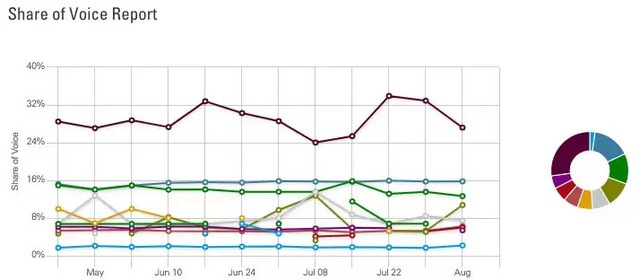
The BrightEdge platform also contains Share of Voice. With Share of Voice, organizations can compare their standings to their major competitors. They will receive a visual representation of the percentage of the internet space they dominate, versus how much the biggest competitors for that space do.

example of share of voice chart for higher education seo - brightedge

With Share of Voice, schools gain valuable information about which schools they need to pay the closest attention to. For example, they may realize that a school they had not even considered was their biggest competitor for keywords related to a significant degree program. This will empower schools to focus their higher education SEO strategies with a higher degree of precision. They can build strategies to counter the competition that poses the largest threat.

The information gained here can also play a valuable role in other ways. UC Davis SEOs, for example, can use it to show others at the institution “the light.” They can see how higher education SEO efforts allow their school to start gaining on--or even outpacing--the competition in important areas.

Gauging progress with higher education SEO

As schools begin to build and improve their digital presence, you will want to monitor your progress and clearly see the impact that your efforts have had on your visibility and traffic. StoryBuilder on BrightEdge will provide you with this advantage.

“It [StoryBuilder] is great for metrics and keeping an eye on things.” - Adam Napolitan, UC Davis

StoryBuilder makes it easy to customized dashboards to focus on the metrics that matter the most to you and your leadership at your institution. You can gauge KPIs, such as how many pages rank on page 1, allowing you to easily see your progress. You can also build customized dashboards that can be used when speaking with leadership, utilizing the metrics that capture their attention.

Our partners in higher education also mention using Keyword Reporting and Page Reporting regularly to further gauge their progress. They can monitor how keyword rankings respond to their optimization efforts on an individual level.

For BrightEdge partners in higher education, our platform offers the resources they need to compete and attract the attention of an increasingly digital audience. As our partners use the various features on the platform, they build a stronger digital presence and attract the site visitors and interest that allows their institution to thrive.

request a demo cta banner

7 Simple Ways to Discover Long-Tail Keywords

ssharma@brightedge.com
M Posted 11 years 4 months ago
t 9 min read

Keyword research and discovery is the fundamental first step towards optimizing your website content so it ranks for keywords, captures organic search share and generates leads. When conducting keyword research, it may be tempting to focus on those highly competitive one- or two-word terms used by most in your industry’s vertical. While these terms definitely should be part of your long-term SEO content keyword strategy, they should also be balanced with less competitive, “long-tail” keywords built into your site’s content. Long-tail keywords are more likely to capture searchers’ specific intent – yielding greater search visibility for your optimized content and higher conversions. I explain the rationale behind using long-tail keywords in another post on the BrightEdge blog:

Marketers spend a lot of time dreaming up the perfect piece of content, and then try to incorporate keywords. To be more effective and use your content to its potential, this strategizing should really be done the other way around. Research long-tailed keywords first, and incorporate them from the beginning of the process, so that your content is shaped around the keywords you need to use. Deciding on which long-tailed keywords to use before producing the content helps to ensure that the content gets seen by the right audience.

So, creating site content with long-tail keywords “baked in” signals search engines that your content is most relevant to your target user’s query, creating greater search visibility and conversions. In this post, we’ll go over si simple ways to discover long-tail keywords.

Resources for long-tail keyword research

1. The BrightEdge Data Cube

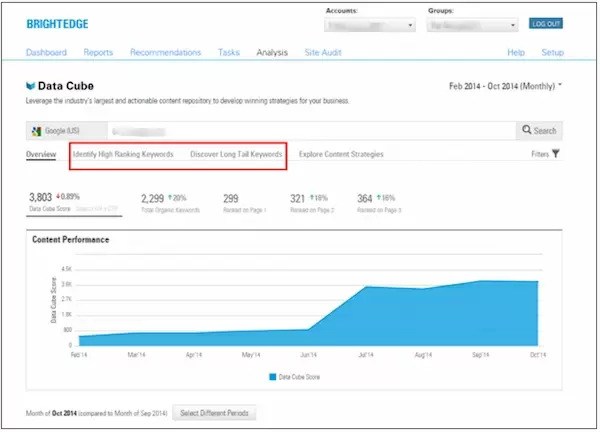
If you have access to the huge repository of data stored in our Data Cube, then you’re already a step or three ahead of your competitors in accessing competitive long-tail keywords. By leveraging its “SEO X-Ray” technology (similar to a search engine with a massive data bank of keywords from all the major search engines around the globe), you can readily view your competitors’ SEO management and strategies, including the keywords that are generating results for them that you should pursue as well. Specific to long-tail keywords, you can use the BrightEdge platform for keyword discovery by entering your site’s Web address (URL) in its search box, followed by those of your competitors. This will give you not only a list of long-tail keywords and their respective search performance, but also invaluable competitive intelligence. (Refer to my guide on performing keyword research, noted above, for more details on leveraging the BrightEdge Data Cube). finding long-tail keywords using the brightedge platform

2. Google trends

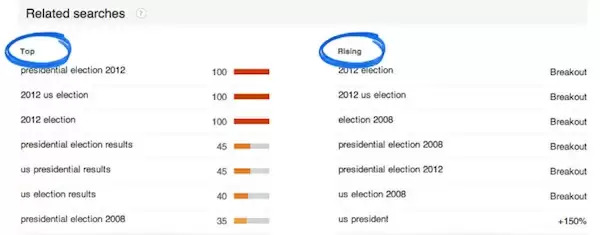
Google Trends and its related searches feature are free Google resources that give insight into how any given keyword is trending on the Web in terms of search volume, as well as related searches that, when explored, can offer more long-tail keyword terms to add to your keyword portfolio. Google’s 2012 U.S. presidential election example illustrates the data you can glean: using google trends to help you find long-tail keywords that work - brightedge Looking at Google’s example, you’ll notice “top” and “rising” stats. Top searches represent the popular search terms similar to the keyword term entered. The “rising” percentages are those searches related to your original keyword term that have shown a significant growth in popularity over a time period that you specify (such as month-over-month). Also notable are the “breakout” terms reflected in the election example (which, in this example, indicate the related search terms experienced a search query growth of more than 5,000 percent over the specified time period). In this way, Google Trends and its related searches can help you optimize for long-tail keyword terms that are immediately relevant, and those that are trending in organic search.
3. Google Webmaster Tools (GWT)

Using GWT search queries, you can see the top search queries that return your site pages in Google SERPs. You can also glean insights into your site’s content performance within a set time period of up to 90 days with parameters that include comparative page impressions and click-through rates (CTR). Google provides a video describing its search queries function, here: Note: The 90-day limit on GWT’s historical keyword data can be problematic when creating an informed, long-term keyword strategy. I discuss how the BrightEdge SEO platform solves this analytical gap further on the BrightEdge blog.

4. Google Ads keyword planner

For culling data on long-term keywords, you can also set up a Google Ads account to gain access its Keyword Planner tool. (Note: you don’t have to an ad campaign to use this resource). By simply entering your website’s URL into the first field of the Keyword Planner and selecting “get ideas,” you can readily discover more long-term keyword terms.

5. Google Analytics site search

Connecting your site’s search functionality to your Google Analytics is an effective way to gauge site-specific search intent and identify the long-tail keywords used by visitors. This article by Google’s Avinash Kaushik outlines five key insights you can gather from site search, like what info users are seeking and conversions resulting from on-site search. He elaborates on how you can deepen your understanding of search intent with internal site search analysis in this YouTube video.

6. Google’s autocomplete

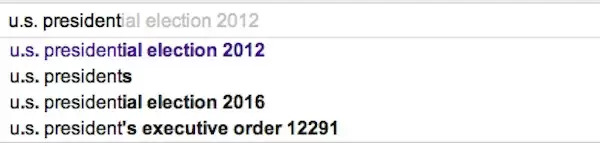
Besides the resources describe above, Google also has an “autocomplete” capability built into its predictive algorithm that “suggests” search query terms for users. Drawing on the example of the “2012 U.S. presidential election” above, before completing the query into Google’s search engine, it displayed the following: brightedge can assist you in finding long-tail keywords So by experimenting with Google’s autocomplete feature, you can see long-tail keyword suggestions that might be of interest to your target market.
7. Google’s related suggestions

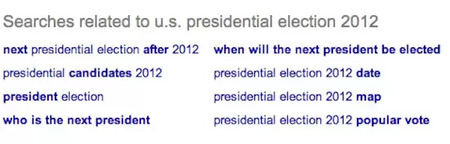
A second, related functionality of Google search that can offer long-tail keyword ideas is its “Searches Related to…” information at the bottom of its SERPs. (Note: this is distinct from its trending and related searches resource described above). Using the same search query of “2012 U.S. presidential election,” here is what Google lists at the bottom of its SERP: finding long-tail keywords is simple - brightedge Again, viewing the auto-generated related searches on Google’s SERPs – this time, at the bottom – you can discover other long-tail keyword terms that are closely related to yours. When it makes sense, they can be added to your keyword portfolio. Happy hunting!
 

How to Get the Most SEO Benefit Out of Your Content

ssharma@brightedge.com
M Posted 11 years 4 months ago
t 9 min read

By now most marketers know that content marketing is a huge key to SEO and marketing success, but not everyone gets everything they can out of their content. A good piece of content can go far, but a good piece of optimized content will always go further. This is because optimized content will help content get shared more, linked more, ranked higher, and will indirectly bring more traffic. For these reasons it's beneficial to talk about how optimizing content and using tools like long-tailed keyword research, internal linking and open graph markup is key to making your content really work for you.

Keyword research

First we'll talk about keyword research—not so much how to do it, but why. Marketers know that keyword research is helpful for PPC and SEO efforts, but why stop there? Ranking for the right keywords is integral to the success of your site, partly by not only getting visitors to your site, but by getting the right kind of visitors. Digital marketers can and should apply their keyword research toward content marketing. A lot of the time, marketers spend a lot of time dreaming up the perfect piece of content and then try to incorporate keywords.

To be more effective and use your content to its potential, this strategizing should really be done the other way around. Research long-tailed keywords first and incorporate them from the beginning of the process so that your content is shaped around the keywords you need to use. Deciding on which long-tailed keywords to use before producing the content helps to ensure that the content gets seen by the right audience. Doing keyword research early on also lets you know where to internally link the copy of the content.

how to get seo benefits - brightedge

Internal linking

Internal linking is not only beneficial because it helps Google figure out your website, but it helps users discover more content on your site. Users will find what initially brought them to the site but also other related content. As your content gets more and more interactions and earned links, it will build up authority for the keywords you initially researched. But to get even more benefits out of your content—and to pass authority on to other pages on your site—make sure to internally link to other pieces of content. If you have the ability to take your piece of content and do internal linking to your landing pages or to other blog posts (and do it naturally), take advantage of that. Use caution when doing this, though, and keep the user in mind; if an internal link is or even just looks unnatural, it may hurt rather than help in the long run.

Ultimately, responsible internal linking is helpful for building the structure of your site and for spreading link juice, but it is also helpful in increasing rankings and making your content more easily discovered. However, to get your initial piece of content seen by more people (and those more qualified), it needs to be optimized. This is where open graph markup comes into play.

Open graph markup

Open graph markup is the part of code found in the HTML <head> tag that tells social media what pieces to pull out onto the webpage when shared. It's likely that you've seen, for example, an infographic on Facebook or other social media platform that pulls the entire infographic rather than just the title section. And you've probably also seen the opposite: a link is shared and it automatically shares just a specific piece of the infographic. Open graph markup is what causes this difference. Of course, adding open graph tags to your website won't directly affect your on-page SEO.

These tags are mostly useful to increase performance of your links on social media, including increasing social shares and interactions. And again, it's true that social media doesn't have a huge direct influence on SEO, but the more times a post on social media is shared, the more likely it is that it will be seen by the right person—the person that will convert. Using open graph markup is the key to getting your content shared and even linked to other influencers. This is what will have lasting impacts on the SEO of your site. It's fairly transparent how these three tools for better content optimization work together to help and support the others, and all contribute to SEO. By effectively optimizing content from the ideation through the publishing of the content, you will earn more links, rank higher for the keywords you want and earn more and higher quality traffic, thereby effectively contributing to your site's overall SEO.  

,