What are Sitelinks and What are the Benefits?

gregalbuto
gregalbuto
M Posted 6 years 1 month ago
t 9 min read

As you make searches on Google, you have likely noticed the appearance of sitelinks. Sitelinks are those additional links that appear below the main URL for a particular domain on the SERP.

Here you will learn the importance of sitelinks - brightedge

These results are designed to help people better navigate your site by featuring the different areas of your site that might interest them. With the sitelinks, people can click directly to the part of your site that interests them the most, rather than clicking on the main URL and having to then navigate to their area of interest. Customers also get a better idea of the variety of content and areas on your site, which then helps them to see your relevance to their particular query.

Sitelinks, however, do not get displayed automatically. Google only displays them for sites when they believe they are highly relevant and helpful for the user. Google itself also selects the pages that get displayed within the sitelink portion, with the site owner having no direct control over the process. There are, however, steps that site owners can take to encourage their appearance on the page.

Given the potential benefits of sitelinks and their impact on SEO and traffic, we wanted to discuss these links with our community. Let’s dive into the benefits of sitelinks for site owners and what you can do to encourage Google to post them for your site. Leverage Site Report to make sure Google and other search engines can find your content.

Benefits of sitelinks

The immediate benefits that sitelinks offer lies in the increase in real estate on the SERP. When you have a domain that displays sitelinks, your listing automatically takes up the space of two to three listings, drawing the eye of every user on the page.

Considering that the top three positions get 52 percent of the clicks from the SERP, the click and traffic implications of taking up this much more space on the SERP become clear.

This additional space on the SERP also helps to build trust and a positive reputation for your organization. Google only awards sitelinks to the domains that it views as deserving of this extra space. Site owners cannot click anything within their search console to activate the links. Therefore, receiving this ‘award’ from Google helps to clearly demonstrate that the search engine views a particular domain as trustworthy.

Also, keep in mind that the sitelinks help to display a range of different pages within your site. It might include main categories from your menu, particular product pages, or portions of a blog. This encourages people to navigate throughout your site, as they can see more of what is offered on your site.

This variety within the listing on the SERP might also encourage people to explore parts of the site that they might not have otherwise looked at. It can help drive traffic to pages that previously did not receive as much attention.

Different types of sitelinks

The sitelinks most people are familiar with are those that Google generates automatically in response to certain queries. These sitelinks appear with the top organic search result and can vary, depending upon the type of query and what Google identifies as the user intent. The links also depend upon Google’s understanding of the site structure and what might help users navigate the site more easily.

The other main type of sitelinks are those that people can add to the Google Ads promotions they create. Google offers a sitelink extension that people can use to include additional links within their ad.

This extension makes it easy for people to offer a more varied ad with more options for customers to click on the material that appears the most helpful for them.

Changes Google has made to sitelinks

Although Google has never given site owners direct control over whether or not their page had sitelinks, until four years ago, people were able to remove certain sitelinks. If a page popped up in your sitelinks area that you did not want promoted on the SERP, you could ask Google to delete that particular link.

this is what you need to know about sitelinks - brightedgeHowever, in late 2016, Google announced that it would no longer allow this option. Essentially, the search engine had decided that their algorithms had matured enough to know which pages would work best within the sitelinks area and that allowing people to discourage certain links unnecessarily complicated things.

Google has said that they do not rule out the possibility of allowing more influence from site masters in the future, but for now, site owners do not have direct control over the process.

As an important note, Bing does allow site owners to demote sitelinks, which are referred to as deep links on this search engine.

Google sitelinks don't just appear - Google makes them appear

Website owners have little control over whether or not sitelinks appear for their material. The creation of sitelinks is an automatic process on Google’s part. The search engine analyzes the structure of your site and then creates the sitelinks as shortcuts that can help users quickly find the information they need. The search engine also says that they only display sitelinks if they would be relevant for the user’s query.

The selection of sitelinks available for a particular domain can also change from query to query depending upon the usefulness of the links for the user.

Sitelinks appear most commonly for branded searches, but can also appear for some other specific searches from highly trustworthy sites as well. Similarly, they most often appear for a site that appears in the first ranked position, but occasionally you may see them for a search result slightly further down on the first page of results, provided that the site is exceptionally well-regarded.

About the sitelink search box

A sitelink search box is a search box that can appear with your domain on the SERP. It allows users to make searches of your website’s pages from the SERP. This allows them to find the exact information they need.

Site owners can use structured data to indicate they either do or do not want the search box to appear for their results. Its ability to bring users a variety of content from your site can make it very appealing from an SEO perspective. Since it is powered by Google, however, users will still have access to outside information while searching, which can result in their clicking of external links.

It is also possible for users with highly reputable sites to have a search box that will offer results to users by directing them to a SERP within the domain, rather than on Google. When this happens, it offers an excellent opportunity for branding and to keep traffic on your page.

Get sitelinks to appear for your site

Keep in mind, as we have already explained, the generation of sitelinks is an automatic process. That doesn’t mean, however, that site owners cannot follow steps to help influence the creation of sitelinks and help Google notice the pages that they do want to have appear on the search result.

When discussing how they select domains for sitelinks, Google specifically speaks about the site organization.

“We only show sitelinks for results when we think they’ll be useful to the user. If the structure of your site doesn’t allow our algorithms to find good sitelinks, or we don’t think that the sitelinks for your site are relevant for the user’s query, we won’t show them.”

Therefore, we believe one of the most important steps members of our community can take is to verify their site organization.

  • Make sure your site structure and hierarchy is clear and logical. If you have not prioritized site structure, this should be good motivation to do so. Not only will this help with sitelinks, but it can also help with other aspects of SEO.
  • Use internal links to help demonstrate your internal site structure and the priority of the pages within your domain. Good linking structures can help to clearly indicate which pages should be prioritized. As you create internal links, use carefully considered anchor text that provides value, without being repetitive.
  • Have a main menu that helps to further emphasize the central categories of content on your page.
  • Build an XML sitemap and make sure it has been properly submitted to Google.

In addition to carefully considering your site structure, you also want to look at your brand name. Make sure your site ranks first for branded searches. If it does not, see if the cause is a name that is not unique enough or if your site needs more optimization work. Look at your URL and site branding to make sure it clearly articulates your brand.

Adding a sitelink search box to your site

Finally, you can also use schema on your site to help Google better understand the content throughout your page and emphasize the parts of your page that you want featured on the sitelinks. For example, you can use a schema markup to create a search box for your site on the SERP. If Google decides that users interested in your site would be well served by a search box, this markup empowers the search box. Conversely, if you do not want the search box to appear, you can use a schema markup that lets Google know this as well.

If you do want the search box, the schema data, as generated for an example by Google, would look like this:

<html>

  <head>

    <title>The title of the page</title>

    <script type=”application/ld+json”>

    {

      “@context”: “https://schema.org”,

      “@type”: “WebSite”,

      “url”: “https://www.example.com/”,

      “potentialAction”: {

        “@type”: “SearchAction”,

        “target”: “https://query.example.com/search?q={search_term_string}”,

        “query-input”: “required name=search_term_string”

      }

    }

    </script>

  </head>

  <body>

  </body>

</html>

If you do not want the search box to appear, then this line of code would suffice:

<meta name=”google” content=”nositelinkssearchbox” />

For more information on the sitelink search box, you can read the Google guidelines here.

Reporting on Google sitelinks

Site owners interested in taking advantage of the potential offered by sitelinks will need to carefully monitor their own site. Know for which queries the domain appears in the top positions and regularly track to see if sitelinks appear for the brand.

When you do have an idea of which queries and pages yield the sitelinks, see how traffic compares between pages that do have sitelinks and those that do not. Monitor also how traffic rates change after sitelink options appear for your site.

If you have sitelinks appear through Google Ads promotions, you can see how the sitelinks directly impact the campaign.

  • Select the campaign you want to check
  • Click on the ‘segment’ button
  • Add a segment for your sitelinks extension
  • Gain a far clearer picture of how well the sitelinks impacted the ad’s performance

Sitelinks offer tremendous potential for sites, empowering them to increase their real estate on the SERP and thereby boost their branding and their traffic. While site owners do not currently have any direct control over when and how the sitelinks appear, taking the steps above can help encourage their appearance and boost the broader SEO strategy at the same time.

How to Target Bottom-of-the-Funnel Sales Leads?

Close your bottom-funnel leads

Leads at the bottom of the sales funnel have reached the point where they are just about ready to buy. They have evaluated their different option and narrowed down their prospects to their last company or two. Now, they focus on making sure that this investment they are about to make will fully solve their pain point.

Targeting customers at this stage, therefore, revolves around putting their hesitations to rest and providing a well-thought out effort to help them overcome any remaining obstacles so that they can hit the ‘buy’ button.discover how to target bottom-of-the-funnel sales leads - brightedge

Know where customers are

Leads at this stage will likely engage with your brand virtually and on a more personal level. A dedicated sales team will be having an ongoing conversation with these prospects, helping them understand why they should select your product. This lead will also be interested in whitepapers and books that help them understand the results they can expect to receive when they buy as well as demos that can help them start to see the full picture of your product or service.

Creating content for prospects at the bottom-of-the-funnel

As you create content for this stage of the journey, here are some ideas to get started.

  • Sales team insights
  • Competitor insight
  • Customer insight

1. Sales team insights. The sales team will play an important role in this process. Since they will likely already be in a dialogue with the lead, you will want to maintain an open conversation with them about the type of content you need to produce. They can take into account what customers typically want to see as they get closer to making a purchase. The sales team can thus make content suggestions for the different types of materials you produce.

Your sales team will also play an important role in distributing the content. Since the material at this stage will likely be more specific to your brand and have less of a search volume, those actively engaging with the lead will play an important role in guiding prospective customers to answers through the content you have created.

2. Competitor insight. At this stage, you also want to continue to monitor your competitors and see what they offer their prospective customers. Since many customers will be comparing one or two companies as they prepare to make a purchase, you want to know the type of content that the other main competitors have to offer and the impact it has on the buying decisions of leads. The more information you can gather about their bottom-of-funnel material, the more prepared you will be to make sure that your material out-performs theirs.

3. Customer insight. Once you do successfully convert customers, ask them about their decision-making process and what helped them to understand why your product or service would provide the most benefit. Learn about the content or the conversations with the sales team that helped persuade them to take that final step and convert.

The better you understand what encouraged one customer to convert, the more prepared you will be to create material that will help others as well.

Creating content for the bottom-of-the-funnel provides a critical part of the buyer's journey. It encourages people who have reached the stage to buy to complete the process and end their pain point with the help of your organization. As you begin to lay out your funnels and create material to target your end-of-the-funnel leads, consider the advice above and see how it can benefit your brand.

Definition

Close your bottom-funnel leads

Leads at the bottom of the sales funnel have reached the point where they are just about ready to buy. They have evaluated their different option and narrowed down their prospects to their last company or two. Now, they focus on making sure that this investment they are about to make will fully solve their pain point.

Targeting customers at this stage, therefore, revolves around putting their hesitations to rest and providing a well-thought out effort to help them overcome any remaining obstacles so that they can hit the ‘buy’ button.discover how to target bottom-of-the-funnel sales leads - brightedge

Know where customers are

Leads at this stage will likely engage with your brand virtually and on a more personal level. A dedicated sales team will be having an ongoing conversation with these prospects, helping them understand why they should select your product. This lead will also be interested in whitepapers and books that help them understand the results they can expect to receive when they buy as well as demos that can help them start to see the full picture of your product or service.

Creating content for prospects at the bottom-of-the-funnel

As you create content for this stage of the journey, here are some ideas to get started.

  • Sales team insights
  • Competitor insight
  • Customer insight

1. Sales team insights. The sales team will play an important role in this process. Since they will likely already be in a dialogue with the lead, you will want to maintain an open conversation with them about the type of content you need to produce. They can take into account what customers typically want to see as they get closer to making a purchase. The sales team can thus make content suggestions for the different types of materials you produce.

Your sales team will also play an important role in distributing the content. Since the material at this stage will likely be more specific to your brand and have less of a search volume, those actively engaging with the lead will play an important role in guiding prospective customers to answers through the content you have created.

2. Competitor insight. At this stage, you also want to continue to monitor your competitors and see what they offer their prospective customers. Since many customers will be comparing one or two companies as they prepare to make a purchase, you want to know the type of content that the other main competitors have to offer and the impact it has on the buying decisions of leads. The more information you can gather about their bottom-of-funnel material, the more prepared you will be to make sure that your material out-performs theirs.

3. Customer insight. Once you do successfully convert customers, ask them about their decision-making process and what helped them to understand why your product or service would provide the most benefit. Learn about the content or the conversations with the sales team that helped persuade them to take that final step and convert.

The better you understand what encouraged one customer to convert, the more prepared you will be to create material that will help others as well.

Creating content for the bottom-of-the-funnel provides a critical part of the buyer's journey. It encourages people who have reached the stage to buy to complete the process and end their pain point with the help of your organization. As you begin to lay out your funnels and create material to target your end-of-the-funnel leads, consider the advice above and see how it can benefit your brand.

How to Target Mid-Funnel Sales Leads

Win over your mid-funnel leads

When people move to the middle-of-the-funnel, they have already been researching their pain point and have begun to understand their various choices. A few company names start to stand out to them as they begin to form a ‘short list’ of potential companies that they want to buy from.Learn how to sell at the middle of the digital marketing funnel - brightedge

When you want to target customers at this stage of the marketing funnel, you will need to understand their comparison process. You want to create a strong sense in their mind that you are the authority on the subject and the solution they need, and that thus they should trust you and what you can offer them.

Know where your customers are

Your first step in targeting customers in the middle of the sales funnel lies in understanding what platforms you can use to engage with them.

The presence you nurture on the SERP and the authority on your website continue to be important factors. Customers may look for downloadable whitepapers and ebooks. Your email list and the content you promote to email subscribers will also play an important role.

Your social media profile should also offer a strong presence where you demonstrate a willingness to actively engage with prospective customers and answer their questions or address their concerns as they arise. Here are some places to begin.

  • Target leads with content
  • Understand main competitors
  • Website traffic
  • Conversations with customers

1. Targeting leads with content. As you build your presence on these different platforms, you need to know how to generate topic ideas that will interest your customers and continue to nurture them to conversion.

2. Understanding main competitors. Spend the time developing a thorough understanding of your competitors. Know what appeals to customers who elect to buy from them and how they nurture their leads towards sales. This can offer valuable information about strategies that you can try as well as potential gaps that you can capitalize on to grow your business.

Remember that leads at this stage have also begun to create a short list of companies they may buy from. Therefore, knowing your top competitors can also help you plan content that focuses on pointing out why your brand offers a better solution than the product or service offered by the other brand.

3. Website traffic. Your website itself can also offer valuable information about what people at the middle of the marketing funnel want to see from organizations. Look at where customers click on your website and the types of content that seem to engage them the most. Monitor the types of email messages that get the most click throughs and the content that encouraged people to click around the site.

This information will help you gain a more complete picture of what customers want to see and what interests them the most on your site. This information can help inform the content creation process as you focus on the most relevant material.

4. Conversations with customers. Your customers can also provide helpful information about what they want to see. As you build relationships with your customers, ask them about their buying process. See what mattered to them the most as they headed into the mid-funnel area. Uncover potential topic ideas and themes as you create material that will also encourage new potential customers to learn more about your company and what you have to offer.

As leads progress through the top-of-the-funnel stages into the mid-funnel stages, you want to provide them with strong motivation to keep coming back to your organization. Creating content that helps to set you apart from the competition can build your business. Encourage people to submit contact information so that you can nurture these leads further plays a significant role. 

Definition

Win over your mid-funnel leads

When people move to the middle-of-the-funnel, they have already been researching their pain point and have begun to understand their various choices. A few company names start to stand out to them as they begin to form a ‘short list’ of potential companies that they want to buy from.Learn how to sell at the middle of the digital marketing funnel - brightedge

When you want to target customers at this stage of the marketing funnel, you will need to understand their comparison process. You want to create a strong sense in their mind that you are the authority on the subject and the solution they need, and that thus they should trust you and what you can offer them.

Know where your customers are

Your first step in targeting customers in the middle of the sales funnel lies in understanding what platforms you can use to engage with them.

The presence you nurture on the SERP and the authority on your website continue to be important factors. Customers may look for downloadable whitepapers and ebooks. Your email list and the content you promote to email subscribers will also play an important role.

Your social media profile should also offer a strong presence where you demonstrate a willingness to actively engage with prospective customers and answer their questions or address their concerns as they arise. Here are some places to begin.

  • Target leads with content
  • Understand main competitors
  • Website traffic
  • Conversations with customers

1. Targeting leads with content. As you build your presence on these different platforms, you need to know how to generate topic ideas that will interest your customers and continue to nurture them to conversion.

2. Understanding main competitors. Spend the time developing a thorough understanding of your competitors. Know what appeals to customers who elect to buy from them and how they nurture their leads towards sales. This can offer valuable information about strategies that you can try as well as potential gaps that you can capitalize on to grow your business.

Remember that leads at this stage have also begun to create a short list of companies they may buy from. Therefore, knowing your top competitors can also help you plan content that focuses on pointing out why your brand offers a better solution than the product or service offered by the other brand.

3. Website traffic. Your website itself can also offer valuable information about what people at the middle of the marketing funnel want to see from organizations. Look at where customers click on your website and the types of content that seem to engage them the most. Monitor the types of email messages that get the most click throughs and the content that encouraged people to click around the site.

This information will help you gain a more complete picture of what customers want to see and what interests them the most on your site. This information can help inform the content creation process as you focus on the most relevant material.

4. Conversations with customers. Your customers can also provide helpful information about what they want to see. As you build relationships with your customers, ask them about their buying process. See what mattered to them the most as they headed into the mid-funnel area. Uncover potential topic ideas and themes as you create material that will also encourage new potential customers to learn more about your company and what you have to offer.

As leads progress through the top-of-the-funnel stages into the mid-funnel stages, you want to provide them with strong motivation to keep coming back to your organization. Creating content that helps to set you apart from the competition can build your business. Encourage people to submit contact information so that you can nurture these leads further plays a significant role. 

How to Target Top-of-Funnel Sales Leads

Targeting your leads at the top-of-funnel

Your top of the funnel leads are in the beginning of their buyer’s journey. They have recently discovered their pain point and want to find potential solutions that will help them solve their problem. At this stage, their priority lies in gaining a better understanding of their pain point and the potential options and companies they should investigate.Lead nurturing at the top-of-funnel - brightedge

The key to nurturing these top-of-the-funnel leads, therefore, lies in creating content that explores their problem and helps to clearly articulate how your brand can help. You want to draw customers into your site by creating content that helps them see your expertise and your insight.

Know where the customers begin online

As you build content for customers at this stage of the buyer's journey, you want to verify where your customers are and how you can reach them. Social media, including YouTube, can be strong assets in this stage. Developing a strong presence on the SERP can also encourage a strong reputation and nurture company interest. Having a website that has the organization and content to encourage people to practice lead generation marketing through email lists and downloadable content also plays an important role.

Creating your content

Here are some main ideas for creating content that will allow you to target these customers.

  • Keyword research
  • Social media trends
  • Competitor insight

1. Keyword research. Keyword research will help you understand what customers look for online based on search volume. You will see the most popular topics that matter the most to your particular customers.

When you do your keyword research with the BrightEdge platform, you can also gain insight about the level of competition for the keywords in order to select variations and topics that will also help you build your presence on the SERP.

2. Social media trends. You also want to make sure that you fully understand how your potential customers interact on social media. People turn to social media to discuss their pain points as well as the companies they have patronized and the products they have purchased.

Tracking the trends across social media gives you an opportunity to build a strong community on Facebook, helping potential top-of-the-funnel clients find you. It also allows you to stay abreast of rising trending topics, empowering you to create content that gets out in front of the competition and reaches your audience at the peak of their interest.

3. Competitor insight. You can also look to your competitors to better understand what customers want to see at the beginning of their journey as they seek to solve their pain points. Look for gaps in your content, where they rank for keywords that you do not. See if there are particular types of material that appear to play a strong role in their ability to nurture new leads through lead generation marketing.

Bringing in more traffic and increasing your appeal for top-of-the-funnel leads can help you grow your business. Consider the pointers above as you begin to create a strategy to target your top-of-the-funnel customers.

Definition

Targeting your leads at the top-of-funnel

Your top of the funnel leads are in the beginning of their buyer’s journey. They have recently discovered their pain point and want to find potential solutions that will help them solve their problem. At this stage, their priority lies in gaining a better understanding of their pain point and the potential options and companies they should investigate.Lead nurturing at the top-of-funnel - brightedge

The key to nurturing these top-of-the-funnel leads, therefore, lies in creating content that explores their problem and helps to clearly articulate how your brand can help. You want to draw customers into your site by creating content that helps them see your expertise and your insight.

Know where the customers begin online

As you build content for customers at this stage of the buyer's journey, you want to verify where your customers are and how you can reach them. Social media, including YouTube, can be strong assets in this stage. Developing a strong presence on the SERP can also encourage a strong reputation and nurture company interest. Having a website that has the organization and content to encourage people to practice lead generation marketing through email lists and downloadable content also plays an important role.

Creating your content

Here are some main ideas for creating content that will allow you to target these customers.

  • Keyword research
  • Social media trends
  • Competitor insight

1. Keyword research. Keyword research will help you understand what customers look for online based on search volume. You will see the most popular topics that matter the most to your particular customers.

When you do your keyword research with the BrightEdge platform, you can also gain insight about the level of competition for the keywords in order to select variations and topics that will also help you build your presence on the SERP.

2. Social media trends. You also want to make sure that you fully understand how your potential customers interact on social media. People turn to social media to discuss their pain points as well as the companies they have patronized and the products they have purchased.

Tracking the trends across social media gives you an opportunity to build a strong community on Facebook, helping potential top-of-the-funnel clients find you. It also allows you to stay abreast of rising trending topics, empowering you to create content that gets out in front of the competition and reaches your audience at the peak of their interest.

3. Competitor insight. You can also look to your competitors to better understand what customers want to see at the beginning of their journey as they seek to solve their pain points. Look for gaps in your content, where they rank for keywords that you do not. See if there are particular types of material that appear to play a strong role in their ability to nurture new leads through lead generation marketing.

Bringing in more traffic and increasing your appeal for top-of-the-funnel leads can help you grow your business. Consider the pointers above as you begin to create a strategy to target your top-of-the-funnel customers.

How to do SEO in Under 10 Hours Per Week

SEO efforts with minimal time each week

Although SEO has become a critical portion of a modern digital marketing strategy, it can appear to be a time-consuming process. For organizations with numerous time constraints, trying to figure out how to fit in the important component that is SEO can feel overwhelming.

Fortunately, there are a number of techniques and ideas that brands can use to start to see SEO results despite having only about ten hours a week to spend on their endeavors. Here are some ideas for successful SEO implementation within a limited weekly timeframe.learn how to do seo in under ten hours per week - brightedge

  • Prioritize
  • Know where your customers are
  • Have strong supports in place
  • Follow a clear plan

1. Prioritize. You want to help your brand achieve the most successes with SEO while minimizing the time needed to achieve them. Therefore, learning how to prioritize tasks will be critical.

Focus on the action items that can help your brand achieve the most gains with the least efforts. For example, striking distance keywords can help the brand see tremendous gains on the first page of the SERPs.

A website that is newer may also want to prioritize the creation of new content, whereas a website that is more established with thousands of pages of relevant content may want to focus more on optimizing existing material.

When prioritizing tasks, focus on asking yourself the following questions:

  • What tasks matter the most for my website and brand?
  • What tasks will allow me to see the most results for the least investment?
  • What tasks align closest to my target customers’ needs?

2. Know where your customers are. When you begin to build an SEO strategy, you will also need to consider the preferences of your customers. Uncover the platforms and type of engagement that appear to interest them the most.

Remember that a successful SEO strategy needs to also incorporate means of promoting the content and encouraging people to click on your material. Therefore, knowing which social media platforms most of your customers use will allow you to create a tailored strategy for that platform that can achieve maximum success for the least time investment. With only ten hours per week, you do not have time to waste on channels that do not offer enough returns.

In a similar manner, knowing which industry publications get read by the most customers can help you determine a guest post strategy that you can work into your overarching SEO effort.

3. Have strong supports in place. To make the most out of your ten hours, you will also need to have strong support in place. You do not want to have to track down data from a variety of sources or waste time when building content calendars or assigning tasks. You want everything accessible in a centralized location that your team can access to guide their tasks.

Fortunately, the BrightEdge platform makes it easy for brands to organize their SEO strategy, track their results, and decide what they want to accomplish next.

4. Follow a clear plan that will help you maximize your ten hours. With a maximum of ten hours per week allowance, you will also have to have a concrete schedule that makes your expectations and goals clear. Goals and clearly outlined plans can make it easier to streamline your efforts. Each member of the team will know precisely what the organization expects from them and when it needs to be accomplished. This keeps everyone on track and maximizes their efficiency.

SEO in just ten hours a week is not the easiest endeavor, but it can be done with the proper planning and strategy. If you want to see genuine SEO success, but know that time constraints will be a pressing concern, see how the ideas here can help you make the most out of your few hours a week and experience tangible results.

Definition

SEO efforts with minimal time each week

Although SEO has become a critical portion of a modern digital marketing strategy, it can appear to be a time-consuming process. For organizations with numerous time constraints, trying to figure out how to fit in the important component that is SEO can feel overwhelming.

Fortunately, there are a number of techniques and ideas that brands can use to start to see SEO results despite having only about ten hours a week to spend on their endeavors. Here are some ideas for successful SEO implementation within a limited weekly timeframe.learn how to do seo in under ten hours per week - brightedge

  • Prioritize
  • Know where your customers are
  • Have strong supports in place
  • Follow a clear plan

1. Prioritize. You want to help your brand achieve the most successes with SEO while minimizing the time needed to achieve them. Therefore, learning how to prioritize tasks will be critical.

Focus on the action items that can help your brand achieve the most gains with the least efforts. For example, striking distance keywords can help the brand see tremendous gains on the first page of the SERPs.

A website that is newer may also want to prioritize the creation of new content, whereas a website that is more established with thousands of pages of relevant content may want to focus more on optimizing existing material.

When prioritizing tasks, focus on asking yourself the following questions:

  • What tasks matter the most for my website and brand?
  • What tasks will allow me to see the most results for the least investment?
  • What tasks align closest to my target customers’ needs?

2. Know where your customers are. When you begin to build an SEO strategy, you will also need to consider the preferences of your customers. Uncover the platforms and type of engagement that appear to interest them the most.

Remember that a successful SEO strategy needs to also incorporate means of promoting the content and encouraging people to click on your material. Therefore, knowing which social media platforms most of your customers use will allow you to create a tailored strategy for that platform that can achieve maximum success for the least time investment. With only ten hours per week, you do not have time to waste on channels that do not offer enough returns.

In a similar manner, knowing which industry publications get read by the most customers can help you determine a guest post strategy that you can work into your overarching SEO effort.

3. Have strong supports in place. To make the most out of your ten hours, you will also need to have strong support in place. You do not want to have to track down data from a variety of sources or waste time when building content calendars or assigning tasks. You want everything accessible in a centralized location that your team can access to guide their tasks.

Fortunately, the BrightEdge platform makes it easy for brands to organize their SEO strategy, track their results, and decide what they want to accomplish next.

4. Follow a clear plan that will help you maximize your ten hours. With a maximum of ten hours per week allowance, you will also have to have a concrete schedule that makes your expectations and goals clear. Goals and clearly outlined plans can make it easier to streamline your efforts. Each member of the team will know precisely what the organization expects from them and when it needs to be accomplished. This keeps everyone on track and maximizes their efficiency.

SEO in just ten hours a week is not the easiest endeavor, but it can be done with the proper planning and strategy. If you want to see genuine SEO success, but know that time constraints will be a pressing concern, see how the ideas here can help you make the most out of your few hours a week and experience tangible results.

Successful SEO is Possible with a Small SEO Team

gregalbuto
gregalbuto
M Posted 6 years 1 month ago
t 9 min read

Considering that 93 percent of online experiences begin with search, and that even 82 percent of customers about to buy something in store will still research online, brands today cannot afford to overlook the importance of SEO and creating a strong digital presence. Many organizations, however, have to learn how to manage this with a small SEO team. Given the immense task of fully optimizing a site and elevating a brand across the web, this can feel challenging.

Fortunately, we have seen many organizations who achieve considerable SEO success despite a small SEO team by using an optimal strategy. Here is what we would recommend for those who want to take their optimization to the next level.

Understand the importance of training people in multiple disciplines

When it comes to building a highly efficient small SEO team, you want to emphasize the importance of cross-discipline training and cooperation. One of the challenges faced by small SEO teams is the variety of disciplines that go into building a solid SEO strategy.

In general, you need someone who:

  • Can manage the technical side of SEO to help you take advantage of opportunities in presentation with coding and schema markup
  • Will produce high quality content to help demonstrate the brand’s expertise and trustworthiness
  • Has the ability to do standard on-page SEO optimization to help the content rank as highly as possible
  • Understands how to use social media to engage with prospective customers and drive traffic back to your site to build engagement and rankings
  • A marketer who understands the overarching SEO strategy and content production who can create schedules and fit all of the different pieces together into a solid strategy.

On a small SEO team, it may be a challenge to create a fully equipped team with a member to fill every role. Instead, often a single team member needs to have the insight to fill multiple roles.

Offer opportunities for team members to receive training in various disciplines that the group needs. For example, provide your content writers with lessons and training opportunities to help them understand how to do on-page SEO.discover ways to create a successful small SEO team - brightedge

Online, there is now a wealth of opportunities for brands who want to find training for different areas of SEO. Blogs, like our BrightEdge blog,  can help novice SEO professionals delve into different areas of specialization. Training courses and books can also help professionals learn more about how to drive success online.

Prioritizes the marketing areas you will focus on

Once your small SEO team has begun to form, the next step to achieve success lies in prioritizing your marketing tasks based on what you can accomplish quickly and see the best results. Particularly with a small team, accomplishing these quick wins can help you begin to build up the team and demonstrate to the organization as a whole that SEO is a worthy investment.

BrightEdge makes it easy for brands to identify areas where they can see the best SEO victories as quickly as possible. Our platform can show brands the pages that are close to ranking within the top results on the SERP, and thus provide ample opportunities to see success.

In addition to pages that offer great openings for quick wins, think also about what pages might be missing from your site. Look at competitor sites for major gaps within the content you have created.

Also, analyze how you currently have your buyer’s journeys set up. Consider how your various personas progress from their initial stages of investigation through becoming customers. Are there any major gaps in their progression? Prioritize closing these gaps.

Set reasonable weekly goals

To keep everyone moving forward, you also want to set reasonable goals. You will not have the same bandwidth as an organization with a significantly larger team, but you can make steady progress. The important thing is to set well-articulated goals so that everyone knows their exact role and is clear on deadlines.

Bring the team together and discuss what they can reasonably accomplish per week. Use this meeting to also determine the progression of how content and the optimization process will move between team members. For example, a content writer who can also manage SEO should produce a piece of fresh content each week, which they then pass to the technical SEO professional who also posts the material.

The goals your group sets should revolve around the priorities of marketing that your group already determined. Consider factors such as optimizing a certain number of pages per week, producing a certain number of fresh pieces of content, and creating a predetermined number of social posts each week.

These weekly goals should also carve a clear path towards guiding monthly and quarterly goals. This will help each member of the team see how their weekly accomplishments feed into the groups overarching goals.

Remember the importance of the entire sales funnel

optimize the full buyer's journey with your small seo team - brightedgeAs you produce content, be careful not to overly prioritize the top-of-the-funnel to the detriment of the middle or bottom of the funnel. It can be easy for marketers to focus on content that falls at the beginning of the buyer’s journey and neglect other material, particularly as the top-of-the-funnel content tends to be easy to find through keyword research.

To see true ROI from your marketing, however, your material should be capable of nurturing customers through the entire buyer’s journey. This will warm up the lead enough for the sales representatives.

To improve your ability to produce content for those further down the sales funnel, use a combination of:

  • Keyword research
  • Customer interviews
  • Site monitoring
  • Competitive analysis

Since you have a small SEO team, you will need to make sure that the content you produce aligns well with your entire sales funnel. With fewer resources and more time constraints, you cannot waste time producing ineffective material.

Have quality supports in place

When it comes to making the most of a small team for effective SEO, the right support can make a tremendous amount of difference. With the BrightEdge platform, your small team can bring together a variety of capabilities. For example, you can use the platform to:

  • Monitor your SEO success and understand your progress
  • Find striking distance keywords and easy SEO wins
  • Conduct the research on competitors and keywords that you need to build a strong funnel
  • Receive SEO guidance to empower those learning hybrid specialties to complete the jobs well
  • Assign and coordinate tasks with others on the team so that everyone knows the schedule and their responsibilities to improve efficiency

Successful SEO with a small SEO team is completely within the reach of your organization. Knowing how to organize and train your group as well as prepare your strategy will help your brand achieve solid SEO growth and work towards your objectives. Consider the advice and guidelines outlined above as you begin to move forward with your SEO goals.

How to Optimize a Google Ads Campaign?

SEO for Google Ads campaign

Google Ad campaigns provide organizations with tremendous potential to engage with their target audience and make sure that their brand appears high on the SERP for important queries. However, knowing how to optimize the ads they create can help marketers ensure that their campaign brings in as much traffic and as many conversions as possible.

Here are four ideas for optimizing your Google Ads campaign.learn how to optimize google ads campaigns - brightedge

  • Keyword research
  • Create ad text and headlines
  • Employ A/B testing
  • Use filters

1. Keyword research. Begin by optimizing for the keywords and key terms you want to target with the ad. Know what search terms matter the most to your target customers and where on the journey they will likely be when making such a search. This will help you create content that correlates well with the likely user intent.

Remember that Google Ads can also be a great tool if you have a highly competitive keyword that you struggle to get your material to rank for organically. You can use an ad campaign to keep your brand visible for customers making this search.

2. Create ad text and headlines based on user intent. You want to make sure that your ads align closely with the intent of your user to encourage them to click and engage. To gain a better understanding of the likely user intents of people who search for your targeted keywords, look at how the SERP appears now. Look at the content on the top ranking sites and how the SERP listing is constructed to better understand what people likely want to see when they enter this search. Then you can model your ad after these listings.

3. A/B testing. Optimizing in Google Adwords comes down to always looking for ways to improve. A/B testing makes it easy for brands to see how their readers respond to different headlines, ad text, and formats. When you employ these tests, you will learn how to encourage more people to click on your ad.

Create alternate forms of your ads and then create A/B tests that will help you understand which version performs better. Carefully track your results, looking not only at how many people click on the ad, but also which ones produce more leads, conversions, and revenue for the organization. It will help you continue to refine and improve your ad design.

4. Use filters to get the best possible match. Google Ads also offers a few options for you to narrow the audience who will see your ad. Since you have to pay per click, this can help you improve your ROI.

One of the easiest to implement are the geographic restrictions. You can select certain areas where you want to display your ad, so that only people who are within these boundaries will see it.

You can also consider going to an exact match for your targeted keyword. Although this does narrow down the searches you will be exposed for, it helps to ensure that those you do appear on will attract the eyes of those most likely to buy.

Google Adwords offers a number of benefits and opportunities for brands. The better you understand how to optimize your campaign, the more success you will see.

Definition

SEO for Google Ads campaign

Google Ad campaigns provide organizations with tremendous potential to engage with their target audience and make sure that their brand appears high on the SERP for important queries. However, knowing how to optimize the ads they create can help marketers ensure that their campaign brings in as much traffic and as many conversions as possible.

Here are four ideas for optimizing your Google Ads campaign.learn how to optimize google ads campaigns - brightedge

  • Keyword research
  • Create ad text and headlines
  • Employ A/B testing
  • Use filters

1. Keyword research. Begin by optimizing for the keywords and key terms you want to target with the ad. Know what search terms matter the most to your target customers and where on the journey they will likely be when making such a search. This will help you create content that correlates well with the likely user intent.

Remember that Google Ads can also be a great tool if you have a highly competitive keyword that you struggle to get your material to rank for organically. You can use an ad campaign to keep your brand visible for customers making this search.

2. Create ad text and headlines based on user intent. You want to make sure that your ads align closely with the intent of your user to encourage them to click and engage. To gain a better understanding of the likely user intents of people who search for your targeted keywords, look at how the SERP appears now. Look at the content on the top ranking sites and how the SERP listing is constructed to better understand what people likely want to see when they enter this search. Then you can model your ad after these listings.

3. A/B testing. Optimizing in Google Adwords comes down to always looking for ways to improve. A/B testing makes it easy for brands to see how their readers respond to different headlines, ad text, and formats. When you employ these tests, you will learn how to encourage more people to click on your ad.

Create alternate forms of your ads and then create A/B tests that will help you understand which version performs better. Carefully track your results, looking not only at how many people click on the ad, but also which ones produce more leads, conversions, and revenue for the organization. It will help you continue to refine and improve your ad design.

4. Use filters to get the best possible match. Google Ads also offers a few options for you to narrow the audience who will see your ad. Since you have to pay per click, this can help you improve your ROI.

One of the easiest to implement are the geographic restrictions. You can select certain areas where you want to display your ad, so that only people who are within these boundaries will see it.

You can also consider going to an exact match for your targeted keyword. Although this does narrow down the searches you will be exposed for, it helps to ensure that those you do appear on will attract the eyes of those most likely to buy.

Google Adwords offers a number of benefits and opportunities for brands. The better you understand how to optimize your campaign, the more success you will see.

How to Adjust to Google's Algorithm Changes?

What to do with the everchanging Google algorithm?

Google openly discusses that they make changes to their ranking algorithm multiple times throughout the year. These changes might cause dramatic changes in how sites are ranked for important queries and thus the traffic volume and recognition that brands receive. They might also influence how results get displayed on the SERP.discover how to adapt with google's ever-changing algorithm changes - brightedge

With all of these changes, it can be tempting to try and determine how to adjust SEO strategies and marketing best practices to align with the latest Google changes. This, however, provides organizations with a very short-sighted strategy and fails to take into account the dangers of this theory. Here is what people should know about how to adjust to Google’s algorithm changes.

  • Remember Google will always change
  • Focus on the same goals as Google
  • Stay abreast of the latest changes

1. Remember Google will always change. All marketers should by now realize that Google will always change. It will never be a static algorithm that allows brands to analyze it and ‘master’ it. Since technology and customer expectations changes, brands need to be prepared for regular changes from Google.

Therefore, trying to always adjust your internal strategy to align with the latest changes from Google becomes very challenging. The algorithm updates come so frequently that you would need to revamp your marketing practices every few months. The lack of consistent, coherent strategies will also make it easy for gaps in your strategy to emerge.

2. Focus on the same goals as Google. Rather than trying to analyze and guess Google’s strategy, brands should focus on understanding the same goals as the search engine.

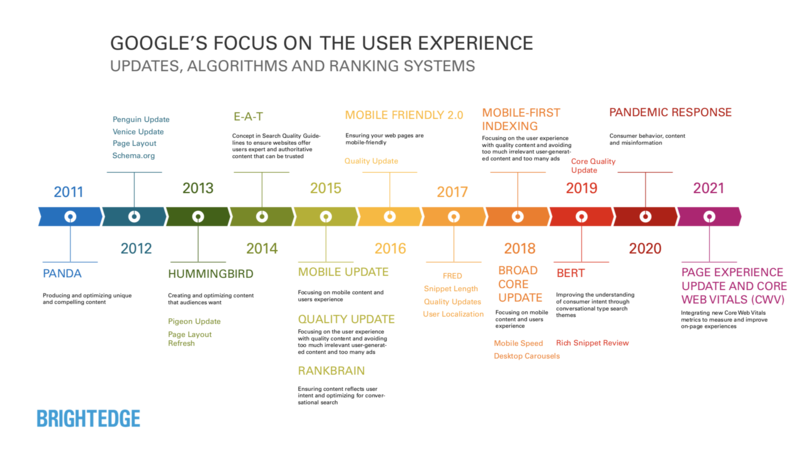
Google wants to create a user experience that helps people find the information they need quickly and easily. For the search engine, the priority lies in giving people an outstanding experience so that they continue to return to Google to make searches in the future.

To this end, the search engine continues to look for ways to better understand what customers want to see and understand their intent when making a search. They also continually look for changes in consumer behavior online to better understand how users might make those important searches. The algorithm then adjusts as they work to better understand these behaviors and changes.

Rather than try to stay on top of the changes Google makes, you should instead focus on aligning your site goals with the same goals as Google. Create a site and optimize the content you produce with the intention of producing the optimal customer experience.

Your SEO efforts should work to make your content and depth readily apparent to the search engine spiders. You want to clearly demonstrate your expertise so that both the users and the search engines have reason to trust what you have to say.

3. Stay abreast of the latest changes in technology and customer expectations. Google’s updates often occur in response to consumer expectations and technology. Therefore, make sure that you and your site are ready for these developments as well. Keep yourself up to date on the latest changes in the industry, including trends in user behavior and what the technology is capable of. This will help you ensure that your site is ready for what customers want to see and how the algorithm might adjust in the near future.

The Google algorithm regularly changes, which means that it is not an efficient use of resources to try and continually adjust strategies based on how the algorithm recently evolved. Instead, keep the site and your strategy aligned with the user experience and producing content that clearly demonstrates you are the best source of information and help when it comes to solving a pain point.

Definition

What to do with the everchanging Google algorithm?

Google openly discusses that they make changes to their ranking algorithm multiple times throughout the year. These changes might cause dramatic changes in how sites are ranked for important queries and thus the traffic volume and recognition that brands receive. They might also influence how results get displayed on the SERP.discover how to adapt with google's ever-changing algorithm changes - brightedge

With all of these changes, it can be tempting to try and determine how to adjust SEO strategies and marketing best practices to align with the latest Google changes. This, however, provides organizations with a very short-sighted strategy and fails to take into account the dangers of this theory. Here is what people should know about how to adjust to Google’s algorithm changes.

  • Remember Google will always change
  • Focus on the same goals as Google
  • Stay abreast of the latest changes

1. Remember Google will always change. All marketers should by now realize that Google will always change. It will never be a static algorithm that allows brands to analyze it and ‘master’ it. Since technology and customer expectations changes, brands need to be prepared for regular changes from Google.

Therefore, trying to always adjust your internal strategy to align with the latest changes from Google becomes very challenging. The algorithm updates come so frequently that you would need to revamp your marketing practices every few months. The lack of consistent, coherent strategies will also make it easy for gaps in your strategy to emerge.

2. Focus on the same goals as Google. Rather than trying to analyze and guess Google’s strategy, brands should focus on understanding the same goals as the search engine.

Google wants to create a user experience that helps people find the information they need quickly and easily. For the search engine, the priority lies in giving people an outstanding experience so that they continue to return to Google to make searches in the future.

To this end, the search engine continues to look for ways to better understand what customers want to see and understand their intent when making a search. They also continually look for changes in consumer behavior online to better understand how users might make those important searches. The algorithm then adjusts as they work to better understand these behaviors and changes.

Rather than try to stay on top of the changes Google makes, you should instead focus on aligning your site goals with the same goals as Google. Create a site and optimize the content you produce with the intention of producing the optimal customer experience.

Your SEO efforts should work to make your content and depth readily apparent to the search engine spiders. You want to clearly demonstrate your expertise so that both the users and the search engines have reason to trust what you have to say.

3. Stay abreast of the latest changes in technology and customer expectations. Google’s updates often occur in response to consumer expectations and technology. Therefore, make sure that you and your site are ready for these developments as well. Keep yourself up to date on the latest changes in the industry, including trends in user behavior and what the technology is capable of. This will help you ensure that your site is ready for what customers want to see and how the algorithm might adjust in the near future.

The Google algorithm regularly changes, which means that it is not an efficient use of resources to try and continually adjust strategies based on how the algorithm recently evolved. Instead, keep the site and your strategy aligned with the user experience and producing content that clearly demonstrates you are the best source of information and help when it comes to solving a pain point.

How To Succeed in SEO with a Small Team?

Small team SEO best practices

Consider that 93 percent of online experiences begins with a search. Brands who want to thrive in the modern age need to make sure that they prioritize SEO. Attracting the attention of customers online has become a critical part of bringing in new leads and building the brand.

Many organizations, however, only have a few people dedicated to their marketing department. They want to know how they can succeed with SEO despite having only a couple people working with them on these goals. After all, sometimes it appears as though the list of tasks needed to successfully build a brand online grows with each passing day.discover how to succeed in seo with a small team - brightedge

Fortunately, we have seen countless small teams experience genuine success in SEO with the right strategies in place. Here is what we would recommend.

  • Bring together marketers with multiple areas of expertise
  • Prioritize important areas of marketing
  • Set reasonable weekly goals
  • Focus on filling out entire funnels for customers
  • Select the right supports

1. Bring together marketers with multiple areas of expertise. As you build your team of digital marketers, work to actively recruit people who have multiple talents in the world of SEO. Content writers who also know how to optimize content or those who understand technical SEO as well as social media can make it significantly easier for these small teams to achieve success.

If your team does not have team members with expertise in a few different areas, then consider creating opportunities for them to learn. There are a variety of training options available online as well as a wealth of blogs and other materials that professionals can use to keep themselves updated on the latest in the industry.

2. Prioritize important areas of marketing. As your team gets started on the SEO process, you will want to focus on the areas where you can have the largest impact on your site success with the least effort.

The BrightEdge platform can help you easily find quick wins, such as keywords that are within striking distance of the first page of results. Focusing on these areas for optimization efforts will help to demonstrate measurable impacts from your SEO efforts.

Priorities for SEO tasks should also revolve around the areas that will matter the most to your target customer. Know what interests them. Look at the content you already have on your website and their engagement rates with the material. Analyze your keyword search volume and competitive brand sites as well to get a better grasp of what customers want to see from your organization.

Knowing what matters to your customers will also help you create a more effective SEO strategy that focuses on the areas that matter the most to buyers.

3. Set reasonable weekly goals. Organization is key for those with a small team. You do not want any confusion to arise over responsibilities, deadlines, and goals. Make sure that you have clear goals for your week, month, and quarter to guide the effort that your team puts into SEO.

When crafting your goals, consider the bandwidth of each of your team members and what they should be expected to accomplish. Craft goals that align with your prioritization discussed above.

Make goals that also help you slowly work on the various aspects of SEO, including:

  • Optimizing existing content for important keywords
  • Creating new content that nurtures people through the funnel
  • Promoting the content and brand across multiple platforms, including PPC and social media
  • Creating guests posts that drive traffic and engagement back to your site
  • Producing original research and ideas to promote your organization as a thought leader and trustworthy organization within the industry.

As a small team, acknowledge that you will not be able to aim for all of these goals at once. Instead, determine the ones that apply most directly to your organization and your priorities, and create regular goals that help you progress towards them.

4. Focus on filling out entire funnels for customers. As you create content and marketing material for your prospective customers, make sure that you remember to take the entire sales funnel into account. It can be tempting to focus too much on top-of-the-funnel content, which is easy to identify through simple keyword research, and neglect the material for these leads as they get closer to becoming customers.

Instead, consider the entire customer journey for your target buyer personas, including what will help them continue to move through the funnel as they get closer to making a purchase. This means creating mid-funnel and bottom-funnel content alongside your top-of-the-funnel content.

5. Select the right supports. The right platform can also make an enormous difference in the success of an SEO program. A platform like BrightEdge, which helps brands bring together their SEO data, plan projects, determine priorities, assign tasks, and track success from a single source makes it significantly easier for small teams to see genuine success.

Even with a small team, your organization can achieve considerable growth with SEO. The right support and strategy can make it easier for you to make the most of your resources and begin to experience the potential that SEO has to offer.

Definition

Small team SEO best practices

Consider that 93 percent of online experiences begins with a search. Brands who want to thrive in the modern age need to make sure that they prioritize SEO. Attracting the attention of customers online has become a critical part of bringing in new leads and building the brand.

Many organizations, however, only have a few people dedicated to their marketing department. They want to know how they can succeed with SEO despite having only a couple people working with them on these goals. After all, sometimes it appears as though the list of tasks needed to successfully build a brand online grows with each passing day.discover how to succeed in seo with a small team - brightedge

Fortunately, we have seen countless small teams experience genuine success in SEO with the right strategies in place. Here is what we would recommend.

  • Bring together marketers with multiple areas of expertise
  • Prioritize important areas of marketing
  • Set reasonable weekly goals
  • Focus on filling out entire funnels for customers
  • Select the right supports

1. Bring together marketers with multiple areas of expertise. As you build your team of digital marketers, work to actively recruit people who have multiple talents in the world of SEO. Content writers who also know how to optimize content or those who understand technical SEO as well as social media can make it significantly easier for these small teams to achieve success.

If your team does not have team members with expertise in a few different areas, then consider creating opportunities for them to learn. There are a variety of training options available online as well as a wealth of blogs and other materials that professionals can use to keep themselves updated on the latest in the industry.

2. Prioritize important areas of marketing. As your team gets started on the SEO process, you will want to focus on the areas where you can have the largest impact on your site success with the least effort.

The BrightEdge platform can help you easily find quick wins, such as keywords that are within striking distance of the first page of results. Focusing on these areas for optimization efforts will help to demonstrate measurable impacts from your SEO efforts.

Priorities for SEO tasks should also revolve around the areas that will matter the most to your target customer. Know what interests them. Look at the content you already have on your website and their engagement rates with the material. Analyze your keyword search volume and competitive brand sites as well to get a better grasp of what customers want to see from your organization.

Knowing what matters to your customers will also help you create a more effective SEO strategy that focuses on the areas that matter the most to buyers.

3. Set reasonable weekly goals. Organization is key for those with a small team. You do not want any confusion to arise over responsibilities, deadlines, and goals. Make sure that you have clear goals for your week, month, and quarter to guide the effort that your team puts into SEO.

When crafting your goals, consider the bandwidth of each of your team members and what they should be expected to accomplish. Craft goals that align with your prioritization discussed above.

Make goals that also help you slowly work on the various aspects of SEO, including:

  • Optimizing existing content for important keywords
  • Creating new content that nurtures people through the funnel
  • Promoting the content and brand across multiple platforms, including PPC and social media
  • Creating guests posts that drive traffic and engagement back to your site
  • Producing original research and ideas to promote your organization as a thought leader and trustworthy organization within the industry.

As a small team, acknowledge that you will not be able to aim for all of these goals at once. Instead, determine the ones that apply most directly to your organization and your priorities, and create regular goals that help you progress towards them.

4. Focus on filling out entire funnels for customers. As you create content and marketing material for your prospective customers, make sure that you remember to take the entire sales funnel into account. It can be tempting to focus too much on top-of-the-funnel content, which is easy to identify through simple keyword research, and neglect the material for these leads as they get closer to becoming customers.

Instead, consider the entire customer journey for your target buyer personas, including what will help them continue to move through the funnel as they get closer to making a purchase. This means creating mid-funnel and bottom-funnel content alongside your top-of-the-funnel content.

5. Select the right supports. The right platform can also make an enormous difference in the success of an SEO program. A platform like BrightEdge, which helps brands bring together their SEO data, plan projects, determine priorities, assign tasks, and track success from a single source makes it significantly easier for small teams to see genuine success.

Even with a small team, your organization can achieve considerable growth with SEO. The right support and strategy can make it easier for you to make the most of your resources and begin to experience the potential that SEO has to offer.

How to Create Engaging Email Marketing Campaigns?

Creating email marketing campaigns that work

Email provides companies with a highly effective means of engaging with potential customers. It allows you to continue to communicate with these leads and offer them content that will help them see why your brand can help them solve their pain points.

Considering that there are just over 4 billion email users globally, it also is easy to see why email remains such an effective strategy for engaging with interested customers.discover how to engage customers through email marketing campaigns - brightedge

The key, however, is learning how to create highly personalized campaigns that can capture people’s attention and continue to drive them back to your site and content. Here are a few tips for creating engaging email marketing campaigns.

  • Use email segmentation
  • Use email automation
  • Pay attention to headlines
  • Create emails with a clear purpose

1. Use email segmentation. Customers appreciate personalization. Even personalization in the headline increases open rates by 26 percent.

Personalization helps to keep the content you send to leads relevant to their particular situation, improving the chances that they will engage with the content. It also lets the customer know that you care about their unique situation and that you have solutions tailored to their needs.

Email segmentation makes it significantly easier to create personalized emails. With segmentation, you can separate email addresses into groups based on the information you have about them so that you can tailor the message you send.

Based on your business, you may want to segment recipients based upon their location, place in the buyer’s journey, the size of their organization, or the type of content that they have already engaged with. For example, you might have an email list for people who download content specifically related to one type of product and another list for those who download content focused on another aspect of your business.

Once you have your segments, taylor the message and the content you promote based on what will most likely interest these individuals. Carefully track your open rates and progress so that you can gauge your success and make adjustments as needed.

2. Use email automation. Email automation makes it easy to target customers quickly and based on particular interactions with your site. Particular behaviors, such as downloading certain white papers or engaging with a pricing page might trigger prewritten emails to be sent. These emails allow you to catch the attention of customers right away and demonstrate additional evidence that you can help them solve their pain point.

Marketing automation has demonstrated high rates of success. Emails sent based on specific behavior triggers see a 70.5 percent higher open rate than standard ones.

Identify particular behaviors that matter the most to your buyer’s journey and set up email triggers that can help you catch the attention of users at key parts of their journey.

3. Pay attention to headlines. The headlines you use in your email campaigns will have a dramatic impact on your open rates and the interest of customers. The same attention you pay to the headlines you create for your content on your website, you want to pay the headlines of your emails.

Regularly test the email titles you use to see if particular types of headlines receive better open and click through rates than others. Use your keyword research to help you identify terms and topics that are likely to interest perspective readers and incorporate them into the headlines you create.

Check your formatting and your punctuation as well to make sure your email does not sound like spam. You do not want your email discounted before people even open nor for it to get stuck in spam filters.

4. Create emails with a clear purpose. Develop emails that offer a clear purpose for your users. Create content that answers a specific question for people in your buyer’s journey. You want people to know exactly what they should then do after they engage with that content. Offer a call to action that they can easily respond to and make it clear what you want them to do after they engage with the content you have sent them.

Email marketing offers many opportunities for brands to engage with prospective customers. Taking the time to plan out your campaigns to appropriately target leads and create engaging messages will increase the success of these campaigns and improve the health of your sales funnel.

Definition

Creating email marketing campaigns that work

Email provides companies with a highly effective means of engaging with potential customers. It allows you to continue to communicate with these leads and offer them content that will help them see why your brand can help them solve their pain points.

Considering that there are just over 4 billion email users globally, it also is easy to see why email remains such an effective strategy for engaging with interested customers.discover how to engage customers through email marketing campaigns - brightedge

The key, however, is learning how to create highly personalized campaigns that can capture people’s attention and continue to drive them back to your site and content. Here are a few tips for creating engaging email marketing campaigns.

  • Use email segmentation
  • Use email automation
  • Pay attention to headlines
  • Create emails with a clear purpose

1. Use email segmentation. Customers appreciate personalization. Even personalization in the headline increases open rates by 26 percent.

Personalization helps to keep the content you send to leads relevant to their particular situation, improving the chances that they will engage with the content. It also lets the customer know that you care about their unique situation and that you have solutions tailored to their needs.

Email segmentation makes it significantly easier to create personalized emails. With segmentation, you can separate email addresses into groups based on the information you have about them so that you can tailor the message you send.

Based on your business, you may want to segment recipients based upon their location, place in the buyer’s journey, the size of their organization, or the type of content that they have already engaged with. For example, you might have an email list for people who download content specifically related to one type of product and another list for those who download content focused on another aspect of your business.

Once you have your segments, taylor the message and the content you promote based on what will most likely interest these individuals. Carefully track your open rates and progress so that you can gauge your success and make adjustments as needed.

2. Use email automation. Email automation makes it easy to target customers quickly and based on particular interactions with your site. Particular behaviors, such as downloading certain white papers or engaging with a pricing page might trigger prewritten emails to be sent. These emails allow you to catch the attention of customers right away and demonstrate additional evidence that you can help them solve their pain point.

Marketing automation has demonstrated high rates of success. Emails sent based on specific behavior triggers see a 70.5 percent higher open rate than standard ones.

Identify particular behaviors that matter the most to your buyer’s journey and set up email triggers that can help you catch the attention of users at key parts of their journey.

3. Pay attention to headlines. The headlines you use in your email campaigns will have a dramatic impact on your open rates and the interest of customers. The same attention you pay to the headlines you create for your content on your website, you want to pay the headlines of your emails.

Regularly test the email titles you use to see if particular types of headlines receive better open and click through rates than others. Use your keyword research to help you identify terms and topics that are likely to interest perspective readers and incorporate them into the headlines you create.

Check your formatting and your punctuation as well to make sure your email does not sound like spam. You do not want your email discounted before people even open nor for it to get stuck in spam filters.

4. Create emails with a clear purpose. Develop emails that offer a clear purpose for your users. Create content that answers a specific question for people in your buyer’s journey. You want people to know exactly what they should then do after they engage with that content. Offer a call to action that they can easily respond to and make it clear what you want them to do after they engage with the content you have sent them.

Email marketing offers many opportunities for brands to engage with prospective customers. Taking the time to plan out your campaigns to appropriately target leads and create engaging messages will increase the success of these campaigns and improve the health of your sales funnel.

,