BrightEdge SEO Platform - #1 in the Industry

BrightEdge SEO software delivers instant results with powerful new features to help marketers understand the customer experience, optimize in real-time, and discover new opportunities all in one platform.

Stay ahead of the competition with the most innovative features

Leverage actionable insights from the industry's largest content repository to develop winning strategies for your business.


Perform keyword research, view current rankings, evaluate page speed performance and get recommendations based on 12-month trends with BrightEdge Instant.

Crawl and resolve technical errors on your website to improve performance with the most advanced website audit solution..


Make data-driven decisions with robust and flexible visualizations. Use dashboards to showcase the impact on brand and revenue from SEO efforts.

Hear what others are saying about the BrightEdge SEO Platform

Ryan Edwards
The Tombras Group

“Scaling local-level SEO performance has always been a challenge, but with BrightEdge innovating the space, we’ve been able to achieve actionable insights from milions of data points.”


Jerome Harvey
United Airlines

“I’m a big fan of the BrightEdge dashboards. I can go in with data and show our company leaders how much money they could potentially be getting from SEO and it’s really caught their attention.”


Andy Seguiin
Kiddie Academy

“Working with BrightEdge Customer Suport was extremely helpful.. they know our business and our challenges, the latest innovations, and what we are trying to solve for.”

Trusted by more than 1,700 companies worldwide


SEO Now Research For B2B Tech

gregalbuto
gregalbuto
M Posted 5 years 10 months ago
t 9 min read

As states rolled out social distancing orders, BrightEdge began a deep dive into the digital world and the shift in search behaviors. We discovered that SEO is more important now than it ever has been before. We also discovered where search trends are headed in the future. In this installment of our series on SEO now for the B2B tech industry, we’ll look at how B2B tech companies are handling the transition to online operations. Visit these pages for our previous installments on education, finance, and retail.

What is going on with B2B tech?

Since the start of the pandemic, B2B tech organizations have worked to adjust their marketing and sales strategies in order to attract more of their customers online. Buying behaviors have shifted, as well as search behaviors, and while some B2B tech companies saw a pull back, like CRM products and services, others saw an increase in interest. 

McKinsey conducted a survey across 11 countries and found that B2B tech companies saw digital interactions were two to three times more important to consumers than sales interactions. Digital marketers at B2B tech companies are vital to the success of their business right now. Producing high-value, editorial content and offering a gateway for other businesses is likely to assist in continuing traffic to your site. 

In our research, we found that B2B tech companies are currently either rebounding or stabilizing, depending on which category they fall under. Data Center and IT Networking are both rebounding, while IT Security and Collaboration are stabilizing. You can see what’s happening with the B2B tech industry and other industries below.

This is where the B2B tech industry stands as it continues to recover from the pandemic - BrightEdge


Tech companies should transform their marketing strategy to include cross-channel marketing techniques that work in today’s digitized world and shift focus from traditional marketing to digital marketing. Because in-person events have been postponed or canceled, companies can move conferences and major events online. Rather than spending advertising budget traditional ads, brands can leverage digital marketing opportunities in SEO & PPC channels during this time.

BrightEdge recently coordinated our own digital marketing efforts to drive leads and opportunities for our research webinar SEO Insights, Opportunities, and Performance in an Era of Uncertainty. We brought together industry-specific research to educate our audience on how search insights have changed. We discovered just how many consumers were looking for digital education and we saw great results.

What content is resonating with consumers in the B2B tech category?

IBM discovered that video content is resonating the most with their audience. Tanu Vijayavargiya, Global Digital Analytics Lead at IBM says consumers are interested in the touch and feel of being virtually present. IBM utilized BrightEdge Instant to research what video content to create and understand new opportunities to pursue during the COVID-19 crisis.

Virtual demos, webinars, and how-to videos can all increase your organic traffic and keep consumers interested in what your business has to offer their business. 

What should strategy look like for B2B tech?

As a B2B marketer, it will be instrumental to leverage a virtual strategy for events, your sales cycle and post-sales support. Vijayavargiya says B2B marketers should prepare for a true sense of digital economy– an economy based on digital technologies for economic ventures and personal interactions. Whether your organization is digitized or not will determine the overall impact COVID-19 had on your business.

B2B companies have seen very slight decreases in interest throughout the pandemic and in fact, we estimate they’ll see an increase in spend in the coming weeks. 

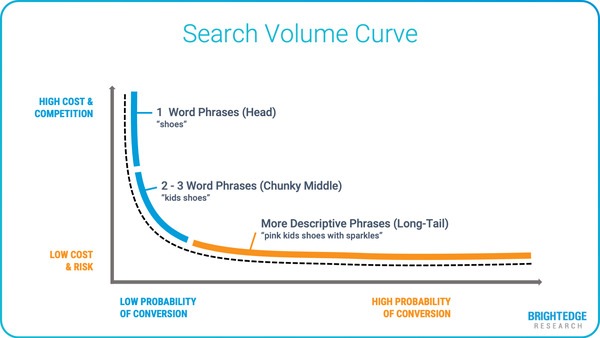
Companies, like IBM, understand that finding keyword intent and spending budget accordingly for keywords with intent is critical during this time and will likely remain critical in the coming months. As people continue to navigate through their pain points, creating content with high intent, long-tail keywords will help drive consumers to your content – especially more specific posts related to your business. Utilizing keywords through your content that will produce high intent is important to the success of your content. 

In order to see success during this time, businesses should strategically leverage SEO. Consider using SEO to improve your performance for the more expensive keywords your company’s vertical. As newcomers and your current competition shifts to the digital marketplace, expensive keywords will quickly clean out your PPC budget. Use this time to focus on a content strategy that attracts users and conversion rate optimization tactics to convert them.

Whether you’re spending this time fixing technical errors on your site or strategizing your digital marketing approach, SEO will help drive the results you’re seeking both now and in the coming months. We recommend refreshing your knowledge of SEO and the BrightEdge platform as SEO continues to be an ally. Dive into search results innovations, like Instant, that you may not have had the time for yet and develop a plan of action for your digital approach moving forward.

Search Insights For The Financial Industry

gregalbuto
gregalbuto
M Posted 5 years 10 months ago
t 9 min read

As businesses use their digital presence to communicate with consumers, the keyword “SEO” hit a new high in April 2020 with 1.5 million monthly searches. Brands are leveraging SEO more than ever to increase organic traffic over the last few months and for good reason. 

Digital marketing became fundamental for business success as brick-and-mortar locations closed. People, especially business owners, are fearful of what the financial industry and their personal finances will become going forward. A PwC survey showed that 71% of people who responded have a concern of “financial impact, including effects on results of operations, future periods and liquidity and capital resources.”

Where are people concerned when it comes to wealth management?

BrightEdge Instant shows us that “wealth advisor” and related keywords saw an increase in search volume beginning in February 2020 and continues to see a rise.

Keyword "wealth advisor" saw a search increase - BrightEdge

It’s not surprising that people became increasingly interested in financial advice during these uncertain times. Dimensional Investing spoke with six top advisory firms about how they’ve been working and communicating with clients since the pandemic began. Partners from the firms have expressed constant communication, exercising empathy, and remaining calm while working with new and current clients.

Norm Mindel, Partner at Forum Financial Management, expressed that clients were considering making a mistake by going to cash and selling stocks as an immediate solution. While there is typically a small search volume for “go to cash”, it did see a 320% spike in searches in March 2020.

More people want to go to cash since the 2020 pandemic struck - BrightEdge

As it is still unknown when businesses reopen and what the job market will look like following the crisis, people are looking at their financial options. 

What happened to the financial industry in March 2020?

BrightEdge research discovered that from a financial standpoint, interest spiked. The impact of COVID-19 and a shutdown turned consumers attention to stocks and the impact it has on 401ks and retirement plans. March 2020 saw a stock market crash that Forbes called “the 19th worst in history” as it was down 12.5% in one day. March 2020 also saw some of the best days in stock market history. March 24 saw a 9.4% lift and was ranked 9th best in stock market history for one day. This could all be reason as to why Instant saw headlining volatility between February, March, and April.

Consider where the financial industry is headed

BrightEdge research shows that there are four stages industries are navigating through in response to the pandemic. They include rebounding, accelerating, recovering, and stabilizing. Based on our research, Wealth Management is recovering and Stocks are currently in the stabilizing stage.

Stocks are currently in the stabilizing stage - BrightEdge

Utilize Instant as you drive organic results for finance specific keywords

In March, The keyword “stock market” saw a 231% spike in monthly search volume at over 11 million from its three million monthly searches in February. 

"Stock market" saw an increase in search volume in March 2020 - BrightEdge

“Stock exchange” and “stocks to buy” also saw a lifted monthly search volume in March and then an immediate decline in April. People became interested in industries that may have seen plummeting results at the start of COVID-19 but have plans to increase in the future. 

Keyword "stocks to buy" saw an increase in search volume and then an immediate decline

For example, there was a 1,256% increase in search volume for “airline stocks” between February and March. As nearly all travel ceased in March, airline stocks took a nosedive. According to S&P Global Market Intelligence, shares of United Airlines Holdings lost 48.8% in March. Consumers know that as time goes on, travel will pick back up and airline stocks will level out. They understand that now is the time to invest.

Airline stocks saw a spike in search volume when travel ceased - BrightEdge

Similarly, “zoom stocks” saw a 1,256% increase in search volume. Because of the immediate demand for virtual interactions, and in turn immediate need for video communication, people took an interest in purchasing Zoom stocks as well as Microsoft Teams stocks. 

Zoom stocks saw an increase in search volume when social distancing started - BrightEdge

In March, companies, including Nationwide, Facebook, and Zillow all discussed either working from home through the end of the year or working from home permanently. Because of this, there is a need for cloud communication platforms that offer video collaboration to employees and business owners.

As businesses begin to open and work to find some type of financial normalcy or recovery, it is important to remember that SEO efforts can assist you in doing so. Utilizing SEO rather than PPC will benefit your business in the long run. Spending budget on keywords and advertisements for now will get you immediate results but as the world starts to perk up, SEO will prove to be more beneficial as buying behaviors normalize.
 
For more information on SEO in an era of uncertainty, check out our most recent research webinar, SEO Insights, Opportunities, and Performance in an Era of Uncertainty with BrightEdge, L’Oreal, and IBM experts. 

The Importance of SEO For E-commerce and Retail

gregalbuto
gregalbuto
M Posted 5 years 10 months ago
t 9 min read

SEO is more important now than ever before as search trends and buying behaviors continue to change throughout this era of uncertainty. In a continuation of our BrightEdge Research series, today we’ll look at how COVID-19 has affected search behavior and heightened the importance of SEO.

E-commerce and retail sees shift in buying behaviors

The customer journey has changed. When storefronts closed and social distancing orders were put in place, consumers changed their shopping behavior and priorities, though they continued to make purchases to resolve their pain points. E-commerce and retail saw a shift in behavior as consumers looked towards products or services that would benefit them from home.

In February 2020, “gym near me” saw a slight decline in search volume from its previous months. By April 2020, the same keyword saw an 87% decrease in search volume since January. You can see the drastic change below.

Gym near me search volume increase using Instant - BrightEdge

As working out at a gym was no longer an option, search behavior shifted and “dumbbell”, “exercise bands”, and “yoga for beginners” all saw a surge in search volume.

Keyword "dumbbell set" saw an increase in search volume during COVID-19 - BrightEdge

You can see similar results for retail and apparel. Beginning in March 2020, “mens suits” saw a drop in search, presumably because companies have slowed hiring, there is less reason to dress up for work, and weddings are being postponed making suits an unnecessary purchase. On the other hand, March 2020 saw a huge jump in searches for “loungewear set” as more people sought comfort in their homes.

Keyword "mens suits" saw an increase in search volume - BrightEdge

Instant showed an increase in search volume for "loungewear set" - BrightEdge

Rebounding - Time to Focus on Winning Categories

Currently, BrightEdge research shows that E-commerce and retail (including apparel, baby and maternity, and beauty) have entered the rebounding stage. While there are certain categories of E-commerce and retail that may continue to see a decline in purchases, there are categories where we’re seeing and expect to continue to see growth.

Find out what stage your business category is in due to COVID-19 - BrightEdge

Additionally, we expect online shopping to continue to see an overall increase in sales as consumers have mixed feelings about leaving their homes. 

Communicating to the stay at home consumer

Because of the changes to society, E-commerce sites should consider pivoting communication to target customer’s experiences from home. 

For example, a workout equipment retailer could develop a strategy to bring an online workout experience to customers. Offering virtual workouts, whether live or pre-recorded. A beauty supply store selling hair dye could partner with experts to drive traffic by creating video content that offers a salon experience and teaches people to dye their hair at home.

As we learned in our SEO Insights, Opportunities, and Performance in an Era of Uncertainty webinar, mimicking a personalized in-store experience online for consumers is a solution L’Oreal developed for their customers in order to better their online experience. They also use augmented reality in order to personalize the beauty experience online. Customers can choose products that match their wants and needs using AI to assist in their decision. L’Oreal utilized Instant to create an entire virtual strategy for their new buyer’s journey.

Why should E-commerce and retail invest in SEO over PPC?

Aside from the fact that SEO is a growing channel leading with the highest percentage of traffic at 53%, SEO is a smart channel to invest in at this time. 

As the search volume for these keywords continue to rise, so will the competition, and the cost-per-click. Optimizing and winning the organic SERPs is a more cost-effective strategy especially as budgets get tighter.

Creating new content that speaks to what consumers are looking for right now will be key to getting and staying ahead of the competition. Also, consider that more consumers are watching video content than before. YouTube usage saw increases by 15.3% over several weeks during this period of social distancing. Invest your time in producing the right kind of videos for your audience.

As E-commerce and retail sites shift communication and marketing strategies, remember to harness the power of SEO. Utilize information on SEO best practices and the BrightEdge platform to drive successful results and consumers to your site. 
 
For more information on SEO in an era of uncertainty, check out our most recent research webinar, SEO Insights, Opportunities, and Performance in an Era of Uncertainty with BrightEdge, L’Oreal, and IBM experts. 

Live Event Structure Data Markup

ajenkins
ajenkins
M Posted 5 years 11 months ago
t 9 min read

Offline events have had no other option than to cancel due to COVID-19, and with good reason. In this time of crisis, safety and social distancing are of the utmost importance. However, there may still be an opportunity for event creators to "go online."

Events held exclusively online are becoming more common and perhaps you're thinking of hosting your own. If so, do yourself a favor and add this line item to your event plan - markup event pages with structured data. As you’re likely aware, using structured data helps Google understand the content of your site and may enable special search result features.

So, what structured data types do I advise? For your virtual event, consider adding both Event and Video structured data to your website. Let's review the benefits of each, confirm Google’s requirements, and then look at what implementation may look like for you:

Event Structured Data

What’s in it for you and your attendees?Event structured data following COVID-19 - BrightEdge

The event experience makes it easier for people to discover and attend events through Google Search results and other Google products. This feature brings some key benefits:

  • More interactive results: Your events can be eligible to be displayed in the event experience on Google, featuring your logo, description of the event, and more.
  • Increased chances of discovery and attendance: People have a new way to interact with your event posting and click through to your site.

(source: https://developers.google.com/search/docs/data-types/event)

NOTE: If you need to convince stakeholders of the importance of structured data, lead with this – beyond our own website, Google will also crawl/gather event details from 3rd party event websites. If their details are outdated and inaccurate (which occasionally happens), and you’re not sharing current and accurate event details via structured data, attendee experience and overall attendance may be negatively impacted due to conflicting dates and times, inaccurate pricing information, poorly written event descriptions, etc.

What are the requirements?

To be eligible for display in Google’s enhanced search results, the following properties are required:

  • location
  • name
  • startDate

The recommended properties below can be added as well. They enable a higher degree of customization within rich results and may provide a better overall user experience:

  • description
  • endDate
  • eventAttendanceMode (although not required to appear in enhanced results, for events held exclusively online, consider this a property required)
  • eventStatus
  • image
  • offers
  • offers.availability
  • offers.price
  • offers.priceCurrency
  • offers.validFrom
  • offers.url
  • organizer
  • organizer.name
  • organizer.url
  • performer
  • performer.name
  • previousStartDate

How do I implement event structured data?

Implementation is quite easy thanks to JSON-LD (Google’s preferred structured data over Microdata and RDFa). Once you’ve selected the applicable properties for your event, incorporate JSON-LD structured data snippet into the <head> section of your event page. If you’re hosting a free online event, it may look something like this:

<html>
  <head>
    <title>Our Big Event</title>
    <script type="application/ld+json">
    {
      "@context": "https://schema.org",
      "@type": "Event",
      "name": "The Big Company Event 2020",
      "startDate": "2020-07-21T09:00:00-07:00",
      "endDate": "2020-07-21T17:00-07:00",
      "eventStatus": "https://schema.org/EventScheduled",
      "eventAttendanceMode": "https://schema.org/OnlineEventAttendanceMode",
      "location": {
        "@type": "VirtualLocation",
        "url": "https://theurlwhereattendeescanjoin.com/"
        },
      "image": [
        "https://example.com/photos/1x1/photo.jpg",
        "https://example.com/photos/4x3/photo.jpg",
        "https://example.com/photos/16x9/photo.jpg"
       ],
      "description": "Join us for our big 2020 event!",
      "isAccessibleForFree": true,
      "organizer": {
        "@type": "Organization",
        "name": "Your company name",
        "url": "https://www.companyhomepage.com"
      }
    }
    </script>
  </head>
  <body>
  </body>
</html>


NOTE: Be sure to test the accuracy of your code snippet with Google’s Structured Data Testing Tool prior to implementation and post launch.


Video Structured Data

What’s in it for you and your attendees?

Livestream example for structured event data - BrightEdgeThe LIVE Badge! Google GA’d this feature in December 2018, and if you haven’t adopted, now is the time.

What are the requirements?

To be eligible for Google’s LIVE badge, nest the following properties in your VideoObject:

  • publication
  • publication.endDate
  • publication.isLiveBroadcast
  • publication.startDate

Google also clarifies that if you're adding BroadcastEvent to livestream videos, you’ll need to follow these guidelines:

  • Don't use vulgar or potentially offensive language in the structured data.
  • To make sure Google crawls your livestream video at the right time, use the Indexing API. Call the API for the following events:
    • When the video goes live
    • When the video has stopped streaming, and the page's markup has been updated to indicate the endDate
    • Whenever a change has happened in the markup and Google needs to be notified

(Source: https://developers.google.com/search/docs/data-types/video#livestream-guidelines)

To use the Indexing API, follow the steps below.

  • Complete the prerequisites by enabling the Indexing API, creating a new service account, verifying ownership in Search Console, and getting an access token to authenticate your API call.
  • Send requests to notify Google of new, updated, or deleted web pages.

(Source: https://developers.google.com/search/apis/indexing-api/v3/quickstart)


How do I implement video structured data?

Once again, we’ll write the JSON-LD structured data snippet and incorporate into the <head> section of our livestream video pages. The result would look something like this:

<html>
  <head>
    <title>Our Big Event 2020 Keynote - Livestream</title>
    <script type="application/ld+json">
    {
      "@context": "https://schema.org",
      "@type": "VideoObject",
      "name": "Keynote Presentation",
      "description": "Tune in to hear the latest about our company!",
      "thumbnailUrl": [
        "https://example.com/photos/1x1/photo.jpg",
        "https://example.com/photos/4x3/photo.jpg",
        "https://example.com/photos/16x9/photo.jpg"
       ],
      "uploadDate": "2020-07-21",
      "duration": "T1H20M35S",
      "contentUrl": "https://www.example.com/video/123/file.mp4",
      "publication": {
        "@type": "BroadcastEvent",
        "name": "Keynote Presentation by XYZ",
        "isLiveBroadcast": true,
        "startDate": "2020-07-21T09:00:00-07:00",
        "endDate": "2020-07-21T10:20:35-07:00"
      },
      "interactionStatistic": {
        "@type": "InteractionCounter",
        "interactionType": { "@type": "http://schema.org/WatchAction" },
        "userInteractionCount": 150
      }
    }
    </script>
  </head>
  <body>
  </body>
</html>


That’s a wrap

I look forward to a time when mixed online/offline events are once again permitted. But in the meantime, take advantage of these structured data opportunities to boost event engagement and livestream views.

A Full Guide To Evergreen Content

gregalbuto
gregalbuto
M Posted 5 years 11 months ago
t 9 min read

Creating content that consistently drives traffic to your site can be difficult and everyday blogging likely won’t be the way to do it. Evergreen web content is targeted content written on a topic that is always going to remain relevant and is always driving traffic. For example, this could include ‘social media marketing’ or ‘how to become a yoga instructor.’ Think about this: Yoga instructors are required to learn the practice, teach it, and continue to keep up with certifications. It’s a method of relieving stress, increasing strength, and benefits your health. Finally, over 20 million Americans practice yoga; therefore, there will always be a search volume for it. ‘Social media marketing’ and ‘how to become a yoga instructor’ are also almost always relevant searches as they’re not seasonal.

Creating evergreen content vs an evergreen topic

There is a difference between having an evergreen topic to create content around and actually making your content evergreen.

A topic, like ‘how to boil water’, can be evergreen but if the content written around the topic is no longer relevant, your content is not evergreen. Let’s say it’s the year 3000 and there is a new stove that begins boiling water when you clap your hands. Your previous content is no longer relevant but the need to boil water still is. Have you seen a loss in traffic? If so, it’s not evergreen.

Writing evergreen content for your site

Now that you know how to find topics to write about, let’s get into creating the content.

Evergreen posts needs to remain relevant for a long period of time, so putting together 500-700 words in a quick ‘how to’ isn’t going to cut it. Spend time researching the topic to add expertise, authoritativeness, and trustworthiness, to your piece.

In order to refresh and create evergreen content that is respected by search engines, it’s best to be seen as an expert on the topic. If your site or brand isn’t knowledgeable on sewing buttons, you should steer clear of writing the content just to drive traffic. It won’t work.

Below are some other quick tips to consider:

  1. If possible, avoid dates or discussing time frames as it will immediately date your content
  2. Build links internally and externally in order to establish authoritativeness and gain traffic from other sites
  3. For older content, republish and re-promote via social media and email to make sure your evergreen content is noticed and shared

Sometimes, creating evergreen posts occurs naturally and the topic you chose to write about ends up being permanently relevant. Some examples of this could include a how to guide for a new product, consumer reviews and testimonials, or case studies. Because your piece was helpful and referenceable it became evergreen despite never being your intent. This content now consistently drives traffic and leads to your site – be sure to keep it that way.

Maintaining content that's evergreen

While your topic may be evergreen, your content can get stale. Are there aspects of it that are no longer evergreen? Outdated images, invalid or old statistics that are no longer true, and references to 1997 would all contribute to your article no longer being relevant. To keep your content up to date and evergreen, establish a regular cadence to refresh and replace older content and data.

Let’s take the example of a case study. Case studies are a great way to attract new customers by showing your audience that your products or services work and work well with other brands. They can also wind up being evergreen content if your study is still relevant to your business.

Write evergreen content to boost traffic continuously - BrightEdgeIn order to keep your case studies evergreen, you need to keep them up to date. Add new and updated internal links where they fit. Keeping irrelevant and out-of-date content linked won’t keep your case study fresh. Include keywords that are also up to date. For example, if you’re referencing Google Adwords in your case, your content is outdated as Adwords became Ads in 2018. Finally, be sure to create new case studies with current customers. It’s great to show expertise over the years but to remain trustworthy, it’s important to show you have current happy customers as well as past happy customers.

Another red flag that your content may no longer be relevant is when your competitors start outranking you on the same topic. Pay attention to what your competition posts, to highlight what your content is missing and update it accordingly.

How do I find evergreen topics to write about?

Finding an evergreen topic can be tricky. Not every broad topic will remain relevant, and there’s likely to be hundreds, if not thousands, of posts out there for any given area of your expertise. A thorough keyword research project is your first step to evergreen success.

You can utilize DataCube to find topics you’re already ranking for by searching for keywords and tracking their keyword rank history. You can filter by date and determine when you saw an increase, decrease, or for how long you’ve been owning the top SERPs. Use this information to better your already ranking pages with evergreen content or to find high-value evergreen keywords you’re not ranking for that you should be. Use Data Cube to determine your content performance compared to competitors. Research what your competition is writing about and boost your own strategies using the knowledge gained.

Then, use BrightEdge Instant to evaluate your keyword list and identify potential topics. With Instant, you can see a keyword’s volume trend to determine its potential as an evergreen topic. For example, ‘social media marketing’ has a fairly level volume history, making it a contender as an evergreen topic.

take a look at this evergreen keyword example - brightedge

Let’s look at ‘how to become a yoga instructor’ too. This keyword has a relatively flat trend line with a steady search volume, making it evergreen.

here is an example of evergreen content - brightedge

When a keyword is evergreen but has a low monthly search volume, it may not be worth your time to write about. However, keywords with lower monthly search volume tend to have less competition and they will still drive monthly visitors. If you’re not able to get traction targeting keywords with large search volumes, writing evergreen articles around smaller topics may be a good strategy.

Creating evergreen content can be a philosophy that drives your content strategy or something your team works on from time to time. Before you begin working on a piece of content, consider whether or not you can make it evergreen. By growing your evergreen content, your site will become more authoritative and be a go-to for traffic.

How To Write A Successful Blog Post

gregalbuto
gregalbuto
M Posted 5 years 11 months ago
t 9 min read
Writing can be time consuming, but the value in creating effective content can be seen in increased profits, lead generation, an uptick in traffic, and more. What's the secret to producing quality content, reaching your audience, generating high levels of organic traffic, all while managing your time? Check out these guidelines on how to write a blog post and drive these metrics. 

What does my blog post need to be successful?

 
Digital marketers are constantly looking for ways to create unique content. Here are a handful of things to consider while attracting readers to keep them on your site.  Learn how to write a blog post that attracts your reader's attention - BrightEdge
  • Choose a topic that you’re knowledgeable about and is relevant to your reader and brand. This is an opportunity for you to serve as an expert resource for your readers. Also, consider writing about topics where your readers may need more information. Educating your audience is the first step to becoming a thought leader in your industry. 
  • Define and write for your audience. Before writing your post, ask yourself: Who is my audience? Narrowing down exactly who your target audience is will make it easier to determine what you should write about and how it should sound. 
  • Create a hook. Get your readers to want to take the time to absorb your blog. Do this by avoiding unnecessary jargon and getting right to the point. Have a descriptive title and a strong headline. Grab your reader’s attention and keep them interested with the depth of your knowledge. 
  • Make your language and voice relatable. While you may be highly educated on your blog topic, your readers likely are not. Consider knowledge gaps and write with the purpose of educating. If you’re writing for multiple audiences, have something to offer both. For example, if your content is more technical, provide definitions or valuable internal links to guide readers in the direction of learning more about the topic. 

What should my blogging strategy be?

 
Now that you know what your post should include, it’s time to consider a broader strategy. A blog strategy should contain a clear direction for what you intend to get out of the content. Determine what your takeaway is by outlining your strategy. 
 
1. Choose the best person to write each post 
2. Outline your post format 
3. Research the topic using valuable information about your topic from industry experts 
4. Write enough content to make it educational and successful 
5. Point readers to a clear CTA if you have one whether it’s a follow-up article, demo request, or a sign-up button 

How does blogging help my SEO? 

 
From an SEO point of view, blogging is an effective way to create traffic-generating content. By following SEO best practices, you can boost your site to rank and generate the most traffic possible. Below are a few tactics to get started:
  • Provide links to internal pages on your site. Writing new content that relates to already existing content is a way to show your site is succinct. Link posts together in order to prove it and choose them wisely
  • Incorporate relevant and highly-searched keywords to your blog post to improve its chances of ranking for specific keywords. You can use Data Cube to search for keywords that match your content to ensure visibility and, also, discover already ranking content. You can also use Instant to find trending keywords. Using this feature, you can rule out keywords that won’t produce a lot of traffic or drive enough leads. 
  • Add high-quality images and optimize them for speed, size, and the keyword you want to rank for. Remember to compress your images to be smaller in order for your page to load faster. Lastly, be sure to add image alt text describing the image using the keyword. 
  • Research your competitors. Investigate what your competitors are doing on their blogs to give yourself a unique perspective.  

How many categories does my blog post need? 

Write a blog post and attract more readers to your website - BrightEdge
A category helps organize your content into different subjects. Each post will belong to only one category. For the blog as a whole, somewhere between five and seven categories would be ideal. In addition to organizing your content, categories are also used to give your readers a better user experience and navigate your content.  
 
Using your top keywords as categories is also a good way to boost visibility for these terms. 

How many tags does my blog post need?

 
Tags are a way to refine your categories. If you have a few different topics within a category, their posts can be organized into tags. Too many tags creates a poor site hierarchy, which is why one to three tags is an optimal number per post. 
 
When deciding how many tags per category, ideally there’s a limit to the number of tags each category supports. Again, we’d recommend roughly three to five tags per category, but there are no hard and fast rules. 

Go write your first blog post

 
Providing your audience and website with healthy, well-written content continuously is a valuable way to increase traffic and drive new leads to your website. While blogging has been around for a long time, it doesn’t seem to be dying down anytime soon. You can utilize new blogs to better your SEO and become a thought leader rather than just simply provide the internet with information.  
 
We hope you use these tips before getting started on your next blog post! 
 

COVID-19 Frequently Asked Marketing Questions

gregalbuto
gregalbuto
M Posted 5 years 11 months ago
t 9 min read

The novel coronavirus has had a tremendous impact on how customers engage with businesses and how organizations have adapted to interacting with consumers while still bringing in buyers. To help answer the questions our community has been asking about the importance of SEO and digital marketing, we put together a series of topics that benefit a wide range of industries and explored solutions for each.

What is the importance of SEO today?

We know that many of you are wondering if SEO is still worth the effort. The simple answer is, yes. If you have wondered about the importance of SEO during this period of transition, there are a few vital things you need to know.

Understand Where Your Site Needs SEO Efforts

Changes in Search Trends

First, know that trending searches have changes. Through BrightEdge Instant, we’ve found that certain keyword search volumes have skyrocketed over the last few weeks. More searches are geared toward making people feel comfortable at home, whether it’s making homemade sourdough, doing at home workouts, or staying connected with friends through video games, online poker, or virtual hangouts. Find a way to promote what your business has to offer consumers from the comfort of their own home and optimize your site accordingly.

BrightEdge Instant shows COVID-19 keyword search trends and the importance of seo

Adobe, recently found that customers have begun to purchase over-the-counter medicines, food, and antiviral protection equipment online in far greater numbers. Our research through BrightEdge Data Cube and Instant corroborates these findings, and also shows that users are interested in “grocery delivery”, “medicine for a cough”, and “work from home jobs”. Below you can see Instant results that show people are looking, specifically, for remote jobs or jobs at companies that are still open during the pandemic including Amazon.

BrightEdge Instant shows COVID-19 keyword search trends and the importance of seo

Connecting with users online is more important now, and will continue to be important in the coming months, than ever before. With the rise in online traffic over the last few weeks, we expect your SEO efforts now will pay off down the road. Push content that speaks directly to the needs and concerns of customers and optimize pages in order to be more competitive with an increasingly diverse online marketplace.

Where should I begin with SEO during this pandemic?

Begin by building a campaign, but before you start optimizing, it’s important to understand the buying and browsing behavior of your audience during this period to build a plan of action.

Depending upon your industry, you may find that your target customers have substantially less buying power or interest than they normally would. For example, the travel industry has been hit hard, seeing a 17 percent drop compared to last year and a 20 percent drop from the original 2020 forecasts. Businesses trying to survive in industries that have been similarly impacted by the pandemic and social distancing measures will want to look carefully at the behavior of their customers online.

  • Are people planning for the future?
    • Create content to help them daydream about returning to normalcy in the months to come.
  • Are customers interested in your top-of-funnel content but do not have buying power right now?
    • Maybe you target small businesses that might not have much purchasing power right now. You might see an increase in traffic for your top-of-funnel content without a corresponding increase in mid and bottom-funnel conversions. Use this opportunity to nuture these potential future customers. Coordinate a drip campaign to keep them engaged via email or offer a discount code for a future conversion.
  • Do you offer help to customers interested in distracting themselves from the stress?
    • Update your content to reflect the current situation and highlight the benefits of products that provide an escape.

Study how customers engage with your site and the type of content they're reading by looking at your site analytics.  

If you’re a BrightEdge customer, look into leveraging BrightEdge Instant to explore real-time recommendations and results of what consumers are searching for. You can use the feature to spot trends in searched keywords and choose the best ones for your audience.

You can then use this insight to create a robust content calendar that will guide you through the next few weeks. Choose keywords with growth opportunity and high search volumes that match your trending topics. Remember that SEO and digital marketing will remain important cornerstones of your business’s success during and following this period of social distancing, so your calendar should accurately reflect what your customers want to see.

What can I do after I've dealt with the basics?

Now that you have a plan and a content calendar with the most relevant topics for your site and audience, you should continue to employ SEO best practices that you already know are impactful to your site. Optimize key pages for featured snippet opportunities, including Quick Answer and People Also Ask results, these results are known to steal traffic from first position results.

By deploying this SEO strategy now, you can work to increase and protect your positions on the SERP from being taken over by competitors. You can utilize the Share of Voice feature in BrightEdge to identify competitors and ways to outrank them. This is an opportune time for all brands to step up their SEO game so understanding the importance of SEO is vital to your opportunities.

What if customers aren't buying right now?BrightEdge Answers COVID-19 FAQs - helpful tip: don't panic

Unfortunately, many businesses are struggling with a decrease in sales. As brick and mortar businesses close their physical stores, they’re shifting to rely on e-commerce like never before. As the US unemployment rate rises, many customers do not have the same budget and buying power they did even a few weeks ago.

Now is a good time to focus on projects that you couldn’t get done with your typical weekly tasks. Manage website updates, dive into technical SEO projects, and explore other complicated tasks that may be on your rainy day list. Use Keyword Reporting and Page Reporting to track how each project will impact your rankings.

We also recommend utilizing ContentIQ to gain an understanding of the health of your website. While site audits can be time consuming and require several team members, slower business means more time to fix your site. Prioritize your site errors from most impactful to least impactful for search engines and get to fixing those technical issues.

Now is also an excellent time for running tests. Conduct A/B or multivariate tests to optimize your conversion rate, improve user experience, or test landing page designs. Use this time to create a website that will be fully prepared to maximize conversions when customers return to more typical browsing and buying patterns.

Keep in mind that all areas will not experience the pandemic equally. As restrictions begin to ease and some forms of normalcy return, your customers may experience vast differences in buying power based on the cities or states where they live. Instant makes it easy to narrow down your searches, allowing you to capture audience attention based on their precise location.

Analytics can provide you with valuable information about the location of different site visitors, enabling you to track how customers in different regions browse your content and engage with your products and services. Remember, BrightEdge can integrate data with multiple analytics platforms; such as Google Analytics, Adobe Analytics, and even Coremetrics. You can integrate analytics data with BrightEdge dashboards, providing you with an intricate understanding of how customers engage during and following the social distancing regulations.

What if I have events scheduled during social distancing?

The decision to begin social distancing and close businesses came quickly and without much warning. While there is still no definitive date on re-opening businesses, you do have options other than canceling your events including postponing or shifting your event to a virtual experience. In addition to informing your attendees through social media and email marketing, use the new SpecialAnnouncement schema markup to make the latest updates regarding your events known to search engines.

What should my B2C SEO strategy include?

If you are in the B2C sector, don’t forget the importance of SEO on your customer acquisition efforts. There are steps you can take to specifically build a strong digital presence for your target customers.

To begin, we recommend taking this opportunity to build out your product and category pages. Make sure that each page has original, relevant content that helps you target customers based on their search terms and interests. Regardless of whether you are in an industry experiencing a surge in online buying, or if your sales have dipped as your consumer base deals with job loss, creating well-thought-out pages can position you well for future sales.

As members of our B2C community work to connect with consumers and sell their products, we do recommend that they remain upfront with customers about any limitations they might have regarding shipping or product availability. Keeping this transparency with customers helps to create a sense of togetherness and trustworthiness.

What should I do if my data looks unusual to me?

Many brands have also noticed that the data coming in from their site looks more unique than it has before as consumer browsing and buying behaviors have changed. For example, beauty product suppliers like Sephora may notice a drop in many makeup sales, as people are wearing less makeup while they remain at home. On the other hand, they may also notice an uptick in the interest and sales of skincare products, such as face masks, serums, or eye creams.

If you notice shifts in behavior on your site, pivot your marketing campaigns to align with your consumer movements. Use the information you gather to adapt to search and buying changes. If customers are coming to your site but leaving before buying, use this time to nurture relationships that will serve your business well for the future.

How can I know what my competitors are doing?

Part of building a strong content strategy is to keep an eye on what your competitors are doing. You do not want to lose valuable real estate on the SERPs during this period of change.

We recommend regularly monitoring what your competitors are posting on social media and how customers respond. Run Competitive Analysis through the BrightEdge Data Cube to understand where keyword gaps lie and how their content performs compared to yours.

Also, monitor their positions on the SERPs so that you can quickly see if they begin to gain ground on important keywords and how you can protect your own rankings. The better you understand their performance and strategy, the easier it will be for you to capitalize on areas of weakness, build a strong digital presence for your own organization, and ensure that you are well-positioned to excel when your customers return to their former buying patterns.

How do I create content my customers want to read or share?

To create material that customers will want to read or share, keep these central ideas in mind.

  1. Customers are at home, which increases their need for products and services that either benefit them in a home environment or are at least accessible at home. This also means there is a greater emphasis on home delivery options.
  2. Customers want to be entertained. It’s been reported that usage of phones and tablets, game consoles, and television have all increased.
  3. Customers want to have hope for the future. Focus your content development strategies on positive, future-focused material that helps your readers look towards the future and what they will be able to do as the social distancing rules phase out.

Whether you’re business thrives in written or video content, put the consumers needs first. This is no time to fail at letting people know you care about them and are with them.

The novel coronavirus and the social changes it has caused has resulted in a number of adjustments for businesses. Those that want to thrive will need to embrace new strategies and properly engage with SEO and marketing.

,