Demo the BrightEdge Platform
[[nid:4777]]

Website optimization – or SEO – is the practice of structuring your website’s pages to make it easier for search spiders to crawl your site, create an optimal user experience and provide unique information or helpful resources on a topic that searchers are looking for. This is all done in order to drive higher ranks in the SERPs – or search engine results pages. When you create content that is unique, informative, educational and optimized, you will likely find your pages naturally rising in ranks in the SERPs. This will drive both new traffic and more traffic to your site.
As more businesses, more products and services, more education, etc. move online, there is a growing interest in learning SEO techniques and strategies with the hopes of ranking higher for important pages. We did some research via Instant to learn more about what users are hoping to understand about SEO. Below are some examples of growing search trends for topics surrounding SEO for beginners. We will answer these questions in the content below.
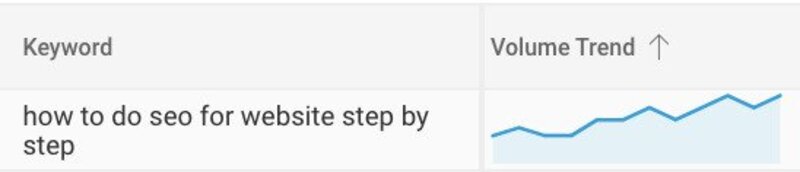
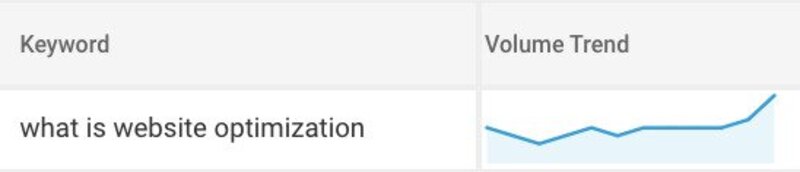
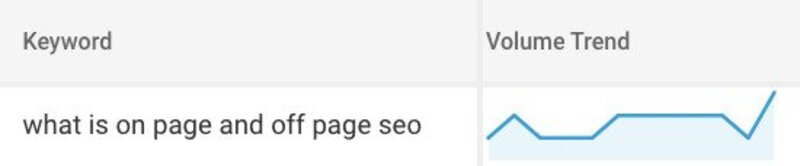
As you can see, there is an increase in interest around the basics of SEO. If you’re reading this blog, you’re likely interested in performing SEO yourself and learning what exactly goes into the initial steps for optimizing pages of a website.
Statistics show that 28.5% of users click on the first organic SERP, 15.7% click on the second, and 11% click on the third. Less than 10% of searchers click on paid advertisements. Why? Because users don't trust them. Because of this, SEO is absolutely vital to the success of your website.
Not only does SEO help the success of your site, though. Optimizing your site provides users with an overall better experience. For example, when you focus on page speed, a search engine ranking factor, Google will reward your site for loading quickly. On the other hand, search engines will also penalize your site for loading slowly. Slow loading pages, pages that don't provide valuable answers but are stuffed with keywords, an unresponsive website and more will get your site penalized and dropped in rankings via search engines.
Focusing on the overall health of your site will give search engines the opportunity to rank your pages well in the SERPs.
So, you might be wondering why SEO is important and if it is, is it important to your industry or business? The answer is yes. The organic channel makes up 53% of all web traffic and is expecting to rise above other search traffic, year after year.
Not only is the organic traffic channel growing, but there is no media cost for SEO. If that weren’t enough to interest you, SEO can provide substantial ROI. By creating unique content that is also well-optimized, you can increase your ranks. As they increase, you will drive traffic. The more traffic, the better your chances of converting a user to a customer.
While the organic channel continues to grow, it’s important for SEOs and digital marketers to grow with it. Learning the basics of SEO is imperative but also understanding the “why?” behind it is as well. Search engines like Google are continuously evolving their algorithm with new updates on a daily basis. Why? Because Google, Bing, Yahoo and other search engines want to provide searchers with the best possible user experience. Because of this, it is important to create content for the users, not bots.
While it’s tempting to practice keyword stuffing or accept low quality guest blogs just for a backlink, these are poor SEO practices, and you should avoid them at all costs. Going into the beginning stages of SEO, you should understand that SEO is an ongoing process that requires time and patience. While most SEO efforts can be quick to implement, the results will take time.
On-page SEO includes all of the optimization you can do to the front end of a page found in HTML source code. It includes everything involved in creating the best possible user experience for readers. Understanding on-page tactics is key to understanding SEO in general and how it works.
On-page SEO includes the following elements:
Some best practices for on-page SEO include the following:
Off-page SEO refers to all of the actions of your site taken off of your domain. It includes all of the SEO elements and techniques used to prove your site's worth and reputation from external digital presences including reputable websites, directories and more.
Off-page SEO elements include the following:
Use the following off-page SEO practices to gain a leg up on your competition:
There is no perfect way to perform SEO step by step as each page and business will require different SEO elements based off of what a site is hoping to gain from page optimization. For example, if you’re optimizing a page for local users in order to drive foot traffic to your store’s location, your SEO efforts will differ. You’ll want to focus more heavily on optimizing locations pages, increasing digital citations and creating an optimized Google My Business page.
If you’re new to SEO and working on the perfect strategy for optimizing pages, we recommend checking out this on-page SEO checklist to better guide you through the initial steps of SEO. Once you’ve checked off all the boxes in the checklist, you’re ready to get SEO efforts implemented into your page. We recommend doing this for every page until you feel comfortable performing SEO without it.


The Business Challenge
With hundreds of stores across North America, the beauty retailer's website is its largest store and the foremost prestige beauty destination on the Internet. Despite its online success, the company found its growth potential limited by legacy aspects of the site's design.
The site's structure made it difficult for Google to find and index valuable content beyond the top pages. They needed a way to scalably grow their share of organic search traffic despite the limitations of the site design.
The BrightEdge Solution
The company's marketing team knew it could help Google better find its content by building out internal links. However, doing so in a scalable, sustainable way remained a challenge.
The retailer's senior manager of SEO noted another challenge to internal linking. "We're limited in the real estate we have on the page where we can place links. We needed a way to scale internal linking in an intelligent way across the site."
BrightEdge approached the challenge with Autopilot, a new marketing automation technology that leverages internal links to move more high-value, non-brand keywords to page 1 of search where 75% of search clicks originate.
Intitially, the company's marketing leader voice some doubts about automating internal linking. Would it impact site performance? Would the links be high enough quality? Would it be able to support different markets and different languages?
The team decided to test Autopilot on its shop pages, saying of the implementation, "We had good communication with the BrightEdge technical team throughout the integration process. BrightEdge provided us with testing URLs, profiles and use cases, so that when it came time to release Autopilot, there were no issues."
The Results
Most importantly, the BrightEdge client saw rapid and significant results.
"We saw an increase in keyword visibility immediately. More significantly, we have seen a better conversion rate on pages that include the Autopilot link block and we've measured an increase in average order value on visits that engaged Autopilot."
Despite robust in-house SEO and technology operations, the company notes that Autopilot offered speed, scale and a "secret sauce" that further benefitted them.
"From just a cross-linking point-of-view, we could have built some sort of service back-end feature, but that doesn't get to the secret sauce, which is BrightEdge's Data Cube. That intelligence is where a lot of the value comes from, and it's not something we would have been able to develop. We couldn't put a price on that."
Following its initial success with Autopilot, the company has begun to expand its use of the technology. "We are expanding Autopilot into other product categories and other pages types. There is additional untapped value that we're really excited about."
That untapped value, according to the marketing team, goes beyond linking purely for SEO. "It is something we can enable on different areas of our site for different use cases. For example, I could use Autopilot to cross-link my support pages. There would be SEO value in doing that, but it would also improve my customer experience."
"In addition to measurable SEO value, we have also seen an increase in average order value on visits that engaged Autopilot. I would absolutely recommend Autopilot." - Senior Manager of SEO, Beauty Retailer
If you're interested in learning more about Autopilot, contact your BrightEdge CSM or request a demo of the SEO platform.
Alt text for images - or alternative text - is the hidden text descriptor of an image and appears for the image if the page isn't loading or a screen reader software is being used. Screen reaader softwares aree assistive technologies that translate text verbally for the virusall impairs. It was created to assist the visually impaired in having an optimal user experience. However, image alt tags are also important to the health of your SEO and are an essential part of web design.
You can improve your site’s visibility for the visually impaired users that come to your site. Alt text is used by screen-readers, programs used by the visually impaired, in order to give these users a good user experience as well. Becoming ADA-compliant and making your site accessible to users with disabilities will be valuable to your site and your brand to increase target audience, improve your SEO, and avoid penalties.
You can help your pages and images rank by making sure your images are fully optimized, including alt text. Google says, “by adding more context around images, results can become much more useful, which can lead to higher quality traffic to your site.”
While alt text isn’t one of the most important SEO ranking factors, it’s used by search engines to understand the content of an image and rank in search results.
To properly leverage alt text, there are a few things you can do.
Depending on the CMS your site uses, the process will be different. Generally, you’ll edit your alt text in the field provided after you’ve uploaded the image, or by editing the HTML directly. Remember that alt text is different than caption text and image title. Be sure not to confuse these elements or leave the alt text section blank.
While good image alt text is valuable to your image SEO, it isn’t difficult to come up with. Below are examples of good and bad alt text for BrightEdge.
Good alt text example
“alt=Refine your SEO strategy using these 10 tips”
Bad alt text example
“alt=seo platform use seo platform seo basics top seo platforms best seo platforms for me”
In addition to image optimization, alt text provides additional context into what your entire page is about. Optimizing your alt text will create a good user experience for both users and search engines and improve your image SEO visibility.
Stay ahead, and keep ahead, of your competition.
q Learn more about BrightEdge SEO
| |
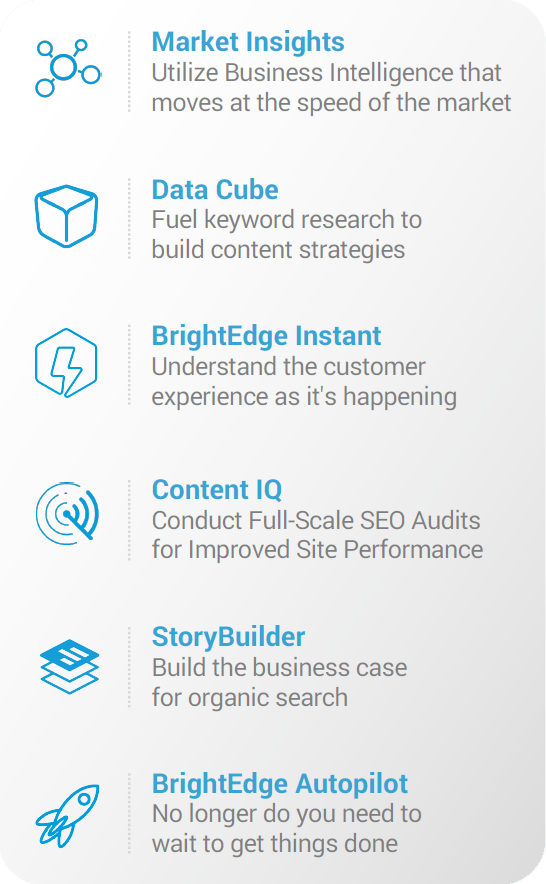
Market Insights Utilize Business Intelligence that moves at the speed of the market |
|
Content IQ Conduct full-scale SEO audits for improved site performance |
| |
Data Cube Fuel keyword research to build content strategies |
S |
StoryBuilder Build the business case for organic search |
| |
BrightEdge Instant Understand the customer experience as it's happening |
|
BrightEdge Autopilot No longer do you need to wait to get things done |


One of the most important issues this year facing digital marketers is how to prepare for Google’s upcoming Page Experience Update.This May, Google will begin using three key metrics to help assess the user experience of a given webpage based on actual browser data. The three metrics that are critical for this update include:
Largest Contentful Paint: This is the time it takes to load the largest visible element of your page (images, videos etc). Google says load times of less than 2.5 seconds for this element are ideal.
First Input Delay: This is the time it takes for the first interactive element on a page to respond to the user (hitting play on a video, clicking into a link or a drop down menu etc). Google has stated times less than 100 milliseconds is ideal.
Cumulative Layout Shift: As pieces of a site load, elements of the page will move around as pieces render. This shift in layout can cause people to click on the wrong things and ultimatley provide a poor user experience. This is measured from a score to 0-1. While some layout shift is inevitable, Google has stated less than .1 is ideal.
DOWNLOAD THE FREE CORE WEB VITALS WEBINAR
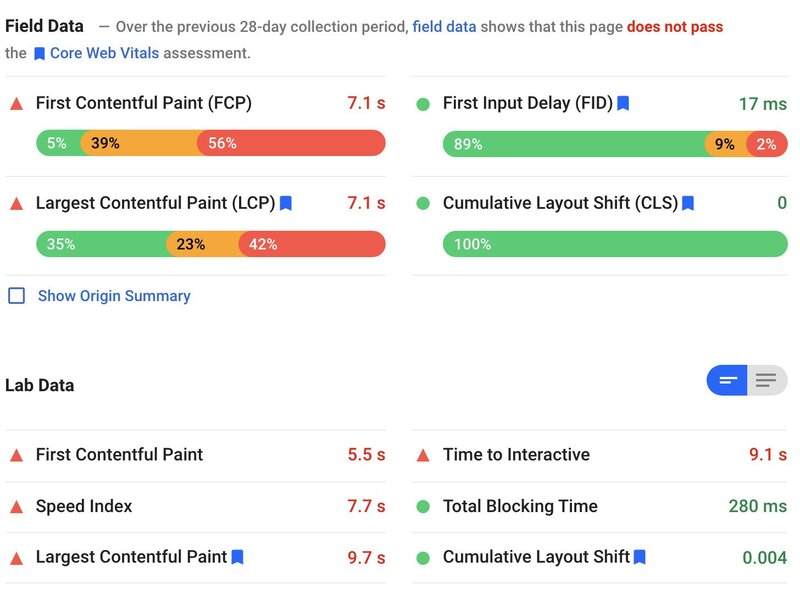
For large companies whose websites have lots of moving parts, it can be challenging to meet these benchmarks without making drastic changes to their entire infrastructure. Sitewide changes involves multiple stakeholders, conflicting business priorities and often lead to sizable projects. To be successful in preparing for this update, digital marketers need compelling data and very prescriptive prioritization in order to sell requirements into their organization.
Here are five key strategies that can help you address the core web vitals of your website and justify the implementation work needed.
It’s critical you keep a pulse on this for your own web properties. But you also need to understand your landscape. It can be difficult to scale measuring multiple URLs if you’re only using things like Google’s Page Speed Insight Tool. Tools like Brightedge Instant enable users to look at batches of URLs and compare their performancees. If they measure URLs with the top share of voice in a keyword group and run the page speed test on them, they have an instant readout of what competitors are vulnerable and where they have opportunity. Some ways to use this approach include:
There are a range of issues that could cause metrics like first input delay to be slow. You should be able to address many of these through common code optimization techniques. If pages are built on custom apps or content management systems that require multiple javascripts to render content, you may need to seek other ways to help your site meet performance benchmarks.
How your site is hosted, and its total infrastructure can have an impact on how well it serves content. In addition to evaluating on-page factors and loading aspects specific to a page, consider how your site it hosted, what platforms it is built on and so forth. These may be big overhauls but if you’ve got data to show how significant it could impact the channel, it may be worth it.
One of the most common challenges with enterprise websites, is they feature legacy code, and elements that are no longer in service. Log files can help marketers see what aspects of the site may be particularly prone to slowing down load times reducing the sites ability to react quickly to user input. SEO’s typically use log file analyzers to get a birds eye view into how crawlers are getting through the site. This same principle can help you address contentful paint and input delay issues at scale. While Google has stated this measurement is driven by browser data, the experiences crawlers have on the site can offer invaluable data points to prioritize how to optimize your site’s experience. Some examples of how log file analysis can help marketers prepare for the Core Vitals update:
Once you are aware of these issues, there are scaled ways to address them. For example, Brightedge’s AutoPilot compresses images automatically, eliminating this as a task.
If you’ve used share of voice reporting to identify which of your search results are prone to fluctuations in May during the Page Experience Update, you have a critical collaboration point for your media teams. If you anticipate having some vulnerabilities when the update rolls out, it may be wise to lean on paid search to help run air cover while you implement.
Measuring trends on both a macro and a daily level not only help you understand where those may be, but they can also help you anticipate what opportunities you could realize by meeting the Core Vitals Benchmarks. For example, Brightedge users that are using Market Insights can see at a high level what behavioral trends are fueling search behavior. This insight fuels things like content strategy, but when coupled with tools like Search console and page speed inisghts on the leaders in each space, it is now possible to forecast and predict what content is likely to be displaced at scale. For Brightedge customers, Daily Pulse makes it simple to visualize how positions are shifting leading up to the rollout, and even pinpoint when it occurs on results that matter to your business.
We can expect Google’s Page Experience update in May to have significant impacts on the organic channel as a whole. It is important to be armed with the right data and the right tactics to pivot and adjust. Even if your website is meeting the benchmarks, you can use this as an opportunity to pinpoint where you need to focus to generate positive traction. If you’re interested to learn more about how Brightedge’s suite of enterprise technology could help your business navigate things like the May Page Experience Update, please reach out and we can set up a demo today.