Optimize For Quick Answers

gregalbuto
gregalbuto
M Posted 9 years 9 months ago
t 9 min read

Given that an estimated 53% of your website traffic arrives from organic search, it is important to keep track on what developments, like Knowledge Graph, can boost your organic traffic.

What are Google Quick Answers?

Google Quick Answers are highly-visible text snippet answers and links placed at the top of the Google SERPs. They're also referred to as Quick Answers boxes, Rich Answers, Rich Answer boxes, Featured Snippets, and Google Answers. They are observed to provide a huge boost in organic traffic. Quick Answers appear up to 40% of the time for some types of queries. Some of the most important things to know about Quick Answers are:
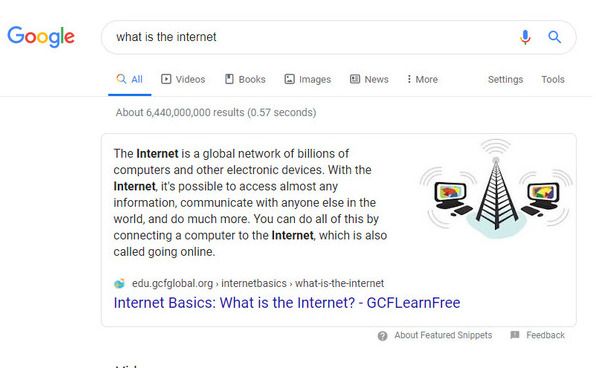
  • optimize for quick answers and score this spot - brightedgePages that have a Quick Answer box and ranked result perform better than those with just a high-ranking result
  • Quick Answers click-through traffic generates increased revenue and conversions
  • Quick Answers allow sites that haven't made it to the top of the SERP to receive a huge boost in traffic

How do I optimized for Quick Answers?

There are 4 key factors that Google looks at when choosing a page to show up in the Quick Answer box. They strongly correlate to a particular site being afforded a Quick Answer box. If you pay close attention to them, they'll help you boost your chances of having a snippet taken from your page. Here are the four factors to consider when you optimize for Quick Answers:

1. Be in the Top 5 on the SERP

An estimated 77 percent of the Quick Answer responses are taken from websites ranked within the top five. Although you might occasionally see results that break this rule, it is clear that if you want to increase the chances of getting your response highlighted in a box, you want to have a strong ranking on the SERP.

2. Have at least 1,000+ links to your domain

Referring domains are an excellent way to tell Google that your site is viewed as reputable and that people trust what you have to say. About 81 percent of the sites with a Quick Answer have a minimum of 1,000 referring domains. Fifty percent, however, have over 10,000. When it comes to cultivating these links, the more you have, the stronger your site will be.

3. Have less than 2,000 words on a page

Research has shown that most of the sites ranking in the top slots on Google are longer, within 1,500 words widely considered to be ideal for most topics. However, there appears to be a maximum as well - an estimated 70 percent of the sites with Quick Answers have less than 2,000 words.

4. Have good user engagement

Like the referring domains, user engagement tells Google that people like what you have to say and value your opinion. Sites with high bounce rates generally did not answer their visitors' needs and did not help with their query. A site that boasts strong engagement numbers, however, is likely well-regarded on the topic and will produce the quality answer that Google would want to display. Keeping these four factors in mind, you now need to choose the best opportunities to pursue. The main challenge here is picking the keywords for which you have a high chance of making it into Quick Answers. BrightEdge can be a valuable platform and can help brands identify the most viable opportunities. You must first identify where your best opportunities lie to receive a Google Quick Answer box. Focus your efforts on the topics that are most associated with your domain. In other words, focus on the queries and keywords you already rank high on or those related to them. By working on these opportunities, you are more likely to be rewarded with the box. On-page optimization to receive the Google Quick Answer Box includes the following seven techniques:

  1. Structure the page with the user experience in mind. Generally, this means keeping paragraphs short (350-500 characters) and using scannable lists when applicable. Headings can also be valuable to ensure that people can find the topics that interest them the most within the piece.
  2. Include your target question in the H1. This way you will make sure that Google understands your intention with a particular page.
  3. Provide a short, direct answer to your question in the first paragraph. If your question is best answered with a list, then include either ordered list (<ol>) or unordered list tags (<ul>). As you develop the rest of your copy, use variations of your keyword.
  4. Use 'how to' or other lists in your page as appropriate. If you use unordered lists, consider adding "Step one, Step two, etc.) to each of the bullets as you appropriate to make it easier for Google to interpret it.
  5. Include media content on the page: images, videos, infographics, and more. Make sure there media materials are consistent with your content and demonstrate the depth of your knowledge. Images are a must-have.
  6. Link to other related pages on your website. This will demonstrate to Google that you have the contextual breadth of knowledge needed to provide users with a trustworthy, high-value answer.
  7. Create 'related materials' and 'related guides' sections at the bottom of the page. To learn off-page optimization techniques for obtaining the Quick Answers box, download the full white paper.

This white paper features a step-by-step process from choosing the best opportunities to optimize for Quick Answers, shows how the BrightEdge platform helps you gain Quick Answer boxes, and track success. It finishes by outlining 20+ optimize for Quick Answers best practices that maximize your chances of boosting organic traffic to your website. Get started optimizing your content today. 

How Your Content Audit Can Help You Digitally Mature

enewton@brightedge.com
M Posted 9 years 9 months ago
t 9 min read

For brands to see genuine success from their digital marketing strategies, they need to develop mature practices. They must grow from their early, rudimentary efforts that yield little success and become a highly efficient and effective content-production organization. Brands that reach these upper levels of maturation are able to scale their content production across their business, accurately measure their progress and results, and provide innate value to their customers. A recent survey of B2B businesses, however, found that only 8 percent viewed themselves as being at this late stage. Before looking at content audit, let's dive a little deeper into the survey results. More than half of the surveyed categorized themselves as being at the middle stages, described in the above survey as the adolescent and mature phases. These brands see some success and are beginning to delve into accurately measuring and integrating their processes across the organization. A correctly-run audit can provide brands with the positioning they need to progress further in marketing maturity and begin to build a content production system that will advance their organizations online. Here is how to take your content audit, and your business, to the next level.

What is a content audit?

A standard content audit is the process of categorizing the content you currently have to better understand your strengths and weaknesses. Armed with this information, you can then move forward and fill in any gaps, strengthening your online presence. The basic audit will follow these steps. Content Audit BrightEdge

1. Take an inventory of current content

You want to look at all the current content available on your website, including your main site, blog, and gated content. You need to have a complete list so you can accurately determine where any gaps in your content creation exist. You will also need to be checking for any duplicate content.

2. Evaluate if content is accurate and useful

Not only do you need to know what types of content you have available for users, but you also need to know if that content is accurate and useful. Content that needs to be updated because it now contains incorrect information, for example, should be addressed. You can provide visitors with better information by including links to updated posts. Develop a rating system that will be able to help you quickly gauge how important a piece of content is. Look for the value it offers users and how well it meets the guidelines you want to establish for your brand. Grade your content based on how much it needs to be updated. Feel free to test your knowledge with BrightEdge Digital Marketing Quiz or SEO Quiz.

3. Measure traffic and engagement rates for content

You also want to see how well your content is drawing traffic and if it is capturing the attention of your visitors. Note the types of content that seem to be resulting in the highest engagement rates. Look for patterns in styles and topics that can help you better understand the needs of your audience.

4. See how well the content is organized on the site

Successful content marketing also requires taking a careful look at how your material is organized on the site. Customers and Google alike want to see sites that they can easily navigate to find what they seek. This means making URLs easy to understand, labeling features on the page clearly, including inbound links that are useful, and making it simple for people to return to the homepage.

5. Check the optimization of the content and see where weaknesses lie

Have a checklist prepared of optimization features that you want for every page of your content. This should include the basics such as:

  • The keyword in your H1 and H2 tags
  • Alt tags
  • The keyword in your URL
  • An engaging, customized meta description
  • Internal links to relevant pages

content gap for content audit - brightedgeAny pages missing these features should be edited to help them rank higher.
6. Determine what content is missing

Once you know exactly what content you have published and how well it is helping you to meet your business objectives, you then need to determine which gaps you should fill. Look for trends in your content-- such as blog posts that are missing images or posting multiple pieces related to your product and fewer pieces pertaining to the top of the sales funnel.

Taking your content audit to the next level of marketing maturity

Although this basic content audit can be helpful for your marketing efforts, those who want to mature in their content marketing strategy can also use this opportunity to amplify their efforts and start to see improved results.

1 Map all your content to the buyer’s journey for specific personas.

For you to mature in online marketing, you need to know exactly who you are addressing and what they want to see from your brand. You do this by understanding your targeted customers’ pain points and concerns. You also understand where they are on the path towards a purchase and the type of information they need to encourage them to move forward. Once you have this information, you can align your current content to this path and gain a clearer picture of what you need to produce and where you need to focus your efforts to better move people towards conversion. You will also be able to produce more effective calls to action.

2. Use more in-depth metrics.

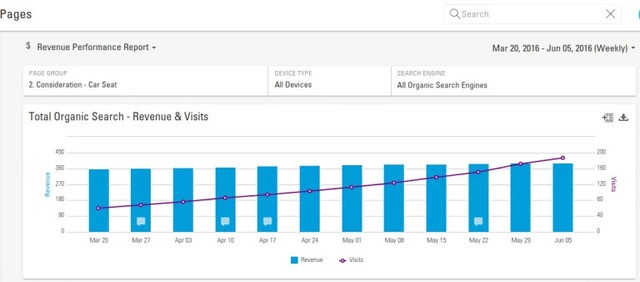
The more information you can gain concerning the impact of your content, the better you will be able to develop an effective and scalable strategy. Look at statistics related to your backlink profile for the pieces of content, noting the topics and styles that seem to attract the most high-quality attention. Measure the impact of different pages and funnels on sales and conversions. For example, on the BrightEdge platform, you can create groups for different types of pages, such as those related to specific topics or those targeting specific customers, and then monitor those groups compared to sales and conversion data. You can also watch month-over-month and year-over-year data to see the impact of your efforts to improve the success of your pages.

Content audit example with brightedge

3. Make sure your content efforts stretch across specialty and departmental boundaries.

One of the focal points of the marketing maturity model is making sure that your content development efforts become integrated across the organization. This means that content should play a role in a variety of business functions, including customer service and PR. Monitor how much content has been developed to fill these roles and how well they are helping to improve the customer experience and the brand reputation. You also want to check how well your marketing efforts stretch across the different specialties within the marketing department. Your content experts, SEO specialists, paid search professionals, and social media contributors should all be collaborating on the creation of effective content and means of distribution for specific pieces. A content audit can be an effective, helpful means of boosting your content marketing effectiveness and providing the lift your entire organization needs to mature in their marketing efforts. Take this opportunity to go beyond the minimum and instead enhance your content production effectiveness and efficiency by becoming a more integrated, data-driven, and content-oriented organization. 

The Power of Domain Authority or Trust Flow

Default avatar
Robert Lim
M Posted 10 years ago
t 9 min read

Domain authority and Trust Flow both measure the influence of a website as primarily measured by the number and quality of the site that link to it. When Google determines how well a particular page on your site ranks for a query, the algorithm is not only looking at the individual page that has been optimized for that keyword or phrase - it is also looking at the reputation of the entire website. That is why a site like SearchEngineWatch can publish a new post, and it will quickly rank highly on queries. Discover the Power of Domain Authority - brightedge Meanwhile, your new blog that you started a few weeks ago might post a fantastic, insightful article but you cannot find your site until page three or four of the search results.
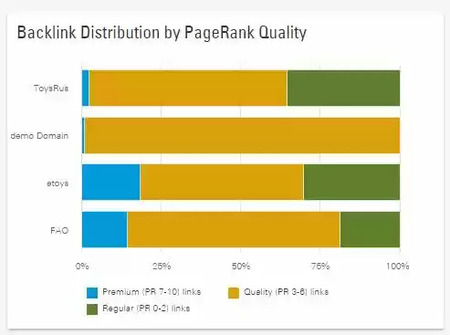
Established, reputable sites, like BrightEdge and SearchEngineWatch have a strong domain authority. These domains, which Google has already established as trustworthy, are regularly scanned by spiders to check for fresh content like this post. The strong reputation helps to boost the new web page, even before it has time to cultivate much traffic, many backlinks or other known factors in Google’s algorithm. While much of SEO focuses on optimizing specific pages of content to perform well in the search engines, it is important not to neglect domain authority. As your overall site reputation improves, it will help to boost every page on your domain. Here are four steps you can take to start improving your domain authority or trust flow today.

Cultivating good backlinks

Your backlink profile is an important means of demonstrating your domain authority to Google. When one site links to another, in many ways they are putting their own reputation behind the second site. The site is saying that this source is reliable and trustworthy for their visitors. Websites, therefore, that cultivate many links from a variety of other reputable sites can be regarded as equally authoritative sites. As Matt Cutts from Google has said: backlinks are a really, really big win in terms of quality for search results - backlink relevance still really, really helps in making sure we return the best, most-relevant, most-topical set of search results On the other hand, sites that receive multiple backlinks from poor sites, such as spam links, may be seen as untrustworthy.

Although Google does not say that sites can be harmed in their rankings from bad backlinks, the possibility of this threat remains. It is best to use Google’s disavow tool whenever needed. This tool will let Google know that you do not want to have anything to do with the poor links, which will help ensure that you do not receive any negative ramifications. Building a strong backlink profile can be a challenge. The most important thing you can focus on is producing high-value content that is engaging and people like to read. Then promote this content as often as possible, across social media and other distribution methods. You can also seek opportunities for guest posts to demonstrate your thought leadership. The more people who read and value your content, the more they will be willing and eager to provide you with backlinks from their own material.

Build internal links

Many sites neglect the importance of internal links. Linking from one page of content to other, relevant pages can help customers move around your site and understand your navigation and organization. Not only do these links help human visitors explore, they can also help the spiders crawl that arrive from Google and the other major search engines. This improves your reputation, resulting in stronger overall domain authority. These links can also encourage readers to remain on your site as they examine what you have to offer about their topic of interest. The more time people spend on the page, the higher your engagement statistics will be for the search algorithm, improving your reputation and rankings.

Reexamine technical SEO

There are also a number of other technical SEO methods that you should employ to boost your domain authority. It is important to go through your site and make sure that you are completely updated in the following areas:

  • Set up easy site navigation with the sitemaps uploaded and an organized, understandable domain
  • Use meta tags and meta descriptions to make it as easy as possible for Google and users to know when your site is relevant
  • Use alt tags for your images so that the search engines know what your visuals show
  • Make sure that the pages of the domain have been optimized with the appropriate keywords that reflect consumer vocabulary and queries so that it appears in the appropriate queries
  • Minimize the load time - Google and visitors do not like it when a site takes more than a few seconds to load

Build brand trust

As you work to build your brand trust, you will also increase your domain authority. Brand trust is something that will need to be cultivated across the web. To build brand trust, you need to begin, once again, with your content. Content that adds value and answers the needs of your customers will be content that is trusted. You should be researching topics and keywords that your intended audience is most interested in reading. The BrightEdge Data Cube can be an excellent resource to guide you in this area.

You will then need to develop content that addresses the needs of these consumers. The content should provide immediate value and go in depth with the topic - a cursory exploration or a reposting of what every other website already articulates will do little for your content exposure or your visitors. This content will be promoted on social media. On these platforms you want to cultivate a strong following with outstanding content and an interactive style. Ask questions of your followers, address their inquiries, entertain them with contests and reward them with occasional coupons or other bonuses. The BrightEdge platform provides detailed backlink count and Trust Flow information over time.

BrightEdge also displays the quality and Trust Flow of a site's backlinks. backlinks for domain authority - brightedge The BrightEdge SEO platform also breaks down the content types in which the backlinks exist. backlink type and flow for domain authority - brightedge BrightEdge will also help a site identify the gap backlinks a competing site has that your site does not. You can also build brand trust by tapping into the influencers in your industry. Influencers are people that your customers already rely on for accurate information and advice.
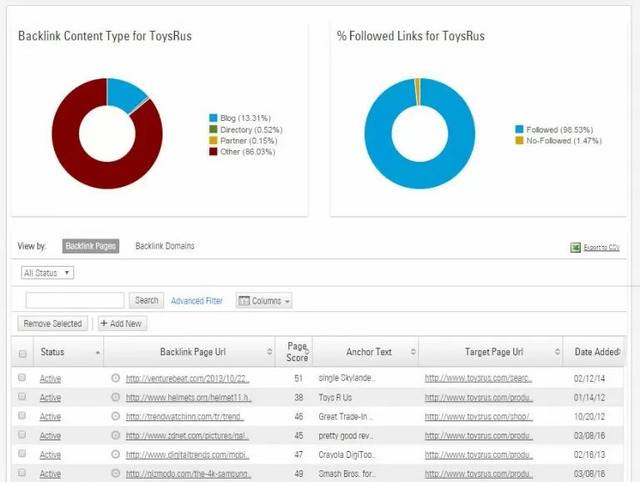

When you build relationships with these influencers and they vouch for you by sharing your content or allowing you space as a guest poster, they are throwing the strength of their reputation behind you. This can boost people’s trust of your brand as well. Your domain authority can have a powerful impact on how your pages rank and therefore the traffic you receive. Taking the time to follow these steps and boost your reputation can influence the ranking of every page on your site now and in the future.

Share16 Call for Speakers - Open Now - April 15th

Default avatar
spatel
M Posted 10 years 1 month ago
t 9 min read

BrightEdge’s 6th annual digital marketing conference, Share16, is coming this October 24-26th at the Westin St. Francis in the heart of San Francisco! Last year we had 75+ of the best speakers from leading brands like Google, Salesforce, Microsoft and Bing. This year we plan on making Share16 even better. We have already started receiving requests to speak at Share16 and so we are opening submissions early. If you want to submit yourself or someone you know as a potential speaker, or have a great idea for a session you want us to consider, please let us know.  Share16 is coming! - brightedge

If you have an interesting success story to share, practical insights or performance-related case studies then we want to hear from you! To submit a speaking proposal or nominate a speaker, please fill out the speaking submission form. We will be collecting submissions until April 15 with all potential speakers notified by April 29, because of the high expected number of submissions not all speakers will be selected. Learn more about sponsoring, attending, or speaking at brightedge.com/share16. Check out the videos of all Share15 speakers and their presentations by choosing “Share15" under category: Share15 Search, Content, and Digital Marketing Presentations Recap


How Many SEO Keywords Should I Target? Webinar

enewton@brightedge.com
M Posted 10 years 2 months ago
t 9 min read

"How many SEO keywords should I target?" is a common question SEOs and marketing departments consider as they try to maximize business results and ROI. For most companies, SEO has the highest ROI of any of the channels, and that is a fact that continues to grow as search gets better at understanding what the users want. At BrightEdge we are asked this keyword target question regularly by our customers, so we decided to formalize our answer with a webinar which we introduce in this blog post. Discover how many SEO keywords you should target for your site - brightedge We answer the question by considering the two key business factors: Opportunity and Constraints. We advise customers to build keyword sets using the following criteria:

  1. Brands
  2. Industry
  3. Categories
  4. Products
  5. Plurals
  6. Long-tail value
  7. Funnel conversion and value
  8. Seasonality
  9. Languages
  10. Geos
  11. Mobile
  12. Topics
  13. Trends
  14. FAQs

Using BrightEdge DataCube allows marketers to see the estimated query volumes behind each of these categories and even the singular and the plural of major keywords. Using BrightEdge Page Reporting helps marketers understand the keywords that the search algorithm has mapped to each page - a unique and proprietary solution in a "not-provided" world. We have also identified 7 constraints that guide how large a set of keywords to go after:

  1. Query volume
  2. Web and blog pages
  3. Platform technology, ability to track at keyword and page level
  4. Labor/Agency capacity
  5. Competitive strength
  6. Competing channels 
  7. ROI targets

Only BrightEdge customers have the remedy to reduce the restrictions of these constraints. Any practitioner can see how these two lists will help fill and size the keyword bucket, but some of them have additional thinking and math behind them to get it right. Once the keyword set has been identified, then it is time to engage in content performance marketing to make the quality content that ranks. In this early February webinar, BrightEdge product experts will dive deep to explain how to use these criteria to maximize business value in a webinar on this topic.

Watch for webinar registration announcements for How Many SEO Keywords Should I Manage? on our webinars page and in an email from us. If you are interested in pre-registering for the webinar offer of a comprehensive keyword identification program we call Ignite Opportunities for customers, please contact jdewulf@brightedge.com or a Content Performance Report for future customers, contact btulloch@brightedge.com.  

16 Reasons to Focus on SEO in 2016

enewton@brightedge.com
M Posted 10 years 2 months ago
t 9 min read

SEO has been around for more than a decade and a half and provides the majority of traffic for successful web sites (learn what is SEO). The following are some of the top reasons why SEO still matters a lot and provides substantial business value for SEO in 2016.

  1. A trillion is big number. Google processes an estimated 3.5 billion searches per day and 1.2 trillion per year. Take a look at the rolling query meter.
  2. The majority of website traffic comes from search engines. A BrightEdge study found that on average 51% of the tracked channel traffic comes from natural search.
  3. On average 83% of the traffic from search engines comes from SEO and 17% from paid search, according to BrightEdge research.
  4. The quality of the search results are better than ever with the algo changes that punish spammers and reward real brands and authoritative, relevant sites. That and advances in artificial intelligence mean it will continue to command attention even with competition from social search platforms.
  5. Though it accounts for the majority of channel traffic, most companies underinvest in SEO relative to its contribution or the opportunity, meaning it should provide higher returns for those who do.
  6. SEO traffic converts better than other channels because of the research process, journey stage, and transfer of trust from the search engine sorting and ranking. SEO leads have a 14.6% close rate, while outbound leads, such as direct mail or print advertising have a 1.7% close rate.
  7. SEO requires an upfront resource investment, but successful content performance marketing benefits once earned have long-term duration or equity.
  8. SEO traffic has no media cost and can provide a substantial ROI – higher than most other channels.
  9. Proper SEO helps organize your website and makes it easier for your visitors to navigate and transact as topics will be more clearly delineated on pages and logically linked together.
  10. SEO success secures a share of voice on the search engine results pages, and this can make your company look better-organized and more competitive. SEO is an integral component of your brand and brand trust.
  11. Search engine results pages are landing pages for traffic that is generated by your other marketing channels. It is important to align those messages to capture the maximum amount of traffic and revenue.
  12. SEO is a critical part of the research process, especially for long sales cycle products. People use search engines to create a list and then use them to collect opinions and input and make decisions. 44% of online shopping begins by using a search engine.
  13. SEO leverages and compounds investment in social content because some queries are more sensitive to fresh and social content to determine positioning.
  14. Focusing on SEO and legitimate link building leads you to develop relevant, useful content that people want to share and provides highly leveraged digital word of mouth.
  15. SEO allows you to understand user interest and intent and build site content that addresses and captures that intent.
  16. SEO has global reach and can even provide dynamic translation and localization that can bring in new and unexpected customers and opportunities from all corners of the world.

SEO in 2016 is more compelling and rewarding than ever. Make a strong case for expanding your content performance marketing and SEO in 2016 to drive more traffic and revenue.  

request a demo

SEO During a Site Move or Redesign

enewton@brightedge.com
M Posted 10 years 3 months ago
t 9 min read

Most web developers put SEO issues on the back burner while moving a website, when in reality, they should be putting SEO as a top priority. If the site is not optimized effectively, people will not be able to find the site, so all of your efforts moving the site or redesigning it will have been for nothing. There are three main components of a site move that require SEO for website redesign: before the launch, during the launch, and after the launch.

SEO for website redesign pre-launch

During the pre-launch period, SEOs should compile a list of metrics and errors to benchmark. This will help point the Web developer in the right direction as he/she is moving the site. It will also be useful to compare the before and after metrics after the site is moved. These are the five critical metrics that need to be measured before the change happens:

  1. Traffic analysis: Using Google or Bing Webmaster Tools, check and see if the site has any crawl errors. Understand what needs to be done to resolve these errors, and make a list of recommendations for the Web developer to resolve during the site move.
  2. Benchmark current keywords: See which keywords you are ranking for before the launch and for which landing pages. This will give an opportunity to provide content writers the ability to incorporate these and new keywords into the copy of pages as the site move takes place. Also consider setting up a tracking campaign for these keywords using the BrightEdge Data Cube to measure keyword performance before and after the launch.
  3. Landing pages: Record which landing pages get the most traffic, as well as which ones rank for which keywords, and which position they hold for each keyword. Record how many each of the top landing pages internal links they have pointing at them.
  4. Existing 404 errors: List out the 404 errors on your site that need to be resolved during your site move.
  5. Redirection errors: Review the redirection response codes across your site to discover unnecessary 302 redirects. Create a redirection plan to ensure that Web pages are redirecting appropriately.

SEO for website redesign during launch

During the launch of the site, there will be a lot of going back and forth between the SEO and Web developer, so it’s important that all of the data and recommendations made by the SEO are clear and understandable. Follow up regularly with the web developer to ensure all requested changes are completed correctly. The following are four aspects that SEOs should monitor:

  1. Organic traffic levels: Keep an eye on traffic and see what happens during the initial site move.
  2. Custom 404 page: Make sure the custom 404 page is working after the site launch.
  3. Check on the 301 redirects: Make sure that the 301 redirects are working as they should. Also, make sure that 302 redirects that need to be changed to 301s are being completed.
  4. Monitor site errors as the move occurs: Use Google or Bing Webmaster Tools to do this. Just make sure you follow through with the developer to ensure that all of the things with the pre-launch are actually done.

discover seo for website redesign practices - brightedgeSEO for website redesign post-launch

After the site move, you’re going to want to do a complete SEO site audit to see which pieces have fallen through the cracks. The SEO will then need to guide the Web developer through the remaining tasks, even when developers think that everything is complete now that the site has been moved. Conduct a final website audit that will contain the following metrics:

  • Redirects
  • 404 errors
  • Duplicate data (h1 tags, titles, meta descriptions, etc.)
  • Internal linking
  • Image alt description

Be sure to create a follow-up report for the developer with the remaining issues and how to resolve them. Continue to monitor keywords and traffic as the site adjusts to the move, and the to the changes the developers continue to make. Too many SEOs and especially Web developers neglect SEO-centric steps during a site move. SEOs need to be the instigators to make sure these SEO metrics are a priority during this initiative. After all, if the SEO authority is lost during a site move, the move was not worth it.  

S302: Beyond the Algorithm – Advanced SEO & Technical Trajectory - Adam Audette

 
Download Presentation


Adam Audette
SVP Organic Search
Merkle


< Back to all Share15 Videos


DM103: Channel Marketing – Digital Marketing Mix - Ujjwal Bhattarai

ujjawal bhattarai brady  brady logo
Download Presentation

  Ujjawal Bhattarai
  Sr. SEO Manager
  Brady Corporation


< Back to all Share15 Videos

DM101: Paid, Owned & Earned Digital Marketing - Michael Thomas

  Download Presentation

 
  Michael Thomas
  Chief Marketing Officer and Partner
  Noble Studios


< Back to all Share15 Videos

,