Marketing & SEO Strategies For 2021

gregalbuto
gregalbuto
M Posted 5 years 2 months ago
t 9 min read
An SEO strategy helps brands position themselves within the digital ecosystem. A strong SEO strategy will use data, technical SEO, and user intent to create content that answers the user’s needs and is easily found by prospective visitors.
 
Your SEO strategy should make up the cornerstone of this online presence. With 53.3% of the traffic arriving on your website coming from organic clicks, and about 60% of clicks going to sites in the top three spaces, the position and visibility of your site on the SERPs will have a dramatic impact on your ability to draw in new customers. 
 
Over the past decade, SEO and digital marketing have become increasingly competitive. The amount of data in the digital ecosystem is projected to increase from 130 exabytes in 2015 to 463 exabytes in 2025 daily, a ten fold increase. Content created by brands, and consumers themselves, has driven much of this data growth. The content creation process and output intensifies each passing year. Due to the pandemic and how it has affected the world, 94% of content marketers change the way that they drive and market their brands. This exponentially increasing content competition means that brands need a clear SEO strategy to guide their campaigns and accurately measure the results. The right strategy will be tailored to the unique needs of the business, maximizing resources and driving success.

Upcoming trends for B2B content marketing in 2021:

  1. Video content. Video is versatile and you can reach audiences in many ways by leveraging it. It’s important for your brand to discover both how to create video content and how to make it successful. More and more consumers are seeking video content rather than written.
  2. Webinars. Webinars are informative and are a great way to build trusting relationships with consumers. If you don’t know much about a topic, you shouldn’t create a webinar on it. Therefore, creating webinars will help your brand look like an industry expert – especially if the information follows E-A-T guidelines.
  3. Podcast. Podcasts are becoming increasingly popular – especially while so many professionals are on the go. They’re easy to access in the car, on a train, walking, etc. Being able to listen in on industry experts anywhere, at any time is convenient and worth looking into.
  4. Featured snippets. If you’re page is ranking well anywhere in the first SERPs page, it’s a good day for your post! Google is adding more featured snippets than seen before and scoring one of them will get you more clicks and more traffic. Optimize for them! You can track your featured snippet success within Data Cube.
  5. User-generated content. User-generated content, like reviews and testimonials, are important for boosting both your page ranks and the trust consumers have for you. Spend time getting to know your users and ask them for reviews. It’ll go a long way.
  6. Search intent. Understand the buyer’s journey. Search intent is important because searchers will start with a simple search and end up on your page from that. In order to be there for them, you have to understand what they’re looking for – hence search intent.
  7. Partner operations. Building partnerships with brands that can assist you in promotion can also assist your SEO. Gaining backlinks to credible sites will increase exposure to your site.

The modern SEO strategy


As the digital ecosystem becomes more crowded, and therefore more competitive, the world of SEO has become increasingly complex and sophisticated. High rankings and strong positions can no longer be driven by guesswork and instincts. Instead, marketers generate these results through careful measurement and intentional actions. The modern SEO strategy must be data-driven and carefully planned and executed. In a successful SEO strategy, organizations must have an intimate understanding of precisely who the campaign targets. They must know the pain points of their audience. Through keyword research, they can also uncover the topics and interests of their audience, enhancing their ability to create content that people want to read.
 
Digital ecosystems puts you in a position to focus on driving business value eliminating frustrations with outdated, legacy B2B solutions. It’s important to maintain a great relationship with your customers and to always be better today than they were yesterday. A digital ecosystem adds true value to those relationships and consistently helps you meet customer SLAs, quickly surface exceptions, and provide fast remediation to ensure your business stays on track.
 
The marketers working for these companies must also accurately target the user intent of their prospective visitors when they make particular queries, allowing them to create content that is highly relevant for the target audience. What types of content should marketers be focused on optimizing? Below are some options:
  1. Perform keyword research. Going in blind while creating content is not a good strategy. Performing keyword research to understand which keywords are worth optimizing for, which have larger search volumes, which one’s competitors are ranking for, etc. is a good strategy. Begin your SEO efforts by doing keyword research. 
  2. Title tag optimization. While the content on your page is the most important ranking factor, your title tag does matter. Be sure to include a well-thought-out keyword in your title and use it to introduce readers to the rest of your copy.
  3. Meta description optimizationMeta descriptions are not ranking factors. However, you should still optimize them accordingly to attract users to click on your link.
  4. H1 optimization. Your H1 is your most important headline and you should only have one H1 on page that indicates what your page is about.
  5. Internal linking and anchor text optimization. Internal linking is a great way to boost several pages at once. If one page is doing well, it has a better chance of helping the other pages linked to it, too. Be sure to choose the right keywords as anchor text. Don’t force it – but try to use keywords that indicate what you’re linking to.
  6. Image optimization. A file name and image alt text are both image SEO efforts you should focus on. Make sure you’re descriptive enough that if your image is found, your content is easily understood.
  7. Content optimization. Finally, the most important part of boosting your rankings and bettering your SEO is having great content that’s informative and unique. Include keywords throughout your copy but be sure to avoid keyword stuffing.

Understanding user intent for SEO strategy


User intent has taken center stage for successful SEO strategies. The goal is to optimize the content for users so that there is an increase in retaining your market along with converting them into customers and clients as well.
 
To push towards the improved understanding of user intent and creating a better user experience, brands must also consider the changes in how users interact with the internet. We have already seen the rise, and now dominance, of mobile usage, online chat boxes, and voice search. 
 
Voice search is expected to see five billion searches this year in 2021 and 6.4 billion in 2022. About 20% of mobile and Android searches are expected to be voice commands.
 
The newest marketing trends that many will have to keep in mind for 2021 are:
  1. Retention marketing. Market to existing customers and continue to bring them back, year after year.
  2. Content marketing. Create a content calendar to assist in continuously creating content that consumers want to read and interact with.
  3. Interactive content. Retain users by creating interactive content. Users only have an attention span of eight seconds – therefore quiz questions, games, videos, etc. could assist in keeping them on your site.
  4. Chat boxes. Since it’s less common a consumer can reach a business by phone, adding a chat box to your site will allow consumers to reach out and get answers ASAP.
  5. Nostalgia marketing. Reintroduce past products to the market with nostalgia marketing by leveraging new and old trends combined.
  6. Voice search marketing. More consumers are looking to use voice search. It’s predicted to be the future of online marketing.
An SEO strategy must take these changes in usage into account to help the brand better understand how to optimize their content, where to focus their efforts, and the types of content that will hold the user’s interest. As brands better understand user intent, they will be able to use a variety of different types of content in their SEO strategy, including images, videos, infographics, and standard text content. The information can then be promoted to the right customers at the right moment. How do I create a better workflow and maximize SEO ROI? Find out here.

Bringing in the technical side of an SEO strategy


In addition to properly aligning content with the targeted audience, brands can also not neglect the technical aspects of a SEO strategy. The goal of SEO is to help the right audience discover the content. In order to accomplish this, marketers must also consider their site construction, navigation, and markup. Interlink site pages with other relevant content so that visitors who display interest in particular topics can then move on to other material that will also engage them. This will encourage visitors to move down the sales funnel. It is also important to create a site taxonomy that allows visitors to reach their destination in as few clicks as possible. A shallow site taxonomy that organizes pages by topic, but keeps content no more than three clicks from the home page, is the ideal setup. Learn more about how to use topic clusters for better SEO.
  
When it comes to the technical aspects of SEO strategy, companies want to make sure that they are utilizing all their strategies in order to speak to their audience. Three factors to consider when dealing with the technical aspect of SEO strategy is:
  • Know what you want to communicate. Your vision, value, topics, and issues. Things that your business stands for and passionate about.
  • Know what people are searching for. Use keyword research as an opportunity to study and target large audiences, the market demand, and interest online.
  • Understand what Google favors. Review the first page to better understand what Google deems to be the most relevant answer and try to replicate something competitive.
Once sites have completed the optimization process with the rest of their site, they should also consider the role of schema markup in their site optimization. Schema provides search engines with additional information about the website, ensuring that the content is properly understood and listed where applicable. It can also help brands obtain rich answers on the Google SERP, such as placements in the Google Events feature or earning Quick Answers.
 
Your SEO strategy will help drive your organization and your content forward by making your material discoverable by the search engines and the visitors themselves. Developing an SEO strategy, however, requires careful forethought and planning. You must understand the pain points and interests of your target audience while creating content that both aligns with user intent and incorporates the latest best practices in technical SEO. Brands that master this balance find themselves rewarded with a strong, profitable marketing strategy.


Let Your CMS Guide Your Content Workflow

ksoosOLD
ksoosOLD
M Posted 5 years 5 months ago
t 9 min read

A CMS, otherwise known as a Content Management System, is software used to develop and manage your content through various marketing channels. While most content management systems mainly focus on content management for your website, some also grant marketers the ability to manage content across multiple channels such as web apps, social media and more. A CMS allows for multiple users across your organization to collaborate on marketing efforts without requiring them to have deep technical or coding skills. 

How does a CMS work? 

A CMS helps guide content creation in an easy-to-use application by allowing users to create, manage and publish content with a few clicks of the mouse. Rather than building a website or landing page from scratch, a CMS removes the need for heavy development and simplifies content creation through drag and drop or WYSIWYG (What You See Is What You Get) editors. This allows marketers to control more of the website, streamlining workflows and bringing both the business and technical teams together to collaborate in real time. 

Evaluating what CMS you should use

Start by identifying the problems your team is currently facing and whether you’d benefit more from a SaaS or a hosted CMS solution. Be sure to fully understand your site and content management needs and the basic features you’ll require from a CMS before you begin your evaluation. We recommend making a list of need-to-have and nice-to-have features to assist with your evaluation.  

Most CMS platforms will allow you to build web pages, save your favorite page templates, store and deliver content, allow you to collaborate with teammates and even create workflows, calendars and processes to help keep your team organized. 

When evaluating the price of a CMS solution, you’ll need to consider more than just the upfront cost of the product. Not all CMS solutions come out-of-the-box with everything you’re looking for, some will require additional features or integrations and may have add-on costs for large support requests or SLAs, WYSIWYG editors and more. Consider all your business needs and be sure you’re aware of the CMS’s limitations and other costs that may come up. 

Consider what kind of upkeep and daily management will be required. What will the creation and upkeep of the site look like after the initial migration and set up is completed? Will you need a developer to assist with your day-to-day tasks? How will this solution work with your team’s skillset(s)? Does the solution offer WYSIWIG or drag-and-drop type editors for your non-technical (non-developer) team members? Look at what kind of support is included or available as well and consider what would be best for your business. Do they offer 24/7 support, or will an SLA be required? 

Be sure to evaluate whether this CMS can easily integrate with your current tech stack. If the out-of-the-box solution can’t solve some of your needs, how much customization is needed or available and what is able to be integrated? This is where you should consider all features (the need-to-have and nice-to-have features you listed out earlier) and see what will require additional integration or may have additional costs. 

You’ll also want to make sure the CMS software is scalable. Find a solution that meets your current requirements, but always be thinking about future goals and where your site and company are heading and find a CMS software that can grow and adapt with you. What features will you need moving forward to assist with your company’s growth? 

CMS software features for SEO & digital marketing 

Not only will a good CMS allow you to create outstanding web content with ease, it should give you the ability to manage your site’s SEO as well. Basic SEO features include page titles, meta descriptions and image alt text. Think about how much control your team would like to have over more of the technical SEO features such as updating sitemaps, robots.txt, adding schema, canonicals or setting redirects. Being able to quickly make these changes without waiting for development can be critical for SEO success. 

Have questions about schema and structured data? Learn more here. 

Page speed and mobile responsiveness are important factors to keep top of mind as well. Your site may look great, but it won’t perform well for users and may not rank as well on search engines if the site loads slowly or isn’t mobile-friendly. A faster site not only helps your search rankings, but increases user engagement and conversions as well as lowering your site’s bounce rate. If the CMS you’re considering comes with CDN capabilities, be sure it’s lightning fast with proven page speed performance. 

Read more about the effects of page speed 

Other features to consider include social media marketing/integration, site chat to assist inbound sales, e-commerce features, A/B testing, dynamic content for personalization, blogging capabilities, SMS functionality, CRM and sales features or email marketing. Will your team benefit from using features like content calendars or structured workflows?  

In conclusion  

As you review solutions, think about what will be most useful and relevant to your business. Does this solution meet all/the majority of your needs or will you need to add on products and features or need to integrate with other technology?  

Every website will have different needs – some may require event registration while other sites may require e-commerce features or a site chat for inbound sales.  Most platforms will allow users to sign up for free trials, or sandbox versions of the CMS software to get a hands-on experience to truly see if a CMS is right for you. 

What Is Click Through Rate? How Do I Maintain A High CTR?

gregalbuto
gregalbuto
M Posted 5 years 8 months ago
t 9 min read

Click through rate, or CTR, is a performance metric that helps you understand your audience and what content resonates.

However, a good CTR doesn’t always mean higher conversions or better engagement with your site. If you have a high CTR but you’re not seeing purchases from those users, you are likely targeting the wrong audience.

How to get a good CTR?

There are several ways you can increase your CTR. Below are a few ways you can begin.A good click through rate depends on your content - BrightEdge

  1. Write unique and informative copy. For SEO, this is your meta description, in PPC it’s your ad copy. It’s the text that entices users to click on your link. Without giving away too much, or an exact answer to Q&A content, leverage your copy to draw attention to your content for users to learn more.
  2. Leverage structured data. Help your content stand out and grab the attention of users with structured data. Rich snippets have been known to receive more organic clicks. Optimize your pages using structured data to better your chances of receiving clicks.
  3. Optimize for local SEO. Localizing your content is especially relevant today as Google continues to move to mobile-first indexing. Local SEO can help your brand stand out in local searches and drive more organic leads to your site. 50% of users visit a store within a day of searching locally. 

How to maintain a good CTR?

In order to get a good CTR, create quality content. You’ll want to start by choosing keywords, especially long-tail keywords, that have a high search volume and resonate with your audience. You can use Instant to pinpoint keywords that are both trending and work for your content.

Demo BrightEdge Instant!

Optimize your title, meta description, and/or ad copy with the keyword you want to appear for. For PPC, remember to use negative keywords as well. Leveraging negative keywords allows you to filter out queries that are less relevant. Some of the more common negative keywords would be “free” or “cheap” to avoid customers that aren’t looking to spend on quality products or services.

If you’re looking to increase CTR of an ad, consider adding a review extension to the copy. When potential customers are able to see that your brand is positively reviewed, you can increase your clicks by up to 66%.

When will I see an increased CTR?

Typically, you will see higher CTRs at the beginning of the customer journey while users are doing informational searches. You will typically see lower CTRs toward the end of the journey when users are making buying decisions.

You will also likely see a higher CTR from video content. An email with a video, rather than an email with just content, receives a 96% increase in CTR. Video content averages the highest click through rate of all digital channels. It is smart to consider adding a video or a link to a video in your content to increase your CTR.

While digital marketers regularly test out different ways to increase CTR and organic traffic and have discovered that some simply don’t work, there are tried and true ways to increase CTR. By getting creative with your meta descriptions and using an SEO-driven titles, you have a better chance of increasing your CTR and, in turn, your ROI as well.

Rank For Lawyer SEO Terms Relevant To Your Firm

gregalbuto
gregalbuto
M Posted 5 years 9 months ago
t 9 min read

How should law firms do SEO?

The legal vertical is one of the most competitive in search, and for good reason. Paid advertisements and aggregator sites including Avvo, Justia, and Super Lawyers fill the first half of the SERPs for a majority of the industry’s top keywords including specialty terms like “attorney for dui” and “attorney for divorce.” Because of this, it is important for law firms to differentiate themselves from the competition through their organic strategy.

Big law firms can combine PPC and SEO together in order to maximize visibility in the SERPs. This is something we’ll get to a little later.

For smaller local firms, leveraging local SEO is critical. Outranking the aggregators, news sites, and big law firms for industry keywords is difficult. Optimizing pages for local search opportunities, is key to ensuring small firms can compete in organic SERPs.


What are the benefits of law firm SEO?

A whopping 96% of people seeking legal advice use a search engine and 74% of consumers visit a law firm’s website to take action. Because of this, the competition to gain organic ranking for law-related terms is high. Regular optimization, site audits, and technical SEO efforts will result in increased traffic to your site and boost your visibility within the SERPs.

Gaining the top organic rankings while practicing law firm SEO can result in more leads, opportunities, customers and overall growth. It is important and valuable for law sites to be seen as trusted by consumers and search engines. Google has increased its focus on trusted websites. Being recognized by search engines as a trusted site will increase visibility. As organic traffic increases so should potential leads. This is where conversion optimization becomes the primary focus. Optimize your site with a form fill or a consultation request on a home page, at the end of a blog, or near an attorney’s bio in order to get the potential clients’ information. 

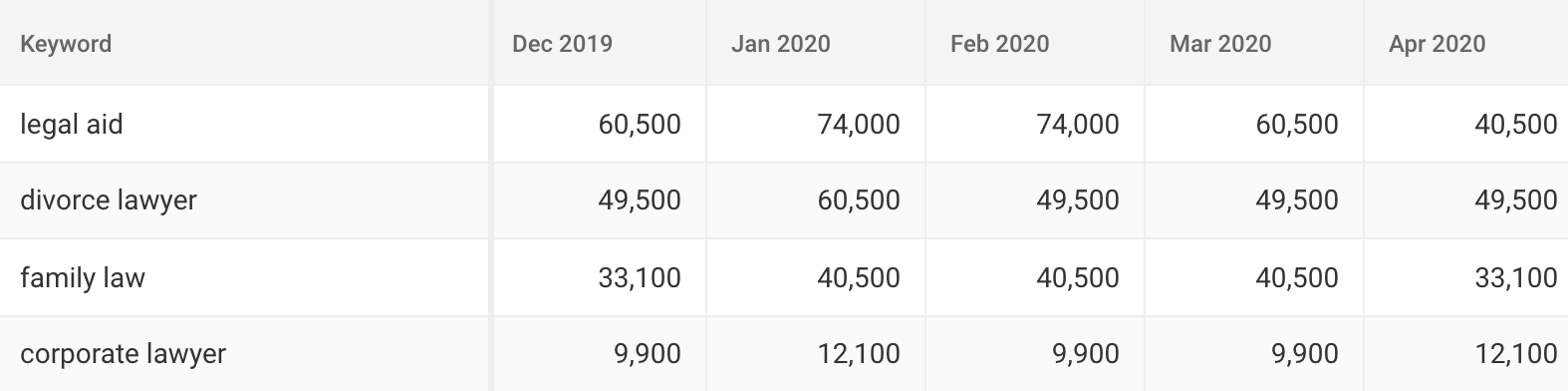
Producing regular content that appeals to your audience, will drive repeated visitors to your site. This will develop a reputation as a thought leader. One way to ensure your content is targeting the best keywords for your firm is by using Instant and Data Cube to conduct your keyword research. You can also leverage Data Cube to research your competition for law keywords to see where they may be outranking your site. Below are examples of law-based keywords with high search volumes found via Instant.

Lawyer SEO keywords for your law firm’s site - BrightEdge

Get a demo of BrightEdge Instant!

Law firm SEO strategy

Since it’s nearly impossible to outrank the aggregator sites, it’s vital for law firms to rank on the aggregator sites. Use the keywords you choose to rank for as headers and in any images you attach on the aggregator site. Write unique content for the aggregator site that isn’t already on your site. 

For small law firms with only one location, focus SEO efforts on local search. Optimize location pages and be sure to have a Google My Business page. Choose specific, long-tail keywords to optimize for that include “near me” or the city where the firm is located. For example, “attorney for dui near me” or “attorney for dui in Miami.”

All law firms should separate services pages, whether you have one or multiple. For each service you offer, detail what your legal teams offer clients and link to other pages on your site that include more information. For example, if you specialize in legal counsel for company-wide benefits for employees, create a landing page for that information and link to another page that offers information on how clients can get started with employee benefits themselves. Separating services pages allows you to expand the layers of your site. You will drive more traffic to your site with multiple pages you have the opportunity to rank for rather than one page with all of your services information.

Law firm SEO also includes client reviews. Offering potential clients a look into how you interact with current or past clients will better help both your SEO and your reputation. Reviews signal to Google that your site has authority and is trustworthy for visitors which can influence your ranking. Additionally, it’s good for users who are considering your services.

Combining PPC and SEO 

Leveraging PPC and SEO will drive more visibility to your site and increase your traffic. Utilizing paid ads while also optimizing for the organic SERPs can help you gain visibility right away and later. PPC is a great way for you to gain visibility right away and SEO is a method to gain traffic overtime. Not only does running ads on search engines work well, but also, running them on aggregator sites will benefit you as well. When an aggregator site ranks, your site ranks, too. You can specify ads based on your geographic area and the categories in which you practice law. 

Paying for advertisements on aggregator sites can help you to avoid the high prices seen in the law vertical on Google Ads. Avvo offers monthly ad subscriptions that can be more affordable than Google Ads. Specifically, for keywords relevant to law SEO, the CPC of a Google Ad can be costly. However, Google Ads have the benefit of being extremely focused – down to the zip code and modified for focused terms – and can benefit your site more so than an Avvo ad would. 

Utilizing Google Ads for visibility on high-ranking, impactful keywords is a marketing tactic big law firms should leverage. If a small law firm has the budget, spending on PPC in order to stay competitive for specific keywords may be a wise approach. Used correctly, Google Ads can help small law firms target specific keywords, in specific areas.

Avvo receives over 1.3 million organic visits each month. While there is huge visibility here, Avvo might not be ranking for the keywords that are important to you. Avvo’s monthly subscription is less costly than Google Ads but leveraging Avvo is likely to show you less of a conversion rate than Google Ads. Google Ads has a 3.75% conversion rate while Avvo only has a reported .0083% conversion rate. 

Overall, Google Ads will provide your firm with more visibility, more leads, and more ROI if you have the funds to spend on paid ads. If you don’t have as much to spend, aggregator ad sites, like Avvo, are a good source of lead generation. However, the best source for high conversion rates is still SEO - leading with a 14.6% close rate. If you decide to invest in paid advertisements, optimizing for organic results with SEO efforts is still very important to your overall strategy. Strive to leverage PPC and SEO together in order to gain as much visibility as possible.

What else can I do to rank for lawyer SEO terms?

Another SEO tactic to utilize is building link authority. Find out where your competitors are linked to and work to gain links on those same sites. Also, work to gain link building opportunities where your competitors don’t have any. 

While guest blogging isn’t as strong of a link building tactic as it was in the past, it is possible to gain audience trust and credibility as a thought leader by writing guest posts on sites that are trusted and respected. Relevant sites may include law school websites, blogs with extensive information on law topics (Attorney at Work), or well-rounded and respected publications like The Wall Street Journal.

Lastly, building citations will be important for any local firm. In order to do so, make sure your NAP (name, address, phone number) is correct and in proper format. Make sure you’re not already listed on the sites before submitting your citation. If you already have a citation listing on a site, double check to make sure it’s accurate and updated otherwise the point of the citation is lost.

SEO strategy for law firms is unique as the competition is high, there are massive aggregators in the space and there is more to consider than the typical product or services site. Ranking for law-related terms is beneficial and worth the hard work to get there. Be sure to regularly create new content and optimize keywords that have strong growth and resonate with your audience.

Successful SEO is Possible with a Small SEO Team

gregalbuto
gregalbuto
M Posted 6 years 1 month ago
t 9 min read

Considering that 93 percent of online experiences begin with search, and that even 82 percent of customers about to buy something in store will still research online, brands today cannot afford to overlook the importance of SEO and creating a strong digital presence. Many organizations, however, have to learn how to manage this with a small SEO team. Given the immense task of fully optimizing a site and elevating a brand across the web, this can feel challenging.

Fortunately, we have seen many organizations who achieve considerable SEO success despite a small SEO team by using an optimal strategy. Here is what we would recommend for those who want to take their optimization to the next level.

Understand the importance of training people in multiple disciplines

When it comes to building a highly efficient small SEO team, you want to emphasize the importance of cross-discipline training and cooperation. One of the challenges faced by small SEO teams is the variety of disciplines that go into building a solid SEO strategy.

In general, you need someone who:

  • Can manage the technical side of SEO to help you take advantage of opportunities in presentation with coding and schema markup
  • Will produce high quality content to help demonstrate the brand’s expertise and trustworthiness
  • Has the ability to do standard on-page SEO optimization to help the content rank as highly as possible
  • Understands how to use social media to engage with prospective customers and drive traffic back to your site to build engagement and rankings
  • A marketer who understands the overarching SEO strategy and content production who can create schedules and fit all of the different pieces together into a solid strategy.

On a small SEO team, it may be a challenge to create a fully equipped team with a member to fill every role. Instead, often a single team member needs to have the insight to fill multiple roles.

Offer opportunities for team members to receive training in various disciplines that the group needs. For example, provide your content writers with lessons and training opportunities to help them understand how to do on-page SEO.discover ways to create a successful small SEO team - brightedge

Online, there is now a wealth of opportunities for brands who want to find training for different areas of SEO. Blogs, like our BrightEdge blog,  can help novice SEO professionals delve into different areas of specialization. Training courses and books can also help professionals learn more about how to drive success online.

Prioritizes the marketing areas you will focus on

Once your small SEO team has begun to form, the next step to achieve success lies in prioritizing your marketing tasks based on what you can accomplish quickly and see the best results. Particularly with a small team, accomplishing these quick wins can help you begin to build up the team and demonstrate to the organization as a whole that SEO is a worthy investment.

BrightEdge makes it easy for brands to identify areas where they can see the best SEO victories as quickly as possible. Our platform can show brands the pages that are close to ranking within the top results on the SERP, and thus provide ample opportunities to see success.

In addition to pages that offer great openings for quick wins, think also about what pages might be missing from your site. Look at competitor sites for major gaps within the content you have created.

Also, analyze how you currently have your buyer’s journeys set up. Consider how your various personas progress from their initial stages of investigation through becoming customers. Are there any major gaps in their progression? Prioritize closing these gaps.

Set reasonable weekly goals

To keep everyone moving forward, you also want to set reasonable goals. You will not have the same bandwidth as an organization with a significantly larger team, but you can make steady progress. The important thing is to set well-articulated goals so that everyone knows their exact role and is clear on deadlines.

Bring the team together and discuss what they can reasonably accomplish per week. Use this meeting to also determine the progression of how content and the optimization process will move between team members. For example, a content writer who can also manage SEO should produce a piece of fresh content each week, which they then pass to the technical SEO professional who also posts the material.

The goals your group sets should revolve around the priorities of marketing that your group already determined. Consider factors such as optimizing a certain number of pages per week, producing a certain number of fresh pieces of content, and creating a predetermined number of social posts each week.

These weekly goals should also carve a clear path towards guiding monthly and quarterly goals. This will help each member of the team see how their weekly accomplishments feed into the groups overarching goals.

Remember the importance of the entire sales funnel

optimize the full buyer's journey with your small seo team - brightedgeAs you produce content, be careful not to overly prioritize the top-of-the-funnel to the detriment of the middle or bottom of the funnel. It can be easy for marketers to focus on content that falls at the beginning of the buyer’s journey and neglect other material, particularly as the top-of-the-funnel content tends to be easy to find through keyword research.

To see true ROI from your marketing, however, your material should be capable of nurturing customers through the entire buyer’s journey. This will warm up the lead enough for the sales representatives.

To improve your ability to produce content for those further down the sales funnel, use a combination of:

  • Keyword research
  • Customer interviews
  • Site monitoring
  • Competitive analysis

Since you have a small SEO team, you will need to make sure that the content you produce aligns well with your entire sales funnel. With fewer resources and more time constraints, you cannot waste time producing ineffective material.

Have quality supports in place

When it comes to making the most of a small team for effective SEO, the right support can make a tremendous amount of difference. With the BrightEdge platform, your small team can bring together a variety of capabilities. For example, you can use the platform to:

  • Monitor your SEO success and understand your progress
  • Find striking distance keywords and easy SEO wins
  • Conduct the research on competitors and keywords that you need to build a strong funnel
  • Receive SEO guidance to empower those learning hybrid specialties to complete the jobs well
  • Assign and coordinate tasks with others on the team so that everyone knows the schedule and their responsibilities to improve efficiency

Successful SEO with a small SEO team is completely within the reach of your organization. Knowing how to organize and train your group as well as prepare your strategy will help your brand achieve solid SEO growth and work towards your objectives. Consider the advice and guidelines outlined above as you begin to move forward with your SEO goals.

Social media can play a powerful role in SEO and building a brand’s online presence. Although the links from social media are typically no-follow, they can benefit brands throughout the buyer’s journey in a variety of ways. With two billion users across the various platforms worldwide, the potential for engaging prospective customers is significant. Namely, […]

The post Social Media and SEO: How to Use Them Together to Drive Leads appeared first on BrightEdge SEO Blog.

Social Media Impact on Google and SEO POV

Are Twitter and Facebook tweets and likes an SEO ranking signal?

POV: Social Media Impact on SEO

Are Twitter and Facebook tweets and likes an SEO ranking signal?

Social content matters because it is crawlable content that lives on an authoritative domain. It can appear alongside your own site content in the SERPs, especially SERPs for branded queries using a content calendar.

Backlinks on social media platforms, however, are all NoFollow, and Google itself has stated that "tweets and likes" are not a ranking signal in its search engine. So does that mean that the impact of social media activity doesn't matter for SEO?

The answer is that it's not so simple. Read BrightEdge's exclusive point-of-view on the impact of social media and SEO to find out why.

Leverage social media to drive traffic to your site using this downloadable guide.


CAPTCHA
Solve this simple math problem and enter the result. E.g. for 1+3, enter 4.
This question is for testing whether or not you are a human visitor and to prevent automated spam submissions.

5 SEO Strategies for 2020

enewton@brightedge.com
M Posted 7 years 4 months ago
t 9 min read

Losing a single spot on the SERP can have a tremendous impact on your traffic rates, and therefore your conversions and revenue. Position one on the desktop SERP receives an average of 28 percent of the clicks, while position two receives only 13, and position three 9. Earning a leading position, therefore, and maintaining that ranking, can benefit brands tremendously. When it comes to optimizing a website and its content, the list of required steps can be confusing. A number of different factors influence how well search engines understand the content of your website and its ability to align with your target audience. We understand that SEOs have a lot of different jobs to juggle. They want to prioritize the SEO tasks that will give them the largest return on their investment. Here are 5 SEO strategies that will have a positive impact on the success of your website.

Pay attention to image type and SEO

SEOs already know that images themselves play an important role in becoming an SEO expert. BrightEdge Research found that images appeared in 28% of SERPs in September 2018. The increasingly visual atmosphere of the online world dictates that customers want to see images as they browse the web. Posts and pages with images receive better engagement, shares on social media, and overall improve the ability of the content to pull in customers and engage them. To take this a step further, however, we also suggest that SEOs consider the image type that they elect to use. Customers pay close attention to page load speed. Google has found that when the page load time increases from just 1 second to 3 seconds, your chances of people bouncing increases by 32 percent. When your page load time increases from 1 second to 5 seconds, that probability increases by 90 percent. Your images play an important role in how quickly pages load. You have three main image types to choose from: JPEG, GIF, and PNG. Most of the images you see online are JPEG. Since they are widely used, they are compatible with most device types. They also compress images to help keep the file small. This can sometimes hurt the quality of the image, but it also helps page load time. GIF images have gained tremendous popularity over the past few years because they allow users to incorporate simple animation as well as having regular art. These images only use 256 colors, so you would not want to use a GIF to upload a photograph. The limitation also means that the size of the image is small, thus making them a good choice for certain images, such as the company logo, that need to download quickly. PNG images are the newest, which means that you might find support and compatibility of the images lacking in some sectors. These images can use more colors, which makes for a crisper and more detailed image, but the images do tend to be be larger. For your SEO strategies, consider carefully the role the image will play within a particular piece of content on your site and which file type will have the best impact on the user experience for your audience. Balance image quality, load speed, and the need for image compatibility and support to create the best image experience.

Remember mobile site type and SEO

Since 2015 brands have understood the importance of mobile compatibility and since the mobile-first algorithm roll-out, they have taken mobile optimization into account. What many SEOs might overlook, however, is the type of mobile site they use. Mobile site type can impact SEO strategies - brightedge There are three main types of mobile sites, and each has its own benefits and drawbacks. M(dot) sites M (dot) sites were the first real solutions for brands interested in creating sites for their mobile users. It allowed site owners to create separate sites for mobile devices, which could then be optimized specifically for the user on the go. While these sites served well for the first few years of mobile design, their usage has been declining in many areas. Site owners have to consider drawbacks such as:

  •  
  • Managing two separate URLs
  •  
  • Having redirects between the site versions
  • Users have trouble sharing links from mobile devices-- as anyone who opens their shared link on a desktop has a poor user experience

Responsive design Responsive design has been the chosen solution for many people. This design automatically detects the type of device that displays the site and adjust accordingly. Google has also in the past stated that they prefer responsive design-- although they also say that they do not prioritize one type of design over another in the algorithm as long as the pages are compatible with mobile users. Responsive design, however, does have a few issues as well. The largest drawback is the need to optimize for both the mobile and the desktop experience simultaneously. This means that if your desktop users prefer the site design but your site performs poorly with mobile users, you have to determine the risk of modifying your site design to please your mobile users and weigh the risks of both audience types. Adaptive Design Finally, adaptive design attempts to correct some of the issues seen in responsive design, as site owners have greater flexibility to create separate journeys for mobile versus desktop users. It also reduces some of the load speed problems seen with responsive design. On the other hand, this type of design can be complicated and require a lot of resources for many site owners. As a site owner, you need to consider the type of mobile site that will work best for your needs. Look at the traffic on your site, the behavior of mobile versus desktop customers, and see which type of site will perform best for you and your SEO strategies and goals. Read more on how BrightEdge drives mobile success.

Hreflang implementation and SEO strategies

Anyone who runs a site designed to reach people in multiple languages or multiple countries should have their hreflang tags implemented. Some people wonder if these tags might be redundant, as Google can automatically detect if a page is written in a given language, such as Spanish versus English. What the tag does, however, is help Google sort through multiple versions of a site that might not be immediately obvious. For example, if you have one version of your website designed for British customers, you will likely target these consumers with optimization oriented towards British search preferences, contact information and shipping information for people in Great Britain, and use British English spelling and grammar. Similarly, you would do the same with an American, Canadian, or Australian version of a website. You want to make sure that even though all of these sites are in English, they get displayed correctly for the audience in the particular country. Hreflag tags provide benefits for SEO strategies - brightedge Using hreflang tags ensures that Google has your site correctly indexed and ready for your customers in various locations. With sites that reach the right audience, you will naturally improve their user experience, which in turn will boost their engagement and your SEO.

Accelerated Mobile Pages or AMP and SEO

Remember our discussion earlier of how quickly people will start to abandon a page based on load speeds. In response to this need of customers, since this summer of 2018, Google has also officially considered pagespeed a ranking factor for websites. AMP, however, is a tool that has been a around for a few years and allows you to capitalize on website speed on mobile. By creating AMP pages, you can ensure that latest and most relevant of your pages have speed on their side when customers come across them. Google likes AMP pages because they can be trusted to deliver fast content and an optimal user experience. To create an accelerated site, take advantage of AMP, particularly for any news or similarly targeted articles you create on your website. This will help you get your new releases above the competition and in front of customers, building a strong brand reputation.

Optimize your XML Sitemap for SEO

Creating an XML sitemap can play a strong role in helping Google understand and properly index your page. It provides you with the opportunity to let Google know how your site is organized and where you would like them to prioritize the indexing process. Depending upon where you host your site, you likely can easily generate a sitemap. For example, WordPress allows you to create and update a sitemap with a plugin. You can then take this auto-generated sitemap and submit it directly to Google. Since the purpose of the site map is to help Google know how to index your page, you should not include pages that you have blocked with robots.txt on your site map. If you have a very large site, you also want to make sure you place an emphasis or weight on pages that have been highly optimized and represent your site best. Similarly, you only want to include canonical versions of your website on the sitemap. Once you have submitted your sitemap to Google, go back and review it in Google Search Console. If the search engine has problems indexing certain pages, they will let you know, which can help you quickly fix these potential problems and create a site better prepared for search. SEO will always be a challenging area with a number of various techniques and optimization processes to follow. Sites that want to build a strong presence online should consider how these 5 proven SEO strategies can boost their own performance and what they can do to implement them on their site.

The Value of Robots.txt: How Does It Help SEO?

maspillera
maspillera
M Posted 7 years 8 months ago
t 9 min read

The origins of the robots.txt protocol, or the "robots exclusion protocol," can be traced back to the mid-1990s, during the early days of web spiders traveling the internet to read websites. Some webmasters became concerned about which spiders were visiting their sites. A file containing directions on which site sections should be crawled and which shouldn't offered site owners the promise of having more control over which crawlers could visit their URLs and how much capacity they were allowed to consume. Since then the robots.txt has grown to meet the needs of modern web designers and website owners.

The current versions of the protocol will be accepted by the spiders and the major search engines to send out to gather information for their respective ranking algorithms. This is a common agreement among the different search engines thus making the commands a potentially valuable, but often overlooked, tool for brands in their SEO reports.

What is robots.txt?

Robots.txt is a series of commands that tells web robots, usually search engines, which pages to crawl and not to crawl. When a search engine lands on a site, it looks at the command for instructions. It can seem counterintuitive for a site to want to instruct a search engine not to crawl its pages, but it can also give webmasters powerful control over their crawl budget.

When writing out your protocol file, you will use simple, two-line commands. The first line says, "user-agent." This portion of the protocol dictates who the instructions apply to, and an asterisk "*", usually referred to as a wildcard, will mean that the command applies to all the web robots. Under the "user-agent" it will say, “disallow.” This tells the robots what they cannot do. If there is a "\", it means that the spiders should not crawl anything on the site. If this portion remains blank, then the spiders can crawl the entire site.

Why would I want to use robots.txt?

Understanding how Google crawls websites will help you see the value in using robots.txt protocol. Google has a crawl budget. This describes the amount of time that Google will dedicate to crawling a particular site. Google calculates this budget based upon a crawl rate limit and crawl demand. If Google sees that their crawling of a site slows down that URL, and thus hurts the user experience for any organic browsers, they will slow the rate of the crawls. This means that if you add new content to your site, Google would not see it as quickly, potentially hurting your SEO.

The second part of the budget calculation, the demand, dictates that URLs with greater popularity will receive more visits from the Google spiders. In other words, as Google stated, “you don’t want your server to be overwhelmed by Google’s crawler or to waste crawl budget crawling unimportant or similar pages on your site.” The protocol will allow you greater control over where the search engine crawlers go and when, helping you to avoid this problem. In addition to helping you direct search engine crawlers away from the less important or repetitive pages on your site, robots.txt can also serve other important purposes:

  • It can help prevent the appearance of duplicate content. Sometimes your website might purposefully need more than one copy of a piece of content. For example, if you create a printable version of a piece of content, you may have two different versions. Google has a well-known duplicate content penalty. This would allow you to avoid that.
  • If you are reworking parts of your website, you can use robots.txt to hide unfinished pages from being indexed before they have been prepared.
  • You also likely have pages on your website that you do not want displayed to the public. For example, this might include a thank you page after someone has made a purchase or submitted a login page. These pages should not appear on a search engine, making it worthless for Google or other search engines to index them.

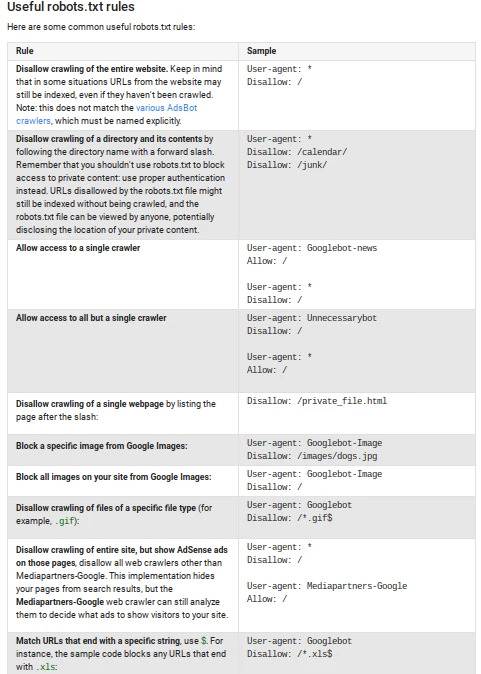
According to Google, here are some of the most common rulesets for the protocol: Understanding robots.txt - BrightEdge

  1. It is important that while noting the various useful features of robots.txt, you do not try to use the protocol to keep sensitive information private. Think of the protocal as a request, but not a command.
  2. Although "good" spiders, the ones run by reputable organizations such as Google or Bing, will listen to the protocol's orders, it remains quite possible for crawlers designed by those with more nefarious intentions to ignore the command and crawl the page regardless of the code specified. Pages can also become indexed in other ways. For example, if another site or another page on your own site links to the page, your hidden page could end up indexed.
  3. When planning out your site infrastructure it's important to make a distinction between your private pages. Are these pages that need to be private and non-discoverable for solely for SEO reasons, or is keeping the content on these pages away from crawlers a security issue - e.g. exposure of sensitive customer data? The value of the robots.txt comes from the SEO strategy, not keeping confidential information private.

How do I configure robots.txt?

Setting up your protocol can be straightforward, but first let’s review what the two parts of the protocol mean:

  • User-agent: refers to the crawlers that the text refers to
  • Disallow: indicates what you want to block, what the crawler should not read

In addition to these two main portions, you can also use a third portion, labeled ‘allow’ if you need it. This section will be used if you have a subdirectory that falls within a blocked directory. For example, if you wanted to block the majority of a directory but had a single small subdirectory, the fastest way to set this up might be to say: user-agent: * (remember that the asterisk indicates that the protocol applies to all the spiders) disallow: /directory allow: /subdirectory1

This will tell the crawlers to look at this single subdirectory, even though it falls within the larger, blocked directory. If you want to let the crawlers look at the entire site, then you will leave the ‘disallow’ portion blank. If you want to set up your robots.txt to block specific pages, such as your login page or a thank you page, then in the "disallow" portion of the protocol you will put the portion of your URL that comes after the ‘.com’. As you think about the pages that you may want to block, consider these types of content and see if you have any on your site.

  • Login pages
  • Thank you pages for after someone has downloaded or purchased something
  • Needed duplicate content, such as a PDF or printable version of a webpage
  • New pages that you have begun to develop, but you do not want search engines indexing them yet

All about robot text - BrightEdgeAlthough robots.txt looks simple, there are a few rules that must be followed to ensure that the code will be interpreted properly.

    • Use all lower case letters for the file name, "robots.txt"
    • The protocols must be located in the top-level directory of the web server
    • You can only have one "disallow" for each URL on the site
    • Subdomains that have a common root domain need different protocol files

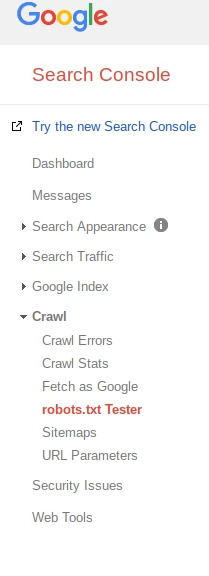
After you set up the protocol, you should test your site with your Google Webmasters account. Under the menu there will be a "Crawl" option. Clicking on this will open a dropdown menu, which will include a protocol tester option. If Google says that the text is allowed, it means that your text was written correctly. Robots.txt can be a useful tool in the hands of SEOs who understand the value of controlling how and when spiders crawl their websites. Consider how it might benefit your website and take this next step in SEO. 

To help you better understand and communicate more effectively with your SEO team, we’ve composed a 3-part series of basic SEO concepts and their related definitions. While there are many SEO terms, we’re focusing on those that are the most basic and most discussed. In this first segment of our SEO glossary, we’ll go over the […]

The post A Guide to Basic SEO Practices: Part 1 appeared first on BrightEdge SEO Blog.

,