What is a SERP?

the basics of serpsWhat is a SERP?

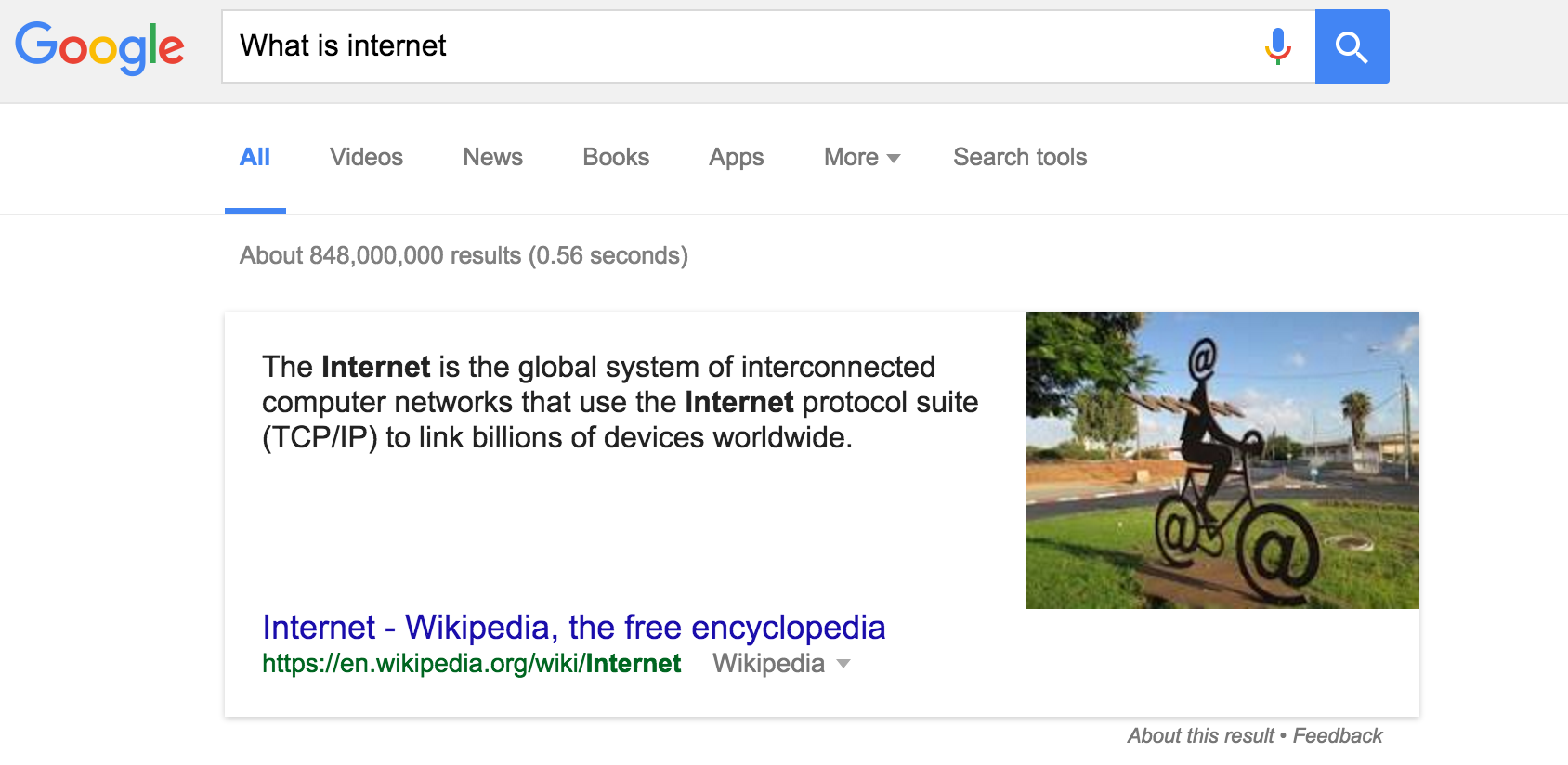
SERP refers to a Search Engine Results Page, or the results that you see after typing a query into a search engine. The higher your website ranks on the SERP, the more attention and clicks your content will receive. A study run in 2014 found that 71.33 percent of searches had an organic click on page one of the SERP. Pages two and three only get about 5.59 percent of the clicks.

Within the first page, the first five results get 67.60 percent of all the clicks, while the results from six to ten only get 3.73 percent.

In other words, ranking within the first five results will have a tremendous impact on how many people pay attention to your site and how many click through to visit your page. The more traffic you receive, the more you will be able to increase your brand reach, your brand authority, your number of conversions and your revenue.

How can I improve my SERP?

  1. Focus on the end-user. Google has made numerous changes to their algorithm over the past few years and they have all one trait in common: reduce the impact of spam and poor-quality websites and increase the rankings of the high-quality pages that actually answer the user’s question. Taking your eyes off the main goal of user satisfaction will make it easier for you to be penalized whenever Google updates their algorithm.
  2. Understand what your users are looking for, not just what you want to write. Use topic and keyword research tools, like the BrightEdge Data Cube, to understand what people are looking to find.
  3. Create content that meets the needs of the searcher while paying attention to depth and quality to ensure the content adds genuine value. Google looks at factors such as traffic and bounce rates when determining rank, so neglecting the value of your content will hurt you.
  4. Use images that are properly labeled with Alt tags to make your material more engaging and bring in more clicks.
  5. Distribute the content every way possible, from newsletters to social media, to expose people to your thought leadership and get it in front of those most likely to be intrigued by what you have to say.
  6. Track your progress in terms of traffic, engagement, backlinks and position. Also examine your competitors to see what they are doing that you neglect so you can learn how to outrank them.

Creating a strong website and ranking on the SERPs will not happen overnight. You need to have the drive to go through the steps to raise your rank, but once the project is done, you will be able to reap the benefits of online marketing.

<< Back to the SEO Glossary main page

Definition

the basics of serpsWhat is a SERP?

SERP refers to a Search Engine Results Page, or the results that you see after typing a query into a search engine. The higher your website ranks on the SERP, the more attention and clicks your content will receive. A study run in 2014 found that 71.33 percent of searches had an organic click on page one of the SERP. Pages two and three only get about 5.59 percent of the clicks.

Within the first page, the first five results get 67.60 percent of all the clicks, while the results from six to ten only get 3.73 percent.

In other words, ranking within the first five results will have a tremendous impact on how many people pay attention to your site and how many click through to visit your page. The more traffic you receive, the more you will be able to increase your brand reach, your brand authority, your number of conversions and your revenue.

How can I improve my SERP?

  1. Focus on the end-user. Google has made numerous changes to their algorithm over the past few years and they have all one trait in common: reduce the impact of spam and poor-quality websites and increase the rankings of the high-quality pages that actually answer the user’s question. Taking your eyes off the main goal of user satisfaction will make it easier for you to be penalized whenever Google updates their algorithm.
  2. Understand what your users are looking for, not just what you want to write. Use topic and keyword research tools, like the BrightEdge Data Cube, to understand what people are looking to find.
  3. Create content that meets the needs of the searcher while paying attention to depth and quality to ensure the content adds genuine value. Google looks at factors such as traffic and bounce rates when determining rank, so neglecting the value of your content will hurt you.
  4. Use images that are properly labeled with Alt tags to make your material more engaging and bring in more clicks.
  5. Distribute the content every way possible, from newsletters to social media, to expose people to your thought leadership and get it in front of those most likely to be intrigued by what you have to say.
  6. Track your progress in terms of traffic, engagement, backlinks and position. Also examine your competitors to see what they are doing that you neglect so you can learn how to outrank them.

Creating a strong website and ranking on the SERPs will not happen overnight. You need to have the drive to go through the steps to raise your rank, but once the project is done, you will be able to reap the benefits of online marketing.

<< Back to the SEO Glossary main page

Content Industry Changes from Marketing Trends

marketing trends in the content industry - brightedgeWhat are the new marketing trends?

Those in the marketing industry have likely noticed that the silos that once separated different marketing teams are now crashing down. The rise of the hybrid marketer has begun, and it will likely not slow down any time soon.

Marketing departments have begun to evolve in this direction because of the growing importance of the user experience. Customers today are largely channel agnostic. They do not depend upon a single platform to communicate with brands and learn about their offerings. They might ask questions on social media, redeem coupons through email and make purchases on mobile. Creating a quality user experience requires everyone on the marketing team to work together to provide for these customers throughout their journey. Siloed teams and employees hinder this progress.

The importance of the user experience also extends through website development. Google wants to see sites that are user-friendly, and that is quickly rising as a critical ranking factor. Sites with errors, slow load times, excessive ads and other features that make them more frustrating for users have all been penalized through the different algorithm updates. Brands need to focus always on the customer first.

How do new marketing trends impact the industry?

Organizations today need to focus on finding marketers who can stretch across borders and help build campaigns that use more than one platform. Content marketers need to understand SEO, organic search needs to understand PPC, and social media needs to understand email. You want to find employees who can answer this need when growing your organization. Existing employees need to be offered trainings and learning opportunities to expand their skills.

You also need to take your marketing team back to the basics and rebuild your strategy to focus on the user experience. Everything from keyword selection to content development to distribution needs to be focused primarily on what customers will think and experience. It is only through this reworking that you will be able to grow your website rather than risk being penalized by a future Google update.

How do I prepare for the changes in marketing trends?

  1. Send out guidelines ensuring that all future marketing employees demonstrate hybrid expertise and experience.
  2. Hold workshops and training sessions to bring existing employees up-to-speed.
  3. Create campaigns that force teams to work together and establish common goals.
  4. Redraft the marketing development process to make sure that the user experience is always the primary goal of the marketing team.
  5. Measure your marketing results throughout your campaigns to see how well customers are responding.
  6. Adjust when necessary to maintain your focus on the user experience.

The content marketing industry continues to change. This has led to the breakdown of the silos separating teams and a renewed focus on the user experience rather than rankings. By staying current with these latest developments, brands can position themselves strongly for the continually maturing industry.

<< Back to the SEO Glossary main page

Definition

marketing trends in the content industry - brightedgeWhat are the new marketing trends?

Those in the marketing industry have likely noticed that the silos that once separated different marketing teams are now crashing down. The rise of the hybrid marketer has begun, and it will likely not slow down any time soon.

Marketing departments have begun to evolve in this direction because of the growing importance of the user experience. Customers today are largely channel agnostic. They do not depend upon a single platform to communicate with brands and learn about their offerings. They might ask questions on social media, redeem coupons through email and make purchases on mobile. Creating a quality user experience requires everyone on the marketing team to work together to provide for these customers throughout their journey. Siloed teams and employees hinder this progress.

The importance of the user experience also extends through website development. Google wants to see sites that are user-friendly, and that is quickly rising as a critical ranking factor. Sites with errors, slow load times, excessive ads and other features that make them more frustrating for users have all been penalized through the different algorithm updates. Brands need to focus always on the customer first.

How do new marketing trends impact the industry?

Organizations today need to focus on finding marketers who can stretch across borders and help build campaigns that use more than one platform. Content marketers need to understand SEO, organic search needs to understand PPC, and social media needs to understand email. You want to find employees who can answer this need when growing your organization. Existing employees need to be offered trainings and learning opportunities to expand their skills.

You also need to take your marketing team back to the basics and rebuild your strategy to focus on the user experience. Everything from keyword selection to content development to distribution needs to be focused primarily on what customers will think and experience. It is only through this reworking that you will be able to grow your website rather than risk being penalized by a future Google update.

How do I prepare for the changes in marketing trends?

  1. Send out guidelines ensuring that all future marketing employees demonstrate hybrid expertise and experience.
  2. Hold workshops and training sessions to bring existing employees up-to-speed.
  3. Create campaigns that force teams to work together and establish common goals.
  4. Redraft the marketing development process to make sure that the user experience is always the primary goal of the marketing team.
  5. Measure your marketing results throughout your campaigns to see how well customers are responding.
  6. Adjust when necessary to maintain your focus on the user experience.

The content marketing industry continues to change. This has led to the breakdown of the silos separating teams and a renewed focus on the user experience rather than rankings. By staying current with these latest developments, brands can position themselves strongly for the continually maturing industry.

<< Back to the SEO Glossary main page

How do SEO and Social Media Work Together for Search?

Discover how to mix content, social media, and seo together as the search trifecta - brightedge

Content, social, and search trifecta explains how content can get more successful if used with strong social promotion and solid SEO optimization.

How do content, social media, and search work together?

The basis of any quality online marketing campaign is content. Without this material, the campaign will not have the power it needs to move forward. This content then interacts with your search and social campaigns to raise your brand.

To begin the cycle, you must first create quality content that answers your audience’s needs and provides them with value. You then promote this content across your distribution channels, including social media. Since your content offers something to the readers, they will be more inclined to share it with others. The more your content is read and shared, the more your metrics - such as backlinks and traffic - will increase. This will help raise your rankings on search. As your piece is ranked higher on search, it will become more readily available for new people to find, enjoy and share on social media, thus beginning the cycle again.

As you monitor the types of material that your social network is inclined to share, you will also gain insights into the content you should produce to amplify the impact of this cycle.

How does SEO work in digital marketing?

  1. Outline your buyer personas and map them to their buyer journeys. Use this information to create content that speaks to the needs of your customers and what they want to read.
  2. Create a thorough distribution plan that places the content in front of the audience most inclined to appreciate it.
  3. Monitor how much your content is shared on social media platforms as well as your resulting backlink profile and traffic rates. Use this information to make adjustments to future campaigns.

How can I measure my progress?

Once your marketing campaign has begun, you need to carefully monitor your progress to understand which aspects are performing best and which ones need to be altered moving forward.

  • Examine the social signals on your pieces. See how well your audience is engaging with your work and which pieces are receiving the most attention.
  • Monitor your traffic and engagement rates. See how well they correlate to your social signals to understand how social media is impacting your piece’s popularity.
  • Track your content’s ranking to see how much your efforts are impacting your search results.
  • Use your insights about the most successful pieces to guide your content development and distribution for the next pieces.

The content, social and search trifecta can be an excellent resource for boosting your brand’s content and increasing your brand reach. Understanding how these different elements can work together will help you drive your content marketing efforts forward.

<< Back to the SEO Glossary main page

Definition

Discover how to mix content, social media, and seo together as the search trifecta - brightedge

Content, social, and search trifecta explains how content can get more successful if used with strong social promotion and solid SEO optimization.

How do content, social media, and search work together?

The basis of any quality online marketing campaign is content. Without this material, the campaign will not have the power it needs to move forward. This content then interacts with your search and social campaigns to raise your brand.

To begin the cycle, you must first create quality content that answers your audience’s needs and provides them with value. You then promote this content across your distribution channels, including social media. Since your content offers something to the readers, they will be more inclined to share it with others. The more your content is read and shared, the more your metrics - such as backlinks and traffic - will increase. This will help raise your rankings on search. As your piece is ranked higher on search, it will become more readily available for new people to find, enjoy and share on social media, thus beginning the cycle again.

As you monitor the types of material that your social network is inclined to share, you will also gain insights into the content you should produce to amplify the impact of this cycle.

How does SEO work in digital marketing?

  1. Outline your buyer personas and map them to their buyer journeys. Use this information to create content that speaks to the needs of your customers and what they want to read.
  2. Create a thorough distribution plan that places the content in front of the audience most inclined to appreciate it.
  3. Monitor how much your content is shared on social media platforms as well as your resulting backlink profile and traffic rates. Use this information to make adjustments to future campaigns.

How can I measure my progress?

Once your marketing campaign has begun, you need to carefully monitor your progress to understand which aspects are performing best and which ones need to be altered moving forward.

  • Examine the social signals on your pieces. See how well your audience is engaging with your work and which pieces are receiving the most attention.
  • Monitor your traffic and engagement rates. See how well they correlate to your social signals to understand how social media is impacting your piece’s popularity.
  • Track your content’s ranking to see how much your efforts are impacting your search results.
  • Use your insights about the most successful pieces to guide your content development and distribution for the next pieces.

The content, social and search trifecta can be an excellent resource for boosting your brand’s content and increasing your brand reach. Understanding how these different elements can work together will help you drive your content marketing efforts forward.

<< Back to the SEO Glossary main page

Discover Content Marketing For The Future

Discover a content marketing strategy that works for the future - brightedgeWhat is changing in the content marketing industry today?

There are two main drivers pushing the content marketing industry forward: customers and technology. As the buyer’s journey continues to shift even further into the control of the customers, people have begun to expect an even higher level of personalization. They want to do business with the brands that understand their individual needs. This desire for increased personalization is forcing companies to learn more about topics such as:

  • Marketing automation
  • Website personalization
  • Data-driven content

These customers are also pushing brands towards mobile. They are using their smart devices for everything from research to purchasing, and brands are required to have their sites ready to meet these new demands.

As the brands and customers are becoming increasingly aware of these developments, the technology is in turn rising to the challenge and making it easier for brands to meet the needs of customers. Take the BrightEdge Data Cube, for example. We developed this technology to make it simple for brands to understand what exactly their customers wanted to read so that they could provide it for them. The Data Cube makes it possible for brands to access the latest analysis of keywords, search terms, rich media and content at lightning speed, making it easier than ever to create industry-leading, competitive strategies.

What causes changes in the content marketing industry?

As these changes have become more prevalent, we are beginning to see the growing popularity of content marketing automation software that helps brands send triggered emails to customers at precise moments in the buyer’s journey.

We are also seeing a drastic increase in cross-channel campaigns which understand that the journeys of customers are not always linear, and instead might jump from channel to channel.

Industry leading companies are also finding more ways to create personalized experiences-- adjusting content for SEO depending upon past visitor behavior, location, weather and other factors.

How can I prepare for the changes in content marketing?

  1. Create in-depth personas that help you understand who you are marketing to and their interests.
  2. Create ample content in a variety of formats that meets the needs of these customers throughout the buyer’s journey.
  3. Determine personalization factors that might influence your offerings for a particular customer. If you are a clothes retailer, for example, you promote swim suits or umbrellas depending upon the weather.
  4. Optimize your mobile pages and your mobile apps to attract customers on-the-go.
  5. Invest in analytics. Content marketing in the future will be defined by analytics. It will guide your content production, the content you display to customers, how you track cross-channel purchases and how you create personalized experiences.

The content marketing industry continues to change at lightning speeds as customers and technology together help to push brands forward. To stay relevant, you need to understand where marketing is going and invest your time and energy making sure you are ready to serve the modern consumer. 

<< Back to the SEO Glossary main page

Definition

Discover a content marketing strategy that works for the future - brightedgeWhat is changing in the content marketing industry today?

There are two main drivers pushing the content marketing industry forward: customers and technology. As the buyer’s journey continues to shift even further into the control of the customers, people have begun to expect an even higher level of personalization. They want to do business with the brands that understand their individual needs. This desire for increased personalization is forcing companies to learn more about topics such as:

  • Marketing automation
  • Website personalization
  • Data-driven content

These customers are also pushing brands towards mobile. They are using their smart devices for everything from research to purchasing, and brands are required to have their sites ready to meet these new demands.

As the brands and customers are becoming increasingly aware of these developments, the technology is in turn rising to the challenge and making it easier for brands to meet the needs of customers. Take the BrightEdge Data Cube, for example. We developed this technology to make it simple for brands to understand what exactly their customers wanted to read so that they could provide it for them. The Data Cube makes it possible for brands to access the latest analysis of keywords, search terms, rich media and content at lightning speed, making it easier than ever to create industry-leading, competitive strategies.

What causes changes in the content marketing industry?

As these changes have become more prevalent, we are beginning to see the growing popularity of content marketing automation software that helps brands send triggered emails to customers at precise moments in the buyer’s journey.

We are also seeing a drastic increase in cross-channel campaigns which understand that the journeys of customers are not always linear, and instead might jump from channel to channel.

Industry leading companies are also finding more ways to create personalized experiences-- adjusting content for SEO depending upon past visitor behavior, location, weather and other factors.

How can I prepare for the changes in content marketing?

  1. Create in-depth personas that help you understand who you are marketing to and their interests.
  2. Create ample content in a variety of formats that meets the needs of these customers throughout the buyer’s journey.
  3. Determine personalization factors that might influence your offerings for a particular customer. If you are a clothes retailer, for example, you promote swim suits or umbrellas depending upon the weather.
  4. Optimize your mobile pages and your mobile apps to attract customers on-the-go.
  5. Invest in analytics. Content marketing in the future will be defined by analytics. It will guide your content production, the content you display to customers, how you track cross-channel purchases and how you create personalized experiences.

The content marketing industry continues to change at lightning speeds as customers and technology together help to push brands forward. To stay relevant, you need to understand where marketing is going and invest your time and energy making sure you are ready to serve the modern consumer. 

<< Back to the SEO Glossary main page

What Are Local Search Engine Rankings?

Local ranking factors for business you need to know - BrightEdge

Local SERPs describe the results that show up for a local-based query based upon where the customer is. Local SERPs usually include a local 3-pack on top and show the most relevant results on the map.

Why are local SEO rankings important?

If you have a brick-and-mortar store or other local business listing, then local SERPs can have a significant impact on how easily people can find your business online. Local SERPs, as we mentioned, are the results that show up for a local-based query based on location. In other words, for in-person customers, it is valuable to you to rank highly in local queries around your area. This will boost your visibility for the most relevant customers.

Are local rankings different from global queries?

When it comes to local search, local SERPs can differ greatly, and it is important for businesses to be aware of the changes.

The SEO team at Fathom, using our technology at BrightEdge, conducted a study to see the differences between local SERPs and global ones. They wanted to monitor the changes for non-branded keywords-- keywords that did not include a specific business name-- in local Google search engines versus Google US. The study was specifically looking local searches related to universities in Michigan. This study found the following:

  • Non-branded keywords in Google’s geo local engines had an average ranking difference of 11.06 positions compared to the Google US engine.
  • An average of 51.9 percent of the non-branded keywords in the study also had varied rankings across the different local search engines and had noticeable differences in rankings from one week to the next.

How can I improve my local search engine ranking?

  1. Use software, like BrightEdge, to monitor keywords locally so you understand how they perform in particular areas versus how they perform for the entire US.
  2. Create measurable goals based upon these new keywords to focus your content development and marketing efforts.
  3. Make sure that you also optimize your site for US search, including using various forms of content, leveraging social profiles and employing clear images. The credibility you build on a nationwide level will also impact your local results.
  4. Check that your site is optimized for local search (link to local search project page).
  5. Measure your results and adjust your campaigns as needed.

Monitoring local SERPs can be a valuable resource for identifying how well you are performing in local search and the keywords that will give you the best local advantage in your community.

<< Back to the SEO Glossary main page

Definition

Local ranking factors for business you need to know - BrightEdge

Local SERPs describe the results that show up for a local-based query based upon where the customer is. Local SERPs usually include a local 3-pack on top and show the most relevant results on the map.

Why are local SEO rankings important?

If you have a brick-and-mortar store or other local business listing, then local SERPs can have a significant impact on how easily people can find your business online. Local SERPs, as we mentioned, are the results that show up for a local-based query based on location. In other words, for in-person customers, it is valuable to you to rank highly in local queries around your area. This will boost your visibility for the most relevant customers.

Are local rankings different from global queries?

When it comes to local search, local SERPs can differ greatly, and it is important for businesses to be aware of the changes.

The SEO team at Fathom, using our technology at BrightEdge, conducted a study to see the differences between local SERPs and global ones. They wanted to monitor the changes for non-branded keywords-- keywords that did not include a specific business name-- in local Google search engines versus Google US. The study was specifically looking local searches related to universities in Michigan. This study found the following:

  • Non-branded keywords in Google’s geo local engines had an average ranking difference of 11.06 positions compared to the Google US engine.
  • An average of 51.9 percent of the non-branded keywords in the study also had varied rankings across the different local search engines and had noticeable differences in rankings from one week to the next.

How can I improve my local search engine ranking?

  1. Use software, like BrightEdge, to monitor keywords locally so you understand how they perform in particular areas versus how they perform for the entire US.
  2. Create measurable goals based upon these new keywords to focus your content development and marketing efforts.
  3. Make sure that you also optimize your site for US search, including using various forms of content, leveraging social profiles and employing clear images. The credibility you build on a nationwide level will also impact your local results.
  4. Check that your site is optimized for local search (link to local search project page).
  5. Measure your results and adjust your campaigns as needed.

Monitoring local SERPs can be a valuable resource for identifying how well you are performing in local search and the keywords that will give you the best local advantage in your community.

<< Back to the SEO Glossary main page

What is SlideShare?

Slideshare and Linkedin Collaboration - BrightEdgeWhat do LinkedIn and SlideShare have in common?

LinkedIn is the premier networking social media platform, helping businesses and professionals advertise themselves and their abilities to gain connections. It has more than 400 million members, and thanks to its reputation, the profiles created on the site rank highly for related queries on Google.

In 2012, LinkedIn announced that they were buying SlideShare, which is a platform that allows people to upload slideshows and presentations. The site receives about 70 million visitors and there are more than 18 million uploads on the site. It is also a well-regarded site by Google, so the content in the presentations often rank well on the SERPs.

Both platforms are heavily used by experienced professionals working to build themselves up as leaders in their field. When used wisely, you can leverage the two platforms together to build your exposure.

How does SlideShare and LinkedIn?

LinkedIn allows you to embed your SlideShare presentations in your profile, which helps to boost your profile and demonstrate thought leadership and expertise to the people who visit your page. Visitors can engage with your presentation through your profile or click through to SlideShare and engage with you and your brand on the platform. This can help increase traffic to your presentation, thereby increasing its position in the SlideShare internal algorithms. Raising your rank on SlideShare can further increase your visibility when people perform searches looking for presentations as well as increase the odds of your presentation appearing highly on Google SERPs for related queries.

Creating a quality presentation on SlideShare can also work in the reverse. SlideShare allows you to place links in your presentation to your website or LinkedIn profile. This will help build backlinks and drive traffic towards your LinkedIn profile. As more people visit your profile, your personal brand and your professional brand will have greater exposure and grow.

How can I leverage the SlideShare and LinkedIn connection?

  1. Upload a few of your most popular presentations to SlideShare. Choose ones that engage the audience while offering valuable, helpful information that demonstrates your expertise and leadership.
  2. Use engaging, interesting images in your presentation to make it as inviting as possible.
  3. Include a link to your LinkedIn profile in the presentation.
  4. Build out your LinkedIn profile to ensure that all of the sections have been filled in well.
  5. Embed your presentation on your LinkedIn profile as a means of personal advertising
  6. Promote your presentation on SlideShare on other platforms as well to drive traffic

LinkedIn and SlideShare both have a number of benefits to offer professionals. Using them together can help promote your personal brand and raise the ranking and visibility on both sites together.

<< Back to the SEO Glossary main page

Definition

Slideshare and Linkedin Collaboration - BrightEdgeWhat do LinkedIn and SlideShare have in common?

LinkedIn is the premier networking social media platform, helping businesses and professionals advertise themselves and their abilities to gain connections. It has more than 400 million members, and thanks to its reputation, the profiles created on the site rank highly for related queries on Google.

In 2012, LinkedIn announced that they were buying SlideShare, which is a platform that allows people to upload slideshows and presentations. The site receives about 70 million visitors and there are more than 18 million uploads on the site. It is also a well-regarded site by Google, so the content in the presentations often rank well on the SERPs.

Both platforms are heavily used by experienced professionals working to build themselves up as leaders in their field. When used wisely, you can leverage the two platforms together to build your exposure.

How does SlideShare and LinkedIn?

LinkedIn allows you to embed your SlideShare presentations in your profile, which helps to boost your profile and demonstrate thought leadership and expertise to the people who visit your page. Visitors can engage with your presentation through your profile or click through to SlideShare and engage with you and your brand on the platform. This can help increase traffic to your presentation, thereby increasing its position in the SlideShare internal algorithms. Raising your rank on SlideShare can further increase your visibility when people perform searches looking for presentations as well as increase the odds of your presentation appearing highly on Google SERPs for related queries.

Creating a quality presentation on SlideShare can also work in the reverse. SlideShare allows you to place links in your presentation to your website or LinkedIn profile. This will help build backlinks and drive traffic towards your LinkedIn profile. As more people visit your profile, your personal brand and your professional brand will have greater exposure and grow.

How can I leverage the SlideShare and LinkedIn connection?

  1. Upload a few of your most popular presentations to SlideShare. Choose ones that engage the audience while offering valuable, helpful information that demonstrates your expertise and leadership.
  2. Use engaging, interesting images in your presentation to make it as inviting as possible.
  3. Include a link to your LinkedIn profile in the presentation.
  4. Build out your LinkedIn profile to ensure that all of the sections have been filled in well.
  5. Embed your presentation on your LinkedIn profile as a means of personal advertising
  6. Promote your presentation on SlideShare on other platforms as well to drive traffic

LinkedIn and SlideShare both have a number of benefits to offer professionals. Using them together can help promote your personal brand and raise the ranking and visibility on both sites together.

<< Back to the SEO Glossary main page

What is Content Syndication?

Content syndication is the process of republishing part of an article or blog post on another, more popular site. You might elect to republish the entire piece, only the title, or just a small opening portion. The goal with syndication is to attract readers by encouraging them to click from the blog post to your site to consume the content. Syndication provides you with the opportunity to expand your reach and demonstrate your authority and expertise to more people.

Content Syndication BrightEdgeHow can I utilize content syndication?

There are a number of ways to use content syndication. You can repost an entire article, a paragraph or even just a headline. This second posting is done on a more popular website with the goal of increasing the number of people who see your content. Your headline, paragraph or article would then attract the attention of these readers, drawing them back to your website to read the rest of the article or see what else you have written.

Increasing authority with content syndication

Since your article was published on a site that receives more traffic than your own, you can also increase domain authority. The readers who regularly view the hosting site have already established trust with this site. By posting your content and encouraging people to visit your original site, the host site helps to build your credibility, which can then help increase your lead generation.

Will content syndication hurt my rankings?

Your site and brand reputation is a common concern for many when it comes to content syndication, but when done properly, the process will only help your rankings.

To successfully syndicate content, you want to let Google know that this content has been duplicated on purpose and that it is not an attempt to trick the search engines. You can do this by using a rel=”canonical” tag, which is Google’s preferred means of signifying syndicated content. Other potential options would also be NoIndex tags or including an attribution link. All three of these options let Google know that you are not trying to get two pages indexed and ranked, and that there is one page in particular that should be ‘counted’ for the search engine. Google’s main concern is to avoid having multiple copies of the same content appear in search results, as this can hurt the user experience. With the right tags, you can avoid being penalized.

Why should I syndicate content?

Syndicated content can help you grow your audience and attract the attention of new readers. Since your material will be posted on websites that have a larger and potential different audience than your own, you have an excellent opportunity to grow your reach and reputation. Ideally, the content you syndicate should be high-quality so that you attract positive attention and create a strong reputation for yourself. At the same time, do not syndicate all of your best content, because you want to have at least some material on your website for new users who arrive.

How to do content syndication?

  1. Select a website that has the audience and traffic rates that you want to attract to your website. It should target the same ideal audience as your own site while also having more authority than your personal web property.
  2. Choose some of your highest quality content to syndicate. It should be on par with the quality that is typically seen on the host site. At the same time, do not repost all of your best work. You want some material to be fresh on your website for when new visitors arrive.
  3. Decide how much you want to syndicate. This will depend on your goals for the syndication process. If you want to grow traffic, you might only repost a headline or paragraph. If you want to build brand awareness, you might repost the entire article.
  4. Avoid duplicate content penalties. There are a number of options for avoiding Google penalties.
    1. A canonical tag is often the preferred means of avoiding problems with content syndication. This tells Google that this version of the article is just a copy and lets the search engine know where the original is.
    2. You can also put a NoIndex on the copy, so that Google does not ‘read’ the reposted version.
    3. You can also use an attribution link, as some host sites do not want a NoFollow or canonical tag. The attribution link should generally be enough to let the search engines know that this version of the article is a copy.
  5. Track your traffic rates from your syndicated content to get an idea of how successful your efforts were. Another helpful metric might be Share of Voice to determine its impact on brand awareness.

Content syndication can be a valuable tool in the marketer’s toolbox when working to attract attention to content and improve the brand’s reach and reputation. If you decide to use this method, always follow the steps precisely to avoid incurring penalties.

<< Back to the SEO Glossary main page

Definition

Content syndication is the process of republishing part of an article or blog post on another, more popular site. You might elect to republish the entire piece, only the title, or just a small opening portion. The goal with syndication is to attract readers by encouraging them to click from the blog post to your site to consume the content. Syndication provides you with the opportunity to expand your reach and demonstrate your authority and expertise to more people.

Content Syndication BrightEdgeHow can I utilize content syndication?

There are a number of ways to use content syndication. You can repost an entire article, a paragraph or even just a headline. This second posting is done on a more popular website with the goal of increasing the number of people who see your content. Your headline, paragraph or article would then attract the attention of these readers, drawing them back to your website to read the rest of the article or see what else you have written.

Increasing authority with content syndication

Since your article was published on a site that receives more traffic than your own, you can also increase domain authority. The readers who regularly view the hosting site have already established trust with this site. By posting your content and encouraging people to visit your original site, the host site helps to build your credibility, which can then help increase your lead generation.

Will content syndication hurt my rankings?

Your site and brand reputation is a common concern for many when it comes to content syndication, but when done properly, the process will only help your rankings.

To successfully syndicate content, you want to let Google know that this content has been duplicated on purpose and that it is not an attempt to trick the search engines. You can do this by using a rel=”canonical” tag, which is Google’s preferred means of signifying syndicated content. Other potential options would also be NoIndex tags or including an attribution link. All three of these options let Google know that you are not trying to get two pages indexed and ranked, and that there is one page in particular that should be ‘counted’ for the search engine. Google’s main concern is to avoid having multiple copies of the same content appear in search results, as this can hurt the user experience. With the right tags, you can avoid being penalized.

Why should I syndicate content?

Syndicated content can help you grow your audience and attract the attention of new readers. Since your material will be posted on websites that have a larger and potential different audience than your own, you have an excellent opportunity to grow your reach and reputation. Ideally, the content you syndicate should be high-quality so that you attract positive attention and create a strong reputation for yourself. At the same time, do not syndicate all of your best content, because you want to have at least some material on your website for new users who arrive.

How to do content syndication?

  1. Select a website that has the audience and traffic rates that you want to attract to your website. It should target the same ideal audience as your own site while also having more authority than your personal web property.
  2. Choose some of your highest quality content to syndicate. It should be on par with the quality that is typically seen on the host site. At the same time, do not repost all of your best work. You want some material to be fresh on your website for when new visitors arrive.
  3. Decide how much you want to syndicate. This will depend on your goals for the syndication process. If you want to grow traffic, you might only repost a headline or paragraph. If you want to build brand awareness, you might repost the entire article.
  4. Avoid duplicate content penalties. There are a number of options for avoiding Google penalties.
    1. A canonical tag is often the preferred means of avoiding problems with content syndication. This tells Google that this version of the article is just a copy and lets the search engine know where the original is.
    2. You can also put a NoIndex on the copy, so that Google does not ‘read’ the reposted version.
    3. You can also use an attribution link, as some host sites do not want a NoFollow or canonical tag. The attribution link should generally be enough to let the search engines know that this version of the article is a copy.
  5. Track your traffic rates from your syndicated content to get an idea of how successful your efforts were. Another helpful metric might be Share of Voice to determine its impact on brand awareness.

Content syndication can be a valuable tool in the marketer’s toolbox when working to attract attention to content and improve the brand’s reach and reputation. If you decide to use this method, always follow the steps precisely to avoid incurring penalties.

<< Back to the SEO Glossary main page

What is the Purpose and Value of the Hreflang Tag?

Add hreflang tags to your technical SEO efforts - BrightEdgeWhat is the hreflang tag?

The hrefLang tag is used to tell Google the language that you are using on a specific page. This helps Google return results to users that are most likely to match their needs, based upon their location. For example, if you wanted to create a French version of your website, then you would include hreflang=”fr”. Google would then know to show this version of the website when displaying results to a customer in a French speaking country.

You can also use the tag to specify regions where the content has been localized for the audience. For example, if you had Spanish content that was localized for Spain, you would include hreflang=”es-es”, while Spanish content for Mexico would be written hreflang=”es-mx”.

How important is hreflang?

With the hreflang tag, you are able to create localized pages for different languages and locations to get the correct information into your customers hands. If you have separate offerings for customers in Spain versus Argentina, you need to have a way to let Google know which site is for which country.

How do I add hreflang?

To generate the tag, you need to carefully watch your language and country codes. For example uk is used to indicate Ukraine and Ukrainian, not United Kingdom. If your content is for England, then you use gb, which is for Great Britain.

There are generators that will help you spit out the code you need, or you can create it yourself by using the language code from the ISO 639-1 format or the country codes from the ISO 3166-1 Alpha 2.

This tag goes in one of three places:

  • Your site map
  • The HTTP header
  • The on-page markup

You only need to include it in one place. It is important to note that Google and Yandex both recognize this tag, but Bing does not.

The Hreflang tag offers website developers considerable control over the localization of their site internationally. If you have a site that will need to serve customers from different counties, this is a valuable tool to use to get started.

<< Back to the SEO Glossary main page

Definition

Add hreflang tags to your technical SEO efforts - BrightEdgeWhat is the hreflang tag?

The hrefLang tag is used to tell Google the language that you are using on a specific page. This helps Google return results to users that are most likely to match their needs, based upon their location. For example, if you wanted to create a French version of your website, then you would include hreflang=”fr”. Google would then know to show this version of the website when displaying results to a customer in a French speaking country.

You can also use the tag to specify regions where the content has been localized for the audience. For example, if you had Spanish content that was localized for Spain, you would include hreflang=”es-es”, while Spanish content for Mexico would be written hreflang=”es-mx”.

How important is hreflang?

With the hreflang tag, you are able to create localized pages for different languages and locations to get the correct information into your customers hands. If you have separate offerings for customers in Spain versus Argentina, you need to have a way to let Google know which site is for which country.

How do I add hreflang?

To generate the tag, you need to carefully watch your language and country codes. For example uk is used to indicate Ukraine and Ukrainian, not United Kingdom. If your content is for England, then you use gb, which is for Great Britain.

There are generators that will help you spit out the code you need, or you can create it yourself by using the language code from the ISO 639-1 format or the country codes from the ISO 3166-1 Alpha 2.

This tag goes in one of three places:

  • Your site map
  • The HTTP header
  • The on-page markup

You only need to include it in one place. It is important to note that Google and Yandex both recognize this tag, but Bing does not.

The Hreflang tag offers website developers considerable control over the localization of their site internationally. If you have a site that will need to serve customers from different counties, this is a valuable tool to use to get started.

<< Back to the SEO Glossary main page

What is Marketing Automation?

You should practice email marketing automation - brightedgeWhat is digital marketing automation?

Marketing automation is a process that brands can use to effectively target their ideal audience with the right content at exactly the right time. Since the process is automated, brands can make sure that leads are followed up upon immediately, rather than having to worry about a delay before they can be contacted. Remember than an estimated 50 percent of sales go to the vendor that contacts a prospect first, so marketing automation can be a valuable resource in helping brands get in front of the crowd and connect with a new prospect or lead.

The brands that have begun to use automation report successful numbers, with 80 percent reporting an increase in leads and 77 percent saying they see an increase in conversions.

Execute Successful Email Campaigns

What is online marketing automation primarily used for?

Marketing automation involves setting up certain rules that dictate actions that will be completed in response to customers’ behaviors. For example, if a customer visits your pricing page but does not buy, they might receive a certain follow-up email that offers them a free trial or other enticing offer that fits with their activities on the website.

This type of care is also highly personalized since it is dependent upon someone’s individual behavior. Personalization is a central component of building a relationship with customers. It helps to show that you care about their needs. The rising importance of personalization will likely increase the prevalence of automation.

How do I start using marketing automation?

  1. Determine the actions that will be triggers with your marketing automation system, such a visiting a pricing page or downloading a free trial.
  2. Begin drafting emails that will be for particular people at certain points in their journeys.
  3. Get to know the people on your page, including details such as their location, the information they are looking at and the landing pages that convert them.
  4. Capture the information the lead offers on landing pages.
  5. Send out your triggered emails at the appropriate moments.
  6. Measure your results and make adjustments as needed.

Marketing automation can be an efficient way for brands to get the right content in front of people at the right time. Those interested in implementing these stages can see great results for their marketing efforts.


Definition

You should practice email marketing automation - brightedgeWhat is digital marketing automation?

Marketing automation is a process that brands can use to effectively target their ideal audience with the right content at exactly the right time. Since the process is automated, brands can make sure that leads are followed up upon immediately, rather than having to worry about a delay before they can be contacted. Remember than an estimated 50 percent of sales go to the vendor that contacts a prospect first, so marketing automation can be a valuable resource in helping brands get in front of the crowd and connect with a new prospect or lead.

The brands that have begun to use automation report successful numbers, with 80 percent reporting an increase in leads and 77 percent saying they see an increase in conversions.

Execute Successful Email Campaigns

What is online marketing automation primarily used for?

Marketing automation involves setting up certain rules that dictate actions that will be completed in response to customers’ behaviors. For example, if a customer visits your pricing page but does not buy, they might receive a certain follow-up email that offers them a free trial or other enticing offer that fits with their activities on the website.

This type of care is also highly personalized since it is dependent upon someone’s individual behavior. Personalization is a central component of building a relationship with customers. It helps to show that you care about their needs. The rising importance of personalization will likely increase the prevalence of automation.

How do I start using marketing automation?

  1. Determine the actions that will be triggers with your marketing automation system, such a visiting a pricing page or downloading a free trial.
  2. Begin drafting emails that will be for particular people at certain points in their journeys.
  3. Get to know the people on your page, including details such as their location, the information they are looking at and the landing pages that convert them.
  4. Capture the information the lead offers on landing pages.
  5. Send out your triggered emails at the appropriate moments.
  6. Measure your results and make adjustments as needed.

Marketing automation can be an efficient way for brands to get the right content in front of people at the right time. Those interested in implementing these stages can see great results for their marketing efforts.


What is SEO for YouTube?

The Role of YouTube in Search MarketingWhat is SEO for YouTube?

SEO for YouTube is optimizing videos to rank better for your content on search engines and increase your organic traffic. YouTube is a powerful tool for boosting your brand awareness and your thought-leadership. The platform has a user base of an estimated 1 billion people, which provides ample opportunity for reaching an audience of your intended buyer personas.

Videos are also increasingly becoming a preferred means of communication. An estimated 78 percent of people watch at least one video a week and they have been found to help customers feel more confident in their purchases.

How do you get more search on YouTube?

When people visit YouTube, they are generally looking to be entertained or learn something new from their chosen videos. For your videos to be a success, they must acknowledge and address this need. People do not visit YouTube because they want to hear a sales pitch-- save that for videos you post on your own website. Focus on using YouTube as a way to demonstrate why you are an industry leader and start to build that initial relationship of trust that will eventually lead to the customer converting.

The videos you post on YouTube should be designed for a broad audience. You should focus on primarily creating videos that people can understand and appreciate, even if they have no previous exposure to your brand. Great video topics might be:

  • helping people understand a complicated topic related to your industry
  • how to’s
  • news or thought-leadership videos that introduce people to new ideas, and cast you as the leading brand that first explained it to them.

How to create a video for SEO?

  1. Analyze your buyer personas and your buyer journey and look at the topics that fall towards the beginning of the cycle - the ideas that fit into the early awareness and consideration stages
  2. Develop a video idea based on what you can realistically communicate in less than three minutes
  3. Create a video script and determine your cast with the goal of engaging the audience and inviting them into a relationship with you in mind.
  4. Shoot the video using professional grade equipment when possible to ensure that the quality of the video will be to the highest standard.

YouTube is a powerful tool for marketers because it helps them reach customers and engage them, typically early on in the buyer's journey. By creating high-quality videos, you increase your chances of expanding your base and achieving your long-term goals.

<< Back to the SEO Glossary main page

Definition

The Role of YouTube in Search MarketingWhat is SEO for YouTube?

SEO for YouTube is optimizing videos to rank better for your content on search engines and increase your organic traffic. YouTube is a powerful tool for boosting your brand awareness and your thought-leadership. The platform has a user base of an estimated 1 billion people, which provides ample opportunity for reaching an audience of your intended buyer personas.

Videos are also increasingly becoming a preferred means of communication. An estimated 78 percent of people watch at least one video a week and they have been found to help customers feel more confident in their purchases.

How do you get more search on YouTube?

When people visit YouTube, they are generally looking to be entertained or learn something new from their chosen videos. For your videos to be a success, they must acknowledge and address this need. People do not visit YouTube because they want to hear a sales pitch-- save that for videos you post on your own website. Focus on using YouTube as a way to demonstrate why you are an industry leader and start to build that initial relationship of trust that will eventually lead to the customer converting.

The videos you post on YouTube should be designed for a broad audience. You should focus on primarily creating videos that people can understand and appreciate, even if they have no previous exposure to your brand. Great video topics might be:

  • helping people understand a complicated topic related to your industry
  • how to’s
  • news or thought-leadership videos that introduce people to new ideas, and cast you as the leading brand that first explained it to them.

How to create a video for SEO?

  1. Analyze your buyer personas and your buyer journey and look at the topics that fall towards the beginning of the cycle - the ideas that fit into the early awareness and consideration stages
  2. Develop a video idea based on what you can realistically communicate in less than three minutes
  3. Create a video script and determine your cast with the goal of engaging the audience and inviting them into a relationship with you in mind.
  4. Shoot the video using professional grade equipment when possible to ensure that the quality of the video will be to the highest standard.

YouTube is a powerful tool for marketers because it helps them reach customers and engage them, typically early on in the buyer's journey. By creating high-quality videos, you increase your chances of expanding your base and achieving your long-term goals.

<< Back to the SEO Glossary main page