NAP (Name, Address and Phone Number): A Complete Guide for Local Businesses

jordan.walman
jordan.walman
M Posted 4 years 2 months ago
t 9 min read

NAP is an acronym that stands for “Name, Address and Phone Number.” It’s a core concept in search engine optimization because Google uses NAP when ranking local results. 

If you operate a local business, either in the form of an independent outlet or a chain of local branches, it’s essential that your website and business profile are NAP-optimized. Failure to do so will result in lost rankings, traffic, and customers. 

In this guide, you’ll learn everything you need to know about NAP. We’ll define key terms, explain why NAP is important within the broader field of SEO, and show you how to optimize for NAP. 

What Is NAP?

In an SEO context, NAP refers to the information that local businesses include in their various listings across the web. If NAP references are consistent across different sources, Google knows that they are correct and can confidently display a company’s details to searchers. 

What Are Citations?

To leverage NAP ranking factors fully, it’s necessary to understand how the broader search process works. Local search results – also called the “Local Pack” – are shown in a dedicated section before generic search results. A map is displayed above local business listings. 

Google first determines if a keyword has geographical or “local” intent. That is, if the searcher is looking for a result tied to a particular location, such as a hair salon or bookshop. This is known as “geo-targeting.”

Google then algorithmically ranks business profiles in local results according to a range of local factors. These include keywords in an organization's Google Business Profile, past customer reviews, the user’s IP location, and NAP citations.

A citation is a business listing published on a third-party site. Nation-wide and global business directories like Yelp have extensive collections of business entries. But local online publications are also taken into account. 

Why Is NAP Important for Local SEO?

Google looks at two NAP-related factors (among a myriad of other ranking elements) when determining where to rank a local business: the number of citations and their consistency. Having a large number of consistent citations across the web is the ideal outcome from an SEO perspective. 

If Google finds discrepancies in data when comparing different sites and business listings, it can’t be sure of the information it displays to searchers. 

It’s also worth keeping in mind that NAP consistency is important from a user experience perspective. Customers often use third-party sites to check a company’s name, address, and phone number. A lack of consistency across listings creates confusion and interrupts the buyer journey. 

What Are the Consequences of Poorly Optimized NAP Listings?

Consumer behavior data shows that a typical customer will interact with a business across multiple online touchpoints—including its Google Business Profile, Google Maps, its company website, and third-party directories—before making an in-store purchase. 

To successfully complete their journey, a customer requires access to consistent information across all touchpoints. 

For example, let’s say an internet browser encounters your brand through an ad on a website. They then use Google Maps to check the location of the nearest store before visiting your website to browse products. 

Finally, they decide to visit your store to make a purchase, checking the address in your business listing in Yelp. If the addresses displayed in Google Maps and Yelp don’t match up, it is more difficult for the customer to make a purchase. This increases the likelihood that they will lose confidence, abandon the customer journey or report a low level of satisfaction. 

How to Optimize NAP for SEO:
A 5-Step Guide

Optimizing NAP information for SEO is both a straightforward and ongoing process. It’s important to ensure that current citations and new citations are correct and up-to-date. 

Take the following steps to optimize your NAP details for search:

1. Display information clearly and correctly on your “personal assets” 

First, check NAP information is visible and free of errors on your website and Google Business Profile (formerly known as Google My Business).

Use Google’s Structured Data Markup Helper to determine which Schema.org markup to use. 

2. Ensure that NAP citations are consistent across the web 

Google cross-references NAP citations on different websites, so ensure consistency across sources as best you can.

In particular, check popular business directories like Yelp, Yahoo Business Listings, Facebook, and so on, along with local listings in your area. Numerous tools can help to find your listings across the web.

3. Continue to add your business to directories 

NAP consistency is a key ranking factor. But it’s also essential to think about citation quantity. Continue to add your business to established directories to increase the number of citations around the web. This strategy will positively impact your local rankings. 

4. Follow best local SEO practices for multiple locations

If you manage multiple locations, follow best practices for local SEO, with separate site pages for each store and unique business profiles. 

5. Remember to update all listings if your NAP changes 

If you change your company’s name, address, or phone number, modify all listings across the web. Keep an up-to-date database of listings to streamline the process of updating NAP details. 

6. Avoid using different numbers for tracking purposes 

Sometimes, businesses will use unique phone numbers to track traffic from different directories. This approach is best avoided as it can result in Google treating each listing as a separate location. 

Related Resources from BrightEdge


New Features and Resources from Google Put a Spotlight on Local News

tvura
tvura
M Posted 4 years 3 months ago
t 9 min read

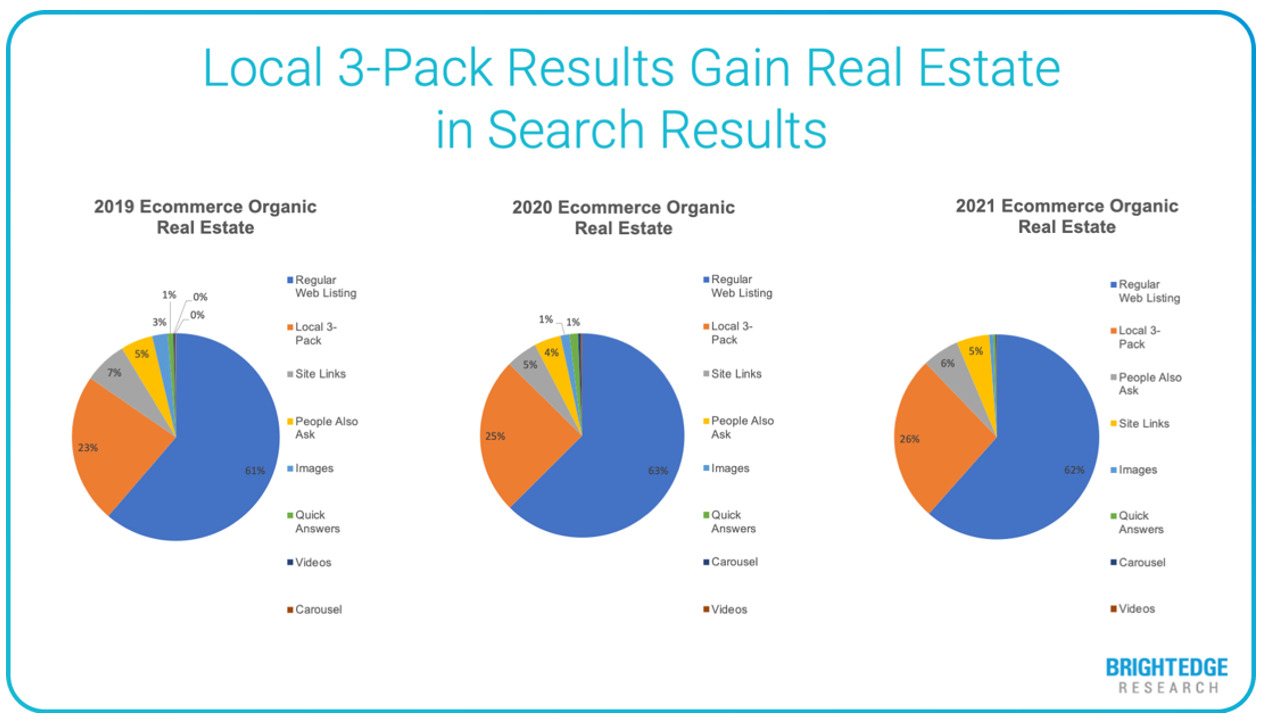
Judging by efforts both official and experimental, Google seems to be placing increased emphasis on local search. We have seen indications of this emphasis in different ways in our own research. When we looked at the e-commerce sector recently, we found steady incremental growth in local 3-pack results, for example, from 23% of e-commerce results in 2019 to 26% of results in 2021:

Local 3-pack results are one of the indicators BrightEdge uses to define what Google calls “I-Want-To-Go” moments. Altogether, BrightEdge classifies search intent broadly under one of four similar mindsets (note, searches can span multiple mindsets):

  1. I-Want-To-Know - Research-oriented searches
  2. I-Want-To-Go - Local sourcing, travel and hospitality searches
  3. I-Want-To-Do - Instructional resource searches
  4. I-Want-To-Buy - Commerce-minded searches

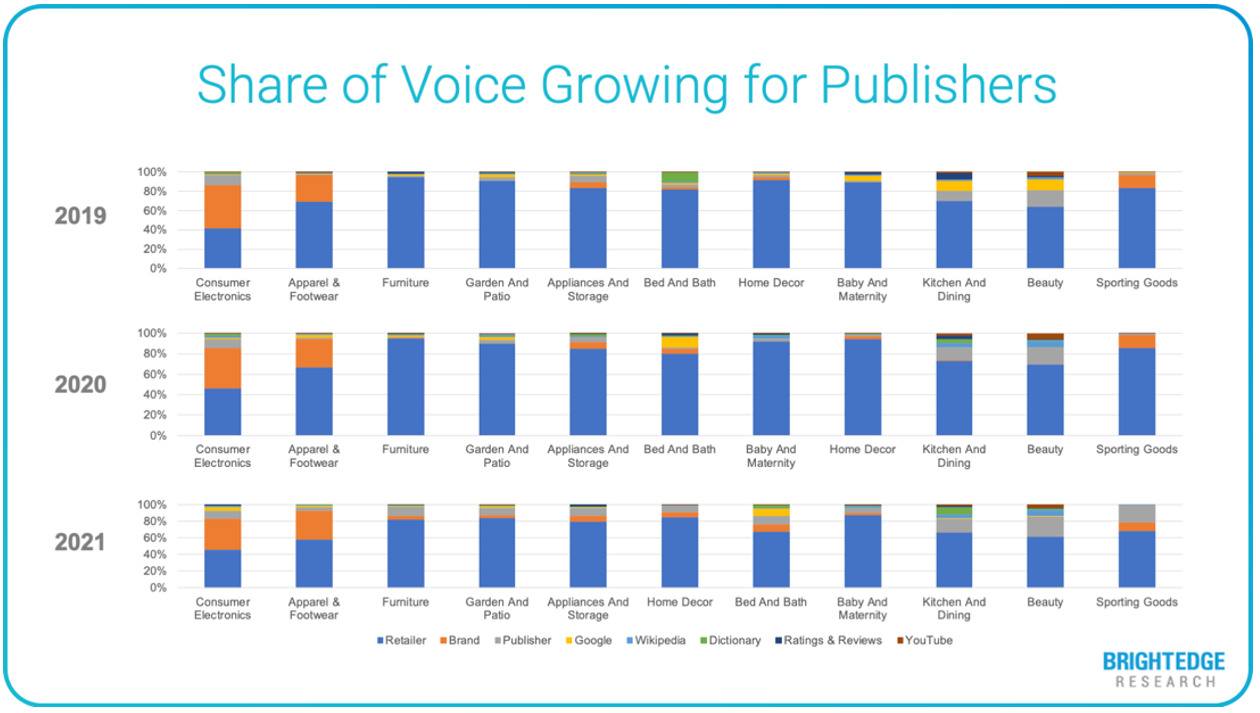
From the same research study and worth noting is the growing share of voice among publishers in search. Publishers support all mindsets with varying content and search results are beginning to better reflect that. Even in our study of e-commerce where the main focus is on I-Want-To-Buy moments, publishers (represented by grey bars in the chart below) gained measurable share of voice in most commerce categories:

With this growth in share of voice for both local and publisher search results, it’s not surprising that Google cites a threefold increase in searches for “news near me” over the last 5 years. To better support the growing interest in local news, at the end of 2021 Google launched new tools and features to support local news.

Better, More Integrated Local News Search Results

As more users search for local news, Google is responding with four key improvements to how it surfaces and presents local news in the search engine results pages:

  1. Local news carousel – Early in the pandemic, Google launched a carousel to surface useful information related to COVID searches. The carousel has now been expanded to return local news results when relevant.

  2. Integration with national sources – Users will now more often see authoritative local news sources alongside content from national publications.

  3. Local news in finer detail – When visitors search for broad topics, Google will pair the search with location signals, which tell Google your location, to also return results on narrower or locally relevant subtopics. The example Google offers is a search for “sports.” When a user searches “sports” Google will now be able to show results for football games, on the national, collegiate and local high school levels when relevant content and location indicators allow.

  4. Newsworthy local tweets – Finally, Google now surfaces relevant tweets from authoritative local sources and individuals.

Taken together, these improvements provide an opportunity for local news publishers to increase their visibility among potential readers.

Tools and Resources for Journalists

To better enable local news storytelling, Google also announced two new resources for journalists and publishers:

  1. Census Mapper – Part of what makes news local is the people and communities affected or involved in a story. The better a journalist can describe the audience, the more easily a reader can understand, relate or empathize. Google’s Census Mapper makes it easier for reporters to sift through complex census data and present visualizations of the data.

  2. Common Knowledge Project – Google announced improvements to its Common Knowledge Project, which it describes as a data explorer and visualization project that enables journalists to explore local data. Improvements include geographic comparisons and new charts and visuals.

Key Takeaways for Publishers

While it will take some time to understand completely what local news content benefits most from the changes, Google’s efforts are a boon for local news publishers. The best advice at this point is to follow basic principles of content optimization. For example, Google’s announcement makes repeated usage of the word “authoritative” to describe the content and sources it will favor, which points to the basic SEO principle of building E-A-T: expertise, authoritativeness and trustworthiness. Journalists and publishers should also take advantage of the resources Google announced, something Google may look favorably on when evaluating E-A-T.

We’ll be monitoring the effectiveness and impact of these updates and where trends emerge, we will offer relevant advice on how to optimize content to appear in local news search results.

Learn how the BrightEdge platform helps tailor your SEO strategy to distinct local markets.


A Guide To Your Google My Business Page

gregalbuto
gregalbuto
M Posted 5 years 5 months ago
t 9 min read

For small businesses to be easily found by users searching for your products or services, your site needs to rank well in the local listings. While studies show that 28.5% of clicks come from the first organic SERP, and drop significantly after that; the local 3-pack has the highest percentage of clicks overall at 44% CTR. 

In order to maximize visibility and increase your opportunity to ranking well, it’s important to own your local listing, otherwise known as a Google My Business page. 

Claiming your business profile using Google My Business

A business profile can be added to Google by anyone. A profile is a listing of your business – or a local citation. Any place added to Google Maps is given a profile, because of this you may not have control over your business location. In order to manage your business profile, you’ll need to have a separate Google My Business account for your profile’s page. You cannot manage your business profile without a Google My Business page.

You’ll need to claim ownership over your business profile and once it’s approved by Google, you’ll have a business profile to properly manage the accuracy of information consumers see.

Essentially, Google My Business is a tool used to increase the visibility of your profile. It is important to maintain accurate and up-to-date information on your business profile as other channels including Yelp and Bing get their local business information from Maps and Search as well. If possible, maintaining consistent NAP information through local directories and your site’s location information is essential.

Interacting with consumers on Google My Business

Within GMB, you can manage how your business appears in local searches and Google Maps. You can manage your NAP, images, videos and more – including reviews.

We’ve found that 93% of users are influenced by reviews regardless of whether they’re positive or negative. Therefore, it’s important to have as many positive reviews on your GMB listing as possible. 

Through GMB, you can interact with consumers and engage with them when they leave you a review. This is a great way to show other consumers that you’re interested in what users have to say about your products and services. You can also enable direct messaging via your Google My Business page to be contacted directly by consumers.

It is important to know that you cannot turn off GMB reviews. If you have negative reviews, decide with the rest of your marketing team a good strategy to address them as they are likely to impact sales down the line. 

Harvard Business Review found that businesses will increase sales and ratings if they respond to reviews, good or bad. Forbes recommends moving the situation offline by providing contact information of a specific company representative. By responding, you have the opportunity to increase ratings and also show potential customers that you care about your consumers experiences.

Optimizing your Google My Business page

Having a well-optimized Google My Business page can attract visibility to your site and is a crucial part of local optimization efforts. 

  1. Add and claim your business's Google My Business page to Google Maps.
  2. Add a unique and detailed description of your business that encourages people to learn more. Use relevant keywords for products and services to increase rank opportunity for those queries. 
  3. Choose a specific business category to better connect you to consumers. Some category options include grocery store, beauty supplies or fitness center. Use a category that describes your business as a whole. If your beauty supply store offers in-house services like haircuts, create a separate business profile for the services.
  4. Use high-quality images and videos of your products and business.
  5. Make sure your NAP – name, address, phone number - is completely accurate for potential local consumers.
  6. Encourage positive reviews from consumers. You can provide a CTA for after a purchase is made, send a thank you email requesting a review, etc.

You can leverage Google My Business to both increase visibility and your chances of outranking competitors. Manage how your business is seen on search engines and correct as much NAP information as you have control over with GMB.

Local SEO: 4 Steps to Take Your Strategy to the Next Level

enewton@brightedge.com
M Posted 6 years 7 months ago
t 9 min read

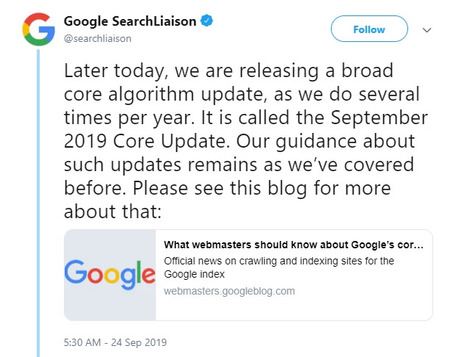
Google announced today that a core update will go live on the afternoon of 9/24. While they have not released information regarding what precisely this update will target, it is possible that sites will see some shake ups in the rankings of their pages. This could result in an increase or a decrease in rankings for particular pieces of content.

google core update announced for Sept 24th - brightedge

When we saw the alert about the impending core update, we wanted to bring it to the attention of our community and discuss what this update means for them and their content.

Don’t panic. In a recent post, we pointed out that after core updates there are often adjustments and rollbacks if Google sees sites move more than intended.

What is a core update?

Google reports that they make minor adjustments to their algorithms on a regular basis– nearly daily–as they work to improve their ability to rank websites and serve their users. Often these smaller updates do not attract much notice. A few times a year, however, they release larger updates. These updates often do attract attention as a number of sites see rises and falls in their rankings across multiple pages. They also likely see the corresponding traffic increases and drops as the updates go live.

Google generally acknowledges these core updates, as they want to give site owners more targeted information about what they should focus on improving. For this particular core update, Google has also specifically gone out of their way to point out that sometimes nothing is expressly ‘wrong’ with content that has lost a few positions as a result of a core update. The purpose of the update is not necessarily to penalize content, but rather to find content that has been better written and developed and will be more trustworthy for users. Sometimes this means that content that follows all of the Webmaster’s Guidelines, may still see a drop.

What should I do as we wait for Google’s core update to roll out?

We recommend that our community carefully monitors their sites through the BrightEdge platform. You can set alerts for any key pages within your site so that you receive notifications if they drop too low in the rankings.

Remember to not only watch for site drops, but also keep an eye on any site ranking boosts. Monitoring how different pages rise and fall in the rankings can offer important clues into how this core updates impacts sites, which then provides valuable insight into how rankings can be regained following this drop.

What should I do if my content drops after Google’s core update?

If you notice a drop in your content as this core update rolls out, take a careful look at what specifically dropped and by how much. Keep in mind that Google is not necessarily penalizing your content, it could instead be a reward for another site that has produced strong content. This means there might not be a concrete criteria that needs to be ‘fixed’ to regain the rankings.

Instead, you will want to carefully evaluate the content that fell alongside any content that rose. You also want to look at the material that now ranks higher than yours and try and detect what might have made Google prefer this content over yours. This will be your key to help you determine how to correct your content and improve your site moving forward.

How should site owners try to improve their content if they drop in rankings?

Site owners should pay close attention to Google’s strategy for ranking content. Specifically, their algorithm attempts to identify the Expertise (E), Authoritativeness (A), and Trustworthiness (T) of content. They also instruct their team of search quality raters to score search results based on this criteria. Keep in mind that these raters can not actually impact search results. Instead, their ratings are used to determine the effectiveness of the search algorithms.

If you notice a drop in your rankings, you should carefully evaluate your content based on these criteria. Look at the originality of your content: do you produce any original information or research for your customer? Consider also your own expertise and why people should trust you. Do you give them a good reason to believe what you have to say? Does your site and page layout help to support your expertise? Do you regularly cite sources within your content and otherwise support what you have to say?

Google wants you to focus on producing content that offers high value for your users. Your content should have something that your competitors do not have if you want your piece to rank highly.

Google continues to update their algorithm, and this includes rolling out core updates that have the potential to impact the rankings of large numbers of sites. The search engine giant has given us the heads up regarding this upcoming update and went out of their way to remind site owners that a loss in rankings does not automatically mean that best practices or webmaster’s guidelines have been violated. Instead, the focus lies on content that embodies the E.A.T. criteria to better serve the users. Keep a close eye on your site through the BrightEdge platform and let us know how the update impacts you.

So if your traffic drop was due to an algorithm change and does not revert, what can you do?

Remember, organic search is a long play game, so make your plans, adjust a bit, and keep producing and optimizing relevant and valuable content. We’ll repeat our guidance from our last algo update post for your convenience:

  1. Increase your content production cadence of blogs, pages, FAQs, glossary, and videos to try to offset the lost traffic
  2. Continue to focus on high-quality content
  3. Be authoritative, deep, and relevant, target over 1000 words per piece and preferably over 2000 words
  4. Be original, fresh, accurate, and current
  5. Build multiple pieces in a content silo and internally link them together
  6. Be well liked and linked to internally, externally, and socially
  7. Work on page load speed until you get to 95 score
  8. Reduce the bounce rate of people landing on your site
  9. Provide an excellent customer experience and site performance
  10. Consider using schema markup, which Google has been promoting since 2011 and people are starting to report positive rank and traffic impact from schema

Three Ways to Help Local Customers Find Your Business

koleary
koleary
M Posted 7 years 1 month ago
t 9 min read

Mobile devices surpassed desktop as the main way that people browse the internet a number of years ago, for some industries BrightEdge research found that 62% of all web traffic comes from a smartphone or tablet device.1 For some industries, like food and beverage, the share of searches from smartphones and tablets is as high as 72%.2

The predominance of mobile search has changed people’s behavior and expectations. Previously, if you were going out, you might have researched a restaurant online before leaving home. Today, you’re just as likely to wait until you arrive at your destination, search for “restaurants near me,” and receive hyper-local results that you can act on immediately.  

These new consumer expectations and behaviors are relevant to any business with a brick and mortar presence. An incredible 76% of local mobile searches lead to a store visit within one day, while 28% result in a purchase.3 When people search for something nearby, they are often ready to buy.  discover how to optimize for local customers - brightedgeThis is why it is so critical to ensure that your business shows up in Google’s Local 3-pack: the trio of nearby businesses that dominate the search engine results page (SERP) of 23% of local-focused mobile searches, according to BrightEdge research. When a local 3-pack is displayed on mobile, 55% of the clicks are for one of the three listings. If your business is not featuring there, you’re immediately missing out on half your potential audience.   

Here are three ways to make sure your business is easy to find.

1. Have clear, complete, and factual information

Google’s main source of information about your business is from company profiles found on Google My Business. To ensure the correct information is displayed in Google Search or Google Maps results pages, make sure that your company profile page is complete and up-to-date. While Google searches account for nearly two-thirds of all searches,4 it’s also important to update and maintain your business profile on other channels like Yelp for Business, which is where Bing gets its local business information for display on Bing Search and Bing Maps results pages.

Also, it is important to clearly display your business address, contact details, and business hours on your own website’s home page, as this is another source that Google and Bing will check. Having accurate and informative “About Us” and “Contact” pages on your website will also boost your chances of appearing high in search results rankings. Finally, if you have multiple locations, create an individual page for each location with the unique information and content about each one.  

A good tip is to look at existing 3-pack search results for the keywords related to your business’ products or services, and ensure that your company profiles have the same keywords, or read Google’s suggestions for improving your company’s local ranking.

2. Be inventive with the keywords you target

Last year, Google reported a 500% increase in “near me” mobile searches that included “can I buy” or some variant. Knowing which keywords related to your business that people include in these searches is critical to your chances of appearing in that valuable 3-pack near me search result. Don’t be afraid to speak the local language. A long sandwich may be called a “sub” in most of the US, but if you’re targeting local customers in Philadelphia, they are more likely to call it a “hoagie,” in New York City, a “hero,” or in New England, a “grinder.”

learn more about seo for local customers - brightedgeIf your business is near a prominent landmark or location in the area, think about potential variations on “near me,” like “near the ballpark” or “near Times Square.” You should also find out which terms your competitors are successfully targeting and see if they apply to your business. BrightEdge can help you analyze and prioritize which keywords you should create content for by helping you understand which universal results (like a Local 3-pack or Quick Answer) appear on the first page of search results.  

3. Encourage great local customer reviews

Google doesn't display just any three businesses in the 3-pack search results. The search engine wants to give its customers the best three local businesses related to their searched keyword. That’s why businesses with good reviews on Google are more likely to be featured in 3-pack search results. Encourage your happy customers to leave positive reviews on these sites, along with any sites related to your business, whether that’s a food blog or car review site.

If your business has received good customer reviews, featuring them on your website can be helpful. Get permission from your customers to post the review first. Then, mark up the review with optimizing schema in order to claim it as a first-party review. You may see the review on the search engine results page, much like a Yelp listing, except this drives traffic to your website, not Yelp’s. Google can be strict about the use of first-party reviews so it’s worth looking at its rules if you’re using a review.

Whatever your business, having complete factual information, being inventive with your keyword targeting, and getting great reviews will help local customers find your business when they’re searching locally. With Google constantly tweaking what it’s looking for and how it displays search results, BrightEdge will tell you how to optimize keyword targeting and keep you up to date with changing search engine algorithms with the goal of boosting traffic to your site so your business can stay ahead.

Small Business Content Marketing: Thriving When Big Domains Dominate

gregalbuto
gregalbuto
M Posted 7 years 2 months ago
t 9 min read

With more than a billion sites online, competition is fierce across nearly every sector. Brands try to get their voices heard above the noise. In a number of industries, however, there are sites that dominate the search engine results pages and seem nearly impossible to overtake. This is why your content marketing for small business strategy is extremely important.

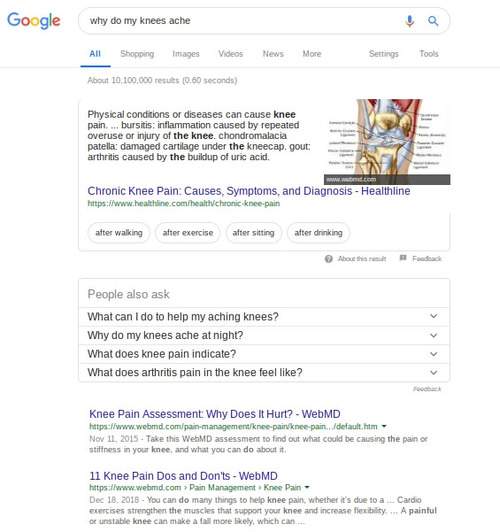
Search query reveals dominance of few websites for medical queries, challenging for small businesses

Take for example the medical industry and websites like WebMD, Healthline, or Cleveland Clinic. In the film and entertainment industry, IMDB and Rotten Tomatoes can be found at the top of the SERP. Wikipedia also presents a considerable indirect competitor for many brands to try and outrank.

For brands that have sites closely tied to keywords that these major sites rank well for, it can seem futile to try and figure out how rank highly when competing against these major sites. That does not mean, however, that SEO and content marketing overall cannot be used.

Understanding how to create content that performs well in these situations, and how brands can bolster performance, is important for realizing the full potential of content. Here's what you need to know about content marketing for small business.

Create content that is location specific

Many smaller brands focus on location-specific audiences. For example, a local medical provider or practitioner might treat patients within a specific geographic location or a local events organizer might focus more on local entertainment.

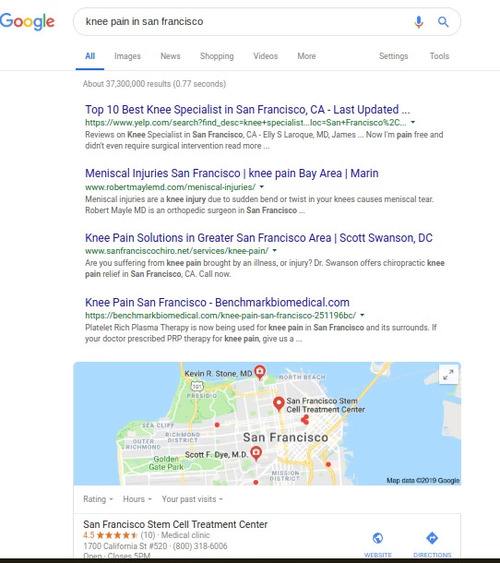
Adding location keywords helps with content marketing for small businesses

These brands should look for opportunities to create content geared towards their local audience. The targeted audience might be smaller, but the use of local keywords will help them appear in local searches for people in their area.

Think carefully about what people in the immediate area might be looking for when developing content. Consider places, landmarks, local names, or other factors that might show up as terms in people’s searches in the area. You can even incorporate factors, like weather or local events that might encourage people to make related searches that wouldn't occur to larger brands trying to appeal to people across a wide variety of locations.

Target less-popular keywords for content marketing for small businesses

In every industry there tend to be less-popular keywords brand websites often ignore. They opt instead to optimize for the most popular keywords that have the greatest potential for traffic. In a situation where you are trying to compete with large brands with excellent reputations, however, sometimes these less popular keywords can be an important part of optimization.

By creating content for less-popular keywords you create opportunities for your brand to start building your brand reputation. You will be able to brand yourself as an expert in your industry and your site will rank for important keywords, even if they aren't the most common searches. As you build your domain reputation, that bedrock foundation will help your brand build rankings across all of your pages.

Take keywords in slightly different direction

You can also create content that takes a slightly different look at some of your most common keywords. You can focus on slightly different areas of concern for users. For example, say you are a medical practice. You know that trying to compete with WebMD and Mayo Clinic on general articles pertaining to different diseases and conditions would be a big challenge.

You can, however, focus on creating content related to treatment, what to expect during treatment, how your office treats this particular condition, or optimize for treatment related to this condition within your area.

To consider the type of content that will provide the most value for your organization, think about the types of questions and concerns that customers or prospects often approach your organization with. This will provide you with valuable insight into the issues and concepts that matter the most to them, helping you find the topics that will most likely appeal to other prospective customers.

Incorporate paid search strategies

For your high-value keywords where the first page of search results remains dominated by major brand names in your field, the best way to get your brand recognized will be to use a paid search strategy. PPC will get your content featured at the top of the SERP, putting you directly in front of prospective customers.

Developing a strong PPC strategy requires understanding what people generally want to see when they land on a particular SERP. Research what the SERP looks like currently to get a better understanding of the typical user intent of users. Both your ad and your landing page will need to reflect these desires.

You ad will need to closely reflect what other search results look like. Examine how the results are formatted and how descriptions are worded. Your ad should take this information into account and also reflect what sets your organization apart.

Your landing page will also contain what users want to see. It should provide high quality information that reflects what visitors would see on any of your competitor's sites.

Monitor your success with PPC closely. Since you have to invest more monetarily, you will want to make sure you derive maximum value. Look at your click through rate as well as the number of conversions and revenue you secure with each lead. This will allow you to calculate the value of your efforts with PPC, setting you up for the optimum conversion rate.

Focus on your social media presence

Social media can also provide organizations with a powerful means of getting out from under the umbrella of larger companies. The modern consumer spends a lot of time on social media--an estimated 77% of Americans have at least one profile, and Nielsen reports that Americans over the age of 18 spend an average of 45 minutes on social media every day. This makes social a great way for people to interact with potential customers.

When it comes to building a strong profile, you do not have to worry about outranking your competitors. The most important aspect will be creating a profile that engages users in your target demographic. Interacting with people, encouraging them to post on your page-- which means that their engagement with your profile shows up in the feeds of all their connections, and otherwise using social media as a means of building a personal connection with users all create an excellent opportunity to stand out from the others in your industry. Customers greatly appreciate this personal connection with brands they consider doing business with.

Given the immense size of some brands that dominate the SERPs, creating a more personal, intimate connection with followers might not be as feasible. This makes it a fantastic place for smaller organizations to shine. Consider how you can take advantage of your smaller size to bring a more individual touch to your social followers.

Fighting for space on the SERPs is something that brands of all sizes must do. Sometimes, however, it can feel like a David vs. Goliath fight, and the smaller companies know that keyword research alone will not be enough for them to overtake the large, reputable, and well-cited content that dominates the top slots for their industry keywords. Understanding how to build a successful marketing strategy despite this obstacle, however, can help brands see success in content marketing for small business.

small business content marketing request a demo banner

Local Search Optimization: How to Compete For a Spot

enewton@brightedge.com
M Posted 8 years 5 months ago
t 9 min read

An incredible 50% of local mobile searches will lead to store visits within one day, and 18% of those searches will result in a purchase within that same timeframe. The power of local search optimization to reach customers with the information they want and entice them to try particular local businesses cannot be understated. We have reached a point of near complete digital penetration in the United States. Seventy-seven percent of American adults now own a smartphone - more than double since 2011 - and they use these devices on a regular basis.

Americans now spend an average of 5 hours a day on their devices, and one in ten report that they are "smartphone dependent", meaning that their devices are their primary source of internet access. With nearly every prospective customer for your business now online, the majority of them via mobile device, the era of hyperlocalization and the ultimate personalization has begun. Research indicates that a full 57% of traffic now arrives from mobile devices - a rapid rise considering that mobile only overtook desktop in 2015 - and it shows no sign of slowing down. Customers read and take advantage of what people post online. Retailers estimate that 82% of customers will research products online before making an in-store purchase and 60% of people report that they have used information from local ads. Content created and optimized for local search will be digested and produce strong returns when it is created appropriately and delivered to customers at precisely the right moment.

The key for digital marketers who want to compete in this space is understanding how to speak to customers in their moment of need. They must have a precise understanding of their audience and what they want to see - not just data from the nearest major city - and use that information to generate campaigns that target the micro-moments of consumers on a hyperlocal and hyper-personalized level.

The latest trends in local search optimization

As we already mentioned, mobile search has overtaken desktop. Customers also use their mobile devices for about 5 hours per day, which includes time spent learning about local businesses and finding information about their products and services. Given the rapid rates of smartphone and tablet adoption, along with the rapid increase of mobile searches over desktop, mobile search has begun to drive a considerable amount of marketing innovation and strategy. A large part of mobile strategy also overlaps with local search as customers use their devices to answer their questions and address their needs as they move around their location. This has led to the rise of various trends in consumer behavior and changes in the Google SERPs that marketers must understand to craft an effective location search optimization strategy.

Understanding the role of the micro-moment

For the past few years, Google has been pushing marketers towards the particular classifications of user intent that they have termed, “micro-moments”. These moments categorize the four main types of queries as categorized by Google:

  • I-want-to-buy micro-moment
  • I-want-to-do micro-moment
  • I-want-to-know micro-moment
  • I-want-to-go micro-moment

Google believes that the vast majority of the queries it sees each day fall into one of these categories. It uses this understanding of user intent to adjust the SERP layout accordingly. Google will often include the local-3 pack on the I-want-to-go micro-moment searches, the I-want-to-know micro-moment might include a Quick Answer at the top of the page while the I-want-to-do micro-moment has YouTube videos or step by step instructions depending upon how the search engine interprets the intent. These changes help Google match their users faster with the content they need. In local search optimization, brands need to understand how Google’s emphasis on the micro-moment impacts their content’s ranking and how user intent impacts behavior on the SERP. For example, customers making local mobile searches often look for quick information, such as contact information or phone numbers for the local business. Creating content that emphasizes these particular types of information allows brands to better serve the needs of these users, and thus draw more traffic and engagement from the site visitors. For brands to effectively use local search optimization, therefore, they must be willing to perform the needed research about their targeted keywords to see the likely user intent, as Google understands it, and then begin to create and optimize their content accordingly.

The trend towards hyperlocal

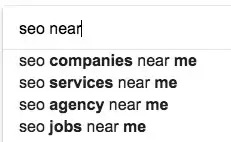
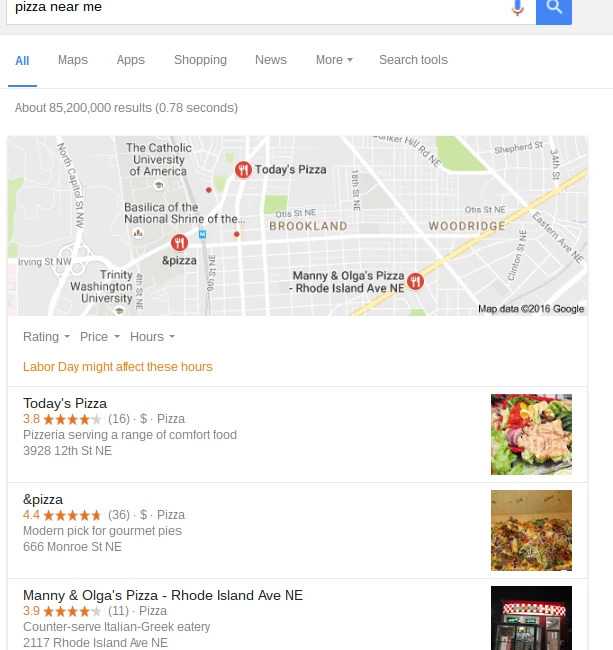
seo near me search query example for local search - brightedgeSince 2014, there has been a dramatic increase in the number of "near me" queries on Google. Customers have realized the value of using their mobile devices to find businesses in their exact vicinity and they have been using it at an increasing pace. This has corresponded with a rise in hyperlocal targeting. In hyperlocal marketing, businesses work to reach out to customers based on their exact needs when they are in a precise location. It is not about helping prospects find a pizza parlor within a particular city, it is about helping them find the highest rated pizza parlor that is physically closest to them. To accomplish this, brands need to use a combination of both paid search and organic search to create a presence for those precise customers. They need to have data insights and understanding that relate to their users within exact physical locations. To better accommodate these hyperlocal targeted searches, Google has also been looking for ways to further refine their SERP. Not only do listings change in the local 3-pack depending upon the exact physical location of the user, but there are also generally options to filter the results to help the user find a more exact match for what they seek. This allows consumers to filter based on criteria such as ratings or hours to help them find the locations that best meet their needs. For brands to effectively use hyperlocal targeting, they need to put in the effort to make sure that their content has been pre-optimized and marked up so that it will appear in as many of the filters as possible. They need to also make sure that if they have more than one physical location that each one has representation in Google My Business. This will maximize their chances of showing up in hyperlocal searches for all of their locations instead of being restricted to prospects near their main address.
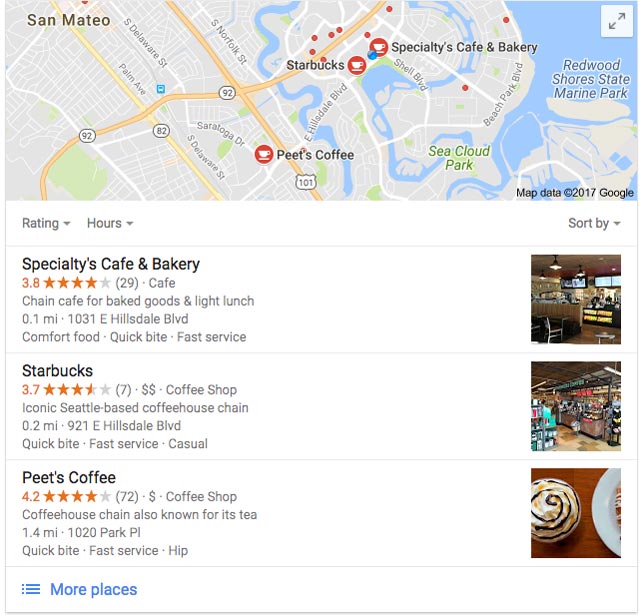
Understanding the local SERP

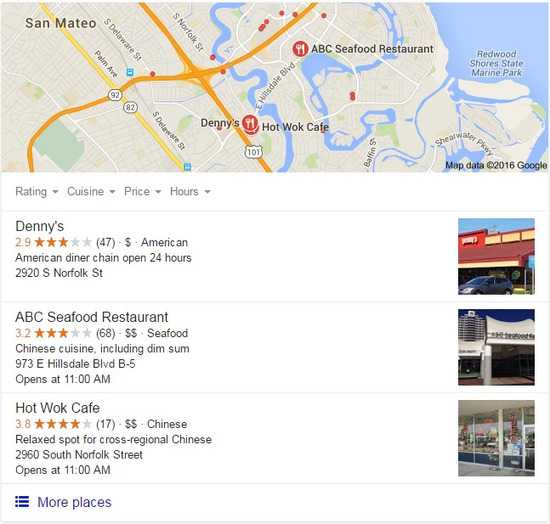
To understand local search optimization, businesses must also understand how Google constructs their SERP for searches with local intent. Google consistently runs to test to match their SERP with user intent and to make sure they display the desired information to their users. This means that paying attention to what Google focuses on can provide considerable insight into how organizations can maximize their return from their own efforts. On the local 3-pack, for example, Google looks to include information such as ratings, a brief description, and the address. As already discussed, users can then filter their results by factors such as prices or ratings. Google has selected these criteria to display in their local 3-pack because they have found people consistently want to find addresses for businesses to help them determine their proximity to particular options. Not only should this indicate the importance of filling out the Google My Business profile completely, but it should also impact how you construct the rest of the content you produce for the local SERP. local 3-pack example serp for local search - brightedge As an example, above most organic query results you will see a series of advertisements. If you want to target particular keywords that regularly carry the I-want-to-go user intent and a local 3-pack, your ad will likely see better returns if you include the same valuable information Google does, including a means to contact you. Similarly, on your other organic content, make sure that customers can clearly find your location, your content information, and other details that would help them if they were interested in shopping at your location at that moment.

Seeing local search optimization strategies in action

Anchor Oyster Bar

When you plug “Seafood in San Francisco” into the search engine, you will likely encounter Anchor Oyster Bar as the first result in the local 3-pack. Given the intensity of the competition for that position, it can help to examine what this business does right. Immediately, you can see that they have nearly 300 reviews and almost 5 stars, indicating their quality. Clicking through to the website and you will see keywords like “seafood restaurant”, “seafood dishes” and “San Francisco” used prominently right in the first paragraph. The site also links to mentions they have received in prominent publications and promotes their address several times.

Old Ebbitt Grill

Old Ebbitt Grill has also demonstrated an excellent local SEO strategy. For anyone interested in having a nice meal after a visit to the White House, the query, “best places to eat near the White House” returns this restaurant right at the top of the local 3-pack. Note that this query uses a local landmark to find a location, and Old Ebbitt Grill delivers. Its physical address is located prominently at the top of the page, clearly indicating its proximity to the famous house address, but the main text on the page also clearly articulates that it is “just steps from the White House”.

Tucson City Golf

If you want to find the best place to play golf in Tucson, Arizona, then the query “best golf course in Tucson” will be helpful. Tucson City Golf, which hosts several of the courses that show up in the local 3-pack has made their way to the top of the listing through cultivating dozens of positive ads and including phrases like, “best courses” on their home page.

Steps to building an effective, modern local search optimization strategy

  1. Google My Business. Your Google My Business page will be the cornerstone of your local search optimization strategy. Google will pull from the profile you create to generate your listing on the local 3-pack as well as when they seek to understand where your business should fall for different filters within highlighted results. The images you post on your page, the accuracy of the information you fill out, and the keywords you include will all impact when and where your business information is displayed.
  2. Perform research on the hyper local targeted area. To effectively use hyperlocal targeting, you must know exactly what your targeted populations want to find in those areas. Note that in the age of hyperlocal, looking at trends and data from the nearest city will not be accurate enough. You want to know exactly how people make searches in your targeted region. This might include local trends in your industry, such as types of food, or it might include particular landmarks that people like to use to find businesses, such as restaurants after a day out exploring a local park. The greater your insight into the precise interests of the region, the easier it will be to use hyperlocal marketing.
  3. Create content precisely for the targeted locale. Once you understand what people want to read about in this particular location, you next must create content that addresses their needs. Like other forms of keyword research and subsequent content development, you want to create content built around the targeted keywords and trends that uses the ideas naturally and adds value for the reader. Incorporate keywords that speak directly to the local audience rather than addressing broad topics that will also interest people a thousand miles away.
  4. Create separate pages for different locations. If your business has more than one location, creating separate pages for each one remains critically important. With customers making hyperlocal searches and people looking for contact information through mobile devices while on the go, failing to have separate pages means that secondary locations will likely be overlooked. They will not show up well in the local 3-pack, even for people standing nearby, if you do not let Google know there is a separate location there. Similarly, someone trying to visit your location might struggle to find the appropriate contact information and this thwarting of the user desire can quickly result in lost revenue.
  5. Markup pages with schema. Although the Google algorithm does reliably well at interpreting the information contained on a page, Google still recommends that businesses use schema to make sure that all the relevant information lifts easily from the page. With the filters and other details that Google includes within the local 3-pack, failing to make the information as clear as possible may result in your business not appearing as often as it should, hindering traffic and returns.
  6. Cultivate reviews. In local search optimization, remembering the value of the review continues to be critical. Google displays your star rating right in the local 3-pack and customers can filter their results precisely for reviews. According to Nielsen, recommendations from friends and family remains one of the most trusted form of advertising. You can leverage some of that power through cultivating reviews for your business. Remember that Google looks at reviews you receive on your Google page, but do not neglect other major sites like Yelp, where many customers go to search for local businesses. While you cannot compensate people for leaving you reviews, letting satisfied customers know that their opinions are always welcome can be a good place to start.

Using the BrightEdge product to move forward

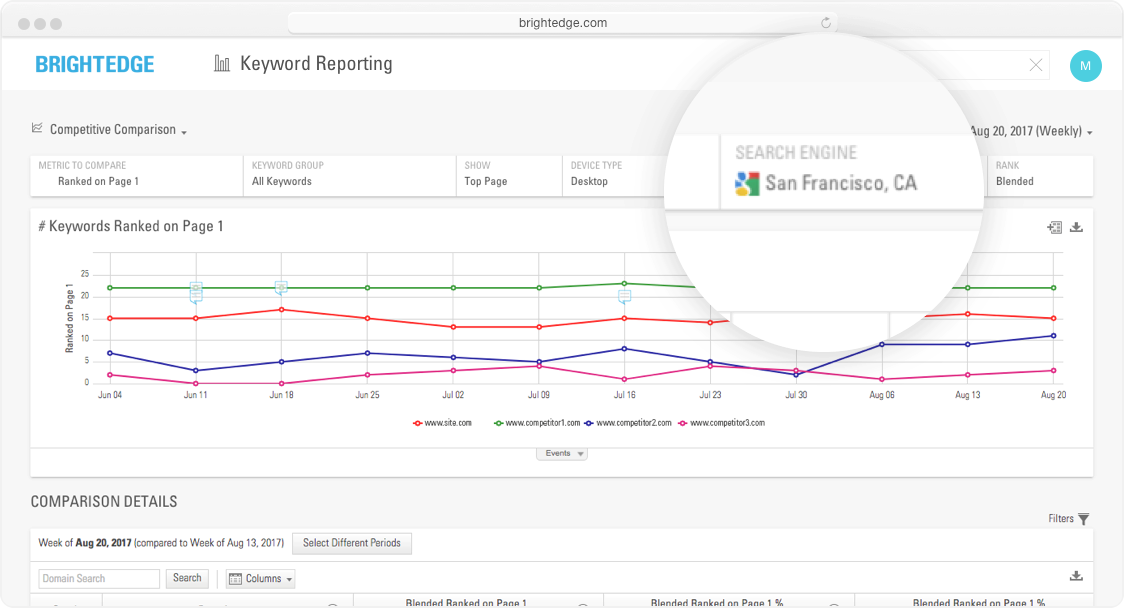
For creating an ideal local search optimization strategy, the BrightEdge platform can benefit partners throughout the entire process. Our recently launched local search power enables partners to refine their keyword research to precise local areas, rather than just using the nearest major cities. This platform currently supports overs over 72,000 locations. While you plan your content development, you can also use the platform to uncover insights about the SERP, including the types of content featured such as local 3-packs, videos, or Quick Answers. You can use this to guide the content creation process. As you develop your content, you can then use the BrightEdge Content features to ensure that the material is properly optimized and ready for usage. hyperlocal competitive comparison on san francisco local search - brightedge Once you begin to implement your mobile strategy, you can then use the tracking features through BrightEdge to see how your content ranks and engages users through mobile devices specifically. Tracking the mobile searches will give you good insight into how your local optimized content performs for users on-the-go, which comprise a significant portion of your local audience. Not only does BrightEdge support tracking your content performance on specifically mobile devices, you can also track the overall performance and look for changes in rankings and traffic to see how your strategy impacts your pages.

See what BrightEdge customers have accomplished

Direct Agents

BrightEdge partner Direct Agents wanted to improve the local search results for their client. Through keyword research on the BrightEdge Data Cube they were able to find keyword gaps with the key competitors and then optimize both the Google My Business page as well as the client’s website with those terms. They also used the Data Cube to perform research about the rich answers that would benefit them the most and thus optimized for Quick Answers, local 3-packs, and other important parts of the Google Universal Result. Their intensive site comparisons and local keyword research helped them receive a “huge boost” in local, non-branded traffic. Watch the Direct Agents testimonial video.

WellBiz brands

The WellBiz brands runs dozens of business locations and wanted to help each franchise boost their local results and revenue. To accomplish this ambitious goal, they set up unique dashboards for each location and then paired them with the location-filtered Data Cube for each location along with the local Google search engine for each location. They were then able to generate local Share of Voice reports for each franchise and thus optimize their content for the keywords in each location. Watch the WellBiz testimonial video.

Measuring your local search optimization success

To gauge the effectiveness of your local search optimization strategy, you will want to track a few different metrics.

  1. Look at how often your brand shows up in the local 3-pack. The local 3-pack indicates that your business is featured for local searchers and it should boost not only the people visiting your site, but also your foot traffic since the listing includes valuable information, such as your address.
  2. Pay attention to the ratings you receive on the various review sites, such as Google and Yelp. Your Google ratings will impact your appeal in the local 3-pack and how often you appear there, while Yelp functions almost as a separate search vertical and quality ratings there can bring you site and foot traffic by itself.
  3. Monitor your rankings for your important local keywords. The same as you would for any other optimization strategy, you want to see how your pages improve in ranking on the SERP. This includes also looking at your ability to secure slots in any rich answers, such as Quick Answers.
  4. Measure directly your traffic and the revenue you secure from these efforts. Not only do you want to rank well for local customers, but hyperlocal optimization is about providing customers with that right information at the right times. Now that you know that your information is readily available, you want to make sure that it is being displayed to the right customers. Your revenue and traffic rates will help you better understand this progress.

Local search optimization opportunities abound as an increasing number of customers turn to their mobile devices to find things to see, buy, and do. The better you understand the trends around hyperlocal targeting and how you drive brand success through this personalization, the easier it will be to grow your foot traffic and revenue through the SERP. Learn more about VSO or Vertical Search Optimization.

How Google's Changes Impact Your Local Search Strategy

enewton@brightedge.com
M Posted 9 years 2 months ago
t 9 min read

Google's changes to the SERP for local-related queries impacts how brands effectively boost their visibility online with a local search strategy. We want to draw your attention to some of the recent adjustments seen in the ad portrayal on local search so you can adjust your local search strategy accordingly. Local search strategy comprises a critical segment in the marketing for many businesses. It impacts both in-person commerce and e-commerce significantly. A huge 78% percent of local-mobile searches result in offline purchases and 50% percent of mobile visitors will visit stores within one day. Given the significance of search in the success of local businesses, when Google makes changes to the SERP for local search, brands need to prepare themselves and make the appropriate adjustments to their local search strategy so they can continue to have the rankings and visibility they need to grow their business.

Google’s experiments with ads in local search

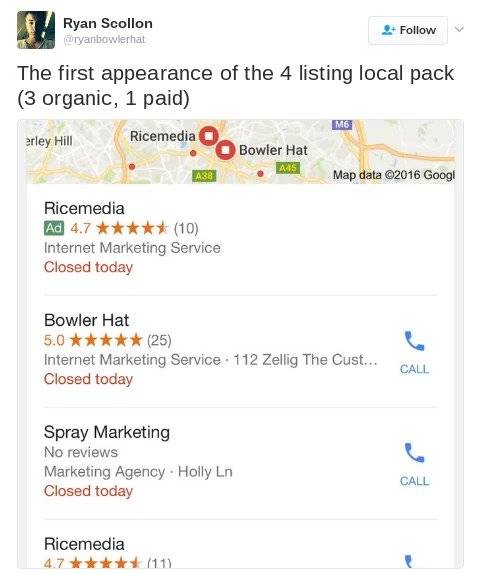
Over the past few months, we have seen some experimentation from Google on the use of ads in local search. We had heard rumors that Google intended to start using ads in the local 3-pack, but we did not know exactly how the search engine planned on combining organic and paid results on the local pages. Last summer, people first spotted a local search pack that had one ad followed by 3 organic listings.

Enhance your local search strategy by watching ads in the local pack, BrightEdge

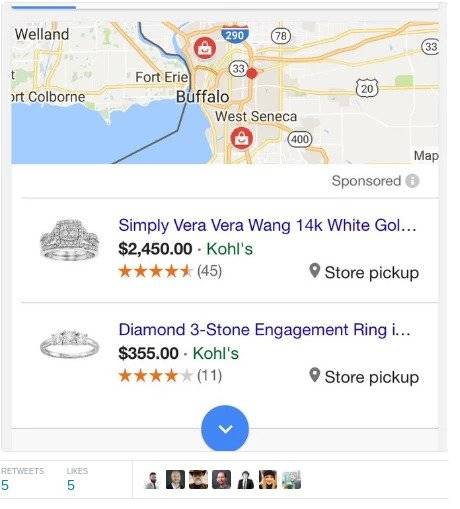
A few months later, in January, reports also emerged that Google shopping ads were appearing for purchase-related local queries on mobile.

Understanding the relationship between PPC and SEO for successful local search strategy, BrightEdge

In both examples, however, these ads have not been replicated everywhere and do not seem to be widely used, yet. These changes have been significant because customers do pay attention to ads when they make local searches - 60 percent of customers say that they have used information provided in ads. The increasing prevalence of ads in local search means that many companies will need to make adjustments to their local search strategies to maximize their ability to attract customers interested in patronizing their stores.

How Google’s new ads impact local search strategy

Given that such a significant portion of customers say that they pay attention to the information in ads for local search, it makes sense that this segment of optimization has been the subject of experimentation. This is all a part of Google’s trend towards ad visibility. We all remember Google’s changes to the SERP layout at the beginning of last year, when they increased the number of ads along the top of the results page while eliminating the ads that were once along the side. For many queries this change means that minimal organic results, and sometimes none at all, appear above the fold. Thus, brands need to pay closer attention to the intersection between PPC and SEO. Do not view hybrid marketers as a nice-to-have, but rather as an essential resource of the marketing team.

Using systems, like the BrightEdge platform, brands can quickly uncover which keywords that relate to their business have local 3-packs. They can also research the level of competition and the average search rates for these local results, empowering them to improve their targeting so they can focus their local search strategy on the terms that will provide the most return. Brands can use their PPC and SEO together to better target these important keywords. Since ads are incorporated closely into the standard local results, focusing your PPC efforts on the keywords that have high significance for your brand, but that you do not have the ranking you need, can help you gain the visibility necessary.

To maximize your opportunity, you should also pay close attention to how Google structures the local 3-pack. Google displays the information that customers want to find when they make a local query. Model your ads to include the same valuable information, such as hours, address, and phone number. This can help boost engagement with your visitors by ensuring that people have access to the information that they need and expect when they make a local search. Note also that when we first started hearing the rumors about the introduction of ads into the local SERPs, many marketers thought that we would see a 2-pack plus one ad. Although Google still seems to be in the early stages of introducing ads into local search, right now we are still seeing three organic slots open. This means that brands cannot neglect their standard local search strategy.

Brands that want to grow in local search need to focus on building their Google business page, including adding clear, appealing images, and by cultivating reviews. You also want to pay close attention to your Name, Address, and Phone Number, or NAP, as this has been shown to have a sizable impact on your rankings within Google. For more tips on optimizing for local search, visit NAP and Local. As you build your local search strategy with both organic and paid search, you want to make sure you continue to monitor your progress to make sure that you use your resources effectively. BrightEdge offers you measuring capabilities to ensure that you can look at your performance on a local level. See your rankings improve with local search optimization and monitor keywords in specific geographic areas to ensure your efforts match the needs of your local consumers.

Google continues to experiment with the SERPs to better serve the end user, and this includes their efforts to balance both paid and organic results. They have been experimenting recently with including ads in certain local searches, which is a trend that cannot be ignored by brands interested in developing a strong local search strategy. At BrightEdge, we will continue to help you remain on top of the latest developments and how you can use the platform to maximize your performance in the face of the ever-changing industry. 

Taking Local Search Optimization Even Further

enewton@brightedge.com
M Posted 9 years 7 months ago
t 9 min read

Local search optimization is the careful process of helping your website appear in relevant searches in the area around the user. These local searches are often answered by a local 3-pack that provides easily-digestible listings for businesses in the immediate vicinity. local search optimization tips for local seo - brightedgeLocal search is quickly becoming a dominant component in commerce. An estimated 78 percent of local-mobile searches result in offline purchases with 18 percent leading to sales within a day. As mobile usage continues to rise, the importance of these on-the-go devices in local business continues to grow as well. Sixty percent of American adults say that they use smartphones or tablets to look for local product or services information. It should be clear why local search optimization and helping your brand stand out in local searches is important. You should also note that Google answers 93 percent of searches with local intent with a local 3-pack. In others words, in the vast majority of the searches performed for local businesses, users will automatically be drawn to three main listings in the top center of the page. The better that businesses are able to understand how local SEO works and what they can do to boost their chances for success, the easier it will be for them to appear in these key listings and help their businesses stand out in their area.

How does local search optimization work?

Google creates local search results based upon the businesses that are located the closest to the exact location of the user. This means that a position change of just a few miles will impact the results. The results that appear for local searches, particularly on the local 3-pack, are continually changing. For businesses, this provides both benefits and drawbacks. Since the results are continually in a state of flux, brands have ample opportunity to enhance their local SEO and start to see an increase in their own appearance in local search. On the other hand, it means that no matter how well their site is optimized, if they are on the other side of the city and there are other quality businesses located closer to the user, they likely will not appear in the critical 3-pack. There are some opportunities to boost one’s appearance in local search. For example, if a user searches for the ‘best’ pizza place near them, the results will differ than if they just searched for a pizza near them. This means that Google is filtering through the results around the user to find those with the highest ratings. This may encourage the algorithm to widen its parameters, even slightly, to focus on the top-rated local businesses. Brands that therefore focus on cultivating positive reviews and using related keywords can therefore increase their chances of appearing in a greater number of local search 3-packs.   Local search optimization opportunity with the local 3-pack - brightedge   

Do not neglect standard optimization for the local 3-pack

When the 3-pack is displayed for a local search, it automatically dominates the page. Other organic results are pushed to the very bottom. On mobile, the standard organic results are not even visible without scrolling. Brands that want to succeed in local search optimization cannot neglect this key area.

  • Focus on the NAP. Make sure that your name, address, and phone number are consistent on all your listings so that Google is confident in your information.
  • Claim your Google+ page for your business and build it out. This means including quality pictures and writing descriptions using local keywords.
  • Cultivate reviews. As explained before, high-quality reviews can help increase the chances of your brand being listed on the 3-packs. It will also help your business appear even more reputable on any 3-pack where it is listed. Take steps such as encouraging satisfied customers to leave reviews after transactions and including links to your Google+ page on newsletters, business cards, and your website.

What can I do to make my local search optimization efforts stand out?

Since the local search results change easily and are so user-dependent, it is easy to feel some level of frustration over how much influence you can have over your local search optimization efforts. Fortunately, there are a few steps you can take to make your business and domain stand out.

Remember the power of PPC

Ads appear even above the local 3-pack and can provide you with an additional opportunity to attract local attention. They can help you tap into a prominent position on the SERP for important local keywords and thus boost brand awareness and click-throughs. To do local search ads correctly, however, you need to make sure that your ad fits with local search intentions. A study conducted by Neustar Localeze and 15 Miles examined the purpose of local searches. They found that the top three reasons for conducting these types of searches were:

  • Finding the address or location of a business
  • Searching for area organizations with the products or services being sought
  • Looking up the phone numbers for businesses

The Google local 3-pack makes most of this information obvious right from the listing, so your PPC ad needs to similarly serve the needs of these local customers. Including information about your location, click-to-call links, or links to information about your business can help you increase your success with paid search. When the user clicks on your ad, you want to continue the positive user experience. This means having the landing page optimized for local users - with information about who you are, what you do, where you are located, and how to contact you featured prominently.

Create content for local searches

You can also enhance your local search optimization by creating content designed for people in your area. You can use BrightEdge to uncover keywords directly related to your area and put them in a specific group to track their progress. Create content that focuses on events and developments in your area and how they impact your industry. Build a reputation in your area as the local expert in the business. You can also expand your brand reach and awareness by participating in local events. For example, set up a booth at local fairs or sponsoring local charities and events. You can then promote the event on your website for even more attention.

Do not neglect the I-want-to-go micro-moment

Google has recently been impressing upon marketers and businesses the importance of micro-moments. These are intent-filled instances when users want to accomplish a specific task. During the I-want-to-go moment, users often turn to mobile devices to help them reach a specific destination, such as a local business. Customers want quick answers that address their needs. To match these desires, brands should construct their websites to ensure that critical information, such as locations and content information are prominently featured on the landing page. With the rise in mobile device use and the importance of mobile search with commerce both on and offline, brands need to understand how local search works and how they can improve their own local SEO. While it can seem frustrating to try and optimize for perpetually changing, user-dependent results, these search optimization tips can help brands better prepare for the local 3-pack while also boosting their reputations and reach in the region. This helps local search optimization and ensures that the organization takes advantage of search opportunities around them.  

https://www.brightedge.com/requestademo

Local Three Pack and the I Want To Go Micro-Moment

Default avatar
brightedge
M Posted 9 years 10 months ago
t 9 min read

The Local Three Pack

Introduced in 2014, the local three pack is a feature that occupies the top of the organic portion of the organic SERP, provides a map of the user's area, and provides address and contact information for three physical locations that might meet the needs of the user. It also provides review scores for each of the three listings. Here's what a typical local three pack looks like: Local Three Pack Desktop  

If a brand has physical locations this result drives traffic to physical locations as well as traffic to a website. If not, then keywords with this SERP feature need to be noted because significantly less traffic is going to make its way down to the traditional web listings. Now that we've covered what the local three pack is and what it is useful for let's dive into the world of micro-moments.

The "I Want To Go" Micro-Moment

Google has come on strong lately with the micro-moments concept. They believe that users have very specific motivations that brands can understand and help to answer. In response, Google is trying to provide content which is focused on providing a simple answer to the user's need. The micro-moment of interest to us is "I want to go." This moment represents a user who has intent to physically go to a location. They may be interested in a web page in order to find information about the location or to make an order prior to going there, but at the end of the day their goal is to go somewhere and do something. Since micro-moments are strongly associated with mobile search, "I want to go" is a very powerful example since a user can expect to not only look up a location to go to, but can actually be directed to that location.

Tying the Local Three Pack to "I Want To Go"

With a good understanding of the major components of the situation, let's look at the connection between the two. Google has the most sophisticated relevance engine in the world, especially since the introduction of RankBrain - the objective of which is to identify the content that will be best able to meet the quickly diversifying and evolving needs of their users. This helps them by driving additional searches and usage through their search engine. The result is profitable because it drives more market share and more ad revenue for Google. The interesting point here is that Google's algorithm is not only attempting to find the the best content for the user, it is also trying to provide content in the correct format for the user's consumption. The combination of the two factors provides the best possible experience for the user. In the case of "I want to go" micro-moments this means presenting the user with a local three pack full of relevant physical locations. This is the most efficient way to present the user with content to meet their needs. It also allows them to take action by linking directly to Google Maps for directions or turn-by-turn navigation.

Relating Back to SEO

Knowing how Google provides relevant content and appropriate types of results informs how marketers can benefit. The idea is to understand the micro-moment that you are dealing with in each situation. This will allow you to build the correct content to serve the user and be ranked by the search engine. To execute, group keywords together which have local three packs. Do so with the understanding that those keywords represent the "I want to go" micro-moment. Once that has been established then when you build or optimize content to earn traffic from a specific keyword, you will have a great indication as to what type of content to build for that keyword. Also, once you have built or optimized content for these keywords, your next objective is to get those pieces of content ranking in the local three pack.

Applying This Concept to Other Result Types

Can transfer this concept to other micro-moments. The simple answer is yes, you can. In order to do so, identify another type of content or universal category which Google has paired up with keywords representing another micro-moment. Once you have that, you can follow the same process of identifying keywords and taking the action that was outlined above.  

In the long-term, this is a very strong way to organize your content creation and optimization effort, since it aligns with Google and helps to define what you need to build for any given keyword.

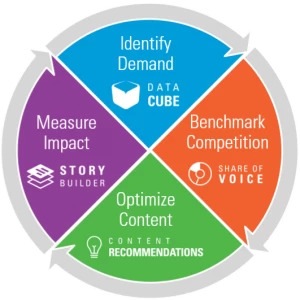
Scaling for Enterpriseworkflow for local three pack - brightedge

The process of grouping, optimizing, and measuring results is fairly straightforward. The problem you may run into is trying to do this at a large scale, when the process of manually managing all of this becomes a huge hassle. BrightEdge can help with this. As the global leader in enterprise SEO, we are uniquely positioned to support you and make this process simpler and smoother. You can leverage the power of Keyword Reporting and Universal Results to identify which keywords have universal presence and where you are currently ranking. Once you have done that, you can track the impact of your optimizations on your bottom line by looking at traffic, conversions, and revenue performance using Page Reporting. Lastly, you can report on progress at scale by using StoryBuilder to create all the visualizations that you need and schedule them for delivery to your stakeholders.  


,