Google User Interface Design Changes 2016

Definition

Did Google change their algorithm again?

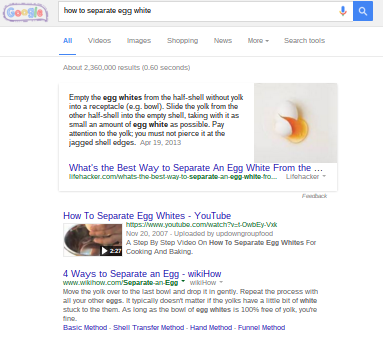
In February 2016, Google removed right sidebar ads from SERPs and moved the paid search results to the top of the page. Now, up to four paid search results are allowed on a page. For some queries, this pushes nearly all the organic results down below the fold, potentially limiting the success of a brand’s SEO efforts.

It is important to note that although the number of ads allowed at the top of the SERP has increased, with the elimination of the right sidebar ads, there is still a net loss for the number of ad slots.

What is User Interface? Let us teach you more - BrightEdge

How will this change impact paid search and organic search?

Since there are fewer ad spots now appearing on SERPs, and the ones that are available are more expensive and highly-coveted, it is likely that the price of ads will rise. This can push some marketers out of the running, forcing them to move to less popular keywords or to shift their focus towards more organic search.

Since there are fewer organic spots appearing above the fold, the competition will also be fierce for the top organic slots. Brands will have to use all the tools at their disposal to maximize their visibility in the new Google user interface changes.

How to improve visibility with the new layout?

  1. Establish data tools that you can use to help identify important keywords and monitor your success. The intersection of data and content has become imperative to success. BrightEdge’s Data Cube will make it easy for you to secure the information you need.
  2. Build a list of keywords applicable to your industry and your ideal personas. Map the keywords to your buyer’s journey.
  3. Create content that fits the customer’s needs based upon this information.
  4. Use all available resources to optimize your content. This includes well-placed keywords, tags, optimized images, and schema markup. Schema can also help you take advantage of any available rich snippets to boost the appearance of your content in the SERPs.
  5. Distribute the content throughout your network to build traffic, engagement and backlinks.
  6. Monitor your success to see how your content is performing and ranking. Use the data to pinpoint the types of content and information that customers seem to respond to best.

When Google user interface design changes are made, it is easy to feel intimidated and overwhelmed by how the new layout might impact search. Focusing instead on creating content that fits the precise needs of your readers and optimizing that content will help your material get the attention it deserves.

<< Back to the SEO Glossary main page

What are Mobile Technical Errors?

Definition

Mobile error messages are vital to fix - brightedgeMobile technical errors are the issues you can experience on your mobile website. These issues are usually caused by wrong setup of redirects, lack of responsiveness, and blocked access to JavaScript, CSS and Images.

What problems can result from mobile technical errors?

There are a number of problems you can experience from having mobile technical errors in your mobile site. To begin, since Google requires brands to have a mobile version of their website, if Google does not recognize your site, you can be penalized for your lack of compliance.

If your site contains problems that hurt the user experience, you might also have high bounce rates and therefore poor engagement and conversion rates. Understanding what these mobile technical errors commonly are and how to avoid them can help you uncover potential problems in your site and keep your web property mobile-ready.

Fix Mobile Errors With A Technical Site Audit

What problems can arise from redirect errors?

If you have a separate mobile site, then you are expected to provide signals to redirect users from the parent site to the mobile version. These redirects prevent the search engine from treating the two sites as separate entities.

Google also asks that there is a 1-to-1 ratio between mobile site pages and desktop site pages. Common problems with redirects typically are one of the following:

  • Not building all sites on mobile, so multiple desktop sites go to one mobile site.
  • Incorrectly configuring your redirects

What problems can arise from JavaScript errors, CSS and Images?

Googlebot needs access to your entire site, including your JavaScript, CSS and image files, so that it can view your pages like the average user. If you block access in some way, such as with robots.txt, this can result in Google not indexing important content and therefore impacting your ranking.

To fix JavaScript errors, make sure that Google can read your entire site, you should test your site using the Fetch as Google feature in Google Webmaster Tools. This lets you know if there are any problems with accidently blocked content or other indexing issues.

Similarly, make sure that there are no URLs or videos that will not show up on mobile. If a 404 appears only for a mobile user or if videos on your site give mobile customers an error message, then you will hurt the customer experience and your reputation.

When your mobile site is properly configured, you will be able to maximize how it appears to your audience. Take the time to review for these types of mobile technical errors to make sure that your site is ready for mobile visitors.

Use Local SEO Marketing To Increase Traffic

Definition

What is local search?

Local search is the use of special search engines that allow users to find what they are looking for in geographical proximity to them. For instance, when a user types a query such as “restaurants near me”, these search engines submit a geographically constrained query against a database of local businesses.

Learn to successfully do local business SEO with this guide - brightedge

How can I improve my local business SEO results?

According to SEO Tribunal, 97% of people learn more about local companies online than anywhere else and Go Gulf says 46% of searches on Google are for local inquires. Customers search locally to learn a variety of things about the businesses in their area, from reading reviews to comparing prices. Failing to prepare for these customers can result in losing many potential clients.

One survey looked at improving local search results means optimizing for what customers wanted to see on local business websites and uncovered some interesting information about consumers’ preferences:

  • More than a third of customers said that a clear and ‘smart’ website gave the business more credibility
  • The most important information people wanted to see on websites were:
  • List of products
  • Price list
  • Phone number
  • Address
  • Clear contact details, company information and testimonials were three of the top four factors that made people want to patronize a particular local business

How to do local SEO?

  1. Make sure your listing for Google My Business is completely filled out. One in three customers will do a local search on a mobile device before they visit a business. These customers are often looking for critical information found on Google My Business. You will fill out valuable information, such as your hours, address, photos and your website. Customers will also have the opportunity to leave a review, which is an important part of establishing credibility with customers. Use engaging photos, encourage past customers to leave you a review and use your listing to power your local business SEO.
  2. Develop your About Us and Home Page on your main website. Make sure these pages include important local keywords, such as your location, as well as your business address and quality content. You want your page to be easily read by Google so that it understands your content and the local customers you serve. Include the link from your website in your Google My Business local listing as well to show Google that they are connected.
  3. Make sure that your name, address and phone number (NAP) are consistent across all platforms. Anywhere this information might be entered, such as various local listings, social media and web properties should contain the same information. This will help Google link your listings together, understand your reach and display accurate information to your customers.
  4. Include a helpful product and price list on your website for people to browse before they officially come into your store.

Local business websites can be very valuable for customers as they decide where they want to do business. Taking the time to optimize for these sites can help you bring in this traffic and grow your organization.

<< Back to the SEO Glossary main page

How to Optimize YouTube Videos?

Definition

Optimize YouTube videos to increase rank - brightedgeWhy should I optimize YouTube videos?

If you're interested in creating high-quality content for consumers, YouTube is a great way to go. The video platform has over two billion users worldwide and consumers are viewing videos more and more as of recent. If you're going to create videos, YouTube is where you need to publish your content.

Like Google, YouTube has its own internal algorithm that determines the rank that the video search results appear. Getting your video to rank highly on this algorithm can help increase your campaign’s success in a variety of ways. The next step following video creation is to optimize YouTube videos.

  1. It will be easier for potential viewers to find your content and watch it
  2. Greater traffic rates will mean larger brand reach and more conversions
  3. You will increase the odds of having your videos rank in standard Google SERPs as well

Although YouTube’s exact algorithm remains a secret, like Google’s, there are a number of factors that marketers can use to build the rank of their videos so that they can reach their desired audience.

How are YouTube videos ranked?

There are a few criteria that brands should focus on when building the rank of their videos.

  1. Keywords. YouTube uses keywords to understand the topics of videos as well as queries that users type when looking for a new video. Your keywords should be used in the title and description of the video as well as the video tags.
  2. Description. Creating a thorough video description makes it easier for YouTube to know what your video is about and who will be the most interested in seeing it.
  3. Watch time. YouTube measures how long people spend watching particular videos, assuming that the videos which are regularly watched all the way through are more engaging than those that are regularly clicked off after just a few seconds. By creating short videos, you're more likely to keep your audience engaged. It'll also be easier for you to post often as you'll have plenty of content to do so.
  4. Number of subscribers. The more people you have subscribing to your channel, the more authoritative YouTube views your videos.
  5. Reactions. YouTube also looks at how many people like, dislike and comment on your videos and factors these in as measurements of how well your video understands its target audience.

How do I get my YouTube video to come up first?

  • Utilize your buyer's journey
  • Create content that's easy to understand
  • Promote your video
  • Add new content often
  • Repeat the process
  1. Utilize your buyer's journey. By using the buyer's journey and buyer personas to uncover what people are looking to view through video content in the early stages of their journey. Use these topics and keywords to create videos that are either emotional or educational. Emotional videos would be funny videos, like the popular Old Spice videos, while educational videos might help people understand a new software. The more engaging your video is, the more you will increase your critical watch time factor.
  2. Create content that's easy to understand. Make it easy for YouTube and Google to understand your content. Use keywords throughout your video markup, including the title, tags and description. Use a full description so that the algorithms understand as much as possible about your videos.
  3. Promote your video. YouTube videos can be easily embedded on other social media platforms, so take advantage of that and let your entire audience know about your great video to drive up your traffic and customer responses.
  4. Add new content often. Whether it's every day, a few times a week, or once a week, if you want your YouTube to both rank and gain traffic, you need to upload new content for your audience at least once a week.
  5. Repeat the process. Continue to repeat these steps to build a strong channel. When you make the jump from developing just one awesome video and instead create several well-regarded videos, you will develop a strong channel with numerous subscribers, boosting your rankings and your authority.

YouTube is a fantastic tool for marketers because it lets you reach a wide audience of interested viewers. Get your voice heard above the crowd by optimizing the YouTube videos you create and let people know why your brand should be their trusted choice in the industry.

<< Back to the SEO Glossary main page
How Do I Optimize a Landing Page CTA?

Definition
  1. Determine the value of your offer for customers and use this as a basis for building your forms.
  2. Remember that when unsure, it is always best to delete a form field. You want your customers to see completing the form as a small investment for their time and effort.
  3. Create a CTA based on your offer.
  4. Write your CTA in first person point of view to build a relationship.
  5. Always run A/B tests to see the impact of your CTA form and to ensure that it is fully optimized for your specific audience.

The human brain is constantly evaluating offers in terms of cost versus reward. Everything to the mind "costs" something, whether that is money, time or even just your name and email on a form.

Landing pages require you to tap into human psychology by understanding how people view your content and calculate the cost of your offer. Optimizing these two elements will help you maximize your conversions.

Create a good landing page that converts with these tips - brightedgeWhat makes for a good landing page?

Once you optimize the content on your landing page, you might think it is ready for customers. In truth, even the details of your call-to-action and form can impact the number of conversions. Customers are sensitive to factors such as the number of fields included in forms and the language you use in your CTA.

How to make landing pages that convert?

It is important to keep your form proportional to your offer if you want to be taken seriously. In other words, if all you are offering is a basic ebook, then asking for much more beyond a name, email and company name will often require too much of customers and can lower conversion rates. If your offer is something more valuable, such as an in-depth case study that the customer cannot get anywhere else, then asking for more information, such as the person’s position at the company, might be appropriate.

When determining the length of your form, it is always best to err on the side of brevity. One study found that a decrease of just one form field led to an increase of conversions by about 50%. Only ask customers for information that you absolutely must have to serve them.

What do customers want to see from my CTA?

If you have already optimized your content, then you know about creating a strong value for the potential lead or customer. Your CTA is where you make the final push towards the conversion. This makes it essential to get these last few words right.

Studies have shown that landing pages see more conversions when the CTA is written in the first person. In other words, you should be creating CTAs and buttons that say things like, “Start my download” instead of “Start your download”. This helps people feel more connected to the product or service and feel a personal benefit from converting on your page.

<< Back to the SEO Glossary main page

How To Optimize Mobile Apps?

Definition

What is the value of a mobile app?

We all know that customers are spending an increased amount of time on mobile, but what many do not realize is that the vast majority of that time is spent specifically on mobile apps. Customers spend an average of 85 percent of their time on smartphones on mobile apps. While mobile sites are crucial to interacting with people browsing the web, building an effective and popular mobile app is a very valuable way to build brand loyalty and engage with your mobile customers.

Optimize for mobile apps with these tips - brightedge

Why bother optimizing the app?

Although 85 percent of the time that people are on mobile phones is spent on apps, only an average of 5 apps per user see heavy use. People do not download and use numerous different apps, which means that the competition to be one of those popular, valuable apps for users is fierce.

The importance of optimizing also becomes important when you realize that an average of 60k new apps are uploaded to iTunes and 50k are uploaded to Google Play every month. You need to learn how to get your brand’s app to stand out and be found against this saturated market.

How do I optimize my mobile app?

  1. Design an app that projects your brand. It needs to be consistent with the messaging that your customers receive elsewhere from your organization.
  2. Your app needs to add value for customers. Your app needs to be useful so your customers will want to download it and engage with you further. 
  3. Create your app using bright and inviting images. This is particularly important for the image that appears in the search results. Images can help invite customers to click on your app and give it a try.
  4. Optimize your content for mobile. Content optimized for mobile adjusts to small phone screens so users can easily read the content. Videos should be compatible for mobile and emails should load quickly and be easily scannable.
  5. Make sure your app has a thorough description with keywords. It is the description that will help tell the app store that your app matches the needs of the customer typing in a search query. Describe your app well to capture that attention.
  6. Remain engaged with your app. Listen to feedback and use it to make your app more useful and efficient. If there are any complaints about problems, fix them immediately and update your description to let people know what issues have been addressed.

Mobile apps are a valuable part of the modern mobile experience. Taking the time to optimize your app will help you attract desired attention and maximize your potential for on-the-go consumers.

When Should I Optimize My Website?

Definition

Optimizing When Building a WebsiteIdeally, your website should be optimized when it is being built. This will result in the least amount of work for you and will maximize your visibility from your first launch. Postponing your optimization efforts will mean that you will have to go through the process at a later date, resulting in lost time and money. Since Google might also take anywhere from a few days to a few weeks to ‘reread’ your site, it might also be a while before your changes are noticed, resulting in prolonged periods of lower ranks and less visibility. Optimizing your site from the beginning avoids this potential problem.

What should I think about as I build my website?

1. Load time. Google and your users want to see sites that have low load times. Pages that take too long to load are often just closed (link to project page on load times). Google knows that long load times result in a lower user-satisfaction rating, and so they also penalize the sites. To keep your load time low, you need to prioritize the items on your page and your plugins. Too many plugins or items that need to load will slow down the page.

2. Folders and site map. It should be clear how your site is organized so that Google and your users know what to expect. Your sitemap should be uploaded to Google to help the search engine understand your pages.

3. Navigation. Navigation should be intuitive. This means pages should be appropriately named and organized in an understandable fashion. Customers should be able to clearly see where they are in your site and how to get where they want to go.

How do I optimize my website?

Here are some things to absolutely remember when optimizing your website:

1. Types of content. Your content should be developed with the end user in mind. This means understanding your buyer personas and their journeys and using data to pinpoint keywords and topics that appeal most to specific people. You should be producing a variety of types of content, such as videos, text and infographics, so that you can appeal to a broad range of potential customers.

2. Meta descriptions. Meta descriptions (link to project page on meta descriptions) are the bits of text that appear below your URL on SERPs, describing your page to users. This text can have a big impact on the sites that people choose to click on, so write descriptions that are engaging and inviting.

3. Keywords. Although various Google algorithm updates have shifted optimization efforts away from just matching keywords and towards matching concepts, keywords are still an important way to let Google know your topic. You should use data to determine a few desirable keywords and use them naturally in your content, while focusing on providing users with information they want about this particular subject.

As you build your site, focusing on optimization can help you create a successful web page that is ready to perform from the moment you launch it. Remember that SEO is an ongoing project, and will continue to require modifications and adjustments as algorithms, customers and best practices change (link to project page on site redesign). Keeping these ideas in mind, however, will get you started on the important path of ranking well and reaching customers.

<< Back to the SEO Glossary main page
Social Media Metrics

Definition

What are social media metrics?

Social media metrics is the data used to assess the impact of social media activity on marketing campaigns and a company's revenue. These metrics help to assess how well you are accomplishing your goals in the social space and provide insight to where you can modify your campaign.

Social Media MetricsWhy are social media metrics important?

Social media is an important part of any content marketing campaign. It is not just a soap box for you to broadcast your message to your followers, but a platform on which you can engage with those interested in your company and industry. Like any part of a content marketing strategy, it requires metrics so that you know how well you are accomplishing your goals.

Metrics in social media can tell you a considerable amount about your audience. You can learn the types of the content and the topics that they are most interested in, how well your efforts to build brand awareness are going and whether or not you are successful in encouraging these followers to enter your sales funnel. As you gain these insights, you will be able to modify your campaign as needed.

What are examples of social media metrics?

There are a number of different types of social media metrics you can use, depending upon the goals you want to accomplish on the platform. For example, shares, likes and followers are all good ways to see if you are successful with increasing brand awareness.

Comments on your social platforms or on the articles that you distribute through social media can help you understand how engaged your audience is with the types of material you are putting out.

How your backlink profile and traffic rates grow in response to social media distribution can also help you see how successful you are at engaging the search, social and content trifecta (link to search, social and content project piece).

  1. Volume measures how many people are talking about your brand and the number of posts that mention your brand. Track this metric over time to see how customer engagement changes.
  2. Reach measures the potential size of your audience. Use reach in comparison to other engagement metrics to discover how many people participated in your campaign in comparison to your audience.
  3. Engagement measures how many people participate conversations involving your brand. This can include sharing content and commenting on posts.
  4. Share of voice measures how you brand compares in conversions to your competitors.

How to build a data-centric social media campaign?

  1. Look over your past activity on the platform and see the topics and content types to which your social media audience most frequently responded.
  2. Develop a strategy that reflects a concrete goal for this campaign and ways to measure success.
  3. Understand that most social media followers are at the early stages of the buyer’s journey, so they are most interested in awareness stage and consideration stage type content.
  4. Create content that reflects understanding of why people share content.
  5. Distribute content and measure reactions through the predefined metrics.
  6. Make adjustments to improve your next campaign.


Social media is an excellent opportunity for you to engage with your audience personally and encourage them to enter your sales funnel. By using social media metrics during your campaigns, you will better understand people’s behavior and be able to create content more tailored to their needs.

Related materials

<< Back to the SEO Glossary main page
Measuring YouTube Success

Definition

How do I know if my YouTube efforts are successful?

YouTube offers marketers the opportunity to reach over a billion users. At the same time, however, since it is a 3rd party platform, it can be a challenge to know if your efforts are successful.

YouTube, since it reaches such a broad audience, typically is used for boosting brand engagement and awareness. Understanding how to monitor these factors will allow you to see how worthwhile your YouTube efforts have been and how you can produce better results in the future by using your data to streamline your efforts.

Metrics to watch for to monitor YouTube success

Branded Traffic and Your Share of Voice

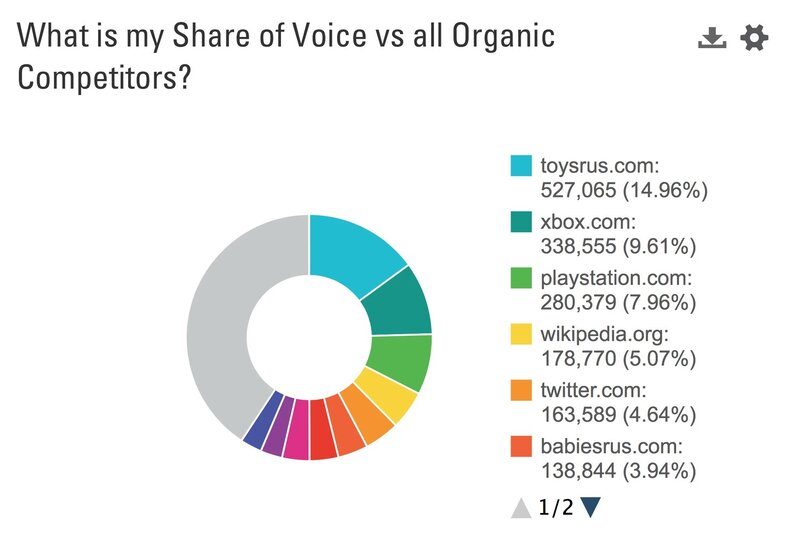
YouTube is a valuable tool for increasing your brand awareness. As you create engaging videos that help people better understand or learn about topics of interest, you expose them to your brand and what you have to offer. Monitoring your Share of Voice and Branded Traffic can be a good way to know if you succeed in this endeavor. The BrightEdge Share of Voice tool can be valuable to help you accomplish this goal.

Referral Traffic from YouTube

Make it easy for people to click through from YouTube to your brand website by including a link to your page in the description of the video and on your brand’s YouTube page. It is important to note that YouTube is not known for large amounts of referral traffic, so just because this number is low does not mean your videos are failing. Rather than looking at the number, you want to look at the pattern-- if the number increases, then you know your videos are having a positive impact.

YouTube analytics

YouTube also offers you a few different options for monitoring your video success right on the platform. You can measure engagement by tracking watch time insights. You can also monitor factors such as Likes and Dislikes, Audience Retention and Sharing, which all add valuable insights into what people think of your videos. Here is a complete list of the currently available analytics.

YouTube is a valuable resource for your organization to increase brand awareness and improve your reputation, but it can be a challenge to measure your success. Using these three main categories of metrics, however, will help you gain the insights you need to improve your YouTube strategy and integrate it into the rest of your campaign.

How Does PR relate to Content Marketing?

Definition

How does PR relate to content marketing?

With the Internet and content marketing, customers have changed how they look for information. Rather than wait for brands to come to them, they actively go online and research the products and services that they desire. These customers also help to spread publications and articles about topics that interest them through social media. This has changed how PR professionals promote their brands.

PR and content marketing - brightedge

Publications have also changed. Now, it is not just major newspapers and magazines that PR professionals can look to for coverage. Now there are also a host of online blogs that are actually highly respected publications. Even the brand’s own blog can be a useful way to spread information to the company’s audience.

It is also common for major publications to be most interested in thought-leadership pieces that are written by authors with large followings that will come to read the piece. These publications want to increase their own exposure.

What is content creations in public relations?

Both content marketers and PR professionals want to present their business to the general public as an authoritative, useful resource. They want to form a relationship with their potential customers.

Many PR professionals are already beginning to notice the relationship between their sector and the broader digital marketing industry. According a report published by Vocus State of PR:

  • 78 percent of PR professionals use social media to share and promote content
  • 50 percent use social media to share coverage
  • 44 percent cultivate relationships through social tools
  • 29 percent make pitches to reporters through social platforms.

As more professionals notice the link between PR and content marketing, those who fail to adopt the latest techniques will find themselves falling further behind.

How do PR and marketing work together?

  1. Have your PR team and content development team discuss common goals, such as brand awareness, to help them see how their efforts can complement each other.
  2.  Educate your employees about the unique roles of PR and content so that the end goals of each are understood. Content marketers want to tell the brand story to connect with people, PR wants to reach the right people. They want to get the brand image in front of customers build a positive reputation.
  3. Know when to use major PR outlets for announcements or news. This will vary depending upon the company and the extent of their social presence. News you want to come from an authoritative source might be better received if it was published in an established publication if you only have a small social audience.
  4. Regularly publish high-quality content that provides value to the users. This is the type of content people share, which can then spread brand awareness.
  5. Measure your customers’ reaction to your content and PR strategies and adjust when necessary.

PR and content marketing are quickly colliding as professionals realize the value of content in promoting brands. PR professionals who want to remain relevant in the digital marketing world should keep these principles in mind as they move forward.

<< Back to the SEO Glossary main page