Thank you for your interest in BrightEdge's Share16 Webinar Assets.

Access the assets by clicking on the links below. For your convenience, we've also emailed you links to the assets for you to access anytime. For more information, please visit our resource center or schedule a demo.


Deck         Video


People who downloaded this white paper also downloaded:

Why an SEO Checker is Not Enough

maspillera
maspillera
M Posted 10 years 1 month ago
t 9 min read

An SEO checker, a tool that helps you analyze your website to see how well you are optimizing your content and remaining compliant with the best practices for the major search engines, is a valuable instrument in your digital strategy. It is important to note, however, that a checker alone is not enough to maximize your prevalence in the search engines.  

The importance of the digital world in commerce continues to grow. Ecommerce grew by nearly 15% in 2015. In the B2B world, 94% of people say that they perform research online before they make a purchase.

Given that more than half of the traffic to your website originates with organic traffic, there is no doubt that your SEO efforts and your visibility on the SERPs will directly impact the bottom line for your organization.

The better you understand how to maximize your usage of the SEO checker and how to leverage a platform that will take your SEO efforts further, the more return you will begin to see from your optimization efforts.  

Get A Concise SEO Evaluation of Your Site

What does an SEO checker do?

Running an SEO check will help you take a closer look at how your site is currently performing. Most SEO checkers will look at factors such as:

  • The usability of your site
  • Your site speed
  • Metadata
  • Your alt tags
  • Your social media interactions
  • Internal and external links

An SEO optimizing platform will help you evaluate how well your site adheres to SEO best practices. It will alert you to potential problems before they become an issue with your rankings and impact your site traffic.

Although this information is helpful, it does fall short in its ability to help you build a strong site that will maximize your appearance in search.

An SEO checker needs to be paired with suggestions

While it can be useful to have the insight about the shortcomings of your website, the information from an SEO check can only help you so much with maximizing the optimization of your brand. You need guidelines that will also help you improve your site.

Not only do you want to know where you have made errors, but also where you may be overlooking opportunities to take your website results further. For example, the BrightEdge platform can offer insight and suggestions about backlinks.

Rather than just reporting on the sites that link to your page, you can also access recommendations that will offer suggestions about websites that might suitable for pursuing additional backlinks.  
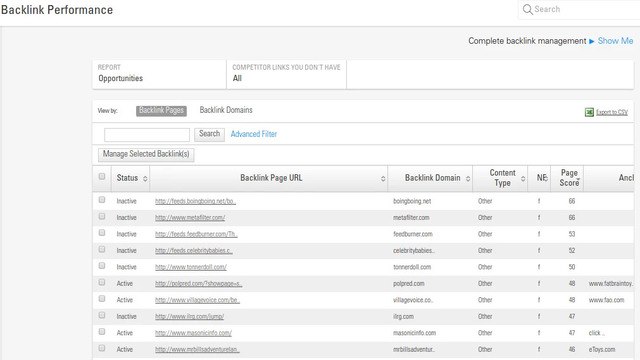
The BrightEdge backlink opportunities amplify insights from a SEO checker, SEO check and optimizer

Similarly, you can analyze the pages that rank for particular keywords and receive insight that will let you see where you have the ability to outrank competitors. You will receive not only the SEO check, but also the suggestions about where keywords should be used while also looking at the top-ranking pages for that topic, which will help you understand what the search engines and users want to see.

You need to know what your competitors are doing

The BrightEdge platform will also help you look at your site next to competitors so that you can see keywords that they are ranking for that you are not, where they are having the most success, and where you need to improve.

It is important to remember that in the world of SEO, you are not only trying to rank well within the search engines, you are also trying outrank all of these competitors. That is how you can attract the attention your site needs.

When you have a full analytical platform, you will be able to gain valuable insights into the factors that are helping your competitors achieve their success, allowing you to find holes that will help you outrank them and improve your own reach and ROI. With BrightEdge you will be able to see:

  • Keyword gaps where competitors are ranking for particular terms that you are lacking
  • The high-ranking keywords and longtail keywords competing domains use
  • Their content performance in universal results and specialized results such as Quick Answers and the Local 3-Pack
  • Their content performance over time next to yours
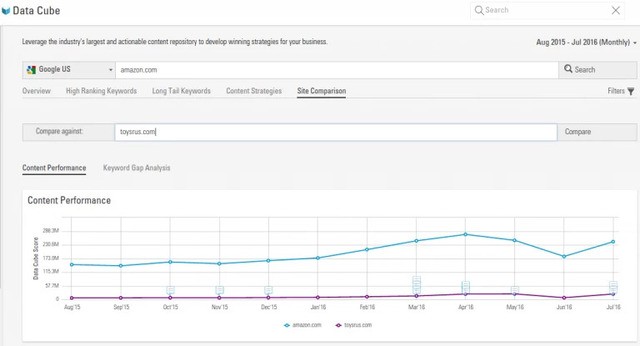
Take your SEO checker further with competitor analysis. SEO check and SEO optimizer

BrightEdge Site Comparison will help you find gaps and opportunities.

This insight into what your competitors are doing and what helps them succeed can help you adjust your own strategies and better capture a larger portion of the share of voice.

You need to know how your SEO efforts impact the bottom line

While gains in SEO can be wonderful to see on your charts, in the end, the value of using an SEO optimizer is revenue. You want to build your site so that more people are attracted to your brand and thus convert.

Ranking highly on the SERPs will only help you if you attract the right audience. Looking at your site only through the eyes of a checker will tell you if you are optimizing your site, but not how well those optimization efforts attract people who are interested in your business.

Working with a more complete platform, like BrightEdge, will allow you to analyze the impact your optimization process has directly on your revenue. You can group pages or keywords together and gauge their impact on conversions.  
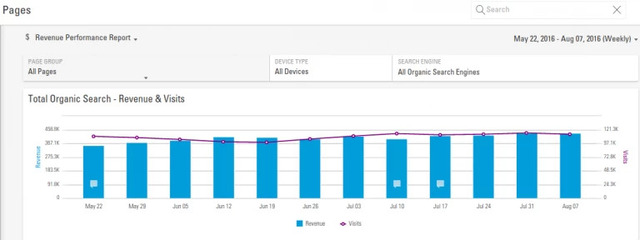
Use page reporting for more insight than an SEO checker, SEO check and seo optimizer

Page Reporting on BrightEdge helps you gauge your impact on conversions and revenue.

You can also track different types of conversions over time to see the impact of various campaigns on the success of your website. You can even see the impact that your SEO has on different devices by comparing your progress in mobile SEO versus desktop. This can help you pinpoint the needs of your different audiences so that you are better able to tap into the growth of mobile internet use. 

BrightEdge StoryBuilder makes it easy to see progress by device.

An SEO checker can help you build a successful website, but it can only take you so far. For you to maximize the potential of your site, you need to combine a checker with a complete platform that will provide you with the insights you need to help your site stand out against the competition.  

How to Increase Website Traffic

enewton@brightedge.com
M Posted 10 years 1 month ago
t 9 min read

Website traffic describes the visitors who arrive on your page and the data you can collect from these visits. When these prospects visit your site, you have the opportunity to entice them to enter your sales funnel.how to increase website traffic report - brightedge Understanding how to build your website traffic is a critical part of building an online reputation. An estimated 94 percent of B2B buyers and 81 percent of customers research products and services online before making a purchase. There has also been tremendous growth in ecommerce, with an increase of nearly 15 percent in 2015. A site that receives strong site traffic will be better positioned to capture this revenue and grow their brand. There is more to successfully building a website, though, than focusing on the website traffic report. You want to time your scaling efforts to ensure that your site is prepared for the influx. This will not only maximize your profit, but it will also help you protect your reputation and build your relationships with those visitors. A successful website will be equipped to handle online transactions while also being organized to encourage people through the sales funnel. Ideally, your content should mirror the funnel itself. In other words, you want to have the majority of your content focus on visitors at the top of the funnel, while also creating some targeted and useful content for those further down the funnel. Links between different levels of content can encourage people to move through your site, engage with your material, and enter your sales funnel, eventually becoming paying customers. You will find as you start examining your site traffic that it is arriving from a variety of different places, including organic and paid traffic sources. Here is what all site owners should know about how to increase website traffic.  

What types of traffic should I examine on my website?

You should expect site traffic to arrive from a variety of different sources. The five most important ones that you will want to track and optimize for are:

  • Organic traffic: meaning those who arrive on your site by clicking on results on the SERPs
  • Social traffic: those who arrive on your site after interacting with your brand on your social media pages
  • Paid traffic: those who land on your domain after clicking on an ad you placed on sites
  • Email traffic: people who visit your site by clicking through a link that you had placed in an email message
  • Direct traffic: Those who are familiar with your site and brand and just type your address directly into the search bar

While there are several different sources of traffic, it is important to remember that they are not all equal. Some traffic sources will bring more people to your domain than others. Namely, organic traffic brings more than half of the visitors to your page, on average. This means that your visibility and ranking on the SERPs is responsible for more traffic than your social, PPC, and email traffic combined. This is an important point to keep in mind as you begin the process of building traffic to your site.  

Understanding how to increase website traffic

how to increase website traffic, site traffic, website traffic report - brightedge The key to understanding how to increase website traffic revolves around being better in tune with what your customers want to see and providing it for them on your website. The better you are able to align with the needs of your prospects, the more enticing your site will become for people navigating the web.

How do I optimize for organic traffic?

Given that organic traffic drives more than half of the visitors who land on your page, the focal point of understanding how to increase website traffic comes down to SEO. Properly leveraging SEO can help you build your site traffic and drive interested prospects to your page, encouraging them to enter your sales funnel. Optimizing your content for SEO and organic search should be an encompassing process that begins before you even write a single piece of content.

  1. Use keyword research to identify topics and vocabulary that will appeal to your targeted audience.
  2. Create high-quality content that is optimized with the keyword appearing in the title, H2 tags, URL, alt text, and body.
  3. Distribute the content thoroughly to ensure that you attract the eyes of those most likely to be interested in your piece to encourage backlinks and high engagement metrics.
  4. Review the information supplied through the BrightEdge backlink checker to uncover opportunities to ask for backlinks to boost off-page SEO.
  5. Monitor your progress with BrightEdge to see your success by page group and keyword group.

In addition to making your site more appealing through SEO, the other key to boosting organic traffic is to make your site look more appealing on the SERPs themselves. You want to focus on your meta description, since this is the site summary that customers see when your page is listed on the results. These 156 characters or so are your opportunity to tell customers why your site will do a better job of answering their questions than the other search results. Similarly, you want to make sure that your page title is engaging and encourages people to click. Remember that an estimated 8 in 10 people will read your headlines without clicking through to read your content. You want to make your title informative and interesting so that you increase your click-through rate from the SERPs.

How do I optimize for other sources of site traffic?

For the rest of your traffic, there are also a few steps you can take to boost the number of visitors to your site.

  1. Keyword research: this is not only for organic search. Keyword research will help you identify topics that are popular within your target audience. This will help you create emails, social media postings, and PPC ads that will better attract people to your page.
  2. You can also boost your paid traffic by analyzing your sales funnel. You want to have a keen understanding of who your customers are and what they are doing at each stage of their buyer’s journey. This will help you create more targeted materials because you will have a better idea of what they are looking to read.

Monitoring your website traffic report and understanding how to increase your website traffic are important steps in the development of a successful website. Before you look at your traffic, first make sure your site is ready to handle the boost in visitors. Then begin to optimize your page for the different traffic sources, remembering always to keep your focus on organic.  

be found online brightedge


About BFO

We make it a point to outperform expectations. Our clients rely on us to continuously find new ways to increase marketing performance through Search, Display, Content Marketing, Social Media, and Analytics. Having been on Inc. 5000’s list of fastest growing companies in the U.S. for 4 years running, and named on NABR’s Best & Brightest Companies to Work For in the U.S., we’re here to help our clients, the team, and our community grow. Throughout our offices in Chicago and London, the people on our teams believe in empowering each other to do great things.

Video: BFO Agency Drives Results Worldwide with Global SEO Solution

Bob Dearsley discusses complete platform solution, service, ease of use, change in SEO, and why BFO is “addicted to BrightEdge.”

Click here to view Bob's testimonial video

How We Do SEO

Our clients enjoy the unparalleled success that comes from comprehensive on-site services, practical off-site strategies, and our relationships with cutting-edge SEO software innovators. Our team of SEO experts begins engagements with a thorough site audit to inform our strategies. Then together with our clients we co-author a plan, implement, and deliver analysis and reporting. As we view every client as a partner, we provide a support experience that includes making ourselves available to help whenever quick specialized guidance is needed.

The Marriage of SEO and Content Marketing

These days, powerful SEO needs content marketing fuel. Our strategies begin with your customers. We take the time to get to know, research, and understand what keeps them up at night. Then, our content marketing experts collaborate with our SEO experts for a well-aligned online marketing strategy. To ensure full integration and maximum success, we combine creative digital marketing thought with “geeky” technical tools and analysis to generate leads and increase sales for our clients.


Using Lead Generation Marketing To Boost Revenue

maspillera
maspillera
M Posted 10 years 1 month ago
t 9 min read

Lead generation marketing is the process of sparking interest in the minds of your prospects about your brand, products, and services. The goal is to start the research and inquiry process so that the prospect enters your sales funnel and moves closer to becoming a paying customer. 

Despite the fact that lead generation is what drives businesses forward, an estimated 68% of B2B brands say that they struggle with the concept. Even with the struggles, brands of all types recognize that lead generation is critical to their brand’s growth. Sixty-nine percent of B2C marketers and 85% of B2B marketers say that lead generation alone is of their biggest priorities for their digital marketing efforts. The better brands are able to understand the role of demand generation in their digital strategies, the easier it will be for them to maximize their efforts and see higher returns.  

The evolution of lead generation marketing

Over the past two years, the entire marketing world, including demand gen, has undergone a massive shift in practice and objectives. Before the explosion of the internet and social media, brands were largely in control of the sales funnel. They were in charge of broadcasting their wares so that customers would become exposed to their offerings. The advertisements would spark the interest of the customers and they would in turn contact the brands to learn more.

The first steps, however, were taken by the businesses and they controlled the messaging that prospective customers received. With the growth of the Internet, however, the shift relegated control over the initial process into the hands of the customers. Suddenly, there was no more need to wait for the brands to initiate the conversations-- if a customer had a question, they could research online to learn about solutions, compare options, read reviews, and make a decision. They were the ones who started the conversations with the companies.

It is estimated that as much as 67% of the buyer’s journey now takes place online and that 94% of B2B buyers will research online before making a purchase. This shift has also impacted the ever-pressing question, “what is lead gen?” Now, lead gen must reflect the changing concepts behind marketing. It has shifted from revolving around the brand to revolving around the customer. It is about building relationships with prospects instead of broadcasting your company name as far as you can reach.

Instead, your goals as a marketer include understanding the pain points of customers and the motivations behind their behaviors, rather than looking at broad demographics. Even the data you gather from your marketing efforts and use to guide future endeavors is focused on the individual behaviors on your website and the types of content that elicited the best results.  

Fitting lead generation into your marketing strategy

understanding lead generation marketing charts - brightedgeDemand generation should guide your digital strategy. Before you begin to build out your website, you want to make sure that your content has a specific purpose within your sales funnel.
  1. Begin by outlining your targeted customers and their buyer’s journey.
  2. Lay out the types of content that will best reach each type of target customer at each stage.
  3. Look at the content you already have and determine what is still needed.
  4. Connect your content with links and CTAs that encourage people to move from one stage of their buyer’s journey to the next.
  5. Create valuable gated content, such as webinars, case studies, or white papers, that encourage people to give you their contact information.
  6. Develop a sign up for your email list that will encourage people to register to receive your emails or blog posts on a regular basis.
  7. Focus your efforts on serving your readers and providing them with valuable information that keeps them coming back.

Lead generation should stretch across all forms of content creation, from your social media postings to your paid advertising. When your focus is always on creating valuable content for your users and meeting their needs, you will bring more people into your sales funnel and be able to turn them into leads. To create a better digital strategy test you knowledge with the BrightEdge Digital Marketing Quiz.  

Creating effective sites to drive lead generation

Your lead generation process should focus on encouraging people towards a specific page, known as a landing page.

What is a landing page?

A landing page is a web page that users visit to fulfill a specific purpose, most often to convert into official leads. Landing pages might encourage people to make a purchase or they might provide download forms for an ebook or a registration for for a webinar. Regardless of its purpose, the landing page is one of the most important aspects in the development of an effective lead gen model.

How do I create an effective landing page?

Landing pages are largely governed by psychology. Although we might like to think that we make our decisions based upon logic, research has shown that psychological principles and emotions play a large role. For these reasons, you want to keep the following best practices in mind.Learn to create effective pages for lead generation marketing - brightedge

  1. Minimize the number of form fields on your registration to decrease the ‘cost’ to the brain.
  2. Use the idea of scarcity when reasonable to encourage people to take advantage of your offer quickly.
  3. Use an appropriate image to help people visualize and connect with your offer.
  4. Use brief, descriptive language to help people see the value of what you have to offer.
  5. Make it easy for people to know exactly what you want them to do by including only one offer per page.
  6. Boost your credibility by including any protections you can offer customers, such as payment protections, free shipping, or awards that speak to your reputation.
  7. Make your CTA appealing and valuable.

Demand gen is a critical part of online marketing, and understanding what lead gen marketing is can help you amplify your entire marketing effort. By transforming your digital strategy to reflect the best practices for lead generation, you can capture more potential customers, boosting your revenue and the ROI of your efforts.  

Use Keyword Research to Enhance Content Creation

enewton@brightedge.com
M Posted 10 years 1 month ago
t 9 min read

Keyword research is the process of choosing the best queries to write and optimize your content around. Keyword research allows you to write in the language appealing to your audience. It can influence the amount of traffic your content will receive. Keyword research impacts how well you your content aligns with your audience. Our research at BrightEdge has found that 51 percent of the channel traffic arriving on your site comes through organic search. Your ability to create content that resonates with your target audience, provide them with value, and rank higher in the SERPs to drive the visibility and success of your website is all part of SEO management.Using keyword finder, doing keyword research and keyword search are essential to content success Properly used, preparing for content development with keyword search will allow you to identify topics that your target customers are most likely to appreciate. This helps you build a relevant website that will boost engagement metrics, encourage social sharing and backlinks, and help you build your domain authority and rank. Considering that an estimated 93 percent of online experiences begin with search, improving your reputation online and building your visibility will influence your digital success.

How to perform keyword research with a keyword finder

Keyword research involves carefully analyzing the behavior of your target audience so that you can identify the topics that are most likely to interest them. There are a variety of factors that you can explore to make sure that you are uncovering topics that will appeal to your target audience.

  • The search rate or query volume
  • The top-ranking pages for the keyword
  • The traffic pages on your own website

As you look at the search rate, you can see how often people search for the term. This can offer great insight into the popularity of the topic. After identifying topics with strong search rates, you can then explore the top-ten ranking pages for that particular keyword. By looking at the top-ranking pages, you can understand the intent of people searching for this term to ensure that it aligns with your brand. You can also see what helps those pages stand out for the search engines and users and find areas where you can improve within your own content to boost your rankings. As you create your content and begin to build strong traffic to your site, your own domain itself can also offer insight for your keyword research. You can examine patterns and trends within your visitors’ behavior, such as the types of content that draw the most traffic, the content that results in the most conversions, and the topics that generate with revenue. This will help you understand the areas that are the most popular with your specific customers. As you create content, you want to ensure that you select topics that will drive traffic to your website while also using the vocabulary that your customers are likely to use themselves. This will help you build a website full of useful content that will appeal to your customers.

How keyword research impacts your business

Keyword research can help you effectively optimize every level of your business because of its ability to help you tap into trends. It can:

  • help you identify trends in products and naming
  • make your PPC spend more efficient
  • create marketing emails more aligned with customer interests

Organic search should be viewed as the focal point of your marketing campaign planning given that 94 percent of B2B buyers and 81 percent of customers research online before making a purchase. These insights, therefore, can help you ensure that all parts of your site will be prepared for search and to drive them down your funnel.  

A keyword finder, for example, can identify trends in products and naming that will help you as you prepare for product development, product launch, and PPC advertising. With PPC, you will be able to efficiently use the right keywords and leverage the content that these searchers want to see. This will help you improve your ROI and performance. The information from a keyword search can also help you tap into the interests of your target audience so that your marketing emails are more engaging for users, thereby improving your response rates. See how Verifi doubled their indexed longtail keywords and saw a 37% increase in organic traffic

How Data Cube can help with a keyword research

A keyword finder can help marketers identify valuable keywords, trends, and insights that will guide their content production. The problem that many run into, however, is the sheer amount of time required to track down the statistics and information needed to understand the necessary insights about a particular keyword or topic. The Data Cube from BrightEdge, however, has the information for billions of keywords in one convenient spot, making the entire process faster and easier. Using the Data Cube as a keyword finder, people can:

  • plug in topics that they believe would be a good fit for their website
  • receive information about that keyword as well as related keywords
  • look at the traffic rates and the estimated difficulty of ranking for these matches
  • sort their results by categories, including high-volume keywords, high-value keywords, and long-tail keywords, helping them uncover the topics that will work best for their particular situation with a single click.

From the Data Cube, you can also click through to see the top-ten pages for the keyword in question. If the keyword is one you track, you can click on it. Once you arrive on the keyword page, you will see a View Recommendations button in the upper right hand corner. Uncover more insights by clicking through to the keyword recommendations.

By clicking on this, you will be taken to a new page, where you can select Top Ten Pages. Here you can see the pages that rank the highest for this particular keyword. You can analyze them to better understand the characteristics which help these pages rank highly and what your site needs to do to earn a spot on the first page of results. View the top ten pages for a keyword to build your own content development strategy.

The Data Cube can also be used to uncover insights into competitor sites. By putting in the URL of a competitor, you can perform a site comparison, which will reveal keywords for which your competitor ranks but you do not. This can help you start to build prospective keyword ideas. You can also look at how they are performing in other aspects of the SERPs, such as universal search. If they are earning a number of Quick Answers, for example, you can examine the highlighted pages to see what changes might benefit your own internal strategy. Perform a competitor gap analysis to build keyword ideas.

Keyword search can be a valuable component of a marketing strategy because it guides your content creation and site development. With this research, your entire domain is prepared for the search engines and the customers who land on your page from the SERPs. Using a keyword search platform, like Data Cube will help you uncover the valuable information you need for optimal optimization without wasting time.

Webinar: Why Share16? Real Strategies & Success

A BrightEdger
A BrightEdger
M Posted 10 years 2 months ago
t 9 min read

Webinar: Why Share16? - August 17 at 10 AM PT / 1 PM ET

share16 webinar - brightedgeShare16, BrightEdge’s 6th annual digital marketing conference, is only 11 weeks away and shaping up to be the best one yet. In an upcoming webinar, we will give you a sneak peek into the latest Share16 updates and why you need to attend and what’s new this year.

You’ll learn about the incredible value you get from being a part of this Forbes and Inc. Magazine top rated event - you won’t want to miss out!

We will discuss how our approach is very different than other events in a number of ways, all leading to a better attendee experience.  This includes the sessions, speakers, and networking activities at the conference.

share16 webinar for attending the event - brightedgeHigh Quality Content

You will learn how we select session topics around the most pressing issues facing digital marketers, how we find marketers from top brands to speak at our conference, and how we work with them to deliver great presentations full of actionable takeaways.  Our sessions are full of the highest concentration of search, content and digital brand marketers and industry thought-leaders who enjoy presenting high quality content uniquely crafted to ensure real value from Share16.

What’s New?

We’ll also discuss major upgrades we’ve made to make the event more fun and provided creative ways to help attendees interact with each other.  Share16 attracts the best digital marketing teams from leading brands, most of whom want to meet and learn from others facing similar challenges. Our enhanced networking party will have delicious food and drinks, along with a number of fun game-like activities that will make it easier to meet new people and form lasting connections.  We even added a special cable car bus tour of San Francisco with lunch served, for those taking the full day of BrightEdge University training on Monday. Share16 will have a new mobile event app - you’ll be sure to leave Share16 feeling connected, inspired, and ready to tackle marketing challenges to elevate your performance.

This webinar will be full of exciting information about Share16 and how the conference will help you grow in your career and accelerate your business.

Register for the Share16 webinar!

SEO and the CMO: Communication and board room metrics that matter

English, British
News Item Title
SEO and the CMO: Communication and board room metrics that matter
News Item Author Name
Jim Yu
News Item Published Date
News Item Summary

Securing investment for SEO is a tough challenge, especially when CMOs don't fully understand the value of this channel. Columnist Jim Yu explains how SEOs can translate the data they track internally into metrics that matter to the C-suite.

A View from Google: The Latest in Mobile and Search

Learn where Google organic search is headed and what your brand needs to evolve

August 25th 9am PT / 12pm ET / 5pm BT

Looking to stay up-to-the-minute with the latest in Google mobile and organic search? Then this is one webinar you won’t want to miss.

Come hear Maile Ohye from Google’s Search Team on Thursday, August 25th share the latest on:

  • What you need to know about Google search today
  • Where Google search is headed
  • Best practices for mobile 
  • What your brand needs to do to evolve

Don’t miss this opportunity to hear the latest from Google!

Register for the webinar now.

Maile Ohye

Maile Ohye
Developer Programs Tech Lead, Google​

Joining Google in 2005, Maile works on Google Search as a Developer Programs Tech Lead. A few of Maile’s projects include rel=”canonical” (co-author of the IETF RFC), and rel=”next” and rel=”prev” for paginated content. She also co-authored Building Web Apps for Google TV (O’Reilly).


Ariane Lindblom

Ariane Lindblom
VP, Product Marketing, BrightEdge​

Ariane is responsible for understanding digital marketing trends and best practices, and helping customers achieve their business goals through content performance marketing.

,