Keyword Gap Analysis: The Key to Successful SEO

tvura
tvura
M Posted 4 years 10 months ago
t 9 min read

Use Competitive Analysis to Rank Higher in Search Results

Competitive analysis is often overlooked in digital marketing strategies, as search marketers instead focus on keywords and backlinks. Without successful competitor intelligence, however, it will be a challenge to really succeed in the SERPs. For your brand to have a strong digital presence, ranking well on the SERPs is nonnegotiable. 

BrightEdge research has shown that as much as 51% of your traffic arrives through organic search. Customers today are online. They have taken control of the early stages of the purchase process, as they have become the ones who go looking for answers, rather than waiting for salespeople to come to them. This explains why 81% of customers and 94% of B2B buyers will perform searches before making a purchase. 

While many brands set out to employ some of the latest SEO strategies to capture this traffic, they neglect a key part of the puzzle. SEO is a zero-sum game. For you to rise in the rankings, someone else must move down. You cannot just try your best to optimize your material without also taking into account what others do in their own online strategies. To really succeed online, you must be able to outsmart competitors and uncover new opportunities to improve rankings. You can use competitive analysis and competitor intelligence to find new aspects of a strong digital strategy that you might have otherwise overlooked.  

Types of Competitive Intelligence to Employ 

There are two main types of competitive intelligence that you will want to use as you build your digital strategy. The first type of competitive intelligence is done on a large scale. It comprises uncovering your online competitor brands and looking at their keyword targets, rankings, and content strategies. You will look at data that might even help uncover competitors you did not know existed, such as an exclusively online seller that does not compete with you at all in the brick-and-mortar sector. With SEO it’s important to think of a competitor as any entity that ranks higher than you for your essential keywords, whether or not it is an organization you traditionally consider a competitor. 

The second type of competitive analysis will be more granular. As you develop content and optimize it for particular keywords, you will want to look at the pages that already rank highly on the SERPs. With the right insights, you will be able to see what makes this content stand out and rank highly, such as the backlinks going to the content and how often they use the keyword in question. You can then use these insights as you write and optimize your own material, looking for weaknesses in the other content that you can capitalize on to drive your own material higher up on the SERP. 

Both types of competitor intelligence are important in the creation of a successful online strategy. Understanding where competitors are, and how they pursue their SEO strategies, must be considered every step of the way. For more guidance, download the BrightEdge eBook, 4 Proven Steps to Competitive Analysis

Putting Keyword Gap Analysis to Work 

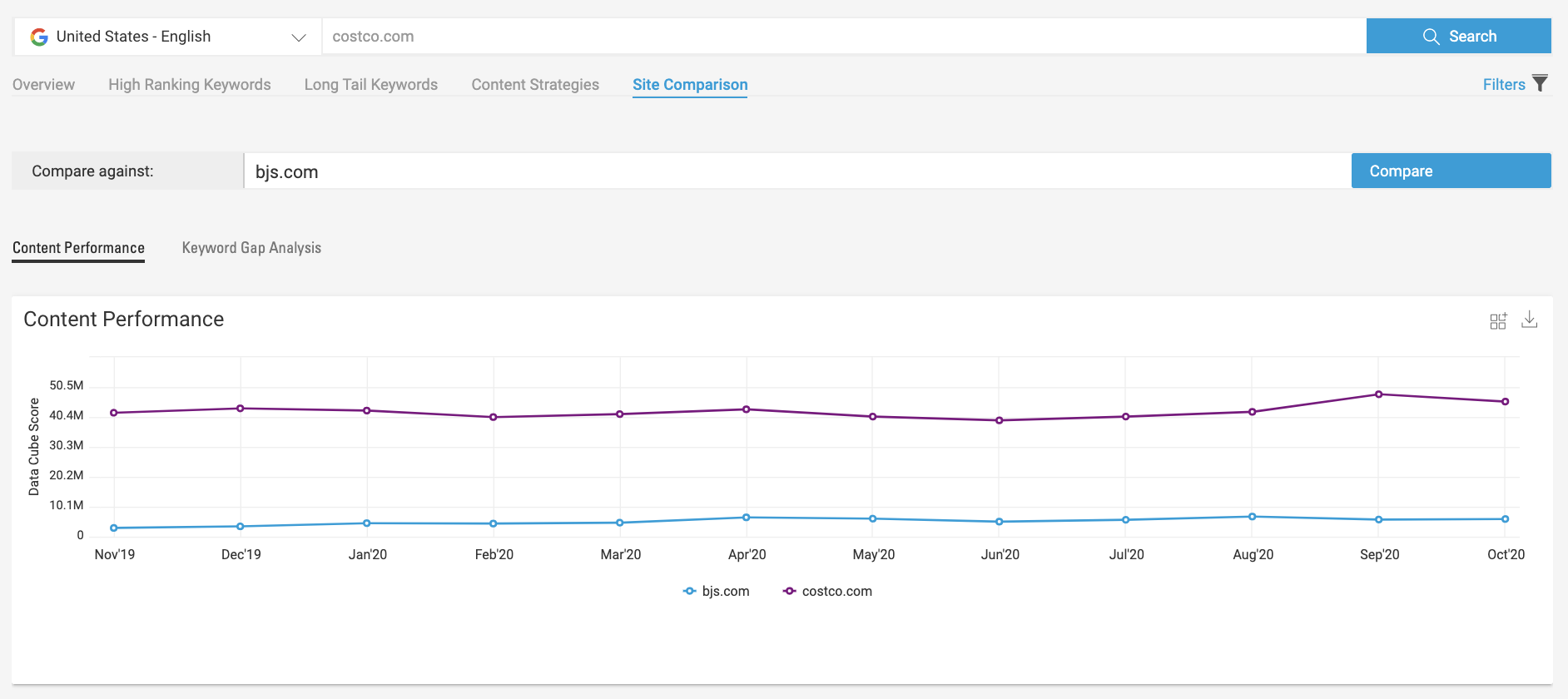
Perform large-scale competitive analysis against some of your known competitors. Look at their overall success online. Through the BrightEdge platform, you can obtain this information in the Data Cube score. 
Do keyword gap analysis with BrightEdge Data Cube

You can then perform keyword gap analysis to see if there are keywords for which they rank well that you do not. Use this information to enhance your tracked keyword groups and get new ideas for your content teams. Take baseline metrics to see how well you rank compared to others on your main keyword groups. Perform high-level analysis to see how well you rank on the keywords that matter the most to your organization. 

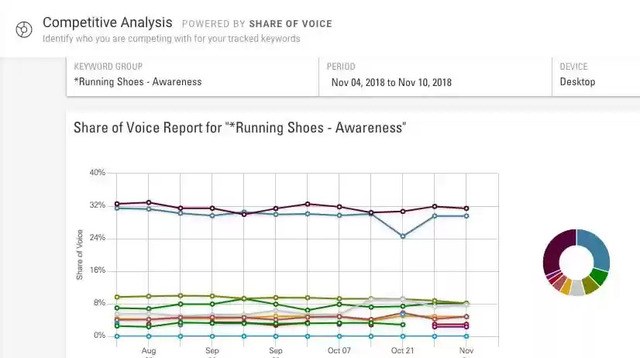
On the BrightEdge platform, you can easily use the Share of Voice feature, which allows you to see how much of the digital space you occupy for groups of keywords, as well as how well other websites perform. Look at individual keyword rankings and the securing of rich snippet space, such as Quick Answers. The clearer the picture you can obtain, the better your understanding of your progress will be. Look at the overall strategies of your biggest competitors. 

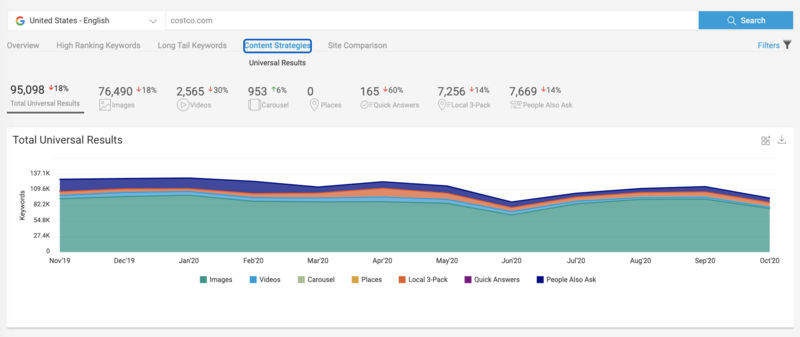
You want to focus on your online competitors, which means that if you found any new ones while looking at the Share of Voice metrics, make sure they also have a place in your analysis. Look at their content strategies, such as their Quick Answer placements, local 3-pack rankings, and image search placement. This will help you gain a firmer understanding of the strengths and weaknesses in their digital efforts, so you can find your own areas to improve. On BrightEdge, this can all be done through the Data Cube

Competitive analysis using Data Cube - brightedge 

Look at the top ten pages ranking for your targeted keywords. Once you have outlined your competitive analysis and you understand the keywords you will target, begin by looking at the top ten pages that rank for these keywords. Look at information such as the backlinks pointing at the pages, where and when the keyword appears, and the quality of the content. Look for gaps that you can use to advance the ranking of your own material. 

Put Competitive Intelligence to Work 

Start by building off the competitive gap analysis. Create high-quality content that fills in the gaps left by competitors. Target your content towards your audience. Remember that competitive intelligence can help you create a superior strategy, but the basic principles of SEO still hold true: your content must be created primarily for those who will consume it. Engagement and traffic will impact how well your content brings in customers, and therefore revenue. 

When you are creating content, your primary goal should be to create interesting and useful content that aligns with the consumer’s search intent. Incorporate essential keywords in a natural and relevant way and be sure on-page SEO – the structural elements of the page are up to snuff. Here is an on-page optimization checklist for additional guidance. Finally, before you publish content it’s important to audit those pages to ensure that they are properly optimized and provide the best performance for the end user. With Google now ranking against technical measures such as page speed and core web vitals, the right content can still perform poorly in the SERP if the page’s technical performance is poor.  

From a competitive standpoint, you will want to ensure that the content and landing pages that you are publishing load faster and provide a better user experience than your competitors. Focusing on technical elements and UX elements of your landing pages, and how they compare to competition, will help your website get a leg up in organic SERPs.  

Use a hybrid approach with your paid search team to boost your visibility in challenging keyword groups. If your keyword gap analysis uncovered keywords that have a high level of importance for your competitors, but the top ten ranking sites have high levels of optimization and you struggle to gain SERP placement against them, incorporate your PPC strategy to maximize your presence. 

Using your PPC and organic channels together in a complementary way will help you get tangible results on a larger, more competitive list of keywords. Like any SEO effort, track your results as you progress with your competitive efforts. Look for improvements in your rankings and traffic, increase your Share of Voice for important keywords and see how this correlates with site revenue. Track spaces where you have overtaken your competitors outside of just rankings as well, such as rich snippets. 

As you create a lasting digital marketing strategy, you must remember that there is more to succeeding in the SERPs than following only standard SEO best practices. You must also consider what your competitors are doing and how you can out-maneuver them. In the competitive space of digital marketing, your success will be limited if you don't incorporate competitive analysis. 



Aligning Content with Intent Webinar Q&A

dmcanally
dmcanally
M Posted 4 years 11 months ago
t 9 min read

We had a great time hosting our webinar around SERP analysis last week. For those of you who weren’t able to attend, myself, Monique Johnson and Doug Antkowiak discussed how search engine results for a keyword reveal what Google understands about the intent behind the keyword.

Micro-Moments provide an easy framework to quantify what these intents are, and if you organize your keywords in this fashion, it provides you with powerful insights into the type of content audiences are looking for in a given moment. We provided some findings from research on these micro-moments across different industries and demonstrated a simple workflow you can use to create a dashboard for micro-moments in your own industry.
 
There were some great questions that we felt deserved some attention, so I’m going to address those here. 

1. Is there a way of doing this type of research without Data Cube? 

It is certainly possible, but it will require significantly more work and manual effort to filter through results. First, you’ll need a tool to do a mass pull of keywords and variations. This tool will need to show you search volumes as well as the presence of universal results appearing for the keywords.   There are point solutions that can do this, and depending on which one you use, you may need to do multiple pulls and compile keyword lists to get a comprehensive view of the market.

Data Cube understands semantic relationships and how keywords are related, so it eliminates a lot of that manual process. Data Cube also lets you combine filtering to create groups of keywords based on the characteristics appearing in the search result. If you are doing this manually, be sure that as you are pulling keywords, you’re filtering out those that could skew your results. For example, in the webinar, we were looking at school supplies. If you’re looking at keywords manually, you’ll need to scrub out irrelevant terms in your analysis (i.e., “Office supplies”). Once you have this research, you’ll need a place to track against the keywords over time. In the BrightEdge environment, you can create keyword groups and the platform will track the keywords, produce a share of voice analysis on them, and derive traffic and optimization insights automatically. Manually, or using a point solution, you would either need to write a script to repull the data or do it yourself.   

2. Where can I see micro-moments in the BrightEdge platform? 

There are a few ways you can dissect the moments. In the workflow we described, you would create keyword groups based on the universal results for each keyword. For example:

  • I want to go moments – Keywords with a local 3 pack 
  • I want to know Moments – Keywords with Quick Answers, People Also Ask, Knowledge Graph 
  • I want to do Moments – Keywords with videos or images
  • I want to buy – Keywords with shopping or carousel results

Once you filter and create a group for these (be sure to name and describe them accordingly), they are available in a number of places in the platform. You can look at share of voice across each moment in Competitive Analysis, individual keyword rankings and performance in Keyword Report, and forecast visibility lifts against each moment in Forecasting. The keyword groups designated to the micro-moments will also be available to you as dashboards via Story Builder. So, depending on how you need to view the data, once the groups are created, you’re able to configure however you need!

3. How could we understand the different moments across different industries?

If you are a BrightEdge customer, the good news is you may very well already have the data to help you do this! You could start with the keywords you’re already tracking and simply create new groups for them arranged by the universal results appearing for each (keywords can live in multiple groups). If you’re starting from scratch, you can begin your research by starting with head terms related to your business. For example, if you are an additive manufacturer, start with a broad term like ‘additive manufacturing’ or even ‘manufacturing’ and begin filtering by universal results to understand the moments that customers in that space are in. Your BrightEdge Customer Success Manager is standing by to help you discover more about the mindsets your customers are in!

4. Is it possible to analyze keywords by “I want to” moments instead of rank?

Absolutely. In fact, you can do this entirely within Data Cube without creating a keyword group. The easiest way to do it is filter by the universal elements that correspond to the moment you are interested in. As we mentioned in the webinar, you can combine filters so you can have multiple universal results represented in your result.

Graphical user interface, applicationDescription automatically generated

Data Cube will break down which keywords by competition and you can differentiate them by long tail and high value. Furthermore, you have the option of creating a dashboard view of these keywords (in my example, if I wanted a laser focus on “I want to go” moments related to school supplies, I could add them to a dashboard and track volumes over time). In this workflow, we’re not even factoring in where your website ranks. This could be particularly useful if you’re analyzing a new market where you have yet to build content and need to see what kinds of mindsets and moments audiences are in to guide what type of content needs to be created.   

5. For share of voice for micro-moments, can I configure different engines?

Yes! When you create a keyword group out of Data Cube, you’ll have the option to select which search engine (by location) you’d like to use. In fact, you can even use Google’s intent algorithm to discern the moments you want and then use another brands’ search engine to track rankings. You’ll be taken to this screen after you click “Track” which gives you a range of engines that can be tracked.

Graphical user interface, tableDescription automatically generated

If your locale and engine you want to track is visible, you’ll be able to see Share of Voice Results for that keyword group.

Micro-moments have been a concept in search for a while, but they are as important as ever when we think about the mindsets behind search. We’re really excited to continue evangelizing them and find new and unique ways to use them to understand customer mindsets. If you’re interested in learning how BrightEdge could help you use search to understand your customers’ mindsets, reach out today to schedule a live demo.

Teradata Achieves High Rank and B2B Lead Generation

Teradata's Global SEO Strategist, Ron Weber, utilizes BrightEdge to optimize all aspects of their Content and SEO strategies

Transcript from Teradata's SEO Story:

The current program at Teradata really was when I took over it was a house on fire. We had a lot of technical issues. We had a lot of content issues. And really it was starting from scratch. It was really analyzing what was happening with the site from all angles and figuring out what to do next.

I am the only person in SEO at our company. I do work with a content team. I have a vast array of resources at my disposal. We have a lot of content-rich assets that are already in place - just a lot of pages that needed to be optimized.

My digital team, which was four people back in March, is now eight. The commitment from management is there. We're pulling resources from all other departments. SEO-led, digital-led; is really what the call to arms is at my company.

The house was on fire when I took it over - a lot of technical SEO work had to be done. Now, we're to the point where we are driving leads. B2B lead gen is the sole focus of our website - that's what SEO is driving towards - that's what everything is driving towards.

As an example, when I first took over SEO I realized that that our cloud section was under-served, under-utilized, under-optimized. I took the section, and I had an SEO led strategy which doubled the number of pages. We went from 14 pages to 28 pages within the span of six weeks put up those pages quickly. They all had SEO journeys in mind. They were all SEO optimized.

The number of keywords in the first position have doubled, the number of keywords in our second position have doubled, and the number of keywords, just across the board, have doubled rankings, all the way from page one to page four to 10. The net impact on the leads that we’re gathering specifically to cloud have been three times what they were back in June.

Our company focuses on megadata customers. I can't quantify what that is, but I do know that the number of leads that are coming from our megadata customers are significant; much more so than prior to doing SEO.

ContentIQ and, as I mentioned, our platform was on fire when I first started in and so being able to see that from BrightEdge perspective was great. And seeing that score tick up, week after week has been really part of my winning strategy.

BrightEdge affects my content strategy in the most impactful way which is looking at competitors. That is something that has served me well for the number of years I've had BrightEdge. And being able to know what my competitors are ranking for that we absolutely should be ranking for is one of those things that I can bring to any content team and bring them the reason to believe why they need to produce content.

Request a demo of the BrightEdge platform and see how you can utilize Recommendations for your company!

Making a Marketing Content Calendar People Will Actually Use

gregalbuto
gregalbuto
M Posted 7 years 6 months ago
t 9 min read

Since the beginning of the digital era, marketers have recognized that content is king. Although the sophistication of the resources and analytics have improved drastically for those in the industry, the importance of creating regular, high-value content for your users has never declined.

It is always a good time to be organized as a marketer, but Q4 is the right time to plan out your marketing content calendar for the first half of 2019.

According to the Content Marketing Institute, content marketing pulls in six times the number of leads of other forms of marketing. Meanwhile, websites who publish regularly with blog posts will have 434 percent more pages indexed than those that do not. Moreover, the organizations that create a marketing content calendar to publish 16 or more posts per month will see 3.5 times the amount of traffic than those who publish 0 to 4 articles on average.

Regularly publishing this content, and doing so with a cohesive strategy that benefits your organization, can be a challenge. The higher cadence requires organization and direction for all the content creators.

Marketing content calendar challenges and opportunities

However, content calendars present a number of challenges: the primary one is getting people to use it, which breaks down into what and how buckets. The what is the software and there are surprisingly few good standalone content calendars. New software itself creates two hurdles, one on the review and purchase side and two on the deployment and getting people to use the marketing content calendar side. People often default to Excel spreadsheets and Google Docs. Local spreadsheets quickly get out of sequence if people edit locally and version control becomes a problem. Google Sheets on the server help with those two problems.

The key things to a good marketing content calendar are: that it aligns to the marketing strategy, accessible, regularly updated, and easy for people to understand so they can find their topics and asset types and produce.

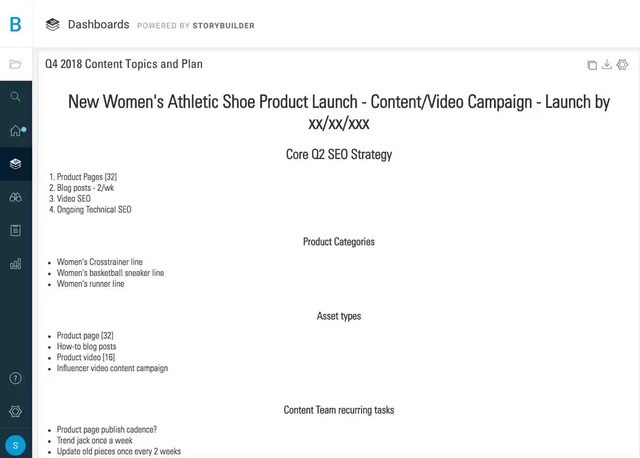
There is a way to build a marketing content calendar in BrightEdge StoryBuilder as a custom report. In addition, to having no additional cost, a marketing content calendar has the added benefit of drawing people onto the platform, which helps expand and elevate SEO in your organization.

Step 1. Know who you want to write for

Creating a marketing content calendar will only effectively drive brand engagement if you understand exactly to who you want to speak and what they will want to read. You want to analyze your target audience and understand their motivations, pain points, and what they will respond to when considering a purchase.

Most businesses will have more than one type of audience. This means that you will need to differentiate between a few different personas and variations of buyer journeys.

Understanding your buyer personas should be done with cooperation from different departments within the organization, such as your sales and customer service teams. These customer-facing parts of the brand will have a good idea of what matters to those who decide to buy from the company and the pain points they face. They can also help fill in information about what makes customers choose this particular company over others in the space.

Finally, to better understand your customers, you can speak to your customers themselves. Surveys can shed light on the common motivators that inspire people to make a purchase. You can learn more about the pain points they want to solve and what brings them to your company.

This information about who your customers are and the journey they take that brings them to conversion points will help you create effective content.

Step 2. Do a content audit to know precisely what material you already have

Once you know the audience your content will target and the journey they take, you want to audit what content already lives on your site. The content you already have can be refreshed or tied directly into new campaigns in your marketing content calendar to improve its ability to bring in traffic.

While running through a content audit, you can also look to see which content has been the most successful in terms of consumption and engagement. You can gauge the ability of your existing content to drive traffic and conversions, looking at the different elements and topics these pieces cover, which can help you start to plan marketing content calendar campaigns.

To audit your current marketing content calendar:

  1. List your current material
  2. Look up the traffic and engagement rates for your content in your analytics or site report
  3. Determine the keywords the content serves
  4. See where they fit regarding your buyer persona’s and their place on the buyer’s journey

This will help you find important gaps, uncover your best-performing pieces of content, and give you a better idea of what your customers want to read.

Step 3. Determine key periods for your brand that will influence content

Take a look at the yearly calendar for your organization. Highlight any key periods that will correlate with important marketing and marketing content calendar campaigns. For example, many businesses will want to create marketing promotions that align with the holidays and sale season of Q4. Your organization might also host or sponsor industry events. If you run a local business that gets involved in community events, you might want to check local calendars to mark when these events will arise.

Any of these occurrences might influence the type of content you create and the campaigns you run, and should therefore be included on your marketing content calendar.

Step 4. Map out overarching marketing content calendar campaigns and strategies

You have now likely mapped out a few campaigns related to events and seasons that impact your brand. Now, the time has come to determine the marketing content calendar campaigns that will fill the time in between. Keyword research, studying the trends impacting your industry, and doing competitive research can all provide you with ideas to inspire campaigns throughout the year.

Learn how to create a marketing content calendar with brightedge

On your marketing content calendar, map out when your campaigns will occur, detailing also your goals and ideal outcomes. Remember the value of creating multi-channel campaigns, so your marketing content calendar campaign ideas should stretch beyond only the written content you create. These campaigns should be determined with the cooperation of those in paid advertising, social media, and even traditional forms of advertising.

Step 5. Determine the content types you will need and create a marketing content calendar

Now that you know what your overarching campaigns will be, the time has arrived to plot out your exact forms of content. Each campaign should take into account your predetermined buyer personas and their individual buyer’s journeys.

Consider the different types of content that will likely be involved in the marketing content calendar campaigns. You will likely want to use combinations of content such as:

  • White papers
  • Blog posts
  • Webinars
  • Social posts
  • Infographics
  • Videos
  • Articles
  • Case studies

Consider how you want to talk to people at different phases of the buyer's journey. Different types of content tend to align better with people at different phases. Generally speaking:

  • For those in the early stages of the buyer’s journey, strategize your marketing content calendar around blog posts and infographics
  • For those in the middle stages of the buyer’s journey, use content such as webinars and ebooks
  • For those at the end of the buyer’s journey, use content such as tutorials and case studies

Look at your campaign themes and see how you can start to develop the different types of content within that theme. Consider also the type of people needed to create the different types of content. Knowing who you will need to collaborate with on the project will allow you to give people plenty of warning and assemble your team and resources.

Step 6. Assign a marketing content calendar owner

An important part of making a marketing content calendar successful is follow through. The best way to ensure this is to assign a designated owner for the calendar who will ensure that things are moving forward. This marketing content calendar owner can be a senior person on your team or a project manager type specialist.

Step 7. Set up recurring content meetings

A weekly recurring meeting keeps content development top of mind and allows team members to share any potential roadblocks, status updates on their project, and new ideas.

If there isn't time available to schedule a new meeting, you can also attach the content session to an existing staff meeting or SEO team meeting.

Step 8. Define a style guide

Your style guide and grammar guide should be defined, distributed, and posted near your marketing content calendar.

Step 9. Establish a cadence for marketing content calendar publishing

At BrightEdge we plan 3-4 integrated marketing campaigns per year. Additionally, our blog publishing cadence is 2-3 times per week. That cadence means that we need to have a running list of the next 12 topics in the marketing content calendar at all times.

Step 10. Have a review process with built-in time

The process for content review needs to be clear for everyone, and all participants need to allocate review time to keep the process moving briskly. At BrightEdge we publish the content calendar in the platform, review at least weekly, have a writer, an editor, a corporate communications or executive review, final grammar sweep, and final SEO tuning for on-page links. We usually finish the steps after the first draft in 48 hours.

Step 11. Use BrightEdge to assign topics and content to different members of the team

Particularly when you work to create content through collaboration with different teams, assigning tasks to people with ample headway can make a big difference in how effectively your group works together. BrightEdge makes it easy to assign tasks to the different members of your team. You can identify topics for your marketing content calendar through BrightEdge and then assign them to the subject-matter experts who would be able to create the most effective content.

Marketing content calendar best practices - brightedge

Through the Recommendation feature, you can also assign specific tasks to members of the teams.

Using these features allows you to designate the owners of particular tasks, keeping track of who is responsible for each stage of content development. This will improve your efficiency and effectiveness.

Creating a marketing content calendar can be an effective way to boost your content production and content strategy. Your content will be tightly aligned with a marketing content calendar strategy and it will be pre-planned, allowing you to capitalize on opportunities that arise throughout the year. Consider these steps and prepare your marketing content calendar today.

brightedge request a demo

S107 - Competitive Benchmarking and Building Your Ultimate CMO Dashboard - Brian Moore

Competitive Benchmarking

brian moore director brightedgebrightedge logo  

  Brian Moore
  Client Services Director
  BrightEdge


During this session we heard from Harry Gold, the CEO of Overdrive, and Brian Moore, the Director for Client Services at BrightEdge. They spoke about some of the metrics that executives want to see and how to make the value of SEO clear to those on the board or in the C-suite.

share17 registration banner

S107 - Competitive Benchmarking and Building Your Ultimate CMO Dashboard - Jeff Selig

Ultimate SEO Dashboard for CMOs

jeff selig vp overdriveoverdrive interactive brightedge

  Jeff Selig
  VP Earned Media & Analytics
  Overdrive Interactive


During this session we heard from Jeff Selig, the VP Earned Media & Analytics of Overdrive, and Brian Moore, the Director for Client Services at BrightEdge. They spoke about some of the metrics that executives want to see and how to make the value of SEO clear to those on the board or in the C-suite.

share17 registration banner

eBook: 4 Proven Steps to Competitive Analysis

Learn How to Outsmart Your Competition Online

eBook: Competitive Analysis

On today’s online battleground, brands compete aggressively for consumer attention. Businesses with a blind spot as to how their digital campaigns stack up versus those of their competitors are losing millions of dollars in terms of traffic, conversions, and revenue.

Understanding the competitive landscape and your rivals’ positioning and strategy has become a prerequisite to digital marketing success.

Download the full ebook to learn four proven steps to effective competitive analysis that will help you beat the competition online.


CAPTCHA
Solve this simple math problem and enter the result. E.g. for 1+3, enter 4.
This question is for testing whether or not you are a human visitor and to prevent automated spam submissions.

6 Ways to Do Competitive Benchmarking

Importance of competitive benchmarking, the process, and product-level how-to

6 Ways to do Competitive Benchmarking Assets

Importance of competitive benchmarking, the process, and product-level how-to

Competitive benchmarking is a best practice that is often discussed but less frequently used; BrightEdge research shows that 40% of marketers deliver their content and campaigns and never benchmark their competitors. In this 45-minute webinar Client Services Director Brian Moore will walk attendees through the importance of competitive benchmarking, the process, and product-level how-to.

Main aspects covered in the webinar:

  • Competitive Dashboards
  • Competitive Comparison
  • Competitive Anomaly Detection
  • Market Landscape Analysis – Share of Voice
  • Content and Keyword Gap Analysis
  • Link Building Assessment and Link Expansion

These techniques will help you get the jump on your competition in 2016.

Download webinar assets now.


CAPTCHA
Solve this simple math problem and enter the result. E.g. for 1+3, enter 4.
This question is for testing whether or not you are a human visitor and to prevent automated spam submissions.

Noble Studios Drives YoY Gains in Organic Across Client Base

The company uses the Data Cube 1000 times per day on behalf of its clients

40%
increase in organic traffic

THE PROBLEM

Noble Studios needed a consistent and efficient means to drive organic search results across its agency client base. They started using BrightEdge approximately three years ago as they started growing their search and specifically their SEO practice. They have found BrightEdge indispensable in centralizing that effort and standardizing the process and see results across the client base consistently improving. “We attribute that success a great deal to the partnership with have with BrightEdge,” said Noble Studios’ CMO Michael Thomas.

THE SOLUTION

“We follow a methodology that has included BrightEdge across every step of the process from competitive research to establishing goals. And I think what BrightEdge does better than any platform that we’ve used to date is the ability to customize reporting and customize results. BrightEdge ran some results for us and indicated that our company uses the Data Cube about 1,000 times per day on behalf of the clients that we represent. It’s a great stat. It shows that it’s become engrained in our culture.” “The BrightEdge platform is constantly innovating. I think listening to customers about what tools they need allows you to do that. And it’s very clear that BrightEdge listens to their customers and anticipates where they’re going, not just providing what they’re asking for.” See Michael's video.

michael thomas noble studiosTHE RESULTS

“BrightEdge is the reason that Noble Studios is having a great success for our clients in organic search. We saw that across the board our clients had a 40% year-over-year increase in organic traffic on the BrightEdge platform. They love those results."

And ultimately it is about performance. The C-suite is incredibly busy and so if you can’t succinctly tell your story it’s probably not going to be heard.

Request a demo of the BrightEdge platform today!

The Network Increases Organic Traffic by 226%

Pia Adolphsen saw a 41,600-visitor increase to the site and a 50,500-visitor increase to the expanded blog

90%
increase in blog traffic
100%
increase on top position keywords

The Network Case Study

The Network Increases Organic Traffic by 226%. 41,600 visitor increase to the site and 50,500 visitor increase to the expanded blog

THE PROBLEM

The Network Inc., now a Navex Global Company, is the leader in providing integrated governance, risk, and compliance (GRC) solutions that help organizations mitigate risk, achieve compliance, and, ultimately, create better, more ethical workplaces. The Network was competing with larger, better-funded providers and needed to be smart and efficient with their content to generate organic search results.

THE SOLUTION

Adolphsen approached the problem with a competitive content assessment to identify new content ideas, content gaps, the best content types, content mix, and what was working best for competitors. She did the content assessment by running a competitor content audit, creating a competitor dashboard in BrightEdge, and, most importantly, performing a keyword audit of competitors. “This is something our fantastic customer success reps at BrightEdge did for us.” Adolphsen said. She recommends selecting 3 content ideas you could add to your content calendar for the coming quarter to get started.

THE RESULTS

The thorough competitor content analysis paid off as Adolphsen, despite her smaller team and more-limited resources, produced a range of high-performing content that achieved higher rank, more than doubling words in positions 1-3 on major search engines. This led to a 41,600-visitor increase to the site and a stunning 50,500-visitor increase to the expanded blog, which contributed substantially to the revenue objectives and business growth. See Pia's Share video.

Are there topics or audiences out there that we are not addressing? Should we be providing more ungated or branded content? We used BrightEdge to answer these questions and we saw a 226% increase in traffic. Our blog had a 90% increase in traffic. Great news all around.

Request a demo of the BrightEdge platform today!

,