Beauty Retailer Triples Traffic and Revenue for Key Ecommerce Pages with BrightEdge Autopilot

See how this BrightEdge client saw rapid SEO results

2,043
highly competitive, non-brand keywords moved to Page 1
308%
increase in traffic from non-brand KWs

Beauty Retailer Triples Traffic and Revenue for Key Ecommerce Pages with BrightEdge Autopilot

See how BrightEdge client saw rapid SEO results

The Business Challenge

With hundreds of stores across North America, the beauty retailer's website is its largest store and the foremost prestige beauty destination on the Internet. Despite its online success, the company found its growth potential limited by legacy aspects of the site's design.

The site's structure made it difficult for Google to find and index valuable content beyond the top pages. They needed a way to scalably grow their share of organic search traffic despite the limitations of the site design.

The BrightEdge Solution

The company's marketing team knew it could help Google better find its content by building out internal links. However, doing so in a scalable, sustainable way remained a challenge.

The retailer's senior manager of SEO noted another challenge to internal linking. "We're limited in the real estate we have on the page where we can place links. We needed a way to scale internal linking in an intelligent way across the site."

BrightEdge approached the challenge with Autopilot, a new marketing automation technology that leverages internal links to move more high-value, non-brand keywords to page 1 of search where 75% of search clicks originate.

Intitially, the company's marketing leader voice some doubts about automating internal linking. Would it impact site performance? Would the links be high enough quality? Would it be able to support different markets and different languages?

The team decided to test Autopilot on its shop pages, saying of the implementation, "We had good communication with the BrightEdge technical team throughout the integration process. BrightEdge provided us with testing URLs, profiles and use cases, so that when it came time to release Autopilot, there were no issues."

The Results

Most importantly, the BrightEdge client saw rapid and significant results.

"We saw an increase in keyword visibility immediately. More significantly, we have seen a better conversion rate on pages that include the Autopilot link block and we've measured an increase in average order value on visits that engaged Autopilot."

Despite robust in-house SEO and technology operations, the company notes that Autopilot offered speed, scale and a "secret sauce" that further benefitted them.

"From just a cross-linking point-of-view, we could have built some sort of service back-end feature, but that doesn't get to the secret sauce, which is BrightEdge's Data Cube. That intelligence is where a lot of the value comes from, and it's not something we would have been able to develop. We couldn't put a price on that."

Following its initial success with Autopilot, the company has begun to expand its use of the technology. "We are expanding Autopilot into other product categories and other pages types. There is additional untapped value that we're really excited about."

That untapped value, according to the marketing team, goes beyond linking purely for SEO. "It is something we can enable on different areas of our site for different use cases. For example, I could use Autopilot to cross-link my support pages. There would be SEO value in doing that, but it would also improve my customer experience."

"In addition to measurable SEO value, we have also seen an increase in average order value on visits that engaged Autopilot. I would absolutely recommend Autopilot." - Senior Manager of SEO, Beauty Retailer

If you're interested in learning more about Autopilot, contact your BrightEdge CSM or request a demo of the SEO platform.

eCommerce SEO: What to Do When Items Go Out of Stock

maspillera
maspillera
M Posted 7 years 2 months ago
t 9 min read

For eCommerce clients, managing product listings can be a challenge from an eCommerce SEO standpoint. Products often move in and out of stock, and no company wants to regularly delete pages. Not only does that create a terrible user experience, but it would be detrimental to eCommerce SEO.

When products go out of stock, eCommerce vendors have a few goals they need to consider. One, they want to preserve the customer experience. Secondly, they want to make sure their site maintains all SEO rankings they may have earned from this particular page. Finally, they also want to keep their prospective customers engaged, even if the site didn't have the product needed at a particular point in time.learn about ecommerce seo - brightedge

These goals can be largely accomplished when eCommerce brands and retail brands with eCommerce presence pay attention to to the page setup and optimize it to take advantage of opportunities to build relationships with clients.

Frustrations customers encounter on eCommerce sites

Imagine you are shopping for a pair of rain boots. You find the pair you like in terms of color and style. You click on the product page and go to select your size, only to discover that this item is out of stock. For consumers, this situation can be very frustrating. They go through the trouble of finding the product, style, and color they want, but when they get to the final step, they find that they cannot actually purchase the desired item.

Imagine another day and you want to buy a new sweater. You search through Google and find a few results that you like. You click, therefore, directly to the product page. However, when you click on the item you want, you find yourself automatically redirected to similar products, but not the one you had selected. You do not receive any explanation for this redirection. Chances are, you now feel similarly frustrated with the brand and their website.

Brands must carefully balance avoiding disruption for their visitors, maintaining their eCommerce SEO, and encouraging people to continue to engage with the brand even though this particular product has been sold out.

Watch our Industry Focus - eCommerce webinar

Consider what the product line will look like in the future

To determine the best course of action for your page, you will need to first define the future of this particular product. Will this item definitely return? Your strategy will differ depending upon whether or not your product will be restocked.

If your product will not return, think about other products your brand offers. Do you have related products that would fit the needs of many prospective customers?

Once you know how your brand will handle this particular product moving forward, you will find it easier to plan the appropriate strategy.

Optimize product pages for items that will be returning for eCommerce SEO

When you know your product will return, you want to do everything possible to maintain your relationship with your customer. You can do that through clear communication that lets customers know exactly what is going on. Letting people move forward in their product search and only letting them know at the last minute that a product is out-of-stock does nothing to help the brand-client relationship, and it could hurt their user experience. Instead, you should let people know about the item's status as early as possible.

why ecommerce seo? - brightedgeTo efficiently communicate with customers, some brands will find it helpful to keep customers notified as products start to get low. For example, a notice that there are less than 10 of a particular item left not only provides a sense of urgency for people considering a purchase, but it also helps to prevent customers from being caught off-guard when the item is sold out a little while later.

Within your site, on product search pages, make sure you clearly label any products that have gone out of stock. You also want to be as clear as possible regarding why this product is unavailable. This will give customers a better idea regarding what will happen in the future.

For example, if a product is out of stock because of high demand, let people know that it has gone out of stock because of many people interested and that you anticipate having new products as soon as possible. If a particular product is seasonal, letting customers know that it will return the following summer, for example, will also help manage their expectations.

If you can, you should also let customers know your estimated time for when the product will return. This will help them plan ahead to see if they really want this product from your particular brand, or if they will want to look elsewhere.

Watch our Industry Focus - Retail webinar

Note on sizes and out-of-stock SEO

Sometimes, brands have trouble because they run out of stock on a certain size of a product, but they might still have other sizes. In this situation it can be a struggle to let customers know early on in the process that certain sizes are sold out without accidentally discouraging people who might be happy to buy the in-stock sizes.

You may have to experiment with a few different strategies to determine the best course of action in this situation. Some brands may have success letting people know on the product page that some sizes are sold out. Others may choose to simply make the sold out sizes impossible to click with a clear notification.

If clients can filter your products by size, you want to make sure that products with out-of-stock sizes don't show up in the results for searches performed for those sizes.

If your online store ties closely with a brick-and-mortar store, you can also help point customers to potential inventory that might be available in stores.

Maintaining communication with customers

You can also use this opportunity to capture information from these customers. A simple "keep me updated" clickable option lets you capture the interested user's email address so that you can let them know when the product comes back in stock. Generally, this will provide you with the best opportunity to avoid losing a sale on this particular product.

This information, however, will also provide you with highly specific information about this particular prospect and what they want to buy. Therefore, you can target them appropriately in marketing campaigns moving forward.

Once you let customers know that this product is out-of-stock, many brands will also find it helpful to let customers know about related products that may be helpful to them. For example, if you carry the same product in other colors or slightly different styles, many customers may elect to purchase these rather than wait for this particular product to be restocked. Make sure that your recommendations are highly related to the missing product and have a reasonable chance of answering the customer’s needs.

Optimizing for a product that won't be restocked

Sometimes brands determine that certain products, for a variety of reasons, simply do not serve their company well. In these situations, organizations need to let customers know that certain products will not be available without hurting their eCommerce SEO or user experience.

You have two main choices in this situation. One, you can create a custom 404 page and let customers know explicitly that this product is no longer carried by your brand. With a custom page, you can individualize it to the user’s experience, stating the product is no longer available and then offering them alternatives that might fulfill their needs. If you end up removing  a number of products, however, this may not be the best solution as having numerous deleted pages does not work well for eCommerce SEO.

If your product page does not receive a lot of traffic, or if you will continue to stock very similar products, you might also consider redirecting customers to related products. The key to success here, however, continues to be communication. Customers do not want to be automatically redirected to something they did not select without receiving a reason why. Let them know that you no longer carry the product they initially wanted, but that you think these products may help them.

Product page redirect best practices

Before setting up redirects for out-of-stock items you should confirm the final status of the product(s) being redirected. Remember the basics of 301 redirects vs. 302 redirects, if the product is going to be restocked in the near to mid-term future then use a 302 temporary redirect and deactivate it once your inventory is restored.

If the product's being cancelled, will remain out of stock indefinitely, or is being merged into a different product line (the one whose product page you're redirecting users to) then you should use a 301 permanent redirect. Depending on how your CMS handles sitemaps, you may also want to manually update your sitemap.xml to remove the URL of the product that no longer exists.

When you no longer carry a product, make sure you let Google know as well. Often, handling internal traffic will be easy - the deleted product will no longer appear in your searches within your website. You need to make sure the product does not continue to appear on Google Shopping pages either.

To protect your user experience and ensure that you keep people engaged with your site, consider the optimization strategies above.

 

8 New Vertical SEO Research Reports

enewton@brightedge.com
M Posted 7 years 5 months ago
t 9 min read

BrightEdge has released 8 new industry vertical SEO research reports, which you can download free now. The first 8 industries covered are:

Each of the SEO research reports covers: industry-specific data, top industry trends, primary marketing channels and tactics, content comparison benchmark, industry SEO click curves, and primary SEO use cases and BrightEdge solutions for the industry. They are useful for enterprise SEOs to understand context and plan for SEO success. Here is a quick preview from each of the reports:

Ecommerce

2018 worldwide ecommerce sales are expected to top $2.8 trillion in 2018 with $653 billion expected in the US, according to Statista.

Ecommerce providers need to manage the buyer’s journey and the full customer experience to be successful to develop good bounce rates.  For commerce providers that also have retail presence, customer journey requires both physical and digital elements to maximize potential.

There is a new acronym for something many have been doing before they shop offline, and that is research online. ROPO – Research Online, Purchase Offline – where people are looking for reviews and making sure they are getting a good price.

Download Ecommerce SEO Research Report 

Retail

According to a recent Gartner Digital Business Survey, as few as 3% of retailers are delivering clear results from their digital marketing initiatives.  The survey further finds that there is a lack of clarity by retail marketers concerning their objectives.

We now live in a new world of "omnishoppers" where 81% of shoppers first learn about a product online before they buy in-store.  It is vital to support this new hybrid (online and in-store) shopper with easy access to all the information they need at the moment they need it.  

While the customer journey clearly begins online it has been reported that up to 88% of online shoppers will continue to make the purchase in-store after making the buying decision online.  In order to drive results, marketers in the retail industry should focus on omnichannel marketing strategies.

Download Retail SEO Research Report

Financial Services

71% of financial services brands said they plan to increase digital marketing spend in 2019 according to a study by Econsultancy. In contrast to that large majority, however, the same study found that only 7% of financial services brands place creation of high-quality content as a top marketing priority, compared to 15% in other industries.

The digital channel, and SEO with it, is rapidly becoming a centerpiece of marketing efforts in an industry that has traditionally been seen as a conservative one. The low numbers around prioritization of quality content and SEO research might be discouraging at first glance, but they speak to the pronounced SEO opportunity for financial services brands that exist right now.

Ninety percent of U.S. consumers want personal finance courses to be part of high school education according to a survey from Equifax, suggesting older generations feel unprepared to equip younger people with the financial skills they need. As a result, the potential demand for informational content about financial literacy to fill the gap is great.

Download Financial Services SEO Research Report 

Travel

Like many other service-based industries, travel and hospitality is in the midst of a fundamental shift towards digital transformation. As consumers trend away from absolute brand loyalty and towards a longer conversion funnel, opportunities arise for SEOs and digital marketers in this space to get search visibility with prospective customers.

A full 72% of businesses say improving customer experience is their top priority, according to a Forrester survey. As websites, mobile applications, and progressive web applications (PWA) increasingly become the main place where customers and prospective customers receive the brand experience, this has obvious implications for web owners in the travel and hospitality space. Ever-increasing digital market: The market for online travel sales has grown consistently since 2014. Total digital travel sales worldwide are forecast to reach $817.54 billion by 2020 according to Statista.

Growing budgets for digital marketing: Travel and hospitality brands are responding to the outsized growth of opportunity in the digital space. A 2017 survey of hotel professionals by SiteMinder found that 48% planned to allocate “high spend” towards digital marketing, including website and SEO research.

Download Travel SEO Research Report

Media and Publishing

The birth and growth of the digital ecosystem has had a tremendous impact on the media and publishing industry. Advertisers must counter falling print circulation, which in turn has impacted how they approach the market and invest their budget. Advertisers spent 6.8 percent less in 2016 than they did in the previous year, and it is expected to drop another 6.8 percent in 2018.

As distribution and storage became ubiquitous, instant, and virtually free the pendulum has swung back to “content as king” as can be seen with massive sift to original content creation and licensing. Creating and controlling exclusive content has become a hallmark of successful digital publishers of all types.

The encouraging news is that in the digital era total, ad spend has doubled and new media companies were born and thrived: Google, Facebook, Twitter, Pinterest, Amazon, Netflix, YouTube, Craigslist, and Spotify. Traditional media companies that evolved with the industry include: Time.com, Forbes.com, WallStreetJournal.com, CNN.com, NewsCorp/Fox.com, IAC/HSN, ConsumerReports.com, Latimes.com, WashingtonPost.com, and TheGuardian.com to name a few.

Download Media and Publishing SEO Research Report

Higher Education

In 2015, a survey of college-bound high school juniors and seniors found that over three-quarters of them reported college websites making a difference in their ideas about the institution.

As schools become more focused on becoming successful digital enterprises, they demonstrate a greater understanding of user intent and an ability to enhance the student experience throughout their educational journey. This begins from the moment when the student first begins to explore educational options through their graduation day and beyond as an alumni and potential donor, building loyalty and appreciation for the school.

Download the Higher Education SEO Research Report

Real Estate

2018 is expected to see 6,270,000 homes sold in the US with a total value of $1.73 trillion or 9% of the US gross domestic product. Though the market has slowed some in mid-2018, housing prices are up 6% and volume is expected to be flat to last year.  Commercial real estate sales have declined modestly from their peak in Q4 2015.

With US unemployment dipping below 4%, the demand for commercial real estate is on the upswing in 2018 and expected to remain steady. Job growth bodes well for housing market, but that is also being tempered by rising interest rates. As the market slows, marketing for customers and transactions becomes more important for agents and brokers in both commercial and residential housing.

BrightEdge Research shows that on average 62% of site traffic is now mobile and that 70% of commerce journeys start in the SERPs. Real Estate has very strong mobile use cases because people will be out on the move in the neighborhoods looking around for units.

Download the Real Estate SEO Research Report

Healthcare

The total U.S. healthcare expenditure was more than $3.5 trillion, per the Centers for Medicare and Medicaid Services. At that level, it accounted for 17.9% of gross domestic product (GDP). 85 publicly-traded healthcare companies made $47 billion in profit on $545 billion in global sales. Pharmaceutical companies generated 22% of the revenue and 60% of the profit.

In this industry SEO research report on healthcare marketing, BrightEdge discovers how the healthcare industry can deliver higher degrees of personalization, consistency in care, overall capacity utilization, patient satisfaction, and outcomes.

Key trends

  • Patient-Centered Care- Improving the patient experience throughout the patients’ journey
  • Digitization- Connected devices, sensors, micro-services, and rich applications offer highly efficient options
  • Regulation, Compliance, and Marketing- Public exchanges provide more access to insurance as laws impact services and fees
  • Reputation Management- Encouraging positive reviews as reputation is the #1 criteria for hospital selection

Download the Healthcare SEO Research Report.

These are just some previews of the wealth and depth of information available in these new SEO research reports.

6 Steps to Power Your Ecommerce Holiday Marketing Strategy

gregalbuto
gregalbuto
M Posted 7 years 5 months ago
t 9 min read

The end of the year is almost here, which means the scramble to prepare for Black Friday and holiday shopping has already begun. Holiday ecommerce sales are expected to exceed $123 billion this year, which means that brands who take the time to optimize their ecommerce marketing strategy and SEO ahead of time can set themselves up for a strong run of digital sales and growth to close out Q4.

Look at ecommerce and mobile trends over the course of the year and you'll notice some important insights. Chief among these is tremendous growth in mobile shopping with ecommerce sales from mobile exceeding $30 billion in 2017, a dramatic growth from the $8 billion that was seen in 2012.

To you help you capitalize on that growth pattern, here are 6 strategies for making sure that you maximize your holiday ecommerce marketing strategy potential.

Last year’s ecommerce marketing strategy successes

Start by examining the performance of your ecommerce marketing strategy from last year. Pinpoint the strongest-performing keywords and pages for your brands. You want to look at both your traffic and conversion rates. The keywords that attracted the highest amounts of traffic and conversion will provide insight regarding what people want to read about during this particular time of year. Similarly, the pages with the best performance will let you see how well your page meets the needs of your target audience.

This data will provide you with insight regarding what people liked best. You can see the types of content and keywords that that encouraged them to convert. This information can help brands maximize the potential of the content they produce. It will guide your ecommerce marketing strategy and content creation throughout the holidays.

Look at patterns in your industry

In addition to looking at the best-performing pages and keywords from the last year, you also want to look at the current trends and patterns in your industry. This will provide you with renewed insight into what your prospective customers want to see the most. You will be able to capitalize on these interests to produce highly engaging content and shape your ecommerce marketing strategy that will serve your prospects well.

Using BrightEdge will allow you to see these trends as they emerge. Creating content immediately positions you well within your sector. You will jump out in front of the others in your industry. Not only will this help improve your ability to serve your clients, but your content will also more easily earn high-ranking positions on the SERP. As the field for a particular term and trend becomes more competitive, your content will already have the backlinks, traffic, and engagement as well as the established value that will help it rank well.

Research potential holiday-oriented keywords

In addition to emerging trends for the end of the year, you also want to look for potential holiday-oriented keywords to go after. Depending on your industry and ecommerce marketing strategy, you may find that people become interested in holiday-themed products, holiday-themed sales, or similar keyword types.

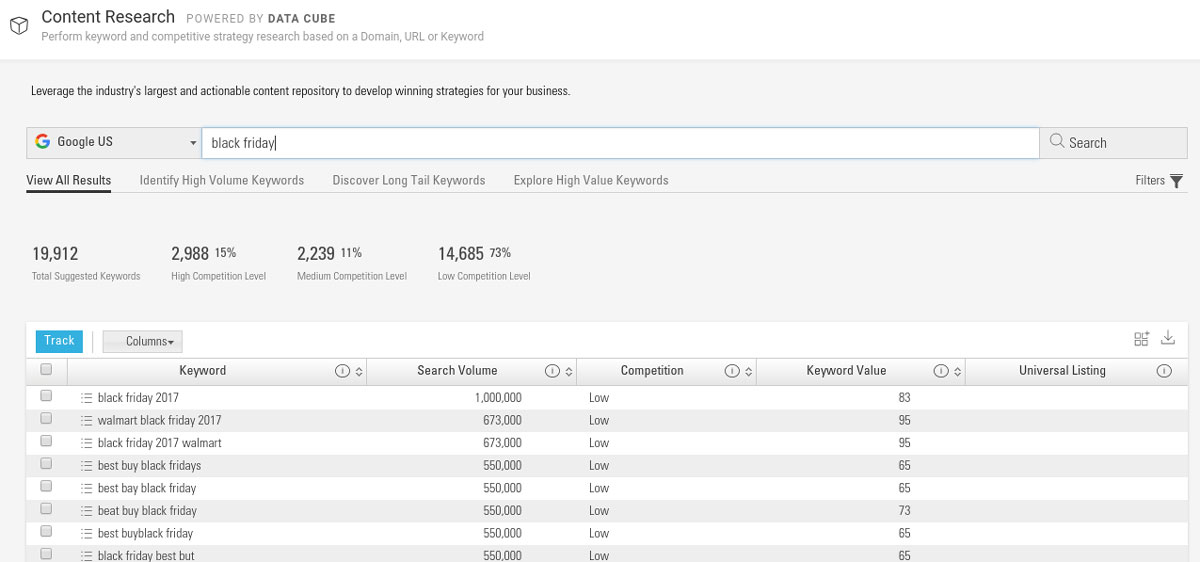
data cube research on black friday related keywords for ecommerce marketing strategy with brightedge

To find these keywords you should go back and analyze your digital sales data from last year. See if there was a standout subset of holiday or seasonal keywords that drove a significant portion of your conversions.

You should also perform keyword research. Using the BrightEdge Data Cube, you can run searches related to the holidays and your industry and uncover potential keywords that people commonly search to help drive your ecommerce marketing strategy.

These keywords will not only inform your standard content, they can also help you form ideas for your sales and holiday specials.

Build excitement for upcoming sales and specials

Use your content to build excitement and awareness for upcoming campaigns and specials. People expect sales and specials around the holidays, and they often start planning their holiday shopping early in the season.

example of holiday seasonal ecommerce marketing strategy on facebook - brightedge

Use this period to let people know about what you will offer closer to the holidays or around the big shopping days, such as Black Friday. Products that will be offered on sale can be heavily promoted for end-of-journey prospects through content, such as how-to guides, comparisons with other products, or videos with product demonstrations.

As you build these campaigns, remember also the importance of thinking in terms of a multi-channel strategy which includes ecommerce marketing strategy. Use social media to cross-promote your efforts, further building excitement for your upcoming sales and specials. Excellent product shots, engaging images with customers using the product, or even hosting contests encouraging customers to post about their experiences using particular products can help interest new potential customers ahead of the actual sales.

Once the sale does begin, add in other channels, such as your paid advertising. Promote the sale across your channels and see the value of the earlier promotion you did.

Don't forget mobile

As we mentioned, mobile ecommerce marketing strategy has seen a dramatic rise over the past few years. This year it is projected to comprise nearly 40% of all retail ecommerce. Given Google’s recent push towards mobile, particularly with their mobile-first algorithm, your mobile efforts will benefit the performance of your entire site.

Customers have become increasingly comfortable making purchases right from their mobile devices. To succeed in engaging your holiday shoppers, you need to make sure you build adequate mobile compatibility into your efforts. Each campaign should be easily viewed by people on mobile devices. This includes your content and videos you create, as some images and videos don't render well on mobile devices.

In addition to the basics of mobile optimization, however, you also want to consider creating mobile-oriented campaigns as a part of your ecommerce marketing strategy. Capitalizing on reaching customers while they are on the go can help you attract this particular target audience. You can use mobile advertising to target people within a specific geographic area or when they perform particular local searches.

How to optimize holiday ecommerce for mobile

Incorporate your mobile promotion campaigns into the rest of your campaigns. Use the above steps to build your mobile efforts.

  • Review your success from last year, specifically looking at the pages and keywords that performed best for mobile searches
  • Look for trends specifically applicable for mobile users
  • Create mobile ads and content that will encourage people to participate in the promotions while on mobile devices and keep a healthy bounce rate

Measure your progress

With the billions of dollars in revenue brands bring in during the holiday season, site owners need to pay close attention to their ecommerce marketing strategy used to drive traffic, engagement, and conversions during this critical period. Your successes and struggles this year will also have a considerable impact on how you organize your campaigns during the holiday season next year. To ensure that you collect the valuable data you will need, measure your holiday performance closely this year.

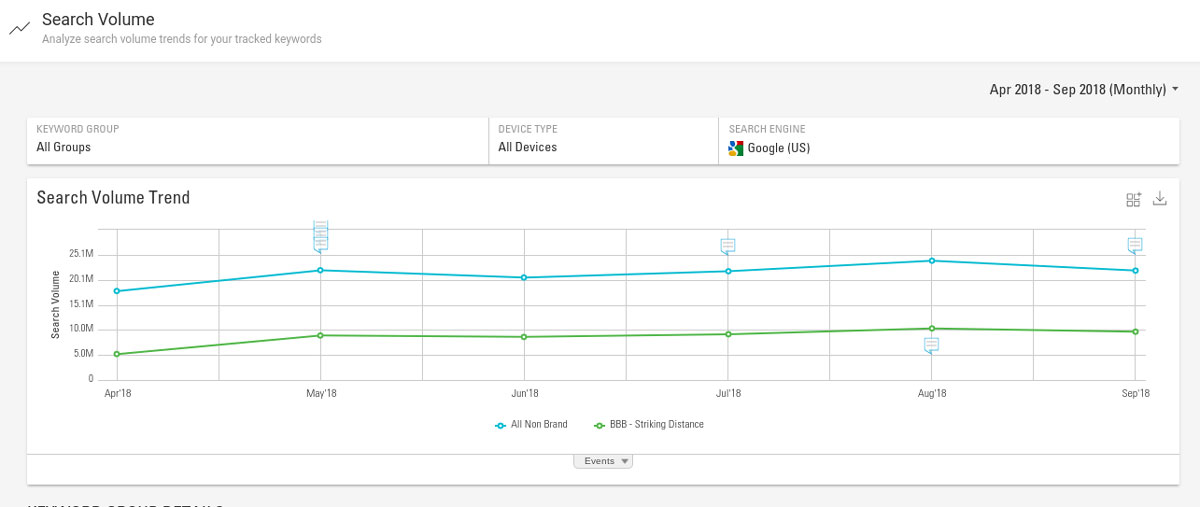
example of keyword search volume tracking for holiday ecommerce marketing strategy - brightedge

How do I measure holiday ecommerce marketing strategy progress?

  • Measure how people engage with your content
  • Look at your conversion rate and how it compares to the rest of the year
  • Examine the success of your promotional efforts for upcoming sales and promotions and how the success of that event compares to similar past events
  • Compare how your overall revenue for the holiday period appears compared to the rates you see during other times in the year

The more you take the time to plan out your campaigns and ecommerce marketing strategy during this critical season, the easier it will be see the success you want. Consider how these steps can boost your own efforts throughout the end of the year and use digital marketing to drive your ecommerce holiday marketing success.

Get the BrightEdge Ecommerce Holiday Shopping Trends research report!

7 Ways to Capture Online Sales This Holiday Season with SEO Efforts

Default avatar
brightedge
M Posted 10 years 8 months ago
t 9 min read

Capture online sales in the holiday season

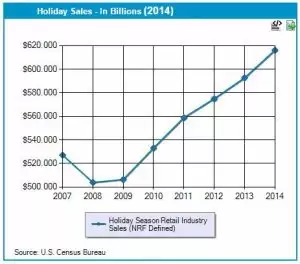
For retailers, the holiday season is critical to a successful year. In 2013, 19.2 percent of annual sales occurred just during the holiday season. The 2014 holiday season saw $72.03 billion in ecommerce sales and the 2015 season is expected to grow to $82.4 billion.

capture online sales with brightedge

The holiday season offers multiple opportunities for sales and promotions. The weekend of Black Friday through Cyber Monday was responsible for an incredible amount of revenue, with online sales quickly becoming a major player. According to Adobe, Thanksgiving Day 2014 saw $1.33 billion in online sales and Black Friday saw $2.4 billion, setting new records for ecommerce over the popular shopping weekend.

Failing to capitalize on this incredible source of revenue will leave companies struggling as they enter the new year. Fortunately, there are a few steps and tools that you can leverage to properly engage your website and prepare for the holiday season of 2015.

1.   Understand where the best search demand is on a query basis

Organic is still the major driver of traffic to websites regardless of industry. At BrightEdge, we found that search is responsible for an estimated 51 percent of traffic to websites in retail alone. Display, email and referred email comes in second, followed by paid search, with social revenue falling into a distant fourth. Within the holiday season, it was reported that more than 20 percent of online holiday retail sales originated through organic search in 2014, surpassing all other sources of traffic.

For you to have a successful online holiday season, ensuring that you understand what your customers search for is crucial. It is only when you understand the types of information and products that your customers seek that you will be able to optimize your pages for the impending holiday traffic.

The BrightEdge Data Cube allows you to identify specific keywords and understand the activity of industry customers. By monitoring activity across millions of websites, the data produced will tell you exactly what people are searching for online.

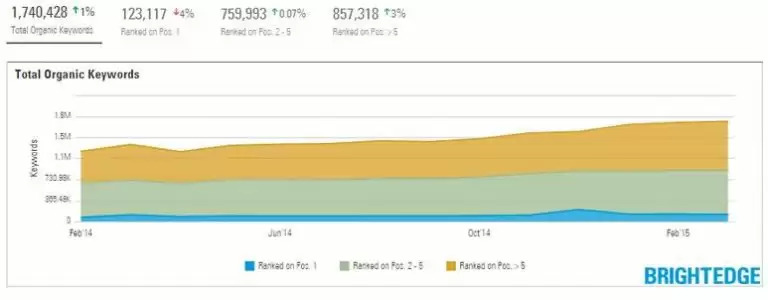
kw growth to capture online sales - brightedge

For example, consider the travel and hospitality industry. In 2014 the Data Cube enabled identification a hot hospitality keywords that customers were looking for:

  • Flight deals Cyber Monday
  • Winter getaways in New England
  • New York winter getaways
  • LAX airport
  • Flights to Florida

Using Data Cube also enables the break down of the information by type of transportation, such as air versus train, as well as the most popular sites, such as Expedia.com versus Kayak.com. Businesses could then use this information to optimize their own sites, such as a bed and breakfast in Vermont leveraging ‘winter getaways in New England’.

You can search by URL or through keywords and see information in real-time in Data Cute. With goal-based research you can specifically select what you are trying to accomplish with your optimization efforts, for example finding high-value or long-tail keyword, and the platform will then help you identify the best ways to capitalize on the holiday demand.

2. Understanding your competitors’ strengths and weaknesses in desired keywords

It is not enough for you to know what your intended audience seeks-- you must also know how the content of your competitors performs. This can offer you insights on where gaps in their keyword usage or content development are that you can use to improve your own rankings and visibility. You can identify strengths, such as particular keywords or optimization efforts, which might be helping them outrank you. This can then help you adjust your own strategies.

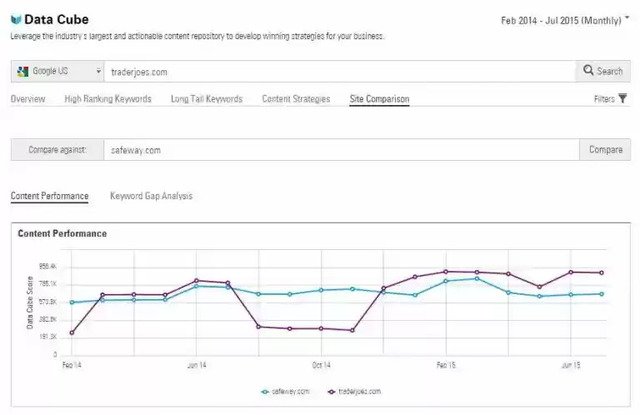
The BrightEdge Data Cube can also provide you with this data you need about the performance of your competitors. You can see how their sites rank along with their traffic and the keywords for which they have optimized their content. Under Goal Based Research, you can even identify specific videos and rich content strategies that your competitors are using so that you can learn from their successes and implement your own.

Datacube research to capture online sales - brightedge

3. Leverage steps 1 and 2 to create a targeted keyword list

To create a valuable, targeted keyword list, you need to take the information you gathered through your demand research and your investigation into your competitors’ sites. You also need to carefully monitor the performance of your own site and know which words are producing the best conversion rates and the best value. These three sources of information should then be combined to create the optimal targeted list.

BrightEdge makes it easy to track the necessary analytics to accomplish these goals. You have access to some of the most sophisticated analytics reporting in the industry. It includes viewing an in-depth analysis of your traffic, such as how long they spend on the site and the total pageviews. You can also map performance goals, how specific keywords drive revenue and access Google Analytics or other platforms’ metrics, such as bounce rates. This information will enable you to monitor your targeted keyword list and its performance continuously, allowing you to make necessary adjustments to capitalize on the holiday season.

4. Develop content to focus on those keywords

Once you have your optimal list of keywords, you then need to create high-quality content that will rank AND encourage people to convert. The content produced should focus on filling a need for your customers and provide them with information that they seek online. Creating compelling product descriptions and using adjectives that appeal to the senses of your customers are two excellent ways to create the type of content that will serve your business well.

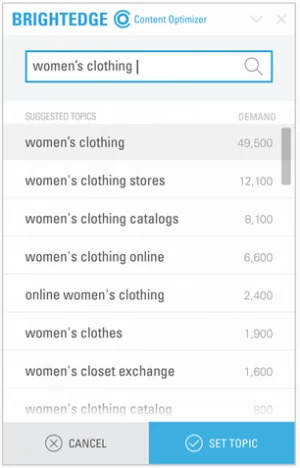
content optimizer to help capture online sales - brighetdge

For longer types of content, such as blog posts or articles, the BrightEdge Content Optimizer allows you to focus on topics that people are currently interested in. This makes it easy to take advantage of the various trends and topics that are high in demand yet low in competition to help get your site noticed.

5. Optimize your landing pages to improve conversion

Your landing page is your prime opportunity for bringing in traffic and driving them towards a specific conversion. Landing pages should therefore be optimized to help people find the website and motivate them to convert.

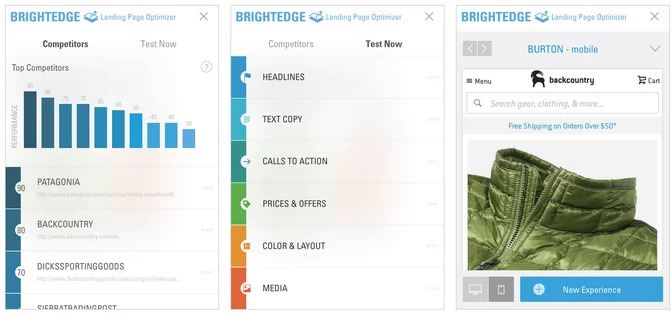
landing page optimization to capture online sales - brightedge

BrightEdge will soon be offering a landing page optimizer that will help ensure that you meet these goals. BrightEdge is an Adobe Accredited Application Partner and will be releasing a Landing Page Optimizer that seamlessly integrates with Adobe Experience Manager. You will be able design test ideas and test different potential pages while also getting real-time recommendations and comparing your projected performance with your competitors.

6. Use a platform that gives you a full picture

You want to make sure that the platform you use to monitor the organic traffic around your site takes into account your competitors’ sites and supplies you with all the necessary information so that you can ensure that your holiday season will not be spoiled by a better-prepared competitor. You should be able to accurately identify their optimization efforts and how that corresponds to their progress, so you can preventively take steps to avoid any loss in traffic or revenue before the peak of the holiday shopping season hits.

7. Prepare for mobile and offline/online cross-channel

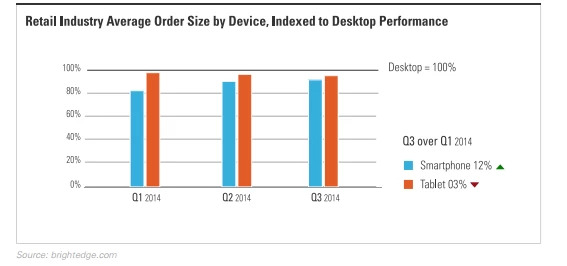
According to our own data at BrightEdge, we found that e-commerce is no longer dominated by desktop. In fact, over the course of the first three quarters of 2014, we found that the average order size was almost equal between smart devices and desktop-- within a 10 percent range. Customers are clearly willing to buy both large and small items on mobile as well as desktop. No holiday optimization effort, therefore, would be complete without paying attention to mobile performance.

Retail research to help capture online sales with brightedge

Customers also commonly use mobile (learn more about mobile e-commerce) in conjunction with activity offline, such as making a purchase in-store. Customers want to see improved cross-channel cooperation. For example, 69 percent say they expect prices online and in stores to be the same, but 31 percent say they can find better prices online. Another 69 percent say that the customer accounts they have in store and online are not connected. Customers want to see consistent promotions, prices and access to information about product availability. Creating these links between the various parts of the customer experience can improve satisfaction and the reputation of the brand.

Additionally, mobile and social, mocial if you will, influence buying behavior as people use apps, like Instagram, Snapchat, and Whatsapp to consult with friends and family to purchase items for themselves or their loved ones. Consider ways you can encourage that behavior and of course leverage customer social networks by incentivizing sharing of promotions and purchases.

Online sales has been playing an increasingly important role in the marketplace, particularly during the holiday season where people are often shopping on the go. BrightEdge offers the solution that uses data to create highly effective marketing campaigns that will catch the attention of your customers.

Marketers that invest correctly will reap the maximum reward from the high-powered holiday season. From identifying keywords to developing content opportunities to monitoring revenue on a comprehensive platform, with BrightEdge every step of the process is backed by concrete numbers that help deliver the bounty of holiday revenue.

request a demo

,