enewton@brightedge.com
M
Posted 9 years 3 months ago
t
9 min read
When it comes to reaching potential customers through search, Google stands head and shoulders above the competitors in the U.S. In the ecommerce world, however, there is a competitor that can have a powerful impact on a brand’s exposure for its products: Amazon. The New York Times reported that in 2009, about 25 percent of people looking to make an online purchase started on a search engine while 18 percent started on Amazon. By 2011, however, nearly 33 percent started on Amazon and only 13 percent started on a search engine. When people are interested in buying products, they increasingly head right for the Amazon site, bypassing Google altogether. For businesses to increase their visibility, therefore, they need to move beyond their marketing on Amazon strategies of focusing almost exclusively on Google - they need to spend some time making sure they are well-represented on Amazon as well. Amazon boasts incredible ecommerce statistics that make it a natural draw for retailers:
The more brands understand about Amazon, the easier it will be for them to take advantage of the opportunities presented by these robust numbers. Amazon has its own internal search algorithm. There are strategies ecommerce businesses can use to maximize their appeal for the popular site and increase their exposure.
Amazon differs from Google
It is important to note that Amazon is not just another Google. The two differ on a fundamental level. Google was developed to return the right content for its users. It wants people to come back to its page so that it can profit through ads and clicks. On the other hand, however, Amazon is all about selling the products. It wants to have a marketplace of the best products at the best prices so that customers continually buy. In other words, while Google focuses on the user experience, Amazon was built around conversion. There are also differences in the basic set-up. Developing your own website effectively gives you a blank page. You can do whatever you want with a new website in terms of layout and content. On Amazon, you are confined by forms. Developing a product page requires a tremendous amount of structured data, where you are given options about the types of information you would like to plug in about your item. 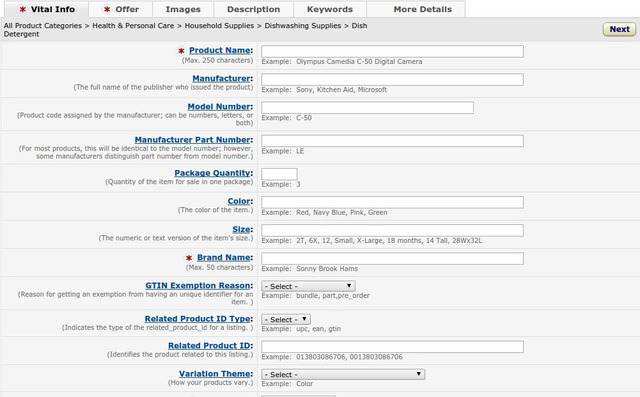 The greater the understanding you have about the differences between these two sites, the easier it will be to grasp what the user is looking for and how you can use that insight to maximize your visibility.
Amazon Ranking Factors and How to Improve Standings
The factors that influence organic rankings on Amazon are much more straightforward than Google. There is no such thing as off-page ranking factors - the algorithm, which is known as A9, is only concerned with factors directly on the page. Amazon determines relevancy for a user based on how likely they are to buy a particular product. This means factors, such as the price, are generally considered very important. The site knows that customers are going to be unhappy if they cannot find competitive pricing compared to their other buying options. Amazon also looks at factors such as Sales Rank, which is the number of sales compared to similar products. In other words, the more sales you make in a particular category, the higher you will rank. Customer reviews and your seller record also factor into the order you appear in the results. Other important factors include:
- Number of reviews
- Average rating score
- Number of images
- Characters and keywords in title
- Bullets describing the product
- Amount of text and keywords in the description
- Price and relative price
- Sales velocity (and probably rate of returns)
- Whether the product is fulfilled by Amazon
- The number of answered questions you have on your product page
Ranking well on Amazon, therefore, depends upon you understanding these factors and increasing your relevance to customer queries.
- Make sure you fill out your form as much as possible. Customers often narrow their queries down based upon factors like brand or color, so the more you fill in the form, the better you will appear.
- Use high-quality images that clearly show the user what they want to see about your product.
- To match products with queries, Amazon looks at the forms and the keywords used in the title and description. Use important keyword selection words in these fields.
- Use the search terms wisely. It is important to note that the search terms do not work the same way they do for SEO or PPC campaigns. You do not need to worry about repeating words, common misspellings, or including multiple variations of the words. Instead, use as many of the allowed 50 characters as possible to describe what you are selling as core terms.
It is also important to keep in mind the value of Amazon’s recommendation features. The site is famous for featuring products that are often bought together or other items that the site thinks you might like. These products are not selected randomly. Amazon uses what it terms ‘item-to-item collaborative filtering’ to customize the site for its users. The system takes into account what the customer has viewed, purchased or liked as well as what other customers have viewed, purchased or liked to better understand the items that pair well together and that are most likely to spark an interest. When brands focus on building a thorough product page using the system above, they can increase the odds of being featured on these recommendation sections as well. Amazon Ad Targeting In addition to organic advertising, Amazon also allows its vendors to pay to target ads. Amazon explains their Internet-based Ads Policy on their site as follows:
On both Amazon-owned and operated sites and unaffiliated sites, Amazon displays interest-based advertising using information you make available to us when you interact with our sites, content, or services. Interest-based ads, also sometimes referred to as personalized or targeted ads, are displayed to you based on information from activities, such as purchasing, visiting sites that contain Amazon content or ads, interacting with Amazon tools, like the Amazon Browser Bar, or using our payment services, like Amazon Pay. Click here for more information about the types of information that we gather. In providing interest-based ads, we follow the Self-Regulatory Principles for Online Behavioral Advertising developed by the Digital Advertising Alliance (a coalition of marketing, online advertising, and consumer advocacy organizations).
Like other online ad networks, we use cookies, web beacons (also known as action tags or single-pixel gifs), and other technologies (collectively, “cookies”). Cookies enable us to learn about what ads you see, what ads you click, and other actions you take on our sites and other sites. This allows us to provide you with more useful and relevant ads. For example, if we know what ads you are shown we can be careful not to show you the same ones repeatedly. We do not associate your interaction with unaffiliated sites with your identity in providing you with interest-based ads.
Tracking Your Progress
Unfortunately, it can be a bit harder to judge the success of your efforts on Amazon as there is significantly less data available. Under your Reports >> Business Reports, you can receive some detailed information about your page sales and traffic. 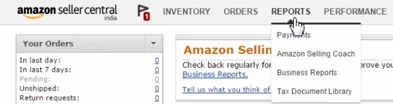 Amazon will give you your Unit Session Percentage or conversion, which tells you the number of units you sold divided by the number of sessions your listing received. Be careful if you are listing a product that is also sold by other dealers. In this situation you need to pay attention to your buy box percentage.
Amazon will show you the number of sessions a listing received, regardless of the seller who was in the buy box, but will only show you the purchases from your account. This can make your conversion rate seem much worse than reality. By factoring in your buy box percentage, you can have a more accurate picture of your success. You should also pay attention to feedback metrics. This includes your customer ratings and reviews. As you gather positive feedback, you can raise your ranking. You can also use your payments reports to calculate your profit by subtracting the cost of running your business. This will help you see how well your business is performing over time and the influence your optimization efforts are having on the bottom line.
These metrics together will all help you paint a clear picture of how well you are reaching interested customers and your performance. Amazon is an incredible tool that can help ecommerce brands get their products in front of interested customers. Like Google, however, the position that your product appears on the results page is not because of chance, but rather a carefully calculated algorithm that looks at a variety of different factors when determining rank. Brands should take the time to maximize their exposure with Amazon with these guidelines and see how they can improve their ecommerce sales in 2018. Learn more about VSO or Vertical Search Optimization.