March 12, 2019 SEO Algorithm Update

enewton@brightedge.com
M Posted 7 years 3 months ago
t 9 min read

Something really strange happened to me in March - something that never happened before. I visibly lost rank on some high-volume pages due to an identified algorithm change.

Brightedge shows how the google update march 2019 affects seo results and how to respond

As a white-hat practitioner working on a brand property, I usually benefited from the prior algo changes that were released to thwart black hats and affiliates. The SERPs got cleaner and more directly relevant to the search intent. And that was good for users and for me.

I am the head of SEO in an SEO technology company, so continually growing SEO takes on added responsibility in addition to that faced by the community. My SEO traffic was up 80% year-on-year in February, and all was good. Exec updates were fun as SEO grew in absolute and relative terms. But then in mid-March it was down 20% week-on-week.

It is interesting to experience this first-hand, and the upside is that it helps me understand what others in the community might experience at these times, so I decided to publish a blog to help guide people through it.

So how should you respond when you see unexplained dips?

  1. Don't react for 24 hours to see if the analytics data was incomplete.
  2. Check and see if any changes were made to the site that might have blocked the spider's crawl or a mistake in robots.txt.
  3. Look at the calendar and decide if there was a vacation that took people away from their computers.
  4. In analytics, compare the effected period with the prior period and the year-prior period. If all channels are down this year and last it is a seasonal effect.
  5. Check Google Search Console for notices, alerts, and errors. Then explore what happened with Impressions, Clicks, and CTR.
  6. Check the channel mix proportions and see if another channel, like Direct, grew by the amount that Organic dropped. This could indicate a tracking or cookie problem.
  7. Review Google Webmaster Blog and social media to see if there is discussion of an algo change.
  8. You can post a question to the BE Certified Linked In group and see if others have seen a similar issue.
  9. Determine if downstream results are also suffering or not. Often traffic from lower rank positions engages and converts better. If you see traffic down and leads holding steady, it suggests that Google has done a better job of understanding and mapping search intent to content. In my case organic traffic was down, bounce rate was down (which is good), time on site was up, conversion was up, and interestingly total conversions from Organic were up month-on-month.
  10. Sometimes Google rotates new content into top positions to balance the self-fulfilling nature of high rank and traffic. It gives it more data to assess the desirability of the content.
  11. Keep in mind: Organic is still the largest channel at 48% on average and much higher for B2B companies, Organic is a long-term play, so think in terms of months and quarters, Organic traffic has no media cost, so the ROI is usually the highest of any channel.
  12. Now you have information and data that will help contextualize and explain the impact of the change. Showing that you have a good handle on the situation, even if you do not have an immediate fix, will go a long way to calming nervous executives.

Google Search Console Y-o-Y comparison showing effects of the google algorithm update march 2019

Here is a snapshot of Google Search Console year-on-year comparison. If you have not set up Google Search Console for your site, it is a must.

Google has filed for patents defining its use of neural matching, a component of its intent matching, but different from RankBrain. Neural matching uses synonyms to interpret search intent and select content for the SERPs. Barry Schwartz reported that Danny Sullivan of Google said that neural matching is in use in 30% of queries. Schwartz explained that "RankBrain helps Google better relate pages to concepts. Neural matching helps Google better relate words to searches." Glenn Gabe reported that Google clarified that the March 12 update was not related to neural matching enhancements.

So if your traffic drop was due to an algo change what can you do?

In the narrow sense and short term, not much. That is why BrightEdge does not closely track or analyze algo changes. They happen every day and Google's guidance and BrightEdge best practices are consistent:

  1. Focus on high-quality content
  2. Be authoritative, deep, and relevant, target over 1000 words per piece and preferably over 2000 words
  3. Be original, fresh, accurate, and current
  4. Be well liked and linked to internally, externally, and socially
  5. Provide excellent customer experience and site performance
  6. Consider using schema markup, which Google has been promoting since 2011 and people are starting to report positive rank and traffic impact from schema

This 6-point list will likely expose some areas in the content that has dropped that could use attention. If you apply these guidelines to existing content, you will, at a minimum, make content that is better for the users and voice devices and probably will improve in SEO performance as well.

Applying this thinking to my current rank-drop content, I noticed that the publish date of my piece was older than the publish date of the content that ranked above it. Further my title tag had a 2018 in it. Both of these violate #3. I updated the title tag, content, and publish date and I moved up 3 positions. It is a bit ironic that I published a blog on publish date and freshness around the time this happened.

The particular pieces were topical extensions from my core topics and themes, so there is less depth on these topics in the domain. That violates #2. This will require deeper content clusters and may take time. See also if you are interested our 3-part deeper dive on clustering as latent semantic indexing.

I have not promoted the pieces that dropped socially in a while, #4, so I will take that step also.

See, so Google's guidance is constant, but its algo tweaks are its effort to align further with that guidance. If you fail to keep these guidelines in mind and in execution, you could be at risk of losing rank as Google uses RankBrain AI and figures out ways to better align with what it suggested all along.

Something really strange happened to me in March–something that never happened before. I visibly lost rank on some high-volume pages due to an identified algorithm change. As a white-hat practitioner working on a brand property, I usually benefited from the prior algo changes that were released to thwart black hats and affiliates. The SERPs got […]

The post March 12, 2019 SEO Algorithm Update appeared first on BrightEdge SEO Blog.

Understanding Attribution Models: When to Use Multi-Touch Attribution

enewton@brightedge.com
M Posted 7 years 3 months ago
t 9 min read

As we discussed in the first article in this series, customer journeys have become increasingly complex. This can make it challenging for brands to know precisely how customers interact with their organizations before they decide to make a purchase. The models we already discussed dealt with single-touch attributions - the model only attributed the income and ROI generated from a new customer to a single point on the buyer’s cycle. With customers hitting so many touch points before making a purchase, however, the inefficiency of these systems versus a multi-touch attribution model is clear.

Knowing which multi-touch attribution models bring in the best quality leads, as we learn from the first-touch attribution model, is helpful. Similarly, knowing the end-of-funnel strategies that encourage those conversions will help, but you will still not get the full picture. You don't know where people were nurtured and what convinced them to end up engaging them with the brand in the first place. You will not give enough credit to the top-of-funnel activities.

Multi-touch attribution models can help brands to better document the entire customer journey. They are designed to better articulate how customers found the brand, moved through the customer journey, and ended up making a purchase. Multi-touch attribution models are designed to document which type of touches customers interacted with throughout the organization as they moved closer to conversion.

Keep in mind that no attribution model will be perfect, including multi-touch attribution, and that they instead focus on providing an average value of how the different types of marketing strategies perform. To help you make the best decision for your group, here are a few of the most popular multi-touch attribution models that you can adopt for your organization.

Linear attribution

A linear attribution model is one type of multi-touch attribution model that divides the credit for a particular conversion evenly across all of the customer’s touch points. If a customer found a brand through organic search and signed up for an email list, followed an email link to engage again, clicked on PPC when product searching and then made a purchase, the organic search, email marketing, and PPC would all receive an equal division of revenue from the conversion that resulted from this lead.

This model can benefit many brands because they will find it easier to understand all the checkpoints that should receive credit for finding and nurturing the lead. This will help them develop strategies moving forward.

multi-touch attribution photo of hands piecing together an attribution puzzle - brightedge

Contrary to multi-touch attribution, this model does fall short in its ability to clearly demonstrate which strategies and promotions had more of an impact than others. For example, if your email campaign does little to generate conversions but does get clicked on by existing leads, then it will receive the same amount of credit as another strategy that had better success persuading leads to make a purchase. When used in conjunction with first- or last-touch attribution models, however, brands will come away with a good idea of their customer journeys and the strategies that give them the most success.

Time-decay Attribution

A time decay attribution model attempts to make up for the shortcomings of the linear attribution model by assigning increasing value to each touch point as the customer moves through the journey. In other words, the first touch will receive the least, a PPC ad that brings them back to the site gets little more, an email campaign that brings them back again a little more, and a white paper download that directly precedes their conversion receives the most.

This multi-touch attribution model does give credit to all the touch points in the buyer's journey, but it can minimize the top-of-funnel efforts. Similar to the last-touch attribution model, it can make it hard for organizations to properly understand how well their awareness efforts to bring in new prospects perform.

Since it does assign increasing credit to all of the touch points, however, it can be a great way to understand how well your bottom-of-the-funnel nurturing performs. You will clearly see what brings customers on the verge of converting to the tipping point and how they interact with the site through the final touch points before a conversion. This can help you refine your ability to nurture customers through these last stages.

U-Shaped Attribution

The U-shaped attribution model understands that the first and last touch points on the buyer’s journey hold particular significance. One introduced the prospect to the brand and started to show them how your company can meet their pain points. The last touch point lets brands see what finally convinced the prospect to convert.

This model also takes into account the importance of the funnel as a whole, noting the importance for organizations to understand how prospects interact with the site and brand throughout their buyer’s journey.

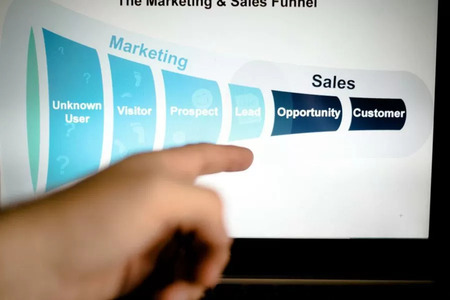
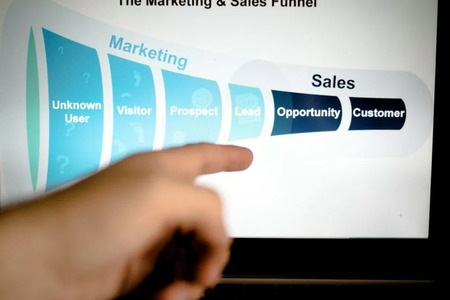
multi-touch attribution visualization of conversion funnel - brightedge

To accomplish this, the U-shaped model assigns 40% of the credit to the first and last touches and divides the remaining 20% among the touch points in between. This does give brands a more balanced idea of how their customers interact with the organization and how well the top and bottom of their funnel performs. Of course, brands can also customize this, or any, model if they find it does not best represent their objectives. For example, you can decrease the credit given to the first and last touch credit in the U-shaped model and offer more credit to the touches in the middle if you really want to measure your funnel performance.

How Do I Know Which Attribution Model to Use?

There is no clear right or wrong answer when it comes to using attribution models. Brands need to think carefully about what they want to measure, such as the strength of their awareness efforts or the power of their brand. They also need to think about how their typical customer progresses through their buyer’s journey. An organization with a quick buyer’s journey may perform better with a one-touch attribution model, while one with a longer process and a greater importance placed on the touch points in between will need a multi-touch attribution model to best understand their customers. Consider how these different methods and their measurements align with your objectives when making a selection.

Measuring attribution plays a critical role in how you will plan your future marketing strategies and present your ROI to decision makers. Understanding the benefits and drawbacks of multi-touch attribution and the other models covered in these last two posts will help you make the selection that fits your business best.

Multi-touch attribution - see a demo of what's new in the BrightEdge platform

As we discussed in the first article in this series, customer journeys have become increasingly complex. This can make it challenging for brands to know precisely how customers interact with their organizations before they decide to make a purchase. The models we already discussed dealt with single-touch attributions — the model only attributed the income […]

The post Understanding Attribution Models: When to Use Multi-Touch Attribution appeared first on BrightEdge SEO Blog.

Understanding Attribution Models: One-Touch vs. Last Touch

enewton@brightedge.com
M Posted 7 years 3 months ago
t 9 min read

In marketing, understanding the ROI of various strategies and advertising efforts is essential. With the sheer number of channels available, brands must carefully rank what works most effectively with their target customers. The better they understand the places where they best engage their users, the easier it will be to properly allocate resources and bring in more leads and customers.

The problem that many brands encounter when trying to measure the success of their different methods is the increasing complexity of the buyer’s journey. Customers today generally interact with brands in multiple ways before they end up buying. For example, they might land on a site organically, download a white paper, click through emails, engage with PPC, attend a webinar, and then finally end up making a purchase.

When a customer goes through a path this convoluted, it can be a challenged to determine what deserves credit for this customer and revenue.  Should it be the organic efforts since they initially introduced the customer to the brand? The webinar for finally convincing them to convert? Brands want to make their estimation as accurately as possible as a wrong measurement might end up drawing funds and resources away from effective means of engagement and overly investing in methods that did not have as much of an impact.

To solve this problem, marketers have developed several different types of attribution models. Each one emphasizes slightly different points in the buyer's cycle, allowing brands to pick the one that makes the most sense for them and their brand.

EKeep in mind that no attribution model will provide a perfect picture and the importance of different methods and strategies likely differs from customer to customer. The point of the attribution models is to provide a quality estimation and summary that brands can use in their reporting and when planning new strategies.

This post and this companion one will explore the different types of attribution models, helping our community determine the one that will work best for them. In this post, we will discuss the main forms of one-touch attribution models and when they can be useful.

First-touch attribution models

First-touch attribution models focus on the touch that first introduced the new customer to the brand. For example, in the example offered previously, with the customer that found the brand organically, then clicked on email links, and then watched the webinar before converting, only the organic search will receive credit for the customer and the revenue generated.

This model works on the assumption that the strategy that first brought the customer to the brand delivered the most value, and thus deserves the credit. This strategy can be a good one for brands that want to see how well their outreach, top-of-funnel efforts generate profitable prospects. It does not, however, give any insight into how well prospects are nurtured when going through the funnel.

The first-touch attribution model will likely be most helpful for brands that have a short buying cycle. For example, some types of ecommerce stores that have customers who tend to buy quickly and not spend too much time researching or engaging before buying will may find this helpful.

Brands might also find it helpful to use this model if they need to build a case for the ROI for their top-of-funnel activities. For example, if your organic team needs to create a presentation for brand leaders or shareholders and you want to show the strong value of SEO, demonstrating the value of your awareness efforts will bolster the points you make.

Last-touch attribution models

Last-touch attribution models work opposite to the first-touch model. This model measures only the last touch a customer had with the brand before they end up converting. The idea behind this attribution method is that the last channel a customer interacted with is the one that convinced them to convert and should thus receive credit.

Since this attribution model focuses on the last interaction a customer had before they purchased, it is a good means of measuring the end-of-funnel activities. On the other hand, you will not receive any insight regarding what first made the customer aware of the brand or how they were nurtured throughout the funnel before they ended up converting.

brightedge explains the differences between attribution models

This is a conservative approach and emphasizes the importance of the brand. Many organizations do find it helpful to know what ended up giving people the final push to convert, and this does help shape their strategies moving forward.

This attribution model also ends up being the simplest to measure and implement. This makes it a good starting point for brands that have not done much marketing tracking the past.

In addition to the standard last touch attribution models, which looks at the very last interaction people have with the organization before they buy, there is one key variation: the last non-direct touch.

What is a last non-direct click: a variation of the last-touch attribution model?

The last non-direct touch follows a similar format to the last direct touch, but it eliminates any touches that originate with the customer going directly to the website. In other words, if the last interaction the customer has with the brand involves them typing in your company’s web address and navigating directly to the site, this touch will not be counted. This system operates on the assumption that if your customer already knows your web address, all the hard work of attracting them and nurturing them has already been completed. Tracking this touch does not give much insight into how people learned about your brand, and therefore does not provide much information that can be used to build a strategy moving forward.

The last non-direct touch attribution model, therefore, offers much of the simplicity of the last touch model, while eliminating at least one of its shortcomings. It therefore offers greater insight than the standard model.

Which attribution model is right for your business?

Identifying the best attribution model can help brands better understand how their revenue has been generated and what they need to know to build a better strategy moving forward. Consider how these two models might serve your organization, and read our next post where we will explore the other major attribution models to help you make the best decision for your organization.

See a demo of what's new in the BrightEdge platform

In marketing, understanding the ROI of various strategies and advertising efforts is essential. With the sheer number of channels available, brands must carefully rank what works most effectively with their target customers. The better they understand the places where they best engage their users, the easier it will be to properly allocate resources and bring […]

The post Understanding Attribution Models: One-Touch vs. Last Touch appeared first on BrightEdge SEO Blog.

Making the Most of Internships: What I’ve Learned | BrightEdge

A BrightEdger
A BrightEdger
M Posted 7 years 3 months ago
t 9 min read

Find a company that allows you to grow as an individual

By Rylie Miller

Falling in love with a job description and going through the internship application process produces a variety of mixed emotions. Rapid-fire emailing, preparing for interviews, hopeful responses inviting you to the next round of the application process, and devastating rejection letters can summarize the progression of the internship search.  

After months of applying to countless positions and only hearing back from a handful, one particular position and one specific company stayed at the top of my list: BrightEdge. 

Out of all the companies I applied to, BrightEdge was not only one of the friendliest, but kept me completely in the loop about my application status. I was ghosted by a few companies, leaving me in the dark about where I stood. With BrightEdge, I was constantly aware about where I was throughout the entire process.  

When I found out the position was mine, I was overjoyed. I finally saw the results of my hard work and patience show and was eager to begin working and learning more about and alongside BrightEdge. Though I did have my hesitations about entering the office and putting my skills to the test, I knew I was on my way into something great.  

BrightEdge Cleveland Interns Lev McCollough, Hollie Mocsiran, and Rylie Miller
BrightEdge Cleveland Interns Lev McCollough, Hollie Mocsiran, and Rylie Miller.

In just one month as an intern at BrightEdge, I have not only learned about the SEO marketing industry, but I’ve learned more about myself as an individual. Throughout all the projects I have been assigned and completed, the people I have encountered, and the knowledge I have acquired every day has pushed my limits and helped me set new goals for myself. This experience has already taught me so many lessons that will always stick with me.  

Making the most of your internship

  • Give yourself some credit. Something I have always struggled with was giving myself the recognition I deserve. I’ve learned to celebrate the small achievements that occur daily. It gives me a sense of belonging knowing that I am succeeding in the work I do, especially if it was challenging. The position was given to you for a reason.  
  • Take on new challenges. Expand your knowledge and learn new skills. Internships are learning opportunities; take advantage of the people you will meet and what they will teach you. I’ve been handed a variety of different assignments in my short time at BrightEdge, some I had prior experience with and others were completely foreign to me. Accepting these challenges and navigating them on your own will not only help you grow as an employee but serve as lessons that will stick with you for the rest of your career.  
  • Appreciate constructive criticism. It’s never a good feeling knowing you did something wrong or didn’t meet the right guidelines. But again, internships are learning experiences. Instead of taking criticism the wrong way, manifest it into something greater. Have an open mindset when it comes to getting your work analyzed or having to follow new guidelines you may not necessarily be accustomed to or familiar with. This will allow more room for growth and versatility in your work. Asking for help can never hurt you, only set you closer to achieving your goals.  
  • Make friends. Waking up early and commuting to the office is already a process in itself. Coming into an office and keeping to yourself makes the time seem like it’s only going slower. Forming new relationships with those you encounter in the workplace will not only make the day go by faster but make coming into the office more enjoyable. They make great brainstorming partners, advice givers, lunch company, and moral supporters.  

“Coming in as an intern to BrightEdge was super intimidating and sitting in the back corner didn’t help with meeting people,” Digital Marketing and Events Intern, Hollie Mocsiran said, “Through my job as the Events Intern, I had the opportunity to work on the Corporate Challenge. At first, I was just seeing names of employees but had no idea who they were until I started talking to everyone to put face to the names. I got to participate in one of the events as well! Since then, the office has felt so much more welcoming” 

  • Make the most of your time. Show up and stand out. Invited to sit in on a meeting? Go. Have the opportunity to network with employees or executives? Go. Time is precious, and it moves quickly. Take the time to get the absolute most out of your summer and time with whichever company you’re with. BrightEdge has created and implemented a work-hard, play-hard mindset that allows employees to perform to the best of their abilities but also to bask in the fun, positive office culture. 
Interested in working for BrightEdge? Check out our open positions or learn more about the BrightEdge Culture.

Five ways SEOs can utilize data with insights, automation, and personalization

English, British
News Item Title
Five ways SEOs can utilize data with insights, automation, and personalization
News Item Author Name
Jim Yu
News Item Published Date
News Item Summary

Constantly evolving search results driven by Google's increasing implementation of AI are challenging SEOs to keep pace. Search is more dynamic, competitive, and faster than ever before.

,