Organic Search Is An Invaluable Business Intelligence Tool

monique.johnson
monique.johnson
M Posted 5 years 7 months ago
t 9 min read

Businesses have had to make drastic changes this year to accommodate the new normal. Likewise, consumer needs and concerns have also zig and zagged this year. This dynamic is quickly creating new market realities and navigating them requires businesses to put a greater focus in their agility. They need to know what the customers care about, how their environment is impacting their intentions and where opportunities are to meet their needs and create meaningful interactions. This will require re-imagining how they gain market and business intelligence to be faster, more accurate and actionable in new environments.

At Share 2020, a key theme we hit on is the convergence of search data and business intelligence. How consumers search and how search engines are serving up trillions of historical search results reveal a rich portrait of what consumers want, how they want to consume it and what messages are resonating with them. For many marketers, the challenge is turning what we see in search results into macro trends that can serve as an input into your broader marketing and omnichannel strategies.

Using a combination of AI and trending billions of searches, BrightEdge provides digital marketers with the technologies to elevate search data into macro consumer insights with Market Insights. We built this platform because we believe when organized and positioned correctly, search represents the most accurate and agile representation of consumer behavior.A guide to search behavior with Market Insights - BrightEdge

There are three key aspects of macro consumer behavior that search data can help your organization uncover:

  1. Who is changing purchase and discovery patterns?
  2. What are your opportunities?
  3. How should you realize these opportunities?

Who is changing purchase and discovery patterns? 

Let’s say you’re a business with an e-commerce component selling thousands of products online. You need to understand across your categories what trends are emerging across those consumers looking for your products and be able to answers to these questions:

  • What product attributes are becoming more important?
  • Are they becoming more price sensitive?
  • Do they have strong brand preferences that inform purchase?

With over 75% of shoppers doing a search before making a purchase, your search data is the perfect consumer measurement. Market Insights aggregates granular search data into consumer categories that empower you to answer these questions. Beyond the search and content value, you are now armed to:

  • Inform product strategy for what inventory needs to be prioritized
  • Help shopper marketing and retail teams understand where price sensitivity is on the rise
  • Inform branding and omnichannel teams on how consumer brand preferences are changing faster than any focus group or lookback data with real time search data. 

What are your opportunities?

Core to the convergence of search and business intelligence is the chance to become even more agile in opportunity identification. Granular search data reveals a lot about what consumers care about and how they think. Market Insights consolidates granular search data into meaningful macro trends. Insights revealed in this data can help businesses:

  • Determine what represents an actual trending change in consumer preferences vs. an anomaly. Move quickly on emerging ones and avoid costly investments chasing the wrong ones. 
  • Identify blue ocean trends—where are net new behaviors emerging that your brand has a right to win?
  • Determine how macro trends are impacting existing sales. Correlate negative conditions or consumer attitudes to impacts on sales. 

Armed with this data, marketers have an agile way of observing the market that is fresh and reactive to current events and conditions. Using search in this way helps brands:

  • Make strategic omnichannel decisions faster and determine what opportunities are significant enough to warrant an orchestrated omnichannel approach
  • Get ahead of new market opportunities faster than competitors and organize your branding, messaging and product teams.
  • React faster with your branding, content and media teams to prevailing macro trending needs and frustrations.

How should you realize those opportunities? 

Once we understand what the opportunities are with our consumers, Market Insights also tells us how we need to orchestrate content and build our omnichannel strategies to realize the opportunity. One of the benefits of search is that we are marketing with the most powerful arbiter of intent the world has ever known. Search engines like Google use powerful search algorithms to receive trillions of results, reflecting on what users really want.

Market Insights harnesses the real-time search results from search engines to help businesses better plan their macro strategies. This help you to:

  • Prioritize what pain points being expressed with search behavior warrant broad communication. Anticipate market opportunities fast. 
  • Determine what content is resonating with consumers across multiple screens.
  • Identify the formats and content delivery methods that align to how consumers prefer to engage.

Demo Instant For Real-Time Insights And Results

Armed with this data, marketers have a near-real time method for measuring what consumers want when they engage. Beyond search, this data helps brands: 

  • Build their macro communication strategies across channels through their content teams.
  • Address new consumer trends by enhancing your content team’s ability to be agile and pivot messaging when needed.
  • Define the formats they need to create in order for that content to resonate with the intended audiences. 

When we start thinking of search as both a channel and a real-time audience listening platform and scale the insights across our business, we make decisions faster and more accurately. 

Atomic212 & Torrens University Generate a 76% Improvement in SEO Leads

Discover how they increased organic conversions using the industry-leading SEO platform

101%
improvement in non-brand visibility
105%
increase in Quick Answers

Atomic212 and Torrens University Generate a 76% Improvement in Leads in One Year Using BrightEdge

Discover how they increased organic conversions using the industry-leading SEO platform

BACKGROUND

Atomic212 works across both SEO and SEM for Torrens University, meaning that digital campaigns and learnings are always complementary between channels. Coming into the beginning of 2019, CPCs across education keywords were rising to a point of economic inefficiency. Thus, organic presence needed to improve to further support paid spend efficiency and drive lead volumes and quality. Further, Torrens University was faced with the objective of simultanously improving their on-site mobile experience for users as well as future-proofing the site for a more voice-search-active audience.

THE SOLUTION

Since volume and quality of conversions were the key measures of success for stage one of using the BrightEdge platform, Atomic212 utilized SEM data to populate BrightEdge with keywords that represented the highest conversion values. Further, all of these recommendations were supported by BrightEdge's Opportunity Forecasting to project business results. Thus, all on-page Recommendations from BrightEdge informed upgrades that were conversion-focused with hundreds of unique insights aiding the amplification of Torrens' organic performance.

Further, researching in Data Cube where Torrens' best opportunities to secure organic SERP features were, these keywords were assigned target pages to inform optimization. Following this, Atomic212 worked with Torrens' CRO team to create a new design of course pages to suit mobile best practice and ensure pages were in an optimal structure to achieve in-SERP features, including Quick Answer, and subsequently trigger audible voice search responses. Atomic212 then utilized digital PR to build authoritative and relevant links to the Torrens domain and these course URLs in particular.

THE RESULTS

Following the publishing of all new pages in February 2019, the first two months of being live saw a 39% improvement in the number of featured snippets related to specific courses available on the Torrens website - each of which were recited audibly when the relevant voice search was made on mobile. The site also experienced a 14% increase in the number of non-brand queries organically appearing on page one. All of which culminated in a 76% YoY increase in organic conversions/leads on course-related pages. Since initiating the use of BrightEdge in October 2018, the Torrens website experienced a 101% improvement in non-brand visibility and a 105% increase in the number of Quick Answers.

BrightEdge allowed us to amplify and accelerate our SEO initiatives. The key insights, recommendations, and the different metrics we are tracking in our dashboards were integral to our SEO strategy. This led to marketing budget efficiency with organic channels supplementing our paid lead acquisition activities. With more indexed pages and better on-page SEO content structure, we've also increased the visibility of our web pages and future-proofed it for voice search, especially on relevant keywords. - Maricel Custodio, Head of Digital Marketing, Laureate International Universities ANZ


Organic Share of Traffic Increases to 53%

enewton@brightedge.com
M Posted 6 years 7 months ago
t 9 min read

SEO share of organic traffic up from prior years

Released as part of its annual Share Conference, BrightEdge Research found that Organic and Paid Search dominate websites’ traffic in 2019 - 68% of all trackable website traffic is sourced from organic traffic and Paid Search, vastly exceeding all other channels, including Display and Social Media. The Organic Search figure at 53% is up from the 51% found in the 2014 research, the first year that BrightEdge Research conducted the analysis.

Organic Search remains the dominant source of trackable web traffic and in the dominant position as a channel. Paid Search continues to grow. Organic Social Media is flat since 2014 at 5%, and though ubiquitous, contributes on average 1/3 as much traffic as Paid Search and just 1/11 as much as Organic Search.

B2B Combined Search Organic Traffic Is 76% of Trackable Traffic

Despite several seismic shifts in consumer behavior, the rise of mobile search, and the dramatic changes to the Search Engine Results Page (SERP) layouts, including Local 3-Pack, Knowledge Graphs, Videos, and Quick Answers, which push more organic searches below the fold, Organic Search is the channel that delivers the most organic traffic to web sites by a wide margin.brightedge tracking organic traffic results

Why did organic share grow?

Over the last 5 years Google has invested significantly in enhancing the user experience by providing increasingly accurate and relevant search results and at the same eliminating from the SERPs distracting intermediaries using techniques that attempt to game the Google algorithm.

With the advent of Google’s RankBrain, its ability to map Internet content to search query intent has improved even further. As a result, consumers trust Google and rely on it even more and are using at a rate that exceeds the growth of display and organic social.

Download the full channel share report to learn more about the findings and review the data in tables and graphs.


Why Make Organic Search the Focal Point of Successful Marketing?

A BrightEdger
A BrightEdger
M Posted 9 years 5 months ago
t 9 min read

An estimated 94 percent of B2B buyers and 81 percent of shoppers say that they use the Internet to research products before making a purchase. With such a large number of people using search engines, organic search offers a tremendous amount of insight into what people are interested in learning about and buying.

You also should not underestimate the impact that organic search can have on the success of your website. Our research here at BrightEdge has found that about 51 percent of the traffic on the average site comes from the SERPs. In other words, more people land on your site because of the results pages for particular queries than because of your email, social media, and paid marketing efforts combined.

Organic search should not be viewed as just one of many different marketing strategies. Instead, it should be the cornerstone of your efforts. Your materials should all be optimized to maximize their appearance on the SERPs. You should also be using the insights that can be gleaned from organic search to inform the rest of your marketing endeavors.

Leverage Data Cube and organic search to guide your merchandizing and product naming

Consumer search can offer insights into the products that people are most interested in as well as what you should be calling those items. The BrightEdge Data Cube is continually monitoring search traffic to see what topics are becoming popular as well as related terms for your search ideas.

For example, we have seen retailers who produce seasonal items, such as ornaments, based upon data that they are able to find through the Data Cube. This information tells them about the themes and ideas that are popular throughout the year and during their peak selling seasons, helping them to know which items will be the most successful and the optimal names to select.

Leverage Data Cube to inform product development

When it is time for your organization to start creating new products or enhancing items already on your product line, organic search can maximize your efficiency and gauge market demand. You will be able to see which products are sparking the most interest through increases or decreases in organic search.

You can then take the information from the Data Cube and compare it to trends within your own sites and the performance of your competitors to create a product line that maximizes your investment.

Leverage Data Cube and organic search to ensure your emails are engaging and effective

All communication from your brand should be tailored to your customers’ interests and needs, including your emails. Emails that are personalized perform best. When you plan your marketing strategy, you should be carefully aligning your target customers with their buyer journeys so you understand what they want to see each step of the way.

You can then use the Data Cube to uncover topics relevant to prospects later in the buyer’s journey, such as your brand versus a competitor or case studies illustrating the value you provide for customers. Since your organic search research will help you understand what people are interested in reading, your emails will be more targeted and helpful, boosting your success rates.

Organic search statistics to boost email marketing with brightedge

Use BrightEdge data to make your PPC spend more efficient

When used correctly, PPC can be highly efficient. Since you only pay when people click and you can target people looking for specific terms, it can be an excellent means of bringing people to your site. Even more importantly, PPC ads have been shown in some studies to even boost visibility and clicks, particularly if your organic result starts to slip further down the page. This can help improve brand reach and maintain a strong reputation. Using organic search data through Data Cube you can make your PPC campaign even stronger. You can research keywords that have the highest traffic and use the BrightEdge Recommendations engine to learn the types of sites that people are most likely targeting with specific queries. You can then create content for your PPC campaigns armed with this insight, positioning yourself well for paid search success.

Recommendation engine and organic search to boost PPC spend - brightedge

Use Data Cube and organic search to guide blog topic creation

Your blogs are an excellent way to attract people to your website and establish your expertise. They offer you a means to provide regular fresh content, which not only pleases the search engines, but also improves your ability to build a bond with your prospects. Using the insight from the Data Cube can serve your blog content creation process in two ways.

To begin, you will be able to create posts that align themselves well with what people seek online. This will increase the traffic to your page and help you to boost engagement.

Secondly, since you are maintaining a steady stream of high-value posts that are tailored to the interests of your target audience, you will have a far easier time building consistent readership and encouraging people to move through the sales funnel.

Organic search statistics can generate blog topics - brightedge 
For a deeper look at how to make quality content an effective value driver, check out our free eBook on Content Marketing Success -- Connecting content marketing efforts to ROI.

Use Data Cube and organic search to outperform competitors

To remain competitive on the SERPs, you need to not only have keen insight into your own marketing strategy, but also what others in your industry are doing. You need to be able to pinpoint keywords for which they rank that you are not. You also want to be able to gauge their performance, including their acquisition of Quick Answers and other special features. Using the Data Cube, you can obtain all of this information. As you analyze their site from an organic search standpoint, you will be able to see where they are excelling in the SERPs and where you need to improve to remain competitive. You can thus adjust your own strategy to achieve a higher success rate.

Organic marketing strategy - brighedge

Organic search is the backbone of a strong digital marketing strategy. It not only drives people to your website, but the insights offered through search trends can help you properly plan and execute your broader marketing course.

Brands that want to employ strong marketing tactics should not neglect the power of organic search and the Data Cube in guiding their success.

Organic Search and How it Differs from Paid Search

Default avatar
brightedge
M Posted 10 years 1 month ago
t 9 min read

The World We Live In

The internet makes massive amounts of data available to us at a moment’s notice. It allows people and businesses to interact with each other, do research, and make purchases. Online channels become increasingly important, especially organic search on average driving 51% of traffic to websites. In order to quickly identify the correct content and websites that will meet their needs almost all users will use a search engine such as Google. Typing a query into a search engine will generate a set of results that are a combination of paid and organic search listings. The user can then choose the most relevant link from these results or search again if the results are not helpful. The process mentioned above is the core of our industry and is executed well over 3 billion times per day, so it’s worth highlighting one piece for a bit closer investigation – organic search.  

What Is Organic Search?

Let’s define it before we jump into how it works and its effects on content performance marketing. Organic search is the process of using an unbiased algorithm to provide a user with content suggestions based on their search query.

This is important to understand because it is our job as content performance marketers is to build content that is going to drive success for our businesses. In order to do that, we need to create and tune our content to meet the needs of our target audiences.

If we can do that effectively, it is in the best interest of the search engine to serve our content to our target audience for us, providing highly targeted visitors to our pages at no incremental cost. This is the secret to the organic channel, and why organic search listings are so valuable. Other channels often come with additional cost for each new visitor provided. You can build a valuable and well-targeted piece of content once, and it can produce for your business for a significant length of time. We describe this as long-term content equity. See additional detail what is seo?  

How Paid Search Is Different

Now we understand what organic search is and how it can provide tremendous value to our businesses. The next question is how organic is different from paid search, since both types of listings are provided by search engines. Paid Search is the process of providing a user with content suggestions provided by third parties in exchange for payment.

This is significantly different from the way organic search works. Whereas in organic search the content is served based purely on its relevance and value to the person doing the search, in paid search the advertiser is paying-per-click to have their content highlighted and placed in front of the searcher. It is definitely possible to bring visitors to your site using this strategy. Traditionally, paid search is very popular because it can produce quick results and provides high keyword and user visibility.  

How BrightEdge Can Help

BrightEdge is the only technology that allows marketers to get an accurate understanding of how organic search rankings are tied to business value. It allows customers to track actual placement among all types of search results. BrightEdge users can switch data and reports between blended and classic rank results to gain more visibility and insight into the effects of local, images, videos, and more. You can also see how your content is performing across device types, like mobile, and in different regions within the same country. The image below from BrightEdge StoryBuilder shows Classic Rank in blue and significantly different rank for Blended or Universal results, which include universal rank types such as quick answers, images, videos, and shopping.

BrightEdge Recommendations provides content-based on-page recommendations which enable users to create high-quality, relevant content that guide multiple target keywords to an individual page. BrightEdge Anomaly Detection enables you to build custom rules around virtually any data point which trigger alerts to specific users when critical changes, like this one, occur and change your rank and performance. Using the BrightEdge platform means access to insight and more capability to respond to our always-changing industry environment. Contact your customer success manager or Request a Demo to review your strategy and response plan or contact us to learn how to start using BrightEdge today.  

The 3 Pillars of Building an Audience via Organic Search and Content

enewton@brightedge.com
M Posted 11 years 1 month ago
t 9 min read

All marketing channels need content and each channel has its own unique set of practices that help with building an audience. 

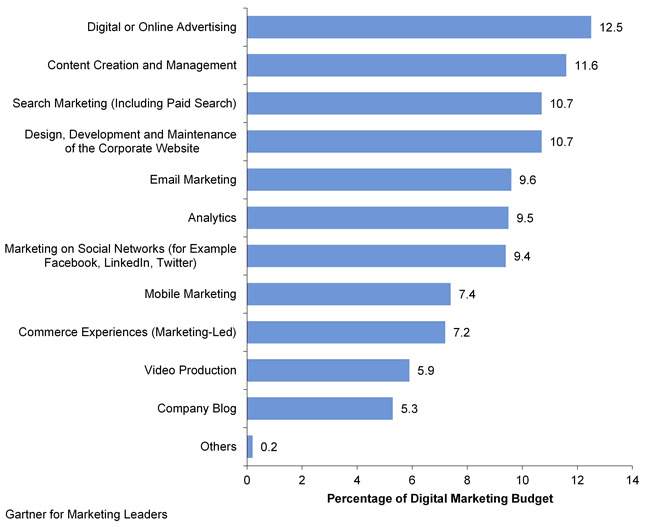
The explosion of content as a driver of marketing success has left its mark already. Back in 2013, Gartner stated that content creation and management comprised the second largest share of digital marketing budgets – and that was years ago.

building an audience via organic content - brightedge

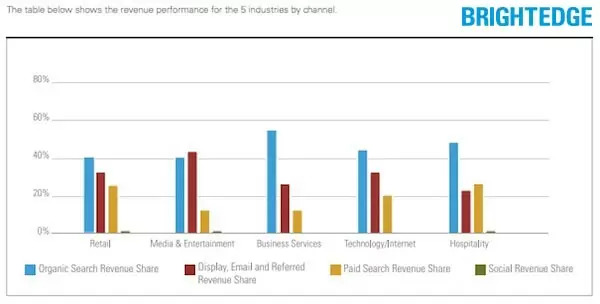
The organic search channel in particular is one that shouldn’t be overlooked. In a 2014 study by BrightEdge, we found that the organic search channel was the highest driver of traffic and revenue for a majority of the sectors studied. You can read more here.

building an audience revenue tracking with brightedge

When building an audience in organic search, how can you use content to help drive organic traffic and revenue for your brand? Let’s look at the three best practices for building an audience:

  • Target your audience's demand
  • Optimize content to help your audience find it
  • Measure content so you know what resonates 

1. Target Your Audience’s Demand. Sure, you can guess what content your target audience wants to consume, but with all the tools we have at our disposal today, why would you?

An informed organic content strategy starts with first understanding what topics your audience is searching for in search engines like Google. This is so you can create the content you want to be found for a searcher’s query – thus building an audience.

In order to start, you need to establish a couple things:

  1. Find and use a Web analytics platform that can help you find those topics that your audience is searching for.
  2. Understand how different content can perform in the search results, for example, video versus text to determine your content’s format (see this research we did on how video fares in the search results).

2. Optimize Content to Help Your Audience Find It. Once you’ve targeted the topics your audience wants to consume and have created the content, you need to optimize it for the search engines so your audience can more easily find it online.

Optimization can mean different things to different SEO professionals – everything from basic on-page tactics for Web pages to implementing schema and beyond.

BrightEdge CEO Jim Yu gives some basic steps to optimization in this post for Marketing Land and discusses how to address a process for content creators to optimize as they are creating in this post for Search Engine Land.

3. Measure Content So You Know What Resonates. When it comes to measuring how your audience is responding to content in the organic search channel, we have no shortage of options in Web analytics. The key is:

  1. Making the effort to track, including taking the time to be educated about your analytics provider and everything it can do for your measurement goals.
  2. Tracking the key performance indicators that matter to your business and your organic content campaigns; this can include anything from measuring traffic and social shares to understanding the Web pages driving revenue.

Unfortunately, one of the biggest setbacks marketers face today is not utilizing tracking at all or not having access to quality data as they attempt to stitch multiple fragmented tools together to get a “big picture” view of their content and audience.

In a recent article for Marketing Land, Jim talks about the mounds of data marketers are tasked with sifting through and how the lack of integrated data is doing more harm than good when building an audience.

His advice it to let the machines work for you, not against you:

One of the most efficient ways to deal with big data in our marketing programs is to allow the machines to pull it all in from multiple sources (all the channels and media that matter to your content), make sense of it for you, and output it in a language a marketer can understand and act upon. The right analytics platform should not only be able to integrate multiple data points, but also should make recommendations via machine learning, offering predictions for your next move based on learning from previous data. In short, the platform is making recommendations versus just following instructions.

Of course, the whole reason you want to track is to learn what’s working and isn’t working with your content for your target audience in the organic search channel. You’ll then know how to allocate your resources accordingly, focusing on making the best-performing content even more visible to your audience.

The three pillars discussed in today’s post should create a solid foundation for building an audience through your content in organic search. Building your content comes next – and that’s the fun part! 

Understanding eCommerce SEO

enewton@brightedge.com
M Posted 11 years 3 months ago
t 9 min read

SEO is critical for eCommerce: organic search is the largest channel for traffic and revenue. In the spirit of the holiday season, we’ve hand-picked five great eCommerce SEO tips and wrapped them up in a bow, so you can ring in the new year with more search visibility. Optimal eCommerce SEO will translate into more traffic and revenue and a good bounce rate.

1. Discover and rank for your target keywords

If you’re not ranking for your target market’s keywords, you’re most likely missing sales from lost Web traffic. Check out this article on the 7 Things You Must Do to Rank for Your Keywords for step-by-step guides on discovering and ranking for your best target keywords.understanding how to do ecommerce seo - brightedge

2. Don’t forget on-page optimization

There are several elements to consider for on-page optimization from keywords to social media. Let’s take a closer look at each:

Keyword Optimization

We’ve identified several crucial elements of your site’s pages that should be optimized for keywords. (For a more detailed explanation of the terms discussed below, refer to part one of our basic SEO concepts).

  • Meta Titles and Descriptions: Also known as Meta data, inform the search engines what Web pages are about overall. The Meta title is the clickable listing in the search engine results pages (SERPs), and the Meta description is the text that follows. Clearly, both the Meta title and description should be unique to each page and optimized with the page’s primary keywords to capture search share. The text should also be compelling and well written.
  • Header tags: These function on a page of content to break up important sections of the content in a user-friendly and search-friendly way. When used well, headers help format the content in a way the search engines can crawl and understand with ease. As a best practice, include at least one of the page’s primary keywords in the H1 and in other header tags throughout the page to reinforce the topic to the search engines.
  • Paragraph copy: Copy is the actual on-page text. Even though your site is geared to eCommerce, this doesn’t mean you should exclude content where it is useful and appropriate for the shopper. Search engines read and index sites via text, so feeding them the content they crave is strongly recommended.

Optimize site structure

Are the sections of your site appropriately themed? Meaning, based on your keyword research, is your site’s content organized well for both users to navigate across and search engines to deem relevant for a particular subject matter?

Creating a well-structured website defined by content and organized around keyword research helps search engines in indexing your site’s content. The easier it is for search engines to understand that your site is about a particular subject matter, the more relevant you can become for a query.

A well organized, optimized website also helps visitors navigate it more easily to find the products they’re seeking.

learn internal backlinks for ecommerce seo - brightedgeInternal linking

An integral part of an optimized site structure is internal linking. Search engine robots crawl the Web via links. Providing your website with a solid framework of internal links that logically lead from one page to another helps search engines in understanding the overall theme. Internal links also assist visitors with navigating your site – where do you want them to go next?

Part of an optimized internal linking strategy is using keywords where appropriate in the anchor text – the clickable words used in a link. You can read more on how to best approach internal linking and anchor text in Part 1 of basic SEO concepts (linked above).

Usability

Aligned with both optimized site structure and internal linking is usability. Essentially, usability refers to the ease with which visitors to your site can navigate it to find the information they’re seeking.

Besides making your site easy to navigate, you can increase conversions with a clear call to action (CTA) that facilitates purchases: don’t hide your sales pages or make it a complicated process for people to buy.

A second critical consideration when optimizing for usability is the growing trend toward mobile, as discussed by BrightEdge CEO Jim Yu at Search Engine Watch. Configuring your website for a mobile-friendly user experience will assist consumers in their shopping and purchase decisions.

Social media integration

There is no doubt that social media influences the search results. Optimizing your site’s content by integrating it with social media campaigns is a smart strategy that can help with your site’s rankings and thereby, eCommerce sales.

When considering your social media integration strategy it’s important to keep in mind the appropriate target audience. One size does not fit all: for some eCommerce businesses, especially those heavy with images, Pinterest may be the best social platform. For others, it may well be Google+ or LinkedIn.

3. Avoid duplicate content and use compelling product descriptions

Product descriptions are very important for eCommerce SEO and should be informed and optimized by your keyword research. Replicating the manufacturers’ descriptions is a common mistake among eCommerce businesses, resulting in duplicate content (which may invite a Google penalty).

A second common, inadvertent source of duplicate content is from repeating Meta titles and descriptions for different Web pages. As emphasized above, it is imperative to create a Meta title and description that is unique to each page of your site.

Generic product descriptions also do little for conversions. Adding details – “warm,” “soft,” “cozy,” “comfortable” – that appeal to your readers’ senses can boost sales. In short, detailed and descriptive product descriptions start with unique Meta information and end with compelling marketing and advertising copy.

product images for ecommerce seo - brightedge4. Optimize product images

When using product images, you’ll want to include image file names and optimized alt text (corresponding descriptions) to inform the search engines of what the image depicts. As discussed in part 1 of our basic SEO concepts, image file names are simple titles that accurately summarize the image’s content, while alt text describes the image in more detail.

Including image file names and alt text helps search engines understand them, as it's currently unclear whether or not Google bot has the ability to read imagery. Image file names also help to explain images to visitors with visual impairments who use screen-reading functionality. Image optimization is a very important part of eCommerce SEO. You'll also want to consider image weight and loading speed. If an image takes too long to load because it's heavy, your page load time will decrease and possibly cause Google to penalize your site. Most SEOs avoid rasterized images.

5. Boost eCommerce SEO - enable reviews and ratings for your products

Finally, enabling reviews and ratings for your products can give your eCommerce business the competitive edge.

A great way to accomplish this is to employ schema on your site’s content – and especially, its key product pages. While it sounds highly technical, Schema is really just a system of code that your Web development team can readily implement that helps search engines better interpret your site’s content.

With schema, search engines can display your Web pages in the search results with richer snippets that even include thumbnail images, reviews and ratings. These rich results are far more compelling – and more likely to be selected by shoppers – than generic SERP listings, giving you the competitive edge. Schema should be one of the first things to consider when doing eCommerce SEO.

So don’t waste another moment! You can readily implement these five tips so this is the year eCommerce SEO increases your organic search traffic and revenue.

Google, Carousel, and the New SERP 3-Pack

ssharma@brightedge.com
M Posted 11 years 5 months ago
t 9 min read

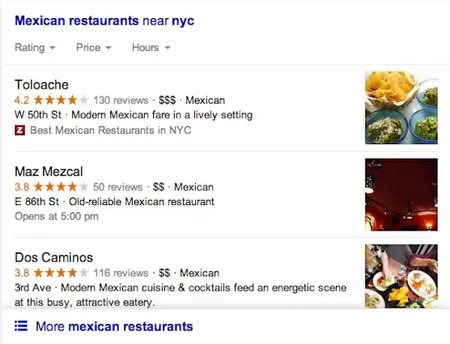
In yet another tectonic shift in the local SEO landscape, Google ended its local “carousel” organic search results on November 13. To date, it primarily affects listings from desktop searches for restaurants, hotels and related business categories. Gone is the interactive “black bar” of local search results that were displayed side-by-side at the top of Google’s vertical results, which accommodated up to 20 listings. The search giant has replaced it with a “3-pack” display representing the top three local organic search results. When it introduced the local carousel in June 2013 via its Google+ page, Google offered an example of local carousel organic search listings for Mexican restaurants in New York City.

Now Google’s search engine results page (SERP) listing for Mexican restaurants in New York City looks like this: understanding the serp 3-pack changes - brightedge By clicking on the “more” link at the bottom of the SERP 3-pack listing, users will land on a new page of local search results displayed as a vertical organic SERP listing.
The individual results show the business address, reviews and a description of the business, as well as a map to the right of the listings.

When Google launched its local carousel, marketers adapted quickly. In fact, BrightEdge CEO Jim Yu discussed a new set of best practices for Google carousel optimization that same year, noting “with 20 results appearing in the carousel. It means your business is competing for attention with 19 other businesses.” However, some of Jim’s tips in that article may be all the more important now, as businesses will vie to be among the top three organic search results of Google’s new local SERP 3-pack. For additional tips on local SEO, you can check out this post by BrightEdge’s Mark Mitchell, which discusses local SEO factors, how Google My Business factors and on-site optimization tips. BrightEdge will be conducting its own research on this new development, and will be sharing the results with you soon. Stay tuned!  

Tips for Travel and Hospitality SEO

Default avatar
Andy Betts
M Posted 11 years 5 months ago
t 9 min read

When it comes to Q4 holiday marketing, most in the industry immediately think “e-commerce” as it relates to Black Friday and Cyber Monday shopping deals. However, under that broad category are the travel and hospitality verticals – especially given that the preponderance of U.S. domestic holiday travel occurs over the Thanksgiving weekend. Those in the travel and lodging industry recognize this seasonal uptick by offering airfare, hotel and other travel deals timed around Black Friday and Cyber Monday. Many brands specify “Black Friday” and “Cyber Monday” in prefacing their discounts, smartly optimizing for the season’s trending search terms. For example, Alaska Airlines features a Cyber Monday flight sale:

With nine of the ten largest hotel groups being among BrightEdge’s clients, we wanted to delve into the demand for that sector leading up to the holiday season, so we leveraged our Data Cube for insights into the Q4 travel and hospitality outlook, so you can prepare. Before discussing what we found, a bit of background.

Travel and hospitality search: a journey

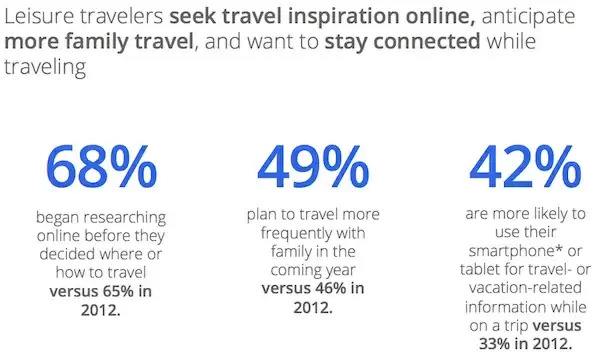
Once upon a time and not so long ago, people planning vacations, weekend getaways or business trips online did so exclusively on desktop. Enter the era of mobile devices – tablets and smartphones – apps and video, all within the past few years, and search around travel and lodging has changed drastically. A year ago, when Google published its annual travel study, it found that an increasing number of searchers began their travel plans with online research, planned more family travel, and were more likely to use their mobile device for related information while on their trip: report data for hospitality seo - brightedge A related “Think with Google” study from March of this year on travel content underscores the role of video (notably, YouTube) as an increasingly popular online medium for people considering travel. According to its report, uploads of travel-related videos grew by 190 percent from 2012 to 2013, exceeding all the other major YouTube categories for video uploads.
This year’s Google travel study (not yet officially published, but Tnooz.com reports it’s received a copy) indicates that over the year, search engines realized a gain of three percentage points, from 15 to 18 percent, as the starting point for research into airfares, and 6 percentage points (18 to 24 percent) for research into lodging. Learn more about travel digital marketing.

BrightEdge Data Cube findings

Our latest Data Cube research into the travel and hospitality industry looked into three major categories:

  1. Travel and accommodation
  2. Travel only
  3. Accommodation only

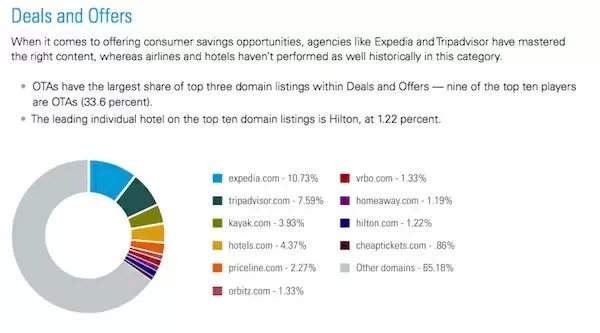
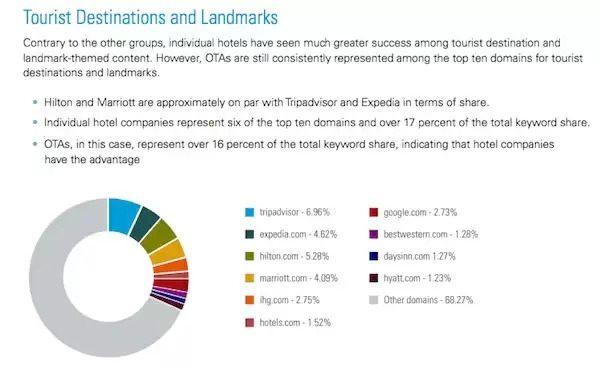
Using our “Time Machine" technology, we were able to analyze travel search trends over time, and found that overall, online travel agencies (OTAs) such as Expedia and TripAdvisor have consistently performed well with organic search optimization, claiming a combined search share of 33.6 percent of the top three “deals and offers” domain listings: see results for hospitality seo - brightedge While OTAs dominate the SERPs in organic content performance for deals and offers, individual hotels – led by Hilton and Marriott – showed notable success for tourist destinations and landmarks, as shown here: data on hospitality seo - brightedge The BrightEdge Data Cube research further uncovered the top ten organic search terms in demand for each category studied as we head into the busy holiday season. BrightEdge CEO Jim Yu recently shared our findings with Search Engine Land readers on this.

How Time Drives Organic Search Success - Binti Pawa

Default avatar
Andy Betts
M Posted 11 years 8 months ago
t 9 min read

It's exciting times as Share14 kicks off tomorrow at the Palace Hotel in San Francisco tomorrow!! As part of our series connecting with leading brands and marketers ahead of Share 14 I managed to catch up with Binti Pawa, Head of SEO for Time Inc.'s Affluent Media Group. Binti is speaking and sharing insights on the "SEO Best Practices Makes Perfect" session at 10:30am - 11:30am on Friday 22nd August. Below are a few extracts from our conversation.

Andy Betts: How much has the SEO landscape changed over the last year? 

Binti Pawa (BP): As marketers, our jobs should be to adapt to the ever changing landscape, learn, and move forward. That said, the landscape has changed in the last year with ‘keywords not provided’ and the on-going algorithm updates for Panda and Penguin to the most recent changes with Google dropping authorship images from their SERPs (although it does not affect rankings directly it does affect CTR for sites). These changes are not the end. There will be more to come. What has not changed, is the way we SEOs optimize sites. The old school SEO will always be the same—things such as optimized title tags, keywords, original content and links.

AB: What change has had the biggest impact for you and your company? 

BP: The biggest impact for us has been the loss of keyword data. For many SEOs in the industry, including myself, this forced us to look at our strategy, and, more specifically, how we report our metrics. A lack of keyword data meant we had to look at alternatives of finding trends, new measurements for non-branded growth, and low-hanging fruit. It forced us to look at GWMT tool query data (in addition to other tools) and page-level metrics more than ever.

AB: Tell me more about your session?

BP: I will be speaking on “Best Practice Makes Perfect – SEO Success Stories”. This will be my first time at Share and I’m very excited to present how we drove organic search success for our Time Inc. brands, Travel + Leisure and Food & Wine. I will discuss the challenges our websites faced and our solutions, in addition to our results-driven approach. I will also include tips on how attendees can do the same.

AB: Tell us more about how you use BrightEdge and how the platform helps you achieve your business objectives?

BP : We use BrightEdge for measuring and reporting our SEO success.  The Data Cube and social signals are great features for content targeting and competitive analysis. Our editors use Data Cube to discover, assign and write content on topics that will drive higher engagement and referral such as localized content. One of my favorite things about the platform is that it’s easy to use and the dashboards are simple yet very efficient.

AB: What do you love about BrightEdge?

BP: I love the speed at which BrightEdge adapts to the evolving search landscape. The company has come along a long way since I started working with them in 2010, when there were only dashboards, keywords and basic analytics. Today, the BrightEdge platform provides marketers and editors with full capability and features to run an in-house or agency-side campaign. The Data Cube, so far, has been one of the best feature additions to the platform.

About Binti Pawa Binti Pawa is a Digital Marketing and Search Engine Optimization veteran with over ten years’ experience in in-house leading performance-driven growth for both start-ups and corporate heavyweights. She is presently the Head of SEO for Time Inc.'s Affluent Media Group, working on such brands as Travel + Leisure and Food & Wine, where she is responsible for leading, developing, and integrating SEO and content strategies. Before working in Digital Publishing, she was immersed in Travel as the head of Social and SEO for enterprise brands CheapOair, OneTravel and Travelocity. Binti is a graduate of Hofstra University, and lives on Long Island, New York with her husband and two children. LinkedIn: www.linkedin.com/in/bintipawa/

About Share14 Share14 is the must attend event of the year for content, search and digital marketers. Hear what search and social titans from Google, Bing, Microsoft, Twitter and Facebook have to say on the future of content, search and social. Marketing leaders from brands such as Adobe, Macys, 3M, SAP, HP, Marriott and Hilton share insights, case studies, and best takeaways on how to win with content performance marketing. The full line up of speakers, and links to registration, can be viewed here.  

,