The SEO and PPC Management Handshake

Default avatar
Andy Betts
M Posted 11 years 8 months ago
t 9 min read

Have you heard of the old saying, “One hand doesn’t know what the other is doing”? You’ve most likely experienced the frustration that comes with that when dealing with large organizations and government bureaucracies.

For example, sending a payment well ahead of the cable provider’s due date, only to receive a bill demanding payment immediately. Or diligently forwarding your mail to your new address, but somehow it isn’t arriving. The list goes on and on.

This phenomenon also applies large brands and their marketing, when separate branches or divisions do not communicate with one another. They’re simply “not on the same page,” and more often than not, the company suffers as much as the customer.

When heading up an enterprise-level search marketing strategy, you understand that you can’t afford to waste precious resources on duplicate efforts, much less counterproductive ones. When this manifests as paid and organic search teams that don’t collaborate, it can mean a muddled, disjointed search marketing strategy that’s not making the most of the website’s presence in the search results.

Managing PPC and SEO working together

One of the smartest ways to both streamline and coordinate the search marketing strategy for your company - and maximize its ranking, conversions, and ROI - is to have your SEO and PPC management teams “on the same page” (literally).

A 2012 study by Google focused on the interactions between organic search results and paid ads found that even for sites claiming a No. 1 organic ranking, paid ads provided 50 percent incremental clicks (meaning, half of the top-ranking site’s visits would not have happened without the presence of paid ads).

The authors of Google’s study further noted that PPC percentages increased as a page’s rank in organic decreased, with paid ads providing 82 percent incremental clicks for sites ranking between two and four, then jumping to 96 percent for brands ranking five or lower:

An example of SEO and PPC management - brightedge

Google’s findings were reinforced by a September 2013 report by Kenshoo, which also analyzed the interplay between paid and organic search (for a major retail division of Hewlett-Packard in the U.S.). For a site ranked No. 1, click share percentage ratios for organic versus paid were 60:40.

In the No. 2 through No. 5 position in the SERP, the correlation dramatically shifted to 33 percent organic to 67 percent paid. The numbers for SERP positions No. 6 through No. 10 were more dramatic still, with organic search clicks at 10 percent to paid search’s 90 percent.

Kenshoo Study for seo and ppc management - brightedge 

With these two studies, we see PPC traffic rising and falling in conjunction with the organic search results position in a concerted effort to help boost visibility. A great way to access data that shows the relative contributions of SEO and PPC management is through the Google Analytics (GA) multi-channel funnels report.

Generated from conversion paths, this GA report can show you not only which channels contribute to your overall conversions, but also how. BrightEdge also has a fantastic report in its SEO platform that tracks channel performance across organic, paid and much more.

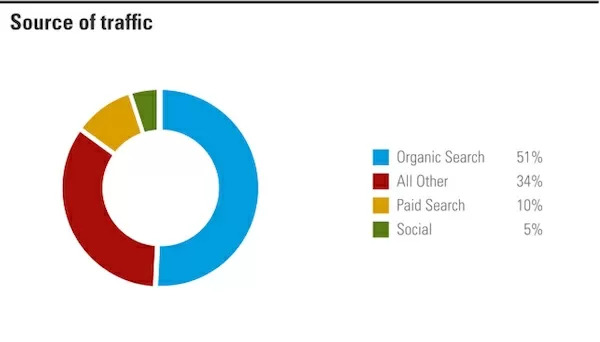
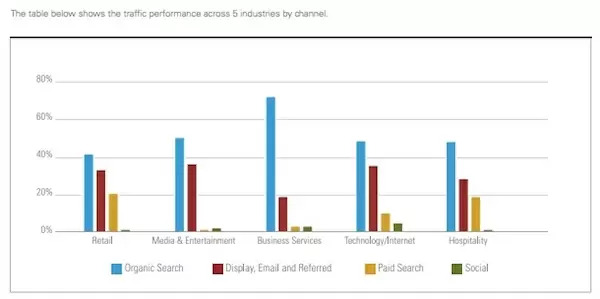
Channel Reporting for seo and ppc management - BrightEdge

How SEO Informs PPC Strategy

Just as PPC can do some heavy lifting when the organic search results drop, SEO can inform PPC. Now that Google has all but eclipsed keyword search query data from its analytics with the “secure search” initiative, the Web page is now the best unit by which to measure your SEO.

In absence of keyword data, you likely still have high-converting Web pages. BrightEdge S3 helps marketers identify their most valuable Web pages. (If you’re not a BrightEdge customer, GA has data you can mine, too.)

An analysis of this data can lend insight into how your PPC landing pages might be improved, or help you to make decisions about which pages to drive PPC traffic to if two pages could be just as relevant to an ad. However, you can still gain insights into important keywords to your website from other places, Google Webmaster Tools being one of them, and you can use that data to inform your PPC strategy.

SEO also impacts PPC in other ways, for example, AdWords Quality Score, which rates how relevant a page is for an ad. Basic on-page optimization of PPC landing pages helps ensure this type of relevancy. You can also leverage organic rank to determine and control your PPC spend. If you claim the top position in the SERP organically, you might decide there’s no need to also secure the No. 1 position in PPC for a keyword.

Clearly, the relationship between organic and paid search means that your SEO and PPC management teams have valuable information to share, which could lead to better site performance in terms of rankings, click-through rates (CTR), conversions and ROI. The best way to secure that friendly handshake between SEO and PPC management is to ensure your organization’s organic and paid teams have the data they need to support the relationship, and know how to collaborate using that data.  

Adapting to SEO Change At Share14 with Macys.com

Default avatar
Andy Betts
M Posted 11 years 9 months ago
t 9 min read

The team at BrightEdge is gearing up for another epic Share conference. Share 14 is all set to, once again, be the must attend digital marketing conference. It all starts on August 20 in San Francisco.

In the run up to the event we’re connecting with many of the worlds leading brands, and the speakers we've invited to Share in order to get a sneak peek into the topics that will be discussed at this year’s event. I caught up with Lauren MacPhail, the director of SEO and organic content at Macys.com. 

Lauren and her team are responsible for increasing the organic reach of Macy’s within the online space through content creation and technical SEO consultation. I chatted with Lauren about the change SEO has seen in the past year, where it’s headed and how content fits into it all. Enjoy.

The SEO Landscape

Andy Betts (AB): How much has the SEO landscape changed over the last year?

Lauren MacPhail (LM): Over the last year, there have obviously been significant algorithmic changes that altered the course for many SEOs. Between Hummingbird, Panda and Penguin, many companies have had to completely change the way they approach optimization.

The largest impact has come from a few key areas:  

  1. Analytics data. The ability to track keyword performance within website analytics used to be the cornerstone of both proving SEO success and identifying new opportunities for optimization. Many SEOs had moved away from relying on SERP rankings for success in favor of a more conversion-driven approach. Secure search changed all of that by forcing SEOs to put more focus on ranking and start examining page performance with a greater level of detail. While many see this as a positive change, it has had the largest impact on SEO analysis and reporting in years.
  2. Linking to content. We’ve all seen the shift over the last year away from guest posting and “link building” strategies toward “content marketing” strategies. The reality here is that both can be good or bad, depending on the intent.
  3. SEM marketplace additions. The rise of PLAs, both on desktop and mobile, and the redesign of paid ads on Google have shifted both the real estate breakdown of the SERP and the average customers’ perception of paid vs. organic. This has affected click through rates, and possibly the rank needed to get high visibility in the SERPs.
  4. Mobile shifts. While mobile rankings used to mirror desktop, that has obviously changed. As more and more search traffic (and traffic in general) comes from mobile instead of desktop, there is increasing pressure on SEOs to optimize the mobile experience. This means everything from intent analysis to performance to content serving, which tends to be outside the wheelhouse of the typical SEO.

AB: How do you see the space evolving over the next year?

LM: The one commonality between the algorithm changes Google had made is the user experience. As the search engines get smarter, they are trying to mimic what a user might analyze as quality, both in terms of linking and content. If they haven’t already, SEOs need to start thinking like good marketers – “What does my customer want? What would best answer their questions? What does my customers’ journey look like?” On the other end, I feel like SEO has gotten more technical than ever, and the landscape is changing quickly, so the need to keep up is imperative.

AB: Any tips to share on adapting to rapid change in the market?

LM: Keep an eye on mobile, and the technology that’s evolving those experiences. We’re at a fork in the road regarding mobile, and both users and the marketplace needs to choose – app or website. The answer to this will impact everything you do going forward. Also, and this seems like a no-brainer to me, stop trying to fool the search engines. Adapting is far easier when you’re not backpedaling and apologizing for bad choices.

The Content Marketing Shift: Optimization, Measurement, Performance

AB: How are you aligning your content and search optimization efforts?

LM: We’re creating a system that ties together keyword ranking performance, conversion information, customer demand, and market interest in order to both inform new content decisions and measure the efficacy of existing content. This has been a work in progress as new technologies and tracking tools have allowed us to connect the dots.

AB: How critical is measurement of content in your organization?

LM: It’s extremely critical. Yes, we’re big, but like any organization we have a finite number of resources available to create and maintain content. Ensuring the content we’re supporting is effective is key to both internal buy-in and external successes. We’re constantly working to fine-tune how we measure content success and adjust our priorities accordingly.

AB: Tell me more about your view on the convergence of content and SEO – what are the challenges, and what advice can you give?

LM: I’m obviously a huge believer in truly “organic” SEO, meaning we are simply helping the search engines to surface the best, most relevant content that our customers are searching. The challenges of this content-focused approach fall mainly within scale and measurement.

Creating great content at scale has been the topic of many blog industry blog posts recently, which have all failed to find the silver bullet. But nothing worth doing is easy.

Measurement is the other major challenge with the content/SEO integration. Content marketing tends to hit the top of the funnel, which means you get less direct conversion metrics in the traditional sense. You end up having to create new “conversions” around engagement, sharing, and increased latent relevance and educate your organization about the value of capturing top-of-the-funnel customers.

About Lauren's Session at Share 14

AB: Tell me more about your session.

LM: In this session, I want to explore how the SERP has changed over time and the struggle that has created for the industry. Many of the outcomes that were seen as “successes” in the past don’t have the same efficacy, and as marketers, we’re having to adjust to the new landscape.

I’d like to examine the factors involved in the change: algorithmic changes, device mix, searcher intent/sophistication, and how the search engines’ marketplace agenda plays into the mix.

AB: Why Share? Why do you attend? 

LM: Share has such concentrated focus on only the most innovative and holistic SEO strategies, and it draws a crowd that is nothing short of obsessed with this type of organic integration. The passion of the speakers plus the great networking conversations mean a value you’re hard pressed to find at some of the broader industry conferences.

Macy's Partnership with BrightEdge

AB: Tell us more about how you leverage BrightEdge. 

LM: BrightEdge is the cornerstone of our SEO measurement and optimization strategies. Particularly since the release of Page Reporting and the Data Cube, my team uses the tool to track optimization efficacy, content targeting, and competitive movement. In the past, the issue was always, “We don’t know what we don’t know,” but the Data Cube has started to solve for this, giving us greater insight into our blind spots.

AB: What do you love about BrightEdge?

LM: I love how quickly BrightEdge has adapted to keep up with the changing industry. Algorithmic changes and new technology keep the SEO industry in a constant state of flux, and the speed at which BrightEdge has been able to adapt to meet our changing needs has been nothing short of extraordinary.

I also have to say, the partnership from our BrightEdge team has been key. My team is known to be demanding in their innovation, and our account and development teams at BrightEdge have answered their needs perfectly.

About Share14 The Worlds leading brands converge at Share14 to share insights, case studies and best practice on the content, search and social media landscape. Hear from over 50 marketing leaders - from companies such as Google, Bing, Microsoft, Adobe, YouTube, 3M, Hilton, Marriott, Home Depot, Best Western, Salesforce and SAP - and network with over 1000 digital marketers set to attend Share14. Tickets for Share14 are selling very fast so don't miss out, capacity is limited.

Stay tuned on the BrightEdge blog for more speaker updates and interviews with Google, Bing, YouTube, Marriott, Hilton, Experian and many more over the next few weeks!      

Solving for ‘X’ in the ZMOT Equation

Default avatar
Andy Betts
M Posted 11 years 9 months ago
t 9 min read

Consider this scenario: your daughter has studied diligently for an algebra test. She calmly sits down at her desk, confident she’s “got this.” The instructor clicks his stopwatch – it’s the moment of truth.

At first glance, the problem seems reasonably straightforward – one that simply directs her to solve for "X." Upon further analysis, the realization hits her: solving for X means taking into account a dizzying array of variables, without the aide of a calculator!

Solving for X as a Digital Marketer

Today, as a digital marketer, you may well find yourself facing a similar moment of truth as you analyze the bewildering implications of Google’s ZMOT (“zero moment of truth”) campaign. To summarize, its mandate is to deliver the right message to the right person at the right time.

Like a mind-bending algebra problem, you realize that meeting Google’s ZMOT challenge requires factoring in a daunting number of dimensions. How can you possibly manage to deliver your brand’s “right” message to your “right” market at the “right” time? Especially at scale, and at the enterprise level?

ZMOT Google

As with algebra, the first step towards solving Google’s ZMOT problem is to define it.

The ZMOT Conundrum

To paraphrase the author of Google’s ZMOT, Jim Lecinski, “Zero Moment of Truth” is defined as follows:

  • It typically starts with online search.
  • More and more, it’s mobile search.
  • It happens in real time, at any time of the day.
  • The consumer is in charge, selecting the information he or she needs.
  • The conversation is multi-way, with marketers, friends, strangers, websites and experts all having their say and competing for attention.

In essence, Google both outlines the parameters of its ZMOT problem (search, mobile, social, and content optimization), and hints at its solution.

The ZMOT Solution: Integration and Optimization

Yes, integration. It’s not merely a buzzword, it's the future of digital marketing and the fate of today’s marketer to be able to facilitate it. As I wrote at Search Engine Watch when discussing Adobe’s 2014 Summit:

Today, the reinvention of marketing and the marketer requires:

  • The ability to pull together data from multiple sources in one place, process it in a standardized manner, and package it in a way a marketer can understand.
  • The power to collaborate with other business units across a company and its teams when working on campaigns, so efforts are streamlined.
  • The capacity to deliver a personalized experience to the customer based on a brand's understanding of who that customer is, what device they are on, and where they are interacting with the brand.

However, unlike your experience as an anxious algebra student deprived of a calculator, today, you have access to the powerful tools and the cutting-edge technologies you need to help solve the multi-faceted ZMOT equation. In short: yes, you can solve for X!

Enter Adobe Experience Manager and Content Optimizer

The dizzying array of channels that marketers must manage is one part of the equation. But the other part is knowing where to focus resources for maximum ROI. For ZMOT, the winner is search.

Organic search is the best channel to understand demand. Through this channel, marketers can uncover a wealth of data to understand what matters to their target audience. And, they can deliver their message in ZMOT fashion.

If you’re not familiar with Adobe Experience Manager, this technology helps marketers “create, manage, and optimize digital customer experiences across every channel, including web, mobile apps, digital forms, and communities.”

BrightEdge partnered with Adobe in a March announcement of the “Content Optimizer” for Adobe Experience Manager, powered by BrightEdge’s Data Cube. The Content Optimizer supports content optimization during the content creation process within Adobe Experience Manager with features like:

  • Content demand targeting: Gives authors the ability to tailor content as they write it to match the topics that people are actually searching for and interested in reading.
  • Real-time content coaching: Allows authors to optimize content as they create it directly within Adobe Experience Manager.
  • Optimal content structure: Determine the optimal structure for effective content and set guidelines within the BrightEdge S3 platform. Then, share guidelines within Adobe Experience Manager, connecting SEO know-how with the content creation process.

In our research, we studied the impact of optimizing pages for search before they were published, and uncovered a potential to drive 10 percent more traffic, 25 percent more revenue and 50 percent less time to results for targeted pages.

Impact of Optimized Content

This seamless integration of data between Adobe Experience Manager and BrightEdge technology also introduces efficiencies for brands by allowing individual business units or teams (SEOs and content creators) to collaborate, cutting back on redundancies and streamlining efforts.

In short, Adobe Experience Manager and Content Optimizer bridge the gap between SEO experts and content writers, enabling marketers to be better equipped to deliver the right content at the right time to the right person.

Together, BrightEdge and Adobe serve as the marketer's calculator to solve for ‘X’ in the ZMOT equation. Feel free to test your knowledge with BrightEdge Digital Marketing Quiz or SEO Quiz.


Understanding Google Webmaster Tools

Mark Mitchell
Mark Mitchell
M Posted 11 years 9 months ago
t 9 min read

Google Webmaster Tools for is a free service offered by Google that helps users monitor and maintain a site's presence in the Google Search results. Setting up Google Webmaster Tools for SEO can help you understand how Google views your site, so you can optimize its performance for the search results.

Today, we’ll go over best practices for configuring GWT, and what you need to look for in the settings and reports to boost your SEO performance.

10 reasons to use Google Webmaster Tools for SEO

In its help files, Google gives 10 reasons to use Google Webmaster Tools for SEO:

Monitor your site's performance in Google Search results:

  • Make sure that Google can access your content
  • Submit new content for crawling and remove content you don't want shown in search results
  • Create and monitor content that delivers visually engaging search results
  • Maintain your site with minimal disruption to search performance
  • Monitor and resolve malware or spam issues so your site stays clean

Discover how Google Search—and the world—sees your site:

  • Which queries caused your site to appear in search results?
  • Did some queries result in more traffic to your site than others?
  • Are your product prices, company contact info, or events highlighted in rich search results?
  • Which sites are linking to your website?
  • Is your mobile site performing well for visitors searching on mobile?

Setting up Google Webmaster Tools for SEO

Getting started with webmaster tools for SEO is fairly simple.

Log in to Google, and go to: https://www.google.com/webmasters/tools/

The basics of site settings

Preferred domain First, set your preferred domain. We do this because links may point to your site using both the “www” and “non-www” versions of the URL (for instance, http://www.example.com and http://example.com).

The preferred domain is the version that you want used for your site in the search results.

Set geographic target Next, set your geographic target. Google wants to return the most relevant sites in response to a user query. As a result, the search results shown in the U.S. may vary from the results returned to a user in the U.K.  

If your site has a generic top-level domain, such as .com or .org, and targets users in a particular geographic location, you can provide information to help Google determine how your site appears in the search results. Sites with country-coded top-level domains (such as .ie, .co.uk or .fr) are already associated with a geographic region. In this case, you won't be able to specify a geographic location.

Pro tip: If your site has subdirectories targeting different countries (e.g., www.example.com/us or www.example.com/fr), set these up as individual sites in webmaster tools for SEO and configure the geotargeting accordingly.

Changing the crawl rate The crawl rate refers to the speed of Googlebot requests to your server during a crawl. Unless there is a known issue with your server, or reason you need to adjust this, we would recommend allowing Google to automatically optimise the crawl rate.

crawl rate settings in google webmaster tools - brightedge

Submit XML sitemap A Sitemap is a list of all the pages in your site, and a way to tell Google about these pages that it might not otherwise discover. See how to create an XML Sitemap, here.  

Here are a few steps to submit your Sitemap to Google Webmaster Tools for SEO:

  • On your Google Webmaster Tools home page, select your site.
  • In the left sidebar, click “Crawl” and then “Sitemap.”
  • Click the “Add/Test Sitemap” button in the top right.
  • Enter Sitemap URL into the text box that appears.
  • Click “Submit Sitemap.”

Tips for reporting data with Google Webmaster Tools

Sitelinks

Navigate to: Search Appearance > Sitelinks Sitelinks are meant to help users navigate your site. Google analyzes the link structure of your site to find shortcuts that will save users time, and allow them to quickly find the information they're looking for. Sitelinks are only shown if Google thinks they’ll be useful for the user, and the structure of your site allows for it.  

Keep in mind, they are automated. You can try to secure sitelinks by ensuring you use anchor text and alt text that's informative, compact and avoids repetition. If you think that a sitelink URL is inappropriate or incorrect, you can demote it in webmaster tools for SEO. Demoting a URL for a sitelink tells Google that you don't consider this URL a good sitelink candidate for a specific page on your site.

Remember, it can take time for your demotion to take effect!

Structured data for webmaster tools

In Google Webmaster Tools for SEO, navigate to: Search Appearance > Structured Data Google uses Schema.org markup to inform “rich snippets” displayed in the SERPs, such as reviews, event dates, recipes etc. Getting rich snippets for your site listings can dramatically improve your CTR.

The structured data report shows how many pages on your site were found to have structured data, and the type of structured data that was found.

You can also use the data highlighter tool to markup events (more will probably become available in the future) on your pages without touching the HTML code. Just highlight the data and input your event information, and then Google will save and apply this to the page.

Linking to your site

Navigate to: Search Traffic > Links to Your Site This report provides a list of domains/URLs that have linked to your site. Check out how your site is linked to by the anchor text.

If you find you are not ranking for a term for which you have many links using the same anchor text, it could be because too many links are using this same anchor text.

In this instance, you would need to get rid of some of these links. You have the option to export all links to .csv for review. If you have a link penalty, you may be spending a lot of time using this tool.

Index status

Navigate to: Google Index > Index Status Index status shows how many URLs are indexed out of all those Google can find on your site. Use this to quickly spot issues such as duplicate content, canonical URL problems and more.

For example, if you submit a Sitemap, and Google indexes 5,000 out of a potential 10,000 URLs, then you probably have a canonical/duplicate content issue.

Crawl errors

In Google Webmaster Tools for SEO, navigate to Crawl > Crawl Errors If your website is not working correctly and you’re getting a high number of crawl errors regularly, then you need to fix this. Each error represents a usability issue and has the potential to make you lose a visitor.

google webmaster tools shows harmful errors - brightedge

Crawl stats

Navigate to: Crawl > Crawl Stats Crawl stats show the number of pages crawled per day. The more pages crawled and downloaded, the better. The more time its takes for your site to perform, the worse off your site is. Remember, site speed is a factor in Google’s algorithm. 

Blocked URLs

Navigate to: Crawl > Blocked URLs The robots.txt file is the first port of call when crawlers or search engine bots visit your site – it tells them which pages to index or not.

The blocked URLs report shows any URLs that have been blocked from crawling by your robots.txt file. It may pick up pages that are blocked, but that you want indexed; in which case, review your robots.txt file and edit accordingly.

Fetch as Google

Navigate to: Crawl > Fetch as Google Use “fetch as Google” to understand exactly how Google sees pages within your site. This is helpful when you need to verify if a page is accessible.

You can also grab as Googlebot-Mobile, which will help you identify any potential issues with your pages when they’re viewed on smartphone devices.

This post is a great starter guide to getting up and running in Google Webmaster Tools for SEO, but there’s still much to be learned. At the least, I hope this guide helps you implement GWT data into your SEO diagnostic process.

Oh, and did I mention that BrightEdge’s S3 platform integrates with Google Webmaster Tools for SEO? Check it out!  

Leveraging LinkedIn Marketing Ideas for Branding

Default avatar
Andy Betts
M Posted 11 years 9 months ago
t 9 min read

Even if you’re not an “official” Baby Boomer, you’re likely familiar with that classic ‘70’s show (or its ‘90’s movie spinoff), "The Brady Bunch." Throughout, poor Jan Brady repeatedly laments, “It’s always Marsha, Marsha, Marsha!”

As brand marketers, you may well relate: “It’s always content, content, content!” Indeed it is, and for good reason.

Just as Marsha was the undisputed queen of the Brady brood, so is content the irrefutable king of search and social media – and will remain so for the foreseeable future. And when it comes to using content to build your professional brand on social media, using LinkedIn marketing ideas remains the sovereign option.

LinkedIn: The Content Publisher’s Professional Platform

In a bold move that distinguished itself from the other major social media channels of the time, LinkedIn introduced a content publishing platform in 2012, “LinkedIn Influencer,” whereby it invited the top 150 industry thought leaders to share their original content.

Fast forwarding to February of this year, the company announced that it would open its publishing venue to all of its users, beginning with 25,000 (still relatively exclusive) members. Today, LinkedIn continues to democratize its publishing platform with a slow but steady roll out to all of its nearly 300 million users. (Note: As of the date of its announcement, LinkedIn states that it is offering access to its publishing platform only to English language users, but stipulates it will be expanding access to accommodate multiple languages). What does this mean for your brand? Nothing short of a huge opportunity to position yourself as the go-to resource in your industry’s vertical! Publishing solid, optimized content on LinkedIn allows you the opportunity to showcase your brand, and reach a significant amount of qualified potential customers, not only through LinkedIn’s own site search, but also via the search engines themselves.

LinkedIn Marketing Ideas for the Content Publishing Fast Track

So how do you maneuver onto the fast track for leveraging LinkedIn’s content publishing platform? First of all, if you haven’t done so already, you’ll want to start publishing exceptional content, be it on your own blog or a secondary online forum.

Once you've published a few good quality pieces, follow these 4 LinkedIn marketing ideas:

  • Flesh out your brand’s LinkedIn company page
  • Incorporate search-specific keywords and phrases into your brand’s profile and shared content
  • Create a LinkedIn group relevant to your industry
  • Integrate visual media to accompany your shared content

​1. Flesh out your brand’s LinkedIn company page. Meaning, REALLY flesh it out by satisfying any and every field LinkedIn deems relevant, and then some. This can range from detailing your brand’s track record (think of this as the “professional experience” part of your personal resume) to having a minimum number of industry connections.

If you haven’t yet crafted your brand’s story, or connected with other brands that are related to your vertical, now is the time to start!

Connecting with others is a relatively easy process, and you may be surprised how readily your “invites to connect” are accepted. Given that your brand’s “colleagues” also need to make connections, it usually amounts to a clear win-win transaction … and perhaps even a possible client or potential business partner!

2. Incorporate search-specific keywords and phrases into your brand’s profile and shared content. Think of this task just as you would if you were optimizing your brand’s website content. LinkedIn has a search function, and by integrating search-savvy terms into your company’s tagline (or headline), summary, and updates, your brand will be more readily found on the platform.

When it comes to your brand’s published updates, informed keyword optimization could also serve to boost your company’s overall search engine ranking.

3. Create a LinkedIn group relevant to your industry. Be it pet care, virtual assistance or massage therapy -- each brand has its own audience. From both search and usability standpoints, your job is to make your brand’s company page, updates, and content as finely-tuned and targeted as they can possibly be for its given vertical. How efficient, then, to accomplish both search and usability goals by creating and sharing your best content (as well as that of complimentary brands) with your highly-qualified brand base.

A quick but important word of caution about forming a LinkedIn group: you’ll want to appoint a social media manager or team member to moderate your group.

This is necessary not only to keep it clean of the spammers that dilute and pollute a company’s group page, but also to act as your brand’s “voice” while engaging with its core audience.

4. Integrate visual media to accompany your shared content. Research clearly shows that people tend to respond more to “rich media,” so keep this in mind when posting your ongoing company updates as well as when sharing content: integrate images and photos whenever possible! Also note that LinkedIn is rather fond of SlideShare presentations, having bought the visual platform in 2012, about the same time it introduced company pages. And of course, you can also supercharge your content by adding video!

Happy content publishing!

Mobile Share Report Reveals Mobile Insights | BrightEdge

BrightEdge's Mobile Share Report Reveals Startling Mobile Insights

Twenty-Seven Percent of Websites Are Misconfigured for Smartphones, a 200 Percent Potential Opportunity in Smartphone Traffic

SAN MATEO, CA--(Marketwired - Jun 24, 2014) - BrightEdge, the essential content marketing platform, today unveiled the latest in mobile marketing research in its Mobile Share Report. With smartphone share of organic search at 23 percent and growing over 50 percent per year, CMOs across industries are working tirelessly to ensure exceptional performance from their mobile sites. This research, derived from BrightEdge's Data Cube -- a technology that powers the BrightEdge platform through real-time access to billions of pieces of data, including content, rich media, search keywords, and social -- reveals the potential untapped opportunity in mobile traffic, conversions, and revenue. The report also discusses how various approaches to mobile site implementation can help capture that opportunity.

"With smartphone website traffic growing at 10 times the rate of desktop, mobile websites are quickly becoming the cornerstone to content marketing and customer engagement," said Jim Yu, CEO and founder of BrightEdge. "We know that mobile will play an integral role in the future of marketing and want to help brands navigate the challenges that mobile presents. This report will help businesses understand the best ways to create mobile-optimized sites in terms of traffic and search rank, boosting customer engagement and, more importantly, ROI."

Pew research found that nearly 60 percent of American adults own smartphones and 40 percent own tablets -- and these figures are projected to continue growing. However, the Mobile Share Report found that just over one in four mobile sites are misconfigured, leading to a massive loss of potential traffic. Twenty-seven percent of mobile sites are ranked lower than they should be because Google and other search engines do not recognize the mobile site as related to its desktop counterpart. If marketers rectify this misconfiguration, the report discovered they stand to boost smartphone traffic by 200 percent. As mobile becomes an extension of consumers' everyday lives, marketers have the opportunity to connect with them in newly impactful ways. This study reveals where opportunities lie to improve configuration and how marketers can make the most of mobile.

Key findings from the report include:

  • Poor mobile configuration, means companies stand to lose big - 27 percent of websites were misconfigured for smartphone searches, which resulted in an average 68 percent loss of smartphone traffic to those websites.
  • Desktop & mobile are not created equal - 62 percent of searches show different results depending on whether the search was performed on a desktop or smartphone and mobile ranks are typically half a position lower than desktop.
  • One-size does not fit all - companies use Responsive, Dynamic and Separate approaches for configuring their mobile sites. However, BrightEdge data shows that the difference in performance between the various approaches is insignificant. This means that companies should first understand their mobile goals and the intent of their mobile audience to select the right implementation approach.
  • Mobile growth is on the rise - Smartphone traffic share is expected to grow by 50 percent in 2014. With smartphones and tablets combined, mobile devices now command a third of organic search traffic going to websites.


BrightEdge's platform offers the most comprehensive mobile SEO technology to help marketing and development teams succeed before, during, and after the mobile implementation. With site audit recommendations, mobile analytics and rankings reports, and the mobile "share of voice," customers get the most business value out of their mobile investment.

Learn how to make your mobile marketing as effective as possible by downloading the report.

About BrightEdge

BrightEdge is the essential content marketing platform for modern business. It transforms online content into tangible business results such as traffic, revenue and engagement. BrightEdge's S3 platform is powered by a sophisticated big data analysis engine and is the only company capable of web-wide, real-time measurement of content engagement across all digital channels, including search, social and mobile. BrightEdge's 600+ customers include global brands such as 3M, Microsoft, Netflix and Nike. The company is based in San Mateo, CA with offices in New York City, Chicago, and London.

Visit our website: www.brightedge.com 
Read our blog: www.brightedge.com/blog 
Like us on Facebook: www.facebook.com/seoplatform 
Follow us on Twitter: www.twitter.com/brightedge

Contact Information:
Kristen Hay 
Launchsquad 
415.625.8555
BrightEdge@LaunchSquad.com

Press Release Date

The Evolution of SEO Roles for the Modern-Day Marketer

Default avatar
Andy Betts
M Posted 11 years 10 months ago
t 9 min read

Characteristics of a species evolve out of necessity over time. For example, did you know that the shape of the human face may have evolved to protect itself from injury specifically coming from a fist?

The evolution of SEO has brought about changes for Marketers’ roles too, sometimes in a violent fashion – like when Google unleashed secure search at 100 percent in 2013, stripping search keyword data from Web analytics. This forced many marketers to find new ways to ensure brands were creating relevant experiences for Web searchers, with the focus going away from the just the keyword to the page level and its content.

But this evolution of SEO isn’t gradual like the human kind. In SEO, things can change overnight, and marketers must adapt in fierce fashion to stay relevant in their own ways.

When we surveyed brands for the 2014 Search Marketer report, we found that marketer roles across 8,000+ global brands were in constant change. Sixty-one percent of those surveyed for the report said there was a promotion on their team in 2013. With those promotions, 79 percent added more responsibility to their roles.

the evolution of seo shows marketers are having more responsibilities added to their roles

At BrightEdge, we promoted 23 people in Q1 of 2014 alone. Pay raises for marketers who evolve their roles is competitive, too. Data from the Search Marketer survey showed more than half who received a pay raise saw a 10 percent to 25 percent increase.

the evolution of seo is bringing pay raises to many marketers - brightedge

That said, who are the people behind this evolution of SEO, and what makes a great marketer in today’s professional world?

Survival of the Fittest

In the evolving world of digital marketing, only the strong survive. In a May post by BrightEdge CEO Jim Yu for Marketing Land, we heard from Kirill Kronrod, senior global SEO manager at Adobe Systems, who had a few things to say about what makes SEOs relevant today.

(P.S., If you haven’t read Kirill’s fantastic guest post on how Adobe approaches its enterprise SEO, check it out on our blog).

No. 1, said Kirill, was analytical skills. “For larger organizations, we really need to understand the numbers,” he said. Technical SEO skills are a must, he added, as well as other attributes like the ability to prioritize projects by the impact they may have.

And sometimes, it’s about possessing the right skill set for in-demand positions. BrightEdge’s Emily Alojado, senior recruiter of marketing and product, says anything “demand generation”-related is hot right now.

“This includes hiring experts with experience in building and helping to build a lead gen program from scratch, along with experience in one or more specific channel.”

Some highly desirable aspects for a demand gen role, says Emily, include:

  • Experience building a demand/lead gen program from scratch to drive growth and profitability across all digital channels.
  • Strong expertise in performance marketing through campaign launch, execution, optimization and analysis.
  • Experience in building and growing the email/CRM channel to deliver awareness, demand generation and customer satisfaction.
  • An SEO expert to drive traffic through organic search, and devise a strategy around online customer acquisition.

Speed Up Your Evolution of SEO

Both marketers and brands rely on progressive skills and minds to keep up with the evolution of SEO. Right now, we’re in a place of melding, where traditional marketing-communications skills and creativity is blending with technical SEO and digital analytics.

To continue to evolve, marketers should focus on and brands should hire for specialized skill sets. Generalists are great for certain roles on a marketing team like support but as we all know, each channel in digital marketing can be a full-time job.

Marketers that are able to forecast the evolution of SEO and digital marketing, and hone in on a skill set to prepare for that, will be ever in demand. And, the brands that hire them will win.

By the way, BrightEdge is hiring marketers now. Check out our careers page to become a part of the evolution of SEO.

Ignite Your SEO Success Release

A BrightEdger
A BrightEdger
M Posted 11 years 10 months ago
t 9 min read

Since 2007, BrightEdge has been dedicated to the SEO community by helping our customers stay ahead of the changing search landscape.

Over the past seven years we’ve seen SEO evolve with algorithm updates like Panda, Penguin, and Hummingbird, the change to Secure Search, and a shift from keyword to content centric SEO. We’ve been here with you through it all! BrightEdge keeps our customers ahead of the curve for tomorrow’s SEO, by anticipating what is coming and focusing on innovation.

At BrightEdge our top value is customer success which is why we deliver SEO innovations 10X a year, have built the largest global customer success organization, and actively listen to your product ideas.

With our latest release we’re excited to announce two new programs, and great new features to help ignite your SEO success!

Jumpstart Your Success with Ignite Onboarding

We're committed to being your best partner in Enterprise SEO, which is why at the beginning of the year we introduced a formalized project-based onboarding program aligned with your business goals and strategies.

  • Get Up and Running Quickly – We’ll provision your account within 2 business days & integrate Google Webmaster Tools
  • Learn the BrightEdge Platform – With dedicated one-one-one onboarding assistance from a Certified Onboarding Manager
  • Global Training for All Users –  Whether you’re a team of 50 or an army of one, we’ll coach you through each section of BrightEdge
  • Deep Dive into an Area of Focus – Choose from one of 9 guided Ignite Projects aligned with your goals & strategies

Ignite Onboarding complements our professional training and certification, ensuring our customers have the skills to take full advantage of the BrightEdge platform.

BrightEdge training and certification can be completed online in self-paced modules, or in-person at Share14.

Voice of Customer Program

What many customers like about partnering with BrightEdge is that their voices are heard. We’re committed to being your best partner in Enterprise SEO and listening to your great product ideas.

Each of our ten releases a year include new features based on the cumulative ideas of our customers that result in highly-adopted features.

Collaborative Innovation with Voice of Customer

BrightEdge Voice of Customer provides an opportunity to:

  • Engage directly with the BrightEdge Product Team
  • Make an impact on industry-wide innovations that benefit your bottom line
  • Contribute feedback and be heard

The Feature Ideas Portal is the newest addition to our Voice of Customer program, which includes our BrightEdge Certified LinkedIn Group discussions and direct input to our Customer Success team via Onboarding, Client Services, and Strategic Account Managers.  

Expanded Global Data Cube Coverage

As always, this release includes great technology advancements. We’ve expanded our Global Data Cube to include Australia and Germany. Learn More About the Data Cube 

Global, Local, and Mobile: Expanded Coverage, Support for 550+ Search Engines

Today’s SERPs are also local in nature, and can have a large variance between cities. BrightEdge Local Search Management extends the power of BrightEdge S3 to local SEO, and helps you precisely target local search trends, gain insights into local competitors, and optimize your SEO strategies by location.

In this release, we’ve added 81 new cities (via Voice of Customer ideas) to our local search management capabilities, bringing our total search engine coverage to 556 city, country, language, and device combinations.

,