


Did Your Rankings Change in Early August?

A BrightEdger
A BrightEdger
M Posted 11 years 7 months ago
t 9 min read

Did you feel that, too? Earlier this month, Algoroo and other SERP monitoring services reported significant volatility and flux in the search engine results pages (SERPs) starting August 7 and continuing through Friday, August 15. The degree of volatility was similar to that experienced in the Panda 4 update in May, leading some to speculate it was another Panda refresh, but Google has neither confirmed nor denied a major algorithm update.

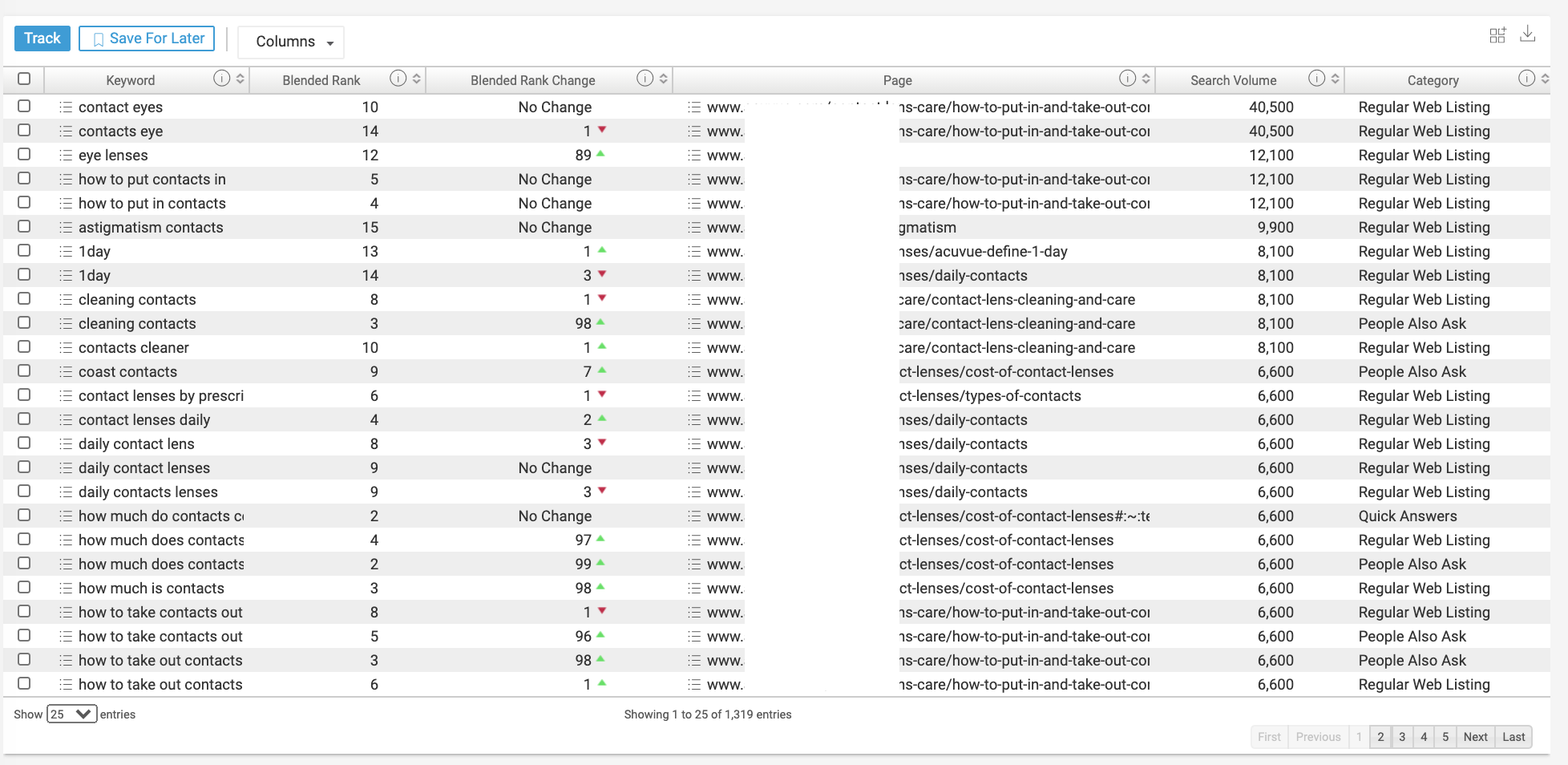
We looked into this issue, and checked BrightEdge data collected during the period of the flux you see in the Algoroo chart above. We searched for instances of major fluctuation where a large number of keywords had an average rank change by more than 10 positions, week-over-week. According to our data, we didn’t see a higher-than-average number of websites experiencing significant fluctuation (and we looked at thousands); in fact, the number we saw affected is smaller than average based on a similar sampling we did from three other weeks of the year. Once we weeded out false positives from our sample of impacted websites, we were left with an even smaller sample to explore. If this were a major algorithm update, we would expect more websites to have experienced a bigger shift. At the end of the analysis, it looked like some of the samples we took had already reverted back to what they had been the week prior, which leads us to believe that Google had been performing aggressive testing. The following screenshots show a couple of websites that took a dip due to the fluctuations. The keywords that dropped off seem to have returned to previous ranking, for the most part. Next week’s data should confirm whether that return persists.

proof of the google algorithm update in august - brightedge


brightedge shows how the google algorithm update in august changed

Here at BrightEdge, we’ll continue to monitor the issue. We’re looking at a set of keywords daily to track the intraweek changes to validate further. The results of this analysis aren’t to say something isn’t on the horizon, but we’re not seeing a pattern or evidence of exactly what that is yet. Do you have anything to share about the SERP fluctuation? Tell us about it in the comments if so.

BrightEdge Announces Strong Momentum, Leads Industry Into New Era of Content Performance Marketing

BrightEdge Leads Industry to New Era of Content Performance Marketing

Company Unveils Tremendous Business Growth Paired With Innovative Technological Advancements

SAN MATEO, CA--(Marketwired - Aug 20, 2014) - BrightEdge, the essential content marketing platform, today announced significant company momentum at Share14, its fourth annual premier digital marketing conference. BrightEdge's customer base has grown to 1,000 direct customers, up from 650 this time last year, and revenue has grown 52 percent year over year. There are now more than 1,500 BrightEdge Certified Professionals worldwide, only one year after BrightEdge pioneered the industry's leading professional training and certification. BrightEdge has also grown to 250 employees worldwide, and opened offices in Chicago, Sydney, and Japan. Bolstered by this tremendous business growth, as well as new technology enhancements and innovations, BrightEdge is propelling the industry into the new era of content performance marketing.

"Content performance marketing is the future, and we're committed to helping marketers everywhere succeed," said BrightEdge CEO and Founder Jim Yu. "The content marketing community's meteoric growth requires innovative technology, and that's what we are announcing at Share14. We are continuously innovating to ensure marketers have the best technology at hand to make sure that their content delivers positive business impact for any organization."

At a time when companies are investing in content more than ever before, the need for data-driven performance insights has reached a critical level. According to DemandMetric, nearly 80 percent of CMOs believe content is the future of marketing and, in 2013, a staggering 93 percent of B2B marketers reported they were working in content marketing, according to CMI. That's why BrightEdge is continuing to innovate at an unprecedented pace and is taking bold steps to support the industry as content marketing moves into a new age. In addition to this year's massive business growth, the company is laser focused on creating the technologies that will make the biggest impact on content success and performance industry-wide. In fact, BrightEdge was named one of this year's "Most Innovative Companies" throughout North America by the 2014 International Business Awards last week. BrightEdge's Data Cube, which analyzes billions of pieces of web-wide content, and the Content Optimizer, a powerful recommendation engine for content optimization, led to BrightEdge being honored as a Stevie® Award Winner.

At a time when 27 million pieces of content are being shared every single day, content marketers need access to insight around their content more than ever. BrightEdge is the solution. Tomorrow, at their fourth annual industry event, Share14, they will announce new innovations to their technology that will unlock the value of content performance data for everyone, everywhere. These advancements, paired with their tremendous geographic, employee, and customer base growth, serves to confirm BrightEdge's place as the driver for the new era of content marketing -- one in which every marketer creating content will have the knowledge to improve performance and impact their bottom line.

"My team uses [BrightEdge] to track optimization efficacy, content targeting, and competitive movement," said Lauren MacPhail, director of SEO and organic content at Macy's. "In the past, the issue was always, 'We don't know what we don't know,' but the Data Cube has started to solve for this, giving us greater insight into our blind spots."

About BrightEdge
BrightEdge is the essential content marketing platform for modern business. It transforms online content into tangible business results such as traffic, revenue and engagement. BrightEdge's S3 platform is powered by a sophisticated big data analysis engine and is the only company capable of web-wide, real-time measurement of content engagement across all digital channels, including search, social and mobile. BrightEdge's 8,500+ global brands include leaders like 3M, Microsoft, Netflix and Nike. The company is based in San Mateo, CA with offices in New York City, Chicago, London and Tokyo.

Visit our website: www.brightedge.com
Read our blog: www.brightedge.com/blog
Like us on Facebook: www.facebook.com/seoplatform  
Follow us on Twitter: www.twitter.com/brightedge

Contact:

CONTACT INFORMATION
Kristen Hay
(415) 625-8555
BrightEdge@LaunchSquad.com

Press Release Date

SEO is Not a Verb with Ken Shults

Default avatar
Andy Betts
M Posted 11 years 7 months ago
t 9 min read

Ken Shults is the managing director of global consulting at Global Strategies. Ken leads the company’s developments in analytics, and relies on his rich experience in mass customization technology platforms, marketing programs and predictive algorithms to provide essential guidance to his customers. Share14 kicks off today, and I sat down with Ken to discuss the changing face of SEO, and how content factors.

The SEO landscape

Ken Shults at Share14 - brightedgeAndy Betts (AB): How have you seen the SEO landscape change over the last year?

Ken Shults (KS): A lot of the “rules of the game” are different after this year. It was a pretty pivotal one for the search community. With the advent of secure search — and Google removing keyword level data for paid search as well as organic search access to keyword level data in web analytics is essentially gone. While not catastrophic, it’s definitely something we’ll have had to get used to. We occupy an information-hungry industry, and having to adapt to getting that insight in a different way is changing things up for search professionals across the board.

AB: What change in the industry has had the biggest impact for you and your clients?

KS: Google’s move to secure search has definitely had a good size impact from a workflow perspective. It’s tough — how can we continue getting valuable insight into how people reach our content without the power of leveraging keywords? “Keyword unavailable” really shook things up, but Google Webmaster Tools (GWT) has become the best alternative for keyword data. The interesting thing about it is that it’s heavily sampled. For one of our largest computer clients, we used to be able to identify four or five million keywords, while GWT only offers the top few thousand keywords for each account. Secure search has really shrunk the scope of our knowledge. With some creative configurations, I can expand that information given through GWT, but there are some pretty large limitations: I can’t export keyword data at the page level at the kind of scale necessary for some of our clients and I lose all engagement data at the keyword level.

AB: How do you see search evolving over the next year?

KS: For Global Strategies clients, we approach our consulting efforts with a “we’re your conscience” kind of attitude with natural search. SEO is not a verb, as we like to say, and I think this rings true for everyone. It’s something that happens when you do everything else right. As shifts in algorithms move toward penalizing content that isn’t high quality or that associates with bad neighborhoods, the focus is on quality content that is more likely to be shared and liked, and that’s where a big source of authority and reputation will come from. We want to help organizations shift their mindset, and help them understand that SEO is a product of creating quality content and optimizing it for the search landscape. Things will continue to move this way. We have to think in terms of semantics, and put content first.

The content marketing shift: optimization, measurement, performance

AB: Speaking of content, how are you aligning content and search optimization efforts for your clients?

KS: Well another big evolution recently has been the creation of the Panda and Penguin algorithms. They’re putting greater emphasis on quality content, are doing things with upstanding web citizens and are staying away from bad neighborhoods. As a natural search consulting firm working with large global enterprise clients, that works in our favor. We haven’t been willing to accept the kind of risk that has come along with spamming, paid linking or content farming activities that would’ve put us at risk with Panda and Penguin. We’ve always felt like content should be the star, and making it easy to find and share is truly the end goal. If we take that as the philosophy, any shifts in these algorithms will actually benefit our clients in the future. Google Hummingbird definitely comes to play in the convergence of search and content as well. As search engines evolve, we’re seeing a move from piecing together strings of text to actually being able to understand relationships between entities and queries. It makes things easier in a way from a search standpoint — especially with natural search, where Google can effectively match pieces of content with a large variety of specific queries. Now, creating quality content is rewarded with SEO results.

About Share14

AB: Tell me more about your session. Can you give us a preview of what you’ll cover?

KS: This year, I’m presenting on the impact that secure search has had on what we do everyday as search engine optimizers and content creators — and how companies can navigate these areas of impact. We use insights from search extensively and our ability to go about that has been impacted by the insights that are available now, after the secure search move. We now have different tactics to get information and pull insights, and I’ll talk about those. In other cases, we’ve lost the ability to see certain information and answer questions about audience, so I’ll discuss that too.

AB: Why Share? Why do you attend?

KS: There are several search-oriented conferences out there, but what’s great about Share14 is that we all have a platform in common. The vast majority of attendees use BrightEdge technology on a daily basis, so we have this shared experience to work off of. We’re all working off the same toolset, so when meeting others at Share, we have this common ground already established. We are using the BrightEdge platform to accomplish the kind of goals we likely share.

About BrightEdge

AB: What do you love about BrightEdge?

KS: SEO is a tough arena to navigate, and BrightEdge is a platform that makes the process easier. You know what to prioritize, where to work, and can rapidly identify issue areas to work from. While you can’t expect it to do the work for you, it’s a powerful resource that provides some essential insights. At Global Strategies, it’s been valuable having BrightEdge on our side to help our own clients. Now we have this convenient, automated platform to hold data together in one place, making it easy to examine and evaluate. BrightEdge technology has been a big help to us from an operational standpoint.

How Time Drives Organic Search Success - Binti Pawa

Default avatar
Andy Betts
M Posted 11 years 7 months ago
t 9 min read

It's exciting times as Share14 kicks off tomorrow at the Palace Hotel in San Francisco tomorrow!! As part of our series connecting with leading brands and marketers ahead of Share 14 I managed to catch up with Binti Pawa, Head of SEO for Time Inc.'s Affluent Media Group. Binti is speaking and sharing insights on the "SEO Best Practices Makes Perfect" session at 10:30am - 11:30am on Friday 22nd August. Below are a few extracts from our conversation.

Andy Betts: How much has the SEO landscape changed over the last year? 

Binti Pawa (BP): As marketers, our jobs should be to adapt to the ever changing landscape, learn, and move forward. That said, the landscape has changed in the last year with ‘keywords not provided’ and the on-going algorithm updates for Panda and Penguin to the most recent changes with Google dropping authorship images from their SERPs (although it does not affect rankings directly it does affect CTR for sites). These changes are not the end. There will be more to come. What has not changed, is the way we SEOs optimize sites. The old school SEO will always be the same—things such as optimized title tags, keywords, original content and links.

AB: What change has had the biggest impact for you and your company? 

BP: The biggest impact for us has been the loss of keyword data. For many SEOs in the industry, including myself, this forced us to look at our strategy, and, more specifically, how we report our metrics. A lack of keyword data meant we had to look at alternatives of finding trends, new measurements for non-branded growth, and low-hanging fruit. It forced us to look at GWMT tool query data (in addition to other tools) and page-level metrics more than ever.

AB: Tell me more about your session?

BP: I will be speaking on “Best Practice Makes Perfect – SEO Success Stories”. This will be my first time at Share and I’m very excited to present how we drove organic search success for our Time Inc. brands, Travel + Leisure and Food & Wine. I will discuss the challenges our websites faced and our solutions, in addition to our results-driven approach. I will also include tips on how attendees can do the same.

AB: Tell us more about how you use BrightEdge and how the platform helps you achieve your business objectives?

BP : We use BrightEdge for measuring and reporting our SEO success.  The Data Cube and social signals are great features for content targeting and competitive analysis. Our editors use Data Cube to discover, assign and write content on topics that will drive higher engagement and referral such as localized content. One of my favorite things about the platform is that it’s easy to use and the dashboards are simple yet very efficient.

AB: What do you love about BrightEdge?

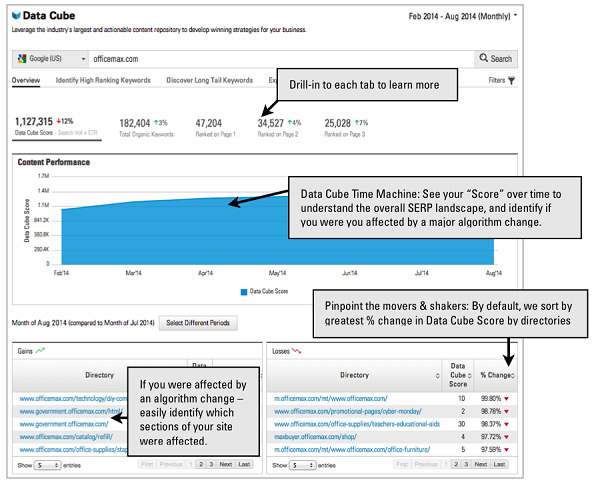
BP: I love the speed at which BrightEdge adapts to the evolving search landscape. The company has come along a long way since I started working with them in 2010, when there were only dashboards, keywords and basic analytics. Today, the BrightEdge platform provides marketers and editors with full capability and features to run an in-house or agency-side campaign. The Data Cube, so far, has been one of the best feature additions to the platform.

About Binti Pawa Binti Pawa is a Digital Marketing and Search Engine Optimization veteran with over ten years’ experience in in-house leading performance-driven growth for both start-ups and corporate heavyweights. She is presently the Head of SEO for Time Inc.'s Affluent Media Group, working on such brands as Travel + Leisure and Food & Wine, where she is responsible for leading, developing, and integrating SEO and content strategies. Before working in Digital Publishing, she was immersed in Travel as the head of Social and SEO for enterprise brands CheapOair, OneTravel and Travelocity. Binti is a graduate of Hofstra University, and lives on Long Island, New York with her husband and two children. LinkedIn: www.linkedin.com/in/bintipawa/

About Share14 Share14 is the must attend event of the year for content, search and digital marketers. Hear what search and social titans from Google, Bing, Microsoft, Twitter and Facebook have to say on the future of content, search and social. Marketing leaders from brands such as Adobe, Macys, 3M, SAP, HP, Marriott and Hilton share insights, case studies, and best takeaways on how to win with content performance marketing. The full line up of speakers, and links to registration, can be viewed here.  

Thank you for your interest in BrightEdge's
Content Optimization Report

Download your resource now by clicking the button below. For your convenience, we've also emailed you a link where you can download this resource anytime. For more information, please visit our resource center or schedule a demo.


Share this asset with your network

 Share by email Share on LinkedIn | Share on Facebook | Share on Twitter


People who downloaded this white paper also downloaded:

Can You Still Win in Organic Search? Yes, You Can!

Default avatar
Andy Betts
M Posted 11 years 8 months ago
t 9 min read

The past year or so has seen quite a shake-up in the organic search world. Those who were not prepared to proactively roll with the punches find themselves in a confused state of affairs. Can you still increase organic search, despite all the changes? Some would speculate that it’s becoming harder, but it’s truly the approach to your increase organic search strategy that will carry you through the algorithm changes, the search engine initiatives and search trends. In this post, we’ll talk about some of the changes we’ve seen, and how to continue to have a winning organic search strategy by focusing on content and mobile.

Mobile marketing

“There is a new phase of content development forming with in-app and mobile experiences. Content is being developed and tailored for device types that fundamentally improve the overall experience. It’s surprising to still see people just digitize content, but not actually tailor it for mobile.” - Darren Pleasance, head of customer acquisition at Google.

Indeed. According to comScore data reported by Rebecca Murtagh at Search Engine Watch, mobile use surpassed that of desktop early this year, forever altering the digital marketing landscape for brands and businesses. Coupled with comScore’s latest (June 2014) smartphone subscriber figures, which forecasts smartphone penetration (in the U.S.) to reach 74 percent by the end of the year, marketers have every incentive to adopt an informed mobile solution for their content.

This surge in mobile use followed Google’s June 2013 announcement that it’d be rolling out ranking changes in its mobile and smartphone search results for sites that provided a poor user experience. According to Google, the two most common mistakes in website configurations for mobile are faulty redirects and smartphone-only errors. Looking for more information on mobile marketing and solutions? Data from The BrightEdge 2014 Mobile Share Report provides insights into the growing mobile search traffic revolution and proper mobile SEO optimization. Also, BrightEdge CEO Jim Yu has written extensively on the subject, including:

  • The Mobile Boom Is Here: Deliver the Best Experience, No Matter the Device at The Huffington Post. Jim notes that “just because you’re ‘doing mobile,’ doesn’t necessarily mean you’re doing it right,” advising brands to optimize for the boom in mobile organic search by choosing their best “mobile path” as determined by the relative performance by of their Web pages by device.
  • Going All Responsive Is Not Always “One Size Fits All” With Mobile at Marketing Land. Citing data from the BrightEdge 2014 Mobile Share Report, Jim states that 27 percent of the websites studied made mobile configuration errors that resulted in an average loss in smartphone traffic of 68 percent. Based on BrightEdge’s Data Cube research, he also cautions that the responsive design (recommended by Google) doesn’t necessarily mean higher search rankings for your site as compared to the other two mobile solution options.
  • Mobile Site Configuration 101: How to Choose at Search Engine Watch. Jim outlines the three mobile site configurations supported by Google, and advises brands to consider their goals and the Web traffic insights culled from their analytics when deciding upon a mobile solution.

Content & semantic search

“This past year will be remembered as the ‘Year of Content.’ [There has been] so much conversation around how important content is, people moving budgets towards content efforts and so on. And yet, for all that talk and action, content has always been important.” – Duane Forrester, head of the webmaster program at Bing.  

As the digital marketing mantra goes, “content is king.” Brands have learned that they must embrace Google’s directive to provide users with the best experience and quality content since the Panda algorithm first arrived on the search scene in 2011. Now, it’s an integral part of Google’s algorithm, rolling out on a continuous basis. Combined with its Penguin update, which targets link schemes, massive guest blogging networks and other attempts to pass PageRank, Google has made its zero-tolerance stance towards such shortcuts clear. “And as if content weren’t enough, more and more companies are starting to hear the message around marking up content, and taking an action towards it. This is a future-proofing tactic that will serve websites well,” Duane notes.

The transition to semantic search, evidenced by Google’s rollout of its “Hummingbird” algorithm as well as improvements to its “conversational” voice search and Knowledge Graph, ushered in a new era of SEO and content development. Coinciding with the search giant’s move to 100 percent secure search, Google unveiled Hummingbird at its 15th birthday celebration in September 2013 (although it quietly rolled out the new infrastructure the month before), marking the beginning of the end of traditional, keyword-driven SEO and content optimization.

As Duane alluded to when he spoke of “marking up content” as “future-proofing tactic,” semantic search is most effectively leveraged when you use Schema.org to markup your digital content. Simply put, Schema.org helps the search engines to better understand your content and what a web page is about, allowing them to deliver better results (think “rich snippets”) to the user. For more information on how semantic search works using the Knowledge graph and structured data, check out these resources and articles:

  • Use Structured Data for Rich Search Results at Google Webmaster Tools Help. A comprehensive, how-to guide on structured data and rich snippets.
  • Google Hummingbird & The Keyword: What You Need To Know To Stay Ahead at Search Engine Land. BrightEdge CEO Jim Yu discusses Google’s Hummingbird algorithm, and what it means for marketers. Coupled with Google’s eclipse of keyword data, Hummingbird represents an improvement in semantic search, allowing Google to better interpret the searcher’s intent and the context of the words used in a query.
  • Introducing the Knowledge Graph: Things, Not Strings at Google Inside Search. In a detailed explanation of the Knowledge Graph, Amit Singhal describes it as the “critical first step towards building the next generation of search, which taps into the collective intelligence of the web and understands the world a bit more like people do.”
  • Knowledge Graph Optimization at Blind Five Year Old. AJ Kohn discusses how brands can leverage the Knowledge Graph by optimizing their website’s connection to it, which can translate into greater search visibility.

How Will You Leverage Your Share of Voice Online?

Mark Mitchell
Mark Mitchell
M Posted 11 years 8 months ago
t 9 min read

Share of Voice” is a powerful digital marketing feature of BrightEdge’s S3 platform. Providing brands with strategic insights into their global search engine results page (SERP) performance by device is just one of its cutting-edge hallmarks. Here, we’ll go over best practices to leverage SOV for:

  • Competitor analysis and benchmarking
  • Brand monitoring and reputation management
  • Business unit benchmarking
  • Content research and development in the SERPs

How Share of Voice works

Share of Voice (SOV) offers insights into your digital marketing strategy by helping you to:

  1. Understand the entire global SERP landscape (encompassing over 300 search engines, including Baidu), by device (desktop, tablet and smartphone).
  2. Understand your competitors’ strategies with a complete picture that includes research into both direct and indirect competitors (by product, pages and groups).
  3. Monitor all of your digital assets in the SERPs (including social media networks Twitter and Facebook), for reputation management and copyright issues, as well as for identifying potential commercial and content partners.
  4. See the most accurate global picture of your keyword visibility in the SERPs on a weekly basis.

Share of Voice Insight example with BrightEdge

Four keys for unlocking Share of Voice success

First, to access SOV in BrightEdge, go to Analysis > Share of Voice. In this post, we’ll talk about how to access varying results through different views of the data that is available.

Competitor analysis and benchmarking

Visualizing the full competitive landscape involves both research and benchmarking the competition. By using SOV to its fullest, you can gain these insights. SOV gives an unlimited picture of competitors against your keyword portfolio. This helps you to understand direct and indirect competitors. Move away from benchmarking your SEO performance against just two to three competitors by using SOV to gain insight into the full SERP competitive landscape.

The SOV feature will allow you to identify who your true competition is online, what content gaps exist in your strategy by analyzing the competitor, and understanding the competition’s backlink strategy by page (via the Majestic SEO integration). You can then feed your insights back into SOV to further inform and drive your digital marketing campaign. This is a regularly updated indexed, so these strategies will constantly be refined based on the landscape changes.

Brand monitoring and reputation management

As you know, brand monitoring and reputation management are critical. With SOV, you have the tools to see the global SERPs for your brand and your brand’s extensions, and detect negative listings and copyright issues, as well as “rogue” affiliates.

SOV allows you to track your brand’s keywords by:

  • Creating a “branded keyword group” including terms like “[Brand + location variant] reviews” to review your online reputation.
  • Identifying which sites and pages are ranking for these keywords.

SOV’s brand reputation management feature lets you:

  • Review content to understand what is being said about your business and products online, which enables you to understand positive / negative sentiment.
  • Develop appropriate strategies to address concerns like client outreach, and content creation aimed at displacing negative reviews.

Beyond mere competitive analysis, SOV can be used proactively to identify sites to possibly partner with, either commercially or for content syndication purposes.

Business unit benchmarking and global targets

“Average rank” is dead. So SOV is the SEO industry benchmark by which to measure your success! With our dashboard feature, you’ll easily grasp the competitive SERP landscape to set realistic benchmark targets, whether by business unit or for global benchmarking. Many leading agency partners of BrightEdge use Share of Voice to benchmark the success of content marketing campaigns. For example, increasing Share of Voice from two percent to five percent can be a strong sign of success with regards to visibility improvements within the SERP. Additionally, if traffic on a certain Web page or page groups has reduced month-over-month, you can look at the correlation with SOV to understand what’s happening.

Content research and development in the SERPs

The fourth best practice for leveraging SOV is to monitor the digital marketing landscape before you start generating content. This gives a roadmap for content creation that follows input, research and findings:

As the graphic above indicates, SOV will help you understand what matters to your brand before you launch a website, much less generate content. By providing insights into influential sites, competitors and blogs, you’ll be able to create an intelligent content strategy and SEO campaign. We have numerous content writers who will utilize Share of Voice to understand the SERP landscape effectively on new keyword or topic area they want to explore for future content. This can be a good workflow process to help enable the content writers for research, as well as fully understand the competition within the SERPS on the new topical area.

Share of Voice in sum

In conclusion, SOV can be leveraged in many ways throughout the lifecycle of your digital marketing plan:

  • Start competitor research and benchmarking.
  • Monitor and control brand reputation.
  • Use as a primary measurement of success in the SERPs.
  • Gain access to informed content development.

Thank you for your interest in BrightEdge's
Mobile Share Report.

Download your resource now by clicking the button below. For your convenience, we've also emailed you a link where you can download this resource anytime. For more information, please visit our resource center or schedule a demo.


People who downloaded this resource also downloaded:

Thinking Like a Freak with Stephen Dubner

Default avatar
Andy Betts
M Posted 11 years 8 months ago
t 9 min read

Chances are, you’ve heard of the book, Freakonomics. This book was (and still is) wildly popular because it examined the way our world works in a completely new light. One of the masterminds behind Freakonomics is Stephen Dubner, renowned author, journalist, and media personality. We couldn’t be more excited for Stephen to close out Share14 with the final keynote - now just a few weeks away.

At Share14, he’ll talk about how to apply the ideas from his latest bestseller, Think Like a Freak (2014), to marketing. Learn how to think like a freak with Stephen Dubner - BrightEdgePrior to Share14, Jim, CEO of BrightEdge, had a chance to pick Stephen’s brain on how marketers can “think like freaks” when it comes to their business strategies and creative processes.

Jim Yu (JY): How does “thinking like a freak” help people to solve problems in new ways?

Stephen Dubner (SD): Ah, you are asking me to summarize the whole book in the very first question! Okay, I’ll try:

  • Learn to admit what you don’t know;
  • Be willing to think like a child;
  • Put aside (temporarily) your moral compass;
  • Learn how to shift the framework of your various relationships;
  • Understand the power of incentives, including the possibility that they might backfire; and
  • Learn to appreciate the upside of quitting.

The digial revolution - measurement is key

JY: How can taking this approach specifically benefit marketers?

SD: The digital revolution has been a huge gift to marketing in that what was once only suspected can now be measured. You can’t learn anything if you can’t get good feedback; now, being able to measure all sorts of things allow us to find better solutions to all kinds of problems, including marketing.

JY: What are your top three tactics for changing up your thinking? Any methods or pieces of advice that you always turn to when you’re in a rut?

Change is imperative

SD:

  1. Spend time with people very much unlike you.
  2. Consciously alter your routines/habits, even something as simple as ordering a meal you’ve never had before.
  3. Physical exercise; it’s remarkable how moving your lower muscles will help you move your highest muscle.

JY: Can you give me an example of how you’ve seen “thinking like a freak” benefit a company in terms of marketing or business strategy?

SD: There’s a story we tell in the book about a huge multinational retailer that probably *should* have benefited from our thought process. They were spending tens of millions of dollars in a way that, in our view, wasn’t necessarily fruitful. They didn’t pay us much attention, however.

Content creation and storytelling

(JY): Do you have any advice for how marketers can be more creative in the storytelling and content creation process?

SD: There is much to be said about how to tell a good story, and why a good story is so resonant, and memorable. (I will likely discuss this at Share14.) One of the most powerful hidden strengths of storytelling is that we are all narcissists, and a good story allows each of us to put ourselves in the place of the characters in the story — assessing how they made their decisions, etc. Because of this, a lot of people — whether clients, customers, etc. — are able to learn a lot more via a story than they would by a set or rules or theories.

Stephen Dubner at Share14

JY: What are you most excited to share with marketers during your keynote at Share14?

SD: I love talking to marketers because they are generally an upbeat, creative, driven group of people whose work isn’t so dissimilar from what I do. Plus they are fun to be around. See you soon!

About Share14

Share14 is the must attend event of the year for content, search and digital marketers. Hear what search and social titans from Google, Bing, Microsoft, Twitter and Facebook have to say on the future of content, search and social. Marketing leaders from brands such as Adobe, Macys, 3M, SAP, HP, Marriott and Hilton share insights, case studies, and best takeaways on how to win with content performance marketing. Please note that the event is due to hit 'sell out' status by next week. Register now to avoid disappointment. The full line up of speakers, and links to registration, can be viewed here. REGISTER NOW

SEO, the Stakeholder & Content with Ngia Vang of Experian

Default avatar
Andy Betts
M Posted 11 years 8 months ago
t 9 min read

Ngia Vang is the senior digital marketing manager at Experian Consumer Direct. There, she leads SEO and content marketing for FreeCreditReport.com, FreeCreditScore.com, CreditReport.com and CreditScore.com.

Ngia and I caught up ahead of Share 14 to talk about Experian's approach to digital marketing in light of the changes we've seen in the past year. We also talked about how they're handling the convergence of content and SEO today.

Here is what she had to say:

The SEO Landscape

Ngia Vang (NV): The landscape has definitely changed with the number of algorithmic changes in the past year; however the overall goal of the search engines haven’t, which is optimizing for the user. The changes to the landscape are forcing organizations, including ours, to change the way we approach and manage our programs so we can 1) optimize accordingly to search engine guidelines and 2) provide the most relevant content for the search intent.

Creating and Optimizing Content

NV: The biggest impact is in the area of creating and optimizing content. In the past year, we’ve taken a step back and are looking at our business inside and out to determine how to best adapt and run our SEO program, how we want to represent our brand and how we solve for our consumers’ needs.

Our strategy is simple: understand who our users are, and optimize our site and content to tailor to them.

The Focus on The Consumer

NV: The space is always evolving; however there is one thing that never changes: the focus on the consumer. And for that reason, marketing’s focus doesn’t change.

We, as marketers, have to adapt to what is new to the “how and where” consumers interact with brands. What I mean by that is the tactics and technology, such as the ever-evolving social network platforms, how things are served, devices like mobile and so on.

What’s new to marketers is getting the right message to render for each device, platform and experience. Learn the technical part of this equation and it will help with how you create your marketing message and content.

Also, don’t forget the basic fundamentals of marketing; only put something out there if you as a consumer would engage with the content/message. If the content is relevant and engaging, we’re doing our job, and they will come.

Staying Ahead Of The Curve

NV: Know who your audience is and be proactively optimizing your site and content for your consumers. Also, always try to stay up-to-date with the Google guidelines; still as the SME of your industry, know the targets and what’s right for your brand.

Lastly, keep up with industry trends so you can get the most out of your content via social, mobile and video vehicles.

Measuring and Optimizing Page Performance

NV: First off, have good partnerships with people that can help you do this. We use BrightEdge. The capabilities it provides to track specific pages and track our target keywords for those pages allows us to optimize existing content, and create new content with the necessary KPIs to track performance.

We are looking at the performance of a specific page now as opposed to the performances of a keyword to help us better identify new content opportunities.

Measuring Content Performance

NV: Our content and SEO teams work hand-in-hand from website design, content layout, keyword planning and topical design to publishing release schedules and outreach programs with social. The two cannot act as silo teams as they may have in the past.

NV: Measurement of content is very important to us. It’s important for us to know which content types or topics are resonating and working for our consumers.

It’s a big win to get a user to a website. If we got them there, we want them to stay longer or come back. In order to do that, we need to understand the behavior and paths our consumers are taking so we have that opportunity. Without measurement, we would be in a black hole. Analytics is the truth to all, without it we can’t understand if what we’re producing is really making a positive or negative impact.

Even knowing that content isn’t working is better than not knowing anything.

The Convergence of Content and SEO.

NV: It’s a long and hard process, and difficult to measure the direct conversion impact you’re making, but worth it if you’re engaging and creating the most relevant content for your users.

In a large organization, it’s even harder to integrate as two separate teams, and there are definitely challenges. Some of the biggest challenges are fundamental things, such as which team is going to do what. Who is going to do the keyword research, write the Title tag and Meta description and create the workflow?

Also, teaching SEO to the content team can be challenging; however my advice is keeping SEO as basic as you can without getting technical. And let them run their show. SEO is a stakeholder to content, not the other way around.

Scaling In-House Session At Share 14

AB: Tell me more about your session.

NV: I will be speaking about: “Scaling In-House: Building the Best Enterprise SEO Operation.” One phrase to describe my presentation is “integrated SEO team.” And how to get there? Restructure, refine and re-launch.

AB: Why Share – Why do you attend?

NV: I really like how Share provides real examples and stories that anyone in this industry can either leverage or relate to. I’m looking forward to hearing what thought leaders of the industry have to share, being that this year is starting a little differently than last year. Also, this is a great conference with lots of networking opportunities with an elite group of SEOs that I’m also very interested in meeting.

AB: What advice can you give attendees to make the most out of their Share experience?

NV: Attend knowing what your objective of the conference is, whether it’s to understand how to measure content or integrate your SEO team. Whatever your purpose is for attending, pay attention and ask questions so you leave with a roadmap of your next steps to achieve your objective. Also, network. You never know how the person next to you can change your perspective.

The Value of the BrightEdge Partnership

AB: Tell us more about how you use BrightEdge.

NV: We leverage the platform for several reasons, first and foremost for tracking and reporting. However, very early on we saw the extensive value it brings with the added features to integrate our data into the tool, the recommendations, page-level reporting, task management, and now more than ever, keyword discovery tools. The Data Cube is the one of the best features BrightEdge has yet.

AB: What do you love about BrightEdge?

NV: I love the people. Without the right people to power a tool, it doesn’t do what it’s supposed to do. It’s a great tool with lots of valuable features, but the right people make it that much better. I have an extraordinary client services rep that is always on top of everything and very helpful.

And the integration teams we’ve worked with make it so simple to set up.

,