DeepSeek Shakes Up AI Search, Google Maintains Market Dominance
New BrightEdge report reveals how DeepSeek’s innovative approach to search is reshaping the landscape and what it means for brands and marketers
San Mateo, CA – February 26, 2025 – BrightEdge, the global leader in AI-driven organic search, content, and digital marketing automation, today unveiled a new report examining the rapid rise of DeepSeek, a groundbreaking AI-powered search platform. The report highlights how DeepSeek’s novel approach to search is reshaping traditional and AI search engines while leaving Google’s commanding 92% market share largely unchallenged. Additionally, the report unpacks how brands and marketers can adapt in this new age of AI-driven search to own their share of conversation.
Since launching in late January, DeepSeek’s chatbot app has surpassed 10 million downloads, with referral traffic already at a similar level to OpenAI's SearchGPT beta. BrightEdge anticipates continued referral growth and an expanding market share for DeepSeek in the coming months.
DeepSeek’s Novel Approach: Searching on User’s Behalf Unlike AI search platforms like Google AI Overviews, ChatGPT, Perplexity and Bing Copilot, DeepSeek takes an open-source approach while prioritizing contextually rich responses and lower processing power. But beyond these differences, BrightEdge’s analysis reveals three other, fundamental ways DeepSeek disrupts the search experience:
A “Think First” Approach: Before beginning its search process, DeepSeek will consider how to best find an answer to a question. For example, DeepSeek’s understanding of recency or immediacy will shape where it looks for answers to a query. This differs from other AI Search platforms that take a "Get Content First, Think Second” approach.
Real-Time, Multi-Source Content Exploration: Once DeepSeek begins its search, it does not pull from a singular search index and does not have a proprietary search index like Google, Perplexity, and other AI search engines do. Instead, it navigates multiple sources in real-time to construct a more comprehensive response.
Transparent Thinking: When ready with an answer, DeepSeek shows its reasoning and where it is collating information from by providing citations, a major shift from black-box AI models that offer little visibility into their decision-making. This approach is likely to increase trust in the results and help users rephrase their search or follow ups if needed.
By dynamically evaluating, sourcing and explaining, DeepSeek isn’t just a search engine— it functions more like a highly intelligent research assistant, establishing a fundamentally new way of searching.
What DeepSeek Means for Search Industry Players While BrightEdge found that January referrals exceed November levels for all AI search engines, except for Claude which has experienced three consecutive months of decline, DeepSeek’s new standard for AI-discoverability carries profound and lasting implications for the search industry. With its technology freely available for adaptation and implementation, some like Perplexity are already integrating DeepSeek into their search engine. Others, like OpenAI, must reckon with whether DeepSeek’s approach disrupts its current footprint or if it can continue innovating without compromising profitability.
But despite ChatGPT and Perplexity seeing month-over-month increases of 17% and 16%, respectively, BrightEdge found no signal of any single competitor—or group of competitors—eroding Google’s dominance of nearly 92% of market share.
"With DeepSeek’s innovations in search and efficiencies proving previously unworkable approaches viable, Google could emerge as a surprise winner,” said Jim Yu, CEO and co-founder of BrightEdge. “DeepSeek’s 'do it for me’ search model is a major shift, and if Google leverages these innovations in time, with its massive user base and resources, it may benefit the most."
What This Means for Brands and Marketers DeepSeek’s approach will also have a rippling impact on SEO strategies. Because AI uses the same engines, index approaches, and understanding of site and content authority, established SEO practices are a great foundation to build from. But brands must expand their focus beyond how they appear in traditional search results, and into how they fit within the broader conversations that AI systems understand. Marketers must understand the various touch points of AI discovery and maximize their brand’s share of conversation.
BrightEdge’s report analyzes DeepSeek queries across industries such as e-commerce, education, and restaurants, and provides actionable insights for brands and marketers to maximize their share of conversation in AI-powered search experiences. You can view the full report with detailed industry-by-industry breakdowns here.
About BrightEdge
BrightEdge, the global leader in Enterprise SEO and content performance, empowers digital marketers to transform online opportunities into tangible business results. Its all-in-one platform provides organizations with crucial market insights and intelligent AI-driven solutions. The BrightEdge platform contains the industry's most unique and extensive data set that connects key search, social, content, and digital media data points. Its deep-learning engine, DataMind, has been powering SEO AI-driven solutions since 2015, allowing marketers to benefit from high-fidelity data-led insights and automated action. Over 57% of Fortune 100 companies and nine of the top ten international agencies trust BrightEdge to help them provide the best performance by becoming an integral part of the digital experience.
We’re not even two months into 2025 and already we’re seeing how Google AI Overviews are transforming how users discover and consume content. At BrightEdge, we're tracking these developments closely to help marketers navigate and succeed in this dynamic landscape. One particularly interesting trend we've identified is the growing importance of YouTube content in AI Overview citations. This development presents significant opportunities for marketers to enhance their visibility and influence in AI-generated responses.
The Rise of YouTube Citations in AI Overviews
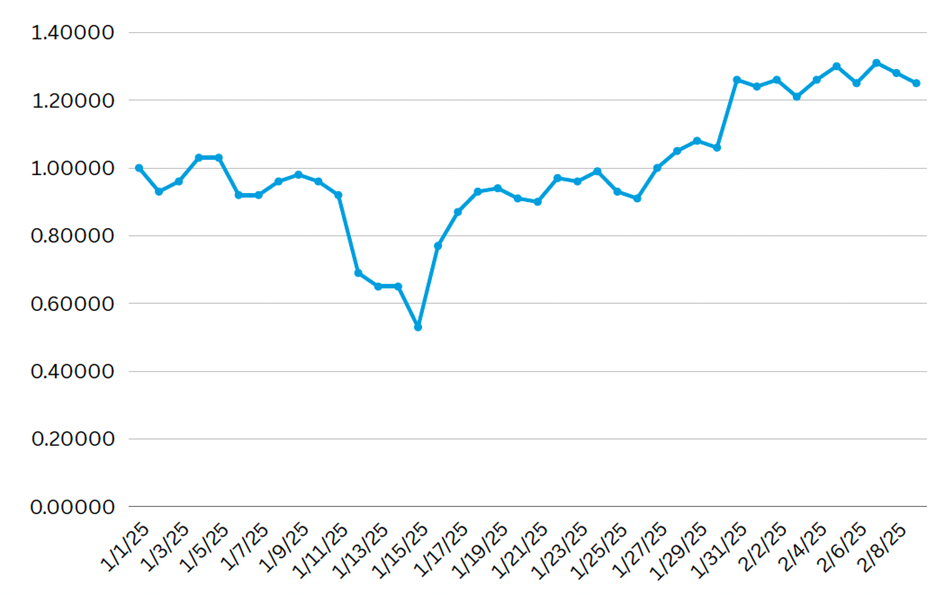
Percentage of Citations from YouTube since the beginning of the year
Since January 2024, we've observed a 25% increase in YouTube citations within AI Overviews. This growth isn't random – it appears to be part of Google's methodical approach to enhancing AI Overview capabilities. For context, in September 2023, we shared data on a dramatic 121% spike in YouTube citations during what appeared to be a comprehensive test by Google. While citation levels normalized after mid-October, this test marked a significant difference from other user-generated content platforms like Reddit, which saw initial gains but subsequently disappeared from citations almost entirely.
Current Trends in YouTube Citations
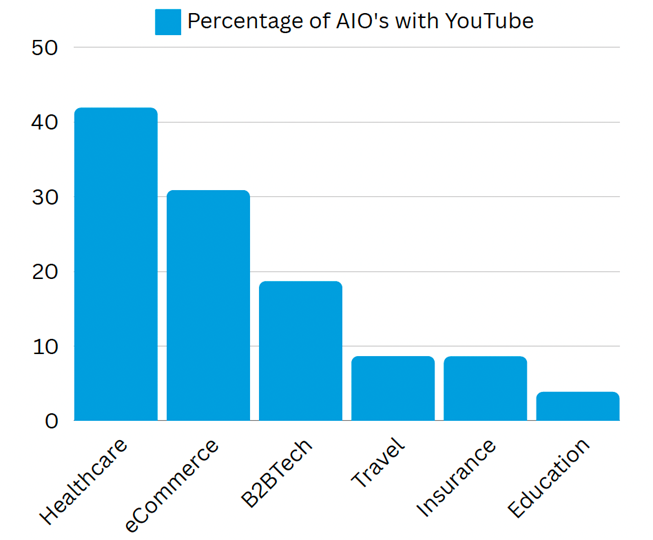
Unlike the September experiment, which showed uniform citation patterns across industries, the current surge shows more strategic implementation. Our recent analysis, reveals that YouTube citations are concentrated in specific sectors:
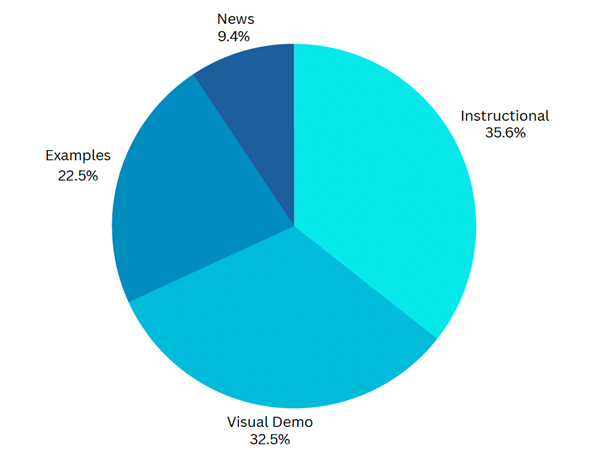
When analyzing the types of keywords triggering these citations, clear characteristics on the types of AI Overviews that rely on YouTube emerge :
Instructional: How-to Queries are predominately featured here
Visual Demonstrations: Techniques, style guides and demonstrations on how to use products
Examples: Verification of products, unboxing videos etc.
News: Current events and live coverage
Strategic Implications for SEOs and Marketers
The increasing prominence of YouTube in AI Overviews presents a couple implications for marketers:
Prioritize YouTube for Hosting Videos
Our research indicates that YouTube dominates video citations in AI Overviews, with minimal representation from other video platforms. While various factors influence platform selection, YouTube's AI visibility makes a compelling case for consolidating video content there. With AI Overviews appearing in nearly one-third of all searches, this consideration becomes increasingly important for your video hosting decisions.
Content Strategies for YouTube and AI
Based on our analysis of AI citation patterns, here are key areas to focus your video content strategy:
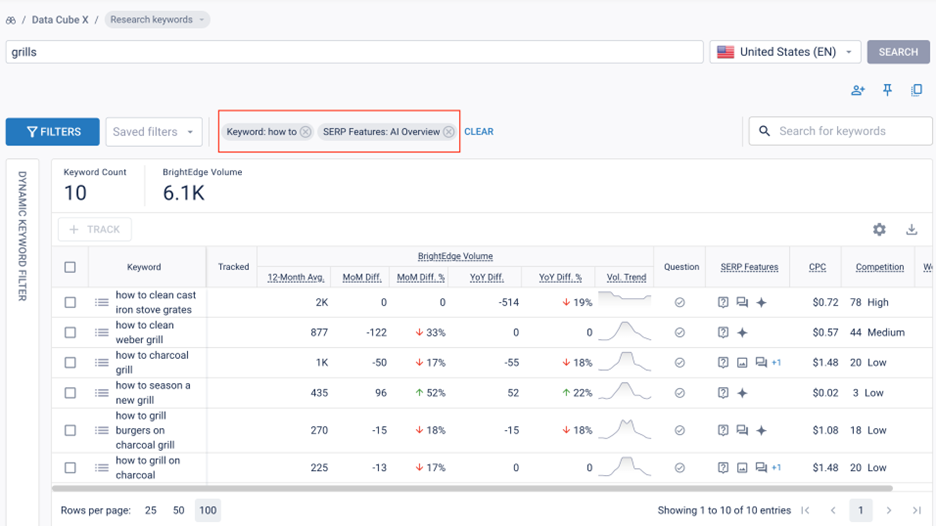
How-To Content Create instructional videos demonstrating your products or services. These tutorials consistently show the highest citation rates across industries. Use BrightEdge's Data Cube X to identify promising "how-to" topics, particularly those already triggering AI Overviews:
Technical Demonstrations Develop videos that visually demonstrate techniques, whether it's software tutorials or physical demonstrations (think exercises, or physical therapy techniques). These types of content frequently appear in AI Overview citations. As you’re building content that addresses these needs, ensure video is a top component of your strategy.
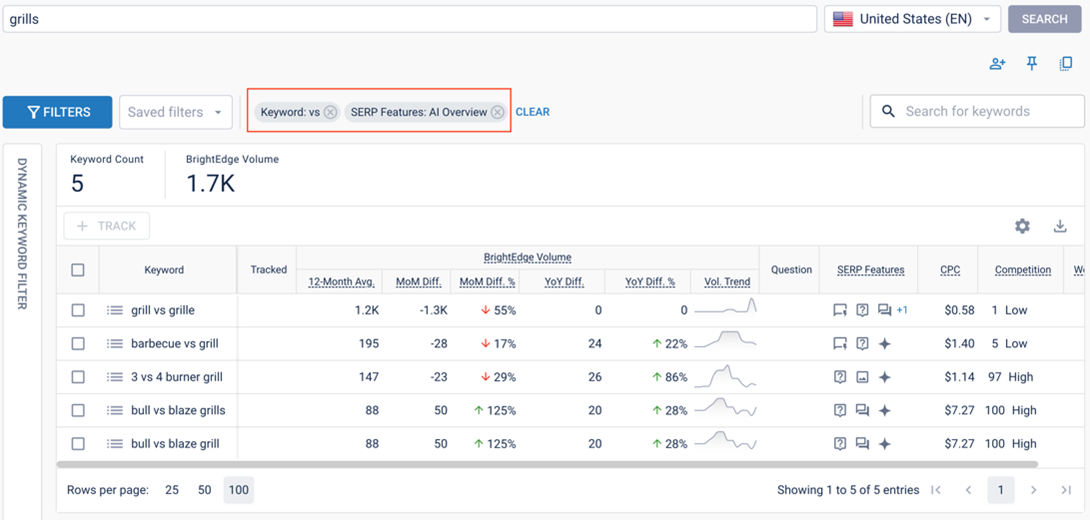
Product Reviews and Comparisons: Unboxing videos and product comparisons represent approximately 25% of cited videos in the current surge. For any brands selling products online, these should be easy to build a strategy for. BrightEdge users can leverage Data Cube X to identify specific comparison-based search queries within their industry to guide their video content planning.
Looking Ahead
The evolution of search presents unprecedented opportunities for marketers to connect with their audiences. As AI continues to streamline information delivery, YouTube's role in the digital marketing ecosystem is becoming increasingly crucial. When developing your AI-optimized content strategy, incorporating video content should be a key priority.
Technologies like BrightEdge's Data Cube X helps to identify specific opportunities within your industry and ensure your video content aligns with user search patterns and AI Overview preferences. This data-driven approach will help maximize your visibility in both traditional search results and AI-generated responses.