5 steps to making your content smarter
The convergence of SEO and content has been a driving force in marketing for the past few years. A recent survey by BrightEdge found that 97% of marketers view these two areas as converged disciplines.
BrightEdge Content uses artificial intelligence to help marketers build content strategy, score and optimize content, and activate that content across various online channels. We spoke with BrightEdge CTO and cofounder Lemuel Park (LinkedIn) to learn how the solution delivers superior results for marketers using AI.
Doing small team SEO is often the reality. The lack in head count can be made up for in choosing the right kind of digital marketing talent and investing in cross-functional training. Running an effective digital marketing campaign with a small team can be daunting. It's doable, however, with a combination of planning, training, and technology. This two-part series will offer advice for helping brands to maximize resources in their small teams.
Businesses may find success particularly difficult to achieve without a strong digital marketing presence. 94% percent of B2B buyers report that they use online research before making a purchase. Forty-seven percent of millennials also report that their purchases are influenced by social media. Organizations that don't appear in the digital space, by way of the SERPs and a following on social media, will have lost the opportunity to engage with these customers, thus losing many opportunities to grow revenue. Creating and maintaining an online presence can, however, feel overwhelming.
There's a bevy of competing responsibilities. Building presence also involves more steps than just building a website and then forgetting about it. More than a billion websites currently live online. Buyers interested in a particular product or service have their choice of vendors/providers to patronize. Those prospective customers navigate towards their preferred brands through Search. Therefore, success typically comes to those who meet the buyer’s needs throughout their journey, so that they become the business of choice when the time for making a purchase arrives.
A major challenge facing many brands of all sizes, however, is navigating this rapidly changing, multifaceted discipline with limited resources. Numerous BrightEdge partners, for example, have to make digital marketing work for their organizations with as few as 1 to 3 professionals dedicated to the endeavor. That said, we believe that with training, proper planning, and technology, success is possible. The first step to successful small team SEO, however, is making sure that you have the right team in place.
When you only have a few people on your marketing team, ensuring that each member can wear several hats is critical. A strong online presence is built on an effective website and smart content, complemented with effective SEO to ensure brand visibility in Organic Search. Email and social must also be used to keep up consistent communication with prospects across multiple moments in the buyer’s journey. Paid search can bolster the traffic to the site and help the brand to capture attention even on keywords they might otherwise struggle to rank for. These are three huge digital disciplines that can have (and have had) entire books written about them. BrightIdeas Webinar: Crushing the SEO Silo in 2017 These various disciplines should be combined, with a single member of the team leading multiple specialties.
For example, the responsibilities of website content, content marketing, and SEO could fall to a single person. In addition to team members needing to handle different angles of digital marketing, the members of the team must also be able to work seamlessly together. While the trend towards tearing down silos between marketing contributors has been playing out across teams of all sizes, for a small team, ensuring that all members can collaborate well and understand each other’s objectives and goals is a mission critical. Without that cooperation, you will struggle to realize the full potential of any of the employees managing your digital marketing.
The value of breaking down marketing silos lies in the improved experience it provides to the end user. Customers expect a uniform experience across all platforms. Sixty percent of Millennials report that when they interact with brands online, they want to have the same experience regardless of how they initiate contact. These buyers will interact with organizations across many platforms including email, social media, and SERP listings -- both organic and paid. The voice the customer hears and the information they receive should be the same regardless of medium. Customers now move through the buyer’s journey by touching a series of micro-moments. These moments can occur in any order and any time frame. Brands who understand user intent, and thereby meet the needs of buyers regardless of the micro-moment they happen to occupy, will see the greatest growth and success in digital marketing.
Many teams who are trying to grow their digital expertise already have a team of contributors built out. This means that aforementioned goals of creating a team of hybrid professionals seems out of reach. It doesn't have to be, however. For these teams, professional growth can be done in-house and on the job. There are a variety of online resources that can provide the motivated professional with the information they need to become proficient across different marketing specialties. Google Analytics, for example, offers free online courses that teach professionals about using the GA platform and gaining insights from website performance data, empowering site owners with a ton of directional metrics. There are also webinars across the web that touch on different digital marketing subjects. Attending reputable ones and taking advantage of Q&A sessions can be an excellent means of learning from professionals in the field. Learn more about BrightEdge’s webinars here. 
As you build the skills and techniques of your contributors, make sure that everyone understands their respective responsibilities. Although on a small team everyone should work together, knowing who will lead initiatives in social, or who to coordinate with for a paid campaign, is helpful for efficiency and ensures that all bases are covered. The training offered to the team should reflect those delineations. You should also work on developing outlines that describe how team members will work together. For example, have regular check-in meetings to sync on your campaigns and the respective roles that each member will play in them. Working efficiently with a small team and finding success is possible if you're motivated. It requires initiative and building skill sets to better incorporate the different disciplines of digital marketing. Opt in to BrightEdge blog push notifications to be notified when Part 2 is out.
Doing SEO with a small team is often the reality. The lack in head count can be made up for in choosing the right kind of digital marketing talent and investing in cross-functional training. Running an effective digital marketing campaign with a small team can be daunting. It’s doable, however, with a combination of planning, […]
The post SEO with a Small Team Part 1: Building Your Team appeared first on BrightEdge SEO Blog.
Google vs. Bing -- should you put all of your resources into optimizing for one search engine instead of the other. This post makes the case for investing in both.
Google and Bing dominate Search both domestically and on an international scale. Together, they comprise more than 90% of the search market. When customers need to look up information, they typically trust one of these two search engines to provide them with answers.
In recent years, Bing has seen even greater growth in market share compared to Google. Although Google still maintains dominance in Search, there is no denying that Bing has been growing in popularity. This presents an interesting opportunity for brands.
Although Google still has the power to bring more traffic, optimizing for Bing can offer some distinct advantages for organizations, particularly those who struggle to secure ranking on Google. All brands should also familiarize themselves with Google vs. Bing for optimization so that they can craft a digital marketing strategy that takes into account a greater overall percentage of searchers. Although many overlapping factors exist, understanding and taking into account the distinct characteristics of Google vs. Bing can maximize the potential for these businesses in organic search.
Google and Bing use completely different algorithms, but they both aim to find content that will best fit the needs of their users. This means considerable overlap does exist when optimizing for both search engines, namely that brands need to focus primarily on producing high-quality content that reflects the interests and needs of the target audience. Within the details of how to let the search engine know that your piece of content will best serve their users, however, lie some key differences.
Google and Bing look at backlinks differently. Google definitely uses them as a measurement to determine the value and authority of a site, assuming that a site with multiple quality backlinks offers something more than sites with only a couple. Although Google has put out updates that adjust how the quality of those backlinks impact sites, brands know that building quality backlinks can boost their rankings for this search engine.
Bing, on the other hand, does not have such a strong affinity for backlinks. They may impact rankings a bit, particularly when they come from highly reputable sites -- such as .gov domains -- or very well-established sites, but overall your backlink building strategy will not have as much of an impact on Bing.
Google’s algorithm has been designed to use semantic search to better understand user intent and predict the websites that customers want to see. Bing, in many ways, might be seen as more literal than Google when it comes to on-page optimization.
Bing wants to see more exact-match keywords in URLs, titles, and even meta descriptions. Although you want to make sure you write with your keywords naturally, including these terms seems to have a greater importance on Bing.
Note also that although Google has said that they do not use meta descriptions when determining rank, Bing is more likely to look at the content you have there when determining your relevance.
Bing also places a higher priority on rich media. The algorithms are much better at interpreting Flash than Google, meaning that these parts of your website can be interpreted by this search engine.
There has been considerable discussion about the role of social media on Google. Generally, social media is seem primarily as a means of driving traffic to websites and increasing rankings indirectly through improved traffic, engagement, and more backlinks generated from interested readers.
On Bing, however, we know that the search engine looks at social shares. Articles that become popular through the major platforms can then also see improved rankings on the SERP. Bing does play close attention, however, to false link-building practices, and these should be avoided to make sure a site does not receive any penalties.
Paid advertising on Google vs. Bing also inspires considerable debate. Google, of course offers you many immediate benefits, including a larger audience-- thus allowing you to reach a greater portion of your projected audience. You can also easily integrate your AdWords campaign with Google Analytics, where your paid search campaigns can easily be tracked side-by-side with the rest of your site’s performance. Even so, there are also concrete benefits to using Bing ads that marketers should be aware of.
More than one study has found that Bing paid search has a better click-through rate than Google, and that the typical CPC is also lower on Bing than Google. For many businesses needing to aggressively go after popular, high value PPC keywords, Bing offers a valuable alternative that can help add depth to the digital strategy.
There are also differences in the demographics of the average Bing user and the average Google user. Bing users tend to be in their 30’s and 40’s with higher average household incomes. Google users tend to be younger. Brands can align their paid campaigns to see which audience more closely matches their targeted audience to maximize their return.
Although search is often regarded as synonymous with Google, it is important not to overlook the draw of the second largest player on the field. While it might not be quite as powerful as Google, Bing does draw a respectable audience and can help brands promote themselves and attract customers. The better marketers understand the differences between Google vs. Bing, the easier it will be for them to formulate a strong strategy that will help them succeed across the different search engines including international search engines.
Google vs. Bing — should you put all of your resources into optimizing for one search engine instead of the other. This post makes the case for investing in both. Google and Bing dominate Search both domestically and on an international scale. Together, they comprise more than 90% of the search market. When customers need […]
The post Understanding Google vs. Bing: Using Them To Grow appeared first on BrightEdge SEO Blog.
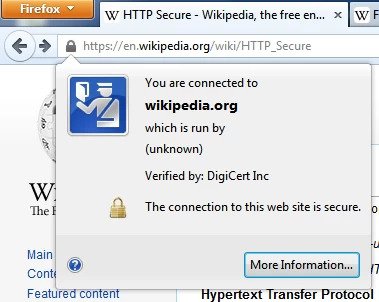
Google called for “HTTPS Everywhere” (secure search) at its I/O conference in June 2014 with its Webmaster Trends Analyst Pierre Far stating: “We want to convince you that all communications should be secure by default,” and it anticipated some resistance and skepticism from the SEO industry. The picture is definitely getting more clear. As a digital marketer, it’s important to understand the differences between HTTP vs HTTPS, the advantages of switching, and any issues you might encounter in your SEO management efforts.
A few years later, two different Google representatives advocated for HTTPS: Maile Ohye in a joint BrightEdge webinar "A View from Google" called HTTPS a "requirement" and Thao Tran speaking on the main stage at Share16 in October said "HTTPS and making sure your site is secure is an imperative at this point... Google will start marking things non-secure... The future of the web is a secure one, and so make sure people in your organization understand HTTPS, and it should be on the road map" for all websites.
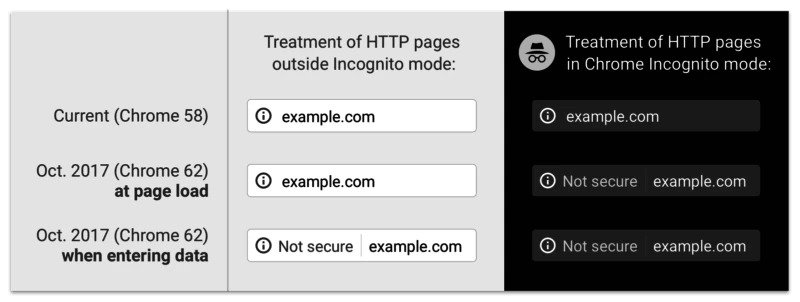
The adjustment period has come to an end with Google warning Chrome users when displaying pages that include forms from non-HTTPS sites: “Chrome will show the ‘Not secure’ warning in two additional situations: when users enter data on an HTTP page, and on all HTTP pages visited in Incognito mode.” This message will appear in url bar of Chrome browsers. 
HTTP (Hypertext Transfer Protocol) is a structure for transferring and receiving information on the web, most frequently operated to retrieve HTML web pages. HTTP is considered an application layer protocol — it exists to present information to the web user no matter what channel it takes to do so. HTTP is stateless, which means it uses less data by forgetting earlier web sessions.
What does HTTPS stand for? HTTPS, or Secure HyperText Transfer Protocal, was established to sanction secured transactions and authorization over the web. Exchanging information, like credit card numbers or access, requires security to avert unauthorized entry through HTTPS. So what's the difference between HTTP vs HTTPS? HTTPS is HTTP — just the secure version. HTTPS follows the same protocols as HTTP — the browser begins a connection to a server on a standard port. The additional layer of HTTPS security uses Secure Sockets Layer, or SSL, to transport data. HTTPS exercises TCP Port 443 by default, so they use two separate communications. For a detailed walkthrough see our on-demand webinar on HTTPS vs HTTP for SEO.
HTTPS works simultaneously with another protocol, SSL (Secure Sockets Layer) to communicate information safely in three ways:
Just like HTTP and HTTPS don’t discriminate with the path that data takes to its destination, SSL equally doesn’t care how the data looks, but HTTP does. So how does it affect HTTP vs HTTPS? In between the two HTTPS presents the best of both worlds: the data is visually appealing to the user, and you’re getting the extra layer of security as the data moves.
Since the key is search security, HTTPS has been used for any site involving secure information. It’s used for ecommerce sites to tender protected transactions. More than likely, your bank will use HTTPS to secure your personal information — easily recognized by the padlock on your browser. And as we’ll discover next, HTTPS is recognized and used as an SEO benefit to your secure site.
Even years ago, research showed an increase in encrypted URLs. However, it wasn’t until the official announcement that we began to see sites affected by this factor. Considering their user-based algorithm updates, Google preference for trusted sites isn’t surprising. If users are guaranteed to have a secure site experience, the answer to HTTP vs HTTPS becomes simple — they will prefer HTTPS to HTTP.
If you’re following Google’s recommendations, deciding on HTTP vs HTTPS is also easy - switching to HTTPS will benefit you and the security of your site. There are also some additional SEO benefits for you to consider: Increased Rankings Not a major boost, but as part of an overall strategy with other ranking factors, it’s a safe bet. In addition, we usually see that the impact of Google’s recommendations and algorithm increase over time. Learn more about Google page rank. Referral Data If you’re exploring Google Analytics for your HTTP site, the traffic passing through referral sources can appear as “direct” traffic. Through an HTTPS site, the security of the referring domain is preserved. This makes the HTTP vs HTTPS decision even easier to make. Security and Privacy Security benefits your overall goals in a few ways:
As with all major URL changes and site migrations, there is likely to be a disruption and loss of rank followed by a recovery in rank. There are little to no issues when switching to HTTPS, especially for SEO. But implementing the secure switch incorrectly can hurt your site and possibly your SEO and cause a sustained loss in traffic. Steps to Switch Google’s own recommendations are below:
More from Google Support: Avoid irrelevant redirects
Don’t redirect many old URLs to one irrelevant destination, such as the home page of the new site. This can confuse users and might be treated as a soft 404 error. However, if you have consolidated content previously hosted on multiple pages to a new single page, it is acceptable to redirect the older URLs to that new, consolidated page.
Provide errors for deleted or merged content
For content on the old site that will not be transferred to the new site, make sure those orphaned URLs correctly return an HTTP 404 or 410 error response code. You can return the error response code at the source URL in the configuration panel for your new site, or you can create a redirect for a new destination URL and have that return the HTTP error code.
Ensure correct Google Search Console settings
A successful site move depends on correct — and up to date — Search Console settings. After the move, add the URL to Search Console. If you haven’t already, verify you own both the old and new destination sites in Search Console. Be sure to verify all variants of both the source and destination sites. For example, you should verify www.example.com and example.com, and include both the HTTPS and HTTP site variants if you use HTTPS URLs. Do this for both source and destination sites. Make sure to read our detailed how-to checklist for how to perform a successful HTTPS site migration.
HTTPS will make your site more secure and Google is ramping up advocacy and signal weight for it. As always the majority of your decision should be based not on chasing algorithm changes, but on optimizing the needs of your business and improving your user experience. For a more detailed breakdown view our on-demand webinar on HTTPS vs HTTP for SEO.

Google called for “HTTPS Everywhere” (secure search) at its I/O conference in June 2014 with its Webmaster Trends Analyst Pierre Far stating: “We want to convince you that all communications should be secure by default,” and it anticipated some resistance and skepticism from the SEO industry. In 2016, 2 different Google representatives advocated for HTTPS: […]
The post HTTP vs HTTPS and SEO : HTTPS Chrome Warning Starting in October 2017 appeared first on BrightEdge SEO Blog.
THE OPPORTUNITY
Digital publisher STACK Media delivers authoritative content on stack.com to help athletes meet their training goals. The editorial team, which leads content development for the site, faced a challenge familiar to digital marketers: how to prioritize their content and SEO efforts to maximize impact. In their quest to acquire new and engaged visitors, and to improve related KPIs (including ranking #1 on SERP), the team turned to the latest BrightEdge innovations to identify keywords that would deliver the best results in the quickest time possible.
THE SOLUTION
The STACK team followed a simple process to find the keywords with the highest potential. Within one month, they launched new, high-performing content by leveraging rich data about opportunities and threats – data they lacked prior to using the BrightEdge SEO platform.
1. Initial target keywords. First, the team used BrightEdge Data Cube to identify 120 keywords that had high search volume and were relevant to the fitness category.
2. SERP visibility. Then, they turned to BrightEdge Intent Signal to analyze the SERP visibility of these keywords. Intent Signal is the first and only solution that tells you whether a keyword has any organic result above the fold on SERP, and whether your content ranks above the fold for that keyword. Within minutes, Intent Signal revealed a subset of keywords with the most promise: keywords with organic listings above the fold where STACK’s content was also within striking distance of ranking above the fold. These keywords were assigned to the “Optimize” category in the Intent Signal dashboard.
3. Competitive research. They then used BrightEdge Share of Voice to analyze the competitive landscape of these keywords, inspecting the content themes and content structure of the page URLs that ranked high on SERPs.
4. Implementation. Next, the team embarked on a clear and manageable action plan. They redesigned the page template to include a new content structure, based on the competitive research. In this new structure, every fitness page would provide readers with comprehensive information on the topic, including performance tips, common mistakes, how-to instructions, and training videos. Then, they launched new web pages with fresh content for their “Optimize” keywords and redirected old pages to the new ones to preserve historical SEO equity.
THE RESULTS
In just one month, the results proved the success of their approach. The keywords in this optimization project increased site visits by 61%, with average bounce-rate-by-page reduced by 73%. Some keywords jumped in ranking significantly. For example, stack.com didn’t rank for the keyword “hip thrust” in March; by May, the company had gained the #1 organic web listing on the SERP for that term.
BrightEdge Intent Signal is a huge time saver for us. Within minutes, you can identify the organic ranking opportunities you're missing and take prioritized actions to win in the moments that matter the most.
Request a demo of the BrightEdge platform today!