








Higher Education SEO: Drive School Success with BrightEdge

maspillera
maspillera
M Posted 7 years 11 months ago
t 9 min read

Our latest research at BrightEdge indicates that for those in higher education, 61% of their site traffic comes from organic search. The research from our individual partners aligns well with these numbers, as UC Davis told us that 56% of their traffic arrives from organic search, and Education Management II reported 50%.

The importance of a strong online presence for higher education SEO can also be seen within the target audience. In 2018, an estimated 12.3 million college and university students will be under the age of 25. This young demographic profile means that a large percentage of the intended audience has grown up with technology. This explains why three quarters of high school juniors and seniors report that college websites influence how they see institutions. Prospective students expect colleges and universities to meet and engage with them online.

To build a strong online presence, educational organizations can use a variety of BrightEdge platform functions to improve their optimization and content production. Here is what you need to know about higher education SEO and the BrightEdge platform.

The importance of site optimization for higher education SEO

Recall the statistics on the importance of higher education SEO for colleges and universities. BrightEdge partner Education Management II reports that not only does organic search drive half of its traffic, but it is also responsible for 40% of their site conversions.

“SEO is a key piece of our digital marketing strategies as Organic Search comprises almost 50% of our site traffic and 40% of site conversion volume.” - Tim Kane, Education Management II

Those in higher education need to optimize content for organic search to ensure that their material can be easily found on the SERP. Higher education SEO in the current age requires brands to carefully plan their strategies around audience interests and technical site requirements.

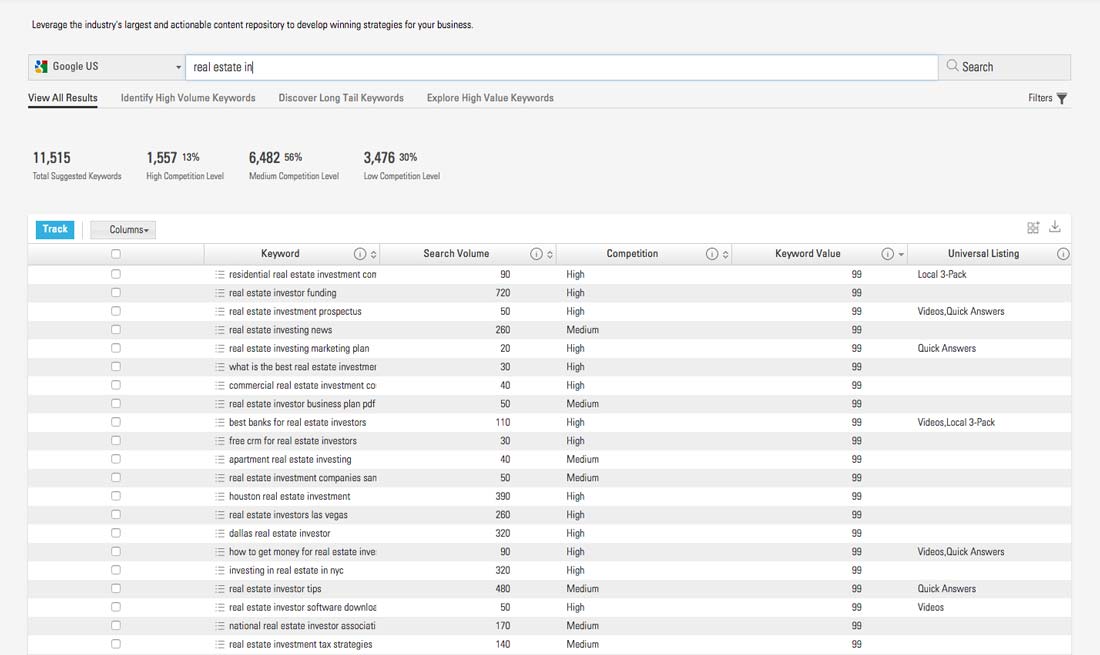
On the BrightEdge platform, higher education SEO clients have access to the powerful Data Cube technology. The Data Cube can be used for keyword research. At UC Davis, our partners report using this feature to develop their strategies and to find new opportunities.

“I spend about 90 percent of my time on Data Cube, it was basically the main reason we bought BrightEdge. It is very helpful. We use it in our strategies and to find opportunities. It is critical in our content work and in competitive analysis.” - Adam Napolitan, UC Davis

They have been working on projects related to topics such as "health." To successfully reach their higher education SEO goals in these areas, they will need research related to keywords in these areas that also apply to their university.

On the Data Cube, you can investigate different keywords and see the types of content that appear on the SERP. For example, higher education organizations will find that there are an estimated 3,000 keywords that appear related to "college diploma." They can then use this insight to find the keywords that appeal most to their audience and develop a content strategy based upon user intent.

Data Cube results for higher education SEO - brightedge

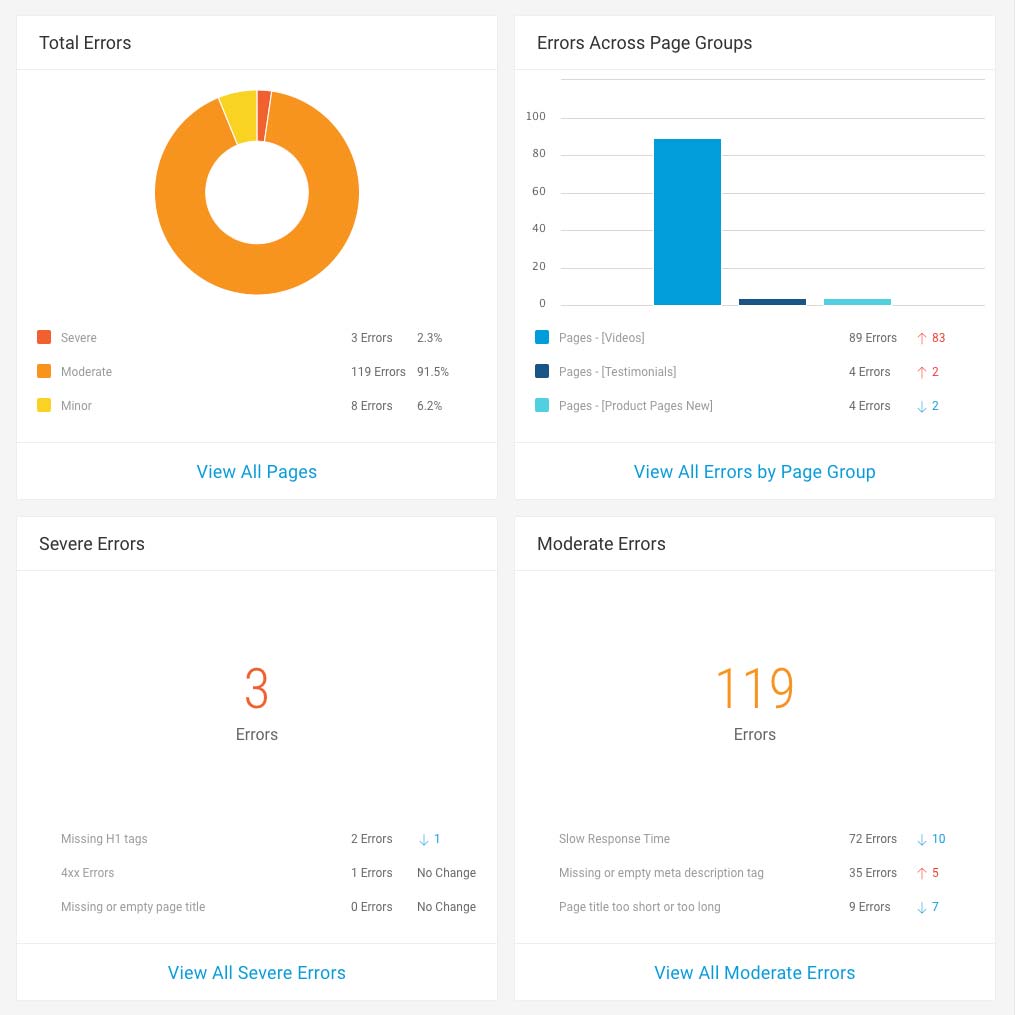
To further optimize their content, higher education organizations can also employ ContentIQ. As UC Davis said, this feature can be very valuable in the technical areas of SEO. By helping companies pinpoint essential higher education SEO aspects such as h1 tags and page load speed, they will make it easier for Google algorithms to understand their content and see its value.

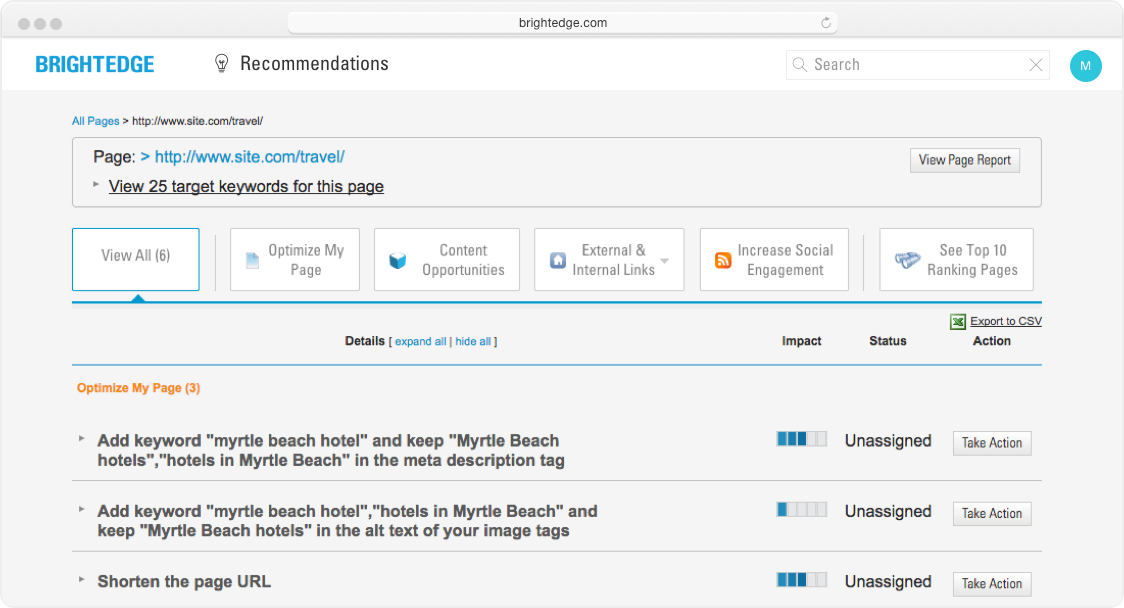
Similarly, the Recommendations feature will help organizations uncover potential problems on their site and organize them according to importance. This technical SEO helps them remain on par with what incoming students will expect from their institutions of choice.

Watching the competition

As of 2012, 3,026 four-year schools and 1,700 two-year schools competed for the attention and enrollment of students interested in higher education. This intense competition means that for these schools to build a strong digital presence, they must also keep a careful eye on higher education SEO.

The Data Cube also plays a helpful role in this part of the digital strategy. Data Cube will show schools the keywords that their competitors rank for but they do not, thus empowering them to develop content that will fill these gaps. They will gain a more complete picture of how the other schools perform and what they need to do to maintain-- and increase-- their standings online.

The BrightEdge platform also contains Share of Voice. With Share of Voice, organizations can compare their standings to their major competitors. They will receive a visual representation of the percentage of the internet space they dominate, versus how much the biggest competitors for that space do.

example of share of voice chart for higher education seo - brightedge

With Share of Voice, schools gain valuable information about which schools they need to pay the closest attention to. For example, they may realize that a school they had not even considered was their biggest competitor for keywords related to a significant degree program. This will empower schools to focus their higher education SEO strategies with a higher degree of precision. They can build strategies to counter the competition that poses the largest threat.

The information gained here can also play a valuable role in other ways. UC Davis SEOs, for example, can use it to show others at the institution “the light.” They can see how higher education SEO efforts allow their school to start gaining on--or even outpacing--the competition in important areas.

Gauging progress with higher education SEO

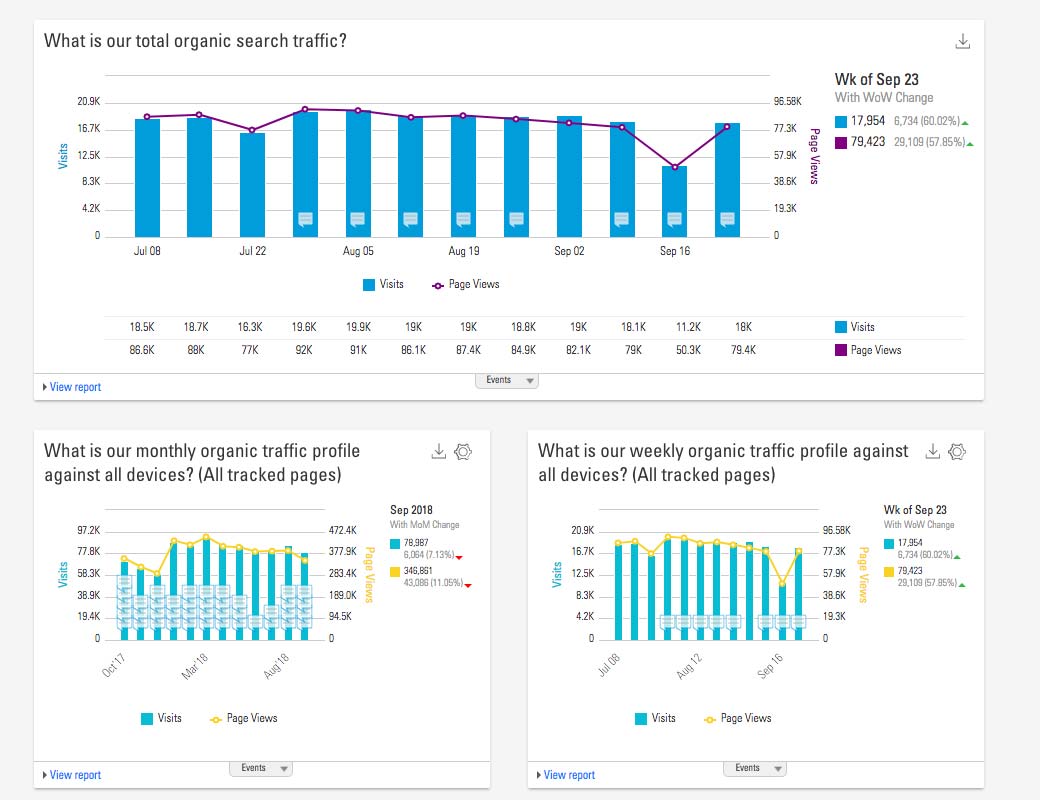
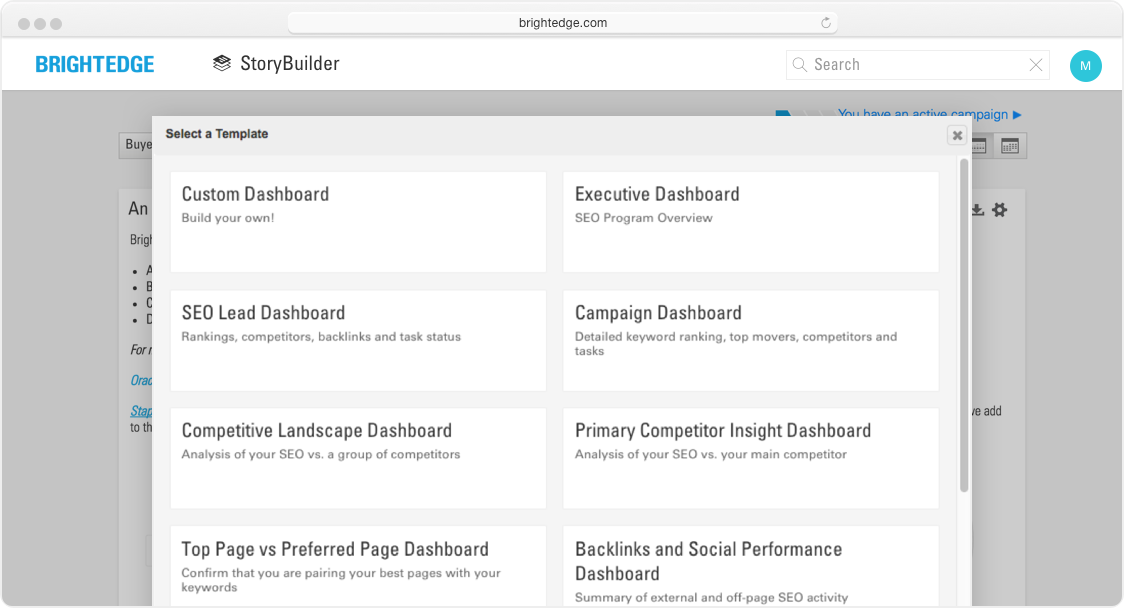
As schools begin to build and improve their digital presence, you will want to monitor your progress and clearly see the impact that your efforts have had on your visibility and traffic. StoryBuilder on BrightEdge will provide you with this advantage.

“It [StoryBuilder] is great for metrics and keeping an eye on things.” - Adam Napolitan, UC Davis

StoryBuilder makes it easy to customized dashboards to focus on the metrics that matter the most to you and your leadership at your institution. You can gauge KPIs, such as how many pages rank on page 1, allowing you to easily see your progress. You can also build customized dashboards that can be used when speaking with leadership, utilizing the metrics that capture their attention.

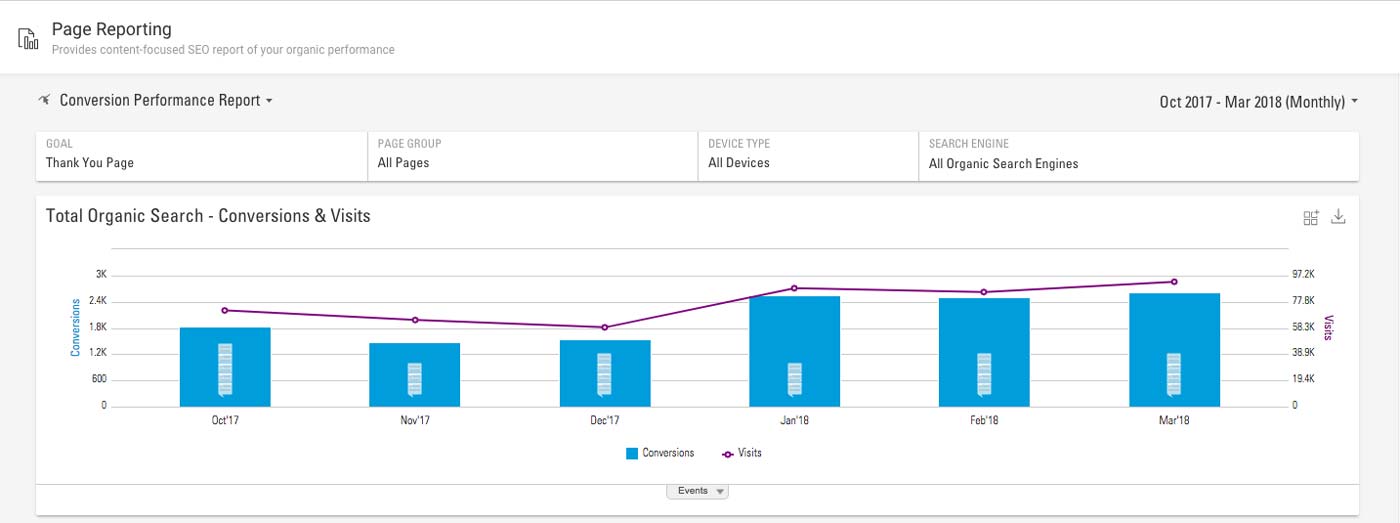
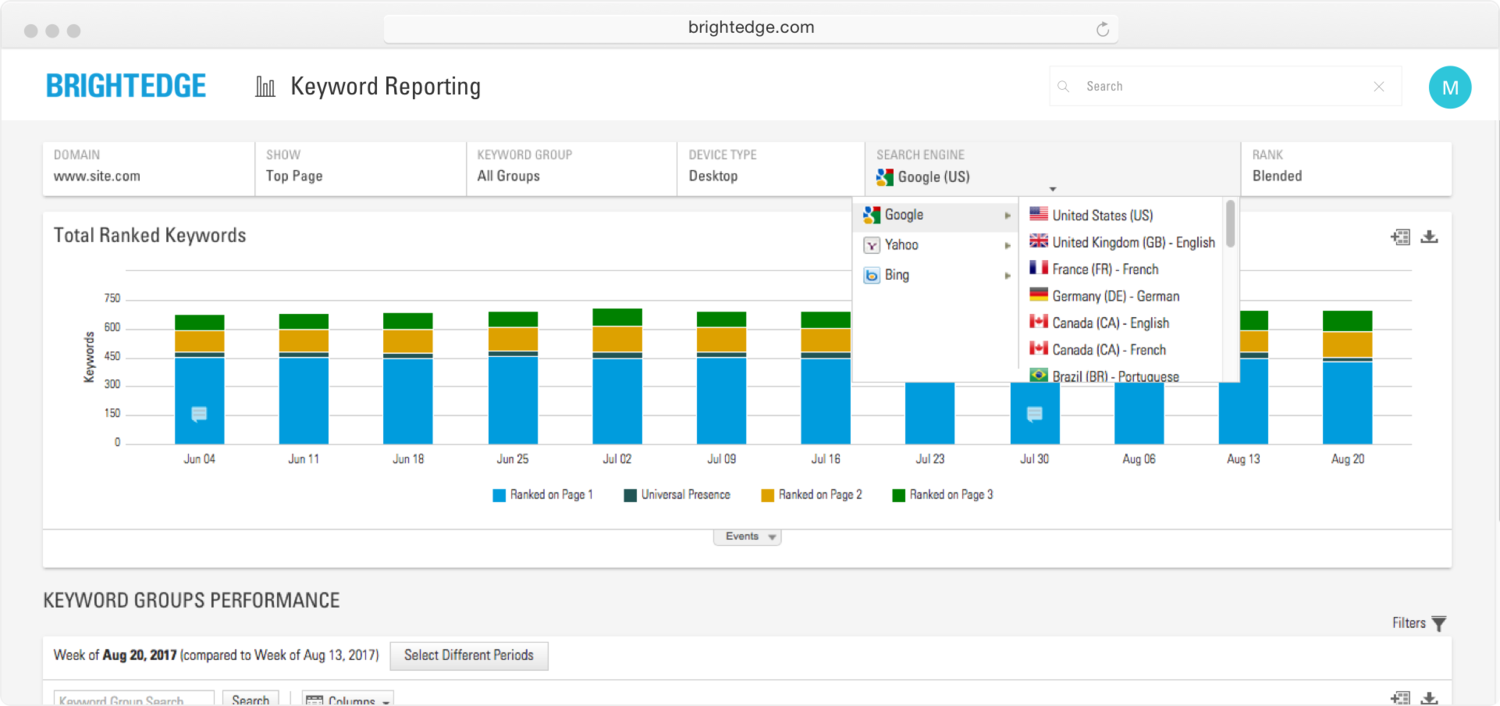
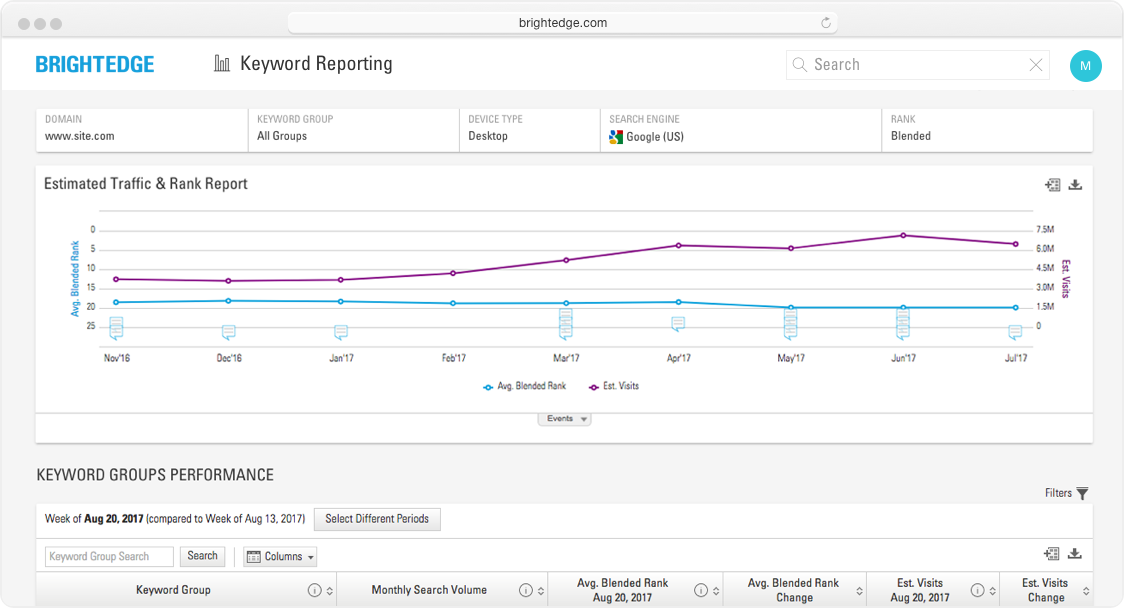
Our partners in higher education also mention using Keyword Reporting and Page Reporting regularly to further gauge their progress. They can monitor how keyword rankings respond to their optimization efforts on an individual level.

For BrightEdge partners in higher education, our platform offers the resources they need to compete and attract the attention of an increasingly digital audience. As our partners use the various features on the platform, they build a stronger digital presence and attract the site visitors and interest that allows their institution to thrive.

request a demo cta banner

Our latest research at BrightEdge indicates that for those in higher education, 61% of their site traffic comes from organic search. The research from our individual partners aligns well with these numbers, as UC Davis told us that 56% of their traffic arrives from organic search, and Education Management II reported 50%. The importance of […]

The post Higher Education SEO: Drive School Success with BrightEdge appeared first on BrightEdge SEO Blog.

Dumpsters.com Earns 38 Quick Answers with Single Page with BrightEdge

Learn how Dumpsters.com secured universal listings across multiple SERPs on a single URL using BrightEdge

230
page one rankings
52%
reduction in bounce rate

Dumpsters.com Earns 38 Quick Answers with a Single Page

Learn how Dumpsters.com secured universal listings across multiple SERPs on a single URL using BrightEdge

THE PROBLEM

Dumpsters.com launched in late 2009 with the goal of owning top SERP positions for high-value keywords. The primary challenge lay with its low domain authority compared to competitors, and they knew they had to get strategic and creative to generate quick wins for long-tail keywords that would then improve relevance for more impactful head terms. With that in mind, they prioritized the pages that could have the greatest impact in the shortest timeframe and started with the pricing page for their core business line: roll-off dumpster rentals. Their goal was to earn high-impact keyword rankings for the roll-off dumpster pricing page six months after launching a brand-new site.

THE SOLUTION

bj bellamy dumpsters.com case study profile photo

Using BrightEdge’s Data Cube, the SEO team identified several target search terms that returned Quick Answers from competitors with specific prices for various dumpster sizes. Before launching any updates, the team set up a page-specific keyword group and used the Quick Answer filter within Keyword Reporting to keep an eye on progress for target terms. They also added a broader universal listing chart to their weekly StoryBuilder dashboard to capture any Quick Answer wins for keywords outside the primary group. Next, the SEO team worked with the in-house analytics group to calculate average prices across the country and displayed the proprietary size-specific pricing near the top of the page using a table. The choice to use an HTML table was based on several considerations:

  • Google likes to show featured snippets in the form of bulleted lists and tables and competitors were ranking with similarly structured content
  • By inserting the price information in an HTML table, the information would be crawlable and replicable directly in search results

The page launched with the new table in April 2017. Over the next few months, the page began to rank for much broader keywords than expected, and this caused the bounce rates to climb. To mitigate this, the team updated the above-the-fold CTAs in the hero image and on the table itself to drive customers to use the zip code search bar. This directed them to relatively high-converting local pages where location-specific content was available. The goal was to personalize the experience for customers while also encouraging them to move beyond the initial landing page. This update went live in Spring of 2018.

THE RESULTS

  • 22 Quick Answers by EOY 2017 and 35 Quick Answers by June 2018 (high of 38 in April 2018)
  • 134 page-one rankings by EOY 2017 and 230 page-one rankings by June 2018
  • Drove 25% of all organic sessions by EOY 2017 and 36% of all organic sessions by June 2018
  • Reduced bounce rates from 65% in February 2018 to 34% in June 2018

Request a demo of the BrightEdge platform today!

SEO and Higher Education

Learn how digital transformation is affecting the higher education industry and how that is affecting SEOs and digital marketers in the space

I spend about 90% of my time on Data Cube. It was basically the main reason we brought BrightEdge. We use it in our strategies and find opportunities. It is critical in our content work and in competitive analysis.

Adam Napolitan, UC Davis

The New Google Search Console: Mobile Compatibility and Link Reports

enewton@brightedge.com
M Posted 8 years ago
t 9 min read

The search engine giant announced last week that they would be adding additional features to their new Google Search Console (GSC).

This new Google Search Console was initially released in beta to a few users at the end of 2017 and then rolled out to all users beginning in early 2018. The initial beta version initially included the most popular functions, including search performance, index coverage, AMP status, and job posting. Google announced their intention to continue to add more features throughout the year. These latest features are imports from the old Search Console.

Features on new Google search console - brightedge

As the company has said about their new Google Search Console:

“The new Search Console was rebuilt from the ground up by surfacing the most actionable insights and creating an interaction model which guides you through the process of fixing any pending issues."

If you noticed some changes as you logged into the new Google Search Console, we have outlined what you should know.

What you will find in the new Google search console

Links Report

On the Links Report, you will be able to easily see both the inbound links to your site as well as the internal links between your pages as Google search sees them. This report will combine the insights that you used to see in the “Links to your Site” feature and the “Internal Links” that you saw on the old search console.

You will also be able to gain valuable insights from this new Google Search Console report such as:

  • Which sites link to your domain the most
  • Which specific pages on your domain receive the most links
  • The text that commonly points to your site

Example Links Report from new Google Search Console

Why does the Link Report matter?

Inbound and internal links play valuable roles in SEO.

Inbound links let Google gain a better idea of how other people view your site. Sites generally viewed as reputable and valuable will receive more inbound links than others. Quality inbound links, therefore, will give the Google algorithm a good idea of how people view your material.

Helpful links can also drive traffic to your site.

People link to your site because your content would give valuable information for their users. If those readers want more information, they will click on the link, therefore bringing more readers to your domain.

Internal links help both people and search spiders enhance their navigation of your site. They will keep people engaged by encouraging them to visit additional pages relevant to their topic of interest. They will better explore the depth your site offers and begin building that important relationship of trust.

Internal links will also help search engine spiders navigate the site. They will see clearly how the different pages connect together and get a better idea of the value and depth you offer. This can help improve your standings in the SERP. They will also help to ensure that no pages of your site are overlooked by the spiders, so everything gets indexed regularly and remains updated.

Mobile Usability report

The Mobile Usability report on the new Google search console will contain issue names consistent with the ones that appeared in the old report. It will also have a new feature, however, allowing GSC users to submit a “validation and reindexing request.” If Google highlights an issue on the mobile usability of your site and you correct the problem, you can then use this request to let Google know the problem has been corrected. Given the importance of mobile in today’s search algorithm, correcting these issues as quickly as possible will be critical.

Example of mobile usability report on new Google Search Console - brightedge

Google has placed a large emphasis on mobile users in recent years. The search engine giant points to the high levels of smartphone saturation, including that in a number of countries, there are more smartphones than personal computers.

Given the number of people who currently use mobile devices to access the internet, brands need to have confidence that these readers can easily engage and interact with the website. Pages that do not conform to Google’s’ mobility-usage recommendations may use small fonts, force people to zoom in on the page, or otherwise not fit the screen, causing a poor user experience.

Why does the mobile usability report matter?

Google has placed a considerable amount of emphasis on usability for mobile users over the past few years. They used mobile compatibility as a ranking factor beginning over 3 years ago with the Mobilegeddon update in April 2015. Beginning at the start of 2018 they also began rolling out their mobile-first algorithm, which looked at the mobile version of a website first when determining the ranking of pages on the SERP.

This report within the new Google Search Console will provide important information for users so they can remain confident that their site does not contain mobility-usage errors. Failing to uncover and address such errors could easily result in a drop in rankings as well as a poor user experience for a number of potential visitors.

What does mobile usability mean?

Sites that rank highly in their mobile usability provide easy navigation for users on-the-go.

You want to think about the page-load speed, text, images, and other visual content you produce. Make sure it appears easily on mobile devices. Small font sizes or fancy designs that make it hard to read will both detract from the mobile user experience as will videos and images that do not display on mobile devices.

You also need to think about the buttons you use. People on mobile devices generally navigate using their fingers. Navigation features, such as your menu or arrows, should all have enough space in between them that mobile users can easily click where they intend.

Mobile friendliness also includes developing layouts and content that assists on-the-go visitors with finding the information they seek. Google, for example, has found that 94% of people on smartphones use them to find local information. Creating content that addresses these local intentions and anticipates what people want to see will produce higher engagement rates.

With the new Google Search Console, Google continues to work towards an improved user experience, and that includes giving site owners the tools they need to improve the usefulness of the content they produce. Through using these features, you will have greater insight into your site’s performance and what you can do to boost it with the help of the new Google Search Console and the BrightEdge SEO platform.

request a demo cta banner

The search engine giant announced last week that they would be adding additional features to their new Google Search Console (GSC). This new Search Console was initially released in beta to a few users at the end of 2017 and then rolled out to all users beginning in early 2018. The initial beta version initially […]

The post The New Google Search Console: Mobile Compatibility and Link Reports appeared first on BrightEdge SEO Blog.

,