Aligning Content & SEO - Alison MacDonald of Seagate

Default avatar
Andy Betts
M Posted 12 years 1 month ago
t 9 min read

Alison MacDonald is the digital marketing manager of global marketing for Seagate Technology. In her role, she creates and deploys brightedge alison macdonald share interviewglobal digital marketing strategy with a focus on SEO. Her key focus at Seagate is organizing and deploying content strategy for U.S. and regional marketing. Ahead of Share 14, Alison gives her insight into content strategy, SEO and how to stay ahead of the "ever-evolving beast."

The SEO Landscape

Andy Betts (AB): How much has the SEO landscape changed over the last year?

Alison MacDonald (AM): SEO has changed tremendously over the past year, mostly in its transition from just being a “keyword” driven tool, to establishing itself as a collection of best practices that cover everything from content, social media and PR to user experience and Web architecture. 

With all of the Google algorithm updates, SEO is now more in the forefront of many marketers’ minds and is gaining more traction than ever before, both by allowing those who focus on SEO to get more traction and buy in, and by allowing us to be more successful in our programs -- rather than pushing just to get our programs understood.

AB: What has had the biggest impact for you and your company? AM: With all of the publicity of companies being penalized for bad SEO practices, the biggest impact for Seagate has been increased awareness and acceptance across our whole organization about what SEO is, and how we can build an even more solid foundation going forward, with multiple teams contributing, than we have ever been able to before.

AB: How do you see the space evolving over the next year?

AM: SEO is an ever-evolving beast that has never really changed. Marketers should continue to create great content with their customer’s journey and best experience in mind. Google, Yahoo, Yandex, Baidu, etc., will continue to promote top rated content that resonates with an audience: relevant and likeable content that is easy to find. Look out for the customer, write for the customer, and create a solution your customer wants to buy, and your website will continue providing value and you’ll continue to be awesome!

AB: Any tips to share on adapting to rapid change in the market?

AM: Change is inevitable. Keep doing the right thing for the customer, stop trying to predict the future, and don’t try and “game” the system. Great content will prevail in all capacities. If you do get penalized, figure out what you did wrong, learn from it, and move on.

AB: What are you doing to shift focus from keyword to page performance strategies in light of secure search?

AM: We are spending more time understanding our customers, which is not only allowing us to rank better, but also helping us create better products and speak to a customer in a manner they understand. Secure search simply forced us to do what we should have been doing from the beginning: using our internal knowledge to communicate with our external customers.

The Content Marketing Shift: Optimization, Measurement, Performance

AB: How are you aligning your content and search optimization efforts?

AM: Our content and SEO efforts are becoming one and the same. We focus our content creation around how our customers talk about our product at different stages of the funnel, and target our content strategy accordingly. The old-school SEO practice of isolating keywords becomes more of a puzzle when you have the opportunity to align content to buying behavior.

AB: How critical is measurement of content in your organization?

AM: Measurement is a high priority for all of the content we create at Seagate. While it’s an ongoing process that we continue learning from, we have also found that we get better every day due to our efforts to measure the success of our content and how our customers are interacting with it.

AB: Tell us more about your view on the convergence of content and SEO – what are the challenges and what advice can you give the audience?

AM: Know that it’s going to take time to move your perspective (and website) from a keyword-driven entity to a content-driven entity. Don’t forget, or underestimate, the value of your internal resources when it comes to talking about where content should go and how customers want to be talked to. Talk to your customers, understand what they are seeking, and make everything easy for them to find.

One of the biggest challenges we’ve faced is: where do we put all of this awesomeness? We are still working on finding the perfect solution, but we know that the effort and testing and interaction with our customers will be rewarded eventually. It takes time: be patient and persevere!

Your Share 14 Session

AB: Can you tell us about your Share 14 session?

AM: My session is on scaling content and making content that you already have work more efficiently for your audience and for your demand gen/lead gen efforts. Seagate is a hardware-heavy company with a lot of crazy technical documents, but we also have some serious capabilities that our products and services are capable of. We like to talk about both of those sides of the house without doing a lot of rework, while reaching a lot of diverse audiences and personas.

AB: Why Share – why do you attend?

AM: Share is an awesome chance to meet the “industry” hot-shots, digital marketing network, and learn more about what everyone else is doing and learning. I’m looking forward to seeing old friends, making new contacts, and learning new tips and tricks to become more efficient.

AB: What advice can you give Share attendees to make the most of the experience?

AM: Talk to everyone, no matter what their title is or yours. Ask questions in the sessions (it’s embarrassing when no one has a question)! Don’t be shy!

Your Partnership with BrightEdge

AB: How do you use BrightEdge to achieve your business objectives?

AM: I use BrightEdge to help with tracking, research and suggestions. I love the platform and the easy automated reporting that I can set up for various levels of understanding across the organization.

On a daily basis, I use BrightEdge for research, suggestions and brainstorms.

On a weekly basis I use BrightEdge to drive the Web team batty, directing them to track what changes have been made and what changes still need to be made, without going into multiple systems or having to manually check pages.

On a monthly basis, I use it to track performance of content, share of voice increase (or decrease), overall social listening, and creating new content ideas. On a quarterly basis, BrightEdge is my backup for when I need to make changes in our process or strategy.

Annually it shows (in pictures!) how well we’ve performed, which pages/content are the most successful, and what our competitors are doing across all timelines.

I also use BrightEdge to help me feel better about myself in comparison to what other companies are doing.

AB: What do you love about BrightEdge?

AM: I love many things about BrightEdge. For one, the fact that I’ve always worked with someone named “Mike,” so I don’t have to learn new names!

Secondly, that BrightEdge takes recommendations and suggestions, and run with them. Finally, that my ideas come to life because the technical team actually listens, and that I have beautiful PDFs that I can print and put on the wall to show the success of our content and SEO strategy.

See some fun content that is really working: check out BrightEdge's SEO Jokes post.

The Year Of Content & SEO - Duane Forrester of Bing

Default avatar
Andy Betts
M Posted 12 years 1 month ago
t 9 min read

Duane Forrester is an author and a prominent voice in the search marketing industry. As the head of the webmaster program at Bing, andbrightedge share interview - duane forrester with about 15 years in the industry, he's seen quite a bit of change.

Yet, some things remain the same -- like the importance of content -- while others things change, like what it means to create "excellent" content.

In this interview, we invite Duane (an upcoming speaker at Share) to give his thoughts on the constants and the changes in SEO.

The SEO Landscape

Andy Betts (AB): How much has the SEO landscape changed over the last year?

Duane Forrester (DF): In some ways a lot, but in other ways not much. This past year will be remembered as the “Year of Content.” So much conversation around how important content is, people moving budgets towards content efforts and so on.

And yet, for all that talk and action, content has always been important. Finally, though, businesses are starting to understand the downside to implicit or explicit shortcuts in this area.

In some instances, people had no idea that they were taking shortcuts, and it served to slow their success. Others who knew what they were doing, were outright hurt. In the end, though, SEO emerges as a better tactic from this intense focus. More people sharing ideas, more people investing more time and efforts truly aligned to giving a searcher what they seek.

And as if content weren’t enough, more and more companies are starting to hear the message around marking up content, and taking an action towards it. This is a future-proofing tactic that will serve websites well. As engines ramp up how they use that marked up data, richer consumer experiences emerge.

The winners from all those experiments in UX, SERP shuffles, etc., will stick around long term. But you’ve got to be marked up to play.

AB: What change has had the biggest impact for you and your company?

DF: I’m going to go with content, even though that has a double edge, as we’re a search engine. Better quality content helps us serve better results to searchers, increasing satisfaction.

Flip that around, and internally the company (Microsoft) has renewed its focus on content – what it is, what stories are told, how it’s shared and so on.

AB: How do you see the SEO and content space evolving over the next year?

DF: Don’t think for a second we’ve turned a corner on this topic. The importance of content is right at the top of the pile and should remain there indefinitely. Right next to usability.

While it’s tempting to think you’ve mastered content, and to seek what’s new and cutting edge, I’ll suggest that a lot of sites still have work to do on the basics. Timing, quality of content, answering searchers needs directly, simply and thoroughly. Creating the words is only one small part of this puzzle and the winners are the ones solving the Rubik’s Cube faster.

Claiming you’ve nailed one, two or even three sides doesn’t mean you’ve completed it. It means you’re on the right track. Close, but not across the finish line.

I often ask during presentations: Who in the room creates excellent content? Usually a bunch of hands go up. That’s when I tell them they’re likely wrong. They are not in a position to judge their content as “excellent.” Customers judge this – by engaging.

If people find your page, click on the result, then leave from that same page, for many websites that’s a fail – no conversion, no ongoing engagement, just a flash of bandwidth drowned by the deafening sound of the exit click.

If you’re nailing content, people want to engage with you more. They are compelled to consume more of it. You become a valued resource. And this is very hard to achieve.

AB: Do you have any tips on how marketers and businesses can adapt to the rapid shifts in our market?

DF: Stay focused on your own metrics. Don’t get jumpy because you read something online about yourself or others … unless, you know, that article about you is true. Then jump as high as you like.

Build a plan: think it through, then execute. Chasing after new ideas every week or month is a recipe for a bunch of unfinished projects.

Learn to predict the future. “Ah, yes, but if I could do that, I’d be rich and on a private island, Duane …” Yeah, yeah, now back down to earth. Predicting the future is an inexact art at best, but trend-watching and crossing that with an understanding of your consumer’s behavior can lead to some pretty interesting insights. Some of which will seem to border on the magical.

To help in this effort, you’ll need to comb through your own data to firmly understand patterns of behavior on your site. You’ll also want to watch for developments across topics that inform consumers, and relate to your products or services.

Now you’re in a position to start taking a stab at, “If Development A comes to be, then consumers may react as such, and their behavior with us/towards us may change like this.” It’s hardly exact, but it’s a skill. Practice it, and you’ll get better at it.

The Content Marketing Shift: Optimization, Measurement, Performance

AB: How are you aligning your content and search optimization efforts?

DF: I can tell you this: our focus is almost entirely on “content” and very little around what we all think of as traditional “SEO.” Yes, technical SEO gets looked at, but maybe not to the depth you might think. The goal in everyone’s mind is clear: we know our target persona and how do we serve them best?

AB: How critical is measurement of content in your organization?

DF: Very important. It’s measured across an impressive number of levels. From qualitative to quantitative, we track it. We train around storytelling, enabling more people to become voices. And we’re constantly testing; everything from features, to messages, to UX to engagement via social.

All that data feeds back to help everyone internally have access to more than just what they typically get exposed to directly. It helps that we have a culture of sharing and of building useful relationships internally, too.

AB: Tell me more about your view on the convergence of content and SEO.

DF: The reality facing businesses today is clearly defined by how consumers engage. Mobile is the leader now, and mobile queries follow that trend. Businesses need to ask themselves not just, “How does my site look on X device?” but also, “How does my content look in the site on X device?”

There are so many failed mobile experiences littering our lives today that it’s a wonder any brand keeps loyalty. In fact, this could be why so many smaller sites have become bigger in the last few years. The ability to more clearly deliver the content the customer wants, in the experience the customer has decided to have, will have long term impacts on success.

Not that this is easy to manage, mind you, but my advice is test, test, test, invest in usability, learn from consumer patterns and deliver unexpectedly great experiences.

About Your Session at Share 14

AB: Tell me more about your session.

DF: Ever wonder what Tesla occupants are searching for? Well I’ll tell ya … their No. 1 query is … well, you’ll have to come to the session to hear those tidbits.

And while it might sound interesting to hear the behavior of those types of searchers, the bigger story here is the move from mobile to mobilized. How technologies in place today are changing consumer interactions and expectations.

"In-car" is an extension of mobile, and opportunities exist right now to impact drivers and passengers. Guide them to your business, leverage SEO or online reviews for better positioning in those all-important moments just before a “local decision” is made and so on.

This is a bit beyond the typical “SEO 201” and “social media is king,” but it’s real and impacting businesses every day – whether they know it or not.

AB: Why Share – why do you attend?

DF: For me, this is about sharing useful information with the right audience. Share brings the right mix of people together and offers a format to engage in meaningful dialogue. It’s a great day when smart business people get together to talk about how to build success!

AB: What advice can you give Share attendees in order for them to make the most out of their experience?

DF: Come prepared. Know what you want to take back to your business – what do you need from other attendees and the speakers to move your business forward? Be practical, but honest.

Hydrate. Yeah, I know, but seriously. This stuff comes fast and furious; being alert means you can keep up and reap the benefits.

Mind the commute times. Nothing sucks more than missing the one session you really wanted to attend because of traffic.

From out of town? Layer your wake up calls. Two from the front desk 15 minutes apart, your watch (if applicable) and your phone.

Take notes. Good old fashioned paper and pen. Skip the live blogging, crafting of funny tweets and stay focused on getting the info you need. Unless of course, your job is to live blog. It’s super easy to get caught up in exciting conversations with people who speak your language, just don’t lose focus on your goals.

If you find yourself in an interesting conversation, make the connection – ask for a card, swap cards, whatever. Just be sure to follow up later that day with a connection on LinkedIn, etc. Don’t stalk, and don’t be needy, but if there’s something legitimately worth connecting over, make it happen.

The only dumb question/noob question/etc. is the one left unasked. No one on stage or off was born with their knowledge, so feel free to openly ask questions and learn. Be polite, but never fearful. If you’re thinking it, so are 10 others in the room. If you’re really embarrassed afterwards, offer to buy all the others who were thinking the same question a drink – you’ll have loads of friends then.

As a speaker, I can say we don’t care if you shave or if your hair is a bit off. We do care if you fall asleep during our sessions, though. That’s an ego crusher.

7 Dos and Don’ts of Onboarding to Get New Hires Contributing Fast

Bill Fergusson
Bill Fergusson
M Posted 12 years 1 month ago
t 9 min read

The success of your company and its initiatives is only as good as its people. And, as an employer that strives to be innovative in all areas of the business, the onboarding process is the first step in demonstrating leadership.

Here at BrightEdge, we put a lot of planning into new hires. As with any growing Silicon Valley startup, the competition is high and the pace is fast. That’s why our onboarding process ensures new staff is set up for success in a repeatable and scalable way.

The faster a new hire feels welcomed and prepared for the job, the faster this person will be able to contribute to the company’s success. It makes good sense for companies; onboarding using the “sink-or-swim” method where staff struggle to figure out what’s expected will eventually negatively impact return.

So what does it take to get your new hires on board and making an impact as soon as possible? Check out the “dos and don’ts” of a killer onboarding process:

  • Don’t skimp on time invested for onboarding process
  • Don’t make onboarding just an HR function
  • Do ensure new hires “get” the strategic vision of the company
  • Do make sure new hires know the culture
  • Don’t forget to teach about products and services
  • Do familiarize the new hire with the website
  • Do cross-train for teams that impact one another

1. Don’t skimp on time invested for onboarding process. Here at BrightEdge, we have a 4- to 6-week onboarding process whereby new hires get to know the company inside and out, covering every important aspect of the business so they can absorb years’ worth of history, knowledge and culture. By the time our new hires are through, they really have a clear understanding of the BrightEdge vision.

2. Don’t make onboarding just an HR function​. In a startup environment, everyone rolls up his or her sleeves to get the job done. This doesn’t stop during the onboarding process. At BrightEdge, we have an approach to onboarding that ensures new hires meet with key staff across departments and teams. Each team is responsible for a facet of the new hire’s onboarding process relative to their team’s mission.

3. Do ensure new hires “get” the strategic vision of the company. This includes understanding the company history – where it came from and how it evolved – to an understanding of where it is today, and where it will be in the future. We try to pair the new hire up with a founder or key executive who has been with the company for a significant amount of time for this portion, as those people are usually the closest to the company story and vision.

Taking this a step further, and depending on the team the new hire is on, getting this person up to speed with the big picture of the department or team goals is crucial, too.

For example, a new hire in marketing will need to know what the company’s marketing goals and plans are from the top down so he or she will understand how their role will directly impact the goal.

4. Do make sure new hires know the culture. One of the most challenging parts of entering into a new environment is understanding the subtleties of the culture, how people work, and who to turn to if a person needs something related to their project.

A new hire may have an idea of a functional area of a business, like HR for example, but how those functions are carried out is different at every company. At BrightEdge, for example, we're an SEO company, and even when seasoned marketers join our team, they appreciate knowing the BrightEdge approach to SEO.

For this piece, we like to pair the new hire up with the vice president of operations – someone who knows the inner workings of the day-to-day – to give the new hire the rundown on how to get things done, and what to watch for.

5. Don’t forget to teach about products and services. A new hire can’t expect to be a contributing member at full capacity unless he or she fully understands the products or services a company provides. And it’s not about just learning as they go; new hires should get a thoughtful, thorough introduction into the business’s bread and butter, and what goes into making it successful.

6. Do familiarize the new hire with the website. One of the key areas that companies may forget to onboard a new hire in is the website. Today, the website at a company is the hub and culmination of many teams, departments and goals. And, because everyone surely has a stake in the website – the face of the brand online – a new hire will want to know the goals of the site, how their team interacts with it, and how to make important updates as needed.

7. Do cross-train for teams that impact one another. Some teams just naturally have a symbiotic relationship within a company – take sales and marketing, for example. You can bet that staff from each one of those teams will inform and support one another’s strategy. Here at BrightEdge, we like to “buddy up” new hires with crucial contacts at teams that would impact that new hire’s role for cross-training and collaboration opportunities.

The Onboarding Process Pays Dividends

Although taking the time to ramp up an employee does mean a short-term hit on productivity for those involved in the on-boarding process, it’s a win-win for all parties.

The sooner new hires are ramped up, the sooner they’ll be productive. And, this benefits new employees who want to prove that they can be a productive member of the team.

And startups: this is especially important. With so much to accomplish, and the race against time to build products and acquire customers, thoughtful onboarding ensures new hires aren’t just figuring stuff out on their own.

For teams, a formal onboarding process means scalability. As a company gets larger and product offerings expand, new hires can jump in feet first and start making an impact.

SEO with Dixon Jones of Majestic

Default avatar
Andy Betts
M Posted 12 years 1 month ago
t 9 min read

Majestic is a name synonymous with link tools that help the SEO community gain crucial insight. Continuing our series of interviews with Share 14 speakers is the latest with Majestic SEO's (soon to be simply, "Majestic") Dixon Jones, the company's marketing director. Dixon has been an active voice in the Web marketing space since the late '90s, and in this interview, he talks how branding and SEO go hand-in-hand.

BrightEdge is pleased to announce Majestic as a key partner and sponsor at Share14.dixon jones - brightedge share interview

The SEO Landscape

AB: What’s your take on the changes to the SEO landscape over the past year?

Dixon Jones (DJ): Every year, the changes in SEO seem to be designed in part to surprise and upset, but I think companies with good business models and a healthy understanding of digital marketing are handling change better and better, whilst those that treat SEO as an afterthought, or (potentially worse), in isolation, are suffering more and more with every iteration in the industry.

Core business values: A great USP, barriers to entry, clear points of difference directly impact success in SEO. It is hard for a search engine to “get it wrong” when you have build up such a reputation that people type in your trademark when looking for a generic product!

The more they do that, the more you can align page performance with branding. That’s the real key to success for any mature (or maturely minded) business.

You don’t have to be “large” to achieve this. Being unique could be as simple as being the only locksmith in town. A barrier to entry could be as simple as choosing a location where zoning laws prevent other players from starting in competition next door.

Being online, as well as being unique, is a massive advantage. One challenge here, though, is the balance between giving your intellectual property up for crawling whilst preventing it from being used against you in a competitive manner.

This is the new, very real threat that is emerging now. It’s all very well to have the widest range of hotels and flight combinations on which to search, for example, but quite another is Google to collate all the information from you and your competition, and present results that never give the user a need to cross your virtual front door.

This is a very real danger. On one hand the mantra from Google has been “create great content” and on the other it has been “make it easy to index.” The natural endpoint of this is that in the process, you give a search engine “license” to almost treat your content as theirs.

To combat this, I really think you need to create brand ambassadors out of your own user base and get them talking about your brand, with your values.

Then you need to combine this with a “lock in” of your own. Give something that does not involve money on the part of the consumer, but make sure that the “information trade” is sticky in some way; some way that the search engines can never take away from you. Every business is different, but at Majestic, the mantra is moving from “content is king” to “functionality is the new content” (content is the new PR).

By this, I mean that what I used to put on our own (well respected) blog, I now give to someone else with the ear of my potential customers. I save the blog, (where I can) for new announcements about our functionality.

We then try and develop faster than our competitors, differently to our competitors and (ideally) in ways where our competition cannot follow.

The Content Marketing Shift: Optimization, Measurement, Performance

AB: How are you aligning your content and search optimization efforts?

DJ: Our big challenge in 2014 is a site migration. We are changing our brand name from Majestic SEO to Majestic after having secured the domain Majestic.com.

Any marketer will see immediately that this is a logical move to build a brand around a good name. In our case that previously involved a name that immediately invoked incorrect associations and preconceptions, which held us up when changing user perceptions about our product.

Marketers are less likely to see why changing our name is also a good long term strategy for SEO. I say this with some feeling, because at the time of writing, MajesticSEO.com ranks on the first page in most countries around the world for the phrase “SEO”!

This may not be the case when we migrate the site, so prima façade, this is a bad SEO strategy -- but returning to my previous point, I want to make Majestic synonymous with being a foundation stone for search and content marketing technologies like BrightEdge.

When users think about “link tools,” they think about our brand, they type in our brand. I bet Dyson still has the problem that everyone types in “Hoover” when they search for a Dyson!

That’s a problem I want my competitors to have – because that’s going to be the one that helps me beat my competitors on search. So we are continuing a successful content strategy to this point. We didn’t just create a “Quality Metric” for pages that emulated Page Rank; we created “Trust Flow,” and more recently, “Topical Trust Flow”.

These are words that are backed up with a massive USP … (Oh, and a trademark!) Now we find (as we planned), that users are starting to use Trust Flow as a benchmark on which to judge the quality of pages in bulk. It’s almost a tradable commodity in the world of domaining (the business of buying and selling domain names).

That bodes well for our “function is the new content” strategy.

About Your Session at Share 14

AB: Tell me more about your session at Share.

DJ: I am talking about content metrics that matter, including measurement, performance and value.

I want to show how we can measure the success of a piece of content based on the traction it gets in links, like how we can highlight when new links come into the content, and why tracking this is good to make sure you engage users with the content that is already interesting enough in your content to connect.

I am also really lucky to be introducing a case study from Epicor, which is almost three case studies in one … but I would hate to steal Epicor’s thunder on that one.

AB: Why Share – why do you attend?

DJ: Hey – every industry has an “inner circle.” This is it for SEO and Content Marketing.

AB: What advice can you give Share attendees to make the most out of their experience?

DJ: Look out for little Majestic Mascots for the chance to win a “Misfit Shine” activity watch.

Your Partnership with BrightEdge

AB: Tell us more about how you work with BrightEdge.

DJ: BrightEdge gives us the power to invest in our future. We develop fast, and that's not easy. BrightEdge looks after the world’s best brands doing SEO, and that helps to fund Majestic’s relentless product development.

BrightEdge does get special treatment from Majestic because they invest in our future, and I hope we return the favor tenfold, because that’s how we invest in the future of every BrightEdge client.

AB: What do you love about BrightEdge?

DJ: BrightEdge is serious about search and serious about partnerships

Optimizing for the Customer Experience with Dave Lloyd of Adobe

Default avatar
Andy Betts
M Posted 12 years 1 month ago
t 9 min read

As part of our series connecting with leading brands and marketers ahead of Share 14, I caught up with Dave Lloyd, senior manager of global search marketing at Adobe Systems. Dave leads a team dedicated to organic and website search strategies, and he's got nearly 15 years in the digital and search marketing space. In this interview, Dave talks about the customer optimization strategy, the difference between demand generation and lead generation, and why search is content -- but content is not always search.

dave lloyd brightedge share14 interview

The SEO Landscape

Andy Betts (AB): How have you seen the SEO landscape change over the last year? 

Dave Lloyd (DL): This is my 14th year in the industry, and the pace of change has never been greater. The search marketing industry continues to evolve. Let’s face it: SEO performance relies on a business solid foundation and adapting regularly to changes in the industry.  

When the algorithms change to improve the overall user experience, top marketers must respond by aligning strategically and operationally to their company’s overall goals. And as always, continue learning and preparing for the next change, because change is the only constant.

That’s where we are with search engine optimization today. Things are in transition because customer behavior is moving more to mobile, social, and search activity. Where the customer goes, we go. SEO in many circles is almost a misnomer now.

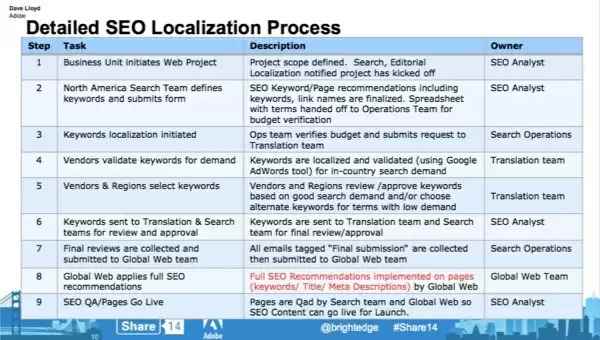
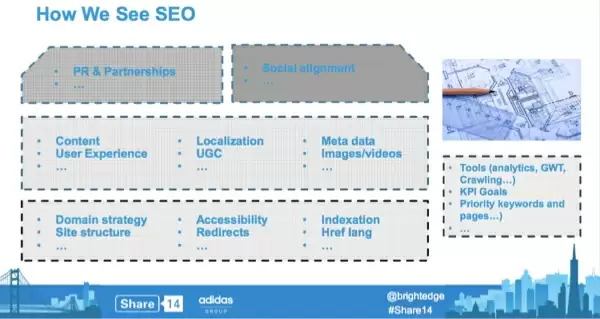
While we will always optimize for search engines, I tend to think we optimize digital assets according to best practices for both humans and algorithms. We optimize for the customer experience because the search engine is now only a means to the end, a conversion. SEO must first optimize to your future customer where they increasingly spend their time on mobile, in social media, and in search engines. SEO must continue integrating with the broader marketing world, including many of the elements shown in the graphic below.

dave lloyd graphic brightedge share 14 interview

The old SEO days of running as fast as you can to keep up with search engines, algorithm changes, and dedicated link building strategies are no longer as effective if your goal is to leverage the value of an integrated SEO campaign. The new SEO, customer optimization strategy (COS), takes place above the shoulders in a well-thought-out content campaign that incorporates the old SEO (no, it is not dead), and also recognizes the new power of the customer to express what they want in social and digital media through user-generated content (UGC). The new foundation for COS is data and data analytics, including predictive analytics that enable content decisions based on customers’ future needs.

As customer sentiments and perceptions shift, content and marketing messages shift to stay fresh and relevant. The customer is telling us what they want. We just have to listen (collect data), pay attention (analyze data), and give it to them (make good decisions based on the analysis).

The Content Marketing Shift – Optimization, Measurement, Performance

AB: Tell me more about your view on the convergence of content and SEO.

DL: Search is content but content is not always search. What I mean by this is that search is obviously dependent on content both strategically and tactically. But the "early and often” opportunity for search to benefit and align closely with content strategy must be earned consistently at companies in order to be integrated and fully supported. Bottom line: there is often a gap between the ideal notions of search + content marketing, and what happens in the real world. In the most practical way, this is how the two could work together to improve lead generation:

  1. Define a keyword strategy
  2. Optimize your website to get found for both brand and non-brand competitive terms
  3. Create blog and other marketing content  (inbound marketing)
  4. Promote content and participate in social media (demand generation)
  5. Convert site visitors into leads (lead generation)
  6. Nurture leads with targeted messages (lead management)
  7. Optimize your marketing for mobile
  8. Analyze and refine strategies

So the back-end strategy at play is generating leads or sales through demand generation. I think of demand generation as an awareness effort designed to drive traffic to your website to cause potential customers to “inquire” about your products.

Demand generation is not lead generation. It’s an enabler for lead generation. Content marketing is often synonymous with inbound marketing, focused on the general marketing funnel effort.

Demand generation is driving those Web visitors further into the funnel thereby generating demand, from the perspective of sales value.

Demand generation is the sales side of inbound marketing; it comes complete with back-end goals related to conversion rates and revenue, whereas inbound marketing is a precursor to demand generation and leaves the ROI issues to the demand generation people in your organization.

Simply, inbound marketing is front-end awareness whereas demand generation also includes back-end nurturing and closing. SEOs today must continue to focus on aligning to content strategy and inbound marketing while striving and innovating to add value to the lead quality being driven through the funnel.

About Your Session at Share 14

AB: Tell me more about your session at Share 14.

DL: I’m honored to be speaking at two sessions – one on global search marketing and the other on in-house SEO operations. In both, I plan to cover strategic and operational topics important to the SEO leader or practitioner with a slant on strategy alignment, process excellence, a focus on data and results, and practical takeaways.

AB: Why Share? Why do you attend?

DL: I attend Share to connect with industry leaders, learn and return with both innovative and practical tips. Our industry changes so quickly that even a few new insights or connections can make a significant difference in results. Share is a world-class event where I can learn about the latest strategies and best practices from search and digital marketing leaders.

AB: What advice can you give Share 14 attendees to make the most of their experience?

DL: As Woody Allen said long ago, “80 percent of life is showing up.” So make the business justification to do that, and then have in mind a few objectives to fulfill at the event – and prepare to share your takeaways with colleagues when you return to the office. Maybe it’s to meet 20 new people plus learn five new things and implement at least three of them within a month.

Takeaways from events like this come from both session topics and hallway discussions, so go out of your way to meet new people and keep in touch. And be sure to take action when you get home.

The SEO and PPC Management Handshake

Default avatar
Andy Betts
M Posted 12 years 1 month ago
t 9 min read

Have you heard of the old saying, “One hand doesn’t know what the other is doing”? You’ve most likely experienced the frustration that comes with that when dealing with large organizations and government bureaucracies.

For example, sending a payment well ahead of the cable provider’s due date, only to receive a bill demanding payment immediately. Or diligently forwarding your mail to your new address, but somehow it isn’t arriving. The list goes on and on.

This phenomenon also applies large brands and their marketing, when separate branches or divisions do not communicate with one another. They’re simply “not on the same page,” and more often than not, the company suffers as much as the customer.

When heading up an enterprise-level search marketing strategy, you understand that you can’t afford to waste precious resources on duplicate efforts, much less counterproductive ones. When this manifests as paid and organic search teams that don’t collaborate, it can mean a muddled, disjointed search marketing strategy that’s not making the most of the website’s presence in the search results.

Managing PPC and SEO working together

One of the smartest ways to both streamline and coordinate the search marketing strategy for your company - and maximize its ranking, conversions, and ROI - is to have your SEO and PPC management teams “on the same page” (literally).

A 2012 study by Google focused on the interactions between organic search results and paid ads found that even for sites claiming a No. 1 organic ranking, paid ads provided 50 percent incremental clicks (meaning, half of the top-ranking site’s visits would not have happened without the presence of paid ads).

The authors of Google’s study further noted that PPC percentages increased as a page’s rank in organic decreased, with paid ads providing 82 percent incremental clicks for sites ranking between two and four, then jumping to 96 percent for brands ranking five or lower:

An example of SEO and PPC management - brightedge

Google’s findings were reinforced by a September 2013 report by Kenshoo, which also analyzed the interplay between paid and organic search (for a major retail division of Hewlett-Packard in the U.S.). For a site ranked No. 1, click share percentage ratios for organic versus paid were 60:40.

In the No. 2 through No. 5 position in the SERP, the correlation dramatically shifted to 33 percent organic to 67 percent paid. The numbers for SERP positions No. 6 through No. 10 were more dramatic still, with organic search clicks at 10 percent to paid search’s 90 percent.

Kenshoo Study for seo and ppc management - brightedge 

With these two studies, we see PPC traffic rising and falling in conjunction with the organic search results position in a concerted effort to help boost visibility. A great way to access data that shows the relative contributions of SEO and PPC management is through the Google Analytics (GA) multi-channel funnels report.

Generated from conversion paths, this GA report can show you not only which channels contribute to your overall conversions, but also how. BrightEdge also has a fantastic report in its SEO platform that tracks channel performance across organic, paid and much more.

Channel Reporting for seo and ppc management - BrightEdge

How SEO Informs PPC Strategy

Just as PPC can do some heavy lifting when the organic search results drop, SEO can inform PPC. Now that Google has all but eclipsed keyword search query data from its analytics with the “secure search” initiative, the Web page is now the best unit by which to measure your SEO.

In absence of keyword data, you likely still have high-converting Web pages. BrightEdge S3 helps marketers identify their most valuable Web pages. (If you’re not a BrightEdge customer, GA has data you can mine, too.)

An analysis of this data can lend insight into how your PPC landing pages might be improved, or help you to make decisions about which pages to drive PPC traffic to if two pages could be just as relevant to an ad. However, you can still gain insights into important keywords to your website from other places, Google Webmaster Tools being one of them, and you can use that data to inform your PPC strategy.

SEO also impacts PPC in other ways, for example, AdWords Quality Score, which rates how relevant a page is for an ad. Basic on-page optimization of PPC landing pages helps ensure this type of relevancy. You can also leverage organic rank to determine and control your PPC spend. If you claim the top position in the SERP organically, you might decide there’s no need to also secure the No. 1 position in PPC for a keyword.

Clearly, the relationship between organic and paid search means that your SEO and PPC management teams have valuable information to share, which could lead to better site performance in terms of rankings, click-through rates (CTR), conversions and ROI. The best way to secure that friendly handshake between SEO and PPC management is to ensure your organization’s organic and paid teams have the data they need to support the relationship, and know how to collaborate using that data.  

Adapting to SEO Change At Share14 with Macys.com

Default avatar
Andy Betts
M Posted 12 years 1 month ago
t 9 min read

The team at BrightEdge is gearing up for another epic Share conference. Share 14 is all set to, once again, be the must attend digital marketing conference. It all starts on August 20 in San Francisco.

In the run up to the event we’re connecting with many of the worlds leading brands, and the speakers we've invited to Share in order to get a sneak peek into the topics that will be discussed at this year’s event. I caught up with Lauren MacPhail, the director of SEO and organic content at Macys.com. 

Lauren and her team are responsible for increasing the organic reach of Macy’s within the online space through content creation and technical SEO consultation. I chatted with Lauren about the change SEO has seen in the past year, where it’s headed and how content fits into it all. Enjoy.

The SEO Landscape

Andy Betts (AB): How much has the SEO landscape changed over the last year?

Lauren MacPhail (LM): Over the last year, there have obviously been significant algorithmic changes that altered the course for many SEOs. Between Hummingbird, Panda and Penguin, many companies have had to completely change the way they approach optimization.

The largest impact has come from a few key areas:  

  1. Analytics data. The ability to track keyword performance within website analytics used to be the cornerstone of both proving SEO success and identifying new opportunities for optimization. Many SEOs had moved away from relying on SERP rankings for success in favor of a more conversion-driven approach. Secure search changed all of that by forcing SEOs to put more focus on ranking and start examining page performance with a greater level of detail. While many see this as a positive change, it has had the largest impact on SEO analysis and reporting in years.
  2. Linking to content. We’ve all seen the shift over the last year away from guest posting and “link building” strategies toward “content marketing” strategies. The reality here is that both can be good or bad, depending on the intent.
  3. SEM marketplace additions. The rise of PLAs, both on desktop and mobile, and the redesign of paid ads on Google have shifted both the real estate breakdown of the SERP and the average customers’ perception of paid vs. organic. This has affected click through rates, and possibly the rank needed to get high visibility in the SERPs.
  4. Mobile shifts. While mobile rankings used to mirror desktop, that has obviously changed. As more and more search traffic (and traffic in general) comes from mobile instead of desktop, there is increasing pressure on SEOs to optimize the mobile experience. This means everything from intent analysis to performance to content serving, which tends to be outside the wheelhouse of the typical SEO.

AB: How do you see the space evolving over the next year?

LM: The one commonality between the algorithm changes Google had made is the user experience. As the search engines get smarter, they are trying to mimic what a user might analyze as quality, both in terms of linking and content. If they haven’t already, SEOs need to start thinking like good marketers – “What does my customer want? What would best answer their questions? What does my customers’ journey look like?” On the other end, I feel like SEO has gotten more technical than ever, and the landscape is changing quickly, so the need to keep up is imperative.

AB: Any tips to share on adapting to rapid change in the market?

LM: Keep an eye on mobile, and the technology that’s evolving those experiences. We’re at a fork in the road regarding mobile, and both users and the marketplace needs to choose – app or website. The answer to this will impact everything you do going forward. Also, and this seems like a no-brainer to me, stop trying to fool the search engines. Adapting is far easier when you’re not backpedaling and apologizing for bad choices.

The Content Marketing Shift: Optimization, Measurement, Performance

AB: How are you aligning your content and search optimization efforts?

LM: We’re creating a system that ties together keyword ranking performance, conversion information, customer demand, and market interest in order to both inform new content decisions and measure the efficacy of existing content. This has been a work in progress as new technologies and tracking tools have allowed us to connect the dots.

AB: How critical is measurement of content in your organization?

LM: It’s extremely critical. Yes, we’re big, but like any organization we have a finite number of resources available to create and maintain content. Ensuring the content we’re supporting is effective is key to both internal buy-in and external successes. We’re constantly working to fine-tune how we measure content success and adjust our priorities accordingly.

AB: Tell me more about your view on the convergence of content and SEO – what are the challenges, and what advice can you give?

LM: I’m obviously a huge believer in truly “organic” SEO, meaning we are simply helping the search engines to surface the best, most relevant content that our customers are searching. The challenges of this content-focused approach fall mainly within scale and measurement.

Creating great content at scale has been the topic of many blog industry blog posts recently, which have all failed to find the silver bullet. But nothing worth doing is easy.

Measurement is the other major challenge with the content/SEO integration. Content marketing tends to hit the top of the funnel, which means you get less direct conversion metrics in the traditional sense. You end up having to create new “conversions” around engagement, sharing, and increased latent relevance and educate your organization about the value of capturing top-of-the-funnel customers.

About Lauren's Session at Share 14

AB: Tell me more about your session.

LM: In this session, I want to explore how the SERP has changed over time and the struggle that has created for the industry. Many of the outcomes that were seen as “successes” in the past don’t have the same efficacy, and as marketers, we’re having to adjust to the new landscape.

I’d like to examine the factors involved in the change: algorithmic changes, device mix, searcher intent/sophistication, and how the search engines’ marketplace agenda plays into the mix.

AB: Why Share? Why do you attend? 

LM: Share has such concentrated focus on only the most innovative and holistic SEO strategies, and it draws a crowd that is nothing short of obsessed with this type of organic integration. The passion of the speakers plus the great networking conversations mean a value you’re hard pressed to find at some of the broader industry conferences.

Macy's Partnership with BrightEdge

AB: Tell us more about how you leverage BrightEdge. 

LM: BrightEdge is the cornerstone of our SEO measurement and optimization strategies. Particularly since the release of Page Reporting and the Data Cube, my team uses the tool to track optimization efficacy, content targeting, and competitive movement. In the past, the issue was always, “We don’t know what we don’t know,” but the Data Cube has started to solve for this, giving us greater insight into our blind spots.

AB: What do you love about BrightEdge?

LM: I love how quickly BrightEdge has adapted to keep up with the changing industry. Algorithmic changes and new technology keep the SEO industry in a constant state of flux, and the speed at which BrightEdge has been able to adapt to meet our changing needs has been nothing short of extraordinary.

I also have to say, the partnership from our BrightEdge team has been key. My team is known to be demanding in their innovation, and our account and development teams at BrightEdge have answered their needs perfectly.

About Share14 The Worlds leading brands converge at Share14 to share insights, case studies and best practice on the content, search and social media landscape. Hear from over 50 marketing leaders - from companies such as Google, Bing, Microsoft, Adobe, YouTube, 3M, Hilton, Marriott, Home Depot, Best Western, Salesforce and SAP - and network with over 1000 digital marketers set to attend Share14. Tickets for Share14 are selling very fast so don't miss out, capacity is limited.

Stay tuned on the BrightEdge blog for more speaker updates and interviews with Google, Bing, YouTube, Marriott, Hilton, Experian and many more over the next few weeks!      

Solving for ‘X’ in the ZMOT Equation

Default avatar
Andy Betts
M Posted 12 years 1 month ago
t 9 min read

Consider this scenario: your daughter has studied diligently for an algebra test. She calmly sits down at her desk, confident she’s “got this.” The instructor clicks his stopwatch – it’s the moment of truth.

At first glance, the problem seems reasonably straightforward – one that simply directs her to solve for "X." Upon further analysis, the realization hits her: solving for X means taking into account a dizzying array of variables, without the aide of a calculator!

Solving for X as a Digital Marketer

Today, as a digital marketer, you may well find yourself facing a similar moment of truth as you analyze the bewildering implications of Google’s ZMOT (“zero moment of truth”) campaign. To summarize, its mandate is to deliver the right message to the right person at the right time.

Like a mind-bending algebra problem, you realize that meeting Google’s ZMOT challenge requires factoring in a daunting number of dimensions. How can you possibly manage to deliver your brand’s “right” message to your “right” market at the “right” time? Especially at scale, and at the enterprise level?

ZMOT Google

As with algebra, the first step towards solving Google’s ZMOT problem is to define it.

The ZMOT Conundrum

To paraphrase the author of Google’s ZMOT, Jim Lecinski, “Zero Moment of Truth” is defined as follows:

  • It typically starts with online search.
  • More and more, it’s mobile search.
  • It happens in real time, at any time of the day.
  • The consumer is in charge, selecting the information he or she needs.
  • The conversation is multi-way, with marketers, friends, strangers, websites and experts all having their say and competing for attention.

In essence, Google both outlines the parameters of its ZMOT problem (search, mobile, social, and content optimization), and hints at its solution.

The ZMOT Solution: Integration and Optimization

Yes, integration. It’s not merely a buzzword, it's the future of digital marketing and the fate of today’s marketer to be able to facilitate it. As I wrote at Search Engine Watch when discussing Adobe’s 2014 Summit:

Today, the reinvention of marketing and the marketer requires:

  • The ability to pull together data from multiple sources in one place, process it in a standardized manner, and package it in a way a marketer can understand.
  • The power to collaborate with other business units across a company and its teams when working on campaigns, so efforts are streamlined.
  • The capacity to deliver a personalized experience to the customer based on a brand's understanding of who that customer is, what device they are on, and where they are interacting with the brand.

However, unlike your experience as an anxious algebra student deprived of a calculator, today, you have access to the powerful tools and the cutting-edge technologies you need to help solve the multi-faceted ZMOT equation. In short: yes, you can solve for X!

Enter Adobe Experience Manager and Content Optimizer

The dizzying array of channels that marketers must manage is one part of the equation. But the other part is knowing where to focus resources for maximum ROI. For ZMOT, the winner is search.

Organic search is the best channel to understand demand. Through this channel, marketers can uncover a wealth of data to understand what matters to their target audience. And, they can deliver their message in ZMOT fashion.

If you’re not familiar with Adobe Experience Manager, this technology helps marketers “create, manage, and optimize digital customer experiences across every channel, including web, mobile apps, digital forms, and communities.”

BrightEdge partnered with Adobe in a March announcement of the “Content Optimizer” for Adobe Experience Manager, powered by BrightEdge’s Data Cube. The Content Optimizer supports content optimization during the content creation process within Adobe Experience Manager with features like:

  • Content demand targeting: Gives authors the ability to tailor content as they write it to match the topics that people are actually searching for and interested in reading.
  • Real-time content coaching: Allows authors to optimize content as they create it directly within Adobe Experience Manager.
  • Optimal content structure: Determine the optimal structure for effective content and set guidelines within the BrightEdge S3 platform. Then, share guidelines within Adobe Experience Manager, connecting SEO know-how with the content creation process.

In our research, we studied the impact of optimizing pages for search before they were published, and uncovered a potential to drive 10 percent more traffic, 25 percent more revenue and 50 percent less time to results for targeted pages.

Impact of Optimized Content

This seamless integration of data between Adobe Experience Manager and BrightEdge technology also introduces efficiencies for brands by allowing individual business units or teams (SEOs and content creators) to collaborate, cutting back on redundancies and streamlining efforts.

In short, Adobe Experience Manager and Content Optimizer bridge the gap between SEO experts and content writers, enabling marketers to be better equipped to deliver the right content at the right time to the right person.

Together, BrightEdge and Adobe serve as the marketer's calculator to solve for ‘X’ in the ZMOT equation. Feel free to test your knowledge with BrightEdge Digital Marketing Quiz or SEO Quiz.


Understanding Google Webmaster Tools

Mark Mitchell
Mark Mitchell
M Posted 12 years 1 month ago
t 9 min read

Google Webmaster Tools for is a free service offered by Google that helps users monitor and maintain a site's presence in the Google Search results. Setting up Google Webmaster Tools for SEO can help you understand how Google views your site, so you can optimize its performance for the search results.

Today, we’ll go over best practices for configuring GWT, and what you need to look for in the settings and reports to boost your SEO performance.

10 reasons to use Google Webmaster Tools for SEO

In its help files, Google gives 10 reasons to use Google Webmaster Tools for SEO:

Monitor your site's performance in Google Search results:

  • Make sure that Google can access your content
  • Submit new content for crawling and remove content you don't want shown in search results
  • Create and monitor content that delivers visually engaging search results
  • Maintain your site with minimal disruption to search performance
  • Monitor and resolve malware or spam issues so your site stays clean

Discover how Google Search—and the world—sees your site:

  • Which queries caused your site to appear in search results?
  • Did some queries result in more traffic to your site than others?
  • Are your product prices, company contact info, or events highlighted in rich search results?
  • Which sites are linking to your website?
  • Is your mobile site performing well for visitors searching on mobile?

Setting up Google Webmaster Tools for SEO

Getting started with webmaster tools for SEO is fairly simple.

Log in to Google, and go to: https://www.google.com/webmasters/tools/

The basics of site settings

Preferred domain First, set your preferred domain. We do this because links may point to your site using both the “www” and “non-www” versions of the URL (for instance, http://www.example.com and http://example.com).

The preferred domain is the version that you want used for your site in the search results.

Set geographic target Next, set your geographic target. Google wants to return the most relevant sites in response to a user query. As a result, the search results shown in the U.S. may vary from the results returned to a user in the U.K.  

If your site has a generic top-level domain, such as .com or .org, and targets users in a particular geographic location, you can provide information to help Google determine how your site appears in the search results. Sites with country-coded top-level domains (such as .ie, .co.uk or .fr) are already associated with a geographic region. In this case, you won't be able to specify a geographic location.

Pro tip: If your site has subdirectories targeting different countries (e.g., www.example.com/us or www.example.com/fr), set these up as individual sites in webmaster tools for SEO and configure the geotargeting accordingly.

Changing the crawl rate The crawl rate refers to the speed of Googlebot requests to your server during a crawl. Unless there is a known issue with your server, or reason you need to adjust this, we would recommend allowing Google to automatically optimise the crawl rate.

crawl rate settings in google webmaster tools - brightedge

Submit XML sitemap A Sitemap is a list of all the pages in your site, and a way to tell Google about these pages that it might not otherwise discover. See how to create an XML Sitemap, here.  

Here are a few steps to submit your Sitemap to Google Webmaster Tools for SEO:

  • On your Google Webmaster Tools home page, select your site.
  • In the left sidebar, click “Crawl” and then “Sitemap.”
  • Click the “Add/Test Sitemap” button in the top right.
  • Enter Sitemap URL into the text box that appears.
  • Click “Submit Sitemap.”

Tips for reporting data with Google Webmaster Tools

Sitelinks

Navigate to: Search Appearance > Sitelinks Sitelinks are meant to help users navigate your site. Google analyzes the link structure of your site to find shortcuts that will save users time, and allow them to quickly find the information they're looking for. Sitelinks are only shown if Google thinks they’ll be useful for the user, and the structure of your site allows for it.  

Keep in mind, they are automated. You can try to secure sitelinks by ensuring you use anchor text and alt text that's informative, compact and avoids repetition. If you think that a sitelink URL is inappropriate or incorrect, you can demote it in webmaster tools for SEO. Demoting a URL for a sitelink tells Google that you don't consider this URL a good sitelink candidate for a specific page on your site.

Remember, it can take time for your demotion to take effect!

Structured data for webmaster tools

In Google Webmaster Tools for SEO, navigate to: Search Appearance > Structured Data Google uses Schema.org markup to inform “rich snippets” displayed in the SERPs, such as reviews, event dates, recipes etc. Getting rich snippets for your site listings can dramatically improve your CTR.

The structured data report shows how many pages on your site were found to have structured data, and the type of structured data that was found.

You can also use the data highlighter tool to markup events (more will probably become available in the future) on your pages without touching the HTML code. Just highlight the data and input your event information, and then Google will save and apply this to the page.

Linking to your site

Navigate to: Search Traffic > Links to Your Site This report provides a list of domains/URLs that have linked to your site. Check out how your site is linked to by the anchor text.

If you find you are not ranking for a term for which you have many links using the same anchor text, it could be because too many links are using this same anchor text.

In this instance, you would need to get rid of some of these links. You have the option to export all links to .csv for review. If you have a link penalty, you may be spending a lot of time using this tool.

Index status

Navigate to: Google Index > Index Status Index status shows how many URLs are indexed out of all those Google can find on your site. Use this to quickly spot issues such as duplicate content, canonical URL problems and more.

For example, if you submit a Sitemap, and Google indexes 5,000 out of a potential 10,000 URLs, then you probably have a canonical/duplicate content issue.

Crawl errors

In Google Webmaster Tools for SEO, navigate to Crawl > Crawl Errors If your website is not working correctly and you’re getting a high number of crawl errors regularly, then you need to fix this. Each error represents a usability issue and has the potential to make you lose a visitor.

google webmaster tools shows harmful errors - brightedge

Crawl stats

Navigate to: Crawl > Crawl Stats Crawl stats show the number of pages crawled per day. The more pages crawled and downloaded, the better. The more time its takes for your site to perform, the worse off your site is. Remember, site speed is a factor in Google’s algorithm. 

Blocked URLs

Navigate to: Crawl > Blocked URLs The robots.txt file is the first port of call when crawlers or search engine bots visit your site – it tells them which pages to index or not.

The blocked URLs report shows any URLs that have been blocked from crawling by your robots.txt file. It may pick up pages that are blocked, but that you want indexed; in which case, review your robots.txt file and edit accordingly.

Fetch as Google

Navigate to: Crawl > Fetch as Google Use “fetch as Google” to understand exactly how Google sees pages within your site. This is helpful when you need to verify if a page is accessible.

You can also grab as Googlebot-Mobile, which will help you identify any potential issues with your pages when they’re viewed on smartphone devices.

This post is a great starter guide to getting up and running in Google Webmaster Tools for SEO, but there’s still much to be learned. At the least, I hope this guide helps you implement GWT data into your SEO diagnostic process.

Oh, and did I mention that BrightEdge’s S3 platform integrates with Google Webmaster Tools for SEO? Check it out!  

Leveraging LinkedIn Marketing Ideas for Branding

Default avatar
Andy Betts
M Posted 12 years 1 month ago
t 9 min read

Even if you’re not an “official” Baby Boomer, you’re likely familiar with that classic ‘70’s show (or its ‘90’s movie spinoff), "The Brady Bunch." Throughout, poor Jan Brady repeatedly laments, “It’s always Marsha, Marsha, Marsha!”

As brand marketers, you may well relate: “It’s always content, content, content!” Indeed it is, and for good reason.

Just as Marsha was the undisputed queen of the Brady brood, so is content the irrefutable king of search and social media – and will remain so for the foreseeable future. And when it comes to using content to build your professional brand on social media, using LinkedIn marketing ideas remains the sovereign option.

LinkedIn: The Content Publisher’s Professional Platform

In a bold move that distinguished itself from the other major social media channels of the time, LinkedIn introduced a content publishing platform in 2012, “LinkedIn Influencer,” whereby it invited the top 150 industry thought leaders to share their original content.

Fast forwarding to February of this year, the company announced that it would open its publishing venue to all of its users, beginning with 25,000 (still relatively exclusive) members. Today, LinkedIn continues to democratize its publishing platform with a slow but steady roll out to all of its nearly 300 million users. (Note: As of the date of its announcement, LinkedIn states that it is offering access to its publishing platform only to English language users, but stipulates it will be expanding access to accommodate multiple languages). What does this mean for your brand? Nothing short of a huge opportunity to position yourself as the go-to resource in your industry’s vertical! Publishing solid, optimized content on LinkedIn allows you the opportunity to showcase your brand, and reach a significant amount of qualified potential customers, not only through LinkedIn’s own site search, but also via the search engines themselves.

LinkedIn Marketing Ideas for the Content Publishing Fast Track

So how do you maneuver onto the fast track for leveraging LinkedIn’s content publishing platform? First of all, if you haven’t done so already, you’ll want to start publishing exceptional content, be it on your own blog or a secondary online forum.

Once you've published a few good quality pieces, follow these 4 LinkedIn marketing ideas:

  • Flesh out your brand’s LinkedIn company page
  • Incorporate search-specific keywords and phrases into your brand’s profile and shared content
  • Create a LinkedIn group relevant to your industry
  • Integrate visual media to accompany your shared content

​1. Flesh out your brand’s LinkedIn company page. Meaning, REALLY flesh it out by satisfying any and every field LinkedIn deems relevant, and then some. This can range from detailing your brand’s track record (think of this as the “professional experience” part of your personal resume) to having a minimum number of industry connections.

If you haven’t yet crafted your brand’s story, or connected with other brands that are related to your vertical, now is the time to start!

Connecting with others is a relatively easy process, and you may be surprised how readily your “invites to connect” are accepted. Given that your brand’s “colleagues” also need to make connections, it usually amounts to a clear win-win transaction … and perhaps even a possible client or potential business partner!

2. Incorporate search-specific keywords and phrases into your brand’s profile and shared content. Think of this task just as you would if you were optimizing your brand’s website content. LinkedIn has a search function, and by integrating search-savvy terms into your company’s tagline (or headline), summary, and updates, your brand will be more readily found on the platform.

When it comes to your brand’s published updates, informed keyword optimization could also serve to boost your company’s overall search engine ranking.

3. Create a LinkedIn group relevant to your industry. Be it pet care, virtual assistance or massage therapy -- each brand has its own audience. From both search and usability standpoints, your job is to make your brand’s company page, updates, and content as finely-tuned and targeted as they can possibly be for its given vertical. How efficient, then, to accomplish both search and usability goals by creating and sharing your best content (as well as that of complimentary brands) with your highly-qualified brand base.

A quick but important word of caution about forming a LinkedIn group: you’ll want to appoint a social media manager or team member to moderate your group.

This is necessary not only to keep it clean of the spammers that dilute and pollute a company’s group page, but also to act as your brand’s “voice” while engaging with its core audience.

4. Integrate visual media to accompany your shared content. Research clearly shows that people tend to respond more to “rich media,” so keep this in mind when posting your ongoing company updates as well as when sharing content: integrate images and photos whenever possible! Also note that LinkedIn is rather fond of SlideShare presentations, having bought the visual platform in 2012, about the same time it introduced company pages. And of course, you can also supercharge your content by adding video!

Happy content publishing!

,