
Life in the Real World - Working at BrightEdge

Many people I know have been asking me about what life is really like post-grad, and I can say it’s pretty great. There are a lot of factors that have put me in an ideal situation. I thought I’d share a little about the transition between college, “real life,” and a few lessons I’ve learned in between.
“Luck is what happens when preparation meets opportunity” - Seneca
This is the most important lesson I’ve learned so far. Essentially, you can’t always predict what’s going to happen to you, but you can prepare yourself to handle the situations as they arise and position yourself for potential success. Here are three lessons:
1. Do your homework
I had a slightly different job search than a lot of my friends. For starters, I was convinced I was going to work in entertainment. But, after a few internships at big-name entertainment companies, I realized it wasn't for me. Personally, I needed more upwards mobility, more room for growth and industry disruption, and immediate financial returns on my work. I also wanted to be located in San Francisco for a variety of reasons, and I can now say it’s probably the coolest city to live in. So, I made a checklist of the ideal post-grad job with a lot of these requirements and headed to the job fair. There, I found BrightEdge by total accident. But, after doing a little homework, I realized it was the ideal opportunity: late-stage start-up with both financial stability and an impressive Year on Year growth; industry leader; lean operation; TONS of opportunity for growth; very competitive salary; The perfect storm. But I wouldn't have made it here without a little leap, which brings me to my next point.
2. Trust your gut
I’ll be frank, I had some options coming out of school. No guarantees by any means but very strong leads. But, for the reasons above, I decided to gun for BrightEdge full force. Despite the pretty quantifiable benefits that I’d done homework on, there was something about the atmosphere that drew me. The work hard play hard mentality. The close mentor-ship between senior BrightEdger's and the new guys. And a competitive environment that was more friendly and supportive than cutthroat and discouraging. Most importantly, though, were the people.
I wouldn't be at this company if it weren't for the people I work with every day. It’s an incredible team of similarly-minded twenty-somethings who are fun, outgoing and interesting. Not only do we grind it out on the floor but we know that it’s okay to have a beer after hitting goal or cut a little loose at the end of a good week with some happy hour. Together we celebrate when things are good, and support each other when it’s just been one of those days. I couldn’t ask for a better group of coworkers.
3. Work hard
This goes without saying but is important to address nonetheless. Regardless of where you go, what profession you pursue, hard work is necessary for success. At BrightEdge, specifically, it’s incredibly important. This is a company that is a get-out-what-you-put-in kind of place. Not only is it extremely noticeable when you’re constantly staying late (I’ve had a lot of conversations with our CEO Jim as the cleaning crew is coming through), but you get immediate financial returns on your work. The equation is simple: the more you work hard, the more successful you are and the more money you make - end of story. Plus, given the fast-paced nature of the sales team, you know that if you can succeed here - if you can develop the good habits early - you can probably succeed anywhere. I know that these are all a little cliche and easier said than done, but they work. At the end of the day, you can’t control luck or the ‘breaks’ that you get--but you can control how you prepared you are to handle them. And, in my experience, there’s no better place than BrightEdge to do just that.







 We are proud to announce that BrightEdge Community Edition has been named a Bronze winner in the Enterprise Product of the Year (Software) category in Best in Biz Awards 2014. The
 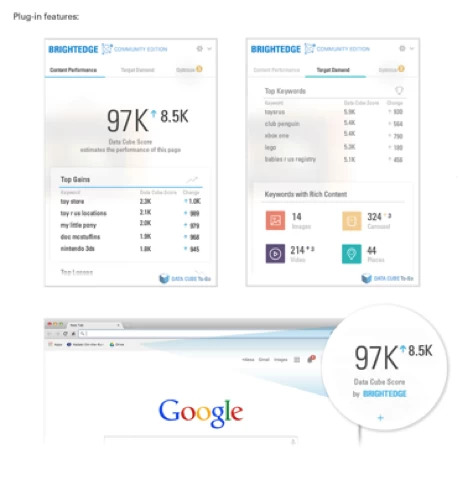 Due to high volume of demand, BrightEdge Community Edition is being rolled out in phases. BrightEdge Community Edition was one of many market-leading products launched at Share 14. This is an annual investment that BrightEdge makes in the community.
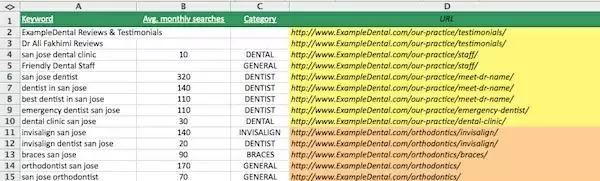 In general, you’ll want to reserve the main landing pages for the most “generic,” high-demand keywords (often only one- or two-word key terms). The main landing page is where you’ll introduce visitors to your services, products or topics, depending on your business. Subpages typically support keywords that are more specific, and likely have less search volume that those of the main landing pages’ keywords. Each section of the site would be housed in a website directory, which is created by designating your site’s structural navigation – the URL structure. The result? A well-organized website experience for users that provides topically relevant, easily-navigated content for search engines!