BrightEdge’s Successful Corporate Culture

A BrightEdger
A BrightEdger
M Posted 11 years 7 months ago
t 9 min read

There’s much that goes into a successful corporate culture, and here at BrightEdge's SEO company, that “much” equates to both investing in and showing appreciation for its people. When building the company seven years ago, CEO Jim Yu and co-founder/CTO Lemuel Park devoted untold hours defining their shared vision for BrightEdge’s culture, centered on the people with whom they wanted to work.

BrightEdge’s first company “events” took the form of celebrating small milestones of success: after every new release, every five weeks, they would hold a “Release Celebration” that was all about good food and fun for all who contributed: the handful people who then made up BrightEdge. This first celebratory tradition lives on, expanding with the company’s success and its growing staff that now includes more than 250 people, to encompass so much more. From small yet meaningful events like its weekly “Thank-You Thursdays” to extraordinary annual events such as “President’s Club Trips” to places like Hawaii, being a part of the BrightEdge team of innovators is a rich and rewarding experience! Here’s a sampling of the happenings that the people of BrightEdge enjoy:

  • Hack-a-thons: BrightEdge Hack-a-thons provide our R&D, product, and engineering teams an opportunity to participate in a competition where they can think creatively, work collaboratively, build incredible SEO technology, and win extremely cool prizes!
  • Thank-You Thursdays: This is a set day when BrightEdge staff have the opportunity to call out a team member who was especially supportive of their efforts, or a colleague who went out of her way to help close a deal, or just someone who brightened their day. It’s a great way to make people feel noticed and special!
  • "All Hands" Celebrations: Every year, we hold an end-of-summer companywide picnic, where we spend some quality time outdoors. We start off with socialization and yummy food, then move on to games of all kinds: volleyball, touch-football, croquet, basketball, Frisbee, softball and much more!
  • BrightEdge Active Club: Our engineering team is a heart-healthy bunch, and started a small running crew. As the word spread, the group has grown to about 10 team members, running anywhere from 2 to 5 miles per week!
  • Catered Friday Lunches: A tradition since 2010, we cater a companywide lunch every Friday. During each lunch, different departments rotate to present a project they are working on.
  • Giant’s Games: When the San Francisco Giants are playing at home, BrightEdge teams enjoy a game together at AT&T Park.
  • Halloween Party: Every year, we hold a companywide Halloween costume competition. We have several categories by which costumes are judged: Most creative, funniest, and of course, craziest!
  • Potluck Lunches: A number of different departments like to plan an impromptu team lunch onsite, where everyone can bring a special dish. We’re a competitive bunch, so naturally we hold a contest with several “dish” categories. As you might imagine, many volunteer to be judges!
  • President’s Club Trip: As part of our sales incentive program, we offer a trip for the top performers and achievers of the year. One year, it might be Vegas, while the next, Hawaii. No doubt, the destination is always a blast!

Becoming a part of the BrightEdge family is an awesome adventure, personally as well as professionally. If you’re interested in pursuing a career with us, we encourage you to take a look behind the scenes at BrightEdge, and check into the opportunities we have available. You can also email us directly via recruiting@brightedge.com. We’d love to have you join us!

Mining Data for SEO and Content at Scale

enewton@brightedge.com
M Posted 11 years 7 months ago
t 9 min read

Sure, you’ve got content – but how is it performing? Is it targeted to what our users are searching for? Is it producing results? These are the questions explored in this session at the BrightEdge Share 14 event, which wrapped up last Friday. Brands like Adobe, OpenTable, Rosetta and SearchLaboratory all gave tips on how to mine data for content and SEO performance insight. Denis Scott of OpenTable was up first. Just some of the questions data can answer, he says, are as follows:

  • Business trends
  • Types of customers
  • Sources of traffic and impact on results

He’s going to focus on the last point. At one point, OpenTable and toptable needed to do a brand/site migration when OpenTable acquired the other. They had a lot of work ahead of them, says Scott.

OpenTable created a forecast for what the traffic might look like first on a line graph. They needed to show the strategy was working, so apart from traffic data, they wanted to look at other factors like PageRank, Scott says. And the team created weekly dashboards in BrightEdge to organize it visually.

The data showed that even though there were traffic dips, there were positive SEO signs. And data was measured in other channels, too, like PPC and email, during the rebrand. Scott says they put together PPC and SEO campaigns to see how it looked year over year, and found where SEO dipped, PPC picked up.

The takeaways, says Scott, are:

  • Start with what you need to answer
  • More data will exist than you need
  • Tell the obvious story which is usually the answer

Next up was Chris Attewell (@twitter) of SearchLaboratory. He used Wal-Mart as an example for his talk on keywords. For a large retail sitelike Wal-Mart, each category may have multiple subcategories on the site. So, where do you focus? he asked. What keywords do you look at?

You need a strategic view to know where you can get the best ROI, says Attewell. The challenge is that there is a lot of data coming from multiple data sources, and putting it together into a meaningful, actionable system is key, says Attewell. SearchLaboratory used the “opportunity forecasting” tool in BrightEdge often to get a better picture of strategy.

Here are some tips, says Attewell, that came from how they went about mining keywords: Build new keyword groups – break it down into words, like “dresses” or “maxi” or “maternity,” then look at keyword group search volume. Measure the effectiveness of keyword groups right within BrightEdge, he says.

Then, mine the long-tail terms to uncover some great trends when doing so. In their research, they found “peplum” as a great opportunity that they weren’t even tracking.

Attewell says they also group keywords for seasonality, and prioritize for international markets. Here’s a tool that SearchLaboratory created a tool that allows people to slice and dice keyword data, available on their site, here. The next speaker was Kirill Kronrod from Adobe. Kirill’s talk is centered on the search impact lifecycle, and how SEO data fits into it. [Side note: Check out Kronrod’s guest post on the search impact lifecycle for the BrightEdge blog, here.]

He shared a content case study. He had a product that had only one page on features, and was dense in content. Because of all the topics on one page, Google could not distinguish the theme, he says. So, the SEO team wanted to spin out 15 pilot feature pages, each focused on a specific feature, to see if it moves the needle.

Based on pilot findings, the team expanded the pilot to 30 pages, says Kronrod. The results were a growth in traffic and conversions, and a greater Share of Voice showing in the BrightEdge data. Another case study in utilizing data was targeting Hreflang. They used BrightEdge to see rankings for targeted keywords across geos. As soon as they implemented Hreflang, they saw significant ranking improvements, more than a 720 percent daily visit boost.

A third case study Kronrod shared in data mining was migrating to a CMS, and determining if it would be a good move. They used the BrightEdge Data Cube to validate the impact of the migration of pages. They also used BrightEdge for rankings and looked in Adobe Analytics for conversions. They were able to determine that the move was a good idea.

The takeaways, says Kronrod:

  • Focus on the right data
  • Align reporting to the stakeholders
  • Prioritize recommendations
  • Do a pre- and post-analysis, tell the story

Matt Saunders of Rosetta was the final speaker. He talked how to mine big data quickly. Big data: where to start? Go to the BrightEdge Data Cube, he says. It’s a complex gathering of information, and makes it easy to get insights, says Saunders. Here, he shows the Data Cube going head-to-head with a keyword tool:

check out brightedge data cube

Saunders said the basic strategy for keyword research and analysis is outlined in the following slide:

keyword research understanding with brightedge

Next, he shared four use cases in data mining. The first was competitive gap analysis. His team needed to identify content expansion opportunities around wedding bands. So they checked out the Share of Voice report, and found Overstock.com had a significant share of voice due to one particular URL. If you dig down into the tool, he says, you can see what a page that is doing well is up to and what they are ranking for. You can identify a handful of new terms you may not have tracked before.

Another scenario on the content marketing side. Look at a URL for the competition, and paste it into the BrightEdge Data Cube, and you can see how you stack up against competitors.

Another scenario is gauging rich media opportunity, says Saunders, through the BrightEdge tool.

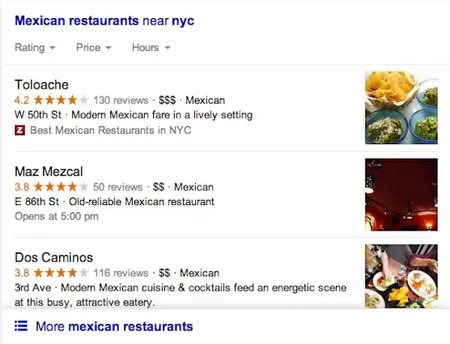
And, finally, Saunders shared a use case for local optimization and Google’s local carousel results. He says you can build out a strategy to see which terms trigger carousel results in the aftermath of Pigeon, for example.  

New Research on Impact of Google’s ‘Pigeon’ Update

English, British
News Item Title
New Research on Impact of Google’s ‘Pigeon’ Update
News Item Author Name
Seth Restaino
News Item Published Date
News Item Summary

Have your Google Places search results been erratic lately? When Google released an update to its local search algorithm on (or around) July 24, named “Pigeon” by Search Engine Land analysts, it dramatically affected a number of industry verticals.

Our SEO analysts looked to BrightEdge’ Data Cube before and after the Pigeon update (June through August), analyzing all U.S. desktop queries for which Google displayed Google Places (the “local pack”) results in its SERPs, bucketing those queries into industry groups (verticals) based on their keyword structure.

BrightEdge’s analysis found that Google is displaying local pack results for 11.26 percent fewer queries overall. BrightEdge Cube data also confirms that real estate queries experienced a dramatic decrease of 63.45 percent in their appearance rate in Google Places results.

Expanding Our SEO Toolbox at #Share14 with BrightEdge

English, British
News Item Title
Expanding Our SEO Toolbox at #Share14 with BrightEdge
News Item Author Name
Leslie Gibson
News Item Published Date
News Item Summary

Last week, I attended the BrightEdge Share14 conference in San Francisco, and came away with heaps of ideas and information to pass on to the NHI team, plus an even greater appreciation for our partnership with the BrightEdge team.

Share14 was easily the most useful industry conference I have ever attended, with presentations focused on technical SEO, social, and content marketing, and plenty of opportunities for networking.

What these 6 CEOs learned from working at Salesforce

English, British
News Item Title
What these 6 CEOs learned from working at Salesforce
News Item Author Name
Erika Morphy
News Item Published Date
News Item Summary

Salesforce launched 15 years ago. With annual revenues expected at more than $5 billion this year, it is hard to remember those days when Salesforce was a scrappy start up, trying to sell enterprise customers on the benefits of the multi-tenant software-as-a-service model. That battle is long over, and since then Salesforce has gone on to introduce a number of other new innovations that were also promptly snapped up with the rest of the industry. Chatter comes to mind; so does its latest product, Community Cloud.

Five Important Hotel Related Takeaways from the BrightEdge Share14 Marketing Conference

English, British
News Item Title
Five Important Hotel Related Takeaways from the BrightEdge Share14 Marketing Conference
News Item Author Name
Melissa Lyons
News Item Published Date
News Item Summary

The BrightEdge Vizergy Partnership. At Vizergy, we work closely with BrightEdge, a search marketing authority that offers an enterprise grade SEO platform. Our partnership is an essential component of our advanced SEO strategies. The analysis, tools and research they provide ensure our SEO services are as in depth and effective as possible.

The harmony of search + Facebook: a Q&A with BrightEdge CEO Jim Yu

English, British
News Item Title
The harmony of search + Facebook: a Q&A with BrightEdge CEO Jim Yu
News Item Author Name
Justin Lafferty
News Item Published Date
News Item Summary

It’s becoming more evident that search and social are not exactly separate silos.

As customers use both search and Facebook in their purchasing decisions, it’s important for companies to make sure those presences are optimized. Jim Yu, the CEO of search and social optimization firm BrightEdge, spoke with Inside Facebook at the company’s Share14 conference in San Francisco about the relationship between the two platforms.

,