SEO for AI

AI is changing how search works—and how your brand gets discovered. Today’s search experience is increasingly shaped by emerging technologies like ChatGPT, Perplexity, Claude, and Google’s AI Overviews and AI Modes. That means traditional SEO tactics alone may not be enough.

To stay visible, SEO professionals and digital marketers need to ensure their content isn’t just optimized for rankings—but for AI-driven citations and recommendations. This guide to AI for SEO breaks down what’s changing, what still matters, and how to adapt your strategy so that AI-powered search engines highlight your brand—not your competitors.

Explore how AI impacts keyword research, technical SEO, content quality, and more—so your brand shows up, gets cited, and stays relevant in the next era of search.


Get the Latest on AI for SEO

Learn how structured data markup is evolving to power AI-driven search results and how to future-proof your schema strategy.
Discover which content quality signals AI algorithms prioritize and how to optimize your content to meet these evolving standards.
Explore how AI is reshaping long-tail keyword strategy and how to capture intent-driven traffic with smarter keyword targeting.
A practical guide to demonstrating Experience, Expertise, Authoritativeness, and Trustworthiness in an AI-first search landscape.
Everything you need to know to execute a site migration without losing rankings, traffic, or visibility in AI-powered search.

Structured Data in the AI Search Era

lpark
lpark
M Posted 1 year 3 months ago
t 9 min read

Structured data is a way to label and organize the information on your webpages so machines (and AI) can understand it. Google defines it as “a standardized format for providing information about a page and classifying the page content”developers.google.com. In practice, structured data uses vocabularies like Schema.org and formats like JSON-LD to annotate key elements of your content. For example, on a recipe page you might mark up ingredients and cook time; on a blog you might mark up the author and publish date. Common schema types include FAQPage (for question-and-answer content), HowTo (step-by-step guides), Product (with nested Offer and Review data for e-commerce), Review (for ratings), Article/NewsArticle, and Organization (company info). Implementing these schemas makes your page’s purpose explicit to crawlers. While structured data itself isn’t a direct ranking factor, it helps search engines—and the AI systems built on them—understand and surface your content better.  Schema.org provides a repository of accepted schemas, with common types including:

  • FAQPage – marks up lists of questions and answers.
  • HowTo – annotates instructional steps or tutorials.
  • Product (+ Offer, Review) – highlights product details (name, price, availability, ratings) for shopping results.
  • Review – marks up ratings and reviews of products or services.
  • Organization – provides business or brand details (name, logo, contact).
  • Article/NewsArticle – labels blog posts or news content (headline, author, date).
  • Event – (extra) for events with dates and locations.
  • LocalBusiness – (extra) for physical businesses with address and hours.

Using JSON-LD (Google’s preferred format) and including schema in your HTML tells search crawlers exactly what each piece of content means. Properly implemented schema can generate rich results (like stars, carousels, or FAQ drop-downs) and even Knowledge Panels that improve visibility. In short, structured data is how you explicitly signal page content to search engines, laying the groundwork for both traditional rich results and AI-driven answers.

How Structured Data Enhances AI Visibility

As AI features (like Google’s AI Overviews, ChatGPT, or engines such as Claude) emerge, structured data could have the potential to play a key role in helping those systems find and use your content. Google’s documentation notes that AI Overviews pull information from “a range of sources, including information from across the web. In practice, this means if your content is indexed and understandable, it can be surfaced in generative answers. Google advises no special markup is needed – just follow normal SEO guidelines– but schema gives extra clarity. It feeds the knowledge-graph and context layers that AI relies on.

In sum, while an AI search engine won’t “parse” your JSON-LD to form its answer word-for-word, schema makes your content more digestible to search crawlers and knowledge graphs. That, in turn, has potential to increase the chance your information will be included or cited by AI overviews and answer engines.

Best Practices for Implementing Structured Data

For implementing structured data as part of your AI search strategy, consider the following:

  • Use JSON-LD: Google recommends JSON-LD placed in a <script> tag. It’s flexible and separate from your HTML, making it easier to manage.
  • Choose Relevant Schema: Only apply schemas that match the page content. For example, use FAQPage on actual FAQ pages or HowTo on step-by-step guides. Avoid marketing up irrelevant content.
  • Validate Your Markup: BrightEdge’s SearchIQ can help ensure your schema is detectable and competitive with websites that rank for similar keywords.
  • Focus on Evergreen Types: Key types like Article, Product/Offer/Review, FAQPage, HowTo, and Organization are widely used and recommended for content visibility.
  • Don’t Overdo It: Use schema “liberally” where it adds clarity, but avoid excess. Google’s John Mueller even cautions against schema bloat on things like product pages.  Only markup what truly helps explain the content.
  • Leverage SEO Tools: Tools can reveal where to focus. For instance, BrightEdge’s SearchIQ analyzes the top-ranked pages in your space and highlights which schema types they use. This helps you prioritize the most impactful markups. Similarly, BrightEdge’s Data Cube X can surface emerging queries or AI-related trends. Use it to find content gaps and new opportunities to apply relevant schema (e.g. rising how-to topics or FAQs).
  • Monitor and Audit: Regularly crawl your site (using technologies like ContentIQ) to ensure your structured data remains intact and error-free after any updates. Update schemas when content changes (e.g., new product attributes, post authorship, etc.).

By following these practices, you ensure that your content is both technically sound for search crawlers and semantically clear for AI engines. In the AI era, well-structured markup is a signal that helps your pages stand out in new search experiences.

The Impact of Structured Data on SEO

Structured data has long boosted traditional SEO, and that impact continues. The most obvious effect is enhanced listings in search results. Pages with proper schema can appear with rich snippets: review stars, pricing info, FAQ expanders, breadcrumbs, and more.

Moreover, schema is critical for voice, image, and other modern search channels. Voice assistants and visual search tools rely on structured cues. For example, marking up FAQ content can enable answers read aloud by smart speakers.

Even beyond clicks, structured data bolsters site authority in Google’s knowledge graph. Content marked up as an Organization, Person, or Entity can feed Google’s backend understanding of your brand. Consistent schema use (across your website and external data sources) strengthens how the web knows your entities. In turn, that can influence AI-driven panels and answers.

Structured Data and AI Technologies

Different AI-powered search tools interact with structured data in different ways:

  • AI Overviews: Google’s AI snapshots pull in content from indexed pages and Google’s Knowledge Graph. The official guidance is that links in overviews are chosen automatically. However, schema still helps. Pages marked up clearly are easier for Google to parse into its knowledge graph, making them more likely to be cited as sources. In practice, FAQ and HowTo markup have become popular for AI because they directly answer questions.
  • ChatGPT Search / SearchGPT (OpenAI): This AI search often uses Bing’s index as its source. That means your Bing-indexed pages (with schema) are potential sources. One report notes you should ensure Bing is crawling your site – ChatGPT Search will cite even lower-ranked pages if they’re well-structured. Structured data here serves the same purpose as in traditional SEO: making your content authoritative and easy to digest.
  • Perplexity AI: Perplexity is a generative Q&A engine that cites web sources in its answers. While it hasn’t released official SEO guidelines, it clearly relies on quality web content. Schema can help Perplexity’s algorithms quickly identify answers: e.g., a Product schema immediately flags where the price and review are. The general advice is the same – great content + clear structure means better chances of being cited by Perplexity or similar tools.
  • Anthropic Claude: In early 2025, Claude introduced web search. That means Claude (when web-enabled) will pull real-time info from indexed sites. Again, the fundamentals apply: structured, high-quality content is more likely to be used. Claude even provides direct citations in its responses once it finds your content.

In all cases, the common thread is that AI tools are consuming the content you publish, and they prefer content that is clear, authoritative, and well-annotated. SEO best practices – such as high domain authority, expert-written content, and strong internal/external links – still matter tremendously for AI visibility. Structured data is one more piece of that puzzle.

Looking Ahead: The Future of Structured Data in AI

The trend is clear: structured data adoption is growing as AI search matures. We expect structured data markup to expand its vocabulary further to accommodate AI needs.

Crucially, structured data is becoming part of the semantic layer that underpins AI. As generative models demand verifiable facts, clear schema provides the grounding they need. SEO leaders have noted that investing in structured data today is “not just about SEO anymore – it’s about building the semantic layer that enables AI. “In other words, schema turns your site into a machine-readable knowledge graph, and future AI tools will rely on that graph to answer questions accurately.

For digital marketers, this means structured data will remain a priority. Watch for new schema types (e.g., QAPage, Speakable, or sector-specific schemas) and ensure content is marked up accordingly. At the same time, keep core SEO strong: rich content, good UX, and technical hygiene (like open crawl paths for AI bots).

Schema and structured data remain an adjacent factor in driving visibility in both AI and traditional rankings.  For marketers who need to reach customers in both of these facets, it’s critical that structured data is part of your approach to SEO. 

AI search helps to boost brands’ visibility. (AIO Report)

English, British
News Item Title
AI search helps to boost brands’ visibility. (AIO Report)
News Item Author Name
Forbes
News Item Published Date
News Item Summary
In the 12 months since Google established AI Overviews—which give users a brief text summary to answer their queries, complete with hyperlinks to source material—search impressions for websites have increased by 49%, new research from BrightEdge found.

Content Quality Signals for AI Algorithms

lpark
lpark
M Posted 1 year 3 months ago
t 9 min read

Understanding Content Quality Signals for AI Algorithms

In today’s AI-driven search landscape, content quality matters more than ever. Search engines use sophisticated AI algorithms (like Google’s BERT and MUM) to assess whether page content truly serves users’ needs. High-quality, original content written for people continues to rank best. As Google’s guidance suggests, “using AI doesn’t give content any special gains. It’s just content. If it is useful, helpful, original, and satisfies aspects of E-E-A-T, it might do well in Search.” In other words, no matter how it’s created (even if AI-assisted), content must demonstrate real value and authenticity.

In practice, content quality signals are the factors search algorithms use to judge a page’s value. These include the depth and relevance of information, originality of insights, author expertise, and user engagement metrics. In the AI era, search systems have been updated to reward “original, helpful content written by people, for people” and to demote content made “primarily to gain search engine traffic”. For SEO professionals, understanding these signals means focusing on content that users find genuinely useful, rather than those designed primarily for an algorithm.

The Importance of Content Quality in the Age of AI

With so much AI-generated content flooding the web, search engines have doubled down on quality. Google explicitly warns against “mass-produced” or spammy content, whether human- or AI-generated, and emphasizes user-first content. In recent updates (e.g. March 2024 Core Update), Google has targeted sites with large amounts of generic AI content. Ensuring content that is AI generated remains useful or users was a core function of Google’s Helpful Content update which has been enhanced and updated since 2022.

Defining Content Quality Signals

Content quality signals encompass everything from topical depth to technical presentation. At a high level, they include relevance to user intent; completeness and accuracy; clarity and organization; authoritativeness (E-E-A-T); and positive user engagement. For example, Google’s Quality Rater Guidelines focus on E-E-A-T (Experience, Expertise, Authoritativeness, Trust) when assessing quality. Even though these guidelines are for human raters, they reflect the types of signals algorithms value. Other signals include fresh content for timely topics, original research, and rich media or data that demonstrate depth. Additionally, page-level user experience (fast loading, mobile-friendliness, easy navigation) affects experience and thus indirectly signals quality.

The Role of User Experience in Content Assessment

User experience (UX) is a key part of content quality. Google’s page experience signals (Core Web Vitals, mobile usability) ensure that even great content isn’t buried behind a poor experience. According to Google, “our core ranking systems look to reward content that provides a good page experience”. This means slow or hard-to-navigate pages can undermine even excellent content. Moreover, search engines look at how users interact with content: do they stay and scroll, or bounce back to search results?

Impact of High-Quality Content on Search Rankings

High-quality content continues to be rewarded in the AI search era. Google’s Helpful Content (2022 onward) explicitly boosts original, people-first content in rankings. Content that genuinely addresses user queries is favored; generic or duplicated content is downgraded. As Google notes, whether content is AI-generated or not, it must be “useful, helpful, original” and meet E-E-A-T standards to perform well. In 2024, Google’s March Core Update impacted many sites with thin or low-quality content, especially sites relying heavily on AI-generated text. This underscores that content quality signals – originality, expertise, trust – have a direct impact on visibility. For SEO and digital marketers, the lesson is clear: prioritize substance over volume.

How AI Algorithms Evaluate Content Quality

Modern search algorithms rely on sophisticated AI and machine learning to parse and rank content. These AI models analyze key factors such as relevance, depth, novelty, and credibility. For instance, Google’s neural matching systems (like BERT) understand the context of words and concepts in both queries and pages. This means content is evaluated on semantic meaning, not just keyword presence. The Multitask Unified Model (MUM) and other AI can even “read” multiple languages and formats to judge the completeness of an answer. In essence, AI algorithms assess whether a page thoroughly and accurately addresses a topic.

  • Key factors AI algorithms consider: AI ranking systems evaluate multiple signals including topical relevance (how well content matches user intent), originality of insights, topic comprehensiveness, and information freshness. They also assess expertise through credible sources, author credentials, and citation patterns. Content structure elements like headings help AI understand meaning and context. Advanced models like BERT and MUM weigh these factors to prioritize content that's clear, well-organized, and helpful to users.
  • Human vs. AI content evaluation: Human quality raters and AI algorithms work as complementary systems. Quality raters use Google's E-E-A-T framework (Experience, Expertise, Authoritativeness, Trustworthiness) to evaluate content usefulness, with trust being the most critical component. These human evaluations help Google assess its search ranking systems but don't directly influence rankings. Human raters provide nuanced judgment to guide algorithm development, while the AI systems ultimately rank pages based on measurable, data-driven signals.
  • Significance of context: Modern search engines understand context, not just keywords. Google's Neural Matching system connects the concepts behind your words to relevant content, even when exact terms don't match. This means your content should focus on thoroughly covering topics and addressing user intent rather than keyword stuffing. Include related subtopics, use structured data, and think about what questions your audience is really asking—not just what words they're typing.

Quality Signals: What AI Algorithms Look For

Search AI models seek specific quality signals in content. The most important include:

  • Originality: Search engines reward unique content that adds new information or perspectives. Create original research, case studies, or expert analysis rather than rehashing what's already out there. Google can tell the difference between fresh insights and copied content.
  • Authority: Show you know what you're talking about! Include author credentials, cite reliable sources, and demonstrate expertise in your content. Google's E-E-A-T framework values first-hand experience and subject knowledge. Clear author information and confident, thorough explanations help establish your authority.
  • Engagement: How users interact with your content matters. Search engines notice if readers spend time on your page, scroll through it completely, or quickly leave. Content that keeps visitors engaged (through good writing, multimedia, or interactive elements) signals quality. Make your content genuinely helpful so users don't immediately return to search results.

Common Pitfalls: Low-Quality Content Signals

  • Avoid Filler Content: Search engines penalize pages padded with fluff or irrelevant information. Every sentence should serve a purpose and address the user's query. Don't use extra words just to make content longer and avoid generic introductions or repetitive passages that don't add value.
  • Quality Penalties Are Real: Google actively demotes or removes low-quality content from search results. Sites with shallow, spammy, or unhelpful content lose visibility. Focus on creating genuinely useful content rather than just trying to attract clicks, as this approach risks serious penalties.
  • Be Careful with AI Content: Mass-produced AI content without human oversight can hurt your site rankings. Google can identify and penalize automatically generated content that lacks originality or added value. Use AI as a helpful tool, not a replacement for human expertise—always edit, fact-check, and add unique insights to any AI-assisted content.

Best Practices for Creating AI-Friendly Content

  • Create Deep, Original Content: Go beyond basics by conducting research or gathering unique data. Develop content with fresh perspectives that can't be found elsewhere. Include examples, case studies, and expert quotes to demonstrate thoroughness and value.
  • Demonstrate Expertise: Showcase author credentials through bylines and detailed bios. Link to credible sources, address user questions completely, and maintain high accuracy standards, especially for sensitive topics like health or finance. Technologies like Autopilot automatically ensure your content is clustered to demonstrate where your expertise is. It even calibrates with search results to update as behaviors change.
  • Enhance User Engagement: Write clearly and break up text with headings, bullet points, and relevant visuals. Include informative images with descriptive alt text and captions. Engaging content encourages longer sessions, which search engines view favorably.
  • Structure Content Properly: Use appropriate heading tags (H1, H2) to create a logical hierarchy. Implement schema markup to help search engines understand your content's purpose. Analyze top-ranking competitors to identify which schema types work well in your industry.
  • Use Data-Driven Insights: Leverage analytics to track performance and refine your approach. Monitor which content formats are trending in search results and adapt accordingly. Technologies like Copilot for Content Advisor ensure content fully encompasses a topic to be cite-able in AI and ranked in traditional search.

To thrive as AI algorithms evolve, prioritize genuine value. Continue focusing on user intent, E-E-A-T, and content originality. Stay agile: monitor performance, adapt to new query patterns, and keep an eye on AI search developments. By building content strategies around these enduring signals now, you’ll be prepared for whatever new quality standards AI search brings in the future.

Long-Tail Keyword Optimization for AI

lpark
lpark
M Posted 1 year 3 months ago
t 9 min read

Why Long-Tail SEO Matters More Than Ever

AI-powered search—especially Google’s AI Overviews—is rewriting the rules of SEO. In the past year alone, long-tail, conversational queries have exploded in frequency. According to our recent study on AI Overviews, queries showing an AIO with 8+ words have grown 7x since AIOs launched in May 2024. Users are asking more complex questions, and Google’s AI is now capable of delivering nuanced, contextual responses directly in the search results.

This shift isn’t cosmetic—it’s strategic. Marketers who focus only on head terms may miss the real discovery moment: being cited, surfaced, or recommended by AI before a user ever clicks.

Long-tail keyword optimization is your front door to this AI-driven visibility. Let’s dive into how to find, optimize, and measure long-tail keywords in an AI-first world.

Understanding Long-Tail Keywords in the AI Era

Long-tail keywords are specific, lower-volume phrases typically made up of four or more words. In an AI-powered search environment, these queries take on new significance:

  • They reflect how people naturally speak or think—mirroring prompts typed into ChatGPT or voiced to a virtual assistant.
  • They signal high intent—users searching “how to optimize solar panel efficiency in cloudy climates” are not browsing, they’re problem-solving.
  • They fit perfectly into the AI Overview format, which synthesizes content from multiple sources to answer detailed prompts.

Then: “solar panel efficiency”
Now: “how to optimize solar panel efficiency in cloudy climates” (now likely to trigger an AIO)

What used to be overlooked as niche is now front and center in Google’s generative results.

Why Long-Tail Keywords Are Critical for AI Search

BrightEdge data shows:

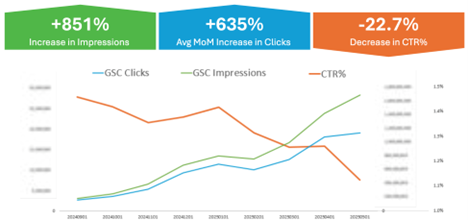
  • 49% increase in Google impressions since AIOs launched, but a 30% drop in CTR as more users engage with the AI layer without clicking.
  • 48.3% increase in technical vocabulary, with queries using domain-specific language that AI Overviews now handle with ease.
  • A 400% increase in citations from positions 21–30, and 200% more from positions 31–100—AI is reaching deeper into the SERP to source helpful, topic-rich content.

In this context, long-tail keywords aren’t just useful—they’re essential. Here’s why:

  • Lower competition: These queries are less saturated, especially if you move beyond the “best X for Y” structure and into nuanced use cases.
  • Higher relevance: They often imply clear intent and enable AI systems to identify focused answers for users.
  • Greater citation potential: Because AI Overviews don’t just pull from the top of page one, well-structured, long-tail content has a real shot at being included—even without a #1 ranking.

How to Identify AI-Optimized Long-Tail Keywords

  1. Use AI-Powered Keyword Discovery Tools
    Platforms like BrightEdge Data Cube X help uncover the specific phrasing users are typing into Google—and which ones generate an AI Overview. You can:
    • Search by intent category (how-to, transactional, informational)
    • Filter by AI-triggering potential
    • Spot which queries align with emerging AIO coverage
  2. Watch for Conversational Patterns
    Monitor sources like People Also Ask, Reddit, and Google’s new “AI follow-ups” for real-world phrasing. Many AIO-triggering prompts are long-tail in nature and come in the form of:
    • Problem statements (“why is my basil plant wilting indoors”)
    • Niche comparisons (“CRM for remote SaaS teams”)
    • Specific use cases (“email automation tools for nonprofits with <$10M budget”)
  3. Cluster Keywords Around User Intent
    Use Keyword Reporting to group long-tail variations into themes. Don’t build isolated pages for each—organize them by:
    • Primary query (e.g., “AI tools for keyword research”)
    • Related long-tail intents (e.g., “free keyword research AI tools,” “AI tools for B2B SEO,” etc.)

This helps ensure your content is seen as comprehensive and contextually rich—a key ranking factor in generative search.

How to Optimize Content for Long-Tail Discovery in AI Search

  1. Align With Natural Language
    AI Overviews reward human-like phrasing. Write your content as if you’re answering a question for a colleague—not just a robot. Avoid keyword stuffing. Instead:
    • Use the full long-tail query in your page title or H1.
    • Answer the implied question clearly within the first paragraph.
    • Support the content with examples, lists, or short paragraphs—formats favored by AIOs.
  2. Focus on “Prompt Completeness”
    Think like the AI: can your content answer the user’s full question in one place?
    • If the query is “How do I treat an ACL tear without surgery?”, your content should cover both causes and non-surgical treatment options—with structured sections and clear subheadings.
    • Use schema markup (e.g., FAQPage) to make that content more digestible for AI parsing, even if schema doesn’t directly trigger AIOs yet.
  3. Focus on the Follow-up to Core Keywords
    BrightEdge data shows that 89% of AI citations come from outside the top 10 organic results. That’s unprecedented.
    AI search isn’t just looking for the “best-ranking” content—it’s looking for the best-fit content.
    Be that fit.

Using AI to Scale Your Long-Tail Strategy

Leverage BrightEdge Copilot and Data Cube X
AI can help you:

  • Generate long-tail variants for each intent (e.g., using Copilot to ideate around a core concept)
  • Spot rising trends and surface them before competitors
  • Map your content to what’s being pulled into AI Overviews via Data Cube X Serp Features

Measuring Long-Tail Performance in an AI World

Success in long-tail AI SEO isn’t just traffic. It’s visibility, inclusion, and influence. Track:

  • AIO citation presence via BrightEdge Generative Parser
  • Share of voice on long-tail clusters across competitor content
  • Engagement metrics for long-tail landing pages (e.g., scroll depth, time on page)
  • Conversions driven by niche content—especially in B2B or high-intent categories

If you're seeing high impressions and low clicks, don’t panic. That might mean you're appearing inside AIOs—an increasingly valuable form of visibility. Use BrightEdge Google Search Console Reporting to confirm and refine.

Final Thoughts: From Rank to Recommendation

AI search is making long-tail the main event—not just a side tactic.

  • Users are asking longer, more specific questions (8+ word searches up 7x)
  • AI is citing deeply relevant, structured content, even from the bottom of the SERP
  • The new game isn’t “rank for head term.” It’s “be the best possible answer to a real-world prompt.”

E-E-A-T Implementation for AI Search

lpark
lpark
M Posted 1 year 3 months ago
t 9 min read

Understanding E-E-A-T: The Cornerstone of Quality Content

Google's quality guidelines emphasize E-E-A-T (Experience, Expertise, Authoritativeness, Trustworthiness) as the framework for evaluating content quality, especially as AI-generated content becomes more common.

In 2022, Google added "Experience" to the previously known E-A-T framework, highlighting the importance of first-hand, real-world knowledge. This means successful content should demonstrate the author's actual experience, such as personal product use or location visits.

E-E-A-T isn't a single ranking metric but rather a framework that influences how algorithms evaluate content. Google's systems look for signals of each component:

  • Experience: Content showing first-hand expertise and depth of knowledge
  • Expertise: Clear demonstration of subject matter knowledge
  • Authoritativeness: Establishing credibility through author bylines, bios, and references
  • Trustworthiness: Clear sourcing, evidence of expertise, and background information about authors or sites

This framework is crucial because it underpins Google's helpful-content standards. Google has clarified that content quality matters more than who (or what) created it—meaning even AI-generated content must earn trust by meeting E-E-A-T criteria

Low-quality, automated content created merely to manipulate rankings is treated as spam, while original content demonstrating E-E-A-T is more likely to rank well. Remember: quality over quantity is key, as Google prioritizes content providing real value.

The Impact of AI on Content Creation and SEO

AI content tools are transforming how marketing teams generate and scale content. BrightEdge users have used Copilot for Content Advisor to generate millions of briefs and drafts to aid in optimized content creation. It assists in automated content drafting, on-page optimization, and keyword research. Generative AI can dramatically speed up content production – for example, writing a page that might take hours can be done in seconds with a prompt.

These technologies must be coupled with original human elements. This means infusing AI drafts with original anecdotes, examples, and strategic thinking that set your content apart.

Challenges and Opportunities in the AI Era

The Growing Impact of AI Tools

SEO professionals are increasingly adopting AI tools for content creation and optimization, seeing significant improvements in publishing speed and content iteration capabilities. While AI delivers clear benefits, many professionals still prioritize maintaining content quality and authenticity when leveraging these technologies.

Quality Standards Remain Paramount

Google's position is straightforward: using automation isn't prohibited, but automated content must be high quality and "helpful and people-first." Content generated solely to manipulate search rankings violates spam policies. The best approach is using AI to enhance your strategy—BrightEdge's Copilot for Content Advisor exemplifies this balanced approach, helping teams generate idea lists or first drafts while maintaining focus on user value.

Evolution of Search Behavior

AI is transforming how users interact with search. Generative AI features like Google's AI Overviews are appearing more frequently. These direct-answer features can reduce clicks to traditional results since users often find their answers without leaving the search page. This doesn’t mean AI-assisted content can’t serve AI and traditional results. In fact, maintaining strong organic rankings helps ensure your content appears in AI-generated answers as well.

Overall, AI offers tremendous opportunity to create and optimize content at scale, but it raises the bar on quality. Marketers must use AI tools strategically, uphold E-E-A-T, and adapt to new search formats. Done right, AI can free teams to focus more on strategy and user needs, while continuing to build content that humans and algorithms alike trust.

Implementing E-E-A-T Principles in AI-Generated Content

Infusing Human Expertise and Experience

Building true E-E-A-T into AI-assisted content requires deliberate steps to demonstrate expertise, authority, and trust. Google's quality criteria specifically look for content that shows first-hand expertise and depth of knowledge, such as actual product usage or location visits. To achieve this:

  • Incorporate real experiences: Add case studies, personal anecdotes, or data analysis that only knowledgeable professionals could provide.
  • Include subject-matter experts: Have specialists write or review content to ensure accuracy and add unique insights.
  • Showcase credentials: Always include author bylines with relevant qualifications to help users judge credibility.
  • Support with authority: Link to recognized sources, official research, and reputable websites to boost authority.
  • Ensure accuracy: Fact-check all AI-generated statements and remove unsupported claims.
  • Consider transparency: When appropriate, disclose AI assistance while ensuring human oversight is emphasized.

By blending AI efficiency with real expertise, demonstrating clear authoritativeness, and building trust through accuracy, AI-assisted content can meet Google's highest quality standards.

Optimizing Content for AI Search

As search evolves, strategies must adapt to align with how AI systems interpret and present content:

  • Use structured data: Implement schema markup (FAQ Page, HowTo, Product) to help AI systems recognize authoritative answers.
  • Format for clarity: Use clear headings and bullet points so AI can easily parse your content.
  • Prioritize page experience: Ensure fast loading times and follow Core Web Vitals for better user engagement.
  • Create concise answers: Structure content with key answers immediately visible, as AI-driven interfaces often pull short summaries.
  • Monitor engagement: Track metrics like click-through rate and session duration to gauge content effectiveness.
  • Update regularly: Refresh top-performing content to stay aligned with evolving AI patterns.

The most successful approach combines structured content, excellent user experience, and data-informed updates while always prioritizing user needs and questions. This human-centered strategy ensures content thrives in the AI-driven search landscape.

Measuring E-E-A-T Success in AI Search Environments

As AI search features become more prominent, measuring E-E-A-T effectiveness requires specialized metrics that reflect both traditional SEO and AI-specific performance:

AI Feature Inclusion

Track how often your content appears in AI search features like Google's AI Overviews or generative answer boxes. Being consistently cited in these AI-generated summaries indicates your content demonstrates the expertise and authority that AI systems recognize. Monitor which specific pages and topics receive the most AI citations to identify your strongest E-E-A-T content.

Organic Traffic Patterns with AI Integration

Analyze traffic changes as AI features expand. Look for correlations between strong E-E-A-T signals and content resilience against potential traffic declines from AI answer boxes. Pages with robust expertise signals often continue receiving clicks even when competing with AI summaries, as users seek deeper information from trusted sources.

Query Intent Satisfaction

Measure how well your content addresses the complete user journey in AI-first search. AI systems evaluate content based on how thoroughly it answers user questions and anticipates follow-up needs. Track whether users who land on your page from AI-influenced search results engage deeply or quickly return to search results (indicating incomplete answers).

AI-Specific Engagement Signals

Track new engagement patterns emerging in AI search interactions. This includes metrics like zero-click searches (where users get information directly from AI summaries) versus full-content engagement. Content with strong E-E-A-T often drives users to seek more detailed information beyond AI summaries.

Structured Data Effectiveness

Measure how your schema implementation impacts AI feature inclusion. Content with proper structured data (FAQPage, HowTo, etc.) that aligns with E-E-A-T principles is more easily parsed by AI systems. Track whether improvements in structured data lead to better representation in AI search features.

Authority Recognition in Competitive Analysis

Compare your AI feature inclusion rate against competitors for the same queries. If your content appears more frequently in AI-generated answers for shared keywords, it suggests your E-E-A-T signals are stronger. Use this comparative data to identify opportunities for enhancing expertise and authority markers.

For successful measurement, combine traditional analytics with AI-specific tracking tools that monitor your content's performance across emerging search features. This holistic approach ensures your E-E-A-T strategy remains effective as search continues its evolution toward AI-first experiences.

Finally, adopt a mindset of continuous improvement. Regularly review performance data to spot underperforming content. A drop in traffic or engagement might mean E-E-A-T elements need strengthening (e.g., adding expert quotes, updating references, or clarifying trust signals). Use this feedback loop: refine content based on metrics and re-test. In summary, E-E-A-T implementation for AI search is not a one-time task but an ongoing strategy. By grounding content in real expertise and trust now, you’ll be ready for whatever AI-driven search engines bring next.

This webinar was presented live on May 14, 2025, and is now available on-demand.

AI Search represents a major opportunity for marketers—but how can organizations take advantage of it when teams are already stretched thin? Can you build a strong brand presence in AI Overviews without a large, dedicated SEO team?

Join us for an engaging session with Teradata, a leading B2B brand doing exactly that. Discover how agile teams are using AI to win in AI—even in competitive, resource-constrained environments.

You’ll also learn how they’re communicating the value of AI Overviews across their organization—translating technical success into clear business impact that gets everyone aligned.

You’ll walk away with:

  • Practical workflows that reduce manual effort while driving results in organic and AI search
  • Success metrics that help your leadership team understand the impact of AI Search
  • Real-world examples of how BrightEdge’s AI capabilities help marketers win in the evolving search landscape

Featured Speakers:

Dave McAnally

Dave McAnally
Product Marketing Consultant

Shalini Desai

Shalini Desai
Digital Marketing Director

Matt Winninger

Matt Winninger
Global Director of Digital Operations

Watch On-Demand Webinar

* indicates required


One Year Into Google AI Overviews, BrightEdge Data Reveals Google Search Usage Increases by 49%

One Year Into Google AI Overviews, BrightEdge Data Reveals Google Search Usage Increases by 49%

Despite fears of disruption, data indicates the era of AI discovery continues to propel growth across traditional and AI search engines


San Mateo, Calif. — May 14, 2025


BrightEdge, the global leader in AI-driven organic search, content, and digital marketing automation, released new research on the anniversary of Google AI Overviews showing the advent of AI-powered search engines isn't diminishing Google's dominance, but rather fueling an unprecedented expansion of overall search activity. BrightEdge found total search impressions increased by over 49%, with Google experiencing substantial growth alongside the emergence of AI-driven discovery platforms, underscoring a powerful shift in how people seek and find information in the AI era.

The findings arrive ahead of the one-year anniversary of Google’s AI Overviews on May 14, 2024, marking a pivotal milestone in the evolution of search. BrightEdge’s report offers one of the first comprehensive views into how generative AI is impacting real-world search behavior—and reveals a counterintuitive insight: rather than cannibalizing Google, the AI era is expanding it.

Key Insights from the Report

  • In the last month, ChatGPT grew 21%, with Perplexity and Gemini remaining about 1/10 of its size, and other AI search engines like Claude, Meta, and Grok another 1/10 smaller. Meanwhile, Google still maintains over 90% of market share.
  • AI Overviews (AIOs) now appear in over 11% of Google queries, a 22% increase since debuting last year.
  • Longer, complex queries have grown 49% in AI Overviews since May 2024, while ranking-style content and comparison queries have decreased, down 60% and 14% respectively.
  • Impressions on all content have skyrocketed by over 49% since the launch of AI Overviews, while click-throughs have steadily declined, with a nearly 30% reduction since May 2024.
  • BrightEdge data shows the industries with the strongest AI Overview presence are Healthcare, Education, B2B Tech, and Insurance. Travel and Entertainment are on the rise, while Ecommerce has not seen rapid growth in the past year.

“The assumption was that AI would kill traditional search," said Jim Yu, Founder and CEO of BrightEdge. "But our data tells a different story: search is not disappearing, it’s expanding. Google is not being replaced; it’s being reimagined. The rise of AI agents has created a new battleground where visibility is no longer about rankings or clicks; it’s about presence across a new class of interfaces. Brands need to understand how and where they’re being interpreted by AI. The rules of engagement are changing, and this data is an early signal of where things are heading."

From Clicks to Impressions, From Discovery to Decision-Making

The rise of AI search engines and autonomous agents is fundamentally reshaping how discovery works and how brands and publishers measure success. Traditional metrics like click-throughs have steadily decreased since the launch of AIOs, while AI-driven impressions surfaced via technology such as AI Overviews are surging. As generative engines guide users through personalized conversations, visibility in the AI layer becomes the new imperative. BrightEdge data confirms that while Google remains the main battleground for search performance, there is a growing need to rethink performance not in terms of click-throughs, but influence, appearing in the right context, at the right moment, in the AI experience.

The shift does not stop at discovery. As AI agents increasingly connect to payment platforms, the line between recommendation and transaction is dissolving. This shift demands businesses rethink marketing to consider AI as a direct channel to consumers. The future of commerce will hinge on understanding and influencing AI agents.

The Path For Future-Proofed Brand Strategies

Brands must urgently adapt SEO for an era of buying within AI search. Future-proofing means optimizing for clicks and AI agent visibility and preference, and shifting focus to new KPIs. To find success in AI search, brands need to attend to their mentions within AI outputs, sentiment behind those mentions, and the likelihood of AI systems prioritizing their content in the buyer journey.

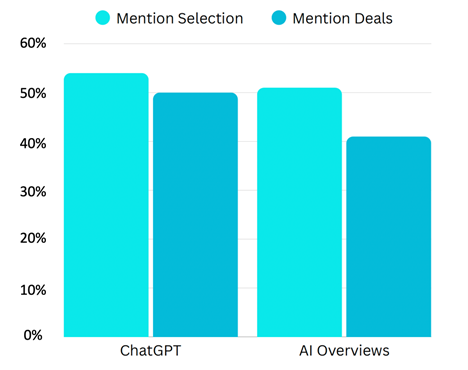
Not all AI platforms treat content the same, and different attributes matter for different AI search engines, and differ in how they cite their sources. In ChatGPT, it’s easy to get mentioned, but citation links are rare (every 2 in 10 mentions are cited). Perplexity leans heavily on citations, averaging over 5 citations per answer, but mentions brands less frequently—only 1 in 5 answers include any brand reference at all. Google AI Overviews exist in the middle of this spectrum, blending brand recall with source attribution. This fragmentation is a complex, new frontier: brands only have one website, yet must optimize for many AI engines with different rules.

BrightEdge’s AI Catalyst solves this problem, delivering unified visibility, sentiment intelligence, and actionable insights across platforms in real-time, so marketers can adapt quickly and keep pace with the evolving search landscape. Since its release, over 750 organizations, including many Fortune 500 brands, rely on AI Catalyst daily to monitor their brand presence across AI search engines.

You can view the full report here: BrightEdge Report – AI Overviews One Year Review Research Paper and Deep Dive

BrightEdge’s AI Catalyst is available for all customers at: https://www.brightedge.com/ai-catalyst.

About BrightEdge

BrightEdge, the global leader in Enterprise SEO and content performance, empowers digital marketers to transform online opportunities into tangible business results. Its all-in-one platform provides organizations with crucial market insights and intelligent AI-driven solutions. The BrightEdge platform contains the industry's most unique and extensive data set that connects key search, social, content, and digital media data points. Its deep-learning engine, DataMind, has been powering SEO AI-driven solutions since 2015, allowing marketers to benefit from high-fidelity data-led insights and automated action. Over 57% of Fortune 100 companies and nine of the top ten international agencies trust BrightEdge to help them provide the best performance by becoming an integral part of the digital experience.

Press Release Date

2025 Guide to a Successful Site Migration: How to Protect Your SEO and Grow in the Era of AI Search

lpark
lpark
M Posted 1 year 3 months ago
t 9 min read

Site migrations have always been one of the riskiest moments for organic search—but in 2025, the stakes have grown higher. Search isn’t just about rankings anymore. It’s about how you appear in AI-generated answers, summaries, and recommendations. Whether you’re rebranding with a new domain, launching a redesign, or moving to a new CMS, the wrong migration decisions can erase years of hard-earned search visibility across both traditional SERPs and AI search.

This guide was created to reflect the new search reality—where AI models not only crawl and rank your content but decide whether to cite it in high-visibility summaries. We wrote a step-by-step migration guide helped thousands of marketers navigate the basics. But this new guide is for 2025: which requires the fundamentals but you must also have an AI-focused strategy which will require some specific capabilities.

Site Migrations Happen Regardless of Experience Levels

This guide is written for digital marketers—not just technical SEOs— who are tasked with leading or supporting a website migration. Whether you're planning a full domain switch or relaunching a mobile-first redesign, there are fundamental steps required which ensure your transition is smooth.

We’ll walk you through:

  • Major Migration Types
  • What to do pre-launch, during launch, and post-launch
  • How AI search engines like Google’s AI Overviews and SearchGPT evaluate and cite content differently from traditional engines
  • The capabilities within BrightEdge and OnCrawl that can help you prepare, execute, and monitor your migration successfully

What Is a Site Migration?

A site migration is any substantial change to your website’s domain, structure, or platform that affects how it appears and performs in organic search. The changes may be technical, content-driven, or structural—but all of them impact how Google, Bing, and now AI engines crawl, interpret, and cite your pages.

Here are common types of migrations digital marketers may oversee:

  • Domain name change or rebrand (e.g., oldbrand.com &rarr; newbrand.com)
  • Protocol shift (HTTP &rarr; HTTPS)
  • URL structure changes, like removing .html, restructuring categories, or shifting from subdomains to subfolders
  • Platform or CMS migration, which can introduce new templates, URL formats, and rendering behavior
  • Website redesign or code overhaul, often changing content hierarchy, page templates, and load times
  • Mobile migration, such as moving from m.example.com to a fully responsive single site
  • International site migration, such as consolidating ccTLDs into a subfolder model
  • Site consolidation, combining multiple brand sites or microsites into one
  • Host or server migration, where speed, uptime, and crawlability could be affected

Each of these scenarios is technically different—but they all require you to preserve one thing: your SEO equity, including rankings, links, citations, crawl paths, and topical authority.

In 2025, you also need to preserve your AI equity: the structured signals, schema, and associations that feed your presence in AI search results.

The AI Search Changes the SEO Migration Playbook

AI-powered search—like Google’s AI Overviews, Bing’s Copilot, and tools like Perplexity—don’t just index your site. They summarize, synthesize, and cite content from across the web.

That means your visibility isn’t just about where you rank anymore. It’s about whether AI systems trust your content enough to include you in answers.

During a site migration, you risk losing that trust if:

  • Previously cited content is removed or merged without maintaining its identity
  • Schema or structured data is dropped
  • Pages are slower to render, load behind JavaScript, or fail to meet accessibility standards
  • Redirects are misconfigured, creating loops or soft 404s
  • Internal link structures are weakened, breaking topical authority chains

To win in AI search after a migration, you must go beyond traditional redirects and rankings. You need to:

  • Maintain clarity, structure, and speed in every new page
  • Monitor how your visibility in AI summaries and citations changes
  • Use schema markup and semantic consistency to reinforce your topical authority

With BrightEdge Data Cube X, you can track how your site is cited and how changes affect your visibility—across both keyword-based and AI-driven search results.

Pre-Migration: Planning, Benchmarking, and Risk Assessment

Whether you’re running a site redesign, consolidating properties, or migrating to a new CMS, the planning phase is where you make or break success. Here’s what digital marketers need to do before launch:

1. Run a Complete Content and URL Inventory

Use BrightEdge ContentIQ or OnCrawl to crawl your site and export:

  • All active URLs
  • Title tags, meta descriptions, and H1s
  • Canonical tags and schema markup
  • Internal link structures and click depth

This becomes your working document to map redirects, ensure metadata preservation, and retain content integrity. Combine with BrightEdge Data Cube X to overlay performance data: which pages rank, convert, or appear in AI panels?

2. Set Benchmarks: Traditional + AI Search

Don’t just track keyword rankings. Track:

  • Organic traffic by page
  • AI Overview citations by query (using Data Cube X)
  • Backlinks and top referrers
  • Indexed URLs in Search Console

Use this to create KPIs: “Preserve 95% of AI citations and 90% of organic traffic within 60 days post-migration.”

3. Create Your Redirect Map

Depending on the type of migration, you may use:

  • 1:1 redirect mapping (old URL &rarr; new URL)
  • Wildcard redirects (entire path structures moved with patterns)

Use 301 redirects exclusively, not 302s. Test them in staging. Create a spreadsheet with columns: Old URL, New URL, Redirect Type, Schema Preserved (Y/N).

4. Audit Your Structured Data Strategy

Preserving schema types—Product, Article, FAQ, etc.—is now an AI priority. Confirm that your schema will:

  • Remain intact post-migration
  • Be upgraded if templates change
  • Align with what’s cited in AI results (e.g., using FAQPage for common questions)

5. Crawl and Validate Your Staging Site

Run ContentIQ or OnCrawl on your staging site before go-live. Check:

  • Canonicals reflect the new domain/structure
  • Page speed meets Core Web Vitals
  • Schema validates cleanly
  • All test redirects function correctly
  • Meta tags and headers are carried over

Lock the staging environment with robots.txt and noindex, but verify all pages render cleanly—especially JS-heavy templates.

Migration Day: Execute with Precision

Launch isn’t just a technical handoff. It’s an SEO and AI visibility event.

Key Tasks:

  • Enable all 301 redirects and test top 100 legacy URLs
  • Update internal links and canonical tags to reflect the new domain or structure
  • Submit updated XML sitemaps in Google Search Console and Bing Webmaster Tools
  • Use Google’s Change of Address tool if you’ve changed domains
  • Validate that schema, meta tags, hreflangs, and mobile tags have transitioned correctly

Monitor crawl behavior with OnCrawl log analysis in real-time to confirm that bots are hitting the new URLs and following redirects properly.

Post-Migration: Monitor, Fix, and Optimize

The weeks after migration are your window to catch and fix issues before they become long-term visibility losses.

What to Watch:

  • Redirect coverage (ContentIQ + GSC Coverage report)
  • Indexation shift (Old site index down, new site index up)
  • Keyword rankings + AI citations (Data Cube X + SearchIQ)
  • Traffic anomalies (BrightEdge’s Anomaly Detection)
  • Bot crawl paths (OnCrawl live logs)

If you notice a major page drop in AI summaries or organic rankings, use:

  • BrightEdge Copilot to rewrite content or metadata inline with AI patterns
  • Autopilot to automatically optimize underperforming pages

Also, use SearchIQ to see what technical or content-related shifts may be affecting how you’re cited in AI Overviews.

Final Thoughts: Modern Migrations Require Modern Strategy

Migrating a website has always required planning. But in 2025, you’re not just migrating URLs. You’re migrating your relevance, your trust, and your AI presence.

The best migrations don’t just preserve—they improve. With capabilities like ContentIQ, Data Cube X, SearchIQ, Copilot, and Autopilot from BrightEdge—and technical analysis from OnCrawl—you can:

  • Plan and map with confidence
  • Migrate without SEO loss
  • Monitor and recover post-launch
  • Prepare your site to win across both search and AI systems

Search is no longer one-dimensional. Your next migration should be built for the AI-first era.

2025 SEO Site Migration Checklist

Preserve SEO performance and AI search visibility across domain, CMS, and site structure changes.

Pre-Migration Planning

Content & Technical Preparation

  • Crawl and inventory all current URLs (BrightEdge ContentIQ / OnCrawl)
  • Identify top-performing pages (SEO traffic, conversions, backlinks, AI citations)
  • Export and map all title tags, meta descriptions, H1s, canonicals, and schema
  • Benchmark rankings and AI citations (BrightEdge Data Cube X + SearchIQ)
  • Document baseline metrics: indexed pages, traffic by URL, CTR, page speed
  • Assess structured data coverage and plan to preserve/expand it
  • Run a full technical SEO audit and address crawl issues on the old site
  • Set site migration KPIs (e.g. “recover 95% of traffic within 60 days”)

Redirect Strategy

  • Create a detailed 301 redirect map (Old URL &rarr; New URL)
  • Use wildcard redirects only when structure is unchanged
  • Ensure no redirect chains or loops
  • Validate redirect logic in staging environment

Staging Site Validation

  • Block indexing (robots.txt disallow + noindex meta)
  • Run full crawl (ContentIQ / OnCrawl) to validate:
    • Internal links
    • Canonical tags
    • Meta data
    • Schema markup
    • Page speed
    • Mobile rendering

Migration Execution

Go-Live Checklist

  • Launch all 301 redirects at go-live (not after)
  • Switch internal links and canonicals to new URLs
  • Submit updated XML sitemap to Google Search Console + Bing
  • Use Change of Address tool (if applicable)
  • Verify schema, hreflangs, and structured data are live
  • Check robots.txt and remove staging disallow directives
  • Validate analytics tracking is working on all pages
  • Announce relaunch across owned channels (blog, social, email, PR)

Post-Migration Monitoring

Week 1–4 Tasks

  • Monitor 301s and crawl errors (Search Console + ContentIQ)
  • Track indexation trends: old URLs dropping, new URLs rising
  • Compare traffic and rankings to pre-migration benchmarks
  • Watch for anomalies using BrightEdge Anomaly Detection, such as:
    • Sudden drop in organic clicks or impressions for high-priority pages
    • Drop in keyword rankings for target terms
    • Spike in 404 (Not Found) errors from old URLs not redirecting
    • Any 5xx (server) errors indicating instability or downtime
    • Crawl rate drops or delays in sitemap processing by Google
  • Track AI search presence in Overviews and summaries (SearchIQ)
  • Monitor server logs for unexpected bot behavior (OnCrawl):
    • Googlebot hitting disallowed or missing URLs
    • Lack of crawl activity on newly launched pages
    • Disproportionate hits to old URLs without follow-through to redirects

Post-Migration Monitoring

Week 1–4 Tasks

  • Monitor 301s and crawl errors (Search Console + ContentIQ)
  • Track indexation trends: old URLs dropping, new URLs rising
  • Compare traffic and rankings to pre-migration benchmarks
  • Watch for anomalies using BrightEdge Anomaly Detection, such as:
  • Sudden drop in organic clicks or impressions for high-priority pages
  • Drop in keyword rankings for target terms
  • Spike in 404 (Not Found) errors from old URLs not redirecting
  • Any 5xx (server) errors indicating instability or downtime
  • Crawl rate drops or delays in sitemap processing by Google
  • Track AI search presence in Overviews and summaries (SearchIQ)
  • Monitor server logs for unexpected bot behavior (OnCrawl):
  • Googlebot hitting disallowed or missing URLs
  • Lack of crawl activity on newly launched pages
  • Disproportionate hits to old URLs without follow-through to redirects

Content & Optimization

  • Reoptimize underperforming pages (BrightEdge Autopilot)
  • Use Copilot to revise titles, descriptions, and schema as needed
  • Run full audit on live site (ContentIQ) to catch missed issues

Ongoing

  • Keep 301 redirects active for 12+ months
  • Reach out to high-value sites to update backlinks to new URLs
  • Track AI visibility monthly to grow beyond pre-migration baseline
,