Travel Nevada Sees 126% Increase in Page 1 Ranked Keywords
Find out how they used BrightEdge to turn their relentless SEO efforts into massive success
BACKGROUND
Travel Nevada is the official destination marketing organization for the state of Nevada. They have historically relied on paid search and media to gain visibility in front of their target audience and drive traffic to their website. While the results of these campaigns have been positive, their team was able to use marketing intelligence tools such as Google Analytics to identify a large opportunity for "always on" visibility through an investment in search engine optimization (SEO) services. In 2018, Travel Nevada partnered with Noble Studios to elevate their marketing efforts with a variety of digital services including SEO utilizing BrightEdge.
THE SOLUTION
Beginning with their existing content and site architecture, Noble Studios found opportunities to take advantage of quick wins using Anomaly Detection and Recommendations. Using BrightEdge ContentIQ, they discovered technical fixes including ADA-compliance issues that were passing down from previous site migrations and negatively impacted SEO.
By analyzing the top 300 site pages for traffic and seeking pages where keyword rankings had either dropped or plateaued, Travel Nevada started their journey to better SEO by updating internal linking, meta descriptions, page titles, and image alt text. Next, they tackled opportunities for existing and new keywords to rank well for Google's People Also Ask and Quick Answers. BrightEdge Page Reporting and Keyword Reporting were used to monitor progress. Finally, by diving into BrightEdge's Gap Analysis technology, Noble Studios located Travel Nevada's major SEO and business competitors to determine target topics for new content creation.
RESULTS
The BrightEdge DataCube score gave Noble Studios and Travel Nevada insight into their relentless SEO efforts by proving their YoY growth rate of 1842%. Total keyword visibility increased by 24% and keywords ranked on page one saw a 126% increase. Most importantly, Travel Nevada’s keywords ranked in the prized position one saw a 135% increase. Noble Studios utilized StoryBuilder to produce custom reports to present these excellent results to the Travel Nevada team and their board.
BrightEdge Automates SEO with the Launch of Autopilot at Share19
Acquisition of New Mobile Technology Developed by Trilibis Helps Power Self-Driving SEO
FOSTER CITY, Calif., Sept. 18, 2019 /PRNewswire/ -- BrightEdge, the global leader in organic search and content performance, today, unveiled BrightEdge Autopilot and the deployment of the industry's first self-driving SEO technology. Made possible through a series of technology investments and targeted acquisitions, marketers can now auto-optimize mobile and fully automate the most critical and time-consuming of SEO tasks.
Following on from the groundbreaking release of BrightEdge Instant, which brought real-time insights and recommendations to marketers for search and digital channels, such as YouTube and Amazon, BrightEdge Autopilot auto-optimizes many aspects of SEO including mobile.
"No longer do marketers have to wait to get things done," said Jim Yu, CEO of BrightEdge. "For the last 10 years BrightEdge has been analyzing billions of webpages and data points to understand where, when, and how to intelligently automate SEO for optimal performance. Today's announcement is a massive step forward for the SEO industry and our customers as we take complex and time-consuming tasks and make them simple but drastically impactful for business outcomes."
Navigating opportunities in SEO and Mobile: Turning Challenges into Opportunity
New research released today by BrightEdge shows that 53.5% (up from 51% last year) of website traffic comes from organic search. This presents a huge opportunity for marketers to automate and optimize their most important marketing channels with speed, precision and scale.
Automating and Optimizing SEO: Unified in One Platform
BrightEdge Instant gave marketers the capability to conduct real-time research and optimize content all within one platform. The impact is instantaneous since marketers no longer have to struggle with disparate and unconnected data silos and the inflexibility of narrow point solutions. This foundational, real-time technology architecture – built around the industry's largest set of high-fidelity data in an AI-powered platform – paved the way for BrightEdge Autopilot.
BrightEdge Autopilot: Trilibis Technology Acquisition and Integration
BrightEdge recently acquired technology developed by mobile solutions pioneer Trilibis and hired its former CTO, Meyyappan Alagappan. Trilibis technology – which has been deployed already to hundreds of large enterprises - has now been transformed and integrated into the BrightEdge Autopilot solution. "It's amazing how fast we've been able to roll out new capabilities with BrightEdge Autopilot that use state-of-the-art AI to eliminate a lot of the overhead typically associated with content optimization," said Alagappan.
BrightEdge Autopilot now adds hundreds more global deployments across consumer brands, media companies and enterprises. BrightEdge Autopilot brings smart, end-to-end automation of SEO, now adding mobile page and image optimization. Within 6 months of deployment, over 1,000 brands are now using BrightEdge Autopilot to power Self-Driving SEO.
Brands across numerous industry verticals have seen dramatic performance improvements – 30-50% in Retail and upwards of 200-300% in Manufacturing and in Automotive!
BrightEdge Labs and Mergers & Acquisitions Initiative
Following on from the formation of the BrightEdge Innovation Circle (BIC) - an environment for key customers to gain early access to key innovations – a new M&A team has been formed to evaluate potential new acquisitions already in the pipeline. According to Tom Ziola, former Microsoft executive and Entrepreneur-in-Residence at venture firm Kleiner Perkins who is now heading up the new BrightEdge M&A team, "BrightEdge, with its large and growing customer base and strong financials, is in a great position to accelerate delivery of high-impact customer solutions and take advantage of industry consolidation trends we see across the martech landscape."
At BrightEdge Share19 on September 19th, hundreds of marketers from leading global brands are convening in New York to learn more about the ground-breaking technology. In its ninth year, Share has been recognized by Forbes and Inc.com as a "leading industry event for digital marketers by digital marketers." You can read more about Share19, digital marketing speakers and its new CMO insights panel here.
About BrightEdge
BrightEdge, the global leader in enterprise organic search and content performance, empowers marketers to transform online content into business results, such as traffic, conversions, and revenue. The BrightEdge platform is powered by a sophisticated deep-learning engine and is the only company capable of web-wide, real-time measurement of content engagement across all digital channels, including search, social, and mobile. BrightEdge's 1,800+ customers include global brands, such as Microsoft and Adobe as well as 57 of the Fortune 100. The company has eight offices worldwide and is headquartered in Foster City, California.
Released as part of its annual Share Conference, BrightEdge Research found that Organic and Paid Search dominate websites’ traffic in 2019 - 68% of all trackable website traffic is sourced from organic traffic and Paid Search, vastly exceeding all other channels, including Display and Social Media. The Organic Search figure at 53% is up from the 51% found in the 2014 research, the first year that BrightEdge Research conducted the analysis.
Organic Search remains the dominant source of trackable web traffic and in the dominant position as a channel. Paid Search continues to grow. Organic Social Media is flat since 2014 at 5%, and though ubiquitous, contributes on average 1/3 as much traffic as Paid Search and just 1/11 as much as Organic Search.
B2B Combined Search Organic Traffic Is 76% of Trackable Traffic
Despite several seismic shifts in consumer behavior, the rise of mobile search, and the dramatic changes to the Search Engine Results Page (SERP) layouts, including Local 3-Pack, Knowledge Graphs, Videos, and Quick Answers, which push more organic searches below the fold, Organic Search is the channel that delivers the most organic traffic to web sites by a wide margin.
Why did organic share grow?
Over the last 5 years Google has invested significantly in enhancing the user experience by providing increasingly accurate and relevant search results and at the same eliminating from the SERPs distracting intermediaries using techniques that attempt to game the Google algorithm.
With the advent of Google’s RankBrain, its ability to map Internet content to search query intent has improved even further. As a result, consumers trust Google and rely on it even more and are using at a rate that exceeds the growth of display and organic social.
Download the full channel share report to learn more about the findings and review the data in tables and graphs.
SEO share of traffic up from prior years Released as part of its annual Share Conference, BrightEdge Research found that Organic and Paid Search dominate websites’ traffic in 2019 – 68% of all trackable website traffic is sourced from Organic and Paid Search, vastly exceeding all other channels, including Display and Social Media. The Organic […]
What does this no indexing mean for you? And what you should do next on NoIndex and NoFollow?
This week Google announced that they will change how they respond to the popular rel=”nofollow” tags. These no indexing tags, once considered an important part of SEO, had helped to signal to Google when you did not want your site to particularly endorse another domain you linked to. Cutting down on comment spam--where people could link back to their own sites from the comment section of popular websites--was an important motivation for the initial development of the no indexing rel=”nofollow” tag.
Now Google has announced changes to how they will look at these no indexing tags as well as announcing the introduction of two new tags that we believe our community should pay attention to. Here is what you need to know about these latest no indexing changes from Google.
What will change about how Google uses ‘nofollow’ links?
Google has said that they will now view the rel=”nofollow” tags as a hint or suggestion. This no indexing change is scheduled to begin on March 1, 2020.
Rather than completely ignoring links marked with this no index, nofollow tag, the search engine giant will now collect some useful data from the link, but take the tag into account when indexing pages. They hope that this system will still allow brands to freely link to other sites without worrying about unintentionally endorsing but also make it easier for the search engine to gain a fuller picture of how the no indexing digital ecosystem connects.
What new no index tags does Google recommend? Introducing rel="ugc" and rel="sponsored"
Now, in addition to the no indexing rel=”nofollow” tag, Google has also introduced two new tags that can be used to signal to Google additional information about the content on your site.
If the content comes from visitor comments, forum posts, or other material that is generated directly by the user, you will want to mark it as rel=”ugc”, signifying ‘user-generated content’.
The idea behind these two new tags is to make the type of no indexing content that would have been marked as ‘nofollow’ in the past, clearer to Google. The search engine hopes that this additional information will help them better understand how websites relate to each other and that it will help them uncover information about the context of the material posted on your domain.
What should I do with my existing rel=”nofollow” tags and how will this impact my site?
Google has specifically instructed site owners not to worry about their existing no indexing rel=”nofollow” tags as these tags will still function as a suggestion or hint for the search engine spiders. This means that you do not have to worry about going back and editing your pages you have already published with new no index tags.
The search engine does recommend, however, that people start incorporating the tags rel=”sponsored” or rel=”ugc” as part of the future workflow.
Google also reports that they do not expect to see large shake ups in the rankings from these changes, particularly since they will still take the rel=”nofollow” tags into account.
What may be interesting, however, is to see if the changes in how Google interprets the “nofollow” tag impacts links coming from large sites that typically “nofollow” all of their outbound links as a rule, such as Wikipedia. If, in the future, Google starts to recognize more of these links, then the sites with backlinks from these large sites could see a lift.
Google’s decision to change how they regard rel=”nofollow” tags will likely not have an immediate impact on websites and rankings. For now, we recommend that our community do their best to implement Google’s new no index tag suggestions. Although the search engine has specified that brands should start using no index tags “at their convenience,” conforming to the latest changes in Google’s recommendations and policies does tend to set brands up for the greatest chances for success.
What does this no indexing mean for you? and what you should do next on NoIndex and NoFollow? This week Google announced that they will change how they respond to the popular rel=”nofollow” tags. These no indexing tags, once considered an important part of SEO, had helped to signal to Google when you did not […]
Content marketing is a valuable digital tool for building a brand and meeting the needs of the modern customer to both gain and keep their attention online. It has grown incredibly over the past few years.
Content marketing has dominated digital marketing efforts for the past decade as brands have become more adept at attracting prospective customers through engagement online. As the industry has matured, brands have begun to better understand users’ online behavior, thus empowering them to create strong sales funnels and integrate content marketing more thoroughly with the rest of their marketing strategy.
As marketers delve deeper than the surface understanding of keyword optimization and user intent, they often find themselves running into new questions. We have brought together some of the most common questions we have received to create an advanced content marketing guide.
What do long-tail keywords vs medium-tail vs short-tail keywords mean?
There has been some buzz lately surrounding different types of keywords, namely short-tail keywords versus long-tail keywords versus medium-tail or torso keywords. Beginning a few years ago, people began to discuss the importance of long-tail keywords while working on content marketing.
Marketers generally understood that short-tail or head-term keywords, like health, lawyer, real estate, insurance, travel, etc. had become overly competitive on both a paid and organic basis. Not only were too many websites trying to gain top ranking results on these keywords, but in instances of local SEO, these keywords could even end up attracting people to the site who likely would never be customers in that local area. If an organic restaurant in Tucson, for example, ranks highly for “restaurant” and attracts traffic searching for a place to eat in Toledo, this traffic would provide them with little financial benefit.
This then leaves long-tail keywords and medium-tail keywords. Both of these types of keywords include additional words that provide context for the keyword, helping brands to more accurately target their audience and increase their chances of ranking well for their content marketing efforts. For example, for our restaurant above, the keyword “organic restaurant in Tucson” would provide them with far superior traffic. The main difference between ‘medium’ and ‘long-tail’ lies in simply how many words are included in the keyword phrase.
Long-tail keywords are generally understood as containing three or more words, whereas medium-tail keywords have more like two to three words. This is an important note for proper content marketing. The goal with the medium-tail keyword is to maximize the audience for the keyword while not compromising the level of precision and still increasing the chances of ranking well for the phrase and attracting the right audience.
Many people will not even make this distinction between types of keywords, often referring to them all as long-tail keywords. On the BrightEdge platform, for example, we often suggest long-tail keywords, but some of the suggestions often contain only two to three words, which could be considered medium-tail keywords for those who prefer to differentiate.
Should I delete or redirect pages that do not get strong traffic? How will this impact SEO?
When it comes to auditing your site while implementing a content marketing strategy, you will likely discover that some pages do not get much traffic and have little importance from an SEO standpoint. When this happens, we often have customers ask us if it would be worth deleting these particular pages; if taking this step would help or hurt their SEO.
In generally, we find that yes, redirecting these poorly engaging pages can be helpful for content marketing and SEO if they have any internal or external links. One, it helps to reduce the potential for pages competing for the same or similar keywords. It also reduces index bloat and helps to ensure that the Google algorithm focuses on the pages for mobile and desktop that have the most value for your site and your prospective customers.
To do this content marketing strategy successfully, however, brands need to make sure that they set it up correctly. This means looking for content that has not been needed in at least a year. You want to make sure your content marketing plan targets only pages with low views and no rankings of value. Use a 301 redirect to do this.
When looking at this potentially deletable content, you also want to check if the content could potentially be updated and if it might then offer value for prospective customers. The first priority for this content marketing step should be to update content when possible, as it will have the advantage of being and established page. If the content has no value, however, then it should be redirected.
When you want to exclude content, make sure that you always set up a 301 redirect, even if no one has visited the page in years. Deleting any page on your site without setting up a 301 has the potential to create a very poor user experience, and if Google detects it, it will definitely hurt the reputation of the site with a potential 404 error.
Make sure that the 301 redirect takes people to another page that is related to the deleted page. Taking people to the homepage will hurt the user experience of anyone who lands on the redirect. Instead, try your best to understand what their user intent may have been if they sought out the deleted page and redirect them to content that will help them and your content marketing efforts.
How often should I refresh my content?
The art of refreshing content also frequently comes up for customers who want to better manage their online material and content marketing. Content that was published years ago tends to not garner as much attention from customers or search engines, both of whom assume that the material is out-of-date and thus offers little value. Given the demands on brands to continually publish new material, however, finding the time to constantly refresh old content can feel like a burden.
What we suggest for is this:
Look for content that is older than two to three years or deals with material that has otherwise gone through a public update. Spend maybe two hours per week refreshing this type of material. If that content marketing topic has changed drastically enough to warrant publishing new content, add a link so that people can see the updated piece if they land on the older one.
If you need to delete content because it has become so outdated that a simple refresh will not suffice for your content marketing strategy, make sure you add a 301 redirect. Do not let your users find a 404 error for any reason.
Use the BrightEdge platform to regularly see the recommendations for all the pages on your site. As you follow these recommendations, many pages will naturally be updated with the latest SEO best practices.
How should I stop keyword cannibalization?
With marketers perpetually producing a stream of content, keyword competition often arises within a site. Understanding the potential dangers that can occur from this situation--known as keyword cannibalization, however, makes it clear why brands generally want to avoid this practice while executing on content marketing.
When keyword competition does not disrupt the ranking of your pages, generally, it is not something to become terribly worried about. Sometimes, however, brands might find that during content marketing, they accidentally rank lower quality pages higher than their targeted pages. For example, they might find a blog post ranks higher than a high-performing landing page. This can disrupt conversion rates.
Lower quality pages can also damage brand reputation as it might be the first interaction with your brand that a particular customer has. It will also result in you being your own competitor, with your own site hindering your click through rates.
To combat this keyword cannibalization during content marketing practices, generally, we recommend:
Saving your highest-value keywords for your targeted content and focusing on alternates for non-converting pages
If you find that keyword cannibalization has already occurred, consider restructuring the pages to make the higher ranking page better reflect your brand and offer opportunities for conversion
If this cannot be done, consider deoptimizing the page by removing keywords from title tag and H1 and reworking the text to adjust the optimization of the page you do not want ranked higher
If nothing else works, delete the page that cannibalizes the content and redirect people to the preferred page. If you resort to this measure, verify that your 301 has been set up correctly, as it will directly impact the success of a high-conversion page.
What is content marketing? Content marketing is a valuable digital tool for building a brand and meeting the needs of the modern customer to both gain and keep their attention online. It has grown incredibly over the past few years. Content marketing has dominated digital marketing efforts for the past decade as brands have become […]
Google’s Quality Guidelines says a lot about Topic Expertise. However did you know that expertise in a topic is a sliding scale that depends on the topic?
Google’s Search Quality Raters Guidelines in the section about E-A-T (3.2) advises:
“Some topics require less formal expertise.”
This article explores what “less formal expertise” means for Google rank and how it applies to ranking in competitive Your Money and Your Life (YMYL) categories.
This Google rank sliding scale of expertise is visible in the search results and it is discussed in Google's Search Quality Raters guidelines.
While the Search Quality Raters Guidelines are not a template for how to do SEO for Google rank, the guidelines do present ideas of what position Google is taking in terms of search quality.
Thus we know that Your Money and Your Life (YMYL) categories are held to a high standard. But that standard for Google rank embraces a wide spectrum, like a sliding scale, and is less strict than is generally acknowledged.
This is what it says in Section 3.2: Expertise, Authoritativeness, and Trustworthiness (E-A-T):
“Some topics require less formal expertise. Many people write extremely detailed, helpful reviews of products or restaurants. Many people share tips and life experiences on forums, blogs, etc. These ordinary people may be considered experts in topics where they have life experience.
If it seems as if the person creating the content has the type and amount of life experience to make him or her an “expert” on the topic, we will value this “everyday expertise” and not penalize the person/webpage/website for not having “formal” education or training in the field.
It’s even possible to have everyday expertise in YMYL topics. For example, there are forums and support pages for people with specific diseases. Sharing personal experience is a form of everyday expertise. Consider this example.
Here, forum participants are telling how long their loved ones lived with liver cancer. This is an example of sharing personal experiences in which they are experts not medical advice."
Further down in that section Google advises more on Google rank:
"Think about the topic of the page. What kind of expertise is required for the page to achieve its purpose well? The standard for expertise depends on the topic of the page.”
It is clear in the Search Quality Raters Guidelines (and in Google's search results) that some topics within YMYL categories can be answered with everyday expertise. There is not one standard for YMYL categories when it comes to Google rank but different levels of expertise.
It's important to set reasonable expectations for Google rank because certain queries are tightly focused on established facts. For medical queries that demand a scientific medical answer that means it's going to be held to a higher Google rank standard.
The sentence following the above=quoted passages says:
"Specific medical information and advice (rather than descriptions of life experiences) should come from doctors or other health professionals."
Which YMYL Queries Require Different Expertise?
In the medical niche, for example, certain health-related search queries do not need a health professional to provide an answer. This is true with queries that do not require medicine, medical treatment, or a medical diagnosis.
As referenced in the Search Quality Raters Guidelines, queries that are tips related to life experiences may tend to be on the sliding scale of Google rank topic expertise.
These kinds of search queries make themselves known when you see non-traditional YMYL sites ranked in the search results.
It is useful to review those pages to see what about them makes them authoritative for Google ranking. This is important because sites ranked in YMYL search results tend to have something in their background online that makes them authoritative.
What Makes a Site Authoritative?
Below is a partial list of the kinds of signals that indicate Google rank authority:
Quoted, interviewed and/or cited from news publications
Quoted and linked in articles outside of the context of a guest post
Here is a list of activities that Google might not use as authority signals for Google rank but nonetheless are the kinds of activities that build authority. What's notable about these activities is that most don't require credentials or degrees.
Kinds of Activities that Build Google Rank Authority
Does the site provide an app?
Is the site publisher active on podcasts?
Has the publisher of the site published a book?
Is the site publisher active on YouTube?
Does the site publisher have an active Twitter account with a respectable amount of followers?
Is the site publisher a member of industry trade groups?
Has the site publisher spoken at industry groups?
How Do You Write for Topic Expertise?
The topics covered in your web page must closely align with the topics covered on sites already shown in Google rankings. Being more comprehensive helps, but keeping your content tightly focused on the topic tends to win in the search results.
This does not mean to copy or rewrite top-ranked content. It means to identify the key elements of a topic that satisfies the user intent for that particular search query. Then turn those elements into questions to influence Google ranks.
Publishers tend to think in terms of keywords and then write content related to those keywords to increase Google ranking opportunities.
Topic expertise is about focusing on answering a question, not writing about keywords. Topic expertise meets the need. Meeting that need includes answering the follow-on questions.
When someone asks A, they also tend to discuss B, C, D, and E.
Here is an example:
Question A: "How do I _______?" That can be considered an aspirational question. The searcher aspires to achieve a goal.
FOLLOW-ON QUESTIONS:
B. What are the symptoms of X?
C. What causes X?
D. What can I do to fix X?
Topic expertise is rarely about answering just question A. Judging by what Google ranks, topic expertise tends to involve answering the follow-on questions.
Achieving that topic expertise may involve several steps in a process. If so, then a section of your page should be dedicated to supplying a short step-by-step explanation.
Two Factors for Topic Expertise
There are many important factors, but two relate directly to topic expertise.
Expert author
Content addresses meeting the need that underlies the search query.
Google's Search Quality Raters Guidelines goes into granular detail on different kinds of expertise. But there are two general factors that can apply to topic expertise.
1. Expert Author
It helps Google rank if the content reflects the author's personal experience, knowledge or skill. There is a reason that on some level makes the author an expert and it should show in the content.
It pays to revisit what was quoted earlier from the Search Quality Raters Guidelines:
“If it seems as if the person creating the content has the type and amount of life experience to make him or her an “expert” on the topic, we will value this “everyday expertise...” "
2. Address the Need
Content should addresses the need, not the keyword, for Google ranking.
Topic expertise is about turning keywords into aspirations by asking, 'What is the searcher trying to achieve, what are they trying to accomplish?' Once those questions are formulated you can then proceed to writing content that helps site visitors achieve their goals and better your Google rank.
That doesn't mean being wordy. In a mobile first world, it's more important now than ever to be direct in answering the questions.
From the Search Quality Raters Guidelines:
"What makes a high-quality page? A high-quality page should have a beneficial purpose and achieve that purpose well."
Expertise-Authority-Trustworthiness (E-A-T)
Content that displays topic expertise is more important for Google rank today than ever before. Truth, accuracy, and trustworthiness are all important. But the most important Google ranking factor resides in the content itself and that's where top Google ranks begin and end.
Topic Expertise and Google Rankings Google’s Quality Guidelines says a lot about Topic Expertise. However did you know that expertise in a topic is a sliding scale that depends on the topic? Google’s Search Quality Raters Guidelines in the section about E-A-T (3.2) advises: “Some topics require less formal expertise.” This article explores what “less […]









 Marketers generally understood that short-tail or head-term keywords, like health, lawyer, real estate, insurance, travel, etc. had become overly competitive on both a paid and organic basis. Not only were too many websites trying to gain top ranking results on these keywords, but in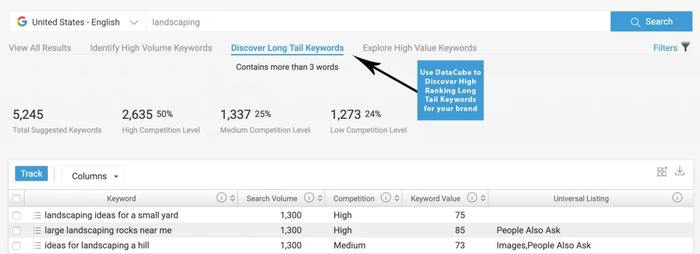

 “Some topics require less formal expertise. Many people write extremely detailed, helpful reviews of products or restaurants. Many people share tips and life experiences on forums, blogs, etc. These ordinary people may be considered experts in topics where they have life experience.
 The topics covered in your web page must closely align with the topics covered on sites already shown in Google rankings. Being more comprehensive helps, but keeping your content tightly focused on the topic tends to win in the search results.