Three Ways to Help Local Customers Find Your Business
koleary
koleary
M Posted 7 years 2 months ago
t 9 min read

Mobile devices surpassed desktop as the main way that people browse the internet a number of years ago, for some industries BrightEdge research found that 62% of all web traffic comes from a smartphone or tablet device.1 For some industries, like food and beverage, the share of searches from smartphones and tablets is as high as 72%.2

The predominance of mobile search has changed people’s behavior and expectations. Previously, if you were going out, you might have researched a restaurant online before leaving home. Today, you’re just as likely to wait until you arrive at your destination, search for “restaurants near me,” and receive hyper-local results that you can act on immediately.  

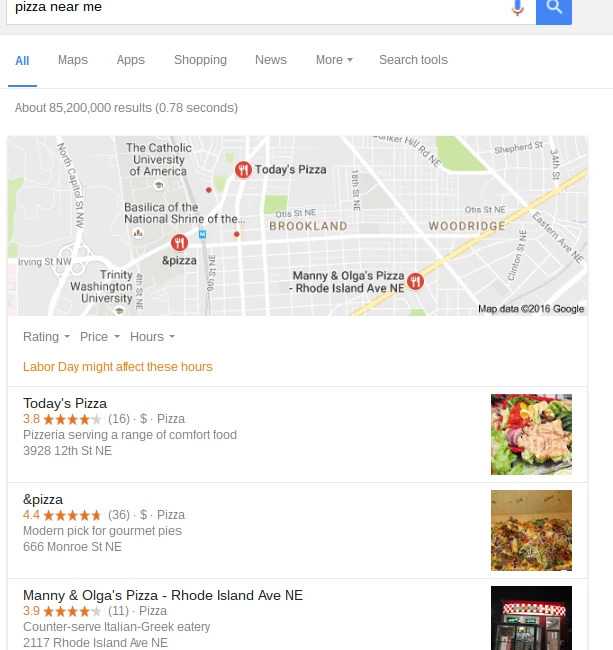
These new consumer expectations and behaviors are relevant to any business with a brick and mortar presence. An incredible 76% of local mobile searches lead to a store visit within one day, while 28% result in a purchase.3 When people search for something nearby, they are often ready to buy.  discover how to optimize for local customers - brightedgeThis is why it is so critical to ensure that your business shows up in Google’s Local 3-pack: the trio of nearby businesses that dominate the search engine results page (SERP) of 23% of local-focused mobile searches, according to BrightEdge research. When a local 3-pack is displayed on mobile, 55% of the clicks are for one of the three listings. If your business is not featuring there, you’re immediately missing out on half your potential audience.   

Here are three ways to make sure your business is easy to find.

1. Have clear, complete, and factual information

Google’s main source of information about your business is from company profiles found on Google My Business. To ensure the correct information is displayed in Google Search or Google Maps results pages, make sure that your company profile page is complete and up-to-date. While Google searches account for nearly two-thirds of all searches,4 it’s also important to update and maintain your business profile on other channels like Yelp for Business, which is where Bing gets its local business information for display on Bing Search and Bing Maps results pages.

Also, it is important to clearly display your business address, contact details, and business hours on your own website’s home page, as this is another source that Google and Bing will check. Having accurate and informative “About Us” and “Contact” pages on your website will also boost your chances of appearing high in search results rankings. Finally, if you have multiple locations, create an individual page for each location with the unique information and content about each one.  

A good tip is to look at existing 3-pack search results for the keywords related to your business’ products or services, and ensure that your company profiles have the same keywords, or read Google’s suggestions for improving your company’s local ranking.

2. Be inventive with the keywords you target

Last year, Google reported a 500% increase in “near me” mobile searches that included “can I buy” or some variant. Knowing which keywords related to your business that people include in these searches is critical to your chances of appearing in that valuable 3-pack near me search result. Don’t be afraid to speak the local language. A long sandwich may be called a “sub” in most of the US, but if you’re targeting local customers in Philadelphia, they are more likely to call it a “hoagie,” in New York City, a “hero,” or in New England, a “grinder.”

learn more about seo for local customers - brightedgeIf your business is near a prominent landmark or location in the area, think about potential variations on “near me,” like “near the ballpark” or “near Times Square.” You should also find out which terms your competitors are successfully targeting and see if they apply to your business. BrightEdge can help you analyze and prioritize which keywords you should create content for by helping you understand which universal results (like a Local 3-pack or Quick Answer) appear on the first page of search results.  

3. Encourage great local customer reviews

Google doesn't display just any three businesses in the 3-pack search results. The search engine wants to give its customers the best three local businesses related to their searched keyword. That’s why businesses with good reviews on Google are more likely to be featured in 3-pack search results. Encourage your happy customers to leave positive reviews on these sites, along with any sites related to your business, whether that’s a food blog or car review site.

If your business has received good customer reviews, featuring them on your website can be helpful. Get permission from your customers to post the review first. Then, mark up the review with optimizing schema in order to claim it as a first-party review. You may see the review on the search engine results page, much like a Yelp listing, except this drives traffic to your website, not Yelp’s. Google can be strict about the use of first-party reviews so it’s worth looking at its rules if you’re using a review.

Whatever your business, having complete factual information, being inventive with your keyword targeting, and getting great reviews will help local customers find your business when they’re searching locally. With Google constantly tweaking what it’s looking for and how it displays search results, BrightEdge will tell you how to optimize keyword targeting and keep you up to date with changing search engine algorithms with the goal of boosting traffic to your site so your business can stay ahead.
How Google's Changes Impact Your Local Search Strategy

enewton@brightedge.com
M Posted 9 years 3 months ago
t 9 min read

Google's changes to the SERP for local-related queries impacts how brands effectively boost their visibility online with a local search strategy. We want to draw your attention to some of the recent adjustments seen in the ad portrayal on local search so you can adjust your local search strategy accordingly. Local search strategy comprises a critical segment in the marketing for many businesses. It impacts both in-person commerce and e-commerce significantly. A huge 78% percent of local-mobile searches result in offline purchases and 50% percent of mobile visitors will visit stores within one day. Given the significance of search in the success of local businesses, when Google makes changes to the SERP for local search, brands need to prepare themselves and make the appropriate adjustments to their local search strategy so they can continue to have the rankings and visibility they need to grow their business.

Google’s experiments with ads in local search

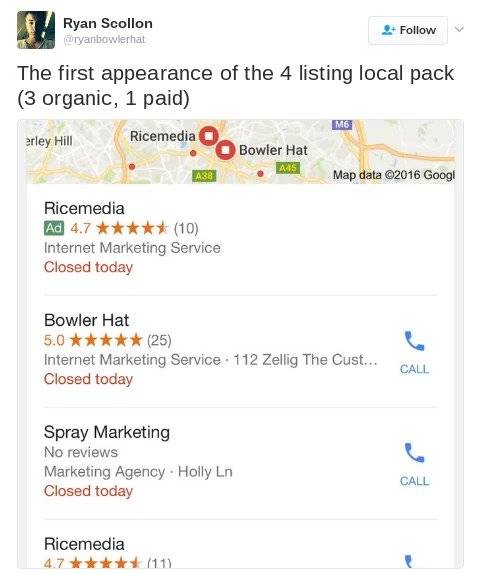
Over the past few months, we have seen some experimentation from Google on the use of ads in local search. We had heard rumors that Google intended to start using ads in the local 3-pack, but we did not know exactly how the search engine planned on combining organic and paid results on the local pages. Last summer, people first spotted a local search pack that had one ad followed by 3 organic listings.

Enhance your local search strategy by watching ads in the local pack, BrightEdge

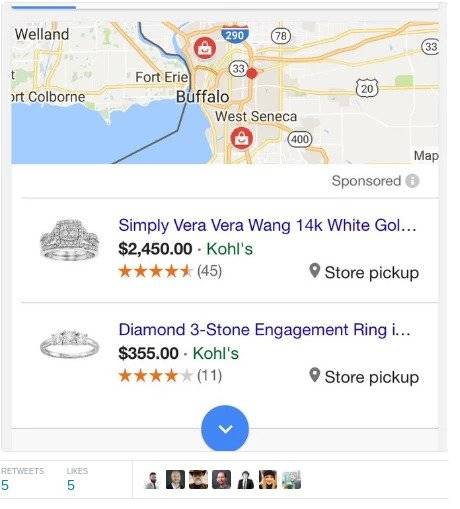
A few months later, in January, reports also emerged that Google shopping ads were appearing for purchase-related local queries on mobile.

Understanding the relationship between PPC and SEO for successful local search strategy, BrightEdge

In both examples, however, these ads have not been replicated everywhere and do not seem to be widely used, yet. These changes have been significant because customers do pay attention to ads when they make local searches - 60 percent of customers say that they have used information provided in ads. The increasing prevalence of ads in local search means that many companies will need to make adjustments to their local search strategies to maximize their ability to attract customers interested in patronizing their stores.

How Google’s new ads impact local search strategy

Given that such a significant portion of customers say that they pay attention to the information in ads for local search, it makes sense that this segment of optimization has been the subject of experimentation. This is all a part of Google’s trend towards ad visibility. We all remember Google’s changes to the SERP layout at the beginning of last year, when they increased the number of ads along the top of the results page while eliminating the ads that were once along the side. For many queries this change means that minimal organic results, and sometimes none at all, appear above the fold. Thus, brands need to pay closer attention to the intersection between PPC and SEO. Do not view hybrid marketers as a nice-to-have, but rather as an essential resource of the marketing team.

Using systems, like the BrightEdge platform, brands can quickly uncover which keywords that relate to their business have local 3-packs. They can also research the level of competition and the average search rates for these local results, empowering them to improve their targeting so they can focus their local search strategy on the terms that will provide the most return. Brands can use their PPC and SEO together to better target these important keywords. Since ads are incorporated closely into the standard local results, focusing your PPC efforts on the keywords that have high significance for your brand, but that you do not have the ranking you need, can help you gain the visibility necessary.

To maximize your opportunity, you should also pay close attention to how Google structures the local 3-pack. Google displays the information that customers want to find when they make a local query. Model your ads to include the same valuable information, such as hours, address, and phone number. This can help boost engagement with your visitors by ensuring that people have access to the information that they need and expect when they make a local search. Note also that when we first started hearing the rumors about the introduction of ads into the local SERPs, many marketers thought that we would see a 2-pack plus one ad. Although Google still seems to be in the early stages of introducing ads into local search, right now we are still seeing three organic slots open. This means that brands cannot neglect their standard local search strategy.

Brands that want to grow in local search need to focus on building their Google business page, including adding clear, appealing images, and by cultivating reviews. You also want to pay close attention to your Name, Address, and Phone Number, or NAP, as this has been shown to have a sizable impact on your rankings within Google. For more tips on optimizing for local search, visit NAP and Local. As you build your local search strategy with both organic and paid search, you want to make sure you continue to monitor your progress to make sure that you use your resources effectively. BrightEdge offers you measuring capabilities to ensure that you can look at your performance on a local level. See your rankings improve with local search optimization and monitor keywords in specific geographic areas to ensure your efforts match the needs of your local consumers.

Google continues to experiment with the SERPs to better serve the end user, and this includes their efforts to balance both paid and organic results. They have been experimenting recently with including ads in certain local searches, which is a trend that cannot be ignored by brands interested in developing a strong local search strategy. At BrightEdge, we will continue to help you remain on top of the latest developments and how you can use the platform to maximize your performance in the face of the ever-changing industry. 

Taking Local Search Optimization Even Further

enewton@brightedge.com
M Posted 9 years 8 months ago
t 9 min read

Local search optimization is the careful process of helping your website appear in relevant searches in the area around the user. These local searches are often answered by a local 3-pack that provides easily-digestible listings for businesses in the immediate vicinity. local search optimization tips for local seo - brightedgeLocal search is quickly becoming a dominant component in commerce. An estimated 78 percent of local-mobile searches result in offline purchases with 18 percent leading to sales within a day. As mobile usage continues to rise, the importance of these on-the-go devices in local business continues to grow as well. Sixty percent of American adults say that they use smartphones or tablets to look for local product or services information. It should be clear why local search optimization and helping your brand stand out in local searches is important. You should also note that Google answers 93 percent of searches with local intent with a local 3-pack. In others words, in the vast majority of the searches performed for local businesses, users will automatically be drawn to three main listings in the top center of the page. The better that businesses are able to understand how local SEO works and what they can do to boost their chances for success, the easier it will be for them to appear in these key listings and help their businesses stand out in their area.

How does local search optimization work?

Google creates local search results based upon the businesses that are located the closest to the exact location of the user. This means that a position change of just a few miles will impact the results. The results that appear for local searches, particularly on the local 3-pack, are continually changing. For businesses, this provides both benefits and drawbacks. Since the results are continually in a state of flux, brands have ample opportunity to enhance their local SEO and start to see an increase in their own appearance in local search. On the other hand, it means that no matter how well their site is optimized, if they are on the other side of the city and there are other quality businesses located closer to the user, they likely will not appear in the critical 3-pack. There are some opportunities to boost one’s appearance in local search. For example, if a user searches for the ‘best’ pizza place near them, the results will differ than if they just searched for a pizza near them. This means that Google is filtering through the results around the user to find those with the highest ratings. This may encourage the algorithm to widen its parameters, even slightly, to focus on the top-rated local businesses. Brands that therefore focus on cultivating positive reviews and using related keywords can therefore increase their chances of appearing in a greater number of local search 3-packs.   Local search optimization opportunity with the local 3-pack - brightedge   

Do not neglect standard optimization for the local 3-pack

When the 3-pack is displayed for a local search, it automatically dominates the page. Other organic results are pushed to the very bottom. On mobile, the standard organic results are not even visible without scrolling. Brands that want to succeed in local search optimization cannot neglect this key area.

  • Focus on the NAP. Make sure that your name, address, and phone number are consistent on all your listings so that Google is confident in your information.
  • Claim your Google+ page for your business and build it out. This means including quality pictures and writing descriptions using local keywords.
  • Cultivate reviews. As explained before, high-quality reviews can help increase the chances of your brand being listed on the 3-packs. It will also help your business appear even more reputable on any 3-pack where it is listed. Take steps such as encouraging satisfied customers to leave reviews after transactions and including links to your Google+ page on newsletters, business cards, and your website.

What can I do to make my local search optimization efforts stand out?

Since the local search results change easily and are so user-dependent, it is easy to feel some level of frustration over how much influence you can have over your local search optimization efforts. Fortunately, there are a few steps you can take to make your business and domain stand out.

Remember the power of PPC

Ads appear even above the local 3-pack and can provide you with an additional opportunity to attract local attention. They can help you tap into a prominent position on the SERP for important local keywords and thus boost brand awareness and click-throughs. To do local search ads correctly, however, you need to make sure that your ad fits with local search intentions. A study conducted by Neustar Localeze and 15 Miles examined the purpose of local searches. They found that the top three reasons for conducting these types of searches were:

  • Finding the address or location of a business
  • Searching for area organizations with the products or services being sought
  • Looking up the phone numbers for businesses

The Google local 3-pack makes most of this information obvious right from the listing, so your PPC ad needs to similarly serve the needs of these local customers. Including information about your location, click-to-call links, or links to information about your business can help you increase your success with paid search. When the user clicks on your ad, you want to continue the positive user experience. This means having the landing page optimized for local users - with information about who you are, what you do, where you are located, and how to contact you featured prominently.

Create content for local searches

You can also enhance your local search optimization by creating content designed for people in your area. You can use BrightEdge to uncover keywords directly related to your area and put them in a specific group to track their progress. Create content that focuses on events and developments in your area and how they impact your industry. Build a reputation in your area as the local expert in the business. You can also expand your brand reach and awareness by participating in local events. For example, set up a booth at local fairs or sponsoring local charities and events. You can then promote the event on your website for even more attention.

Do not neglect the I-want-to-go micro-moment

Google has recently been impressing upon marketers and businesses the importance of micro-moments. These are intent-filled instances when users want to accomplish a specific task. During the I-want-to-go moment, users often turn to mobile devices to help them reach a specific destination, such as a local business. Customers want quick answers that address their needs. To match these desires, brands should construct their websites to ensure that critical information, such as locations and content information are prominently featured on the landing page. With the rise in mobile device use and the importance of mobile search with commerce both on and offline, brands need to understand how local search works and how they can improve their own local SEO. While it can seem frustrating to try and optimize for perpetually changing, user-dependent results, these search optimization tips can help brands better prepare for the local 3-pack while also boosting their reputations and reach in the region. This helps local search optimization and ensures that the organization takes advantage of search opportunities around them.  

https://www.brightedge.com/requestademo

Google Local Best Practices and How-Tos

ssharma@brightedge.com
M Posted 10 years 5 months ago
t 9 min read

You've undoubtedly heard it before: if your business has a physical location, you need local SEO. This is especially true if you've found that most of your business comes from local customers or clients. You might even be already well-versed in the elements needed to actively compete in the Google local game, but there are a few things you need to make sure you aren't overlooking. Read on for three things you need to be utilizing to get the most out of your Google local SEO.

1. Google Local SEO On-site

better understand Google Local Listings for your business - brightedge

Make sure that your site is set up for Google local SEO. This means that you need to be using the city/state in the title tag, H1 tag, URL, content, image alt tags and meta descriptions. An optimal landing page will include the company's name, address and phone number, or NAP. The NAP on your landing page needs to match the NAP on the Google+ Local listing. Consider using a local phone number as opposed to an 800 number or call tracking; local customers like to see a local number. It's a good idea to also include things like a Google map and a photograph of the building on the landing page.

2. Google Local and Citations

Add structured citations to directories like Yelp, Urbanspoon, Zagat, etc. A structured citation looks like the following: Hash House A Go Go 6800 West Sahara Ave Las Vegas, NV 89146 (702) 804-4646 An unstructured citation is usually found on blogs, written by customers or clients of the business. It most likely consists of a few sentences in which the author mentions specific information about the business. Look at this example:

While in Las Vegas last weekend, we went to eat at the Hash House A Go Go. They've got the best chicken and waffles on this side of the country! Give them a call at 702-804-4646 to see what specials they have and to check on how busy they are—this place is pretty popular.

You should be aware that citations exist whether you put them there or not. Whenever someone talks about your business, mentioning the name, address and phone number (NAP), a citation is created. Directories work to make a citation of every business, and Google will index these citations. For that reason, work hard to make the citations consistent. Inconsistencies in name, address or phone number, however small they may be, will hurt your rankings. When changing your company's phone number, switching and cleaning up citations should be your #1 priority. A great way to do this is to check citations by phone number in Whitespark, bit.ly/citationfinder.

3. Google Local and Google+

Make good use of Google+ Local. There a few things you'll want to be doing here to make the most of the service:

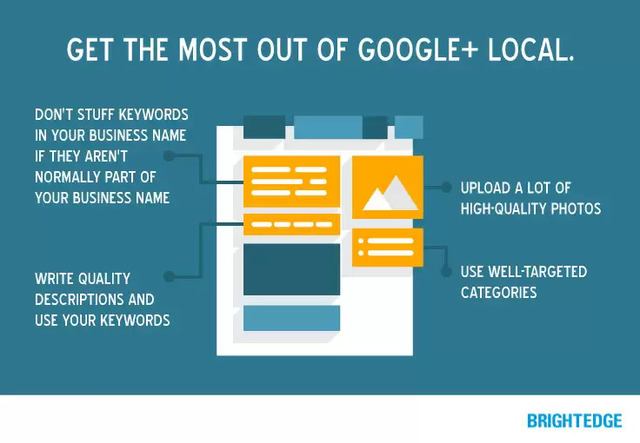
  • Write quality descriptions and use your keywords.
  • Upload a lot of high-quality photos.
  • Don't stuff keywords in your business name if they aren't normally part of your business name.
  • Use well-targeted categories.

To see a star rating (out of five stars), your company has to have at least five reviews. Fewer than five reviews and you won't see any stars. It's a good idea to focus on getting approximately ten reviews on Google Reviews. After that, target places like Yelp and Urbanspoon. Keep in mind that it takes time to receive reviews. If you're getting one or two reviews a month, you're right up there. Don't use Google+ Local to do fake reviews. It's easy to spot these and they will only hurt your rankings. A review is probably fake if it has the below:

  1. There were a number of other reviews left the same day with the same amount of stars (usually 5)
  2. There are duplicate reviews showing up
  3. Certain reviewers left multiple reviews
  4. An obvious keyword shows up once or twice in a review

Keep in mind that the Google Carousel is in play in some sectors; businesses are shown at the top of the SERP with a photo, stars, number of reviews, and price. Watch for how Google displays your photo, because a good photo will attract customers and clients. Creating Google local listings and keeping up on those local listings is a challenge, and with search results tending to favor local result packs more, it's critical to have a local SEO management system to manage these listings. BrightEdge provides in-depth city by city local SEO analysis along with your competitors' city by city local SEO data. Data is the key to smart decision making when it comes to SEO, especially Google local SEO. With BrightEdge's local SEO management system, there's never any guessing on how to do Google Local right. All the data is in one place.  

,