Three Ways to Help Local Customers Find Your Business

koleary
koleary
M Posted 7 years 2 months ago
t 9 min read

Mobile devices surpassed desktop as the main way that people browse the internet a number of years ago, for some industries BrightEdge research found that 62% of all web traffic comes from a smartphone or tablet device.1 For some industries, like food and beverage, the share of searches from smartphones and tablets is as high as 72%.2

The predominance of mobile search has changed people’s behavior and expectations. Previously, if you were going out, you might have researched a restaurant online before leaving home. Today, you’re just as likely to wait until you arrive at your destination, search for “restaurants near me,” and receive hyper-local results that you can act on immediately.  

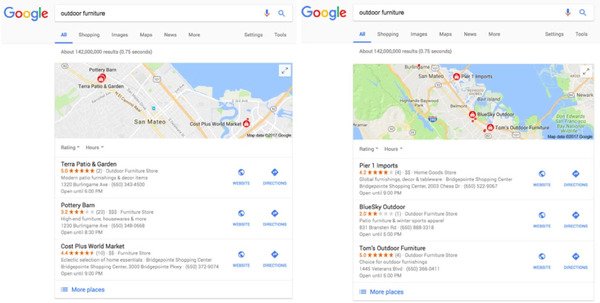
These new consumer expectations and behaviors are relevant to any business with a brick and mortar presence. An incredible 76% of local mobile searches lead to a store visit within one day, while 28% result in a purchase.3 When people search for something nearby, they are often ready to buy.  discover how to optimize for local customers - brightedgeThis is why it is so critical to ensure that your business shows up in Google’s Local 3-pack: the trio of nearby businesses that dominate the search engine results page (SERP) of 23% of local-focused mobile searches, according to BrightEdge research. When a local 3-pack is displayed on mobile, 55% of the clicks are for one of the three listings. If your business is not featuring there, you’re immediately missing out on half your potential audience.   

Here are three ways to make sure your business is easy to find.

1. Have clear, complete, and factual information

Google’s main source of information about your business is from company profiles found on Google My Business. To ensure the correct information is displayed in Google Search or Google Maps results pages, make sure that your company profile page is complete and up-to-date. While Google searches account for nearly two-thirds of all searches,4 it’s also important to update and maintain your business profile on other channels like Yelp for Business, which is where Bing gets its local business information for display on Bing Search and Bing Maps results pages.

Also, it is important to clearly display your business address, contact details, and business hours on your own website’s home page, as this is another source that Google and Bing will check. Having accurate and informative “About Us” and “Contact” pages on your website will also boost your chances of appearing high in search results rankings. Finally, if you have multiple locations, create an individual page for each location with the unique information and content about each one.  

A good tip is to look at existing 3-pack search results for the keywords related to your business’ products or services, and ensure that your company profiles have the same keywords, or read Google’s suggestions for improving your company’s local ranking.

2. Be inventive with the keywords you target

Last year, Google reported a 500% increase in “near me” mobile searches that included “can I buy” or some variant. Knowing which keywords related to your business that people include in these searches is critical to your chances of appearing in that valuable 3-pack near me search result. Don’t be afraid to speak the local language. A long sandwich may be called a “sub” in most of the US, but if you’re targeting local customers in Philadelphia, they are more likely to call it a “hoagie,” in New York City, a “hero,” or in New England, a “grinder.”

learn more about seo for local customers - brightedgeIf your business is near a prominent landmark or location in the area, think about potential variations on “near me,” like “near the ballpark” or “near Times Square.” You should also find out which terms your competitors are successfully targeting and see if they apply to your business. BrightEdge can help you analyze and prioritize which keywords you should create content for by helping you understand which universal results (like a Local 3-pack or Quick Answer) appear on the first page of search results.  

3. Encourage great local customer reviews

Google doesn't display just any three businesses in the 3-pack search results. The search engine wants to give its customers the best three local businesses related to their searched keyword. That’s why businesses with good reviews on Google are more likely to be featured in 3-pack search results. Encourage your happy customers to leave positive reviews on these sites, along with any sites related to your business, whether that’s a food blog or car review site.

If your business has received good customer reviews, featuring them on your website can be helpful. Get permission from your customers to post the review first. Then, mark up the review with optimizing schema in order to claim it as a first-party review. You may see the review on the search engine results page, much like a Yelp listing, except this drives traffic to your website, not Yelp’s. Google can be strict about the use of first-party reviews so it’s worth looking at its rules if you’re using a review.

Whatever your business, having complete factual information, being inventive with your keyword targeting, and getting great reviews will help local customers find your business when they’re searching locally. With Google constantly tweaking what it’s looking for and how it displays search results, BrightEdge will tell you how to optimize keyword targeting and keep you up to date with changing search engine algorithms with the goal of boosting traffic to your site so your business can stay ahead.

HyperLocal Targeting: Content Performance For Your Customers UX

Default avatar
hchung
M Posted 9 years 2 months ago
t 9 min read

Enhanced HyperLocal capabilities allow digital marketers to understand demand and content performance for the locations that matter most to their business.

Digital experiences are now localized to the areas where searches are conducted

Google has taken the next step in providing the most relevant results to consumers – displaying different results pages for small geographical locations, even cities just miles apart, called hyperlocal. 

brightedge example of hyperlocal search results

With digital experiences varying according to location, you can get a skewed view of how your customers experience search locally if you confine your analysis of organic demand (search volume) and content performance (organic ranking) to a single location. You may fail to see the variances in search volume between a metropolitan area and a small nearby town. And using a single-location view of organic performance can hide the fluctuations in ranking across multiple geographies.

To prioritize SEO and content marketing investments effectively, it’s critical to have the clearest picture of how customers experience your brand in organic search results – where and when they are searching.

Marketers need a more granular view of demand and content performance with hyperlocal

HyperLocal capabilities within the BrightEdge platform now allow customers to understand how topics and content perform for searches conducted in every corner of the globe. Digital marketers can track demand and content performance for over 32,000 US and 36,000 non-US city search engines, or submit custom locations, for both desktop and mobile.

Accessing data at the most granular level is a best practice for effectively optimizing for organic performance. Here are a few instances where it makes sense to understand your brand’s digital performance down to the specific areas critical to business success:

  • To target customers for hyperlocal marketing
  • To drive customers to physical locations
  • To understand fluctuations in demand
  • To expand into new regions

1. When you are looking to target customers in a (hyperlocal) very specific location

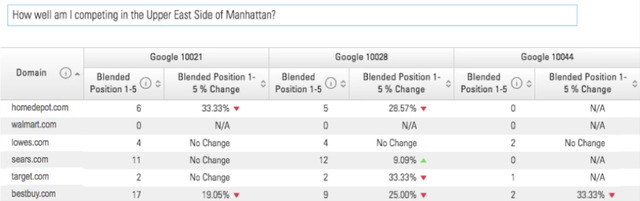
Let’s say that you know geographically where your highest-converting customers are searching – for example a specific city or a neighborhood. While you care how you are turning up in search results in general, you care even more about how you are showing up (or not showing up) for the audiences in these highly targeted areas. By using our HyperLocal capabilities, you can now see how your content is displayed in SERPs for these specific locations.

hyperlocal serps example manhattan - brightedge

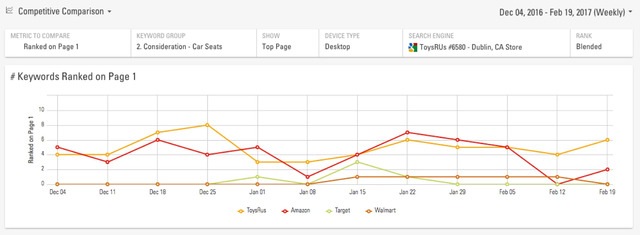
You can also view trending of performance over time in a specific location.

brightedge hyperlocal serp rank trends

By targeting the locations that matter to your business, you secure a more accurate understanding of how you are performing in search for the precise audiences you are targeting.

2. When you want to drive customers to one of your retail locations

Google research shows that 50% of consumers who conduct a local search on their smartphone visit a store within a day. With the increase in smartphone searches (which now make up more than half of total searches online), it is increasingly important to ensure that your brand is showing up for relevant topics in order to drive visitors to your brick-and-mortar locations.

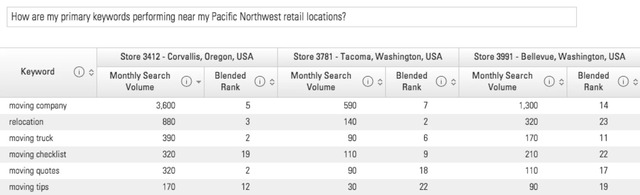
Using our HyperLocal capabilities, you can view performance for the local search engine closest to each storefront location.

brightedge hyperlocal keyword report for pacific northwest

With these insights, you can understand demand for specific topics, as well as how you rank for people searching in that immediate vicinity. You can choose to optimize for the areas and topics where you are falling behind in local search.

3. When you are trying to understand fluctuations in demand for your products or services

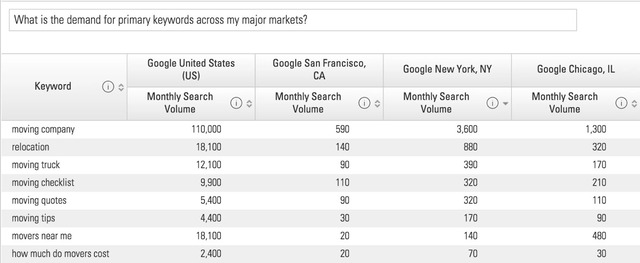
Consumer interests are incredibly regionalized. Something that is popular in one area can fail to capture the attention of consumers in another area. An aggregated search volume figure fails to show you how search volume for that topic can fluctuate across locations. With our HyperLocal capabilities, you can view search volume across the different locations that matter to your business.

brightedge keyword demand report for hyperlocal

Knowing this can help you allocate your marketing resources and create strategies to optimize for topics in the regions where demand is the greatest.

4. When you are looking to expand and want to compare differences in demand across regions

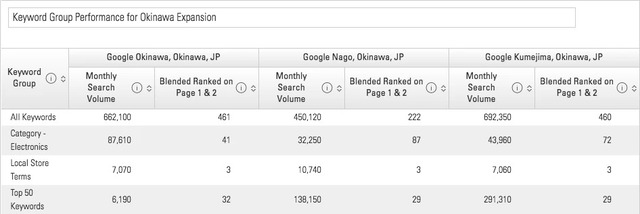
Similar to the use case described above, you want to understand nuances in demand for your product or services in different regions where you are aiming to expand – either domestically or internationally. There can be a drastic difference in search volume for the same topic in cities that are separated even by a few miles.

brightedge hyperlocal keyword group report for okinawa

With access to the most granular search insights, you can compare demand across potential target regions and take a data-driven approach to selecting how you allocate resources as you grow your business.

Providing volume and granularity of search insights unmatched by other SEO platforms, BrightEdge is the only search and content solution that allows customers to understand how pages are performing in the specific locations that are most critical to their business success.

You can contact us to learn more about optimizing for content performance using our HyperLocal enhancements.

request a demo

The Power of Google Local to Grow Your Business

enewton@brightedge.com
M Posted 9 years 9 months ago
t 9 min read

Google Local optimization underlies a strong online strategy for any business with a physical presence or storefront. An estimated 73 percent of online activity relates to local. In other words, people regularly use the internet to find information about businesses and other places of interest around them.

google local trends - brightedge

What brands should pay even closer attention to, however, is the impact of these local searches on business. Customers look for local information throughout the buyer’s journey, and when they reach the conversion point, local searches are twice as likely as non-local searches to result in a purchase. In fact, an estimated 78 percent of local-mobile searches resulted in a purchase often within a few hours.

For brands to succeed on a local level, they need to prepare for their regional audience. Even if you regularly work with people well outside your geographic area, failing to optimize for the local users will hamper your reach, reputation, and business growth.  

What is Google Local?

Google Local involves making your page more locally relevant for users looking for businesses or places of interest that are geographically near them. This refers to queries such as “SEO companies near me” or “pizza places open now”.

When people conduct local searches, Google will currently present to them three main businesses, which are featured on the local 3-pack. These three businesses are at the center of the page with their name, address, number of stars, and a photo, immediately drawing the eye. Underneath these results, users have the option of clicking to see more businesses or just scrolling through the organic results. The high-profile location of this 3-pack makes it particularly important for those who want to optimize their content for local search.

Optimizing your content for Google Local, therefore, means designing your site and your Google+ page to improve the frequency with which you appear in this 3-pack and the positive impression you make upon users who see it. As in all SEO efforts, high rank means awareness and traffic and an implied endorsement from Google.  

How do I succeed with Google Local?

Pay attention to the NAP

The NAP refers to your name, address, and phone number. Google wants to see businesses that keep this information consistent across all websites and listings. When the NAP is consistent, the search engine can be confident that it is displaying the right information to users on the SERPs. Google wants to provide its users with an optimal user experience, and inaccurate information would confuse people and detract from this goal.

Every time your name, address, and phone number are written online, it can create a listing in other directories. Regularly monitor the web for mentions of your brand and reach out to sites to correct any incorrect information. If you find one that needs to be updated, look for the "Claim this business" or similar link to update and control the information,

You want to create your own listing on the various popular online directories, such as Yelp, to ensure that they receive the right information. Style the name of your brand always the same way, ensuring consistency with ‘and’ versus ‘&’, for example. When your NAP is consistent, it can influence the performance of your brand properties on Google Local by as much as 16 percent.

Fill out your Google+ business profile thoroughly and correctly

Google Local pulls from your Google+ business profile when creating your listing for the local 3-pack, so you want to make sure that you pay attention to how your brand is presented on the popular social media platform. Therefore, fill out your profile thoroughly and correctly. This means paying attention to the categories you select to ensure that they accurately reflect your type of business. Use keywords when describing your brand, including both your products and services as well as your location. One study found that using notable keywords, the right categories, and being located near where the person performs the search can impact your performance in Google Local by as much as 19.6 percent.

Attract reviews on Google

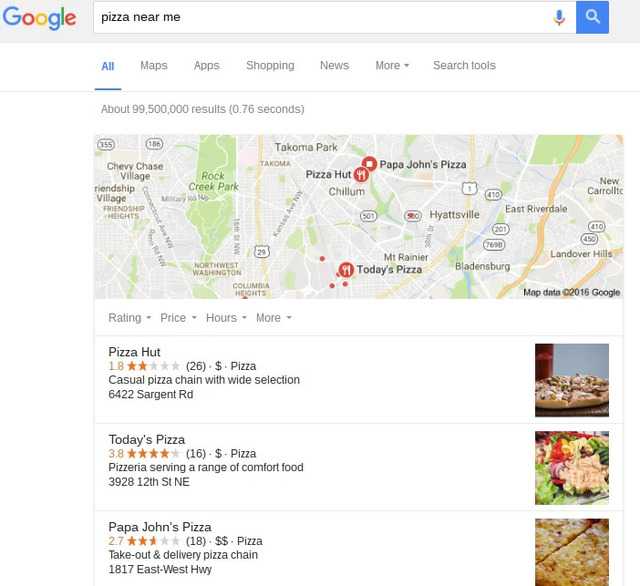
Reviews can be very influential on the results that you are listed for as well as the amount of attention your listing receives. As an example, here are the results from the query ‘pizza near me’.

pizza near me google local example - brightedge

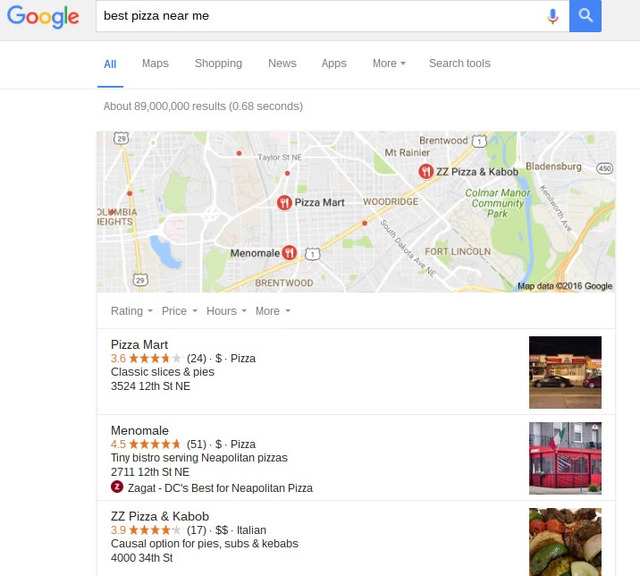
Then here are the results, ‘best pizza near me’.

best pizza near me Google local example - brightedge

According to Nielsen, 92 percent say that they trust earned media, such as reviews from friends or family, more than all other forms of advertising. The reviews on your website might not be from someone that a particular user knows personally, but they do offer third-party validation of your brand and can help you lay the foundation for building a relationship of trust.

There are a few ways that you can encourage your customers to leave you these valuable reviews. Consider:

  • Letting customers know after they make a purchase, such as in a follow-up email, that reviews are appreciated.
  • Include links to your Google+ profile on your brand’s correspondence, such as emails and newsletters.
  • Invite people connected to you on Google+ through your circles to leave you reviews.


How BrightEdge can help with Google Local

As you begin to develop your optimization for Google Local, use a platform with the ability to help you throughout the process. BrightEdge has numerous capabilities for businesses interested in growing their local audience.

Content creation

The BrightEdge Data Cube will help you uncover local keywords that you can use throughout the optimization process. For example, your local keywords can be used to produce content that is geared towards your local audience. The keywords can also be used in your brand description on Google+ and your website. This will help you improve your relevance to your local audience, and appear higher on organic queries.

Creating local keyword groups

As you uncover the important local keywords that you want to optimize your site for, you can create a keyword group to use to track your progress. You can create charts that monitor the correlation between your local keywords and the brand’s growth and revenue.

Monitoring your appearance with Google Local searches

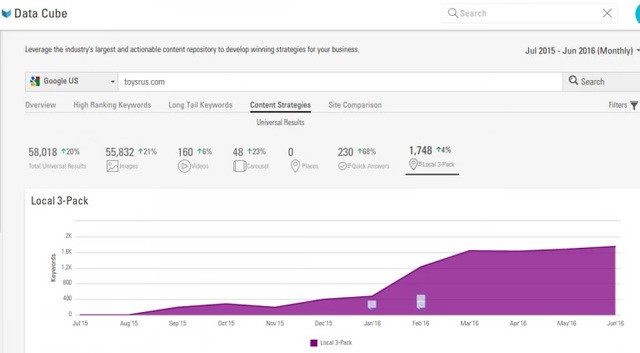
When you open the BrightEdge Data Cube, you can also perform a site analysis that will enable you to see how your site is performing in the universal search results. You can also narrow your data down to show just how you appear in local 3-packs. This will allow you to see your progress and the keywords for which you are successfully appearing in these local searches. You can then do the same for your competitors to gauge their progress as well.

The local 3-pack for Google local - brightedge

Local search engine insight

BrightEdge also provides local SEO support for more than 100 cities throughout the US and around the globe. You can use these Google local tools to look directly at your search performance and that of your competitors in your targeted geographic area.

Google local is a powerful means of reaching out to the customers in the same area as you. Customers often like to do business with those in their region, so optimizing your page to meet these customers can help you grow your business and improve your reputation.  

Case study – see how Yelp did it

request a demo

Local SEO Becomes Hyperlocal

enewton@brightedge.com
M Posted 10 years 2 months ago
t 9 min read

Since 2014, local SEO has been adapting at an alarming pace. It fits with Google’s relevancy mantra—delivering the best search results to users based on their location. But that means businesses and marketers have to keep up with the changes—especially brick-and-mortar shops that rely on local traffic. Outside of the formal algorithm rollouts, we’ve seen fluctuating local SERPs and changes to Google My Business. The carousel was replaced with the local pack. The local pack was trimmed from seven results to three items. Local directories were evaluated heavily for their quality guidelines.

More recently, it’s become vital for a business without a storefront to define its service radius. It’s also become more difficult for brick-and-mortar businesses to target cities too far outside their physical address. Think about what you search for when you have a specific local intent. The verticals affected most by this ever-changing landscape are the ones you’d think of first—the restaurant, hotel, and travel industries. The biggest change to local SEO has been, of course, Google’s own local algorithm update, Pigeon.

Local Algorithm Updates

Google’s Pigeon update wasn’t the first step toward hyperlocal search, but it was a turning point for SEO strategy moving forward. Released in 2014, the update aimed to tie local search results more closely to traditional web search ranking signals. Google’s intent in rolling out Pigeon was to improve and fine-tune their learn and understand local seo with brightedgecurrent ranking signals in terms of distance and location. Although it’s not a penalty-based algorithm, the introduction of Pigeon also meant the usual scramble in regards to traffic and rankings. The use of local packs allowed Google to establish authority within a query for local businesses with a good search presence.

The rollout of Pigeon tried to eliminate duplicate results—businesses were less likely to show in both organic and a map pack—so those featured prominently in the pack were seeing favorable results. In order to give the best possible results, Google’s Pigeon reduced the search radius for local queries as much as possible. This continues to have an effect on businesses that used to rank for their closest metropolis—now without a physical address in the query city, you likely won’t rank high in organic search and probably not at all in the local packs.

Good news for mom and pop shops—Pigeon affected how universal brands showed in local results, and mostly negatively. Local businesses, even without a strong search strategy, continue to rise in the ranks of organic and pack results—think Amy’s Pizza vs. your local Dominos chain. But there were industries that took a hit after the Pigeon roll out—real estate and insurance in particular. BrightEdge’s Data Cube saw a significant drop in Google Places results from those queries.  

Google’s Local Goals

Google’s local ranking emphasis and ongoing local efforts contribute to the overall goal of Google—personalization and relevance. Someone searching for a local product or service, whether they’re at home on a desktop or walking down the street searching on mobile, should see the best possible result. In order to deliver on this, Google aimed to define the parameters of local search as precisely as possible. Instead of general city targets, geolocation was further dissected into neighborhoods. This gave new emphasis to the importance of a correct NAP (Name, Address, Phone Number) and a shift in how successful local marketing would be. How Google Ranks Local Listings

With the new algorithm and Google’s local mission statement in play, it’s important to understand how this changes rankings for the SERPs. In order to understand how local rankings fluctuate, you have to monitor your brand and keyword targets at a local level, instead of just US. BrightEdge can help you determine your geo-targeted market and create specific localized campaigns for your brand or service. The local search ranking factors are important to monitor on a yearly basis.

The existing ranking factors are present here, albeit with a local focus—on-page optimization for local terms, link signals with local relevance, social signals. There is also a heavy focus on specific local factors—Google My Business signals, NAP consistency across citations, and the strength of your review portfolio. Most sites saw a positive or negative effect of these signals, depending on their local strategies before Penguin. Whereas sites rose or dropped for the existence (or lack of) NAP, reviews, and a Business page immediately following the rollout, the signals have become more defined over the past two years. Now quality is favored over quantity, and the search radius continues to shrink with laser-like precision to the business’s storefront address and neighborhood. In addition, signals like reviews and citations are also becoming more refined under the Google microscope. Accuracy and relevancy can enhance citation signals along with the quality of the directory or aggregator used. Just a large volume of reviews isn’t enough to rank either—the timing, consistency, and the quality of review sites are all factored into the local ranking algorithm.

Content Marketing for Local SEO

The world of “content is king” was hardly expected to escape the impact of local search. For local businesses targeting specific neighborhoods, it’s important to tailor your content strategy to fit these needs. In addition to your existing strategy that targets your brand, products or services with high-volume keywords, you’ll need almost an entirely different strategy that targets your local neighborhood, or to at least weave some local elements into your existing content. First you want to identify your radius and your local audience. What neighborhoods do you want to reach, and who makes up those neighborhoods? What are they searching for, and how can you help them? This is where your content strategy can go outside the grid when it comes to your brand. If you’re a maternity clothing store in Astoria, you want to build content for new moms and maternity clothes. But you can also hone in on your local keyword targeting by writing about the best day cares in Astoria and your surrounding neighborhoods—relevant and hyperlocal.

In order to identify your audience and their needs, you can use the tools already at your disposal—Google Analytics demographic information and interest categories, Facebook Insights, AdWords Keyword Tool and more. It’s important to monitor your content performance for your local SEO strategy. Identify the goals you want to achieve—do you want more traffic from your surrounding neighborhoods? Do you want to rank for local queries? Do you want more sales from your immediate location? Once you’ve identified your goals, your local content strategy should be tailored to achieve them. In addition to just creating content, make sure you are optimizing it. Craft local-focused meta titles and descriptions and optimize your images for local search. Pay attention to your industry. If you’re in real estate or hospitality, you can corner the local content market with neighborhood guides, local landing pages, and “best of” lists. The key for local content is to be useful to your market. That can mean promoting events, news, sports teams, or little-known spots and becoming to go-to resource for your neighborhood. Best Practices for Local SEO If you’re looking to ramp up your current SEO strategy, or if you’re starting from scratch post-Pigeon, there are best practices to consider for your local SEO.

  1. Consistency

Both on and off site, your Name/Address/Phone Number listing needs to be consistent. It’s worth spending the time to update anywhere your business might be located on the web to match exactly how you’re listed on your website.

  1. Citations

Speaking of your business listings, check to make sure you’re listed everywhere that’s relevant to your business and seen as a quality site. Sites like Yelp, Foursquare, and of course:

  1. Optimize your Google Business Page

Update and optimize your Google My Business page with your NAP, categories, keyword-targeted description, photos, and more.

  1. Optimize on-page for local

Your content and site architecture should reflect your local strategy. Make sure your city and neighborhood targets are present in your copy and meta data. Take advantage of Schema markup to boost this content.

  1. Manage your reputation

Your online reviews can make or break your local business—and Google knows this too. Review signals are quickly climbing the ranks as part of the ever-changing local algorithm. A local content strategy and citation building strategy should be ongoing. Make sure to start with your site foundation to create an optimized local template for copy and meta data. Don't Overlook These Crucial Parts of Local SEO

Mobile and Local

The increase in mobile queries was skyrocketing during Google’s rollout of Pigeon, and it’s easy to see how the two go hand in hand. If you’re a brick-and-mortar shop, your potential customers are walking around the neighborhood, searching on their mobile for the closest fill-in-the-blank. In fact, the percentage of mobile searches with local intent is as high as 60%. If you don’t have a mobile presence, they might not find you at all. According to Google’s Smartphone Insights:

  • 94% of smartphone users have looked for local info and 84% have taken action as a result
  • 57% of smartphone users look for local info at least once a week
  • 25% of smartphone users look for local info daily

Of smartphone users who searched for local info:

  • 65% visited the business they looked up
  • 47% looked it up on a map and/or got directions

So how do you optimize for mobile in a hyperlocal world? First and foremost, your site should be mobile-friendly. Google has started displaying this quality under each site in the mobile SERPs, so users don’t even have to visit your site to know the mobile experience they’re facing. Since many mobile searches are being done on the go, you want to be prepared with the information they need. This falls back on consistency across citation sites and your mobile site—especially when it comes to your address, phone number, and directions. Important details like parking or hours of operation should be prominently featured. Again, on the go searchers don’t have time for slow loading sites or Flash-heavy web pages. Make sure your mobile site is not only friendly, but optimized for page speed. Finally, if someone is comparing you to your competitors, the first thing they’ll look for on mobile (and desktop) will be your reviews.

Reputation Management and Local SEO

Reviews are crucial to your local SEO strategy. Not only are they considered a ranking signal, but managing your reviews should be extremely important to you as a business owner. Why? Because it’s extremely important to your customers.  

Earning favorable reviews on the top sites—Google My Business, Yelp—will help that first interaction that local searchers will see on their desktops or mobile phones and tablets. The process of getting reviews is tricky, and one that is monitored more and more by Google. Here are some key takeaways for reviews:

  • Whenever possible, acquire naturally
  • Speed and velocity of reviews are monitored—keep track of your requests and promotions to avoid an influx of reviews
  • Responding to negative reviews is easier than trying to remove them

You can get creative with asking your customers to post reviews, but you should always let them know where you’re listed and how to leave a review—especially in the case of a favorable sale or interaction. The response to negative reviews can’t completely combat the effect of that negative review on a potential customer, but a smart and thoughtful response can negate some of the backlash. In addition to reviews, social media is a great way to maintain your reputation for local SEO. Using and optimizing sites like Twitter and YouTube can help boost your local content and dominate your local SERP presence. Can’t get enough local? Check out our other local SEO blogs.


The Best Local SEO Techniques

Mark Mitchell
Mark Mitchell
M Posted 11 years 7 months ago
t 9 min read

Local SEO has undergone a number of changes over the past few years, led by both Google and the overall trend towards mobile search. Among the more notable of local SEO changes initiated by Google is its introduction of Google Places (now called “Google My Business”) and its local “Carousel” - and most recently, its update (“Pigeon”) to the local search algorithm. As a search trend in general, mobile has rushed to the forefront, carrying with it significant implications for local SEO.

First, a brief history: Google Places was first introduced with Google Plus (Google+) in 2011, becoming Google+ Local about a year later, which made it essential for businesses to create Google+ pages and profiles to which to tie their sites’ URLs directly.

The most recent name change to “Google My Business” came in June. Google My Business also integrates Google Maps and the Google+ platform (including G+ reviews) within its local search results. Then came Google’s interactive “Carousel,” unveiled for desktop in June 2013, which proved to be a game-changer with local search listings represented side-by-side at the top of its traditional top-down results, and incorporating details such as review-based scores as well as the physical addresses and photos of local businesses.

Most recently, Google’s update to its local search algorithm in July (dubbed “Pigeon” by Search Engine Land in the absence of a formal name by Google) has meant a shifting local SEO landscape that BrightEdge CEO Jim Yu recently discussed at Search Engine Watch.

The local-mobile connection

Alluding to its “Zero Moment of Truth” (ZMOT) directive, Google states on its “My Business” page (referenced above): “Give customers the right info at the right time, whether that be driving directions to your business in maps, hours of operations in search or a phone number they can click to call you on mobile phones.” Google elaborates on the local-mobile connection with its November 2013 “Mobile Path to Purchase” study, in conjunction with Nielsen. The report reveals key findings:

Consumers are spending time researching on their smartphones (15+ hours a week), their research starts with a search engine (vs. a mobile site or app), proximity is important (69% expect businesses to be within five miles of their location), immediacy is key (more than half want to purchase within the hour) and mobile influences their purchase decisions (93% go on to buy).

Jim Yu has also discussed the boom in mobile search extensively within the past few months. Citing data from the BrightEdge 2014 Mobile Share Report, he wrote for his Huffington Post column in July:

Mobile is commanding more of the organic search market today than ever before. Smartphones account for 23 percent, and combined with tablets' 12 percent share, mobile now equates to fully a third of today's organic search traffic. And in the coming year, smartphone share is poised to balloon by at least another 50 percent.

Now let’s explore some tips to help you optimize for the best local SEO techniques, and ways BrightEdge’s Local SEO Management tool can help.

Best local SEO techniques

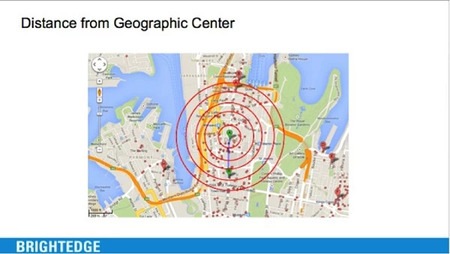
1. Distance from geographic center: having a physical address for your locale matters!

discover the best local seo techniques - brightedge

2. Consistency in your business name, address and phone number (N.A.P.) across your website’s local URL and Google My Business pages, as well as within local directory listings, is essential. 3. Prominence of your business page: To calculate the local prominence of business, Google looks to local “citations,” or Web pages mentioning your business. It gauges the quality of these citations as well as the quantity. Generating user reviews on your “Google My Business” page and other sites (such as Yelp) improves your business’s credibility and in turn, its prominence.

Google My Business optimization

Optimize your Google My Business by considering the following steps:

  • Name: Business name
  • Categories: Carefully choose the five most important categories based on important keywords
  • Description: Contains the business name and keywords
  • Additional details: Keywords for products and services, as well as local information
  • Business related photos and videos
  • Reviews
  • Manual verification

On-site optimization for local

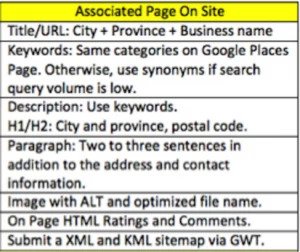
You should also perform on-page optimization for any local-focused pages on your site. Check out the following table for tips on how to optimize those Web pages:

learn the best local seo techniques for your website - brightedge

Don’t forget about Schema.org markup as well in order to help boost the search engine’s understanding of the content on the page. For contact pages, you can communicate things like address, phone number, hours of operation and so on. Check out the LocalBusiness markup here.

How BrightEdge can support local SEO

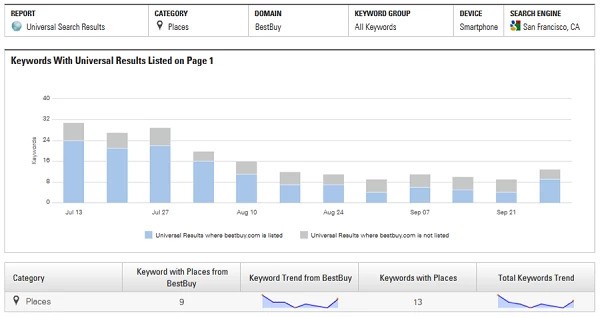
Details on optimizing your local Web page and its corresponding page in Google My Business, as well as local competitive analysis resources, are available through BrightEdge’s Local SEO Management. For instance, with Google My Business, you’d be able to generate reports like this using BrightEdge tools. learn what the best local seo techniques are - brightedge

Using BestBuy.com in San Francisco, as an example, this report shows Universal Search result listings for all keywords in Google My Business accessed via a Google search on a mobile phone. Digging deeper, the report can break results down by image, video, shopping, Places and Carousel results. This helps you to not only understand which keywords you currently have visibility on in Universal Search results, but also identifies opportunities - for example, how many of your keywords show any Universal Search results that your site is not showing up for at present.

All of the information available through the BrightEdge SEO platform can be tracked easily by creating a dashboard. Among the valuable insights you can glean is identifying high-priority keywords within Google My Business where your business is not ranking. While there is a host of local ranking factors, and what we’ve discussed today still only scratches the surface, optimizing the basics is the very first step in any long-term local SEO strategy.  

,