Building Backlinks Through Content Strategy

enewton@brightedge.com
M Posted 6 years 11 months ago
t 9 min read

When it comes to SEO and optimization, building backlinks are a powerful tool in the marketing toolbox.

Backlinks draw people to your website who might not have otherwise discovered your content. The people who click through to your site from another website are also predisposed to trust what you have to say. They were visiting a website they viewed as trustworthy, and that website vouched for your site by linking to you. Therefore, the people who land on your page will be more inclined to engage with what you have to say.

building backlinks with brightedge can help attract positive attention to your site.

Building backlinks can also offer powerful ammunition for SEO. Google works to understand how the various websites fit together and which ones customers will likely view as trustworthy. Backlinks help them better understand which brands other sites view highly enough to link to. Pages that cultivate a number of backlinks from other well-regarded websites will therefore be viewed as having a solid reputation within the digital ecosystem. This will boost the page’s ranking on the SERPs, thus attracting even more attention for the content.

Given the benefits of backlinks, businesses should understand the optimal ways to attract this type of positive attention. Here is what everyone should understand about backlinks and some of the best strategies organizations can use to build their backlinks.

Building backlinks

Building backlinks does present a challenge for many businesses. Since the early days of SEO, people have promoted backlinks to attract attention of Google and site visitors. Over the past few years, Google updates have cemented the idea for people that backlinks only offer value when they come from other quality websites and that brands should focus only on positive backlink building strategies. These strategies might take longer to start to produce results, but the value they produce is infinitely higher. When it comes to nurturing backlinks, quality remains the supreme criteria.

People sometimes note that brands can put ‘nofollow’ on the links within their site, and this diminishes the value the backlinks can provide for SEO purposes. While this is true to a degree, it does not eliminate the benefits of backlinks. To begin, the traffic the link drives remains intact. The trust that customers are more likely to have in the site upon their arrival also remains. The increased traffic and improved engagement metrics will still boost SEO for the site, even if it is not as dramatic as a standard backlink.

Surveys and research for building backlinks

Surveys and research offer you the chance to add something original to your industry, which makes it easy to establish yourself as an authority. Solid surveys and research will help you catch the attention of others in the industry and encourage people to build backlinks to your material. The content you produce can be used to support material that other people produce, which will then encourage building backlinks.

The research and surveys you produce will also likely interest those who participate in the survey. They will feel encouraged to read the results and may produce their own content on the final statistics and insights. This will naturally encourage additional content that links back to your results.

Surveys demonstrate the importance of original content in building backlinks with Brightedge

You can promote your surveys and research in third-party publications across your industry as well as social media. This will help the results of your work gain the most possible attention, and it will help you start building backlinks to yourself.

In general, original research and surveys offer strong opportunities for cultivating backlists as they offer more objective insights rather than just your opinion or impressions. It will encourage people to link to your material or at least mention it-- and the name of your company. This all works together to improve the reputation of your organization.

Newsjacking for building backlinks

Newsjacking can also provide valuable opportunities for producing backlink-ready material. By closely monitoring news sources and trends on social media, you can be ready to jump at potential topics as soon as they arrive, making your material among the first to be published in the industry on the topic. This increases your visibility and makes it easier to engage users.

As one of the first to discuss a particular rising topic, your content will attract attention on the SERPs. It will be easier to get your page ranked highly, which will boost the clicks and traffic your piece receives. You will then naturally increase the number of backlinks you receive as people find and then link to your content as they start to research this emerging topic.

Earning your place as one of the first leaders to discuss a particular topic makes it easier to further enhance your reputation and encourages people to listen to what you have to say. You present yourself strongly as a leader in the field and encourage people to remember your brand and organization.

Backlinks and the sales funnel

Building backlinks have value for brands throughout the sales funnel. They can play an important role in nurturing new leads and coaxing them through the path towards conversion. At the top of the sales funnel, the backlinks make it easier for brands to get their name and content in front of those interested in conducting research and learning more about solutions to potential pain points.

Newsjacking to nurture backlinks can be particularly beneficial for these top-of-the-funnel visitors. By producing content related to the latest trends and news within your industry, you will attract the attention of those just beginning to inform themselves about your sector.

Towards the middle and bottom of the funnel, customers want to see what sets you apart. For more information about how to nurture mid-funnel customers, read our post on creating material for the mid-funnel here.

Backlinks created through original research will help to establish your reputation as a leader within your industry. Prospective customers want to know why they should trust you over other brands within the industry. Original research and surveys that receive links within other industry publications will increase your positive brand mentions and your reputation as a thought leader. This will help you set yourself apart from others.

Measuring and building backlinks

As you engage in these positive link-building strategies, be sure to regularly monitor your progress to gauge your success. Don't forget to check in on broken backlinks that lead to orphan pages, too. The BrightEdge platform offers a backlink tracking feature that makes it easy to see how your efforts correspond with building backlinks. You can see which types of content and investments correspond with the greatest increase in backlink attention. You can therefore modify your strategy when needed and continue to build your backlist directory and the reputation of your site.

Backlinks offer your organization tremendous potential for building reputation and attention on the SERPs. By driving more interested traffic and giving your site an SEO boost, no brand can afford to overlook the potential for building backlinks. Use a content-driven strategy to increase the number of sites that link back to your page, and build your position within the industry, and exercise the power of the backlink throughout your sales funnel.


Guide to Basic SEO Concepts: Part 2

A BrightEdger
A BrightEdger
M Posted 7 years 7 months ago
t 9 min read

Welcome to Part 2 of our 3-part SEO basics series, designed to help you “speak SEO” with your team by becoming better acquainted with the basic SEO concepts most often discussed. Part 1 of our series covered basic on-page SEO terms and definitions. In this segment, we’ll define essential SEO linking concepts and search engine directives.

Search Engine Directives: Definitions

Meta robots refers to the automated search engine “robots” -- usually referred to as “bots,” such as “Googlebot” and “Bingbot” -- that “crawl” the Web, discovering and indexing individual Web pages in the search engine results pages (SERPs). By using relatively simple HTML (“hypertext markup language”) code, SEOs can “tell” search engine bots what specific Web pages and page-level information to exclude from search results, as well as how to handle the links contained within a Web page’s content, via directives (often referred to as “tags”). The working definitions of the most common search engine linking tags are: Index: Tells Meta robots to index the Web page, thereby including it in the SERPs. This isn’t necessary to specify, however, as it is the default setting. Noindex instructs the Meta robots to exclude the Web page from indexing in the SERPs. For example, if your site has an unfinished Web page, you could ensure search engines don’t display that page until it is ready for user viewing with a “noindex” Meta robots tag. (In terms of HTML code, the command would be <meta name=”robots” content=”noindex”>).

  • Note that while a “noindex” directive will prevent the Web page from appearing in the SERPs, the page will continue to be crawled. This means links within the page content will be followed and the destination page of the link indexed, unless a “nofollow” directive is also defined, as discussed below.

Follow directs Meta robots to follow the links included on the Web page to the (destination) pages indicated in the links’ respective URLs (Web page addresses), which they will then index in the SERPs. As with “index,” the “follow” directive is in effect by default. Nofollow prevents Meta robots from following and indexing the Web page URLs of links included within the original page content. Using the example (above) of an incomplete Web page from the “noindex” directive, should you want to exclude both the Web page and the link URLs within its content from indexing, the HTML code would read <meta name=”robots” content=”noindex,nofollow”>. A more concise directive recognized by Googlebot for “noindex,nofollow” is simply none (in HTML, it’d be <meta name=”robots” content=”none”>).

  • Note that the “nofollow” tag disallows the following/indexing of all links on the Web page level. This is distinct from the “nofollow” attribute that applies to individual links within the page’s content.

Noarchive prevents Meta robots from showing a cached copy of the Web page in search results. Nosnippet blocks Meta robots from displaying the Web page’s Meta description in the SERPs, as well as the page’s cached copy.

Link Profile Concepts

As search engine bots crawl the Web via links, your website’s link profile plays a key role in determining its search visibility. There are several essential elements to a “healthy” link profile, defined as follows: Inbound links, also referred to as “backlinks,” are those from other websites linking to yours.

SEO basics part 2 html best practices - brightedge

Beginning with the initial release of Google’s “Penguin” update in 2012 and several iterations thereafter, webmasters and site owners have become increasingly vigilant about the quality of inbound links comprising their backlink profile. Targeted at link schemes seeking to pass “PageRank” (which Google describes as its “opinion of the importance of a page based on the incoming links from other sites”) from one Web page to another, the Penguin algorithm has resulted in countless manual penalties – oftentimes leveled at legitimate websites that have unknowingly or unwittingly become ensnared in a link scheme. In recent times, Google will target the penalties to the page with bad links instead of the whole domain.

Outbound links are external links from your site’s Web pages to those of another site. As with inbound links, it is a best practice to exercise caution when linking out; be sure that the website is in good standing with Google and other search engines. Internal links are those linking separate pages within a website. These links act as a “wireframe” within a site, providing internal structure that assists users with navigation and Meta robots with crawling and indexing. Anchor text is the clickable word or words used in a link, whether internal or external (outbound).

  • Anchor text used to be viewed by search engines as a strong ranking signal, but because spammers abused anchor text (with exact-match keywords) in their attempts to manipulate search engine rankings, the Google search engine scaled back the SEO weight assigned. Now, sites found to be overusing anchor text with exact-match keywords may be subject to manual penalty.

Besides exact match, there are partial match, zero match (generic) and branded (links with the brand name or website URL) anchor text. That’s a wrap for Part 2 of our guide to basic SEO concepts! Be sure to catch Part 3, where we’ll discuss even more technical SEO terms.

request a demo cta banner

Site Architecture for SEO

ssharma@brightedge.com
M Posted 7 years 7 months ago
t 9 min read

Before you spend all the time, money and effort you've laid aside for SEO, consider this: your site architecture might be negating any effort you spend in offsite SEO. In fact, poor site architecture could be causing you to throw away your money. You've got to be sure that your site is set up in a way that will not only bring in visitors but keep them there long enough to generate a lead, make a sale, sign up for your newsletter or become an active member of your community -- and site architecture is key to those goals!Site Architecture SEO with brightedge

What Exactly Is Site Architecture?

Ten or more years ago, there were very few ways to set up a website. Perhaps you had directories with relevant names, or your directories may not have been named well. All your files might have existed in your root directly, and you may have used file names and page titles that only made sense to you. However, the Internet has come a long way from that point, and how you set up your site is important.

Site architecture is a way to group and organize content on your site which encompasses URLs, directories, file names and navigation. The way you set up your site ensures that both computers and humans can find everything on it with ease. But if you do site architecture wrong, you're actually make it more difficult for your readers and search engines, which could seriously hurt your bottom line!

One of the biggest components of site architecture is the number of clicks it takes to achieve a task. Once upon a time, webmasters assumed that readers would click infinitely, but the opposite has proved to be true. If it takes too many clicks to find an article, check out from your store or sign up for a newsletter, your readers might simply leave your site. This is especially true with mobile users.

Although traditional site architecture uses nested directories in a practice now known as silos, this required more clicks to find pages. The pages further down the silos had fewer links to them than the articles further up the silo. While grouping your pages in directories named with keywords is helpful for SEO, you'll want to ensure you're not making them click too many times to find the "bottom" pages. Think of ways you can reduce clicks to any page on your site to three to four clicks at most without decreasing the usefulness of silo structure.  

Keyword Research in Relation to Site Architecture

Although Google no longer favors sites simply because the domain contains a keyword, choosing page URLs with your relevant keywords will certainly help your users as well as crawlers. Good keyword research will indicate topics & themes to be included in your site architecture and page URLs. This URL structure will also help you manage content in respective directories and sub directories.

Before you can give your files, directories and links their proper names, you have to determine a method for naming that will benefit your site. These are the words that searchers would use to find your business. They revolve around industry, services, products and sometimes location if you serve a specific geographic area. But if your website exists mostly to educate visitors, the appropriate keywords will differ than if you're selling something to consumers.

Many webmasters and SEO experts become too focused on short keywords. Yes, they're easier to think of, but there's also more competition for those short keywords coming from similar sites and businesses. This is why long-tail keywords, which are longer keyword phrases, can be so beneficial. In comparison, long-tail keywords have less competition and might get fewer clicks, but visitors who use them are more targeted likely to convert to customers.  

Using Keywords in Directories, File Names, and URL Structure

Once you identify keywords, you'll want to use them in page URLs, categories, post titles, anchor text, file names and image alt attributes, among other on-page locations that benefit SEO. This ensures that your visitors know exactly what to expect from the address of the page. Search engine robots use these same cues.

It's important for more than just your pages to use keywords, however. Images, videos and even archives that you provide for download should use human-friendly keywords. So you'll want to take the time to rename videos and pictures from the automatic names that your camera gives them. Anything that you download from the Internet and upload to your website might need to be renamed, too.

For example, the popular blogging platform WordPress offers several options for formatting your links. However, the default format uses post and page IDs, which are virtually useless to Google and your visitors. A URL such as http://yourdomain.com/successful-site-architecture-seo is preferable to http://yourdomain.com/?p=123 because your visitors know what to expect simply by looking at the address bar.

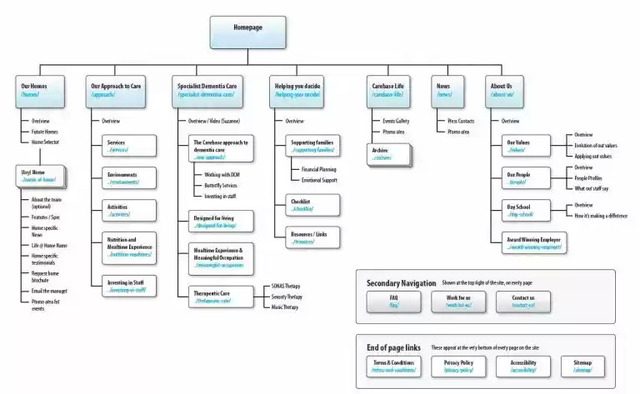
Site Architecture Example with brightedge


Link to Your Own Content/Internal Links

By now, you're intent on enabling Google and other search engines, not to mention your visitors, to find all your content. In the past, SEO has focused heavily on backlinks -- links from other sources -- but this isn't the only way to do that. In fact, linking to your own content, a process known as internal linking, is just as important as external back-linking. Internal linking helps to spread link value on your own site, but it also ensures that no content becomes lost and impossible to find for crawlers as well as your visitors.  

What Does Bad Architecture Look Like?

You've read plenty of advice to help you structure your site in a way that's useful to readers and beneficial to your search engine optimization efforts, but how do you know if you're using it right? Is your current site architecture failing you? Here are a few examples of poor site architecture:

  • Site directory contains numbers and not user friendly words. Example – YourSite.com/shoes/mens vs. www.YourSite.com/1234/shoes-page
  • It takes more than three or four clicks to get to any page from the index
  • Images and files do not use keywords in names, images lack alternative text
  • Small sites have unnecessary directories that cause confusion for users
  • There are too many links on the home page or navigation
  • Navigation changes between pages or sections on the site
  • Pages exist that aren't linked to from multiple sources
  • Page URLs misuse long-tail keywords, which can be vital to a site's success
  • There is no sitemap (page) or, if there is, the site architecture cannot be adequately shown in the sitemap

In fact, devising a site map is one way to quickly locate the weaknesses in your site architecture. If it takes more than three clicks to get to a page on your site, a sitemap will quickly illustrate this. Not all loopholes will be revealed with this method, but it’s one place to start! If you want your website to stand out from the competition, you'll need more than "About Us" and "Contact Pages." In fact, when you become comfortable creating strong site architecture, you might look for a reason to use it. Adding a blog to your eCommerce website, for example, is one way to use and improve those skills while boosting your site's SEO. But even if your website is small, you'll be remiss if you don't pay attention to site structure and what it can do for SEO.  

The New Google Search Console: Mobile Compatibility and Link Reports

enewton@brightedge.com
M Posted 7 years 9 months ago
t 9 min read

The search engine giant announced last week that they would be adding additional features to their new Google Search Console (GSC).

This new Google Search Console was initially released in beta to a few users at the end of 2017 and then rolled out to all users beginning in early 2018. The initial beta version initially included the most popular functions, including search performance, index coverage, AMP status, and job posting. Google announced their intention to continue to add more features throughout the year. These latest features are imports from the old Search Console.

Features on new Google search console - brightedge

As the company has said about their new Google Search Console:

“The new Search Console was rebuilt from the ground up by surfacing the most actionable insights and creating an interaction model which guides you through the process of fixing any pending issues."

If you noticed some changes as you logged into the new Google Search Console, we have outlined what you should know.

What you will find in the new Google search console

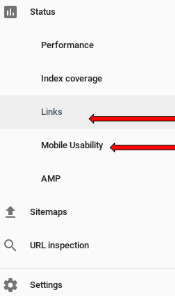
Links Report

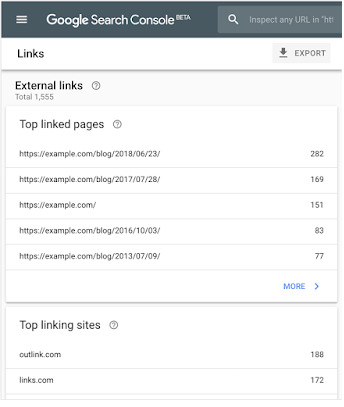
On the Links Report, you will be able to easily see both the inbound links to your site as well as the internal links between your pages as Google search sees them. This report will combine the insights that you used to see in the “Links to your Site” feature and the “Internal Links” that you saw on the old search console.

You will also be able to gain valuable insights from this new Google Search Console report such as:

  • Which sites link to your domain the most
  • Which specific pages on your domain receive the most links
  • The text that commonly points to your site

Example Links Report from new Google Search Console

Why does the Link Report matter?

Inbound and internal links play valuable roles in SEO.

Inbound links let Google gain a better idea of how other people view your site. Sites generally viewed as reputable and valuable will receive more inbound links than others. Quality inbound links, therefore, will give the Google algorithm a good idea of how people view your material.

Helpful links can also drive traffic to your site.

People link to your site because your content would give valuable information for their users. If those readers want more information, they will click on the link, therefore bringing more readers to your domain.

Internal links help both people and search spiders enhance their navigation of your site. They will keep people engaged by encouraging them to visit additional pages relevant to their topic of interest. They will better explore the depth your site offers and begin building that important relationship of trust.

Internal links will also help search engine spiders navigate the site. They will see clearly how the different pages connect together and get a better idea of the value and depth you offer. This can help improve your standings in the SERP. They will also help to ensure that no pages of your site are overlooked by the spiders, so everything gets indexed regularly and remains updated.

Mobile Usability report

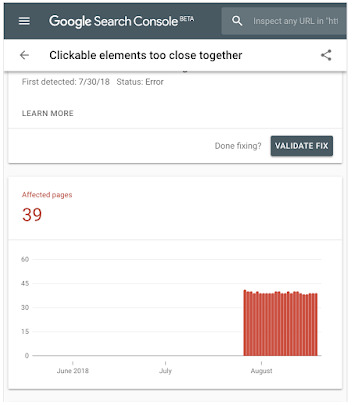
The Mobile Usability report on the new Google search console will contain issue names consistent with the ones that appeared in the old report. It will also have a new feature, however, allowing GSC users to submit a “validation and reindexing request.” If Google highlights an issue on the mobile usability of your site and you correct the problem, you can then use this request to let Google know the problem has been corrected. Given the importance of mobile in today’s search algorithm, correcting these issues as quickly as possible will be critical.

Example of mobile usability report on new Google Search Console - brightedge

Google has placed a large emphasis on mobile users in recent years. The search engine giant points to the high levels of smartphone saturation, including that in a number of countries, there are more smartphones than personal computers.

Given the number of people who currently use mobile devices to access the internet, brands need to have confidence that these readers can easily engage and interact with the website. Pages that do not conform to Google’s’ mobility-usage recommendations may use small fonts, force people to zoom in on the page, or otherwise not fit the screen, causing a poor user experience.

Why does the mobile usability report matter?

Google has placed a considerable amount of emphasis on usability for mobile users over the past few years. They used mobile compatibility as a ranking factor beginning over 3 years ago with the Mobilegeddon update in April 2015. Beginning at the start of 2018 they also began rolling out their mobile-first algorithm, which looked at the mobile version of a website first when determining the ranking of pages on the SERP.

This report within the new Google Search Console will provide important information for users so they can remain confident that their site does not contain mobility-usage errors. Failing to uncover and address such errors could easily result in a drop in rankings as well as a poor user experience for a number of potential visitors.

What does mobile usability mean?

Sites that rank highly in their mobile usability provide easy navigation for users on-the-go.

You want to think about the page-load speed, text, images, and other visual content you produce. Make sure it appears easily on mobile devices. Small font sizes or fancy designs that make it hard to read will both detract from the mobile user experience as will videos and images that do not display on mobile devices.

You also need to think about the buttons you use. People on mobile devices generally navigate using their fingers. Navigation features, such as your menu or arrows, should all have enough space in between them that mobile users can easily click where they intend.

Mobile friendliness also includes developing layouts and content that assists on-the-go visitors with finding the information they seek. Google, for example, has found that 94% of people on smartphones use them to find local information. Creating content that addresses these local intentions and anticipates what people want to see will produce higher engagement rates.

With the new Google Search Console, Google continues to work towards an improved user experience, and that includes giving site owners the tools they need to improve the usefulness of the content they produce. Through using these features, you will have greater insight into your site’s performance and what you can do to boost it with the help of the new Google Search Console and the BrightEdge SEO platform.

request a demo cta banner

Maximizing Your Site Migration with BrightEdge Content Optimizer

mkirchhoff
mkirchhoff
M Posted 8 years 7 months ago
t 9 min read

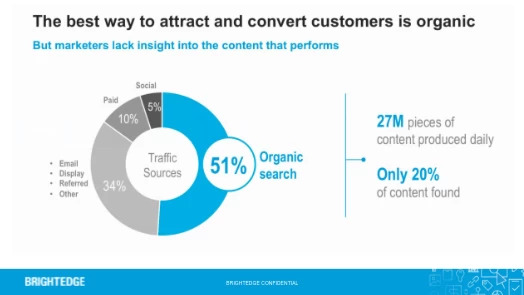
A site migration is the moving of a site from one domain or url structure to a new one. This migration might be a simple shift in domain name, or it could involve factors such as a new CMS or a complete restructuring of the website. Although a site migration is required in particular situations, it can be a perilous time. Mistakes can result in drops in rank and loss of traffic. This in turn can cause revenue losses as well as reduced brand reach and share of voice. Our research at BrightEdge has shown that an estimated 51 percent of a site’s traffic arrives from organic search-- so your position on the SERPs for important keywords will directly impact how your site succeeds overall. Consider also that 93 percent of online activities begin with search, and it is clear why brands need to take considered steps during a site migration.

Organic is key to attract and convert customers, so maximize the role of the site migration

Site migrations can be an important and necessary part of growing brands for a variety of reasons, such as merging one brand with another or changing the name of a company. When completed correctly, it can actually enormously benefit companies. Those interested in maximizing their opportunities throughout this process should pay particularly close attention to the BrightEdge product offering and how, especially BrightEdge Content Optimizer, can help ensure a productive and efficient site migration. Content Optimizer integrates with Adobe Experience Manager and helps makes the process of preparing site migration content for SEO straightforward and easy to follow.

At Best Western we really use content optimizer with our individual property websites.  Each of these websites features an About Us section and a Latest News section. It’s really these sections in which we use learnings and the scoring models of content optimizer to ensure that we’re delivering very effective content. - Felipe Carreras, Best Western

Considerations to keep in mind during a successful site migration

Brands that are interested in doing a site migration need to keep a few key aspects in mind throughout the process to minimize the potential errors while also ensuring that they harness the potential benefits of the move.

Check the redirects

You should verify that your new page and your old page are connected through 301 redirects. These redirects are designed for permanent moves. They let the search engines know which site is the one you want ranked and they help you preserve most of your rank and ‘link juice’. Ideally, your pages should be connected in a 1:1 ratio. You do not want to have multiple pages from your old site linking to a single page on the new one.

Verify your pages’ keywords and website optimization

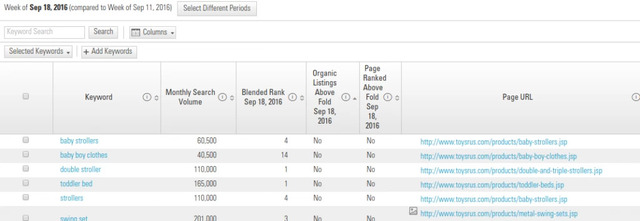
Optimize new pages for the same keywords and concepts as the old pages. Failure to do so can result in a loss of traffic and therefore revenue and reach. The BrightEdge Keyword Reporting and Page Reporting capabilities can help you identify keywords and success rates of the various pages. This will provide guidance as you begin to build the pages of your new site as well as giving critical benchmarks for ranking performance before and after the site migration.

Uncover which pages rank for which keywords to prepare for a site migration - brightedge

Ensure that you know the statistics of your old site and your expectations of the new one

Before you begin any site migration, you should know exactly what your brand hopes to accomplish during the move. This will help you establish the importance of the process and where your focus will lie.

You also want to know the statistics of your old site, such as the traffic to make sure that your new domain and servers can handle what you expect the new site will bring. You do not want to go through a site migration more than absolutely necessary, so verify that your new site can handle your expected growth and development.

Use the opportunity to build optimization efforts

When you migrate a website, you open up the code, re-create the content, and rewrite features such as HTML titles, meta descriptions, and alt text. Take the opportunity to boost your website optimization efforts. Neglecting to take care of content optimization promptly, before the site goes live, can have a serious impact on the overall rankings and power of the site.

Google’s crawl rate for your website is based on the content velocity, among other factors. Therefore, having to make adjustments after the site has gone live is detrimental to your content’s ranking positions in the SERPS and to achieving your business goals. Preparing for high rankings from its initial launch will prevent companies from missing valuable days, or even weeks, after the transfer when the site is not SEO optimized. Instead of trying to recover rankings after the launch, the site will start as strong as possible.

Completing optimization as a separate step will also waste additional valuable time. Members of the IT and marketing teams would have to go back through the site to make sure everything is optimized, forcing them to redo many of their past processes. Completing the website optimization steps during the site migration avoids wasting this time and ensures that the site ranks as highly as possible from the moment it goes live.

Using BrightEdge Content Optimizer to maximize your site migration

Working with BrightEdge Content Optimizer will allow your brand to build a site that is ready for the competitive digital ecosystem. Your material will send the right signals to the search engines and readers to demonstrate its value, helping you to attract a greater audience and a larger portion of the share of voice within your industry.

A huge benefit BrightEdge Content Optimizer brings to the SEO team is scalability. By providing SEO governance, and then embedding step-by-step instructions into the workflow, the tool allows those responsible for migrating existing or creating new content to progress easily.

Additionally, Content Optimizer was developed to simplify and streamline the content creation workflow process. To accomplish that task, a number of BrightEdge’s core technologies, such as keyword research, keyword management, and competitive analysis technologies have been incorporated directly into the Content Optimizer widget. This allows content teams to create data-driven content without ever leaving the CMS.

Step 1: Map the keywords for which your existing site already ranks

BrightEdge Content Optimizer empowers site owners to prepare each of their pages to rank on the SERPs by walking them through the process step-by-step. To maximize the potential that the website optimization guidelines provide, brands must first input a list of primary keywords for which they want their site to rank.

Brands should begin the site migration by determining the primary keywords that attract attention to their current site. This list, called the “Managed Keyword List,” is a repository of up to 100,000 keyword targets that the business has deems high value. The Managed Keyword List supports all languages and characters, providing localization optimization opportunities for those businesses with geo-located content.

The Managed Keyword List in the Content Optimizer will guide the content team to properly build the pages of the new site. Within this first step to optimizing content, creators begin by selecting one primary keyword for each new page.

Remember that as you build a new site, it is considered ideal to have a 1:1 correlation with the old site. Thus, create pages that line up with your old domain architecture and select the same primary keyword for both.

Step 2: Use BrightEdge Content Optimizer and Data Cube to find secondary keywords

In addition to identifying the primary keyword for each page, you also want to add secondary keywords to show the depth and relevance of your material. This helps to build a topical theme for the content, which provides improved natural linguistics in your content and expands the ranking power simultaneously. Including secondary keywords, particularly those that are semantically related, helps to demonstrate to search engines and users that your material has the answers that the users seek.

Without semantically-related keywords, your material may appear thin and thus will not attract the attention you want to see. A site migration, since you are rewriting your content, is the perfect opportunity to make sure that your content has the depth and keywords needed to help it stand out in the search results.

BrightEdge Content Optimizer and Data Cube functions within the platform make it easy to find secondary keywords. Content Optimizer will suggest related keywords based upon the keywords included in the list for the site. If you have other ideas in mind, you can also search using the Data Cube function to gauge value.

Step 3: Make sure your pages are fully optimized

Content Optimizer will make it easy for you to check how optimized you are for various pages. Content Optimizer provides an intuitive step-by-step instruction format to help guide content teams and SEOs on how to improve each on-page element. Specific instructions and detailed information is provided directly within the workflow, streamlining the content creation process.  

The platform also tracks your website optimization progress through gamification and point accumulation, so you can help keep your team members focused on their tasks and quickly check progress.

As you build your new pages with your site migration, you will already be working with page titles, descriptions, URLs, and related elements. Using this BrightEdge function, you can be confident that you are not overlooking any aspect before you launch your website.

Step 4: Compare your pages’ elements to your competitors

It is important to remember in SEO that not only are you working to boost the rankings of your own site, but you are also fighting to overcome your competitors. You can only rank higher by forcing other brands to drop in rank. The competitive insights offered by the Content Optimizer are therefore invaluable. Using this BrightEdge product, you will be able to see how competitors have optimized their sites for the same keywords.

For example, as you develop your own page title, you can look at the page titles utilizing the same keywords on the sites of your main competitors. This will help you maximize your appearance. You can use the competitors panel to see URLs, other SEO elements, and relevant social data for your primary topics for others in your industry. This can help guide your strategy and can offer insights into competitor weaknesses that you can exploit to raise the ranking of your own content.

During a site migration, it is also important to remember the value of comparing your old site to your new site. You want to make sure your new site is ranking for the same terms as your old one. Thus, you can even add your old site as a competitor. As you optimize the new site, you can compare your optimization on your old site to make sure that you are improving your SEO efforts on the new page.

Step 5: Build internal links between related pages

BrightEdge Content Optimizer will also offer you insight into pages you create that might be related to other pages on your domain. For example, if you are running an ecommerce site and you are building a page for a red women’s puffer jacket and optimizing it for ‘women’s puffer jacket’, then the system will suggest that this page might be related to another page on your site- the page you built for green women’s puffer jackets. Creating these types of internal links can help build your authority on your topic.

It will also make it easier for you to encourage people to remain engaged with your content. If they are interested in puffer jackets, for example, they can move from page to page exploring different colors and options. Your brand will provide a positive user experience and do a better job of building the consumer-brand relationship. Creating these links for existing content can sometimes feel tedious, so building them during a site migration is the optimal opportunity to ensure that the site is fully optimized.

Step 6: Monitor progress to see how well pages performing

The moment when a site goes live can be a nerve-wracking one, but fortunately, BrightEdge Content Optimizer has built-in metrics to help ensure that the entire process goes smoothly. You can monitor the success of the pages that you have optimized through this process to ensure that your post-migration SEO is ready to compete in the SERPs. You can see how well your pages rank, attract traffic, and drive revenue while comparing those numbers to your original site. This will give you confidence that the site migration has gone smoothly while also alerting you to any potential problems to fix as quickly as possible.

[L]everaging the BrightEdge platform as well as Adobe experience manager we were able to create over 16,000 pages of unique content.  2,056 individual property websites with well over 16,000 pages of content. We rolled this out in three months again with just a team of five individuals.  We really couldn’t have done that without the scalable nature and the seamless integration between content optimizer and the Adobe experience manager platforms. - Felipe, Best Western

A site migration can be a stressful time for any brand and website owner. While there are often huge opportunities to improve your website experience and traffic, a site migration is as much about risk mitigation as it is about opportunities. Mistakes loom, threatening to be the downfall of a successful website, while the group must move forward to receive the benefits of the move. Rather than becoming paralyzed with the anxiety of something going wrong, site owners should instead have platforms and instruments in place to help them make the transition as smoothly as possible. The BrightEdge platform, can play an enormous role in maintaining strong SEO during the process.

request a demo

Link Building Best Practices: Re-Learn Them

enewton@brightedge.com
M Posted 8 years 11 months ago
t 9 min read

Google released an official blog post reminding marketers about link building best practices. This is what all site owners should know about this latest warning.

Whenever Google releases a blog post that warns marketers about particular SEO behavior, it is always in our best interest to sit up and pay attention. This is precisely what happened when Google put out a new blog post last week about a practice that they have tackled several times already: link building.

They appear to be once again preparing to target websites that participate in poor link building strategies. Often, when we receive these reminders, Google then goes on to penalize the websites that do not follow these recommendations within a few months.

What can be challenging about building links is that even quality websites and marketers can find themselves accidentally running afoul of Google’s suggestions and regulations, even if they believed they were following the ‘rules’. We want to make sure that everyone in our community remains aware of what Google wants to see and potential practices that could get them into trouble if the search engine decides to take action in the next few months. Google issues warning about proper link building strategies - brightedge

What link building guidelines does Google want us to pay attention to?

Google wrote their post to target spammy link building practices, particularly through content distribution strategies such as contributor posts, guest posts, and content syndication. Although these processes can be excellent ways to build brand reach, recognition, and hopefully cultivate SEO backlinking, Google has noticed lately that there has been an increase in the number of sites who engage in these practices poorly, thus hurting the experience for the end user.

The search engine has listed the following four criteria that set off red flags for them when determining spammy link building processes:

  1. Stuffing keyword-rich links to your site in your articles
  2. Having the articles published across many different sites; alternatively, having a large number of articles on a few large, different sites
  3. Using or hiring article writers that aren’t knowledgeable about the topics they’re writing on
  4. Using the same or similar content across these articles; alternatively, duplicating the full content of articles found on your own site (in which case use of rel=”canonical”, in addition to rel=”nofollow”, is advised)

It is important to note that Google has said that these practices will not only harm the site engaging in building backlinks, but it can also damage the reputation and rankings of the sites publishing the content. The search engine believes that when the link becomes the primary focus for the content, then the quality and value of the content will go down, which then harms the experience for the end user.

As we have said in the past, the best SEO practices are the ones that align your website and your strategy with Google’s end-goal of serving the customer. Anything that hinders your ability to do so will not be looked upon fondly by Google, regardless of whether or not it technically falls within the rules.

Consider how Google sums up the practice of building links through content distribution:

"...if a link is a form of endorsement, and you’re the one creating most of the endorsements for your own site, is this putting forth the best impression of your site? Our best advice in relation to link building is to focus on improving your site’s content and everything--including links--will follow (no pun intended)."

Since publishers also risk their own reputations by publishing poor quality material, they are encouraged to report as spam aggressive ‘post my article” requests. Sites that might make these requests should then consider the harm they might do to their own reputation.

Does this mean link building is dead?

No, we do not think link building is dead. Nor do we think that brands cannot publish content elsewhere or create guest posts. The key, however, is to make sure that these practices are completed correctly and with the end user in mind.

As you prepare to develop content, the primary priority should always be providing value for the user. Align the content well with user needs, including putting keyword research to work to watch for trends and reader interests. Develop content that offers insight for the user.

f you do want to syndicate content, you should be particularly careful to use the rel=”canonical” and the rel=”nofollow” tags. We know that many people have gotten lax over these tags at times. Given Google’s warning in their blog post, however, it is reasonable to expect action from the search engine regarding spammy link building practices and content distribution soon. During this time, all marketers should be particularly careful to ensure full compliance with all best practices promoted by the search engine giant.

We also want to remind our community members who might publish content from outside writers that they want to be very careful about the authors and content they accept. Make sure that the author does not engage in questionable practices and that the content offers something for the audience. Review the content for links to make sure they do not monopolize ‘ranking’ keywords. Lean towards only publishing unique content on your site. If you do publish content that lives elsewhere on the web, again, follow Google’s tagging recommendations.

Google works towards an online experience that offers the best possible situation for the end user. These warnings that they publish intend to push website owners towards creating the optimal content that serves the reader before it serves the brand itself. This includes watching link building practices to keep people from trying to trick the system. We believe that our community of white hat SEO professionals already follows best practices that serve the user, but it never hurts to be mindful of Google’s latest reminders and recommendations.

For more on our recommendations on White Hat Link Building Best Practices, download our paper here.

Fred: Latest Algo Update and What You Need to Know to Succeed

enewton@brightedge.com
M Posted 9 years 2 months ago
t 9 min read

Google makes hundreds of adjustments to the algorithm every year. There is a possibility that this was not an original update as much as it was a ‘turning up’ of signals that already existed in an effort to improve the user experience online.

Some updates made a big enough splash to be named by Google or the community, but Google now discourages thinking of them as discrete or separate things. They would prefer to focus on the quality, relevance, user experience, and site performance. But when asked, Gary Illyes of Google conceded we could just call it and other updates Fred, which is to say we should not call it anything, so I will only refer to it that way twice more in this post.

Beginning on March 8, 2017, the industry began to recognize signs of another update from Google. As the Google Fred update finished rolling out, it impacted a narrow number of sites significantly with some reporting traffic drops of as much as 50 to 90 percent. Although this update remains unconfirmed by Google, Gary Illyes suggested that it, and all updates-- unless otherwise stated-- should be named ‘Fred' during a twitter exchange with some SEO leaders, and the name has stuck.

Gary Illyes names the google Fred update on Twitter - brightedge

Here is what you need to know about the Google Fred update and its impact on SEO and search.

What did the Google Fred update target? Probably excessive ads, thin content, and poor quality links as usual, right?

Since Google has not officially released anything regarding the Google Fred update, SEO professionals have had to try to identify the likely causes of the ranking changes based on observation. SEOs generally agree that the most significant focus appears to be content quality and ads.

According to Barry Schwartz,

"After reviewing well over 70 sites that were hit by the Google Fred update, 95% of them share two things in common. The sites all seem content driven, either blog formats or other content-like sites, and they all are pretty heavy on their ad placement. In fact, if I dare say, it looks like many (not all but many) of them were created with the sole purpose of generating AdSense or other ad income without necessarily benefiting the user." 

In other words, Barry believes that the Google Fred update went after sites more focused on generating immediate revenue for the site, such as through ads and affiliate links, than providing real content value for the end user. They were often filled with content, but the material might cover a wide range of topics and often the content did not add much more value than what was already posted on countless other sites.  The content published on the site instead revolved around promoting revenue building opportunities for the site.

There has also been conversation around the link profiles of the sites that saw the largest penalties. Some believe that the Google Fred update prioritized lowering the rankings of sites that had numerous links from poor quality pages. Google has not done much to acknowledge the update; they have said as they usually do that they are continually updating. There is a possibility that this was not an original update as much as it was a ‘turning up’ of signals that already existed in an effort to improve the user experience online.

The BrightEdge community is made up of 1,500+ of the most known and reputable brands in the world, so none reported any impact from the Google Fred update. Our community is full of serious SEOs using white hat techniques. The era of the black hat is finished. That is the beauty of using a philosophy, workflow, and platform centered around quality, relevant content, positive user experience, and proper site architecture and performance-- the BrightEdge community is nearly immune from algorithm updates and penalties.

What should I do if I was hit by the Google Fred update?

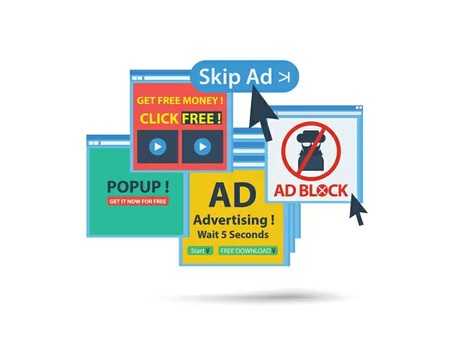
If your traffic and rankings drop off after the roll out of an update, look closely at your website. See how closely you align to the pattern of sites that received the biggest penalties. If your site promotes advertisements, consider removing them. Similarly, review your link profile. Look for any spam-y or other low quality sites that have linked to your page. Use the disavow tool and file to let Google know that you do not want to associate your site with that page.

Salgorithm penalty cartoon - what to do if you're hit by a google fred update penalty - brightedgeince Google has told us so little about the Google Fred update, we do not really have a strong timeline on how long it would take your site to recover from this penalty, even after you have taken the right steps. We encourage you to correct any problems right away, however, to ensure that your site is ready to recover any lost rankings and traffic as soon as possible. Proper SEO should usually start to show results within a few weeks.

Remember as you develop content in the future that the primary priority needs to be on the needs of the user. Creating material for a website is not about writing content that you appreciate or that helps you generate traffic or ad revenue, it is about meeting the needs of the customers and helping them find the information and insights they need. Select topics where your expertise will be appreciated by your audience and produce content that offers them a unique perspective.

Although links can offer some value for your website, artificially building links can create major challenges for you. Past Google penalties have targeted sites with suspect link profiles, and discussion surrounds the role of the Google Fred update in further demoting the rankings of these pages. Optimal link building grows organically and only through reputable websites.

Asking other well-regarded sites that mention your brand or research to link back to your site is fine, paying for any type of link or engaging in reciprocal linking schemes-- where you and another site link back and forth to each other-- potentially sets you up for considerable losses. Fortunately, when you produce high-quality content and promote that content on social media, email, and your website, you build yourself a strong base to naturally encourage links.

How can BrightEdge help brands with the Google Fred update or any update penalty?

At BrightEdge, our platform design helps customers move confidently throughout the SEO field and navigate their brands to success. We recommend regularly tracking all your pages so that you can see any potential changes in page rankings as well as your Data Cube Score. These changes will all provide you with immediate clues about benefiting from, or being penalized by, an update.

Through keyword tracking, you can then dig further to see which keywords have lost or gained positions. Then through the Data Cube, you can see how your competitors have weathered the changes.

We also recommend that you use the BrightEdge backlinks function to watch your link profile. If you see suspicious or spam-y sites pop up, do not be afraid to use the Google Disavow tool to let the search engine giant know that you do not want your site associated with that link. Our backlink profiling function will also provide you with constructive ideas to build authentic links to your pages.

ContentIQ lets you adjust your crawl settings to comply with your organization’s digital standards, including content governance, web accessibility standards, and website architecture. You can isolate your crawl to focus on just a few pages or to complete a full audit of your entire website.

And since ContentIQ is available within the BrightEdge SEO platform, you maximize efficiency by identifying, fixing, and monitoring site errors within a single workflow. This means that you can use BrightEdge platform features in conjunction with your ContentIQ site audit data. For example, use StoryBuilder to build engaging dashboards and charts that demonstrate the impact of recent site revisions.

Finally, the Data Cube provides multiple tools for learning about the topics that your customers want to read. You can use the Data Cube to look at keyword phrases, traffic, and competition levels. Use the same feature to dive into competitor sites to see what they rank for that you do not.

You can also monitor trends in the industry and uncover new topic ideas just as they become popular with your audience. Use these genuine content-idea generating features so that you can confidently produce content that your audience wants to read. Then, take the topics deeper so that the material provides immediate value for the reader.

10 SEO Link Building Ideas You Can Do In a Day

Mark Mitchell
Mark Mitchell
M Posted 10 years 1 month ago
t 9 min read

SEO link building often appears to be a complex and time consuming process. But it’s not always as hard as it seems. In case you missed it, we are republishing this great piece featuring 10 simple SEO link building tactics that you can implement in a day.

A healthy backlink profile is key to your website’s overall search performance. Google and other search engines consider both the quantity and quality of your site’s backlinks in assessing its importance, credibility and authority. This, in turn, influences your site’s search ranking. So building and then using SEO backlinks effectively is crucial for SEO success.

Most SEO link building strategies for building up your site’s backlink profile tend to be either highly resource-intensive or complicated, if not both. With that in mind, we’ll outline 10 simple SEO link building ideas to build your backlink profile and thereby boost your site’s search performance and SEO management efforts.

With any of the tactics in this post, you’ll want to create a process for evaluating the sites you are thinking of obtaining SEO backlinks from. You also want to take care with the anchor text that you are requesting or using in your SEO link building – too much exact match anchor text can look spammy.

Leverage existing networks

There are a few ways you can leverage your existing network of online related businesses for links:

  • For those businesses with which you already have a strong relationship, consider simply asking them for a link.
  • For any businesses you’ve worked with, offer to write a testimonial in return for a link back to your site within the testimonial.
  • For firms that you do a lot of business with, either as a partner or supplier, ask to be listed on their preferred partners or suppliers page (assuming they have one).

Engage with social media

Leverage social media platforms such as Twitter, LinkedIn, Facebook, Instagram and Snapchat to:

  • Tell your company’s story
  • Highlight your products and services
  • Engage with followers
  • Share career opportunities
  • Drive word-of-mouth at scale
  • And, get a backlink to your site

Network through professional associations 

If you’re a member of a business organization or professional industry association, it is likely its website carries authority and credibility. If there is a list of members, check yours to see that it has a link back to your site. 

Also, if it has a feature such as an “in the spotlight” listing, consider asking to have your business showcased. This would serve to increase the value of your backlink, as well as your brand visibility. 

Remember, it’s important that you build links naturally and with integrity, or you could face penalties from Google (like those from the Penguin algorithm).

Optimize images for SEO link building

If you use a lot of your own copyrighted images on your website, chances are that other sites may have used them without your consent. This may be more or less of a concern to you, depending on your vertical.

Instead of sending notices of intent to prosecute the offending parties, why not ask for attribution in the way of a backlink instead?

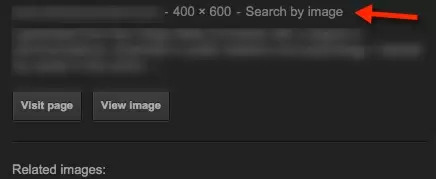
To ascertain whether any of your images are being used on another website, go to Google Images and do a site search (for example, Site:yoursiteURL.com). Click each image, then click, “search by image.” This will show if your image has been used on another site.

SEO Link Building Ideas - brightedge

Start by reviewing the sites that have used your images without your consent, and contact those which appear to be reputable - the sites you want to be associated with. If you can find the contact information for the site’s webmaster, send them a note politely asking for an attribution link in exchange for them continuing to use your image.

If you don’t have many unique images for your site, it’s a good practice to take some high-quality shots. Be sure the images are relevant to your content and optimized for SEO

Create case studies

Another solid SEO link building tactic is asking clients to feature a solid case study on one (or more) of the products and/or services your business offers. Find out what has been most successful and made a genuine impact on their bottom line. Structure your case study with these three steps:

  1. Present the challenges or background
  2. Discuss the solution
  3. Show the results

Have the client feature the case study on their website and use a branded link back to your site and the Web page of your choosing.

Flaunt your logo

Most businesses have a logo that has been professionally designed. Why not showcase yours? People are interested in logos, whether they be prospective business owners, designers or just pure logo geeks. This means there are a lot of popular websites showcasing different logos with high domain authority

Backlink Building and new SEO link building ideas - brightedge

Here is a list of logo gallery sites to investigate featuring your logo on:

  • The Logo Mix
  • Logo From Dreams
  • Logo Design
  • LogoMoose
  • Logo Faves
  • Logo Critiques

You can find more logo sites for your specific needs by searching for terms such as “submit my logo,” “logo showcase” and “logo designs.” An important point to remember is to check the sites are of good quality before you submit your own logo to them (one way to do a spot check is to look at PageRank and Alexa scores).

Upload your presentations to SlideShare

As the largest network on the Web for sharing presentations, SlideShare offers a number of online marketing benefits. For SEO link building purposes, there are just a few easy steps:

  • When creating your presentation, be sure to add a hyperlink URL to it (for example, http://www.yoursite.com)
  • Save your presentation as a PDF, then upload it to SlideShare
  • Test if your link is working by running this query in search: site:example.com inurl:/slideshare/

Note: The presence of this link may be worth less than the actual traffic and branding potential that SlideShare could offer as part of a wider strategy.

Award a scholarship

Consider offering a scholarship to students enrolled in a program related to your business:

  • Designate a page on your site explaining the scholarship offer, as well as terms and conditions.
  • Notify the relevant accredited, reputable universities and colleges about your scholarship offer, and ask them to link back to your page for more information.

The .edu links typically carry high authority, but you’ll have to do your own analysis of each website, as not every .edu is authoritative. Case in point: in our latest research on the impact of Panda 4.1, some .edu sites did well, while others did not.

Further information on link building

Backlink building is important, but don't forget about internal links. Internal linking boosts your SEO results and also helps users discover more content on your site.

As your backlink profile grows bigger it is increasingly hard to keep track of all the SEO backlinks. Read our full guide to backlinking for more information on how to easily manage your site links.

Better assess your backlink profile with link audits or read our comprehensive guide to white hat backlink building.

request a demo

Marketer Spotlight: Mark Fiske, Ancestry.com

enewton@brightedge.com
M Posted 11 years 1 month ago
t 9 min read

Marketer Profile: Mark Fiske is the Vice President of Channel Marketing at Ancestry, a recent BrightEdge customer, a Silicon Valley Search Engine Roundtable founding member and a graduate of Michigan State. Mark has been involved in digital media and search marketing for roughly the last ten years.

I met with Mark Fiske recently to discuss SEO, content, and marketing. He manages a substantial paid budget and a team that handles acquisition marketing across many different channels, including paid and natural search.

Erik: So what do you think is the biggest change in search?

Mark: I think most SEOs will say the move towards secure and the keyword ‘not provided’ data that one can use to optimize search efforts. Now understanding user behavior is more of an art than a science.

Erik: What's the opportunity in the changes if you know what you're doing?

Mark: With paid search I like to say, “You’re only as good as your four dumbest competitors.” Anybody can bid or pay up to skew the marketplace, so being a good marketer often means making the decision to sacrifice volume. That said, you face your best competitors when it comes to organic. As a result, there is often much more opportunity in being advanced in SEO.

You need every little edge that you can get in SEO, every 2% here and 3% there, to actually effect the change you need to get that position. And if you can actually understand and optimize against what's really working for you, you have a way to overcome those obstacles. Data can be material for your program when you think about where you might be applying manual effort of X today versus where you could be with that extra little bit of data to inform that same effort.

Erik: How easy or difficult is it for you to find SEO talent in the market right now?

Mark: It is incredibly difficult. There is a large amount of SEO talent that I've come across who are the very short-term oriented SEOs where they are really good at gaming a system, but they don't necessarily think about creating long-term value. That has been a big challenge. I think on the flip side, a lot of the individuals who have the right mindset about long-term value sometimes don't necessarily have that perfect mix of product, marketing and development background to enable them to effect change to the key components of SEO and infrastructure needed at enterprise organizations.

Erik: Why do you think there aren't more SEOs in the talent pool?

Mark: I'll say it...I've said it a million times, unfortunately SEO is not particularly sexy. In paid search, it’s a dollar in and you can have your dollar out the next day. SEO requires an individual who has a long-term mentality, who can focus on initiatives with a lot of dependencies, product development, and is patient and willing to take a data-driven mindset and kind of wait it out to see what the results of something are and then implement them more broadly. It is a unique person; when you look at the other roles that someone graduating today could go into, you don't see SEOs on the TV show Silicon Valley, right? You do see other types of marketers and functions. I think there is a perception challenge preventing interest in the space to start.

Erik: Has the move to universal search with the carousel at the top, videos, more pictures on top of the results page influenced any of your organic content strategies?

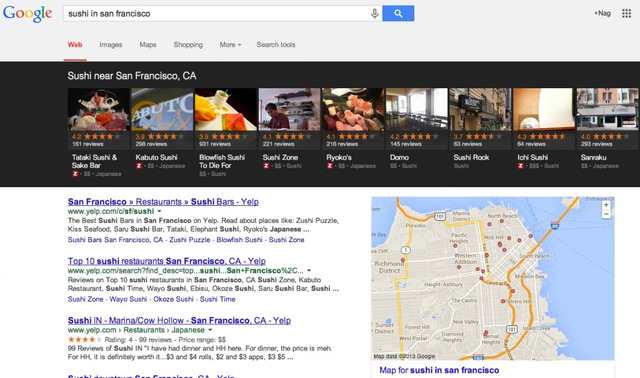
Mark: We haven't necessarily seen it in our category specifically because the types of queries that individuals might search for in our category are not as topical as the things that tend to trigger the carousel. As a result, we haven't really focused on taking advantage of that specific feature. I've definitely seen it in a lot of other areas like travel with Google's price comparison tools - hotels and things like that. We've been fortunate, but I also think we also need to be very wary because if you look at Google's drive to provide people information at their fingertips and what Google has done in other verticals, such as product shopping or search, there’s a real risk that Google could expand and disintermediate in new categories.

Google Carousel Results

Erik: What kind of an opportunity is there in content? Has that opportunity evolved over the last five years?

Mark: I think a lot of traditional SEOs used to think of content as this is my or your link page or this is what I'm going to use to rank for a specific key word. Today content is more about fostering a relationship with your customer and educating as much as it is about capturing that customer initially.

Erik: So we talked a little bit about HTTPS. What are you doing with having a secure site as part of ‘not provided’?

Mark: There are two layers to that. One is how do you get the data that you need to better optimize your search programs. And the second layer of that is the ranking consideration - Google has fired a shot across the bow, so plan to move to HTTPS. They said this is not a large ranking factor night now, but we expect it will be at some point.

As far as using data to optimize in a world where HTTPS is obscuring a lot more, I think it has underscored the importance of us having really tight keyword and page mappings and understanding what that really means to us.

We look at ranking changes and understand what that means to page-level traffic against a specific key word and monitor page-level traffic with much more regularity and care. You still lose a lot of really meaningful information around keyword clustering and things like that. And those are things we've yet to really crack really as an organization.

Erik: What strategies in regard to external link building and development are you willing to share?

Mark: I still do think the good old fashioned elbow grease approach is incredibly important. If you're doing something and it works instantly, I’d be suspicious. If you're actually taking really great content and forming one-to-one direct relationships with advocates in your space and inspiring them to want to share that content, you're going to have a lot more long-term success. A lot of our effort is spent identifying these valuable influencers and targeted keywords. Not hundreds of thousands at a time but much smaller select groups and then having those discussions in a way that we can inspire and motivate them to share our content.

Erik: Have you ever had an experience with somebody using negative SEO against you, any black hat, any stuff that you needed to disavow?

Mark: Yeah, I think we see a lot of content duplication, content theft, things like that. Not necessarily black-hat SEO. It’s hard to say what the intentions of those individuals were, but there have definitely been situations where we had to disavow the links from stolen content, then file reports to Google to ensure that our unique content can remain our unique content.

Erik: So you don't think anybody's given you bad links to get you a Penguin penalty?

Mark: We haven't seen anything. We monitor webmaster tools and look at our link profile and consistently report on them. I've certainly heard things from other organizations that it is a challenge, particularly in more competitive niches. Fortunately in our space, everyone is very motivated to build the category as a whole and there is less influence from the dark side of the SEO space.

Erik: What are you doing in re-targeting? What's been effective for you?

Mark: Our retargeting playbook is actually pretty straightforward in that it's all about taking what you know about the user, serving them personalized content to the extent you're allowed to, legally and without being creepy, and then really focusing on recency of message and target frequency. What has been impactful is figuring out what is actually meaningful to customers. What they have told you about themselves and then making sure that you reflect that in messaging and then getting that message out there as quickly as possible.

Have a bid strategy that focuses heavily on recency without necessarily throwing away the impressions that might be months out. So focus on your traditional DSP-based buys for the first 90 days, and then look at tools like custom audience lists and others to continue to capture that audience after their cookie might be stale or deleted. As display moves more and more towards the one-to-one world, you'll see media inflation against that type of audience buying. I think right now your high-value business targets are very inexpensive because businesses don't understand how to value that and how to buy those audiences at scale. But as more and more people hop on board I think the market place will kind of normalize and you'll see your 45-old year business executives getting valued a lot more highly then maybe his 16-year-old daughter.

Erik: Have you ever heard of anybody scraping names from social sites to build a list?

Mark: I've talked to a couple of B2B organizations that mentioned that as a tactic. What they'll do is they'll scrape names from social sites. They'll even scrape it directly via the Bing API and get massive lists and using third party tools. You can understand the email address format for a certain domain to generate lists of basically valid emails that they against target companies. And then run custom audience lists against those on Facebook or even use a targeter such as LiveRamp to deliver a very targeted display messaging program.

Erik: And did those people say they got good results from that?

Mark: They were bragging, so it definitely seemed like it was working for them. I think they were smart enough not to go and take that scraped data and use it to for underhanded activities such as unsolicited email. It seems it's been working well for them when used in a limited way for display targeting.

Erik: Have you tried content targeting with cookie matching or cookie pooling against the text and topical data.

Mark: In paid content marketing, I think the two largest paid content marketing providers are Outbrain and Taboola. They're usually at the bottom of articles on news sites such as Fox News and CNN, but they are also present on thousands if not hundreds of thousands of local newspapers and news syndication sites. And those are largely targeted based on the relevance of the content related to the article the user is viewing. If you're viewing in the lifestyle category, someone might see a "ten reasons why XYZ is the ultimate cleaner" or things along those lines.

Erik: How many tests or experiments do you run per year?

Mark: We perform hundreds of tests a year around content engagement and what behavior we see following consumption of that content. So for example, we might test what a piece of content posted to Facebook around Justin Bieber, which is not necessarily aligned with our demographic, versus a historical event, versus any number of different pieces and actually theming that out and then measuring the response rate - not just on a click basis, but what does that do to engagement and other ancillary metrics. And we have seen meaningful engagement differences between those types of content.

Erik: What's your testing tool?

Mark: We use Adobe Target primarily. We've also used Optimizely for maybe a lighter-touch, lower-impact test where we're willing to focus more on upfront metrics. We have a team dedicated to a robust testing practice.

Erik: Are the testers on the digital marketing team? What types of tests do you run?

Mark: Testing falls under product marketing team. This ensures our testing and optimization informs our product marketing strategy. But when you ask what types of tests we're doing I think many organizations go to where the ROI is greatest, and when you look at the bulk of our tests they still are in the sign up or conversion funnels. The types of test that have been impactful for me being on the paid side of the house are much more around ‘how do I get the conversion rate up from paid media enough so that I can afford to buy more media?’ An example is paid search, where a test can improve the amount you are able to bid, raising average position from five to one or two and driving exponential volume as a result.

Erik: What's the biggest test result you've generated this calendar year for a delta on the test?

Mark Fiske: I can't provide specifics, but we have been able to realize 20%+ gains from specific traffic sources, so it was a very meaningful impact to conversation rate. You kind of get used to finding 2% here, 4% there and then when you have a big one like that - it's great.

Erik: How much more important is content development and deployment than it was 2 years ago? Why?

Mark Fiske: I’d argue content development has always been important, but as others realize the importance, it becomes increasingly difficult to break through the clutter. As a result, the infographics commonplace two years ago might not necessarily cut it and a focus on meaningful rich content grows over time.

Erik: Which of the features on the BrightEdge platform do you think you will now be able to leverage?

Mark Fiske: We’re most excited for the more international search capabilities, allowing us to more easily optimize and manage across our portfolio of international sites. That said, we plan to utilize page reporting, dashboards and look forward to new functionalities such as Target integration.

How do I get a personalized BrightEdge demo for my website?


Link Audits: A Qualitative and Quantitative Approach

ssharma@brightedge.com
M Posted 11 years 7 months ago
t 9 min read

With Google’s next Penguin update potentially right around the corner, there’s no better time to perform a link audit on your site.

Link audits look at the volume and quality of links in your link profile to ensure it’s balanced, healthy (meaning your website is getting good value from the links) and won’t trigger any unwanted penalties by Google. It’s also important to be proactive with your link audit, meaning don’t wait until the next Penguin update hits.

If you haven’t done it in a while – or ever – it should be the first thing you do before investing in other activities like content creation (aka additional link building). After that, you should prepare to do a link audit every three months to stay on top of your link profile.

Approach a link audit in two ways: quantitative and qualitative, which looks at the number of backlinks to your site and the quality of those links.

While quantitative research usually highlights any unnatural recent growth in the total number of backlinks, qualitative often assess the entire health of the link portfolio.

A 4-step process for assessing link quality

Let’s look at four steps you can take to assess the quality of your backlink profile in a link audit. To pull data, you’ll use tools like Majestic and Google Webmaster Tools (GWT). (Remember, GWT and Majestic integrate with BrightEdge’s S3 platform, too.)

1. Look at link growth by month (quantitative)

Look at the link data by month. You can do this by exporting the data from the tools into an Excel spreadsheet. The following graph shows an example site; the sharp increase in link growth over two month’s time is alarming: discover how to assess a link audit - brightedge The next step of this type of analysis is asking, “Why?” Oftentimes, you won’t find an immediate answer to the unnatural link growth you’re seeing.
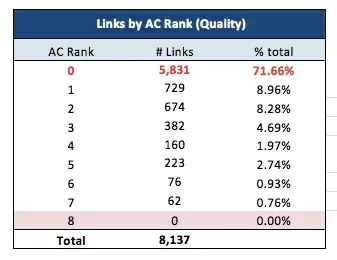
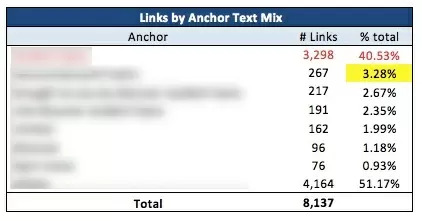
If you work in an enterprise-level company, the answer may be even harder to uncover when multiple teams have a hand in the website. Oftentimes, it can be the result of some marketing activity that wasn’t pre-approved or assessed by the company’s SEO team. Perhaps someone paid for links or had sponsored content go live on a large number of publishers.

Whatever the cause, it’s your job as a link auditor to uncover it, and assess if it truly is something of concern.

2. Look at the link's AC rank (qualitative)

“AC Rank” aka “a citation rank” is an important performance indicator in Majestic’s reporting that checks the quality of backlinks. Therefore, AC Rank is a simple measure of how important a particular Web page is. AC Rank assigns a number from 0 (lowest) to 15 (highest), depending on the number of unique referring external root domains.

In other words, it assesses how many backlinks the website has that’s linking to your site. In order for a page to have an AC Rank of 1 or higher, it needs to have at least one external backlink. You can download a report that shows AC Rank in Majestic. In the following example, you can see the majority of the site’s backlinks come from other sites with an AC Rank of 0. working on link audits for better seo - brightedge

While there isn’t a strict guideline on what percentage of a site’s backlink profile should contain links with an AC Rank of any number, you may want to look at your competitors to gauge a benchmark. And then consider building links with a higher AC Rank. There’s a manual review process involved here as well.

Once you identify the low AC Rank sites, you’ll want to visit at least some of the links and do a quality check to see if the site looks OK, or if it is of concern. Are there too many ads? Too many links pointing out? Create a checklist of how you might assess the quality of the site.

3. Conduct anchor text analysis (qualitative)

Anchor text is the word or words used in the link (the clickable text in a hyperlink). Anchor text helps search engines understand what the page is about that they are going to visit. The search engines used to view anchor text as a strong signal in ranking websites. Because of this, spammers attempted to manipulate search engine rankings by creating a large volume of unnatural links that contained a specific keyword pointing to a site. When the Google Penguin update first hit in April 2012, it essentially put the kibosh on those spammer activities. With Penguin, Google reduced the amount of weight that the anchor text has, and even penalized some sites that had too many anchor text links with the same keyword pointing to them. Let’s quickly go over the different types of anchor text.

  • Exact match anchor text: The keywords in the link are the exact keyword you are trying to generate more visibility for in the search engines.
  • Partial match anchor text: The links include the keyword you are trying to generate more visibility for, in addition to other words.
  • Zero match (or generic) anchor text: Links that don’t include any mention of the keyword you are trying to generate more visibility for. Example: “click here.”
  • Branded anchor text: Links with the brand name or URL of a website in them.
  • All variations of naked URLs: Such as www.example.com, example.com and http://www.example.com.

There isn’t any rule on the percentage mix for having different types of anchor text pointing to your site. But stay away from emphasizing only one or two types of anchor text. A healthy anchor text profile should be a mixture of all of the above. As a general rule of thumb, branded (including branded naked URLs) should make up four out of your top five anchor texts. In the following image, you can see there were too many exact match anchor text for this sample site (keywords blurred out to protect the brand): increase seo efforts with a link audit - brightedge

4. Perform a backlinks analysis by IP address

Too many backlinks from the same IP address will not give any value to the site. And, too many backlinks from different domains but the same IP address (when brands own multiple websites, for example) could hint at a possible link scheme network of sites, which is classified as a bad SEO practice by Google.

For more on what Google thinks is a link scheme, see its documentation here. In this step, you’ll want to document all the links coming from a single IP address, and assess whether or not the mix of links is quality. You can do so with Majestic’s reporting. The result of all the steps in this four-step process will show you which domains are “bad” domains to have links from, and then you’ll decide how to handle them next.

How to handle bad links?

You now have a good picture of the volume and quality of your backlink profile – now what? Sometimes this next step in the process can be long and methodical, since you have no control over who links to your site. But, there are a few ways you can go about cleaning up those links you want to get rid of.

  1. Contact the webmaster of the site that’s linking to you. Put together a template that you will use for every site’s webmaster, and ask that the link either be taken down or nofollowed, depending on the severity. You’ll want to try this several times.
  2. Hire an agency to clean up your links. There are agencies that specialize in link audits and pruning your site’s backlinks for you. This saves you time and resources.
  3. Use Google’s disavow tool. Google gives webmasters a tool to use as a last resort to disavow links pointing to their sites. Google was very specific about how and when to use this tool, and you can read the guidelines here.

Here’s a video by Google’s Matt Cutts explaining how the disavow tool works: I hope this link audit process helps you keep your site healthy and your links working to your advantage. Remember, a link audit can be a time-intensive process, but it’s worth the effort being proactive rather than waiting to deal with a penalty that will catapult you into the same process anyway.  

,