

BE305: Organizational Design: Building Digital Centers of Excellence - Mauricio Moreno

Centers of Excellence


    Mauricio Moreno
    Director of SEO
    Revana Digital


Mauricio Moreno, the Director of SEO at Revana Digital, spoke about how to build “Centers of Excellence” and how they are integral to SEO success. Brands need to focus on three stages: pre-content generation, content generation, and analysis. This means identifying the audience and doing the research needed to know what they want to see, creating content that answers those needs, and then watching for good results during analysis.

Share17 Banner

6 Ways to Figure Your Year-End B2B Budget Strategy

A BrightEdger
A BrightEdger
M Posted 9 years 5 months ago
t 9 min read

Year-End Budget Strategy

Everyone who sells faces the “I-have-no-budget” objection, and as we get to the end of the calendar and fiscal years we sometimes take the easy way out and start asking about how we can get in the consideration cycle for the following year. But in between this year and next year is a little window of budget that can emerge as actuals come in. The use-it-or-lose-it budgeting policies affect government buyers the most with research showing a five time increase in expenditure in the final week of the fiscal year vs an average weekly expenditure. Because of the compressed time schedule, purchases face less scrutiny at year end than in other parts of the year.

The end of the year is an important time for B2B companies and their budget strategy. It is common for businesses to experience a decrease in traffic and conversions during this time with the holidays and budgetary issues slowing spending. B2B companies looking to capture the leftover budget from their clients, however, may find success with online marketing and effective sales follow-through. Because it is less busy in many offices as the holidays and end of year approach, it can be a good time to work around your budget strategy and engage your prospects, but you have to start a few months ahead to identify your opportunities, build content, build pipeline, and advance your prospects on the customer journey to purchase.

Content development and online marketing are becoming increasingly important in the world of B2B marketing. Although many people associate online marketing with B2C, in the United States B2B e-commerce is already twice as large as B2C e-commerce and it is predicted that B2B sales will reach $780 billion by the end of 2015. This will be 9.3 percent of all B2B sales. It is also worth noting that as many as 67 percent of B2B buyers rely more on content for their research and guidance on their purchasing decisions than they did a year ago. Despite these numbers, nearly 60 percent of B2B marketers do not consider their marketing campaigns to be successful, particularly when it comes to demand generation. Fortunately, as we prepare to head into the close of 2015, there is still a little time left to ramp up your online marketing efforts and finish capturing new prospect and customers to include in your budget strategy. Here are some key ways to figure out your year-end budget strategy:

  • Mine keyword data for end-of-year spikes and opportunities
  • Know your competitors' strengths and weaknesses in key content areas
  • Increase conversions by optimizing your landing pages to make it easy to find contact information
  • Incorporate the search, social, and content trifecta
  • Prepare for mobile
  • Perpetually monitor with a platform that gives you the full picture

1. Mine keyword data for end-of-year spikes and opportunities. Data we have collected at BrightEdge indicates that an estimated 51 percent of traffic originates from organic sources. The majority of your site visitors find your page because they clicked on a page in the SERP and it took them to your site. Ranking well is critical to the success of B2B online marketing.


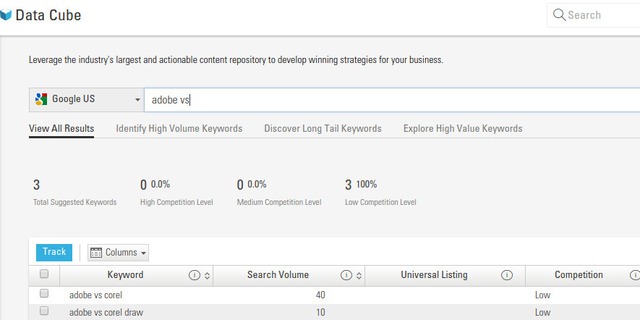
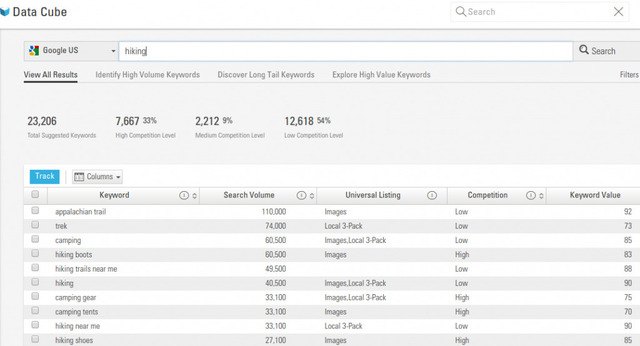
The BrightEdge Data Cube empowers you with key insights into the topics and keywords that your audience desires. You will have access to information gathered from millions of different websites, allowing you to pinpoint the exact areas where you can attract the attention of your customers and bring them back to your website.

You can use this information to begin identifying a targeted keyword list that will guide your content creation and keyword usage. By leveraging industry-leading technology, you can track what people are paying attention to throughout the last months of the year and the impact that your content is having on those visitors.

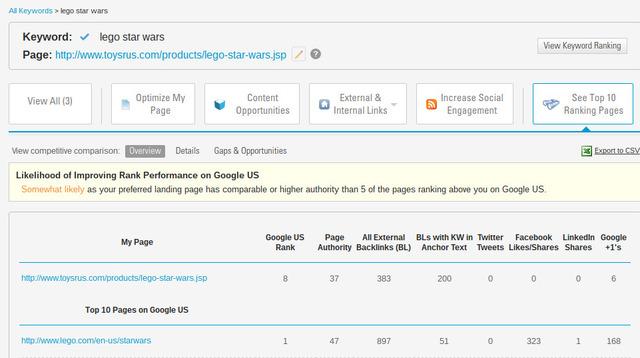
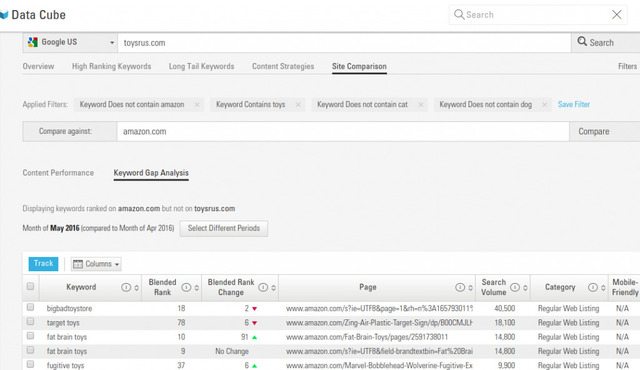
2. Know your competitors' strengths and weaknesses in key content areas. When it comes to ranking well on SERPs, you not only need the quality content and the keywords that match what your customers seek, you also have to outrank your competitors. You want to know where your competitors are performing well and where their campaigns are the weakest. Information about the keywords and content types that are resulting in the most leads and conversions can give you insight into where your marketing needs to position your brand. Analysis of your competitors’ weaknesses can also provide you with fertile ground upon which you can capitalize and draw out new segments of your customer base. Use this information to help refine your targeted keyword list, such as by prioritizing untapped profitable terms. The BrightEdge Data Cube and platform can also be a valuable resource when it comes to accomplishing these goals. You can monitor the sites of your competitors and get insights about their traffic and the keywords for which they rank well. You can run analyses that allow you to measure your progress against your competitors’ pages and gain greater understanding of how to maximize your exposure.

3. Increase conversions by optimizing your landing pages to make it easy to find contact information. The importance of content for a B2B online marketing plan cannot be underestimated. An estimated 64 percent of B2B technology buyers say that they read between 2 and 5 pieces of content before they make a purchase. Business customers want to have content available to help them understand the value of your products and services. This content should be developed based upon the targeted keyword list you created earlier. Compelling content will result in a client-centric experience throughout the site. That includes writing product descriptions and using language and adjectives that appeal strongly to your intended audience. In addition to creating engaging, informative content, you also need to optimize your landing page to bring people down the sales funnel. Keep in mind also the information that B2B customers want to see an appropriate amount of content and details about your company and customers on your website. For example, 53 percent of people in a KoMarketing/Huff Industrial Marketing survey said that Thorough Contact Information was necessary to establish vendor credibility. At the same time, 51 percent of survey respondents indicated that contact information is precisely what is missing on most websites. Following contact information, the next most important website feature was an About Page and Team Bios.

4. Incorporate the search, social, and content trifecta. Search, social and content are intimately connected online. Strong content always forms the backbone - the rest of a campaign will fall apart if it is not supported by a content that matches the reader’s needs with well-formed copy that is easy to digest. To help that content succeed on search, however, you need to also leverage the power of social media. Google has said that they do not directly measure social signals, such as likes or shares, as a part of their algorithm. They do, however, measure traffic and backlinks, both of which social media will be useful at providing. When you have well-written content that meets the needs of customers and promote it through social media, it will naturally bump your traffic rate and can also increase your backlinks. Social media is particularly important when it comes to online commerce. When your content helps to increase your brand reach, you in turn increase the chance of engaging with readers across social media. Forty percent of B2B buyers say that LinkedIn is a valuable resource for researching technology and services they might want to buy. Forty five percent of B2B marketers say that they have generated leads through LinkedIn and another 39 percent say they have found leads through Facebook. Maximizing your use of social, however, requires careful considerations about the types of content and the topics you write about. Tools like Social SEO Recommendations can help you follow social trends and publish content that will capture people’s attention about their favorite subjects. This will help to amplify your social efforts and get your message in front of more members of your intended audience.

5. Prepare for mobile. As of April 2015, more Google searches have begun to take place on mobile devices rather than computers in 10 different countries, including major consumers like the United States and Japan. At BrightEdge, our own research has also indicated that customers are buying both large and small items on mobile devices, so mobile e-commerce matters even more now. Over the course of the first three quarters of 2014, we found that the average order size was within a 10 percent range between mobile and desktop. Given the willingness of customers to buy items of all sizes on mobile, you need to make sure your B2B site is ready to meet the need. Mobile is also a prominent factor in the use of social media. Forty percent of cell phone owners say that they use social media sites on their phones, with 28 percent they do so on a typical day. Given the importance of social media in securing leads for B2B marketers, it makes sense that having a mobile friendly site that can be easily accessed will help enhance any end-of-the-year online campaign. Mobile friendly sites should include responsive web design to ensure that the site fits easily on the smaller screen. The site should also be easy to use with a touch screen and the needs of mobile customers - such as phone numbers and addresses - should also be easily found on mobile site versions. Avoid major mobile errors by reviewing Google’s mobile recommendations to make sure your site is ready to go.

6. Perpetually monitor with a platform that gives you the full picture. As you begin to implement your plan for the end of the year marketing season, you want to make sure that the platform you use can show you the entire picture. You need to be able to see how you and your competitors are performing in real time throughout the last few months. Watch how your keywords are performing, where you are weakest and determine what you need to do to improve. As new keywords and content trends begin to form on social media, make sure that you are ready to produce and publish content that fits these needs to help expand the reach of your brand and the power of your content marketing campaign. BrightEdge is here to provide these service and more. With industry leading technology, you can dive into the data that will help drive your business forward. It will help you not only take preventive steps to avoid unnecessary drops in revenue during this important season, but actually thrive throughout this period. The end of the year is a critical time for B2B brands. It is the time to finish the year on a strong note and prepare to enter the new year in the black. Position yourself wisely, plan, develop content, deploy, and keep reaching out, so you will be equipped to capture the leftover year-end budget and contribute efforts toward your budget strategy from your prospects. Increase your online marketing leverage now to make it happen at year end.

Searching for and winning the marketing moments that matter

English, British
News Item Title
Searching for and winning the marketing moments that matter
News Item Author Name
Jim Yu
News Item Published Date
News Item Summary

Columnist Jim Yu discusses the impact of digital on the customer journey and what marketers need to do to stay competitive and convert customers in the moments that matter.

Thank you for your interest in BrightEdge's Sustainable Contnent Marketing Webinar Assets.

Access the assets by clicking on the links below. For your convenience, we've also emailed you links to the assets for you to access anytime. For more information, please visit our resource center or schedule a demo.


Deck         Video


Share this asset with your network

 Share by email Share on LinkedIn | Share on Facebook | Share on Twitter


People who downloaded this white paper also downloaded:

Fast Facts on Google’s New Mobile Index

A BrightEdger
A BrightEdger
M Posted 9 years 5 months ago
t 9 min read

Google made another announcement recently that is generating considerable conversation. Over the next few months they will create a new mobile index. What's really notable is this new index will become their primary index, eventually replacing the desktop-first version. The goal of this move is to provide the ever-increasing number of mobile users with a superior online experience. The move towards a separate mobile index comes in response to the hyper-growth in mobile usage. In 2015 when speaking about the need for mobile indexing, Gary Illyes said that having a separate index for mobile users did not make sense when more searches were performed on desktop. Since the tide has shifted and mobile searches have outpaced desktop since about half way through 2015, it's now time for a mobile-first index.

What will the mobile index change?

What this means for rankings, SEO, and user experience precisely remains to be seen as we all wait for the index to officially go live. We do know, however, that in the past Google ran into at least two problems.

  1. People do not link to the mobile version of sites as much as they do for desktop. Since the Google algorithm takes links into account when determining the value of particular sites, this problem impacts their ability to effectively rank sites.
  2. Many users also have a tendency to shorten the content they post on the mobile versions of their site. In these situations, often two pages are considered canonical, depending upon whether the user is on desktop or mobile - but one is longer and more thorough than the other. While sometimes mobile users appreciate this, as they were not looking for long content to scroll through, other times they get frustrated because they land on a page that does not have all the information they thought they would receive.

Since Google has announced that they are closer to releasing their new mobile algorithm, we can assume that they have found ways around these challenges. It is possible, therefore, that certain signals will rise or decrease in importance on the mobile index.

When can we expect the mobile index to go live?

google mobile index using a smartphone - brightedgeGoogle has worked on the mobile index for a few years, with them publicly confirming the project back in March 2015. Since Google has now said that they are only a few months away from release, it seems as though they are close to completion. We think SEOs and site owners may start to see the index in the first half of 2017, but we will update our prediction as we receive more information.

What can site owners do to prepare for the mobile index?

In April 2015, when Google released its Mobile Update, businesses needed to ensure their domains were mobile friendly to avoid being penalized. When the index goes live, it is likely Google will be even more particular about their standards for ‘mobile friendly’. Sites will need to do more than just use responsive design - they will need to understand the unique behavior of their mobile users and create content that meets their needs. Good mobile sites should avoid:

  • Blocked or unplayable content
  • Redirects that take users to unrelated pages on the mobile site - such as redirecting those who click on your site’s About Us link to the homepage
  • Error messages that only appear for mobile users
  • Interstitials that cover the contents of your page when a user tries to access your materials. Google prefers fixed banners.
  • A slow load time
  • Small font sizes that are hard to read on mobile screens

It's also important to make your site easy for mobile users to navigate. This entails using buttons that are easy for mobile users to click, and limiting the number of form fields or pages to click through in order to accomplish their objectives. To significantly improve page load speed, which is critical to the mobile customer experience, also consider Accelerated Mobile Pages (AMP) as a core component of your strategy. For pages with a high number of mobile visitors, AMP-enabled pages load lightning fast, keeping customers engaged and reducing abandonment rates.

How BrightEdge can help

BrightEdge can help you by identifying the needs, wants and moments that matter to your mobile audiences. BrightEdge Data Cube gives you market-wide insights on the moments, or topics, that your target audiences care about on mobile, so that you can create the right content. BrightEdge Recommendations will help you optimize your web content for mobile so that it aligns to your audiences' needs, and with AMP support for Top Stories, you'll know when you need to AMP-enable content. Then with BrightEdge StoryBuilder, you can track and measure results from those who visit your web site from mobile devices. Bringing this all together, you'll be equipped to create mobile experiences that will engage and convert your target customers -and keep them coming back.

Penguin 4.0: The Latest On What You Should Know

A BrightEdger
A BrightEdger
M Posted 9 years 5 months ago
t 9 min read

It has been a few weeks now since Google announced the introduction of Penguin 4.0. This latest version revolutionized how we all think about Penguin, as it now runs real-time as part of the core algorithm. This means that the filter will impact websites with poor link building strategies during a regular crawl. Similarly, websites that correct their errors and build quality backlinks will no longer be penalized once their website is crawled again. It the past, it could take months, or even years, for Google to re-run the filter. In our last post, we discussed how Google now limits the penalties to a more granular level. Rather than influencing the entire domain, Penguin 4.0 issues a more measured impact. understanding the google penguin 4.0 update - brightedgeIn the weeks since the release of the latest version, more information has been uncovered about the filter and how it operates, helping us better understand Penguin 4.0.

Penguin devalues not demotes

Google has announced that Penguin 4.0 will adjust how they penalize sites. To understand Penguin 4.0, it is necessary to make a distinction between ‘demotes’ and ‘devalues’. To demote a web page, Google would lower the rankings of that site. Devaluing, on the other hand, refers to ignoring the attempts to artificially inflate ranking. The latest Penguin update focuses on devaluing. In other words, rather than sites receiving a direct penalty that lowers the position of their website, the low-quality links that attempt to boost the ranking are ignored. Since the site will now have fewer inbound links, its position may drop. So, it might seem like a direct penalty if the page rank drops.

Google uses link labels that users can check

Google has confirmed that the search engine uses link labels - a system of classifying links. These labels can vary, including ‘footer link’, ‘Penguin-impacted’ link, and “disavowed link”. A ‘footer’ link describes links in the footer of the page, thus not in the main body of the content. These do not carry as much importance. A ‘Penguin real time’ label indicates links penalized by the algorithm. Finally, a ‘disavow’ label indicates that the link is in a disavow file, meaning you've indicated to Google that you want their crawl to ignore the link. Links can have more than one label, which together determine the value of that particular link. Google then uses this calculated value to help rank sites. The Google manual actions team also uses these labels to guide them on when they should dive deeper into the content to determine whether there is a need for a manual action penalty. Gary Illyes also says that you can see these internal labels for the links and anchors.

So disavow is again, basically, just a label internally. It’s applied on the links and anchors. And then you can see that, as well. Basically, you could have like a link from, I don’t know, WhiteHouse.gov, and it has labels Penguin RT, footer and disavow. And then they would see that — they would know that someone or the webmaster or content owner is actively tackling those links.

This also demonstrates the value of using the disavow tool - it lets Google know that you work to fight webspam.

Google only checks the source site for link value

Most SEOs do understand that Google is mostly concerned about the source of poor links, rather than the destination, but there have been some rumors that Google also evaluates the target site. Google has confirmed that they only look at the source site. As Gary Illyes said in an interview with Barry Schwartz: But it [Penguin] looks at different things on the source site, not on the target site, and then makes decisions based on those special signals.” This should help make site owners more confident as they link to other sites around the web.

Once they understand Penguin 4.0, how can brands move forward?

Penguin 4.0 was added to the core algorithm to improve Google's ability to filter out spam and provide users with high-quality websites. The key to succeeding with this filter, therefore, is to focus on creating links that benefit the end user. This means linking to relevant and valuable sites and cultivating links from other pages of similar caliber. The BrightEdge Platform has core capabilities to help you comply with this algorithm and link to relevant, high-quality sites. Our Backlink Checker suggests opportunities to request quality backlinks. You can also use it to evaluate your existing backlinks. Given what we now know about Google’s backlink labels, distancing yourself from any spammy sites by disavowing them can be very useful in the identification of webspam and poor quality sites. As we all work to understand Penguin 4.0 and the latest Google updates, BrightEdge will continue to look for insights to help you improve your own SEO strategy. 

Share16 Day 3 Summary: Google, Oracle, Facebook, 97th Floor Keynotes

Default avatar
Andy Betts
M Posted 9 years 5 months ago
t 9 min read

Share16 has now officially wrapped up after some more exciting keynotes and engaging breakout sessions. The conference brought together some of the most talented minds in the industry and created an environment with great energy and a fantastic exchange of ideas.

The morning Share16 keynote

The morning of the third and final day of Share16 began with a great keynote presentation from Joyce Boland and Kelvin Gee of Oracle as well as Rachna Sethni of Facebook. Both brands discussed how marketing has transformed their organizations over the past few years and where they see themselves going. Oracle, the world’s largest enterprise software company, explored how it shifted its strategy and even its core culture, in response to the rise of modern technology and marketing. Facebook spoke about how quickly mobile has overtaken other media forms and how convenient it can be for users when everything comes together on a mobile device. Sethni says that Facebook is working to develop apps and capabilities to better bring customers and brands together, creating a superior experience for all.

The Search Track at Share16

S104: Technical Site Configuration: SEO Friendly Design, Build & Infrastructure Austin Kane Austin Kane, the Senior Manager of Search Marketing at John Wiley & Sons, spoke about the importance of valuing technical SEO. He explained that brands also need to have a proactive mindset, not just a reactive one. This means they should pay attention to strategies that can help them grow, rather than just trying to fix problems as they appear. Mark Munroe Mark Munroe is the Founder and CEO of SEORadar. He reminded us that sometimes it can feel as though you have too many cooks in the kitchen when you are trying to design a website. Munroe also spoke about how easily things can go wrong with websites, but that sometimes it can be hard to understand what exactly changed He recommends implementing monitoring processes and having deep visibility into the website.  Jacqueline Urick Jacqueline Urick, the Head of SEO for Pampered Chef, reminded us all that the developers on our teams are people, too! Improving communication can go a long way in helping everyone work together, as well as understanding the goals and pressing concerns of the different groups. Dashboards in particular can be helpful to show progress on SEO projects and to help developers understand your needs. S105: Global and Local Search: SEO, PPC, and Social Synergy Collin Colburn Collin Colburn is a researcher at Forrester Research. He spoke about the importance of creating a frictionless, anticipatory, and immersive marketing experience in the world of post-digital marketing. He drove home the point that marketers really need to do what they say; customers are not nearly as interested in what we say as they are in what we do. Consumers today are interested in personalized messages, rather than general broadcasts, and they want brands that understand the value of being human, helpful, and handy. Chad Hallert Chad Hallert is the Director of Digital Strategy at Noble Studios. He explained to the room the importance of genuinely integrating your teams. Integration requires actual change in your output, not just adding numbers together on a document. When paid search and SEO work together, for example, they can achieve great results. The data we get from the various silos and departments in our organization can all benefit others. Looking at the micro-moments in the consumer journey can also help brands identify opportunities for integration by understanding the types of content most likely to benefit customers. S106: Insights from In-House Experts: Technical Tactics & Conversion Strategies This was a question and answer opportunity with the talented Alex Bullo, the Digital Marketing Manager for SEO & Audience Acquisition at Salesforce; Kirill Kronrod, the manager of Global SEO & Search Analytics at Adobe, and Heather Mezzeta the Sr. Marketing Manager SEO at Sephora. They fielded questions from the audience, covering a range of topics, including HTTPS, scaling SEO in-house, MP, and the importance of data when communicating SEO value to those higher in the organization. The group also mentioned that the areas they are most interested in watching as we prepare to head into 2017 will be AMP in ecommerce, voice search and digital personal assistants, and artificial intelligence.

The Content Optimization and Digital Integration Track at Share16

CO204: The Search, Social, and Content Marketing Trifecta: Digital Branding & PR Rachel Freeman Rachel Freeman, the Director of Integrated Marketing and Digital at Centrify spoke about the impact of PR on SEO. In particular, she touched upon how customers make many queries before actually engaging with a brand, so having a strong brand awareness is critical. When SEO and PR work together to establish consistent communication, they can see great results. Clark Boyd Clark Boyd, the VP of Strategy at Croud, explored the ideas of impulses, habits, and emotions together. He said that there is often too much information and not enough meaning. Brands need to be thinking about improving user engagement and moving towards meaningful content measurements. We need to think beyond immediate interactions, and instead see the big picture. Bringing different disciplines together can help with tracking important metrics and understanding the impact of the content produced. Chris Attewell Chris Attewell, the SVP Americas at Search Laboratory, described the results that can be achieved when SEO and PR are brought together. When brands correctly factor PR into the rest of the marketing discipline, they can produce great results in key areas such as awareness, engagement, and market share. Attewell believes that brands should not let themselves get lost in flashy campaigns and lose sight of methods that have been shown to work, including link building. CO2015: Managing Multiple Digital Channels: Finding The Perfect Mix Cindy Phan Cindy Phan, the Senior Manager of Digital Demand Strategy at VMware, delved into the idea of managing multiple digital channels. VMware has a personalized digital framework to help them understand the audience and segment them for more effective marketing. She spoke about the importance of using 1st Party Data as a means of validating statistics on conversion and campaign performance and always outlining the goals and KPIs of campaigns before they begin. Paul Williams Paul Williams, the VP Director at Performics, explored the importance of understanding intent in the cross-channel experience. He believes that intent is the single largest performance marketing variable, which shapes queries and dictates purchase paths. He also spoke about the shift away from direct response campaigns-- like with television ads expecting people to call, to indirect response-- when customers respond by adjusting their online searches. Allen Nance Allen Nance, the CMO at Emarsys, spoke about finding the right mix between computer automation and human marketing. Data is our most valuable asset, and one day machines will be able to deliver 1:1 personalized marketing. We already use machine learning regularly, and as we rethink the role of the marketer, it will become more prominent.

The Business & Career Elevation Track at Share16

BE304: The Digital Marketing Mind: The Psychology of Self Development Dave Lloyd Dave Lloyd is the Principal Consultant of Optimization and Personalization at Adobe. He spoke about aligning personal goals with the company and team to help you grow both within your personal skill set and in your career. He addressed the importance of asking for feedback and being willing to revisit data. Lloyd also touched upon the importance of using creative storytelling to get buy-in from executives. Adam Audette Adam Audette, the SVP of SEO at Merkle, spoke about the “digital mind” and hacks to grow your career. In his 8 step career algorithm, he explored the importance of actually ‘doing’, following great leads, and not being afraid to make mistakes or ask for help. Mel Carson Mel Carson, the US Brand Ambassador for Majestic and the founder of Delightful Communications, discussed the importance of building a personal brand. By doing so, professionals can make themselves more discoverable, shareable, and memorable. This involves thinking about how you fit in your team, how to project your expertise and skills, and making the right connections. BE305: Organizational Design: Building Digital Centers of Excellence Mauricio Moreno Mauricio Moreno, the Director of SEO at Revana Digital, spoke about how to build “Centers of Excellence” and how they are integral to SEO success. Brands need to focus on three stages: pre-content generation, content generation, and analysis. This means identifying the audience and doing the research needed to know what they want to see, creating content that answers those needs, and then watching for good results during analysis. Eric Hess and Ryan Rickets Eric Hess and Ryan Rickets, Program Managers of SEO at REI, addressed the idea of splitting up SEO into Content and Technical Aspects. The two of them are a team where one handles the technical and one handles the content and they find that the system works well by leveraging the strengths of each. Garrett Mehrguth Garrett Mehrguth, the CEO of Directive Consulting, spoke about the importance of moving quickly and regularly testing. He believes that testing inputs is essential to SEO. Inputs must be measurable to be used. Mehgruth notes that there is no failing in SEO, there is only learning.

Closing Keynote at Share16

After finishing up these incredible sessions, we all gathered together again to hear the closing keynote speeches, and they were worth the wait. We first heard from the Gold-Level sponsor for the event, Chris Bennett of 97th Floor. He explored with us the idea of digital distress, that countless marketers do not feel confident in their own digital marketing abilities, or those of their organizations. He also delved into the growing importance of featured snippets and the impact they can have on traffic and brand presence. They also can offer a variety of information, including cost quotes-- effectively bringing people through much of the sales funnel before they even click on your site. Bennett also explained the concept of TF-IDF (Term Frequency-Inverse Document Frequency) and how even though this is a part of Google’s patent, it is still severely underutilized by marketers. Thao Tran of Google then took the stage and spoke about the latest on the mobile web. This included discussing one of the goals of Google: to help users have a frictionless mobile experience. AMP will also ideally be compatible with a variety of different types of sites, helping all mobile users experience the fast loading sites. According to Tran, there are already 700k websites that use AMP. Tran spoke about the rise of the progressive web app, where brands can help their users have a positive experience, even offline or if they have a spotty internet connection. Many of the pioneering web apps that Tran used as examples actually originated outside the US, but American brands are expected to begin leveraging the technology soon as well. Brands can also equip their apps with capabilities like a credential manager. Ninety-two percent of customers will just give up if they forget their user name or password, and equipping the app to remember the customer when they open this page can help cut back that attrition rate. On the issue of the secure web, she also did not leave any room for discussion when she said, “HTTPS is now the web standard. The future of the web is a secure one.”  We are still feeling excited and invigorated after such an exciting week at Share16. We want to extend another warm thank you to all of our sponsors and speakers. It was wonderful to have your input and your help in making this conference so incredible. We hope that all of our attendees had as much fun as we did and we hope to see you all again next year at Share17! Learn about VSO or Vertical Search Optimization.

request a demo

Chris Bennett: The Value of Featured Snippets

Default avatar
Andy Betts
M Posted 9 years 5 months ago
t 9 min read

We sat down to speak with Chris Bennett about Featured Snippets at Share16.

We are in the middle of the exciting Share16 conference, and we had the chance to sit down with Chris Bennett - the CEO and founder of 97th Floor-- about marketing and featured snippets. His company is the Gold sponsor for this year's Share, helping to make the event as spectacular as it is. 97th Floor is responsible for some incredibly creative and innovative work in the world of digital marketing. We were glad they were able to find the time to understand featured snippets with chris bennett - brightedgechat with us and share some insights with our audience.

“There is no other technology on the market that gets us the data we need to dominate Google Quick Answers like the BrightEdge platform.” - Chris Bennett, 97th Floor

BrightEdge: What is the biggest trend in marketing as we approach the end of 2016?

Chris Bennett: I would say that Google Quick Answers is one of the biggest trends in search. They have appeared with increasing frequency on a variety of queries. Switching gears, in social media, I would say that SnapChat is the most important trend. It has been rising in popularity and we project it to be a great fertile ground for marketers.

BE: What is the biggest opportunity for marketers?

CB: I believe that Featured Snippets is the biggest opportunity right now, by far. It is like the Wild West right now with ample ability for brands to grow. Here is a quick tip for you: BrightEdge will tell you what Quick Answers you rank for. To take full advantage of this, you can go and optimize your content with images. You can also run a keyword rankings report and filter by words like “who,” “what,” “how,” and other terms that fit nicely with the Quick Answers terms. Find the ones where you do not already have featured snippets and then go and prepare your content to appear in this special space on Google.

BE: What is the biggest mistake you see marketers make?

CB: I believe that all marketers are faced with the age-old problem of just not having enough time in the day. Marketers need to be effective and efficient. Too many marketers also end up shooting in the dark when it comes to content development. They produce too much content without taking the time to back up their ideas with solid data. This plays back into the idea of needing to be efficient.

BE: What are your suggestions on how to elevate SEO and content marketing with executives?

CB: Marketers that want to elevate SEO and content marketing with executives need to show them the money. They need to tighten up their tracking and reporting so they can clearly show the progress they make through their efforts. Executives want to see real, measurable results from marketing spend, so that is what you need to show them. Another quick tip: while there are likely many KPIs that executives like to see, usually they care the most about one or two. For example, they might wake up every morning and check a certain keyword or metric. You should find out what they care the most about, and then blow that KPI out of the water. This will make it significantly easier to secure budget.

BE: What are your top two marketing tips?

CB: My top two marketing tips would be the following. First, use data throughout your marketing strategy. If you do not know what type of content to build or where to focus your efforts, then go out and gather more data. Guessing and using hunches will just result in you spinning your wheels. The second thing would be trying to grab featured snippets, even if another site has it already. Use HTML Roles in your markups, so if it is a list, add the list code to the role code in the HTML. Do this in all your content. Also pay attention to your H1, H2, and H3s. Adding the snippet phrase that you are targeting into these areas can be very helpful in gaining the featured slot.

BE: What will you speak about at Share? 

CB: At Share I will speak about the importance of gathering more data so you can have confidence in your content, even before you hit publish. I will focus specifically on Featured Snippets and how you can make sure your brand dominates in content creation.

BE: Do you have any fun facts or anecdotes that you would like to share about yourself? 

CB: I start out nearly every morning with about 2 tablespoons of grass-fed butter in a homemade cocoa tea that I make. It really helps turn my brain on and gets me ready to tackle the work ahead! It was great having the opportunity to catch up with Chris, and we look forward to hearing him speak on Wednesday. Everyone here for Share16 should come to the 4pm keynote on Wednesday to hear him speak! 

,