cbao
M
Posted 8 years 9 months ago
t
9 min read
BrightEdge released the updated 2017 BrightEdge Holiday Shopping Report in December 2017, revealing three key trends. First, holiday shopping is happening sooner, with browsing traffic spikes on the Sunday before Thanksgiving. Secondly, consumers are more comfortable making purchases on their mobile phone or tablet. Lastly, mobile Black Friday transaction volume surpasses mobile Cyber Monday, increasing the importance of Black Friday.
Consumers exhibit significant enthusiasm and buying power during the holiday shopping season. Like consumers, marketers have much to do during the festive period, but making the time to observe shoppers' online behavior should pay attractive economic dividends. Over a holiday-packed eight-week period, shoppers in the US experience ubiquitous “buy buy buy” messaging, severe discounting, and general shopping euphoria. The BrightEdge Holiday Shopping 2017 Research Report provides marketers with invaluable strategic insights as they plan for the holiday season.
What are the key findings from the holiday shopping report?
- The "Sofa Sunday" effect and implications
- Purchase intent is maximized on major shopping days
- Mobile devices are the first point-of-entry for Black Friday deal hunters
- Mobile Black Friday sales exceeded mobile Cyber Monday sales by 9%
The BrightEdge Holiday Shopping Report confirmed that Thanksgiving to Christmas is still the biggest shopping seasons of the year. The research underscores the importance of ecommerce strategy and proper website execution. Marketers can better serve their customers and maximize returns in future shopping seasons by familiarizing themselves with the insights BrightEdge has prepared based on our findings from the 2017 shopping season.
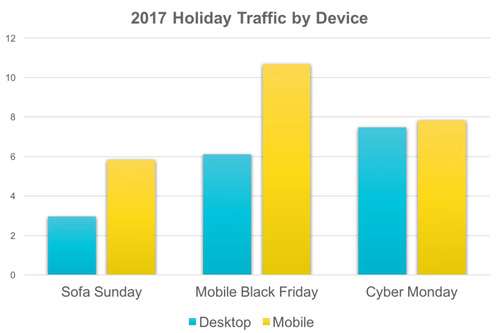
- The “Sofa Sunday” effect and implications. BrightEdge coined the phrase Sofa Sunday, to describe the spike in mobile traffic on the Sunday before Thanksgiving. It appears that consumers started building their shopping list for the holiday season on the Sunday before Thanksgiving.
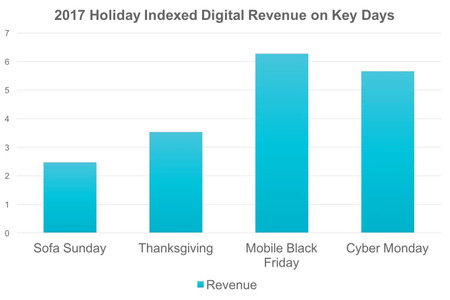
- Purchase intent is maximized on major shopping days. The BrightEdge Holiday Shopping Report investigated consumers’ holiday shopping behaviors and found that online conversion goes up by 2X on Black Friday and Cyber Monday, and then returns to normal just before Christmas. This confirms the importance of maximizing the exposure of special holiday offers leading up to those two days.
- Mobile devices are the first point-of-entry for Black Friday deal hunters. Mobile traffic dominates Black Friday ecommerce as on-the-go shoppers research the best deals, locate that perfect gift, and navigate to the store with that product.
- Mobile Black Friday sales exceeded mobile Cyber Monday sales by 9%. Data revealed that mobile purchase activities were very strong, exceeding that on Cyber Monday by 9%. This behavior is believed to continue in the years to come.
What are the key takeaways for marketers?
- Establish a thorough understanding of your site’s KPIs
- It is essential that marketers create and optimize content for both mobile and desktop
- Make your content easily shareable on Facebook and other social media sites
Establish a thorough understanding of your site’s KPIs. BrightEdge StoryBuilder gives you a full range of flexibility to build a report that will help you understand how well your site captures the mobile search intent, and subsequently, mobile conversions. Given the research findings, and knowing that 57% of all searches now begin on a mobile device, it is critical to put mobile SEO and user experience at the forefront of your web development plans. A mobile-first dashboard will help you understand the trended performance along these key aspects:
- Site visits, conversions, and revenue for a 6-month period and the holiday season, as well as the year before, across mobile, tablet, and desktop
- Average order value by device type
- Bounce rate by device type and by topic (a group of contextually related keywords)
- Keywords or topics that you win or lose on the SERP by device type
- True competitive set at topic level
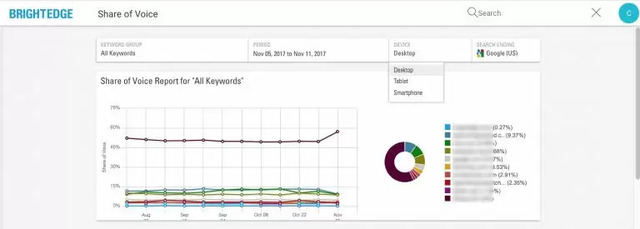
It is essential that marketers create and optimize content for both mobile and desktop. For example, ensure your mobile configuration is correct and the mobile pages include images, icons, buttons, and specific seasonal CTA (call-to-action) as part of the experience. Since not all keywords rank the same on mobile and desktop SERPs, you may also want to check who your true competitors are on mobile by using the Share of Voice feature within BrightEdge.
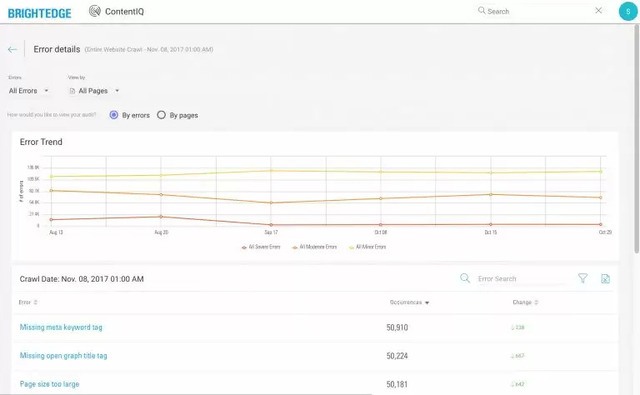
Make your content easily shareable on Facebook and other social media sites. Holidays offer consumers more downtime to browse on social media networks, including Facebook, Twitter, and Instagram. In addition to running targeted social media ads and extending offers to fans and followers you should check if your web pages have implemented Open Graph, which will ensure these pages render properly on Facebook when they are shared. BrightEdge ContentIQ can flag this issue with a quick website crawl. If you have not implemented Open Graph for this season, the number of Facebook shares might be lower than industry average. Consider how you’ll set expectations for the rest of the organization and prioritize to implement Open Graph after code freeze.
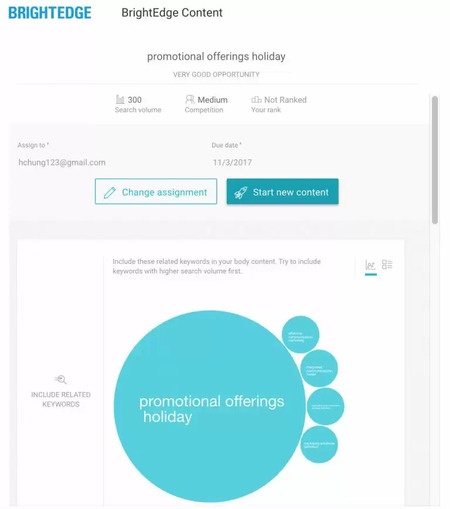
Personalize content and customer experiences both offline and online is critical As online retail spending increases over the holiday season, marketers need to focus on creating smart content and shopping experiences to attract, engage, and convert customers, either in-store or online. Consider developing unique landing pages to take advantage of the profitable topics surfaced by AI-powered BrightEdge Content. Trailblazing marketers have reported 150% growth in website leads from the content created and hosted by BrightEdge Content.
Final thoughts
As we know, prioritization can be a big challenge in website optimization. How about evaluating content gaps along the buyer’s journey as your starting point? Watch this on-demand webinar to learn more about how to use BrightEdge to improve the content strategy and performance of your ecommerce website. Read the complete 2017 BrightEdge Holiday Shopping Report. Stay tuned for more exclusive BrightEdge research reports that will help you drive more revenue from your ecommerce website.