SEO is the foundation of a successful website. Considering that an estimated 51% of site traffic originates from organic search, it is clear that where a website appears on the SERP will greatly impact the site’s overall traffic success. Properly done, SEO can drive engagement, conversions, and revenue.
These SEO basics are a good way to start your way towards successful SEO. SEO is often untended by businesses, however, because it can feel daunting to get a site optimized so it appears high in the SERPs. SEO is a less glamorous form of marketing as it often requires waiting weeks to start to really see the impact of your efforts. By just taking a few minutes a day, however, to focus on taking a few basic steps towards using SEO, you can increase your visibility and therefore your success online. Here are 8 SEO basics you need to get started.
Want to get the most from your SEO? Here is how to maximize your ROI.
SEO Basics 1: Who do I create content for?
Before you can move forward with your SEO plan, you must first know exactly for whom are you are writing. This means breaking down your target customers into customer personas. These categories will help you understand the pain points and needs of your unique audience so that you can tailor the material to engage them.

You can begin to build your target personas by examining and your current and past customers. You want to understand what they wanted to see from a business and what brought them to you. You can also use market research to supplement your findings. It is also important to know exactly when a prospective client will be engaging with your content.
Reports, such as white papers or case studies, tend to serve customers who are further down the buyer’s journey, while blog posts about the industry are often explored by those in the beginning Awareness stage. The type of content as well as the material you cover should all be tailored to meet the needs of particular customers at certain points in their buyer’s journey.
SEO Basics 2: What kind of content do people want to read?
Once you know who you are writing for, the next part is understanding exactly what they want to read. This is keyword research. By doing keyword research you can examine factors, such as the traffic and level of competition for a particular keyword. This can help you pinpoint concepts that your targeted personas are likely to be searching for, improving your chances of attracting a strong audience.
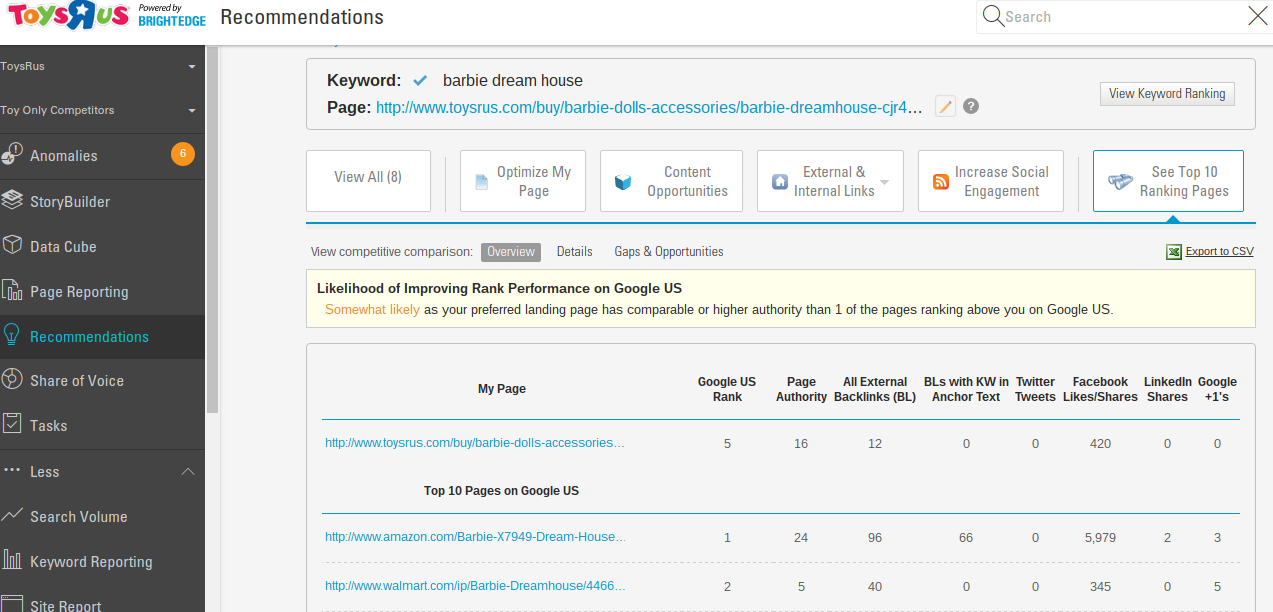
Using a platform like BrightEdge will also allow you to go one step further. Once you have selected a keyword to be tested, you can also check the top 10 domains ranked for the keyword. This will not only help you see if the keyword is worth pursuing, but it will also give you added insight into the types of content and information that have already been well-ranked for this topic. This is a shot of the BrightEdge Recommendations capability which provides actionable on-page and off-page insights. 
SEO Basics 3: How do I write content that is easy to digest?
Armed with your topic and the understanding of the ideal audience, you now need to create fresh content. As you develop your material, the customer should be the center focus. Make sure the content adds something of value for your readers. Use your professional expertise to offer them unique insight. This value will not only improve engagement, but it will also help to cast you as the helpful professional to whom they should return when they have more questions about your industry. Remember that in online marketing, this is often the opportunity to begin to build a relationship with your prospect, so you want to get off to a strong start.
When considering your content, it is also important to think about your format. Customers have ever-decreasing attention spans with the average now down to around 8 seconds. Using features such as bullets, lists, headings and short paragraphs all make your content easier to scan and digest. This will help people retain your material and better understand the depth of the information you can provide.
SEO Basics 4: How can I help people find my content?
Once you have your high-value content prepared, you need to find a way to get that content in front of the targeted customers. People do not magically find quality content, you need to engage in a few best practices to improve the visibility of your material.
To begin, make sure you have included your keyword 5-10 times throughout the content, depending on length. This includes the H1, at least one H2 and naturally a few times in the body of your content. Remember as you begin this step, however, that keyword stuffing is frowned upon both by readers and by the algorithms. Google has taken great care to downgrade the sites that use stuffing techniques to try and make their thin content seem relevant despite its lack of depth. Instead, your focus should be to naturally incorporate your targeted keyword in your material.
Remember that this includes semantically related keywords. Google continues to push towards semantic search with their updates such as Hummingbird and RankBrain. In other words, they work to understand the context and intent behind a query. Including related keywords naturally in your material will help to further establish your relevance to the search algorithm.
Keep in mind that your efforts to get your content in front of the right people at the right time also includes distribution. Your plan should include your social media platforms as well as email lists (learn more about social media metrics). Delivering your content to the people who are the most likely to appreciate it can help boost your traffic and engagement rates, both of which are considered by search engines when determining the position of the article on the SERPs.
 SEO Basics 5: How to I create a pleasant user experience?
Once you get people on your website, you want to make the entire experience pleasant for them. This means features, such as fast load times and using images. Customers quickly grow impatient and annoyed when a website takes too long to load. One study found that an increase of just 1 second in load time can decrease conversions by 7 percent. You can improve your load times by taking steps, such as:
- Only using the most necessary plugins
- Enabling browser caching
- Optimize images that are too heavy
While it is important to use appropriately-sized images, the visuals themselves can also help improve the user experience. Unique images, particularly those that directly involve your company, such as personnel or your products and services, tend to be great. Most people are very visual, and adding images helps you tap into that power to make your material seem more interesting. Using these two steps will help to increase engagement and will decrease bounce rates.
SEO Basics 6: How do I make my site easy to navigate?
As people arrive on your website, you want to help them move around your page. They should be able to clearly understand where they are in your website in relation to everything else in the domain. If they want to learn more about your company itself, for example, then it should be obvious where they can find an About Us link. Your sitemap should also be uploaded to Google to help the search engine understand your site as it crawls the domain.
Your URLs should similarly be clearly structured. Rather than having your domain followed by several random letters and numbers, it should clearly indicate where the person is on the site. For example, yourdomain.com/blog/8-seo-basics. This will also help you add in another keyword, boosting your relevancy.
SEO Basics 7: How do I get people to engage with my site?
Now that you have people on your website, you want to do everything you can to keep them on the page. The more a person reads and engages with your website, the easier it will be to help them build a relationship with you. They will be more likely to remember your brand and view you as a trusted authority. As they prepare to make a purchase, it is a natural inclination to lean towards those with whom they already have a relationship.
As people spend more time on your website, they are also sending valuable signals to the search engines, letting them know that they appreciate and trust your content. You can nurture this engagement a few ways. One important means is through internal links. These links will provide access to resources for those who want to learn more about these related subjects. You should have all links in your piece open into a new window. This improves the user experience and encourages people to come back to the original article easily. Your content should also be followed by relevant CTAs.
Your chief goal with your content is to nurture leads and encourage them to move further through the buyer’s journey. Relevant CTAs are a great way to tap into the interests of your reader and encourage them to move to the next stage in the process. This is one of the nearly unlimited reports generated by the BrightEdge Story Builder.

SEO Basics 8: How do I track metrics and analytics?
As you begin to do SEO on your website, you also need to track metrics. It is not optimal to run an SEO campaign based upon intuition or feelings. When you are just getting started in SEO, there are a few key areas that you want to focus on your:
- Traffic rates by channel
- Bounce rate
- Conversion rates
- Cost per conversion
These numbers will help you see how well your SEO efforts are helping to bring more people to your website and how interesting they find your material. As you mature in your SEO process, you will also want to start looking at more in-depth metrics, such as how your performance is changing month-over-month and year-over-year. You will want to explore how your performance is impacted by different campaigns as well. Fortunately, a platform like BrightEdge allows you to customize your analytics so you can easily get the information you need at each stage of your campaign.
Organic is the largest driver of traffic towards your site. Learn more here.
SEO is an important part of any marketing campaign. Following each of these SEO basics will help you succeed.




 SEO Basics 5: How to I create a pleasant user experience?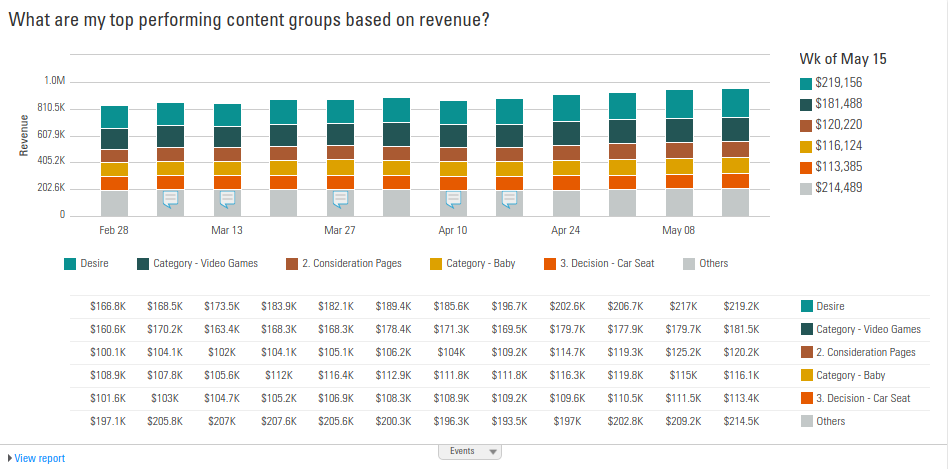
 Once you have entered this portion of the Analytics page, you can add new attribution models, which allow you to select baseline models based on the strategy you want to use for your page. Google gives you choices between Linear Model, First Interaction, Last Interaction, Time Decay, and Position Based (or U-Shaped) models.

 your needs best. On other other hand, if your content for the beginning of the buyer’s journey regularly performs well and you need to pay close attention to the end of the journey, then a last-touch attribution model may be the direction that you need to go.
 since this touch point engaged the customer enough that they felt encouraged to continue to learn about the organization, it deserves the credit if the lead converts.
 Time-decay attribution assumes that as people get closer to conversion, their touch points carry more weight. Therefore, it assigns an increasing value to each of them as the lead gets closer to purchasing. The top-of-the-funnel content, therefore, will receive the least credit, while the bottom-of-the-funnel action that the customer took right before clicking ‘buy’ receives the most.
 interact with brands across multiple channels and platforms as they research their pain points and potential solutions.