If You Care About User Experience, Invest in SEO

tvura
tvura
M Posted 4 years 2 months ago
t 9 min read

And, if you care about SEO, invest in User Experience. Aligning SEO and UX offers too many mutual benefits to ignore.

Why is SEO and User Experience Alignment Important?

Alignment is no longer a “nice to have”. It must be viewed as a requirement for any brand that heavily relies on organic search as part of their marketing strategy. Google’s Page Experience and the Core Web Vitals that help the search engine measure it, are now used to rank pages for both mobile and desktop search. At the heart of Page Experience is a focus on improved user experience.

In effect, this is Google saying: Hey, it’s no longer enough to have good, authoritative information on your page, and it’s no longer enough to have optimized titles and tags, because if your page loads too slowly or your ads are overly intrusive, for example, the user suffers. You still need good information and optimized page structure, of course, but the user experience is now critical in determining whether Google is willing to recommend your content (with a high search rank).

The hallmark of an optimal search-originated user experience is seamless continuity. In other words, the promise of the search result is fulfilled by a click that returns the expected information without requiring the user to wait long for it, dig for it or clear away pop-ups, interstitials and other detritus to access it. The best experience is usually the one the user doesn’t notice. Easy enough.

Creating a seamless user experience is far from easy, though. A big part of that is because the user experience is the combined efforts of SEO, IT, content, brand, monetization and other folks whose goals and priorities, when not in direct opposition, are not always aligned. Without that alignment, however, the user experience suffers, and a lousy user experience tallies its costs in lost business. With SEO more directly influencing and dependent on the user experience, the stakes of alignment are higher than ever.

How Do We Align SEO and The User Experience?

During a recent BrightEdge webinar, Leveraging SEO for a Better User Experience, we explored specific actions organizations can take to achieve alignment and demonstrated how BrightEdge users can leverage the BrightEdge platform in support of SEO / User Experience collaboration. A summary of the recommended actions is below. We’ve also made the full webinar available for download, which expands on the advice here and walks through six specific actions BrightEdge users can perform in the platform to bolster a collaboration between SEO and UX.

1. Enable Collaboration

SEO and UX teams must first get on the same page by understanding and agreeing that improving the experience is good for both users and SEO. To support a shared mission, build a set of collaborative goals that connect to each team’s performance metrics.

Building a shared mission requires knowledge and resource sharing, as well. Determine what knowledge will further the mission and then acquire that knowledge through A/B testing, search data analysis and competitive research. Leverage search data to define user intent for the UX team. Share knowledge in more conventional ways, too, through written primers and “SEO 101” and “UX 101” training sessions.

2. Understand Your Page Pathways

A page pathway is the sequence of pages a visitor will follow from entrance to conversion. Page pathways present something of a chicken and egg situation: the better you understand your audiences the better you can optimize pathways, but understanding your audience often requires first understanding the pathways they choose. With SEO to help steer users to the best path from organic search followed by deliberate on-site navigation and page layout decisions to further direct them, SEO and UX teams can improve conversion.

3. Work Incrementally and Measurably

Both SEO and UX are not as much about knowing the right answer at the start, but doggedly testing and measuring incremental changes to find meaningful improvements. It’s important, also, to track all changes, not just the ones aimed at improving the user experience. Even seemingly innocuous changes can positively or negatively impact engagement, so be sure you can track those impacts back to their causes.

4. Align on Performance

Aligning SEO and UX is not a one-time project, but rather must be an ongoing collaboration. It’s necessary for the collaboration to define clear roles and responsibilities for team members and regular stand-ups to establish and maintain alignment. Additionally, all collaborators must mutually agree on metrics, including some specific collaborative metrics, including Core Web Vitals.

Be sure to watch the webinar recording and reach out to our SEO experts to find out how the BrightEdge platform can be leveraged to support your organization’s SEO / UX collaboration.



Taxonomies and Content Silos: UX Strategy - Part 3

mkirchhoff
mkirchhoff
M Posted 8 years 1 month ago
t 9 min read

This is part 3 of a series on semantic search by Michael Kirchhoff. You can read part 1 on Semantics and part 2 on Content Silos.

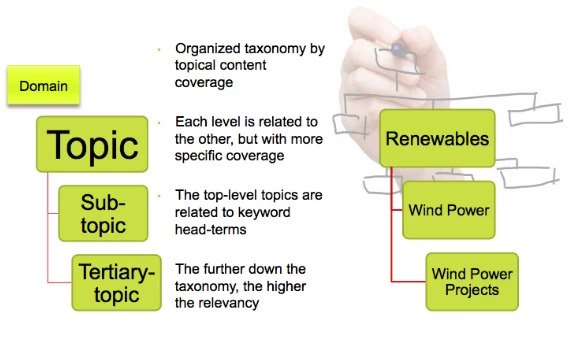
An estimated 50% of sales are lost because people on web sites cannot find what they were looking for. Your UX strategy, site navigation, and how easy it is to find the right information is critical to the performance, reputation, and success of your domain. To create an effective content silo, a website taxonomy is extremely valuable. A taxonomy is a system of classification that helps to organize the ideas and material on your site so that it is easier to understand the subjects and topics covered on your domain. With a taxonomy, live visitors and spiders from search engines are able to find what they seek and therefore appreciate your level of expertise faster and more accurately. Developing a strong UX strategy with a taxonomy structure - brightedge Taxonomies provide good mechanisms for search engines and users to understand the significance of a particular topic and piece of content for your website. Pages at the top of the taxonomy tend to be broader variations of a topic, while diving further into each taxonomy provides refinement. From an SEO standpoint, because the top of the taxonomy funnel is architected closer to the domain, those pages have a higher authority and SEO value for head-terms. On the other hand, subtopics in a taxonomy may have less authority for the head-term but higher relevance for a long-tail target. Both are equally essential for building your SEO and website architecture. The relationship of the taxonomy is tied to the website’s silo structuring and crawl path. When done correctly, it will help both the human audience and search engine spiders understand the relationships within the taxonomy hierarchy and themes for the site.
The types of taxonomy hierarchies

There are four main types of hierarchies that you can use within your content.

  1. You can organize your content based upon categories of related topics in a hierarchical taxonomy.
  2. You can also organize your content in a flat taxonomy, where everything is on one level and there is no depth to the categories. Unless your website is very small, this is generally unfriendly for users and does not provide high value for SEO.
  3. You can create a system that includes both a hierarchy while also using associations between different categories to move people from one area to another in a network taxonomy. These associations are often found when websites make recommendations based upon closely related content or popular or new articles on the taxonomy’s subject.
  4. Finally, you can have a facet taxonomy where you organize your content depending upon how it is used or described. In this system, certain pages can be used in more than one category. For example, a clothing ecommerce site that sells red sweaters for women might have the page appear both under women’s sweaters and under red clothing. With this system, brands have to be particularly careful not to produce duplicate pages within their domain and to ensure a clear and crawlable URL path for both users and search engines to discover the faceted content. Canonicals are also an important part of faceted taxonomies and search.

As there are many technical aspects to a faceted taxonomy, we will examine non-faceted taxonomy content silos in this article. Understanding how to build and manage a taxonomy system for your UX strategy can help you improve the experience you create for your users and therefore your site success.

How do taxonomies align with content and SEO?

The primary benefit of creating a taxonomy is the ability to classify content or products based upon the categories to which they belong. This expands your ability to aggregate and display that content exponentially across your website. When done correctly, a taxonomy also aligns with keywords that reflect search behavior to help readers discover your content and products. Therefore, a taxonomy helps you organize, maintain, display, personalize, and ensure content discovery around your audience's buyer's journey. Taxonomy classification of your content is an important step in creating intelligent content. Organize your content in your UX strategy with the semantic web - brightedge The organization of the content within each of the silo structures helps to improve the rankings of each page. The display of the content assets on the page are all directly related to the taxonomy topic, which helps provide context to the material. These on-page keywords assist with the ranking ability for the page. In a Google Hangout, John Mueller pointed out that the user experience improves because users have landed on a page that is full of content based on a particular topic or taxonomy level. Since they have a better experience, their engagement and CTR improves. In my experience I have noticed an increase in CTR of over 21% by displaying semantically-related content types within a taxonomy page. Google and the other major search engines want to see websites that visitors appreciate and that provide them with value. The importance of the site can therefore be judged based on how people engage with it, such as the bounce rate and the number of people linking back to your material. Improving the silo structuring of your site, including the taxonomy, will boost your reputation and therefore improve your rankings. The search engines also appreciate the UX strategy and taxonomy structure because it makes it easier for them to understand the depth of your knowledge on a particular topic. They can see the links between the different pages you have on the site and thus understand how well you cover various topics. Demonstrating to Google that you offer value and depth will boost your domain authority and therefore your SERP position even further.

How do you create a UX strategy and taxonomy?

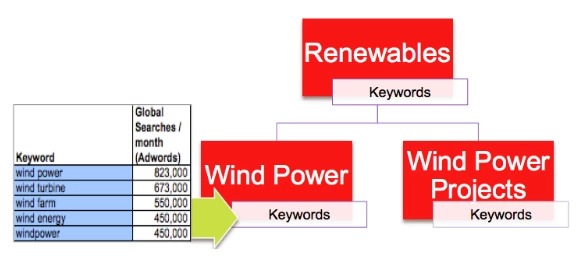
As you begin to formulate your taxonomy, there are a few guidelines you should keep in mind. Begin your UX strategy by looking at your content or product subjects. If you don’t have good depth of coverage on a given topic, then it’s best to select a different topic for the taxonomy. For example if your website covers “Renewable Energy” news, a good top-level taxonomy may contain “Solar,” “Wind,” “Geothermal,” “Bio,” “Hydro,” and “Storage.” However if your content and products only contain a few assets for “Storage,” avoid that taxonomy topic until a routine cadence of content can be created for the taxonomy topic. An example of a good top-level taxonomy structure can be found at Renewable Energy World.

In most situations, it is better to create a site structure that is long and shallow, rather than short and deep. This means that you will have more broad topics at the top of the chain and only take the layers down a few levels instead of having only a few top subjects and having numerous layers beneath them. This structure tends to work better because it reduces the number of clicks needed to find certain information, making it easier for people to use and understand.

Try to keep the depth to around 3 levels, a top level, secondary level, and a tertiary level. Secondly, as you create your categories make sure that you use clear names that will be easily identifiable by your users. You want those landing on your site to know instantly the type of information contained within each category. 

Keep the taxonomy names relevant to your content and products. Otherwise, you run the risk of high bounce rates. Finally, although you will be organizing your material in easily-understandable structures, there is always the possibility that some people are going to go looking for particular items in the wrong place. For this reason, if you can have an alternate search function, this can be helpful. Many businesses use search bars. Additionally, sites often find success when their UX strategy includes arranging their content in alternate structures, such as by alphabetical order, so that people can find their topic even if they looked in the wrong area.

How do I classify content to fit within the taxonomy?

When you first start working with a taxonomy and UX strategy, it can be a challenge to know where you should classify your content and the name of the structures you can use. Here are a few methods you can use to get started.

  1. Examine the content and products on your website and try to organize them into no more than 10 top-level themes, which will become the top-level taxonomy.LEDs Magazine example of a UX strategy and taxonomy classification - brightedge
  2. Look at user behavior on your site. Examine the keywords users type most commonly on search engines through tools like the BrightEdge Data Cube. You can also look at how people move around your site to gain a better idea of how people classify your information and what your top topics should be. Don’t forget to examine internal search logs to find the topics your audience looks for while on your website.
  3. Examine your website analytics to see what content or products are most often reviewed.
  4. You can also look at competitor sites to see how they organize their material. Look at the classification systems of the top-performing sites in your industry to uncover insight about what works.
  5. Perform card-sorting tests. You can ask users to create terms and sort cards with various types of content and parts of your domain. This will also give you insight into how other people view your site and how users would intuitively move around.
  6. As you create the top level of your taxonomy, consider what would fall beneath it as a secondary and tertiary taxonomy topic. For example, if “LEDs & Sources” is a top-level taxonomy topic, the secondary taxonomy could be “OLEDs lighting.” In this example, the website LEDs Magazine has four secondary taxonomy topics- “Packaged LEDs,” “OLEDS,” “Plasma,” and “Light Engines.”

Once you have created your taxonomy system, you will want to make sure that any future content fits easily into this UX strategy and the pre-defined criteria. Focus on creating content that is designed for a particular customer persona at a particular point their buyer’s journey. You can then look at the subjects in your categories and have a good idea about where the material should fit. A taxonomy markup can also be a helpful way to make your silo structuring clear to the search engines. Schema.org is a popular markup option because it was created to be understood by the major search engines, including Google, Bing, Yahoo, and Yandex. The markup will label the different parts of your pages and help to classify the different types of content so that the taxonomy system is easy to understand. Using a site taxonomy is a valuable tool to boost your UX strategy and help your site and your business grow. By enhancing the user experience and helping to keep your content organized, you are able to build a strong site that will perform better and help you reap the rewards of an online presence.

Semantics for SEO, Conversions, and UX - Part 1

mkirchhoff
mkirchhoff
M Posted 8 years 1 month ago
t 9 min read

Michael Kirchhoff, one of BrightEdge's top SEO minds, wrote this series of articles on the semantic web and what it means for SEO. It is one of the best set of advanced SEO content we have, so we updated it and are publishing them again for the community. Be sure to read all three:

  1. Semantics and the Future for SEO
  2. Content Silo-Value for SEO
  3. Taxonomies and Technical SEO and UX Strategy

BrightEdge Marketing Since its birth in 1998, Google has been continually evolving and improving its ability to match users with the websites that answer their needs. The Internet has grown from just over an estimated 17,000 websites in 2000 to well over a billion now. This tremendous growth has put an enormous amount of pressure on Google and the other major search engines to be able to interpret what people are looking for and better understand the value and depth of the websites available. This pressure pushed Google to introduce semantic search into its algorithm.

Beginning with the Knowledge Graph in 2012 and the Hummingbird Update in 2013, Google stopped looking at strings of letters in a sequence and trying to match them to the strings of content on a website. Instead, the algorithm began to understand the ‘meaning’ within the query and on the website.

The search engine was working to understand context and intent and then match the idea that the user was looking for with the best website, rather than just matching the words. Semantics, SEO -- BrightEdgeWhile Google has been working on improving its algorithm, there has also been simultaneous growth in the content marketing industry and the number of people who use the Internet when researching products and services.



An estimated 94% of B2B buyers and 81% of customers currently use online research while determining what product they want to purchase. Within the marketing sphere, an estimated 88% of B2B marketers and 76% of B2C marketers use content marketing.

This exponential growth in competition and demand - an estimated 90% of the data available has been produced in the past two years alone - along with the improvement of digital technology has also led to increased expectations on behalf of the search engine users.

People now require sophisticated and user-friendly sites that quickly meet their needs. If you fail in this task, they will just click off and go to the next one on the SERP.

For sites to meet the needs of these users and the modern Google algorithm, we believe that logical organization (taxonomy) and content silos are the key.

This structural system allows you to organize and classify your available content in a way that helps both search engines and users navigate your content and understand the depth of your knowledge on the topic at hand.

Silo Structuring and LSI

Silo structuring ties closely with Latent Semantic Indexing (LSI), which has been around for several years. A few notable resources that can introduce you to LSI and the role it plays in site building can be found on SEOBook’s excellent post on LSI or Bruce Clay’s post. In short, and to paraphrase SEOBook, the benefits of LSI and its ties to semantics and silo structuring are the following:

  • The LSI system will first record the keywords contained within a document
  • It will then record the keywords used throughout the silo
  • It will then compare the keywords used in the document with those used throughout the silo
  • The documents that contain large amounts of common keywords are considered semantically similar, those that do not are considered semantically different.

There is some debate as to whether or not the major search engines directly use LSI in their algorithms; however based on studies and my personal experience, I believe they do. Regardless, silo structuring and LSI work from the audience perspective. Therefore, the question of, “does Google use LSI?” becomes less significant. When you add the value of silos and content organization to your website and products for improved UX, you have created a meaningful and purpose-driven website that aligns content to the audience. This is what Google has been telling us is the key to success from the beginning. Constructing an efficient silo therefore requires a careful look at your user experience, your content coverage, the linking structure between content and pages in the silo, the keywords used in the silo, and your taxonomy. This is just part 1 of a 3-part series that will break down for you the principles of content silos and how you can use this strategy to boost your click-through rate, conversions, and ranking.

How Google is pushing semantics forward

LSI, the Knowledge Graph and Hummingbird laid the foundation, but Google continues to push the issue of semantics forward, calling on webmasters to conform to improve or maintain their rankings. In 2015 they introduced RankBrain, their first leap into the world of artificial intelligence. The engineers for the search engine aimed to create a system that not only would be able to understand how different concepts were related because of manual inputs, but would actually be able to learn how different concepts relate.

RankBrain was specifically designed to help Google return useful results for the roughly 450 million completely unique queries it receives each day. Shortly after RankBrain, Google stopped participating in the announcement and naming of algorithm updates and encouraged the community to focus on quality and relevance with the implication that RankBrain would be able to recognize and reward that focus.

Learn about the impact of SEO topic clusters. Semantics content strategy - brightedge

This push towards semantics has changed the way SEO is done. Now, rather than trying to match the keywords and vocabulary that your targeted audience is using, you want to match to the topics that they are asking about. Suddenly, related vocabulary terms are not only relevant but often important as a way to demonstrate your depth.

Establishing silos on your site takes a little effort, but it will prepare you for the changes Google continues to make to the algorithm. Each section of this series will help you understand the topic on a deeper level and will make it easier to understand how to build your silos yourself.

Here is what we will cover in each section the this blog series. Look for future posts.

Part 2 - Technical SEO and Content Strategy

In this part, we will explore how semantic search helps Google understand your site organization and how site silos influence Google’s idea of your domain authority and competence. As you create your content silos, you will also work on aligning each step to the buyer’s journey and a keyword group. Here we will explore the value of using technical SEO as a part of your overall authority and why it can help influence your rank. Read Part 2

Part 3 - Creating a UX and SEO-Based Taxonomy

In part 3 we will dive deeply into the taxonomy - your classification categories - of your project. We will see how you can use your terms to align your content and then manage your created system. You will look at how to do a taxonomy markup and how create a system that works specifically for your needs. Learn more about SEO technology in the BrightEdge platform.

Read Part 3 Login to the BrightEdge platform to get started today, or request a demo to learn more. 

Why User Intent is the Cornerstone of Modern SEO

maspillera
maspillera
M Posted 8 years 10 months ago
t 9 min read

Understanding user intent is the cornerstone of modern SEO. Brands that want to succeed need to make sure that they have a firm understanding of what customers search for and what they want to see when they enter these queries. If you want to succeed with modern SEO, you have to understand user intent. Best practices for SEO continue to evolve and mature, seemingly at lightning speed. In just the past few years we have seen the dominance - now 57% of web traffic according to our research - of mobile, the growth of voice search, and the incorporation of RankBrain.

In the wake of these advancements in both technology and consumer expectations, brands have had to adapt their strategies for creating and optimizing content for visitors. The goal of the search engines has been provide the best possible search experience for users. Google in particular has been continually looking for ways to better understand search intent, including the push towards optimizing for micro-moments and differentiating SERPs based upon the anticipated content desires of the users. Brands that learn how to pull away from their competition and dominate the SERPs understand how to interpret the needs of the user so that the content directly addresses what they seek.  understanding user intent with brightedge

Breaking down search intent

Search intent means understanding what motivates the user. It requires going beyond simple one-to-one keyword matching and instead interpreting the meaning behind search terms to better understand what the person wants to achieve. This could mean that they want to find something, go somewhere, buy a product or service, or learn something. The micro-moments, which we've discussed a few times previously, comprise an important piece of this process. These micro-moments articulate the general stages that people go through to satisfy their needs. They can happen in any order at any time. Google has classified these moments as the following:

  • The I-want-to-go moment
  • The I-want-to-buy moment
  • The I-want-to-do moment
  • The I-want-to-know moment

How search engines began to understand user intent

When search engines first began, they had no ability to understand user intent. Instead, search results were based purely upon connecting the strings of letters in the query with the strings of letters in the results pages. SERPs were generated based upon the matches of these strings, rather than trying to understand the nuances of why different people might use similar keywords and keyword phrases. After a few years, the algorithms began to evolve and better understand what people meant when they typed in particular queries as well as how different words interacted with each other. This led to the introduction of the Knowledge Graph for Google, and the increasing ability of the algorithms to understand complex ideas conveyed through written language. As Amit Singhal of Google announced:

[...] we’ve been working on an intelligent model—in geek-speak, a “graph”—that understands real-world entities and their relationships to one another: things, not strings.

This was the beginning of Google’s attempt to understand natural language. In 2015, we saw another leap forward with Google’s introduction of RankBrain, the AI portion of the ranking algorithm. RankBrain works to help Google better understand the meaning and intention of words and queries, particularly the new queries that the algorithm sees. Since its introduction, RankBrain has risen to be the third most important ranking factor. These changes mean that marketers need to focus on user intent more than keywords. Exact match still matters, but Google doesn't just look to match keywords in queries with those in the website text. The algorithm works to understand the whole idea behind the query, including the intention of the searcher. Websites must similarly follow this pattern to provide the optimal user experience.  

How does search intent impact page rankings and SERPs?

Google wants to provide the optimal search experience for users, which means connecting them quickly with the content that answers their needs. This impacts how the search engine constructs the SERP layout and how they rank the websites within the results page.   

Google displays a variety of combinations of types of content including local 3-packs, featured snippets, videos, images, and carousels to connect people quickly with the information they need. Google’s ranking factors themselves also see influence based on user needs. Look at site speed. The search algorithm gives preference to quick sites because that's what human end users wants to experience. Humans also process images faster than text and elicit positive responses to the inclusion of images with text-based content. Thus, images with alt text can also benefit SEO. Across all of these factors, the common denominator is prioritizing user needs and intentions.  

The role of personas when optimizing for user intent

Marketers who want to properly optimize their content need to understand buyer personas, the customer journey, and how they fit together with search intent. Different keywords can have different intentions behind them depending upon the persona. Consider someone searching for the term “fried chicken”. If that user is a college student, they might just be looking for the closest location to buy a bucket. On the other hand, if the searcher is a cook or even just an adult trying to get dinner on the table, they might be more interested in finding recipes.

SEO practitioners and content marketers must work together to align their marketing personas and user interests with relevant content. Technology that allows them to understand different terms and the likely intentions and personas behind them, such as BrightEdge Content IQ, make it even easier to accomplish this goal. Optimal search practices mean not only understanding search intent, but also creating relevant content that draws in the targeted customers. Note that search and content marketing are unique in their capacity to directly assist prospective customers this way. Other forms of advertising are more disruptive, reliant on hopefully hitting customers at the right time in their journey or at least building brand recognition that may factor into a future buying decision. Search marketing is designed to consistently hit customers at the right moment in their journey and give them the content and information they need at the decisive moment.

Optimize content for user intent

To properly optimize content for search intent, there are a few key steps that you should follow.

  1. Make sure that queries direct users towards pages that will be helpful for them. For example, queries with purchase intent should be directed towards product pages.
  2. Use available technology, such as the BrightEdge StoryBuilder, to track how prospects move through content and monitor the micro-moments to see how customers interact with the material and the website.
  3. Perform research with features like the BrightEdge Data Cube to better target demand. You can then create content that is more aligned with the applicable user intent.
  4. Optimize the meta descriptions and the title tags on your pages. This will provide searchers with a better idea of what they will see on your page, helping you better target the right visitors.
  5. Consider the customers who might be looking for rapid information on certain topics. You can optimize for these visitors by creating full question and answer sections on some pages. This can also help you earn positions with Quick Answers for certain queries on Google, capturing the I-want-to-know population, as well as for optimizing for the increasingly popular voice search.
  6. Monitor your dwell time throughout the process. Although marketers tend to pay attention to bounce rate as an indicator of engagement, dwell time - the amount of time people spend looking at the page they clicked on - can be a better indicator of how well you met the needs of the searcher. Even if the user only reads one page before leaving, if they spend sufficient time on the page it demonstrates that your content met their needs and you made an impression.
  7. Optimize all content based on data. Use data to guide your entire content creation process. Data can tell you what topics will be popular with your target audience, the likely intention of those users, and then how well your content meets those needs.

User intent is the cornerstone of modern content marketing. Although best practices and technology seem to change at lightning speed, they continue to progress towards a common goal: understanding what the user wants to see so that the search engine can provide it to them. Brands that focus on this goal will find it significantly easier to develop their rankings and traffic while also avoiding potential algorithm penalties.

Don’t Let Your Site Be "The Walking Dead," Engage Them With Better UX

enewton@brightedge.com
M Posted 9 years 6 months ago
t 9 min read

It’s Sunday night. You’re watching the latest episode of “The Walking Dead,” and you’re in shock over who Negan just killed with “Lucille.” Cut to commercial. You see an ad for the latest gadget that is going to make your life more complete. Your curiosity is piqued, so you grab your mobile phone and carefully enter the right search terms. What appears in Google’s Search Engine Results Page seems the perfect listing. A careful press of the screen and you are headed to a page that promises you it will contain the fastest way to make a purchase. But, hold on a sec. When you arrive on the page, the product you wanted suddenly goes away. A pop-up overtakes the screen and you try to minimize it. Instead your browser opens another tab and now you are frustrated. It’s a virtual tornado of pop-ups.seo and ux designer at computer - brightedge

Think of the lost effort and business the first company just experienced. Its marketing team spent time targeting the right demand, creating the right content, and making sure it passed technical muster. But the company ultimately lost the business because it took its eye off the ball with User Experience on the landing page. This scenario of “UX failure” happens more than many companies would like to admit. That is why we believe that there needs to be a greater focus on the intersection of SEO and UX. In a recent BrightEdge webinar, we discussed how to bring these two seemingly unrelated schools of thought into harmony for better business results.

Our theory: by ignoring UX, you’re killing your SEO effectiveness. We discussed how this disconnected approach won’t work going forward and showed you ways to not only optimize pages for Google, but for your customers, as well.

Some takeaways:

First, you have to start with a proper definition of UX. User Experience isn’t merely design. It is the intersection of user objectives and business objectives. It’s about using simplicity to achieve these objectives. Then, you need to understand that Google isn’t just looking at your website’s content to determine Search Engine Results Page (SERP) rankings. In fact, Google takes your website’s UX into account when determining where you’ll fall on the SERP. This is no longer just a guess: Google confirmed it in 2015 when it said, “Landing page experience refers to how good we think someone’s experience will be when they get to your landing page.” With that, UX officially became an important ranking factor. Another element to understand is that users are finicky. They’re more fickle than a casual “Walking Dead” fan who turns the show off when their favorite character is inevitably killed off. Time and again, studies show that web users generally decide whether they’re going to spend time with your brand in less than a second. Knowing this, developing the perfect user experience is paramount.

The Lessons of SEO and UX

In the webinar, we delved into several ways to address SEO and UX, including using Google’s page speed insight tools, the correct use of schema in the SERP as UX, carrying out an intent-based search strategy, and fostering long-term collaboration. We showed you how to lead with data – not with opinion - and how to automate work flow between teams by putting BrightEdge’s full suite of powerful tools to work for your site. 

Think this is all just high-level philosophy that sounds good on paper but is too difficult to put into practice? We get that. But, think of it this way. Let’s say your site gets 400,000 monthly visitors and enjoys 10,000 average monthly website conversions worth $100 apiece. If you could tweak your UX and improve conversion rate for just a five percent lift, you’d see an additional 15,000 conversions a year worth $600,000. Got your attention yet?

Get On The Road To Higher Conversions

The webinar has passed, but the information we presented is more relevant than ever. As you end 2016 and start to look to how you’ll better engage your customers in 2017, why not learn about our approach to bringing SEO and UX together? Get started by watching the webinar to learn about Noble Studios’ SEO and UX philosophy. Then, when you’re up to speed, download our whitepaper and checklist for success. You can also access the PowerPoint slide deck from the webinar if you’re just looking for a refresher.

Ultimately, SEO and UX aren’t as distant as you might think. Good content, usability, and design all serve the purposes of both SEO and UX. Also, properly structured sites are attractive to both search engines and users at the same time. Once you grasp that UX is not just the function of the creative team, you’ll be well on your way to increased rankings, which will lead to higher page views and, ultimately, a boost in your conversions. And who doesn’t want that?  

Hallmark on User-First Marketing and SEO

Default avatar
Andy Betts
M Posted 9 years 8 months ago
t 9 min read

Kelly Rivard believes that user-first marketing is finally gaining the attention it deserves, while her accomplishments at Hallmark speak for themselves. Learn more from Kelly during her Share16 session on October 25.

We recently had the opportunity to sit down with Kelly Rivard of Hallmark to speak about user-first marketing and her experiences over the past year helping to build a SEO in-house division in the 116 year old company. Her experience with this process means that she had some great insights to share with us.Kelly Rivard talks user-first marketing - brightedge

BrightEdge has allowed Hallmark.com to essentially cut out a significant part of their manual work. DataCube and Opportunity Forecasting can do in one hour what once took 4-6. The platform highlights key opportunities while helping us identify low-hanging fruit, revamp landing pages, and uncovering the data and insights we need to take our SEO to the next level. We have been able to expand our team and reach a bandwidth that would not be possible without BrightEdge.

Here are some of the highlights from our conversation.

BrightEdge: What is the biggest trend in marketing you see as we approach the end of 2016?

Kelly Rivard: 2016 was the year that people started to remember the user again. User-first everything is what we talk about at Hallmark, and it is critical to digital success. I consider myself to be a user-first marketing strategist and these developments have been exciting to see. Something else that ties into this idea of the user-first experience has been Google and their growing emphasis on the micro-moment; meeting the user where they are in the moment when the need arises. The entire industry seems to be shifting towards a more proactive stance of understanding the consumer. This really ties into what I see as the biggest opportunity. More and more marketers are understanding the importance of connecting with the customer. It becomes cliched, but honestly it works. You need to produce content that the audience actually wants, not just what you think will sell a product. Instead, take initiative to create new and interesting content that will start a conversation with the customer and encourage them to come back. From a retail standpoint, you want people landing on pages and buying products, but you need to first build a relationship with content people want to read, and then roll the right products into the right moment all together in the funnel.

BE: What is your biggest challenge as a marketer?

KR: Definitely helping to build an in-house SEO program from the ground up for a retailer that specializes in ink and paper. I started at Hallmark almost a year ago and no one knew how much of a difference my role would make, but we are actually seeing remarkable changes. We have consistently hit new milestones and are changing the way people think within the brand. Any company that has been around for more than 100 years, like Hallmark, will find it challenging to make these changes, but working here has been very rewarding and challenging.

BE: What is the biggest mistake you see marketers make?

KR: I see so many people overusing keywords like crazy. I see people thinking that the data shows they need keywords, keywords, keywords, but unless you are in a role where you sleep and eat SEO, you might not realize that optimization is more nuanced than that. These marketers often end up shooting themselves in the foot. When marketers redundantly use the same keyword repeatedly in a piece of content or stuff too many out-of-context keywords into copy just for search, it does not read well and thus will not perform as desired. Overall, I would say the biggest mistake is being too cut and dry in digital strategy - not being nuanced and “gray” enough, particularly with content strategy.

BE: What are your top two marketing tips?

KR: The first one, I would say, is to always put the customer first. I have often seen people get so caught up in KPIs that it becomes easy to forget that we will only reach our KPI goals when we meet the needs of customers. Similarly, just because you think something is best to promote your product does not mean it will be best for your customer. Always remember: user-first marketing wins. Secondly, marketers need to remember that everyone is trying to do their best. Working in marketing, it can sometimes get tense. It is a challenging field and there are usually politics and mixed priorities involved - particularly with those who do not understand what you are trying to achieve. It is best to always assume positive intent. We are all trying to work together to grow the business. Remembering that human element can help cut back on the frustrations associated with a high-stress job.

BE: Can you tell us a little about what you will speak about at Share16?

KR: I am going to be sharing insight about what it is like to help build an in-house SEO program in a company rich in legacy and history. Hallmark did not sell much on their website until a few years ago, but is now a full-fledged online and omni-channel retailer. SEO is one of many major changes we’ve made in the last few years, and we’ve grown in leaps and bounds because of it. At Share I will discuss how collaboration, open-mindedness, and the human element - remembering that everyone is doing their best - is so critical to brand success.

BE: Do you have any fun anecdotes or stories about yourself that you want to share with the audience?

KR: Oh, I have so many! I can say the alphabet backwards, for example. It is actually listed on my resume and I have done it in nearly every interview. I also recently spent a long weekend in Sweden. I am also training for my fourth half marathon. Well, I think we all know who to turn to when we want some fun stories at the networking events during Share! We look forward to hearing more about Kelly’s efforts in helping to build the Hallmark digital team and her ideas about user-first marketing when we see her in a few weeks at the event.

SEO + UX: Here’s Your Webinar Invite

enewton@brightedge.com
M Posted 9 years 8 months ago
t 9 min read

We invite you to join the webinar to learn more about SEO and UX on September 22nd at 10am PST, 1pm EST. Forget Will and Kate. The real wedding of the century is between the most unlikely of couples: SEO and UX. Long considered polar opposites – enemies, even, in some camps – these two critical elements of your digital marketing are actually quite interdependent. When you bring the two together, your online presence succeeds in ways you never imagined. We’d love to show you how. seo and ux webinar - brightedgeJoin BrightEdge and Noble Studios for the webinar to learn how to make SEO and UX live happily ever after. By giving us just one hour of your time, you will learn:

  • Why UX is a growing part of SEO effectiveness
  • What you don’t know about UX could hurt you
  • How SEO and UX work together to drive business impact
  • How proper UX improves conversion
  • Tools to integrate UX into your SEO plan

Tapping into our experience and insights with an integrated approach to UX and SEO, the Brightedge and co-marketing partner Noble Studios team will walk you step-by-step through best practices for not only boosting traffic but converting visitors through your marketing campaign with journey maps.

Real-Time Personalization (RTP) and Personas

enewton@brightedge.com
M Posted 10 years 9 months ago
t 9 min read

Identify Personas and Deliver RTP

Seventy four percent of consumers feel increasingly frustrated when the content of a website they are visiting does not address their needs. The idea of a one-size-fits-all approach to website design and marketing has begun to come crashing down. Consumers now live in an age where they expect companies to provide them with the information they seek and they expect it quickly. Real-time personalization gives organizations the power to create that individualized experience for customers. This experience will be rooted in answering consumer questions and moving them through the sales funnel. Central to the success of this endeavor is the creation of personas and using those personas to guide the real-time personalization of the website.

How to build personas

Every customer who arrives on your website will be completely unique. They will have their own pain points that are driving them to action and personal goals that they strive for. Despite the differences, however, most companies quickly realize that many of their customers can be grouped together into categories known as ‘personas’. These personas describe ideal customers, including their likely motivations, goals, budgets, and backgrounds. Personas make it possible for companies to provide the real-time personalization that has become so important in the digital era. real-time personalization provides customers a great experience - brightedge

Building personas requires companies to have an intimate understanding of who exactly their customers are. It is worth noting that for many organizations, there is a difference between who the business believes heir customers to be and to whom they actually end up selling. Uncovering buyer personas requires organizations to take a close look at their current customers and compile research on their intended market. You should speak directly with your customers to learn about what motivated them to purchase and why they chose your company.

You can also use surveys, studies and other types of analytical information to understand who the customers are and what they seek. The information can then be compiled and used to develop the content and user experiences that customers desire when they arrive on the website. According to ITSMA, 85 percent of B2B marketers do not believe that they are using personas effectively, yet this step is critical to successfully engaging customers with real-time personalization.

  • Create personas based upon genuine research - do not rely on assumptions, they are often inaccurate
  • Make the personas feel like a real person - give them a name and even a photo
  • Understand the persona’s pain points - knowing what motivates buyers is key to creating the user experience that will help them the most
  • Focus on the people behind the persona and not the company they work for - even B2B professionals do not sell to a company, you are selling to a person

Once you have developed your personas, you can begin to create experiences for each potential customer when they visit your website.

Creating a real-time experience

The real-time personalization experience will ideally take place on several different levels. You can make your website adapt to the customer’s experience on a surface level by using features such as:

  • geo-targeting - where your message, offers and information are particularly relevant to the location from which the visitor is accessing your site
  • weather - particular industries, such as retail, may have success when they adapt their offerings according to the weather that the visitor is experiencing
  • season/holidays - tailoring messages based upon the season and holidays that might be motivating customers
  • channel – adjust messages based on what channel people arrive from, like organic search, paid search, PR article, direct response ad

Beyond these surface features, the site should respond to who the visitor is. As a customer interacts with a website, Big Data and machine learning can give the site a very clear picture of what the person seeks. Some of the information will be voluntarily offered, such as their name and that of their company, while other data can be gathered through website movements, such as the pages viewed and searches performed. There are a number of companies who can help companies track an individual’s movements on the website to develop personalized pages, including IBM. This information can then be combined with the profiles created for the personas to determine the type of content that will best speak to the user as they navigate the site.

A retail site might emphasize products that the user examined in the past or that are related to products they have purchased. A site emphasizing cleaning products might prominently display content about the benefits that speak best to this particular persona. The site should work to predict what the customer is looking for and help them easily find it.  

The real-time personalization beyond the website

The real-time experience should extend to all the interactions the person has with the brand. This includes emails that are triggered by certain actions on the website. By using the information gleaned from website interactions and forms that the user has filled out, emails sent to the page visitors should use segmentation and relevant content to speak to the customer needs. Emails should automatically fill in key personal information, such as the person’s name and company name. The content of the email should focus on providing information that is useful for the person based upon their buyer persona and their action on the website. A first time user who is a major decision maker at their company, but has only read a few blog posts, will not likely respond to an email detailing pricing plans.

Providing page visitors with a personalized experience creates happy customers and higher conversion rates. When organizations take the time to produce individualized content, they see between a 19 percent and 21 percent increase in sales. Taking the time to leverage powerful buyer personas and creating an ideal buying experience for site visitors can help companies boost the bottom line and interact more efficiently with their customers.  

,