Kevin Hill
M
Posted 14 years 2 months ago
t
9 min read
Welcome to my 2nd column here, and I want to share with you just how accessible SEO is today to business owners, beginners, and anyone! I read so many articles online about advanced SEO techniques, or articles that assume that the reader knows anything about SEO. I’d like to start off from the beginning with some good old fashioned SEO basics, and share with you some things I have been doing.
You may or may not know, but Google has been making some pretty large waves recently in the SEO community with the Panda and Penguin updates. These updates are Google’s attempts to remove low quality content, bad links, and in general, manipulation of the Google formulas for how websites rank on the web. But we don’t need to worry about that now. What we are going to do is some good old fashioned SEO, that you should be able to measure results on within in 3-4 weeks, if not sooner.
Setup for the experiment
The 1st thing we need to do is to locate some keywords to work around. Open up your Google analytics account, and go to the Traffic Sources > Search Engine Optimization > Queries section. Set your date range for 2 months and you will see something like this:
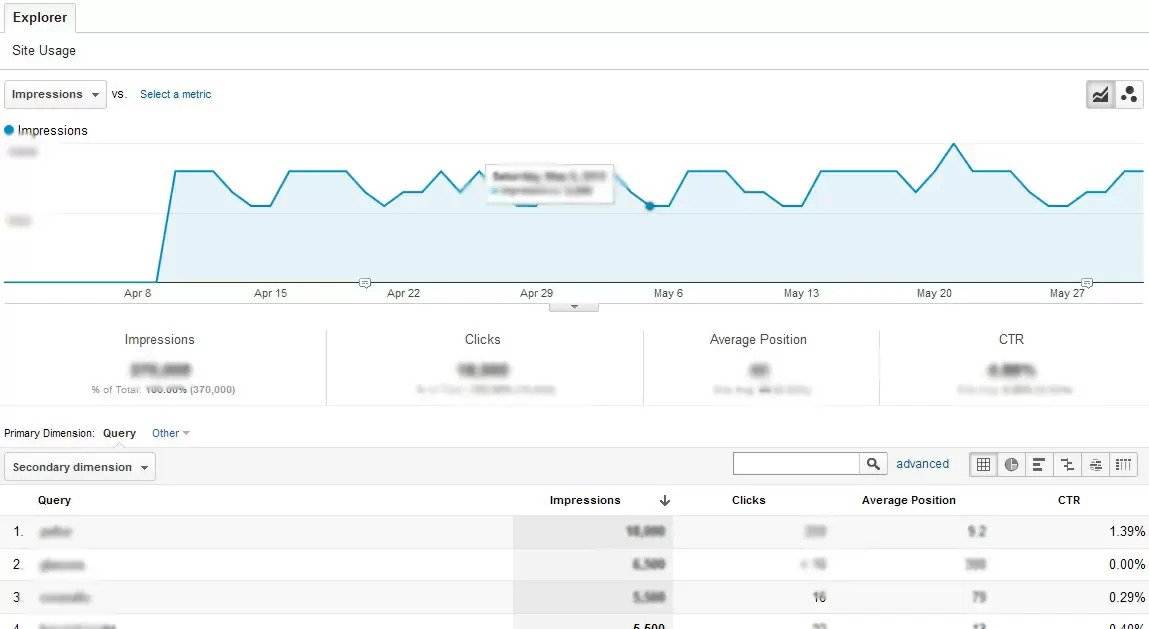
Going beyond Google Analytics Standard Reporting for keyword ideas
Now we need to get some data, that while we can gather it via several reports in Google analytics. The best way to do that is to write a Google custom report. Don’t worry, I’ll give you a link so that you can quickly and easily import this into your own Google profile. That link is right here. Click the link, and accept the report, and you will now have a slick little Google Analytics report that will show you keywords and their landing pages. A great way to determine WHERE you want to do SEO work when you are working on a keyword group.
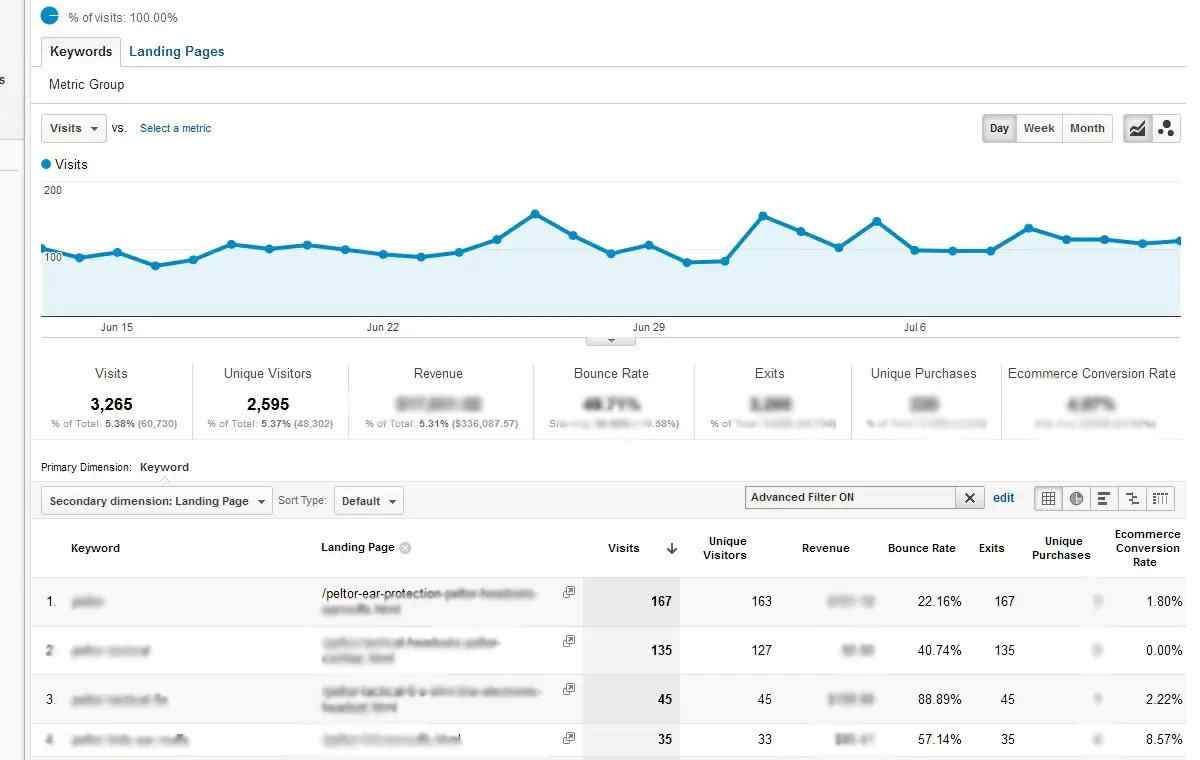
You now have a bunch of keywords ranked by the amount of traffic, and by the revenue generated – this should help you choose 3-5 keywords that you want to operate around. Go ahead and choose 5 of them, they should be somewhat similar, and in your mind, think about how you would talk about these 5 keywords or subjects in the same conversation. In other words, the 3 to 5 keywords that you chose should have a related product or theme to them. Look at the keywords and pick the one with the most visits which we will call the “primary keyword”. Now, you have chosen a good group of keywords for your 1st attempt at SEO!
Take note of the landing pages, in your report, eventually you will be writing content for each of the 3-5 pages that you may find for each of the keywords.
Measuring SEO progress is key!
Before you start your work, it’s important to know where you currently are. The only value the work we’re about to perform is going to bring is in increased traffic, rank, and conversions. In my case, sales dollars. So it’s vitally critical that you understand if what you are doing actually is having an effect. Any kind of effect. As a user of BrightEdge, I can say that BrightEdge can make that task much easier.
Using BrightEdge to measure the impact
Log in to your BrightEdge account, go to your settings, and create a Keyword Group via Setup > Keywords > View and Edit my Keyword Groups.
Once there, create a group called “SEO Work – <KEYWORD NAME>”. Change keyword name to your primary keyword in your group of 3-5 keywords. Once that is done, enter into your group the 3-5 keywords that you just found, and don’t worry about entering a landing page. BrightEdge is so smart; it will find that for you in a few days! Amazing really, and just that simple!
Using other tools to measure results
You don't have to be a BrightEdge customer to do this data collection, it's just going to be much more time intensive, and involve regular tasks every day or week. I don't know about you but I am often so busy with many projects that I simply don't have the time or forget to collect my data! Anyway, what you will need to do if you are using Google Analytics (isn't everyone?), is login to your GA account, and export all data around your search engine optimization -> queries tab, and download it to an excel spreadsheet. Then you'll need to do that at least once a week, for the next 4-5 weeks. (preferably, every week going forward from now on). Once you have done that, you will then need to pull the data into a chart, and graph the positioning of all the keywords you are interested in individually. And, keep in mind, this data is for average position, and is not actual positions over time. Once that is done, you will then need to manually pull traffic information for each keyword over time, and map that as well. The impressions that GA reports is the number of impressions you were exposed to, not the potential max impressions you could experience. (subtle but important difference!). See, you can still do it, but in my world, with hundreds or thousands of keywords, the task quickly becomes impossible to do, which forces me to focus in on just a few keywords.
Capturing other keyword ideas
Now, we’re not done, you are going to need to find a tool called “Google Keyword Tool”, and type in your 3-5 keywords that you have just choosing, and click go:
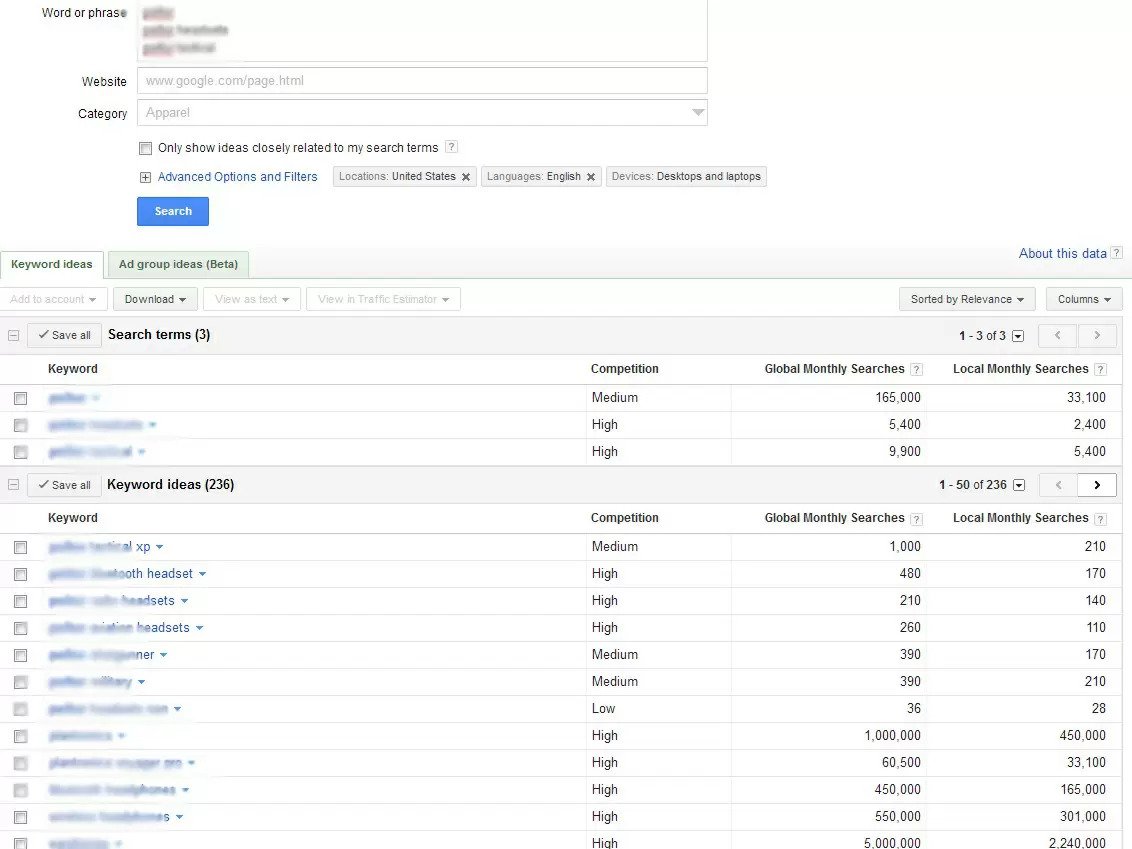
Scroll around, and look at all the keywords, some of them are going to jump out at you as not even related to the group you are working on, and others might be potential relations to what you are working on. Go ahead and add those to your keyword group tracking. It’s always good to know what keywords you might draw in to your web of SEO going forward.
Finally, you will want to navigate to the Content > Site Content > Landing pages page in Google Analytics, and filter on your primary keywords landing page, and add as a secondary dimension “Keyword” – you now have your final set of keywords to look at. Examine these, skip the insulting (not provided) keyword, and add the more relevant ones to your monitoring group. You will need to wait a few days to collect data - as GA is generally 2 days behind on rank tracking.
Let’s write some great content!
Google is always saying it’s about the content. And Google’s Panda Update and Penguin update just reinforced this message in a very strong way. If you cut to the chase, both of these updates simply enforced for the 1st time in a really, serious meaningful way that stance from Google. Panda hit spammy links and content, and Penguin definitely hit the spammy content. So, if you write great content that your users would want to spend time reading (time on page), you’ll be accomplishing one of the goals of Google, which should, help you get more traffic.
What we want to do is write 3-5 articles of content around the keywords that we’re supporting. Each page is going to have 1 major keyword, and we’re going to put that keyword into the title, Meta description and in the text on the page itself. In every page, we’re going to use the other keywords we're focused on to link out to the other landing pages that we’ve found above to generate a cross linking “web” or “SEO Web” as I refer to it. And, if I have other areas on my website, that happen to be related to the keywords that I am working on, I may also “salt” those pages, with a link to my main page, supporting or voting for that page.
Some link patterns I might use:
- <A href=”landing page”>{keyword}</A>
- Find more about {keyword} <A href=”landing page”>here</A>
- It’s amazing what a <A href=”landing page”>full complement of {keyword}</A> can do for your day to day activities!
- <b>{keyword}</b> is a basic item in any shooters bag.
As you can see, it’s not always about a link with the keyword as anchor text, but it is about having that keyword somewhere around the link, and in such a way that any human (and Google bot) would easily infer that the following link is 100% about that keyword.
In building those links, you’ll end up with a link pattern that looks something like this:
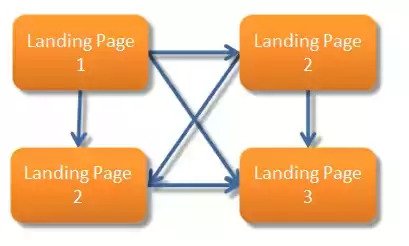
Using tools like BrightEdge can help!
Once BrightEdge pulls all of your keywords into its system, you can start looking at the recommendations tab, and look for the pages you have been working on. By looking at these recommendations, you can take action on what BrightEdge is recommending, to help improve positioning on each of those landing pages. If you do tie your keyword to a specific landing page, those recommendations for that page, will directly tie to your keyword, and will help you to easily improve your pages. And, BrightEdge has a great “assign task” system that will help you even more, by simply clicking and choosing who needs to act on the requested task.
It doesn’t get much simpler than that!
My Results : 4x traffic increase with basic SEO tactics
So what happened to my website, when I started this activity? We’ll, let’s take a look at the metrics, and see what we find for my keyword of “Peltor Headsets” – which lands on my websites page of Peltor Headsets. (Yep – I just did a link build there too!)
Here is what Google Analytics says about my keyword now:
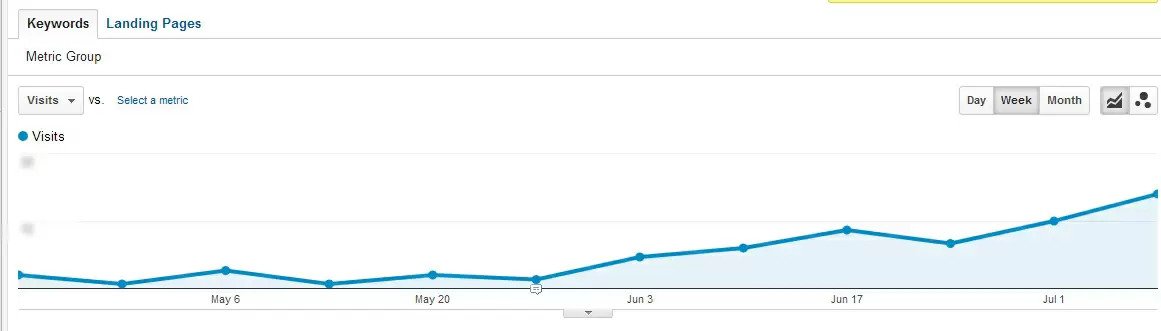
I have moved from position 9, to position 5 in about 5 weeks. (I started my concentrated work in April/May). As you can see, I saw a big drop in June, which I could have got discouraged about, but I didn’t and I kept building by SEO Web around that keyword. As I continued my work of developing content, my keyword positioning rose to new highs, which is what we would expect with all that hard work.
But there is more that we need to check. We improved ranking, but did we improve traffic? Google analytics can tell us that.
In a little less than 5-6 weeks, we’ve taken our traffic and roughly increased it 4x. Add this up across many keywords, and you’ll get significant results in your SEO program, all through a little bit of hard work developing content, and through content that you can control directly!
How to become an even more efficient SEO Machine!
So, you pulled the traffic and ranking information from Google Analytics or your favorite analytics package, right? Two reports, easy peasy! Well, have I got news for you. BrightEdge really makes it even easier through its integration with Google Analytics.


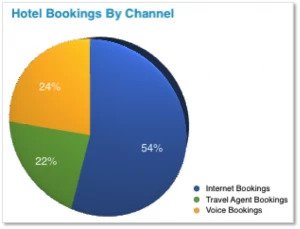
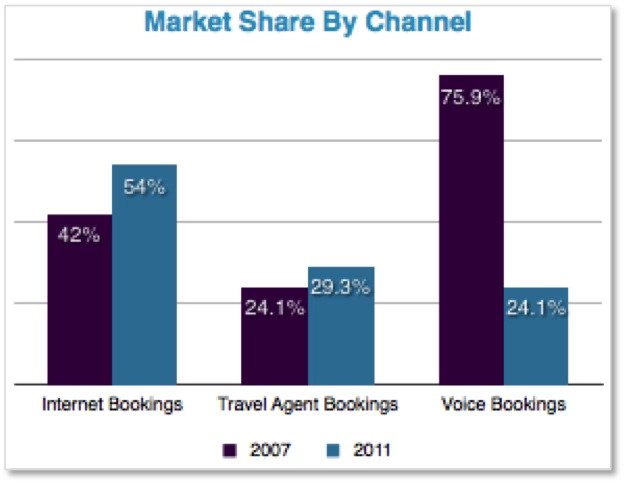 2. Online is the fastest growing channel - The share of online channel bookings has grown 25% since 2007 while those of travel agents and voice bookings has collectively decreased. Clearly, this growth has been at the expense of bookings from the other channels, including Voice Bookings whose share plummeted from 75% in 2007 to 24.1% in 2011. The next section illustrates how the growth of the online channel is a mixed bag.