Google Algorithm Updates: A Running Timeline of Major Changes

tvura
tvura
M Posted 4 years 2 months ago
t 9 min read

Latest Google algorithm updates: 

  1. Core Update (September 2022)
  2. Helpful Content Update (August 2022)
  3. Core Update (May 2022)
  4. Product Review Updates (April, December 2021) 
  5. Page Experience Update (2021) 
  6. Core Updates (June, July, November 2021) 
  7. Core Update (December 2020) 
  8. Core Update (May 2020) 
  9. Core Update (January 2020) 
  10. BERT (October 2019) 
  11. Core Update (September 2019) 
  12. Site Diversity (June 2019
  13. "Medic" Core Update (2018) 
  14. Google "Fred" (2017) 
  15. Interstitial Penalty (2017) 
  16. Google AdWords SERP Update (2016)
  17. Google RankBrain Update (2015) 
  18. Google Quality Update (2015
  19. Google Mobile Update (2015) 
  20. Google Hummingbird Update (2013) 
  21. Google Penguin Update (2012) 
  22. Google Panda Update (2011) 
     

How have the latest Google algorithm updates impacted search results? 

Every year, Google updates or adjusts its algorithm hundreds of times. The vast majority of the time, the updates do not noticeably impact SERP and website owners do not even notice. However, there have been a few significant times when Google has made updates that cause obvious changes in rankings and traffic rates

This is a basic overview of some of these major changes so you can understand how the algorithm has developed over the past few years. 

Core Update (September 2022)

In September of 2022, another core algorithm update came shortly after the heels of the Helpful Content Update in the month prior. There was no information given out about this update, other than the inferred fact that it was enough changes to indicate it as a core update to Google's algorithm and to expect some changes. With it being so close to the Helpful Content Update, it's important when looking at performance that both of these updates likely are working together to help promote good content, and reduce visibility for spammy or unhelpful content. 

Helpful Content Update (August 2022)

In August of 2022 Google had announced a "Helpful Content Update", which aimed to improve the standards neccesary for searchers. This was noted to be similiar to the Panda algorithm update, which impacted poorly written content that did not hold much value to the users, and were written for search engines. Sites that produced spammy content that was unhelpful would be slapped with a sitewide penalty and would affect total site performance, and not just topical areas on your site. 

Google provided a list of questions to ask and how to approach writing for the user, which is essentially the same as content brief for writers, and also included some industries that it might impact more than others, including:

  • Online Educational Materials
  • Entertainment
  • Shopping
  • Tech Related Content

SEOs following Google's guidelines for years saw this as a big win, as it cuts down on spammy quality outranking thoughtful and helpful content on websites. See our Helpful Content blog post about it.

Core Update (May 2022)

Not since November 2021 was there a Core Update, so in May they rolled out the most recent update that would improve search relevancy and serve more useful content to searchers. By June 9th, this rollout was complete, and there were typical fluctations that we saw happen with this update, most notably to poor quality domains.

Product Review Updates (April, December 2021, March, July 2022)

Starting in 2021, SEOs saw a new kind of update, the product review update. The first product review update, which Google pointedly described as not a core update, was targeted at English-language content rolled out over a two-week period at the end of April. In terms of impact, the update was significant, but less significant than a core update and had the main effect of prioritizing the highest quality, most useful product reviews in the SERP (search engine results pages). 

The December update followed the blueprint of the April update, ostensibly improving upon it. The timing of the rollout, which took about three weeks and concluded just a few days before Christmas, rankled more than a few e-commerce retailers. 

This continued into 2022 in March and July, continuing to do minor but impactful changes regarding the way that product reviews were being ranked. 

Page Experience Update (2021)

Google’s Page Experience update began rolling out in mid-June after an initial postponement. The update introduced key performance metrics known as Core Web Vitals that now factor into rankings. It was long anticipated and, by design, did not result in major ranking changes. The long rollout of two-and-a-half months and plenty of time to prepare also helped. The 2021 update impacted the mobile user experience with the desktop update rolling out in February 2022. 

Core Updates (June, July, November 2021)

Despite a late start, in 2021 Google followed the three core update template it established in 2020, though it could be argued the June and July updates were parts one and two of the same update. Core updates tend to roll out quickly and the three 2021 updates were no different, but many SEOs questioned the timing of the November update, which began rolling out right before Thanksgiving and continued rolling out for about two weeks right through Thanksgiving, Black Friday and Cyber Monday, many retailers biggest selling season. Google continued to offer its standard guidance for core updates.  

Core Update (December 2020)

Following E-A-T guidelines is once again invaluable to this Google Core Update. Google also recommends getting to know quality rater guidelines in order to understand how Google systems work and how your content is rated. Creating informative, unique and optimized content that speaks to your readers will continue to help the rankings of your site.  

Core Update (May 2020)

Even though COVID-19 hit in 2020 and businesses and sites struggled to keep up with how much more digital the entire world immediately became, Google went ahead with a huge core update known as the May 2020 Core Update. Because of the pandemic, search intent changed and Google made it easier for people to find relevant answers to their questions with the update.  

Core Update (January 2020) 

The January 2020 core update broadly impact search results worldwide. Because it does not target any one specific thing, Google recommends that users pay attention to E.A.T, or expertise, authoritativeness, and trustworthiness. The content that continues to align with these objectives will be the content that then sees the best rankings. Better content contributes to this superior user experience, and the easier it should be for brands to see their material rise on the SERP, regardless of core updates.  

BERT (2019)

BERT – Bidirectional Encoder Representations from Transformers – is a neural network-based technique for natural language processing and has the ability to better understand the full context of your query by looking at all of the words in your search and delving deeper into the relevant information you’re seeking. This update was so significant that Google needed to buy new and more powerful computer hardware to process the information from the crawl.  

Core Update (September 2019)

This update appears to have been broadly targeted at downgrading sites with low-quality content as well as a rollback to fix some unintended impact from prior core updates.  

Site Diversity (2019)

The Site Diversity update is an adjustment that seeks to eliminate multiple listings from the same domain from the SERP. Multiple listings are now seen less often.   

"Medic" Core Update (2018)

The "Medic" Core Update was a broad core algorithm update, one of the updates that Google does several times a year. While Google did not confirm the specific purpose of this update, it had a large impact on health, finance, and your money your life (YMYL) pages. SEO experts speculated that this Google update boosted the rank of high-quality articles that offer advice on major life issues, such as finances and health.  

The Google "Fred" Update (2017)

An unconfirmed algo update, Fred had an outsized impact on organic listings, with a number of sites experiencing traffic declines from 50 to 90%. The exact parameters of Fred have never been confirmed by Google, but seem to crack down on sites that emphasize display ads and/or traffic monetization widgets over content as well as making said elements difficult to differentiate from actual on-page content.  

Mobile Interstitial Penalty (2017)

This SEO penalty applied to sites running interstitial ads that blocked the user's view of the content on the page. This was not a blanket penalty on all interstitials. Instead, it focused on intrusive interstitials on mobile and interstitials that require the user to dismiss them manually.  

The AdWords Update (2016)

In Q1 2016, Google fundamentally changed the way that paid search listings appeared on the SERP. They removed the traditional 4-pack placement in the righthand column (where the Knowledge Graph element now appears) and integrated them into the top of the main listings. The integration trend would continue, with the icons labelling listings as paid advertisements gradually being deemphasized over time. 

The RankBrain Update (2015)

When RankBrain went live, it introduced artificial intelligence to the Google algorithm. This part of the algorithm has the power to monitor user behavior and response to queries to ‘learn’ more about intent and the value of certain pages. It is now Google’s 3rd most important ranking signal.  

The Quality Update (2015)

This update, also known as Phantom II, was noticed a few weeks after the mobile update went live. This update rewarded sites that focused on the user experience and high-quality content while penalizing those with too many ads and certain types of user-generated content. Once again, thin content was hit hard. This is likely one of the reasons that thin, ad-heavy user-generated sites, like HubPages, were penalized while other user-generated sites with lots of high-quality content, like Quora, saw a boost.  

The Mobile Update (2015)

The mobile update forced all sites to become mobile-friendly or risk being penalized in the SERPs. Rather than mobile-optimization being reserved for the brands at the forefront of the industry, every site needs to have a responsive version.  

The Hummingbird Update (2013)

The Hummingbird update was a change to Google’s algorithm to make it smarter at interpreting semantic search. It was designed to help Google better understand intent and context. This forced marketers to shift towards longtail keywords. It also encouraged marketers to develop pieces based more on user intent and needs rather than a single keyword.   

The Penguin Update (2012)

About a year after the Panda update, the Penguin update was released, creating another push towards quality content. This update targeted spam by looking at backlinks. It rewarded those with quality, organic backlinks and penalized those with artificial backlink profiles.  

The Panda Update (2011)

This update was first launched in 2011, but it has had several updates over the years. In the beginning of 2016, Panda was added to Google’s core ranking algorithm. 

Panda targets spam and weak content that does not help the end-user. Thin content, duplicate content and content with too many ads are all penalized. 


How do I succeed when the Google algorithm keeps changing? 

If you look at the timeline of Google algorithm changes, you will notice that there is a clear purpose and pattern. Each algorithm update is geared towards improving user experience and helping searchers find the information they need as quickly as possible. The Google updates all focus on weeding out poor content and boosting the content that fills this need. 

When developing content for your site, you need to: 

  1. Think less about the search engine and more about your end-user 
  2. Create content that will engage readers at every stage of the buyer’s journey 
  3. Develop a site that is easy to navigate 
  4. Use a variety of types of content, including images, videos, infographics, and text 
  5. Perpetually monitor your site so that you can identify any changes in traffic rates and correct any drops as quickly as possible. 

Google’s algorithm is always changing because it is trying to provide the best information as quickly as possible to its users. To keep a high SERP rank and presence no matter how the algorithm changes, create high-quality, user-friendly content. 



Breaking Down SERPs to Increase SEO Results

enewton@brightedge.com
M Posted 6 years 11 months ago
t 9 min read

When a user types a query into a search engine, they are not interested in scrolling through dozens of SERPs, or search engine result pages, to find the answer to their question. They expect the algorithms within the search engine to properly sort through the available relevant web pages and return the results on the SERP that will best answer the question. As search engines and online marketing have matured, the algorithms have gotten considerably better at performing this task.

Given the expectations of users that the highest-ranking sites are the SERPs that will be the most relevant to a particular query, it is no wonder that the majority of clicks will go to the top-ranking websites. According to BrightEdge Research, an estimated 76% of clicks go to page one of the Google results and the first five organic results accumulate 53% of clicks.

It is clear that your position in the results has an impact on the amount of traffic your site receives. Understanding the SERPs, however, can be a challenge. The algorithms that determine the search results are regularly changing and many brands find themselves feeling overwhelmed when trying to understand and keep up with the results pages.

Here is what all businesses should know about the SERPs as they develop their websites.

What is a SERP?

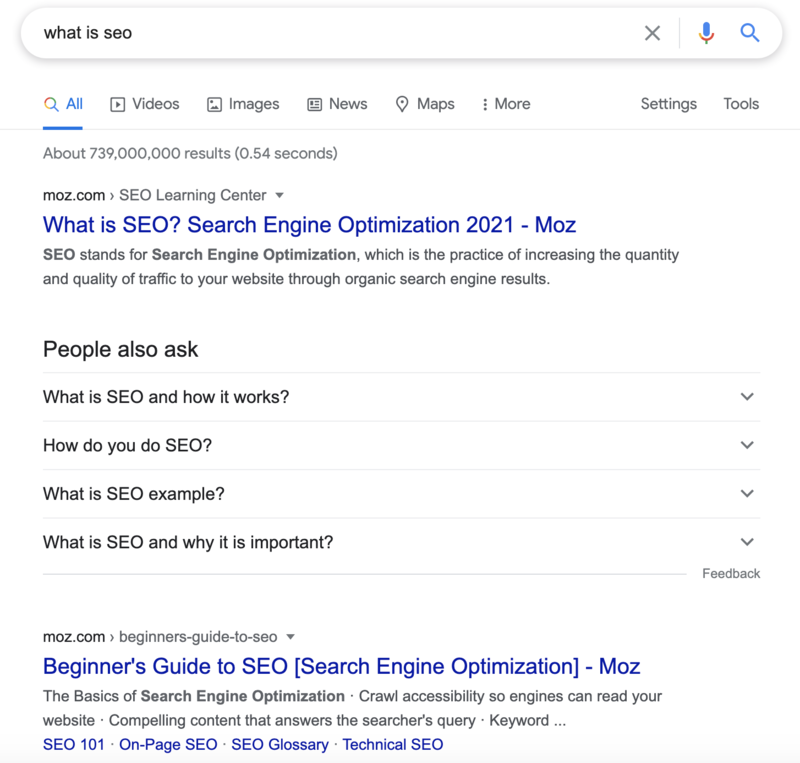
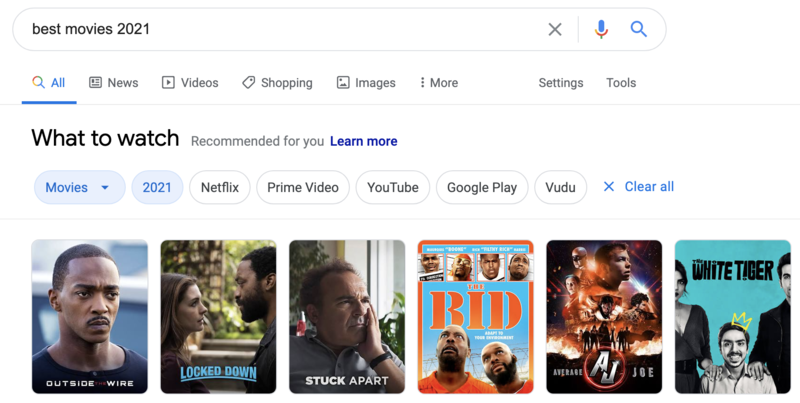
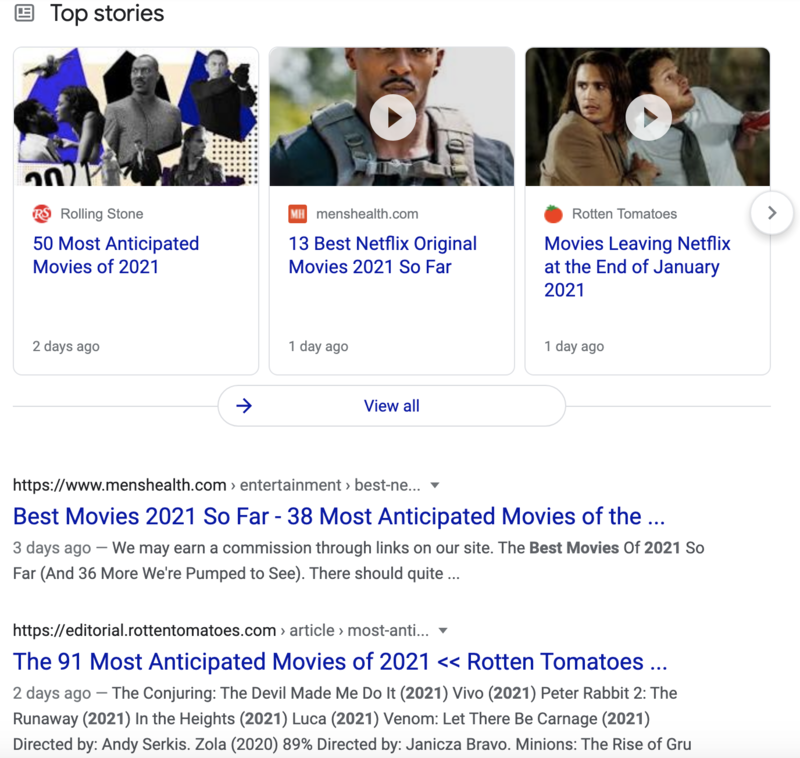
SERP stands for Search Engine Results Page and it refers to the results that show up on your screen after you type in a query to Google or another search engine. Search results often combine a few different types of content, such as paid advertisements, organic text, images, videos, or rich answers - such as Quick Answers. The types of content that show up in the results pages depend upon the type of query the user made and how Google believes it will be best answered. brightedge shows example of the SERPs

The SERP is your SEO opportunity to show the user that your site has value to offer them through an engaging title and inviting page description.

The order that the pages appear in the SERPs is determined by a complex algorithm that is carefully guarded by the search engine itself. Although we do not have access to the algorithm, we know that it judges sites based upon hundreds of criteria that help to determine the relevance and value of a particular web page. Sometimes, Google will also confirm to webmasters that they have made changes to their algorithm and offer some insights into how that update impacted the SERPs. This was true when they made major changes such as RankBrain, the Mobile Update, the Penguin update, and the Panda update.

What does universal SERPs refer to?

The search results are now a visually rich environment constructed to map rich media and text content to search intent. There are more than 50 universal elements in the SERPs and with different combinations, they can be combined into hundreds or even thousands of layouts.

What are the most common universal SERP elements?

Based on a study by BrightEdge Research the top five elements last month were:

  • People Also Ask appeared in 57% of desktop SERPs last month and 61% on mobile. The appearance rate of People Also Ask has by far the highest appearance rate that BrightEdge Research has ever recorded.
  • Video thumbnails appeared on 37% of desktop SERPs and 34% of mobile SERPs.
  • Images appeared on 21% of desktop and 24% of mobile SERPs.
  • Quick Answers appeared on 19% of desktop and 21% of mobile SERPs.
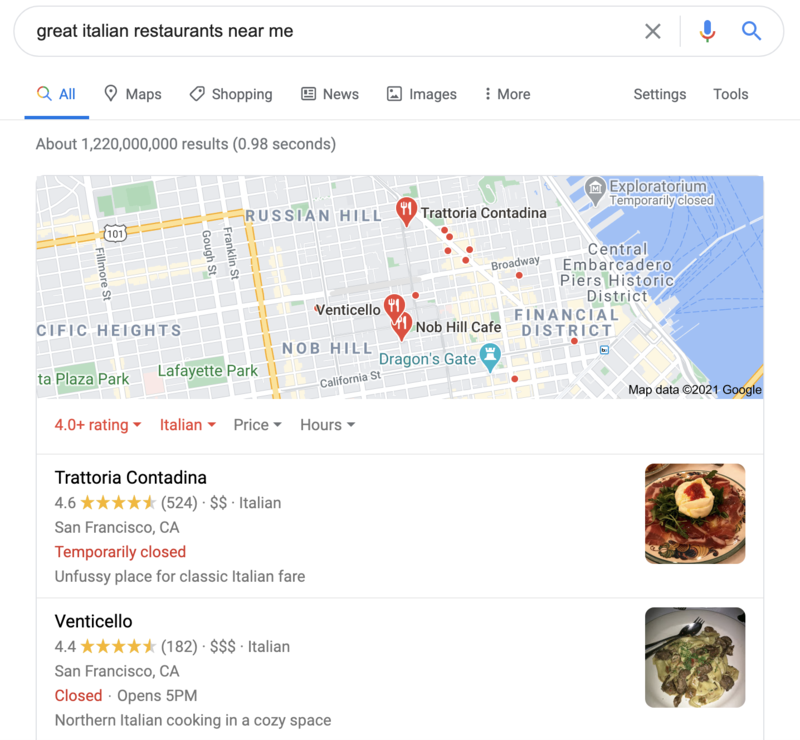
  • Local 3-Pack appeared on 20% desktop and 18% of mobile SERPs.

Demo Daily Pulse For Daily SERP Results

What is the clickthrough rate of different SERP layouts?

The combined clickthrough rate of the top 15 organic positions, including universal elements, varies from 43% to 92%, depending on the layout and device. The higher CTR is for the informational searches that people do at the beginning of their customer journey and the lower ones are more likely to be closer to transactions.

  • SERPs with video thumbnails had a total top-15 click listings rate of 77% on desktop and 52% on Mobile.
  • SERPs with quick answers had a total top-15 listings click rate of 92% on desktop and 89% on Mobile. Searchers likely click on more than 1 listing as they are in information seeking mode.
  • SERPs with images had a total top-15 listings click rate of 54% on desktop and 48% on Mobile.
  • SERPs with Local 3-Pack had a total top-15 listings click rate of 58% on desktop and 43% on Mobile.
  • SERPs with Site Links had a total top-15 listings click rate of 87% on desktop and 60% on Mobile.

What is a no-click search? 

A no-click search is one where the search intent is satisfied by the SERP and the person does not arrive at your web site. If you are not listed in the SERP, you have zero chance of engaging the searcher. It is always better to be exposed than have your competitor exposed, and it is better to cannibalize your own clickthrough than have your competitor cannibalize it.

Should I care about my SERP rank in no-click searches?

Yes. No-click searches can matter a great deal because they are usually on mobile, usually have local intent, and transaction intent. Examples include, “pizza near me,” “gasoline near me,” “hotel near me” or a branded search to find the address and directions while driving. Appearing in the Local 3-Pack is critical to bringing this search intent off the street and into your business.

Can I have more than 1 organic listing in the SERP?

Google is trying to eliminate listings from the same domain in the SERP, but it still occurs in the following cases:

  • Quick Answer results usually have 2 listings. One in position 0 in the answer box and one in position 1 or two just below it.
  • Local Results also can list the business and phone in the Local 3-Pack and a standard result below in positions 4 through 12.
  • When you update your metadata, you will sometimes see the old and new listings together in the search results for a few weeks.

How often does Google crawl and update the SERPs?

Google is always crawling the internet depending on its need for the freshest information from key sources. For example, the Twitter feed that appears with brand searches is usually within a few hours of current.

Google crawls most sites at least once a week and the SERPs show a significant movement weekly, usually on Monday or Tuesday.

What is People Also Ask?

This is a relatively new format that is now appearing on 60% of desktop and 63% of mobile results. It is a block of questions that when clicked on produce a snippet answer and then expand the list of questions available.

Can you get traffic from images in Google Images?

The answer is a qualified yes, but it is less likely than many of the other SERP layouts. Consider a Pinterest style strategy of creating branded memes and infographics so that if people find and download them from Google Images, your brand and URL will have a chance to interact with the searcher.

What are the factors that impact what users see on SERPs?

Location

A user’s location will impact the SERPs they see, particularly when they make a local query such as "great Italian restaurants near me."

Learn what SERP stands for - BrightEdge

Although location has the heaviest impact on local queries, it is important to note that local queries comprise a sizable portion of online traffic. Mobile-first index updates now account for more than half of all online traffic and 88% of smartphone users and 84% of tablet users say that they use their devices to conduct local searches. Local search results also have a sizable impact of sales. About half of smartphone users will visit a store within twenty-four hours of a local search and 78% of local-mobile searches result in purchases.

With this location factor in mind, to increase your opportunity at valuable SERPs, you should be focusing on:

  • Claiming your business on Google+ Local
  • Filling out your Google+ profile with content and quality images while also working to attract reviews
  • Optimizing for local search by prominently featuring your address and creating some content for local audiences
  • Maintaining and checking for consistency in your Name, Address, and Phone Number across all listings for your organization

Relevance on SERP

Google wants to display content that is highly relevant to users. It determines whether or not your content is relevant by looking at the keywords you use and the topics that your site covers.

Keywords have been an SEO best practices topic that has sparked considerable debate since the industry was in its infancy. These terms are important because they help to indicate to the search engine the topic that you will be covering. At the same time, however, keyword stuffing your content will detract from the buyer's journey and user experience and will actually hurt your SERPs ranking. You should instead focus on using a central keyword that you have identified through keyword research, and then filling out the content by using that keyword and semantically-related keywords. This will help to show the depth of your content and how well you cover the topic at hand.

To keep your content relevant for your audience, keep these ideas in mind.

  • Use keyword research to identify highly applicable topics your audience will appreciate
  • Create material that explores the topic well, naturally including semantically related keywords
  • Make your relevance clear by using your keyword a few times in the content, in the title and H2 tags, in the alt text for images, and in the URL

Value and SERPs

Google wants to display content in the SERPs that is relevant to the query and material that adds value. For a site to offer this value, it needs to be able to provide the audience with answers to their questions on an authoritative level - not a thin overview of the topic. This is an important way to achieve a Google answers box. A quality site will not just be a regurgitation of everything else online. Instead, it will offer the unique perspective of an experienced professional that users know they can trust.

Google will judge the value of a piece a few ways. It will look at the depth of information you provide on your site. Not just on the individual page, but throughout the entire site. For example, if you have only one article on a topic and the rest of your site deals with completely unrelated material, you will be ranked lower because you will have lower domain authority.

Google will also be looking at how users respond to your content. If you have a high bounce rate, for example, that would indicate that your content is not meeting the needs of your audience. It could also mean you have orphan pages. On the other hand, ample backlinks and a low bounce rate would show search engines that your content is viewed favorably and deserves to be higher up in SERPs.

Does schema matter in the SERPs?

When Google added RankBrain to their algorithm in 2015, they were quite open about its importance, impact, and role. It was designed to use machine learning to better understand the completely unique queries that Google sees every day. When the search engine announced this development in their algorithm, they said that it has become the third most important ranking factor and that to remove it from the algorithm would do as much disservice to customers as failing to serve half the pages on Wikipedia.

For your site to be optimized for artificial intelligence and machine learning, however, you need to make the topic and value of your material clear. Using schema markup can be an important part of this process. It will tell Google what your site contains, helping the algorithm know when to display your material in the SERPs. It will also aid in ranking well for voice queries using voice search as a range of devices start to handle queries and results.

Using schema tags can also be a powerful way to improve the appearance of your site on the search results. Google offers a handful of rich snippets and People Also Ask listings that help to attract the attention of users because they offer a visually-pleasing listing. When you optimize your content with schema, you can be sure that your content is prepared to take advantage of any rich snippet that becomes available. To discover the added value of schema tags, check out this white paper on schema and SEO success.

Check your SERP rank with BrightEdge

Use BrightEdge as your Google SERP checker

Can competitors bid on my brand terms and show up in paid ads on the SERPs for my brand terms?

Yes, Google allows companies to bid on brand terms but those competitors are not allowed to use your trademarked brand terms in their paid ad copy. If you see this happen, you can file a trademark complaint with Google and they will usually remove the non-compliant ads within 6 weeks. You will need to prove you have the registered trademark in each country by providing the trademark registration number when you file a complaint.

Users' history and the SERP

Google used to also like to track the queries and sites that visitors click on and use this insight to inform decisions made in future SERPs. As of Q3 2018 and post-GDPR they are pulling back on personalized search.

As a site owner, however, this demonstrates the importance of a strong distribution plan and engaging titles and meta descriptions. Your distribution plan will expose more people to your material, building awareness and traffic. Your descriptions and title will also encourage people to click on your material. When users show a preference for your page, then your site will be featured in more personalized search results for those users.

SERPs can sound confusing for many site owners because they are regularly in flux and do not even necessarily appear the same way for two different people. The better you understand the SERPs including mobile SERPs, however, the easier it will be to grasp where you need to optimize and what can be done to build your site a strong following and great business growth.

Tracking SERP elements on a daily basis

BrightEdge Daily Pulse was created for SEOs to track search engine's SERPs on a daily basis. Because of the volatility of some important keywords, BrightEdge introduced Daily Pulse to help track changes in ranks to all SERP elements. It offers screenshots of the SERP for a specific query, insights into keywords, performance and competition on a daily basis. The technology behind Daily Pulse crawls the SERPs multiple times in a day to provide the most accurate data for keywords.

If you're looking to learn more about how you can succeed in SEO, sign up for a demo of our platform.

March 12, 2019 SEO Algorithm Update

enewton@brightedge.com
M Posted 7 years ago
t 9 min read

Something really strange happened to me in March - something that never happened before. I visibly lost rank on some high-volume pages due to an identified algorithm change.

Brightedge shows how the google update march 2019 affects seo results and how to respond

As a white-hat practitioner working on a brand property, I usually benefited from the prior algo changes that were released to thwart black hats and affiliates. The SERPs got cleaner and more directly relevant to the search intent. And that was good for users and for me.

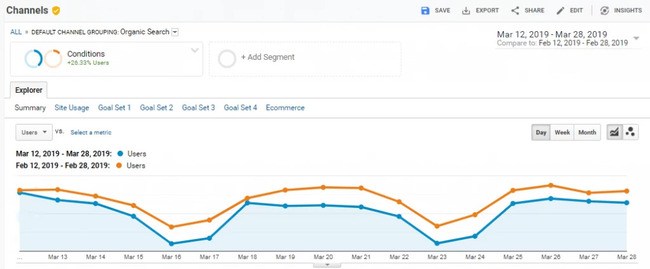
I am the head of SEO in an SEO technology company, so continually growing SEO takes on added responsibility in addition to that faced by the community. My SEO traffic was up 80% year-on-year in February, and all was good. Exec updates were fun as SEO grew in absolute and relative terms. But then in mid-March it was down 20% week-on-week.

It is interesting to experience this first-hand, and the upside is that it helps me understand what others in the community might experience at these times, so I decided to publish a blog to help guide people through it.

So how should you respond when you see unexplained dips?

  1. Don't react for 24 hours to see if the analytics data was incomplete.
  2. Check and see if any changes were made to the site that might have blocked the spider's crawl or a mistake in robots.txt.
  3. Look at the calendar and decide if there was a vacation that took people away from their computers.
  4. In analytics, compare the effected period with the prior period and the year-prior period. If all channels are down this year and last it is a seasonal effect.
  5. Check Google Search Console for notices, alerts, and errors. Then explore what happened with Impressions, Clicks, and CTR.
  6. Check the channel mix proportions and see if another channel, like Direct, grew by the amount that Organic dropped. This could indicate a tracking or cookie problem.
  7. Review Google Webmaster Blog and social media to see if there is discussion of an algo change.
  8. You can post a question to the BE Certified Linked In group and see if others have seen a similar issue.
  9. Determine if downstream results are also suffering or not. Often traffic from lower rank positions engages and converts better. If you see traffic down and leads holding steady, it suggests that Google has done a better job of understanding and mapping search intent to content. In my case organic traffic was down, bounce rate was down (which is good), time on site was up, conversion was up, and interestingly total conversions from Organic were up month-on-month.
  10. Sometimes Google rotates new content into top positions to balance the self-fulfilling nature of high rank and traffic. It gives it more data to assess the desirability of the content.
  11. Keep in mind: Organic is still the largest channel at 48% on average and much higher for B2B companies, Organic is a long-term play, so think in terms of months and quarters, Organic traffic has no media cost, so the ROI is usually the highest of any channel.
  12. Now you have information and data that will help contextualize and explain the impact of the change. Showing that you have a good handle on the situation, even if you do not have an immediate fix, will go a long way to calming nervous executives.

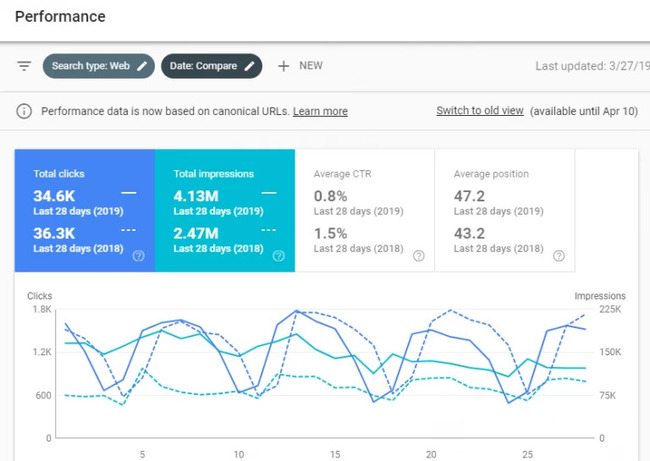
Google Search Console Y-o-Y comparison showing effects of the google algorithm update march 2019

Here is a snapshot of Google Search Console year-on-year comparison. If you have not set up Google Search Console for your site, it is a must.

Google has filed for patents defining its use of neural matching, a component of its intent matching, but different from RankBrain. Neural matching uses synonyms to interpret search intent and select content for the SERPs. Barry Schwartz reported that Danny Sullivan of Google said that neural matching is in use in 30% of queries. Schwartz explained that "RankBrain helps Google better relate pages to concepts. Neural matching helps Google better relate words to searches." Glenn Gabe reported that Google clarified that the March 12 update was not related to neural matching enhancements.

So if your traffic drop was due to an algo change what can you do?

In the narrow sense and short term, not much. That is why BrightEdge does not closely track or analyze algo changes. They happen every day and Google's guidance and BrightEdge best practices are consistent:

  1. Focus on high-quality content
  2. Be authoritative, deep, and relevant, target over 1000 words per piece and preferably over 2000 words
  3. Be original, fresh, accurate, and current
  4. Be well liked and linked to internally, externally, and socially
  5. Provide excellent customer experience and site performance
  6. Consider using schema markup, which Google has been promoting since 2011 and people are starting to report positive rank and traffic impact from schema

This 6-point list will likely expose some areas in the content that has dropped that could use attention. If you apply these guidelines to existing content, you will, at a minimum, make content that is better for the users and voice devices and probably will improve in SEO performance as well.

Applying this thinking to my current rank-drop content, I noticed that the publish date of my piece was older than the publish date of the content that ranked above it. Further my title tag had a 2018 in it. Both of these violate #3. I updated the title tag, content, and publish date and I moved up 3 positions. It is a bit ironic that I published a blog on publish date and freshness around the time this happened.

The particular pieces were topical extensions from my core topics and themes, so there is less depth on these topics in the domain. That violates #2. This will require deeper content clusters and may take time. See also if you are interested our 3-part deeper dive on clustering as latent semantic indexing.

I have not promoted the pieces that dropped socially in a while, #4, so I will take that step also.

See, so Google's guidance is constant, but its algo tweaks are its effort to align further with that guidance. If you fail to keep these guidelines in mind and in execution, you could be at risk of losing rank as Google uses RankBrain AI and figures out ways to better align with what it suggested all along.

Algo Updates: Should You Worry About Them? | BrightEdge POV Paper

maspillera
maspillera
M Posted 8 years 10 months ago
t 9 min read

Algorithm Updates

If you've been in SEO and content marketing for a while there's a good chance that this term evokes certain kinds of images and emotions for you. Some of them might not have the most positive connotations to put it mildly. There are SEOs out there with memories of doing intensive recovery work to bounce back from rank drops or manual penalties associated with major Google algorithm updates.

The SEO press likes the stimulation and galvanization of algorithm updates. If your site does not have spammy backlinks, thin content, no mobile solution, too many monetization pop-ups then the algorithm updates were probably less of an issue for you and you probably were not subjected to fire drill reactions after falling in rankings.

brightedge pov algorithm updates

The fire drills are, however, counterintuitive and are indicative of a poor understanding of where quality white hat SEO and content marketing have progressed in the contemporary SEO era. As an industry, SEO and content marketing are well past the age of "chasing the algorithm," and are now far more focused on connecting with and engaging target audiences.

To help address this issue we published a new BrightEdge Point-of-View paper that answers the question of whether you should worry about algorithm updates. In the article we cover the following subjects:

  • How updates from Google and other search engines are moving SEO into to a 1-to-1 relationship with user experience
  • How SEO best practices and techniques have become more transparent and well documented over time
  • Why SEO and content professionals who adhere to best practices for SEO and content development needn't fear the algo update anymore

Want to learn the whole story? Read the full BrightEdge Point-of-View on algo updates

,