
Scaling Content - Transformation in Your Organization - Seth Restaino

CPM google serp layout changes

The Content Catalyst - Search, Social and Content Interplay - Eddie Smith

CPM google serp layout changes

Navigating Secure Search - From Keywords to Content - Gene McKenna

SEO Quiz

3 Essential Elements of Content Performance Marketing

Learn how to ensure high content performance

3 Essential Elements of Content Performance Marketing

Today’s content marketing landscape is a battleground with companies fighting for consumer attention. Marketers spend hundreds of billions of dollars every year creating new digital marketing content. However, this content has limited value unless it is actually found by users, optimized to achieve maximum impact and measured to assess business results.

In this thought leadership paper, BrightEdge and SAP share numerous insights, tips and a simple 3-step process to guarantee future content performance marketing success and return on investment. The white paper also highlights key content marketing challenges that brands and marketers face

Leverage our full whitepaper to aid you in becoming a thought leader in your industry.

CAPTCHA
Solve this simple math problem and enter the result. E.g. for 1+3, enter 4.
This question is for testing whether or not you are a human visitor and to prevent automated spam submissions.

SAP Paper on Content Performance Marketing

A BrightEdger
A BrightEdger
M Posted 11 years ago
t 9 min read

In a new, free-to-download, thought leadership paper published today, BrightEdge and SAP share their insights, best practices and experience. “The Three Essential Elements of Content Performance Marketing” supports marketers as they navigate the rapidly-evolving content marketing landscape.

The content battleground

Seventy-nine percent of marketing departments hold capital budget for marketing technologies, according to Gartner’s CMO Spend Survey 2015. These technologies attempt to level the playing field as marketing departments vie for budget and prove content’s worth. Today, marketers operate on a content battleground where they fight for their content to be heard above competitive noise. In order to win, marketers need to produce content that resonates with their audience, wins consumers’ attention and converts. It is increasingly important for marketers to understand the performance of their content within the context of the broader marketplace. Marketers know they need a better approach for understanding the performance of their content. For example:

  • Campaigns need to be planned and funded based on the actual performance of content. Gone are the days of guesswork and basing campaign plans on first-party data alone. Historically marketers have been forced to rely on first-person data, which gives them an incomplete view of how their content is performing.

BrightEdge provides marketers with complete sets of data, so they can understand the complete landscape of competing content across the entire Internet. With this understanding of the content battleground, marketers can increase the effectiveness and business impact of their campaigns.

  • Ecommerce marketers need to understand how content performs as it relates to the factors that drive conversions for ecommerce. Offers, calls to action and promotions are great examples here.

Unfortunately, most marketing teams don’t have the resources, technology or know-how to efficiently and accurately measure and analyze the sheer volume of data that exists around their content or competitors’.

Where content marketers are getting it wrong

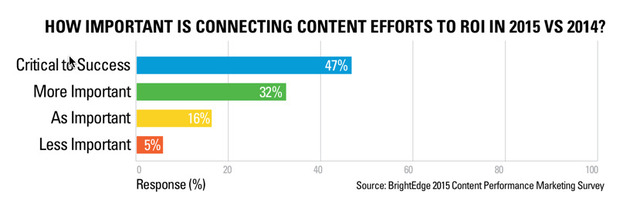
Marketers spent over $135 billion creating new digital marketing content in 2014. However, this content has limited value unless it is actually found by users, optimized to achieve maximum impact and measured to assess business results. This is the challenge many brands now face — a challenge to find the content marketing sweet spot that enables them to understand demand, optimize content and measure results. Brands recognize that connecting content efforts to ROI is essential to success. In fact, 78 percent of those surveyed for the most recent BrightEdge Search Marketer report state it’s either “more important” or “much more important” to connect content efforts to ROI. Connecting Content to ROI - brightedge
SAP, BrightEdge and the content performance marketing solution

SAP is one brand that has succeeded when it comes to establishing a robust and impactful content program that prioritizes data-driven optimization. In this paper, SAP shares experience from the field and provides best practices on how to develop content that delivers performance.

“We are constantly creating and refining our content,” says Jung Suh, Vice President of Digital Marketing at SAP. “With the right tools and processes, this is more exciting than daunting. We can see where our content is falling short, identify gaps, and zero in on emerging opportunities. Content performance measurement is absolutely key. Otherwise, how would we know if our money is well spent?”

As the market leader in content marketing innovation, BrightEdge understands the fundamental flaws in existing marketing technology. This paper provides unique insight into the evolution of the industry, the competitive landscape and market demand for a new approach to drive content marketing into the future.

The three essential elements of content performance marketing
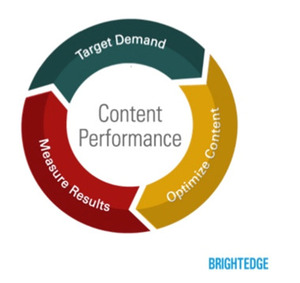
Content Performance Marketing - brightedge

In this thought leadership paper, BrightEdge and SAP highlight some of the key content marketing challenges that brands and marketers face while sharing insights, tips and a simple three-part process to guarantee future content performance marketing success and investment. Technology and its corresponding data-driven insights are the keys that unlock Content Performance Marketing’s potential. Demonstrating content and performance in an organization requires a well-defined, continuous-loop strategy containing three key elements:

  • Targeting Demand
  • Optimizing Content
  • Measuring Results

Download your free copy today and learn how to win on the content marketing battleground!



Winning the Content Battleground: Content Optimizer

Jim
Jim
M Posted 11 years 1 month ago
t 9 min read

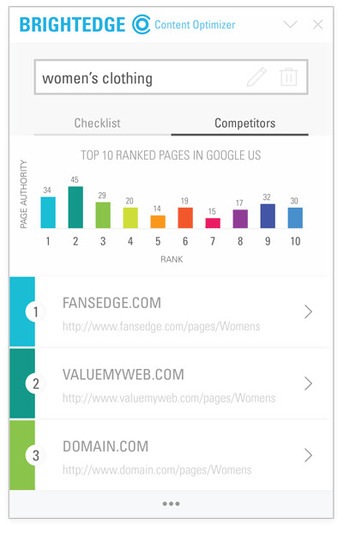
Today, we're excited to announce the release of Content Optimizer 3.0 which integrates with Adobe Experience Manager. As clear leaders in the market BrightEdge has designed this product specifically with our customer feedback in mind to address the challenges they face on the increasingly competitive content battlefield. Content Optimizer 3.0 provides an in-depth snapshot of your competitors' content along with actionable insights into how you can adjust your own content accordingly to gain a competitive edge.  see Content Optimizer 3.0 - brightedge Intrigued? Schedule your demo today. With 27 million pieces of digital content being shared every single day, we believe that understanding your competition is critical. The bottom line is that if you don’t have a competitive view, your content will not thrive in the long run.

With this new technology you no longer have to rely on trial and error to see what works; Content Optimizer 3.0 gives you an unrivaled understanding of the competitive landscape at every step of the process. Last year over 50 household name brands upgraded to the BrightEdge platform as more and more marketers share in the BrightEdge Content Performance Marketing vision. Available today, Content Optimizer 3.0 harnesses Data Cube intelligence to enable marketers to better understand how their content performs against competitors.

Content Optimizer 3.0 is powerful enough to be a standalone solution in its own right. With competitive analysis alongside actionable recommendations, Content Optimizer 3.0 helps marketers to produce quality content that is targeted for the user, optimized at the time of creation and measured at scale. Key features of Content Optimizer 3.0 include:

  • Competitor Analysis: Marketers have access to a detailed analysis of competitors’ digital content. It’s presented in a beautifully designed interface that offers immediate insights to quickly take action. Content Optimizer is the only content marketing technology that looks at competing content, breaks it down in detail, and provides recommendations so marketers can create content that wins from day one.
  • Consumer Demand Targeting: The easy-to-navigate dashboard makes Content Optimizer 3.0 more configurable to the unique needs of every marketer, regardless of industry, geography or scale. Content Optimizer 3.0 guides content authors to better understand consumer demand around specific keywords and topics, so they can take action and boost the performance of their own content.
  • Content Optimization Progress Bar: The new progress bar feature offers marketers a detailed look at the momentum of their content optimization process, while also providing real-time best practices that allow marketers to optimize all content at point of creation.
  • Tailored Content Solutions:Content Optimizer 3.0 operates within the constraints of mobile and stubborn website templates to help content authors generate tailored content solutions to maximize the performance of their content within the boundaries in which they work. 

Join BrightEdge at the Adobe Summit on March 9th-13th The Adobe Summit in Salt Lake City is the place to be from March 9-13 to learn how other marketers are succeeding and how they are using Adobe Marketing Cloud. BrightEdge is once again a major sponsor, and we are looking forward to seeing current and future clients there. We hope you are able to join BrightEdge at Adobe Summit this year. If you do come, please stop by and say hello or contact us to arrange an exclusive demo of our new technology for content marketers.

8%
increase in CTR
15%
increase in referred traffic

THE PROBLEM

As content marketing becomes more important for generating organic traffic, it becomes more important to have a well-defined process for identifying themes, producing content, repurposing content and most importantly measuring the overall gains from multiple channels.

THE SOLUTION

Ali MacDonald, Content Marketing Manager at Seagate approaches content marketing like this:

  1)  Identify themes

  2)  Perform keyword research
  3)  Develop a content plan
  4)  Create content
  5)  Measure progress

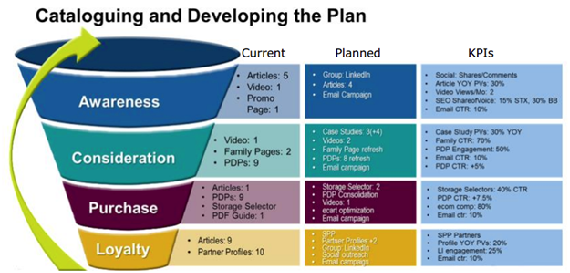
For MacDonald, the content plan in step 3 includes the marketing objective, the media asset, and the key performance metric (KPI) to measure the performance.


Tracking in BrightEdge

THE RESULTS

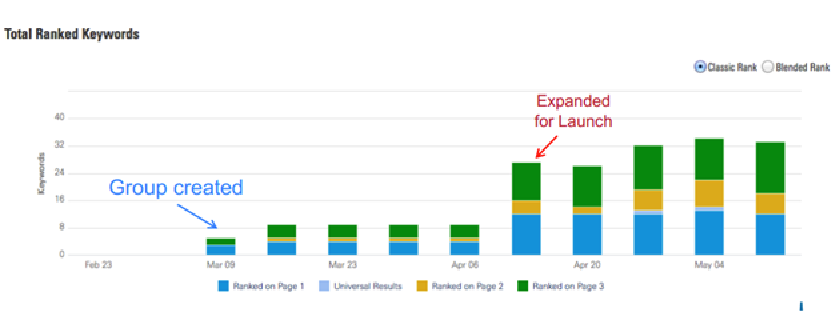
The BrightEdge report captures the dramatic improvement in ranked keywords from 5 to over 32, a 6- fold increase. In addition, the volume and quality of traffic was high with a 15% increase on referred traffic on that topic with a 20% increase in new visitor traffic. The clickthrough rate on the calls to action increased 8% and the campaign was regarded as success by management.

BrightEdge has been huge for us, very helpful.

Request a demo of the BrightEdge platform today!

Why Good Content is Key to SEO Success

ssharma@brightedge.com
M Posted 11 years 5 months ago
t 9 min read

There is a reason that content marketers and SEOs place such a high emphasis on content, but it might not be what most people think. The truth is that SEO does not favor content for the sake of content. It’s not just any content that will garner traffic and get rank. There’s a lot of noise out there when it comes to content, but deep, rich content is what drives organic traffic. It gets you links and social signals, and these factors make you look good to search engines and usually lead to favorable rankings in the Google algorithm. No one wants to read junk that is full of spam links and meaningless text.

Overall, good content is what enhances the user experience, and that’s why Google and other search engines rank good content higher. Above all, it’s important to realize that more content does not equal good content. Don’t be part of the crowd that turns what can be said in three sentences into a 2,400-word exposé or a piece that disguises what is obvious as something profound.

What is good content

A deluge of low-quality content is causing internet users to put up barriers and raise their expectations, so those seeking to be heard have to know how to get past those barriers and meet expectations—and it’s done with good content. And what used to be enough won’t be enough anymore. An e-book once every four or six months may have been enough last year, but this year you might need an e-book every month to keep up with everything else being published on the Internet. Everyone is competing for an increasingly scarce resource—people’s attention. When your content is mixed in with all the other content, it will start looking like something people have gotten really good at ignoring: advertising. That is, unless your content is really good. So become a thought leader. Be an intelligent contributor to conversations around issues that really matter. 

Optimize good content for better SEO

It’s also important that you optimize your content, because just like Google favors rich content over poor content, optimized content is favored over non-optimized content. One way to do this is by coding the open graph markup. This will optimize the content for social sharing which will, in turn, drive more traffic and get more people to discover the content. When more people find your content, it’s more likely to earn good content links from influencers down the line. Another way to optimize content is to internally link your content with your other pieces of content as well as to your landing pages. This will allow your content pieces to pass more of their authority to the rest of your site—especially to your landing pages.

Make sure, however, that this is done with the benefit of the users in mind rather than to strictly boost your SEO efforts. Google’s algorithms are becoming more and more aware of malicious internal linking, so if users don’t benefit, steer away. Content may be king, but good content is emperor. Google and other search engines care about user experience, so create content with the user in mind. If there isn’t a need, don’t produce it. With more and more bad content out there, it’s becoming clear that the biggest threat to content marketing is content marketing. Stand out from the rest by creating content worthy of users’ time.

Analyze Content Performance with Real-Time Data

A BrightEdger
A BrightEdger
M Posted 11 years 5 months ago
t 9 min read

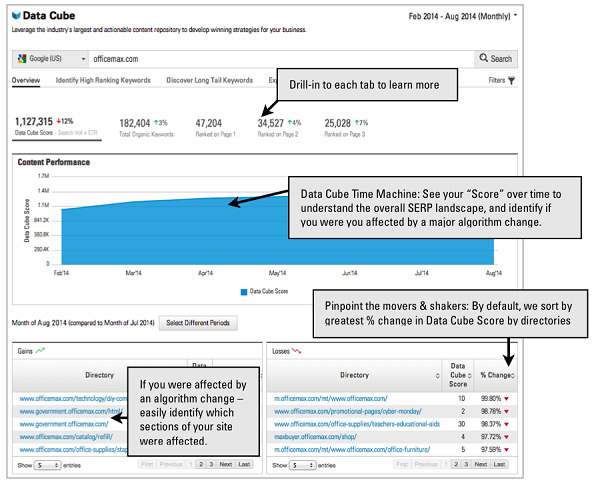
We’re excited to announce that the Data Cube Time Machine and the Data Cube Score are now generally available. These innovations first previewed at Share14, and leverage the power of the BrightEdge Data Cube.

The BrightEdge Data Cube is a massive content repository - the industry’s largest data set made up of billions of pieces of information which include: keywords, search terms, rich media and content, along with their performance on the Web. Backed by a robust data set, both the Data Cube Time Machine and Data Cube Score allow marketers to seamlessly access historical and real-time competitive analysis and performance insights of their content.

Data Cube time machine: explore trends and travel in time

With the Data Cube time machine, marketers can easily understand and analyze content performance historically and over time to identify which content is successful – including rich media (images and video). Marketers can access month-over-month performance comparisons to help them set benchmarks and achieve outstanding content.

Armed with insights on performance and their Data Cube Score over time, marketers can identify the impact of algorithm updates, track branded versus non-branded keywords, stay-ahead of seasonal trends, and improve performance over time.

Analyze content performance with data cube - brightedge

Data Cube score: quantify and analyze content performance

The Data Cube Score is a key performance indicator (KPI) of how well content is performing. Dynamically calculated based on billions of data points, the score lets marketers see how their content is performing, either site-wide or for a specific section of their site. The score also allows marketers to easily identify the state of their content performance and gauge how their content compares to their competitors in real-time.

Together, the Data Cube Score and Data Cube Time Machine give marketers the insights they need to target demand, optimize content and measure results.

Powered by the massive BrightEdge Data Cube data repository, these insights are delivered as comprehensive, lightning fast, actionable intelligence, that help marketers set budgetary priorities for content development and marketing. 

analyze your site with data cube - brightedge

New research

We leveraged the Data Cube to power our latest research report, Consumer Demand For Autumn Travel Report, which details consumer demand for online travel and accommodation sites during this busy holiday season. Learn how leading companies are leveraging content to engage consumers, and which strategies perform best.

Learn more about how to make the leap into content performance marketing here.  

Mining Data for SEO and Content at Scale

enewton@brightedge.com
M Posted 11 years 7 months ago
t 9 min read

Sure, you’ve got content – but how is it performing? Is it targeted to what our users are searching for? Is it producing results? These are the questions explored in this session at the BrightEdge Share 14 event, which wrapped up last Friday. Brands like Adobe, OpenTable, Rosetta and SearchLaboratory all gave tips on how to mine data for content and SEO performance insight. Denis Scott of OpenTable was up first. Just some of the questions data can answer, he says, are as follows:

  • Business trends
  • Types of customers
  • Sources of traffic and impact on results

He’s going to focus on the last point. At one point, OpenTable and toptable needed to do a brand/site migration when OpenTable acquired the other. They had a lot of work ahead of them, says Scott.

OpenTable created a forecast for what the traffic might look like first on a line graph. They needed to show the strategy was working, so apart from traffic data, they wanted to look at other factors like PageRank, Scott says. And the team created weekly dashboards in BrightEdge to organize it visually.

The data showed that even though there were traffic dips, there were positive SEO signs. And data was measured in other channels, too, like PPC and email, during the rebrand. Scott says they put together PPC and SEO campaigns to see how it looked year over year, and found where SEO dipped, PPC picked up.

The takeaways, says Scott, are:

  • Start with what you need to answer
  • More data will exist than you need
  • Tell the obvious story which is usually the answer

Next up was Chris Attewell (@twitter) of SearchLaboratory. He used Wal-Mart as an example for his talk on keywords. For a large retail sitelike Wal-Mart, each category may have multiple subcategories on the site. So, where do you focus? he asked. What keywords do you look at?

You need a strategic view to know where you can get the best ROI, says Attewell. The challenge is that there is a lot of data coming from multiple data sources, and putting it together into a meaningful, actionable system is key, says Attewell. SearchLaboratory used the “opportunity forecasting” tool in BrightEdge often to get a better picture of strategy.

Here are some tips, says Attewell, that came from how they went about mining keywords: Build new keyword groups – break it down into words, like “dresses” or “maxi” or “maternity,” then look at keyword group search volume. Measure the effectiveness of keyword groups right within BrightEdge, he says.

Then, mine the long-tail terms to uncover some great trends when doing so. In their research, they found “peplum” as a great opportunity that they weren’t even tracking.

Attewell says they also group keywords for seasonality, and prioritize for international markets. Here’s a tool that SearchLaboratory created a tool that allows people to slice and dice keyword data, available on their site, here. The next speaker was Kirill Kronrod from Adobe. Kirill’s talk is centered on the search impact lifecycle, and how SEO data fits into it. [Side note: Check out Kronrod’s guest post on the search impact lifecycle for the BrightEdge blog, here.]

He shared a content case study. He had a product that had only one page on features, and was dense in content. Because of all the topics on one page, Google could not distinguish the theme, he says. So, the SEO team wanted to spin out 15 pilot feature pages, each focused on a specific feature, to see if it moves the needle.

Based on pilot findings, the team expanded the pilot to 30 pages, says Kronrod. The results were a growth in traffic and conversions, and a greater Share of Voice showing in the BrightEdge data. Another case study in utilizing data was targeting Hreflang. They used BrightEdge to see rankings for targeted keywords across geos. As soon as they implemented Hreflang, they saw significant ranking improvements, more than a 720 percent daily visit boost.

A third case study Kronrod shared in data mining was migrating to a CMS, and determining if it would be a good move. They used the BrightEdge Data Cube to validate the impact of the migration of pages. They also used BrightEdge for rankings and looked in Adobe Analytics for conversions. They were able to determine that the move was a good idea.

The takeaways, says Kronrod:

  • Focus on the right data
  • Align reporting to the stakeholders
  • Prioritize recommendations
  • Do a pre- and post-analysis, tell the story

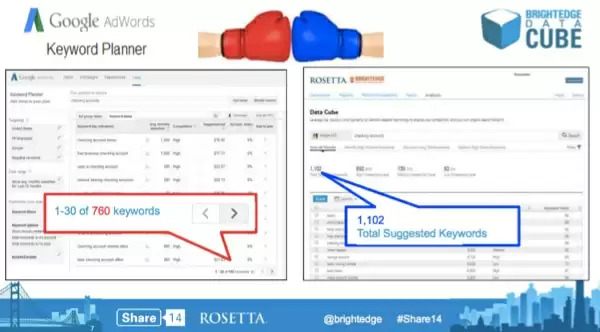
Matt Saunders of Rosetta was the final speaker. He talked how to mine big data quickly. Big data: where to start? Go to the BrightEdge Data Cube, he says. It’s a complex gathering of information, and makes it easy to get insights, says Saunders. Here, he shows the Data Cube going head-to-head with a keyword tool:

check out brightedge data cube

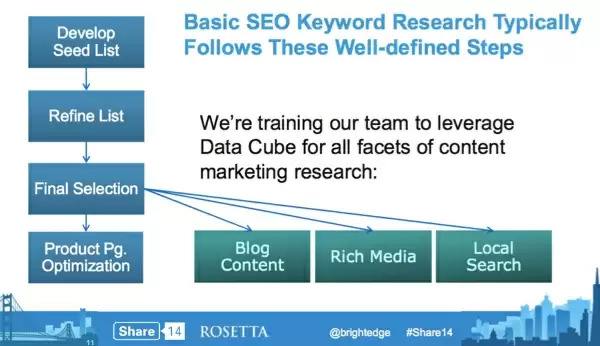
Saunders said the basic strategy for keyword research and analysis is outlined in the following slide:

keyword research understanding with brightedge

Next, he shared four use cases in data mining. The first was competitive gap analysis. His team needed to identify content expansion opportunities around wedding bands. So they checked out the Share of Voice report, and found Overstock.com had a significant share of voice due to one particular URL. If you dig down into the tool, he says, you can see what a page that is doing well is up to and what they are ranking for. You can identify a handful of new terms you may not have tracked before.

Another scenario on the content marketing side. Look at a URL for the competition, and paste it into the BrightEdge Data Cube, and you can see how you stack up against competitors.

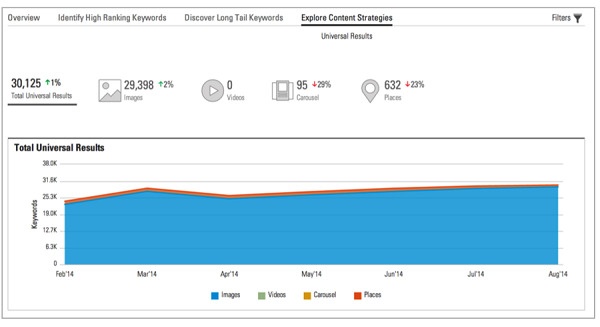
Another scenario is gauging rich media opportunity, says Saunders, through the BrightEdge tool.

And, finally, Saunders shared a use case for local optimization and Google’s local carousel results. He says you can build out a strategy to see which terms trigger carousel results in the aftermath of Pigeon, for example.  

,