2019 Marketing Trends You Need to Capitalize On

enewton@brightedge.com
M Posted 7 years 8 months ago
t 9 min read

By 2021, digital advertising spend in the United States is expected to exceed $300 billion. The popularity of online marketing has also gained a strong foothold overseas: a 2019 marketing trends survey of UK marketers found:

  • 88 percent believe that SEO has importance for marketing -- with 60% saying it is extremely important
  • 77 percent report that using SEO has increased their number of leads and decreased the cost of customer acquisition
  • Yet over 30% still report struggling to get the funds they need for their desired projects

With the incredible heights that SEO and digital marketing have risen to, it can be valuable to look back at the trends that have really taken off over the second half of the year and what will likely dominate the conversation and practice next year. It provides ideas for building strategies and where marketing plans need to mature to meet the needs of the modern consumer.

Here is what we believe are the biggest 2019 marketing trends and strategies that will likely dominate the first half of 2019.

Six 2019 marketing trends to watch for the first half

1. Resurgence in storytelling

A few years ago, there was a lot of conversation about the importance of creating a story for your prospects and the idea has experienced a resurgence. The idea of storytelling now extends far beyond just creating textual content. With the growing popularity of visual platforms, such as Instagram, brands now have the opportunity to create entirely new storytelling opportunities for their customers.

On social media and on websites brands need to carefully consider the story that they want to tell their customers. Communicate the story of the brand to people, rather than just the services and products that the brand provides. You want to create a brand image and narrative that engages people, connects with them, and lets them know more about the brand on a personal level. Companies might use this narrative to connect with people based on their buyer persona or to build a relationship based on shared values with the customers.

2. Necessity of high-functioning mobile

Thanks to the mobile-first algorithm, brands have to adjust their site development away from being simply compatible with mobile devices, and instead design for those on-the-go users. Our own research at BrightEdge reflects that well over half the visitors to most sites -- 62 percent -- come from mobile devices and still growing each month.  

To rank well and properly engage your users, you will need to make sure your site has been developed with mobile users in mind.

Consider first the type of content you develop. Mobile users tend to have particular contexts in mind, such as contacting businesses while they are on the go. Think about the types of intent that people likely have when they search for your targeted keywords. If they want to find your address or other contact information, make sure your information is featured prominently.

When they do elect to read articles and longer types of content, mobile users are on smaller screens, which should influence how you construct your material.

Your content should have:

  • Font and text size that can be easily digested on mobile devices
  • Organize your interface in a way that mobile users can easily navigate. For example, buttons that allow people to skip easily to particular sections of content or return to the top of the page can be helpful

As part of 2019 marketing trends, make sure you also pay attention to the visuals on your page. Images and videos, for example, might not always be compatible with the screen dimensions or browser capabilities of certain mobile devices. Make sure that any you include have been carefully formatted to play on mobile devices. If possible you should try to QA your pages on multiple devices to try and catch any issues with your responsive design.

As you create your pages, keep an eye on page load times. Mobile users will click off a page in as few as 3 seconds if the page has not yet loaded.

3. Growth of vertical searches

Vertical searches have begun to reach across a number of different channels. Vertical searches allow users to access more specific information. A number of alternate search options have arisen in response and have gained considerable popularity. Consider Amazon, Yelp, SlideShare, or TripAdvisor.

Even Google’s SERPs reflect the growing importance of vertical search. BrightEdge Research finds that 95% of Google SERPs include a vertical element. Google’s understanding of user intent has resulted in the development of customized vertical SERPs that reflect these desires. Different types of searches will have different numbers of ads, visual content, textual answers, and Quick Answers depending upon the likely intention behind the search.
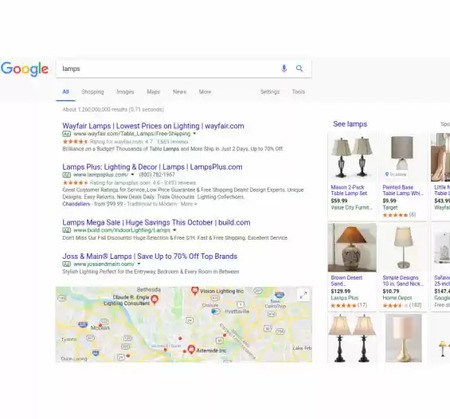
brightedge discusses marketing trends 2019 and the growth of vertical searches

As a result, moving forward brands need to carefully consider the vertical search engines their searches and optimize accordingly. A hotel chain, for example, will want to verify and pay close attention to their appearance on TripAdvisor and Kayak. Ecommerce businesses need to consider Amazon as well as the new ad formats Google has put out to promote vertical searches and keep users in its ecosystem.

4. Machine automation and AI

Machine learning will also continue to emerge as a necessary technological investment. Brands will spend an estimated $60 billion on the technology by 2025 as organizations across sectors realize the value of using technology to create superior content.

The digital universe contains more data than the human brain alone can process. With machine learning, however, organizations can use the technology to interpret the data and better understand what their customers want to see. They can use this insight to improve their content production.

At BrightEdge, we have made these capabilities available to our partners through our products, such as BrightEdge Insights. Customers use this technology to better understand search data and identify content topics faster and more effectively. Brands will be able to identify market changes and 2019 marketing trends in real time, allowing them to produce the content needed to capitalize on these moments efficiency, reaping the benefits of getting content prepared and published at the forefront of the industry.

5. Greater personalized care

Customers also want to see more personalized attention and care moving forward. Consider the growing 2019 marketing trends of incorporating chatbots into websites. These bots enable organizations to answer customer needs in real time. They help customers complete purchases or find other information they need, keeping them engaged with the organization and moving forward rather than clicking off when they cannot find the answers they seek.

This emphasis on more personal relationships with customers can also be seen in the growth of video. By next year, it is estimated that 80% of online traffic will be video. Videos allow customers to digest information passively and create high engagement. They also allow brands to create more personalized connections with their audience. Videos allow the audience to feel as though the subjects on the screen speak directly to them.

6. Voice and image search

We also cannot discuss growing 2019 marketing trends without including voice and visual search. Voice search has become increasingly popular, with the growth of personalized assistants as well as voice search features on mobile devices. Google estimated that over 20% of queries performed on android devices are now done through voice search.

Similarly, Google has also recently drawn attention to the popularity of image search with their introduction of a new potential ad format. This new ad format would allow users to specifically target shoppers browsing image results to get ideas before deciding to shop.

Brands should focus on developing content that speaks to the needs of these users. Brands in highly visual sectors should take advantage of opportunities, such as Google’s image ads, while also creating a strong brand experience with their images.
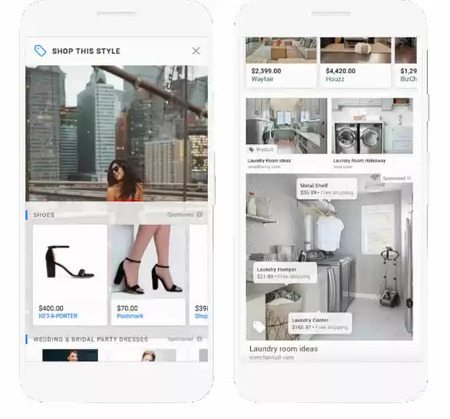
voice and image search - marketing trends 2019 - brightedge

For voice search, organizations should create content that aligns well with the verbal searches. Consider how voice search influences keywords and the type of information they likely want to find. With personal assistant devices offering a SERP of only one, for example, you also want to focus on earning key Quick Answer or top result positions for highly-relevant queries.

Search and digital marketing continues to grow and mature with each passing year. As we look towards the first 6 months of 2019, reviewing these 2019 marketing trends as well as other new strategies for the end of the year can be immensely helpful. Look at the 2019 marketing trends we discussed here to see which ones can have the greatest impact on your brand’s online strategy.

Using a comprehensive SEO platform will keep you on top of the changes and evolution in organic search.

request a demo cta banner

This year’s SMX Advanced has come and gone. We share some of our main takeaways. Much of the focus at this year’s SMX was on subjects that have been on the community’s radar for awhile, such as machine learning and AI, the mobile-first index, voice agents, and voice search, but as is often the case, […]

The post BrightEdge at SMX Advanced 2018 appeared first on BrightEdge SEO Blog.

SEO for Voice Search: Are We Doing it Correctly?

maspillera
maspillera
M Posted 8 years 2 months ago
t 9 min read

Voice represents a significant transformation to the way end users interact with Search. The convergence of Voice, vertical search engines, and mobile will accelerate the fragmentation of Search and the need for agile and targeted SEO for voice.

Organic continues to be a critical channel for marketers. The expansion and modification of paid search placements on Google, implementation of the Knowledge Graph, featured snippets, local results, and now question-answer SERPs have all come and gone. Despite all of that we know that in 2017 Organic still comprised 51% of all web traffic on average. People continue to browse and engage with organic listings on the SERP. There is one technological development that seems to pose a fundamental shift to the way people interact with and navigate through search engines, and that's voice search. By speaking a query to your mobile or home device, the user effectively bypasses the SERP and is delivered an answer without ever having to browse search results, click through to a new site, or, in some cases, even look at a screen. This is the true "Position 0" reality that SEOs have been talking about for a while now. It's obvious that we need to start optimizing for voice, but there are extra levels of nuance beyond simply, "let's go after more Quick Answer boxes," that are worth considering.

Why is voice search important for digital marketing?

In one way, voice search results are simply a continued evolution of the featured snippets that now sit at the top of the SERP for a number of query-based search terms. Google itself has stated that featured snippets help with appearing in voice search queries, and Quick Answers featured snippets are often the source for the answers delivered by Google Voice Search and Google Home for voice queries. The significance of this relationship is even more apparent when you factor in that in 2016, Google SEO Sundar Pichai said a full 20% of Google searches made on mobile and Android devices are voice searches. The proliferation of voice search-enabled devices has also been dramatic. One in six adults in the United States owns a "smart speaker" device as of 2017, according to NPR and Edison Research. Additionally, a Northstar Research study commissioned by Google in 2014 found that 55% of teenagers and 41% of adults included in the survey used voice search more than once a day. It's for these reasons and more that we believe Voice will be a tidal wave that search marketers should be prepared to surf. Of course, the extent to which that's actionable depends partly on how much data is available to work off of, which is - at least for now - one of the main challenges.

What kind of voice search data do we have?

One of the biggest challenges SEOs and digital practitioners have in terms of optimizing for voice search is that we simply don't have very much tangible data on itseo for voice with brightedge yet. Back in 2016 John Mueller, Senior Webmaster Trends Analyst at Google, said in a Webmaster Central office hours session that Google had been in discussions to add voice search traffic data to Google Search Console. The amount of data that's been made available since then, however, has been limited. Mueller did subsequently mention that voice query data would likely be presented as a separate dataset from standard GSC keyword data, but not much else. This isn't out of any desire to withhold information on the part of Google. Rather, as Mueller himself has said, the challenge on the search engine side has been to figure out the optimal way to parse and display this huge new dataset in a way that will be intelligible to the marketer. Despite this, based on best practices for featured snippets and aforementioned Quick Answers we do know enough to have a good sense of how to position for Voice:
  1. Analyze your search reporting for question queries and long queries
  2. Find the 100 most popular questions in your industry, site, CS, or, help section
  3. Ask the question in the title, answer the question in the body
  4. Focus on answers and getting position 1 and Quick Answers or “position 0”
  5. Check for popular answers in Yahoo Answers and Quora
  6. Enhance use of structured micro-data and schema
  7. Enable voice-to-text to search your site to match context query was made in
  8. Use conversational language on pages to map to queries coming from digital assistants

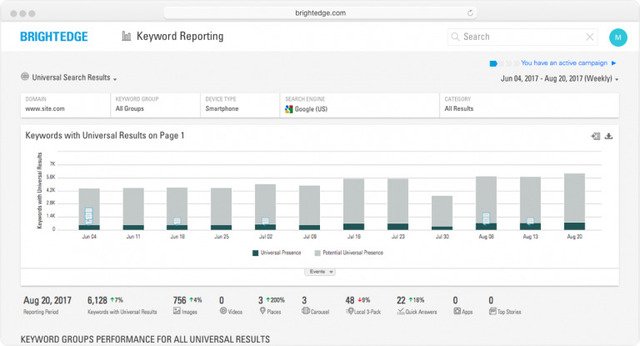
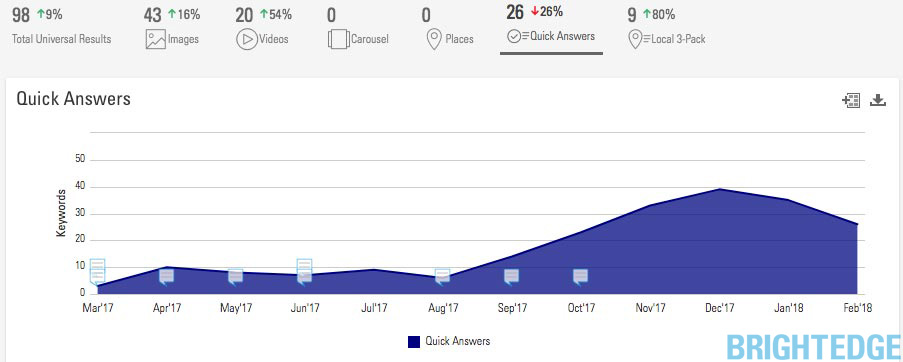
BrightEdge can help you to better identify and target these Quick Answer and featured snippet and, by extension, voice search opportunities. By using the Universal Search Results view in the Keyword Reporting module, as well as looking up your own domain in Data Cube, you can track which Quick Answer boxes you already possess as well as SERPs where you do show up, but don't have Quick Answer placement.Data Cube Universal Results Quick Answers report Additionally, the Insights solution can elevate Quick Answers opportunities to you based on your existing list of tracked keywords. There is also a whole other additional layer of abstraction (and potential for growth) in SEO for voice: The ever-growing universe of vertical search engines.

Voice search and vertical search engines

There's a layer of complexity to voice search that's easy to miss, and that's that Voice is fragmented. There are two separate points of fragmentation worth pointing out: Firstly, there's a whole universe of other search engines out there. Major examples include Amazon, Facebook, LinkedIn, and YouTube. Depending on your industry and business model, many of these vertical search engines can be of significant value. The need for SEOs to start thinking about vertical search engines is something we've talked about before, but the rise of Voice makes it all the more important. Secondly, when we talk about Voice as a whole we often use the term to refer just to voice searches conducted on Google, and we don't factor in device type. Devices, however, are a vital aspect of how voice search will be delivered to and conducted by end users. Consider how it was only around September of 2017 when Apple switched the default search engine of Siri, the voice-activated digital assistant of iOS, from Bing to Google. Compare this to the Amazon Echo, which uses Bing. There are also narrower, but just as powerful examples, such as how Bixby, Samsung's virtual assistant for Galaxy devices, offers a visual search feature, which can identify brands and products and direct the user to ecommerce listings, uses Pinterest's Lens tool. While these individual examples may not be relevant to every search marketer, they are indicative of how the confluence of Voice, mobile device proliferation, and vertical search engines can drastically affect the angles of attack in SEO for voice search. Observe this example of a mundane voice search query using Alexa that delivers results solely for Amazon-branded products.

Different vertical search engines equal different search intent

Not all search engines are created equally. There are many potential scenarios where a brand may be better served focusing its SEO efforts on one search engine or a set of search engines versus another. It's clear that Voice is transforming organic search as we know it. This transformation isn't the end of Organic, it's another layer of complexity that will make savvy SEOs and digital marketers who understand user intent and approach it using a smart content framework more important than ever. If you're hoping to gain more information on the topic, download BrightEdge's POV on voice search.

Voice represents a significant transformation to the way end users interact with Search. The convergence of Voice, vertical search engines, and mobile will accelerate the fragmentation of Search and the need for agile and targeted SEO. Organic continues to be a critical channel for marketers. The expansion and modification of paid search placements on Google, […]

The post SEO for Voice Search: Are We Looking at Optimization the Right Way? appeared first on BrightEdge SEO Blog.

SEO for Voice Search: How Technology Impacts SEO

enewton@brightedge.com
M Posted 9 years ago
t 9 min read

Voice search technology has made tremendous strides in just a few years. Brands need to be aware of how this technology can impact consumer behavior and how they can prepare their websites for success. We have all watched the rise of mobile over the past few years, and now a new search trend has similarly begun to take shape: voice search. Between 20 and 25 percent of Android devices searches are now completed by voice in the US, and this number continues to rise rapidly. A recent survey found that 60 percent of those who use voice assistant devices and voice search say that they only began using the technology in the past 12 months. In addition to the popular usage of voice on mobile phones, there have also been a number of different voice-controlled personal assistant devices introduced onto the market, such as the Amazon Echo and Google Home. These devices have helped normalize the technology across a wide segment of the consumer base.

As the prevalence of voice search technology increases, people have become increasingly more conversational with their devices. When people use voice, they tend to not use the standard typing-style queries that we as marketers have become accustomed to, such as “SEO marketing.” Instead they ask questions using more complete sentences, such as, “what is SEO marketing?” Voice searches have also begun to impact the world of ecommerce, as personal assistant devices now allow users to make more transactions. For example, Amazon Alexa can order a pizza or an Uber ride for users. Google Home also boasts a number of different 3rd party transactional services, including OpenTable and Pandora. Voice search and assistant devices are poised to have a sizable impact on SEO and how brands effectively communicate with prospective customers. This is what we believe our community should note. Get the latest on channel performance right here.

When and why people use voice search

As voice search rises in popularity, the relationship between this hands-free searching and mobile devices becomes increasingly intertwined. A report that looked at why people use voice found that the most important reason listed was that the user’s vision or hands were unavailable. The next most popular motivations reported were desire for faster results and difficulty typing on particular devices. All three of these motivations point towards mobile usage. Voice search correlates strongly with mobile - brightedge More than half of voice users also report that they use voice either on-the-go or in the car. The other half mostly list home as their main location of using voice search - signifying the importance of personal assistant devices in the conversation about voice search. These assistants allow users to make searches, such as how long they need to cook their dinner for, without having to stop what they are doing.


How voice-activated personal assistants will impact how users search

Voice-controlled personal assistants do not operate like the standard SERP. Often they only produce one answer for users in response to their verbal questions, similar to the how the Google Quick Answer provides responses for users without them needing to click on any links. For these devices to pull the information they need, they have teamed up with a variety of different sources of information, expanding the number of search verticals that brands need to consider when optimizing; the devices do not just pull all relevant information from Google or other major search engines. The Amazon Echo, for example, has integrated with Kayak to provide users with flight and hotel information. Therefore, for brands interested in optimizing for hotel searches, their presence on Kayak will have a greater impact on their visibility for voice search users on the Echo than the standard Google SERP. The Echo also accesses Yelp for information on local businesses, meaning that the relevance of the popular review site has become even more significant for small businesses. We recommend that brands consider the rising alternate search verticals in a number of different areas. Facebook and Twitter have risen in the number of searches they host - with Facebook processing more than 2 billion searches a day. These two platforms are major sources of conversation on current events and entertainment. When it comes to ecommerce, more searches for products now begin on Amazon than Google, and anyone selling online should be paying attention to this change in consumer behavior. We also recommend that brands consider platforms such as SlideShare and travel review sites when considering alternate verticals that their consumers might turn to and could end up rising in importance through voice-activated personal assistant devices.

How marketers can begin to optimize for voice search

  1. Pay attention to mobile search. With the incredible overlap between mobile and voice search, making sure that all content has been prepared for mobile devices remains the first step towards optimizing for voice. This includes using mobile-friendly layouts, but also taking the I-want-to-go and the I-want-to-do micro-moments into consideration when designing pages and preparing content.
  2. Note the question words commonly associated with queries. The question words: who, what, where, why, when, and how, have been strongly associated with voice queries. Brands should take the time to find long-tail keyword phrases that use these question words to start developing content tailored for those using voice search.
  3. Consider common interpretation errors. Although voice technology has improved dramatically in just a short period of time, the devices do sometimes make errors. When developing your PPC strategy, consider the common misinterpretations that voice devices might make of queries related to your business. Try to find opportunities where you can capitalize on the machine’s mistakes.
  4. Develop content for the more precise, conversational way of forming queries. With voice queries, people are likely to make more precise queries using complete sentences. The likelihood that they will use more conversational language also remains higher. Tailor certain areas of your website for these types of questions that people want answered quickly. Consider, for example, developing an FAQ page to try and capture the traffic for some common questions for your industry.
  5. Optimize for alternate search verticals. Although the relationships between voice-activated personal assistants and various alternate search verticals, such as Kayak and Yelp, have already been made public, as the technology and adoption of these devices increases, so too will the capabilities available and the number of sites they employ to serve the needs of their users. Consider the alternate verticals most relevant to your business and represent your business well. Voice search has begun to attract considerable attention as its prevalence grows across the digital ecosystem. It will potentially impact a wide variety of industries and businesses, which is why we recommend those in our community begin preparing for the changes now. Consider our tips above and think about how they might serve you to ensure that your site remains at the forefront of your industry. Download BrightEdge's POV on voice search with even more data.

L’Oréal Uses BrightEdge to Improve Positioning for Voice Search

Carlos Spallarossa uses striking distance reporting to position L’Oréal for voice search content strategy

L’Oréal Uses BrightEdge to Improve Positioning for Voice Search

Carlos Spallarossa uses striking distance reporting to position L’Oréal for voice search content strategy

THE PROBLEM

Voice search makes up 20% of queries now and is predicted by Comscore to exceed 50% of queries around 2020. The impact on the search landscape will be profound because many voice-controlled devices are both screenless and SERPless – the search results cannot be displayed. Only a single result will be delivered audibly, making it a winner-take-all proposition. BrightEdge recommends combining Quick Answer, long tail, and FAQ content campaigns to address voice search.

THE SOLUTION

“Voice search has had a big impact on our overall content strategy. So we’re taking a close look in BrightEdge at striking-distance keywords, understanding that we really need to be in the top position, and there really is only one result when it comes to voice search,” says Spallarossa, Director of SEO for L’Oréal.

“We use the BrightEdge striking distance report to take action on some of the pages that we feel we have the opportunity to really push up in the SERPs. And that’s become the cornerstone of our content strategy.

We approach voice-targeted content by answering the 5 Ws: the who, what, where, when, and why and also take into consideration the how. We find especially in the beauty industry that people are hungry for how-to videos, that people want to know what is the best product, how do you create this certain look, and so we are working very closely with our content strategy teams to make sure that we are taking a more voice-search approach to content creation.”

>carlos spallarossa lorealTHE RESULTS

“We’re implementing the recommendations that we see within BrightEdge, and we really are seeing growth.”

The way BrightEdge gives us that data and shows us how we’re positioned is the cornerstone of the whole strategy around natural language search.

L'Oréal Gains Edge on Striking Distance Voice Search Queries

Carlos Spallarossa gets an early start on ranking for striking distance voice search queries using Content Recommendations

Should you be developing an SEO strategy for voice search?

,