Released as part of its annual Share Conference, BrightEdge Research found that Organic and Paid Search dominate websites’ traffic in 2019 - 68% of all trackable website traffic is sourced from organic traffic and Paid Search, vastly exceeding all other channels, including Display and Social Media. The Organic Search figure at 53% is up from the 51% found in the 2014 research, the first year that BrightEdge Research conducted the analysis.
Organic Search remains the dominant source of trackable web traffic and in the dominant position as a channel. Paid Search continues to grow. Organic Social Media is flat since 2014 at 5%, and though ubiquitous, contributes on average 1/3 as much traffic as Paid Search and just 1/11 as much as Organic Search.
B2B Combined Search Organic Traffic Is 76% of Trackable Traffic
Despite several seismic shifts in consumer behavior, the rise of mobile search, and the dramatic changes to the Search Engine Results Page (SERP) layouts, including Local 3-Pack, Knowledge Graphs, Videos, and Quick Answers, which push more organic searches below the fold, Organic Search is the channel that delivers the most organic traffic to web sites by a wide margin.
Why did organic share grow?
Over the last 5 years Google has invested significantly in enhancing the user experience by providing increasingly accurate and relevant search results and at the same eliminating from the SERPs distracting intermediaries using techniques that attempt to game the Google algorithm.
With the advent of Google’s RankBrain, its ability to map Internet content to search query intent has improved even further. As a result, consumers trust Google and rely on it even more and are using at a rate that exceeds the growth of display and organic social.
Download the full channel share report to learn more about the findings and review the data in tables and graphs.
An estimated 79 percent of Americans have at least one social media account, making these platforms an immensely popular means of engaging with friends and family as well as businesses. The engagement people have on these platforms has paved the way for organizations to build a strong social media marketing strategy if they want to ensure they take advantage of all opportunities to find leads and customers.
Social media has evolved into an important part of e-commerce and digital marketing. Seventy one percent of customers are more likely to make a purchase based upon referrals and recommendations they receive on social media. Further, more than half of users on Facebook, Pinterest, and YouTube report that they follow brands on social media to help them learn about products and services.
A quality social media marketing strategy opens the doors for you to engage with these consumers and turn them into customers. Here is how to build a social media marketing strategy that works for your brand.
What is a social media marketing strategy?
With such a large percentage of the consumer population on social media, a good social media marketing strategy empowers you to take your promotions to these popular platforms. It provides an excellent channel for incorporating many of the most valuable elements of modern marketing, including personalized marketing and direct engagement.
Through social media, customers feel as though they can get a better idea of the values of a particular business as well as answers to their questions or concerns. It helps to shed the impersonal view of the business as an entity, and instead helps potential customers see the people behind the scenes who work at the organization.
A good social media marketing strategy will understand how to incorporate these optimal, unique elements of social media into a broader marketing strategy that represents the brand well across multiple channels and platforms. If you have not created a quality social media marketing strategy for your organization, here is what we would recommend.
Examine your overall marketing strategy
Begin by examining your current marketing strategy. Remember that you want your marketing channels to integrate seamlessly, creating a consistent experience for customers regardless of where they interact with your organization. A good social media marketing strategy, therefore, will want to understand the precise goals and positioning for the rest of the marketing team so that they can easily align these new platforms.
Consider important factors such as:
Who your target audience is
The types of channels and platforms this age group appreciates
The language and tone you typically take with your customers-- do you focus on being friendly and approachable? Do you take effort to present yourself more formally as an expert?
Look also at the KPIs you want to measure for social media. Before you get started, you need to understand what your goals are concerning social media marketing. Knowing what you want to accomplish will help you understand where to focus your efforts and what to measure. This will guide the rest of your social media marketing strategy.
A social media marketing strategy can help in a variety of ways. It can increase brand exposure, drive leads, help customer service, and build traffic for websites, to name a few. By determining precisely what role you want your social media marketing to play within your greater advertising strategy, you will find it easier to build a plan that will help this goal materialize.
1. Look at competitor strategies
Considering that an estimated 91 percent of businesses use social media marketing, the odds are that your competitors already live on various social channels. Therefore, take the time to dive into their profiles and campaigns a bit to gain a better idea of how they use social media for their organization. You can look at their followers and the engagement with the material they post. You can also use the Data Cube to gain even more insight into how this particular company builds their marketing strategy and the success they see.
Take this information and start to develop some ideas regarding how you want to create your own strategy. Look at their statistics, such as posting rate, the amount of content they post from their own site versus non-affiliated sources, and how often they interact with their followers. Use these insights to start forming more ideas about a successful social media marketing strategy for your organization.
2. Research your target audience and their social media usage
Assuming you have created a thorough marketing strategy outside of your social media marketing strategy already, you should have a good understanding of your target customer. Knowing important demographics and information about this target customer can now also help you find them on social media.
Make sure you develop your information about where your target audience lives on social media through data, as the demographics on a number of different platforms continue to change.
3. Work with your content marketing team to plan what you want to post through social
Now that you understand where your target audience lives and what you want to accomplish with your main social media accounts, work with your digital and content marketing teams to draft potential posting schedules. Review the types of content that will likely generate the best results on the social media platform. See if you can collaborate to draft some content that will serve the social media audience particularly well.
Remember that your social media marketing strategy should revolve around a conversation with your perspective customers and existing customers. They do not want to log into their social media accounts and find themselves subjected to regular commercials or information coming from a so-called soapbox. Instead, they want to engage in conversations with prospective brands. They want to feel as though organizations care about their needs and answering their questions. Posting content that aligns with these goals, even if it doesn't come from you, can be OK, as it helps to build relationships with these customers.
You can use BrightEdge, along with social listening, to track emerging trends and popular topics. This can help you develop the best posts for engaging with your audience and posting content that resonates best with your customers. Staying on top of the conversations that matter the most to them will help your organization stay relevant in the mind of customers.
5. Incorporate customer service
Remember that an important part of social media is nurturing more direct relationships with your customers. Customer service plays an important role in this goal. Social listening tools can help you pay attention to mentions of your brand or industry across the social platforms. This can help you keep track of conversations and know when a response from your organization might be warranted. Let your customers know that you pay attention, and if they need something, you will be there to help.
6. Measure the results of your campaigns
Once you begin leveraging social media marketing, you now need to regularly measure the results from your campaigns. Look back to the KPIs you wrote down at the beginning of this process. These KPIs will help you track the most important results involved, and thus can help you determine your success rate.
Social media can provide a powerful means of driving traffic back to your website. BrightEdge makes it easy to track the traffic rates and rankings of your website pages, so keep careful track of the pages you post on social media. This will help you see how posting the pages on social media impacts the success of that page. You want to watch your engagement and traffic metrics on this content.
Also monitor your internal social media metrics, such as the number of followers you have and how often people engage with your individual posts. Do not overlook opportunities to engage with people in conversation, but monitor how they respond to your efforts.
The better you can track the results from your campaigns, the easier it will be to see real progress and continue to evolve your marketing plan to help your business thrive.
7. Make adjustments
Armed with your data from the success and shortcomings of your social media marketing strategy, you should now continue to make regular adjustments to help you improve in the areas where you struggle. Continue to monitor your progress and fine tune your social marketing strategy to keep it well aligned with your business goals.
A good social media marketing strategy empowers you to better engage with prospective customers and join the global watercooler. Brands who understand how to do this effectively can take their branding to the next level. Take advantage of the BrightEdge capabilities in monitoring social media content engagement and tapping into the latest trends and see what these platforms can offer you.
Website traffic describes the visitors who arrive on your page and the data you can collect from these visits. When these prospects visit your site, you have the opportunity to entice them to enter your sales funnel.Understanding how to build your website traffic is a critical part of building an online reputation. An estimated 94 percent of B2B buyers and 81 percent of customers research products and services online before making a purchase. There has also been tremendous growth in ecommerce, with an increase of nearly 15 percent in 2015. A site that receives strong site traffic will be better positioned to capture this revenue and grow their brand.There is more to successfully building a website, though, than focusing on the website traffic report. You want to time your scaling efforts to ensure that your site is prepared for the influx. This will not only maximize your profit, but it will also help you protect your reputation and build your relationships with those visitors.A successful website will be equipped to handle online transactions while also being organized to encourage people through the sales funnel. Ideally, your content should mirror the funnel itself. In other words, you want to have the majority of your content focus on visitors at the top of the funnel, while also creating some targeted and useful content for those further down the funnel. Links between different levels of content can encourage people to move through your site, engage with your material, and enter your sales funnel, eventually becoming paying customers.You will find as you start examining your site traffic that it is arriving from a variety of different places, including organic and paid traffic sources. Here is what all site owners should know about how to increase website traffic.
What types of traffic should I examine on my website?
You should expect site traffic to arrive from a variety of different sources. The five most important ones that you will want to track and optimize for are:
Organic traffic: meaning those who arrive on your site by clicking on results on the SERPs
Social traffic: those who arrive on your site after interacting with your brand on your social media pages
Paid traffic: those who land on your domain after clicking on an ad you placed on sites
Email traffic: people who visit your site by clicking through a link that you had placed in an email message
Direct traffic: Those who are familiar with your site and brand and just type your address directly into the search bar
While there are several different sources of traffic, it is important to remember that they are not all equal. Some traffic sources will bring more people to your domain than others. Namely, organic traffic brings more than half of the visitors to your page, on average. This means that your visibility and ranking on the SERPs is responsible for more traffic than your social, PPC, and email traffic combined. This is an important point to keep in mind as you begin the process of building traffic to your site.
Understanding how to increase website traffic
The key to understanding how to increase website traffic revolves around being better in tune with what your customers want to see and providing it for them on your website. The better you are able to align with the needs of your prospects, the more enticing your site will become for people navigating the web.
How do I optimize for organic traffic?
Given that organic traffic drives more than half of the visitors who land on your page, the focal point of understanding how to increase website traffic comes down to SEO. Properly leveraging SEO can help you build your site traffic and drive interested prospects to your page, encouraging them to enter your sales funnel.Optimizing your content for SEO and organic search should be an encompassing process that begins before you even write a single piece of content.
Use keyword research to identify topics and vocabulary that will appeal to your targeted audience.
Create high-quality content that is optimized with the keyword appearing in the title, H2 tags, URL, alt text, and body.
Distribute the content thoroughly to ensure that you attract the eyes of those most likely to be interested in your piece to encourage backlinks and high engagement metrics.
Review the information supplied through the BrightEdge backlink checker to uncover opportunities to ask for backlinks to boost off-page SEO.
Monitor your progress with BrightEdge to see your success by page group and keyword group.
In addition to making your site more appealing through SEO, the other key to boosting organic traffic is to make your site look more appealing on the SERPs themselves. You want to focus on your meta description, since this is the site summary that customers see when your page is listed on the results. These 156 characters or so are your opportunity to tell customers why your site will do a better job of answering their questions than the other search results. Similarly, you want to make sure that your page title is engaging and encourages people to click. Remember that an estimated 8 in 10 people will read your headlines without clicking through to read your content. You want to make your title informative and interesting so that you increase your click-through rate from the SERPs.
How do I optimize for other sources of site traffic?
For the rest of your traffic, there are also a few steps you can take to boost the number of visitors to your site.
Keyword research: this is not only for organic search. Keyword research will help you identify topics that are popular within your target audience. This will help you create emails, social media postings, and PPC ads that will better attract people to your page.
You can also boost your paid traffic by analyzing your sales funnel. You want to have a keen understanding of who your customers are and what they are doing at each stage of their buyer’s journey. This will help you create more targeted materials because you will have a better idea of what they are looking to read.
Monitoring your website traffic report and understanding how to increase your website traffic are important steps in the development of a successful website. Before you look at your traffic, first make sure your site is ready to handle the boost in visitors. Then begin to optimize your page for the different traffic sources, remembering always to keep your focus on organic.
As Google has improved its ability to understand user’s search queries and index a variety of types of content, search results have become increasingly complex. It is no longer a simple question of determining where one’s website falls in an organic text-based search. Now sites have to contend with a wide range of different SERPs, such as image searches, video searches, social searches and local searches.
Blended rank is the key to letting websites know how they perform when these different factors are combined. This provides a more complete picture of the strengths of the website and where it still needs to improve. Learning how to improve blended rank can result in measurable boosts for the brand’s bottom line.
The universal results below for the query “Europe” show results that include: Images, News and Knowledge Graph.
How to improve blended rank
Understand what's giving competitors' sites an edge
Develop content that promotes traffic and sharing
Use social media and local SEO to promote blended rank
Markup pages to better demonstrate the purpose of the website
1. Understand what is giving competitors’ sites an edge. To improve your blended rank, you must first gain an accurate picture of how your website ranks and how that performance compares to your competitors.
BrightEdge offers unique technology that allows companies to measure their website’s blended rank for all keywords and keyword groups. You can also track your competition’s blended rank and identify competitive trends so that you can take corrective action quickly.
Our technology also allows you to see how blended rank is impacting your business results, such as revenue and traffic. This information can then be used to develop a concrete strategy for improving blended rank.
A sample of Google Quick Answers.
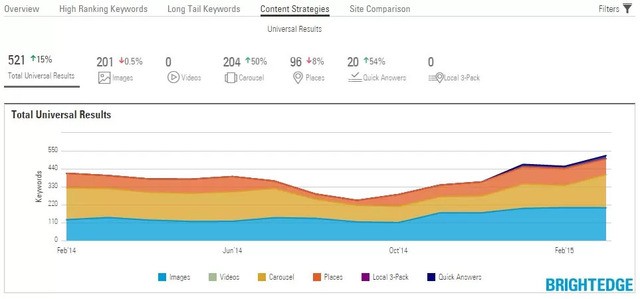
The BrightEdge Data Cube and the Universal Results broken down and trended over time. BrightEdge customers can research these results for any site on the Internet to identify opportunities.
2. Develop content that promotes traffic and sharing
When Google now ranks pages, they are no longer just focusing on the content of the site - although that remains important. They also want to see how people respond to that content. According to BrightEdge research, Google pays close attention to the following user signals:
Click-through rates
time on site
bounce rate
Social signals also matter, including:
Google +1
Facebook shares/shares/comments
Tweets
Pinterest
These types of signs give Google greater insight into how helpful the content is and how well it addresses the query. Content that responds well to these criteria is interpreted to have a high value for users and will likely have its blended rank improved.
3. Use social media and local SEO to promote blended rank
Even if a business works with customers remotely on a regular basis, local SEO can be helpful for blended rank and for reaching those occasional customers that want to be able to meet in person.
According to Wesley Young in a Search Engine Land article, keeping business results updated on social media, including verifying that the NAP (name, address, and phone number) are correct across a variety of social sites and online listings, is critical to ranking well and he tested and showed a 19% explanatory value. Including the city and state throughout the Google+ local page, including the title tag, H1 heading and URL, is important for boosting the rankings of the business’ social site.
These keywords should also be used throughout the content, in the meta description and in the alt tags for images. Google values Google+ pages for local SEO, so these steps are important for local and blended rankings.
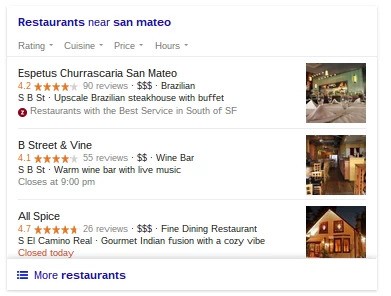
Local 3-Pack example:
4. Markup pages to better demonstrate the purpose of the website
In 2013 Google launched the Hummingbird updates to its search algorithm. This update was designed to help Google understand concepts instead of just looking at the words in a particular query. Optimizing websites to better account for user intent may help improve blended rank performance.
Using site markups will provide rich snippets that preview the site on the SERP. This can help users better understand the content they will find on the website, allowing them to make more informed decisions about whether the content will match their intent. This speaks to the goals of the Hummingbird update.
Sites interested in using markups are generally advised to used the schema.org system, as this was developed to be accepted on Google, Yahoo!, Bing and Yandex.
For companies who want to have their websites perform optimally, understanding blended rank and how the site ranks when all of the different types of searches are combined is critical. Tracking only the text-based results can be deceiving and let sites think that they rank higher than they actually do. Once the true blended rank has been determined, companies can then use the above advice to improve their standings and help their site get in front of customers consistently, regardless of the type of search results requested.