Great Brand Management and How To Measure Success

gregalbuto
gregalbuto
M Posted 6 years 3 months ago
t 9 min read

With the competition that brands face online and in person, the reputation you have with customers can have an enormous impact on your bottom line. Learning how to cultivate positive feedback and nurture good customer interactions with brand management becomes essential.

Customers look to online reviews and search engines to learn more about the companies they consider doing business with. An estimated 90 percent of consumers report that they will look at online reviews before making a purchase, and these reviews influence more than 2/3 of buying decisions.

Use brand management to better understand your audience - brightedge

Given the importance of customer perception, you want to do everything you can to help your organization appear as helpful and trustworthy as possible in the eyes of potential customers. Brand management can help you better understand how to influence these customer perceptions and build a positive reputation for your company.

Here is what you need to know about brand management:

  • Know what sets you apart
  • Pay attention to the culture you create internally
  • Make customer service a priority
  • Practice thought leadership
  • Cultivate brand advocates

1. Know what sets you apart

For better brand management, you must first identify what sets you apart. You should clearly identify what makes your organization unique compared to the rest of the competition. The better you are able to identify this important piece of information, the easier it will be to build a strong brand reputation. You will have the foundation you need to build a brand that stands out in the crowd.

To gain greater insight into what makes your company unique, consider speaking directly to your existing customers. Ask them about their purchase decisions, what brought them to your organization over the competition, and what would inspire them to continue to buy from you.

Compare their answers with the goal the business had when setting out. Look at the initial business plan and what your organization wanted to provide for customers and see how well they align. Then, create content that highlights the unique traits of your business.

2. Pay attention to the culture you create internally

The culture you create internally can also greatly impact your brand perception. When employees feel happy with their work environment, they become more likely to spread positive opinions of your brand to those around them. This can have a tremendous impact on your reputation and the level of trust that prospective customers have in your organization.

Also consider that it is your employees who have the most facetime with your customers. An estimated 70 percent of the perceptions people have about your brand comes from the experiences they have with the people at the company.

In other words, when you create a positive employee experience where people are happy to come to work each day and feel empowered in their jobs, they naturally pass those feelings along to current and prospective customers. They perform their jobs better, leading to more satisfied customers, and they help to spread positive ideas of your organization.

3. Make customer service a priority

Companies lose an estimated $62 billion each year because of poor customer service. Additionally, 62 percent of customers report that they share their negative experiences with brands with others. On the other hand, 72 percent of customers also say that they would share a positive experience with a particular business with those around them.

For proper brand management, you want to make sure that your customers have an excellent customer service experience. Customer service must prioritize addressing the customer’s needs at each stage of the buyer’s journey, including after their initial purchase and while they use the product or service.

Creating positive customer experiences means focusing the factors that matter the most to customers. For example, customers today place high value on privacy. In the age of constant data collection, customers want to know that the information collected about them will be used responsibly. When brands offer them strong privacy policies and have a reputation for guarding that data, it helps to provide a better customer perception.

4. Practice thought leadership

Engaging in thought leadership best practices can help to demonstrate that you are a brand worth listening to in your sector. It encourages people to believe that you have the answers they need to solve their pain points. This in turn helps to build trust and goodwill.

Become a brand worth listening to with better brand management - brightedge

Consider thought leadership best practices like:

  • Posting high-quality content that addresses some of the most important topics and trends that matter to customers
  • Producing original research or analyses that will help demonstrate your place at the forefront of the industry
  • Attend speaking engagements and other opportunities to get your name and qualifications in front of more audiences
  • Write regular guest posts for popular industry publications that help you broadcast your ideas

5. Cultivate brand advocates

As you build your brand culture and perception, you also need to focus on creating brand advocates as a part of your brand management strategy. A study by Edelman found that 61 percent of people said that they find ‘people like them’ to be the most credible when relaying information. In other words, customers become more inclined to listen to fellow customers over official brand advertisements.

Focus your efforts on identifying customers that will make great brand advocates and begin to nurture them on the proposal. Taking a satisfied customer and transforming them into a brand advocate can also be seen as selling to them again.

Let the customer know the benefits of upgrading their relationship with your brand. For example, you might offer benefits such as insight or influence over product development. This inner circle of advocates might also be the first to access new product developments or enhancements. Outside of product benefits, brands might offer to cover fees for events or offer dinners and face time with the leaders of the company.

As you begin to build your list of brand advocates, consider the variety of ways you can put their positive reviews to work. Case studies can be an excellent way to showcase the abilities of your product or service. Speaking at events or providing references for prospective customers can also benefit your organization.

Remember that once your enlist a customer to serve as an advocate, you need to continue to nurture the relationship. Make sure the advocate feels and experiences the benefits of boosting your brand. Solicit feedback about their continued usage of your product or service as well to ensure that you continue to be on the same page.

How to measure and track your brand management

As you begin to focus on brand measurement, you will want to measure your progress so that you can easily see your rates of success. We recommend these strategies as a means of better understanding customer perception and how it changes as you work to build your brand’s reputation. Here is what you should use to track your brand management:

1. Rankings

Google wants to focus on sites that demonstrate expertise, authoritativeness, and trust. Building a strong reputation that encompasses these characteristics. Creating regular content that captures the needs of your target customers, offers original research and thoughts, and demonstrates your authority will help you improve your reputation in the eyes of Google as well. Watch to see if there is an increase in your SERP rankings, along with any increases in your traffic and engagement rates.

2. Social media engagement and followers

Social media has become an important part of branding. Customers turn to social media to connect with friends, follow brands, and otherwise tap into the modern watercooler. As you build brand recognition and trust, this will generally be reflected on your social platforms.

Use social media as a means to further broadcast your brand and promote your high-quality content. Look at the engagement and the number of followers on your various social profiles to better understand how your content and efforts are received by your target audience.

3. Market share and share of voice

Measuring your market share as well as your share of voice can also provide you with valuable insight regarding how the industry in general perceives you and where you stand compared to the competition. Monitor your market share and share of voice as you build your brand management strategy to monitor your progress.

4. Reviews and advocates

Discover how to utilize brand management to the fullest for consumers - brightedge

Throughout your brand management efforts, cultivating more positive reviews and building a strong list of advocates remains an important part of the process. Therefore, you should continually monitor your progress in both areas.

Track the popular review sites for your industry. Invite satisfied customers to leave your reviews and thank people for their feedback through the platform.

As you nurture your customers and convert them into advocates, track the demographics where you have the most success. For example, you might find you do well with cultivating advocates from one particular industry over another. This could signal potential steps you should take to improve your service in that industry.

Regularly also track the engagement and interest of existing advocates. You want to ensure that your brand continues to meet and exceed their expectations. The number of advocates you have and their enthusiasm about the brand will give you a clear picture of how well your brand management and brand reputation initiatives progress.

Managing your brand provides you with the positioning and tools you need to better understand how customers perceive your organization and modify it in your favor. You will know how to better tap into your customers’ needs and adjust your service to help you become the organization that your customers can trust.



Using The News Cycle for Valuable Customer Insight

gregalbuto
gregalbuto
M Posted 6 years 5 months ago
t 9 min read

The news cycle has become a critical part of our world today. According to customer insight from The Media Insight Project, nearly half of Americans have signed up for news alerts on their devices and 78 percent of smartphone users turn to their devices to stay updated on the latest headlines and developments.

Additionally, about two thirds of American adults report getting their news from social media at least occasionally. People today have become accustomed to getting news updates regularly when they want them. 

When it comes to building your business’s presence online, this rapid news cycle can also provide a powerful source of attention and interest. Customers want to know what is going on in your niche, and becoming a regular source of information for them can help brands build recognition and reputation. 

customer insight from news come from smartphone users - brightedge

This also means, however, that consumers generally expect the brands they trust to be at the forefront of their industries. They expect these organizations to have knowledge and customer insight about these latest developments. They also want to know that the products and services they buy reflect the newest best practices and customer insight and expectations.

Brands who understand how to use the news cycle to surface valuable data about their prospective customers can help themselves better engage with leads and buyers. They will be able to better identify what their customers want to see and know how to encourage them to progress through the buyer’s journey. 

This is what those in our community should know about how to use the data from the news cycle to build their brands.

How do I get customer insight?

You can gain customer insight by using the news cycle which offers valuable information about the market itself. As others within your industry release their latest research and their findings, this information can help you better understand the customer insight within your target audience. 

Through the data and research released on the news cycle, you can gain additional information about the pain points and obstacles of your prospective customers. For example, if you target small business owners and read an article that details new end-of-the-year spending habits for people in your targeted sector, it might help you better create marketing campaigns for your holiday promotions. 

The news cycle can also help you understand what drives your customer insight and gain a better understanding of the customer journey. You can gather data about the needs of your customers and what impacts them as they prepare to make purchases.

You can then use this data and information to create more tailored experiences for your customers. Take into account this latest information about what impacts your customers and create customized content and personalized outreach from your sales team that demonstrate to the targeted customers that you understand their needs.

Why is customer insight important?

In addition to using the data lifted from the news cycle to build your marketing and sales strategy, you can also use it to bolster your behind-the-scenes work to create a stronger brand. Below are three ways to utilize data from the news for customer insight:

  • Influence research and development
  • Guide your research
  • Improve brand reach
  1. Influence research and development. You can use the data and information lifted from news to influence the research and development in your organization. You want to make sure that the latest developments you create for your customers reflects their needs and wants. By using the data from the latest news in your industry, you can tailor your products and services towards what customers want to see and the latest trends in your niche.
  2. Guide your research. You can also use the data to help guide your research and publications. Consider what the latest data and trends reflect to help you determine new areas of interest. It will help you figure out what areas you should further investigate personally.

customer insight can help grow thought leadership - brightedge

By using this guidance for your own research and publications, you will help to add valuable information to your industry, contributing to the growing literature and information in your niche. Your literature will naturally help to attract attention and interest when it further develops other trends and areas of interest that others have been investigating.

3.Improve brand reach. Improve your brand reach as more people digest the data and information you publish. Creating this highly engaging original material can help you present yourself as a thought leader as well.

Does customer insight promote thought leadership?

As you publish information about the latest sales cycles, you can also use the information you gather from tracking your readership. By staying on top of the latest news, you can become a valuable source of information for your target audience. This will encourage people to regularly return to your site to gain the latest information as well as your customer insight into these developments.

By attracting an audience to your news cycle posts, you can begin to gain additional valuable information about your audience. You can gather information about the types of news pieces that attract the most attention and what people appear to be the most interested in reading. You can see how customers behave after consuming your news-centered content, which will help you understand their needs and what they want to see from organizations in your niche.

This data will also provide far better insight into customer behavior. You will start to see how they react to news pieces and how the information they obtain impacts their buyer’s journey. Track where they go after reading the news and their likelihood of following your organization on other platforms or to progress closer to making a purchase.

As you begin to learn more about your customers through the news itself as well as how they react on your web page, you will find yourself more prepared to create highly engaging content. Your content will do a better job of meeting customers where they are with what they need.

Make the news cycle work for you

As a near-constant news cycle has begun to dominate our world, customers have started to tap into its potential. Between setting alerts on their phone and following news sources on Twitter, people today expect to be nearly instantaneously informed with breaking developments. This does not only refer to major new events, customers also want to know what happens in the industries that matter the most to them.

This means they prioritize the sources that can help them remain informed, particularly when they prepare to make purchases. Brands can use the information contained within these news cycles in a variety of ways to help them better understand their customers and give their brands a lift. Consider the ideas pertaining to customer insight above and see which ones can help your organization better engage with your customers. 

Start your journey to better visibility and SEO with the industry leading platform!

most trusted SEO platform

How Will You Leverage Your Share of Voice Online?

Mark Mitchell
Mark Mitchell
M Posted 11 years 9 months ago
t 9 min read

Share of Voice” is a powerful digital marketing feature of BrightEdge’s S3 platform. Providing brands with strategic insights into their global search engine results page (SERP) performance by device is just one of its cutting-edge hallmarks. Here, we’ll go over best practices to leverage SOV for:

  • Competitor analysis and benchmarking
  • Brand monitoring and reputation management
  • Business unit benchmarking
  • Content research and development in the SERPs

How Share of Voice works

Share of Voice (SOV) offers insights into your digital marketing strategy by helping you to:

  1. Understand the entire global SERP landscape (encompassing over 300 search engines, including Baidu), by device (desktop, tablet and smartphone).
  2. Understand your competitors’ strategies with a complete picture that includes research into both direct and indirect competitors (by product, pages and groups).
  3. Monitor all of your digital assets in the SERPs (including social media networks Twitter and Facebook), for reputation management and copyright issues, as well as for identifying potential commercial and content partners.
  4. See the most accurate global picture of your keyword visibility in the SERPs on a weekly basis.

Share of Voice Insight example with BrightEdge

Four keys for unlocking Share of Voice success

First, to access SOV in BrightEdge, go to Analysis > Share of Voice. In this post, we’ll talk about how to access varying results through different views of the data that is available.

Competitor analysis and benchmarking

Visualizing the full competitive landscape involves both research and benchmarking the competition. By using SOV to its fullest, you can gain these insights. SOV gives an unlimited picture of competitors against your keyword portfolio. This helps you to understand direct and indirect competitors. Move away from benchmarking your SEO performance against just two to three competitors by using SOV to gain insight into the full SERP competitive landscape.

The SOV feature will allow you to identify who your true competition is online, what content gaps exist in your strategy by analyzing the competitor, and understanding the competition’s backlink strategy by page (via the Majestic SEO integration). You can then feed your insights back into SOV to further inform and drive your digital marketing campaign. This is a regularly updated indexed, so these strategies will constantly be refined based on the landscape changes.

Brand monitoring and reputation management

As you know, brand monitoring and reputation management are critical. With SOV, you have the tools to see the global SERPs for your brand and your brand’s extensions, and detect negative listings and copyright issues, as well as “rogue” affiliates.

SOV allows you to track your brand’s keywords by:

  • Creating a “branded keyword group” including terms like “[Brand + location variant] reviews” to review your online reputation.
  • Identifying which sites and pages are ranking for these keywords.

SOV’s brand reputation management feature lets you:

  • Review content to understand what is being said about your business and products online, which enables you to understand positive / negative sentiment.
  • Develop appropriate strategies to address concerns like client outreach, and content creation aimed at displacing negative reviews.

Beyond mere competitive analysis, SOV can be used proactively to identify sites to possibly partner with, either commercially or for content syndication purposes.

Business unit benchmarking and global targets

“Average rank” is dead. So SOV is the SEO industry benchmark by which to measure your success! With our dashboard feature, you’ll easily grasp the competitive SERP landscape to set realistic benchmark targets, whether by business unit or for global benchmarking. Many leading agency partners of BrightEdge use Share of Voice to benchmark the success of content marketing campaigns. For example, increasing Share of Voice from two percent to five percent can be a strong sign of success with regards to visibility improvements within the SERP. Additionally, if traffic on a certain Web page or page groups has reduced month-over-month, you can look at the correlation with SOV to understand what’s happening.

Content research and development in the SERPs

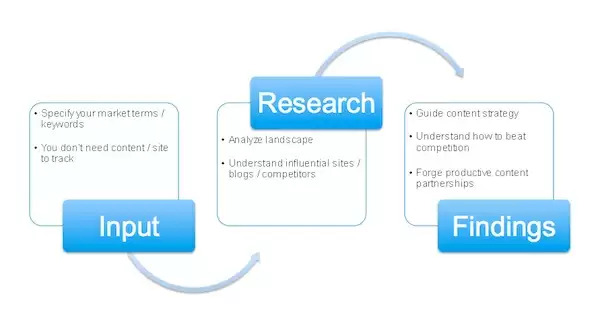
The fourth best practice for leveraging SOV is to monitor the digital marketing landscape before you start generating content. This gives a roadmap for content creation that follows input, research and findings:

As the graphic above indicates, SOV will help you understand what matters to your brand before you launch a website, much less generate content. By providing insights into influential sites, competitors and blogs, you’ll be able to create an intelligent content strategy and SEO campaign. We have numerous content writers who will utilize Share of Voice to understand the SERP landscape effectively on new keyword or topic area they want to explore for future content. This can be a good workflow process to help enable the content writers for research, as well as fully understand the competition within the SERPS on the new topical area.

Share of Voice in sum

In conclusion, SOV can be leveraged in many ways throughout the lifecycle of your digital marketing plan:

  • Start competitor research and benchmarking.
  • Monitor and control brand reputation.
  • Use as a primary measurement of success in the SERPs.
  • Gain access to informed content development.

,