Customer Journey Maps: What you need to know

ksoosOLD
ksoosOLD
M Posted 6 years 9 months ago
t 9 min read

The customer journey today has become an increasingly personal path. Consumers have the power to research their own pain points and potential solutions themselves. Brands who want to understand how customers progress need to have a guide, and that is the role of the content journey maps.brightedge customer journey maps, personalization and importance of mobile strategies

Modern buyers appreciate personalization. Nearly a third of consumers report that they wish their shopping experiences were more personalized than they already are. To provide this personalized experience, however, brands need to have a better understanding of what customers want to see at each stage -- they need to know who their buyers are and what they experience the closer they get to making a purchase.

The importance of consumer journey maps has risen in response. Here is what our community should understand how this strategy and the process of designing one for your organization.

Understanding the importance of customer journey mapping

The value of customer journey maps lie in their ability to help everyone throughout the organization understand how prospective customers go from leads to customers. Journey maps force organizations to dive in depth into this path, giving them greater insight and a better idea of what prospective customers want to see at each journey maps stage as they get closer to making a purchase.

Customer journey maps explore questions related to what customers want to know at each stage. It allows the marketing and sales team to know the types of inquiries they will receive and the types of content they should produce. Journey maps also help the brand understand how customers feel, which offers greater insight into the type of interaction they want to have. Brands will find it significantly easier to create customer-first experiences armed with this information.

Perhaps even more importantly, these customer journey maps can be used across departments and throughout the organization. Everyone at the business will find it easier to remain on the same page regarding customer expectations and wants. When a new lead lands on the sales team’s desk, for example, they will have a far greater understanding of the process and emotions this individual went through during the early journey maps stage of their purchase process, helping them to create a more tailored experience for the prospect now.

The journey maps improvement in the customer experience will also help the business better identify potential holes in the customer experience. They will find it easier to identify gaps that might hurt their ability to coax new leads through the journey towards conversion.

Similarly, all of the departments can work together to ensure that a person going through this journey encounters the right user experience at each journey maps stage. People will provide better service. For example, those who work in UX will better understand what brings new visitors to the site, what they feel, and what they want to see. This will improve their ability to create a highly-effective website.

Getting started with customer journey mappingbrightedge customer journey maps personas

Now that the importance of customer journey maps have become clear, let’s explore how to create an effective map that will improve your ability to engage with your customers.

Review your customer personas

You likely have already built customer personas for the rest of your marketing efforts. If you have not, this should be your first priority of starting your journey maps. Explore the core questions about your customers that let you see why they choose your brand and what pain points they want to solve. Ask questions such as:

  • What brought you to our site?
  • What problem did you want to solve?
  • What motivated you to buy with us over our competitors?
  • How helpful were our sales representatives? How could they have been more helpful?

These personas will give you ideas about the people you want to bring into your buyer’s journey and thus help you understand what they need and want to see from your organization.

Research how customers move through your journey maps

Now you want to analyze how your existing customers have gone through your buyer’s journey. You want to gain a better handle on the path they took, including the touch points they engaged with, how quickly or slowly they went from their first interaction towards a purchase, and what motivated them along the way.

brighetdge customer journey maps

Begin by looking at your website data. You should be able to gain a good idea of where your customers originated, such as whether they came from the SERP, a paid ad, social media, or a direct visit. You may use the StoryBuilder feature in BrightEdge to help you easily visualize this important information.

At this stage of your journey maps, you also want to see how customers behave on the site. Look at the rate of new and return visitors as well as how long customers spend on the page and the bounce rate.

In addition to your internal site data, take your inquiry outside your site to sources such as social media. Look at customer engagement rates on these channels and what they most likely want to see as they engage with your brand. At this journey maps stage, consider the questions they ask and the information they seem the most interested in obtaining.

The information you gather from this journey maps data should then be combined with interviews and anecdotes from customers to ensure you have a firm picture of customer behavior. For example, make sure that your bounce rate is not low because customers have trouble navigating your site and they have to jump around to multiple pages to find important information.

Ask your customers questions such as:

  • Did you have trouble finding important information on our website?
  • Did you need to speak with our customer support teams at all? Were they able to help?
  • What objections did you need to overcome to purchase from us? Can we do anything to help more with this process?
  • What were the most useful types of content and engagement you received from us during your buying process?
  • How did you feel at each stage of the buyer’s journey? How did we help? How could we help more?

List your important touch points

List out all of the different important touch points you have with customers throughout the buying process. Do not neglect any of the channels where customers might engage with you. In this stage of your journey maps, think about website, email marketing, social media, and conversational touch points that your customers progress through as they get closer to making a purchase.

You want to map out when customers will likely reach these touch points, so you know what stages of the buyer’s journey they will likely embody. When mapping out the touch points, consider both your interviews and conversations with your customers as well as research into consumer behavior to make the best projections for when touch points will be reached.

As you map out the touch points, also include how customers felt during the different stages of your journey maps. Record their likely questions and emotions that you want to address as they progress. Align their questions and feelings to the content you expect them to consume.

Watch customers move through your journey maps

Now that you have built your customer journey map, you need to test your ideas to see how well it aligns with the actual experience of your customers. 

When a new lead lands on your site, use journey maps to note their persona and the path they take. Compare their engagement with touch points and how they interact with your brand to your expectations. 

Watch for evidence of the lead stalling throughout the process. See how well your organization meets the needs of the customer as they progress through the journey. Once this customer converts, speak with them about their experience during the buyer’s journey and ask about any unexpected events-- such as delays in progression-- and see if you can make adjustments to better assist the buyer.

Analyze and adjust your journey maps

Now that you have your customer journey maps, along with evidence as to your maps’ accuracy, see if any adjustments need to be made. If customers do not follow the path you outlined, adjust your path or your strategy to better align them. Take into account what customers quoted as presenting problems for them and make changes to your marketing and sales process to better accommodate these needs.

Your customer journey maps will guide your organization as you work to improve your customer engagement. As you better understand how customers move through their journey as well as the questions, emotions, and obstacles they encounter along the way, your business will find it easier to nurture leads and produce the sales and marketing engagement they want to see using journey maps.

Discover how to rank well in Google's SERPs after you've mastered your customer experience and journey mapping.

2019 Marketing Trends You Need to Capitalize On

enewton@brightedge.com
M Posted 7 years 8 months ago
t 9 min read

By 2021, digital advertising spend in the United States is expected to exceed $300 billion. The popularity of online marketing has also gained a strong foothold overseas: a 2019 marketing trends survey of UK marketers found:

  • 88 percent believe that SEO has importance for marketing -- with 60% saying it is extremely important
  • 77 percent report that using SEO has increased their number of leads and decreased the cost of customer acquisition
  • Yet over 30% still report struggling to get the funds they need for their desired projects

With the incredible heights that SEO and digital marketing have risen to, it can be valuable to look back at the trends that have really taken off over the second half of the year and what will likely dominate the conversation and practice next year. It provides ideas for building strategies and where marketing plans need to mature to meet the needs of the modern consumer.

Here is what we believe are the biggest 2019 marketing trends and strategies that will likely dominate the first half of 2019.

Six 2019 marketing trends to watch for the first half

1. Resurgence in storytelling

A few years ago, there was a lot of conversation about the importance of creating a story for your prospects and the idea has experienced a resurgence. The idea of storytelling now extends far beyond just creating textual content. With the growing popularity of visual platforms, such as Instagram, brands now have the opportunity to create entirely new storytelling opportunities for their customers.

On social media and on websites brands need to carefully consider the story that they want to tell their customers. Communicate the story of the brand to people, rather than just the services and products that the brand provides. You want to create a brand image and narrative that engages people, connects with them, and lets them know more about the brand on a personal level. Companies might use this narrative to connect with people based on their buyer persona or to build a relationship based on shared values with the customers.

2. Necessity of high-functioning mobile

Thanks to the mobile-first algorithm, brands have to adjust their site development away from being simply compatible with mobile devices, and instead design for those on-the-go users. Our own research at BrightEdge reflects that well over half the visitors to most sites -- 62 percent -- come from mobile devices and still growing each month.  

To rank well and properly engage your users, you will need to make sure your site has been developed with mobile users in mind.

Consider first the type of content you develop. Mobile users tend to have particular contexts in mind, such as contacting businesses while they are on the go. Think about the types of intent that people likely have when they search for your targeted keywords. If they want to find your address or other contact information, make sure your information is featured prominently.

When they do elect to read articles and longer types of content, mobile users are on smaller screens, which should influence how you construct your material.

Your content should have:

  • Font and text size that can be easily digested on mobile devices
  • Organize your interface in a way that mobile users can easily navigate. For example, buttons that allow people to skip easily to particular sections of content or return to the top of the page can be helpful

As part of 2019 marketing trends, make sure you also pay attention to the visuals on your page. Images and videos, for example, might not always be compatible with the screen dimensions or browser capabilities of certain mobile devices. Make sure that any you include have been carefully formatted to play on mobile devices. If possible you should try to QA your pages on multiple devices to try and catch any issues with your responsive design.

As you create your pages, keep an eye on page load times. Mobile users will click off a page in as few as 3 seconds if the page has not yet loaded.

3. Growth of vertical searches

Vertical searches have begun to reach across a number of different channels. Vertical searches allow users to access more specific information. A number of alternate search options have arisen in response and have gained considerable popularity. Consider Amazon, Yelp, SlideShare, or TripAdvisor.

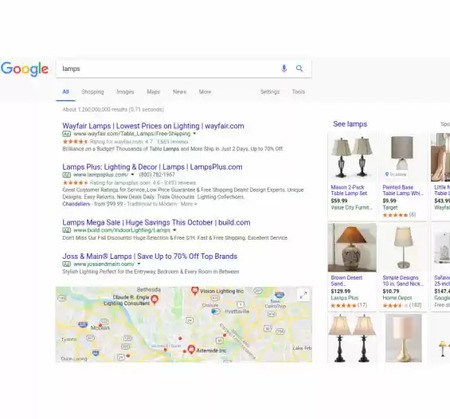
Even Google’s SERPs reflect the growing importance of vertical search. BrightEdge Research finds that 95% of Google SERPs include a vertical element. Google’s understanding of user intent has resulted in the development of customized vertical SERPs that reflect these desires. Different types of searches will have different numbers of ads, visual content, textual answers, and Quick Answers depending upon the likely intention behind the search.

brightedge discusses marketing trends 2019 and the growth of vertical searches

As a result, moving forward brands need to carefully consider the vertical search engines their searches and optimize accordingly. A hotel chain, for example, will want to verify and pay close attention to their appearance on TripAdvisor and Kayak. Ecommerce businesses need to consider Amazon as well as the new ad formats Google has put out to promote vertical searches and keep users in its ecosystem.

4. Machine automation and AI

Machine learning will also continue to emerge as a necessary technological investment. Brands will spend an estimated $60 billion on the technology by 2025 as organizations across sectors realize the value of using technology to create superior content.

The digital universe contains more data than the human brain alone can process. With machine learning, however, organizations can use the technology to interpret the data and better understand what their customers want to see. They can use this insight to improve their content production.

At BrightEdge, we have made these capabilities available to our partners through our products, such as BrightEdge Insights. Customers use this technology to better understand search data and identify content topics faster and more effectively. Brands will be able to identify market changes and 2019 marketing trends in real time, allowing them to produce the content needed to capitalize on these moments efficiency, reaping the benefits of getting content prepared and published at the forefront of the industry.

5. Greater personalized care

Customers also want to see more personalized attention and care moving forward. Consider the growing 2019 marketing trends of incorporating chatbots into websites. These bots enable organizations to answer customer needs in real time. They help customers complete purchases or find other information they need, keeping them engaged with the organization and moving forward rather than clicking off when they cannot find the answers they seek.

This emphasis on more personal relationships with customers can also be seen in the growth of video. By next year, it is estimated that 80% of online traffic will be video. Videos allow customers to digest information passively and create high engagement. They also allow brands to create more personalized connections with their audience. Videos allow the audience to feel as though the subjects on the screen speak directly to them.

6. Voice and image search

We also cannot discuss growing 2019 marketing trends without including voice and visual search. Voice search has become increasingly popular, with the growth of personalized assistants as well as voice search features on mobile devices. Google estimated that over 20% of queries performed on android devices are now done through voice search.

Similarly, Google has also recently drawn attention to the popularity of image search with their introduction of a new potential ad format. This new ad format would allow users to specifically target shoppers browsing image results to get ideas before deciding to shop.

Brands should focus on developing content that speaks to the needs of these users. Brands in highly visual sectors should take advantage of opportunities, such as Google’s image ads, while also creating a strong brand experience with their images.

voice and image search - marketing trends 2019 - brightedge

For voice search, organizations should create content that aligns well with the verbal searches. Consider how voice search influences keywords and the type of information they likely want to find. With personal assistant devices offering a SERP of only one, for example, you also want to focus on earning key Quick Answer or top result positions for highly-relevant queries.

Search and digital marketing continues to grow and mature with each passing year. As we look towards the first 6 months of 2019, reviewing these 2019 marketing trends as well as other new strategies for the end of the year can be immensely helpful. Look at the 2019 marketing trends we discussed here to see which ones can have the greatest impact on your brand’s online strategy.

Using a comprehensive SEO platform will keep you on top of the changes and evolution in organic search.

request a demo cta banner

Personalized Search: Changes on Google and What They Mean

maspillera
maspillera
M Posted 7 years 8 months ago
t 9 min read

In recent years there's been a lot of discussion about personalized search and a personalized user experience on the web. A few years ago, search engines emphasized their efforts to create more personalized results on the SERP. Personalized search results attempted to connect the information you looked at before and how you interact with the platform to the query you just input, creating an improved and unique user experience.

Lately, however, there's been some pushback on personalized search. Customers began to voice concerns about how their info was stored and the amount of tracking that sites placed on them. If you're a search marketer, odds are you're familiar with the ritual of logging into an incognito browser window to run a Google search query so you can see the universal listing instead of the personalized one.

Recently Google announced it would be stepping back the extent of personalized search, focusing only on location of the user or the searches they made immediately prior to their current search. As a marketer, you want to understand what this means for the trend of personalization throughout the industry. Here is what we think everyone should know.

Why did Google step back from personalized search results?

Google’s Pandu Nayak explained Google’s rationale, saying, “A query a user comes with usually has so much context that the opportunity for personalization is just very limited.”

Generally, Google found that SERPs didn't offer much opportunity for effective personalized search. Their efforts did not do much for customers and did not improve the web results displayed.

In other words, Google discovered that while their ability to understand the likely intent of certain queries--and thus pair those queries with micro-moments--remains strong, their ability to interpret the individual desires of a particular user was ineffective. People enter queries influenced by a large number of factors which may or may not be connected to their past searches and/or other interactions with Google.

Keep in mind that you can often still find examples of personalized search with different Google products.

How this impacts marketers

Search marketers may find that this change makes it easier to track and measure optimization results. There'll be, theoretically, less overall variation in SERP layout between individual searchers, especially in the case of universal listing elements, like Quick Answers and Local 3-Pack. SERPs won't change as much from person to person, customization being limited to the nature of the search query.

limiting personalized search will make site monitoring easier with brightedge

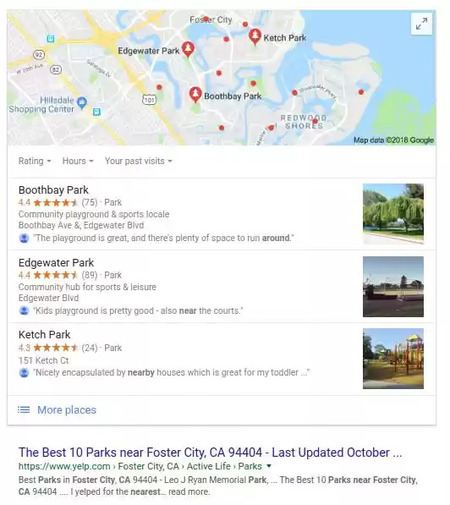
For example, the layout and types of content presented for personalized search will still adjust depending upon your vertical searches and efforts to create SERPs that conform to the likely micro-moment. Consider local searches. When a person makes a search with a likely “I-want-to-go” micro-moment, such as “parks near me,” Google focuses on the local 3-pack and score-based, UGC-driven review sites like Yelp.

the difference between customizing to the query and personalized search - brightedge

This has the potential to help with personalized search optimization strategy. Brands can feel more confident that their listings will appear consistently when they achieve a high ranking on universal search results. That in turn will help them accurately measure their ability to interest and engage users. Measurements of the number of times their site will likely appear in organic listings, based on search volume, will be more accurate and can be better compared to their site traffic.

It is also important for marketers to note that this does not mean that personalized search overall is dead. The ability to customize content and be relevant to your users should still be a priority across multiple aspects of digital marketing.

Types of personalized search marketing that are still important

Personalizing for intent

Google will continue to display different SERPs depending upon their understood intent of the user. In other words, users searching for terms that align well with an “I-want-to-buy” micro-moment will see different types of results than those who have searches aligning with “I-want-to-go” micro-moments. This means that as you develop your content, you should also be keeping these different goals in mind.

To create content for the right micro-moment, you should spend time researching the likely user intent of your intended audience. Look at the current layout of the SERP for your target keyword and see where you should focus your efforts. You can read more about optimizing for the different micro-moments by reading the following BrightEdge blog posts:

Personalized search for repeat visitors

Customers still like knowing that they matter to brands. They want to know that the businesses they buy from cares about helping them personally with their pain points and needs. Finding ways to personalize content on your site for return customers can be enormously beneficial. The individualized experience will boost your engagement rates while also letting customers know that you remember them.

You can personalize the content of known users by taking steps like these:

  • Suggesting purchases based on what the customer bought in the past
  • Offering tips and advice based on the purchases people have made
  • Making content suggestions based on the material they have downloaded from your site

Personalized email campaigns

Email allows you to speak directly to prospects and customers one-on-one, which makes it a prime vehicle to personalize your material. For email to successfully engage with prospects, it must be in alignment with their buyer persona and where they are on the buyer journey. A well-run email program will keep people engaged and encourage them to learn more about the brand and keep opening emails. This is an opening for you to continue to nurture them to progress through the sales funnel.

As the web continues to mature and grow with users and the development of new technology, experiments with personalization will continue. Customers want to reach their prospects directly and provide them with a user experience that encourages them to return.

request a demo cta banner

Personalization Is the Future

Default avatar
Andy Betts
M Posted 9 years 9 months ago
t 9 min read
“At VMware, BrightEdge is a fundamental part of our web strategy. It allows us to optimize our landing pages, attract quality traffic and grow our business. We cannot imagine doing it without the support of BrightEdge.” - Cindy Phan, VMware

Cindy Phan Share 16 discussing personalization - brightedgeWe recently had the chance to sit down with Cindy Phan, the Senior Manager of Digital Marketing Strategy at VMware, one of our fantastic speakers at Share16 to discuss hot topic - personalization. We chatted about her upcoming presentation as well as her thoughts about the latest trends and opportunities in the digital marketing space, including what she has to say on personalization. She had some great insights, and we wanted to share them with all of you.
BrightEdge: What is the biggest trend in marketing that you see as we approach the end of 2016?

Cindy Phan: So the biggest trend that I am seeing in my personal world of digital marketing is a shift towards more coordinated campaign efforts across online and offline channels. Before, and even up to this point, a lot of people ran inbound marketing campaigns on different digital channels as well as outbound email campaigns in a very siloed way. You would have a campaign on social channels such as Facebook, Twitter, and LinkedIn and then your search and display networks campaigns separately with different sets of KPIs. At VMware, and I am noticing this across the B2B industry, there is a march towards more coordinated digital nurture efforts. For example, if you go on LinkedIn, Facebook, or vmware.com and you interact with a VMware offer, your behavior will start being tracked. We will retarget you with the next-step experience to accelerate your digital journey.  You will not see the same offer again if you already consumed it regardless of which digital channel you are on. We are slowly working towards increased cooperation across all channels. I think this is the biggest trend in B2B marketing largely because the technology is improving. We can now build our own digital data hub that allows us to do this higher level of personalization.  

BE: What do you think is the biggest opportunity for brands and marketers moving forward?

CP: I think the next step is to continue with the growing technological capabilities. There is now the opportunity for more personalization within the framework of digital campaigns. It is important to remember that not all campaigns are created equal, how you optimize the campaign really makes a difference. Marketers now have the opportunity to optimize the framework and their campaigns and personalize them to the customer’s experience. They now have the chance to incorporate all their first, second and third party data into the same data hub. I am excited to see where this technology and these opportunities lead in the future of B2B marketing.  

BE: What is the biggest mistake you see marketers make?

CP: A lot of marketers do not look at data as much as they should because not all marketers are the best analysts. To be a successful marketer, I think you need be analytical, creative as well as technical. It is also best for marketers to have a business mindset because it doesn’t matter how much you spend or how many click-thrus you get; it’s the ROI that matters. Marketers have to be able to analyze campaigns from end to end - from vendor dashboard to their own internal funnel metrics - to come up with conclusions.  When you run campaigns across a lot of channels often the data comes from different vendor/agency dashboards. For example, if you run a campaign on LinkedIn, you will get campaign performance data from the LinkedIn dashboard about how well your campaign is doing and how many clicks/engagement/CPC/etc you are getting. Then when you look at your own internal data to see how these efforts are directly contributing to brand growth and revenue, you find that sometimes things don’t line up. This is the time to pause and optimize your campaign. Marketers need to be able to look at things from multiple angles and data points.  Digital marketing is like a hybrid between art and science.  

BE: What are your suggestions on how to elevate SEO and content marketing with executives?

CP: SEO is an important element in our web strategy. It cannot be siloed by itself; it must be baked into the overall digital framework. I rely heavily on SEO to drive quality traffic when I create campaign plans, and marketers need to be able to show that necessity to senior executives. You need to be able to show ROI and how SEO benefits the entire campaign. For example, you can start the journey with organic and quality traffic coming to the site then build behavioral segments to better target them later. With content marketing the same thing applies. We all rely on each other. Poor content will not be read by anyone, and without SEO, website traffic will be impacted in a negative way. Before walking into a presentation with your senior executives, you need to be able to show how these elements work together to drive results and ROI.

BE: What will you be speaking about at Share?

CP: I will be focusing on the omni-channel personalization campaign framework that we’re adapting at VMware as well as some personalized digital nurture campaigns we are running. I will share slides about inbound sources that drive traffic to our web properties, how we capture the data, and how to create segments to nurture the visitor after they leave the web property. As technology develops, it will be easier for people to create these more coordinated campaigns, and I will be providing them with insight about how they can get started.

BE: Do you have any words of wisdom to share with us all?

CP: Always be curious! Without curiosity the leading marketers would never discover the next best thing. It was great to have the opportunity to speak with Cindy about personalization and the other digital marketing trends, and we look forward to continuing the conversation at Share16. She also shared with us that she might look a bit ‘different’ when you see her in October - she is due with her second child in December! We wish Cindy all the best and look forward to hearing her presentation in a few weeks.  

,