Optimizing for the Google 3-Pack

tvura
tvura
M Posted 4 years 4 months ago
t 9 min read

What is Google 3-Pack? 

The 3-Pack is Google's method used to display the top three results for local SERP results. It references the user’s location to make the search more relevant. For instance, if a user searched “restaurants near me”, Google 3-Pack would display three restaurants near the user’s current location. 

Google 3-Pack has undergone a couple of major changes, first in August of 2015 when the Google 7-Pack was cut down to three, creating the 3-Pack. At the time, the update placed more emphasis on links to the brand’s business websites. The way information was displayed also changed, making it easier for mobile users to navigate the 3-Pack by showing addresses and business hours, rather than phone numbers. 

In December 2021, Google 3-Pack saw another major update. Google described the update as a rebalancing of its three key ranking factors for 3-Pack results: proximity, relevance and prominence. The rather rapid impacts to results made it clear that the rebalancing was to place greater emphasis on proximity as a factor. The 2021 update also integrated the results with a map. 

How do I rank locally on Google? 

You cannot optimize specifically for Google 3-Pack because businesses that appear on Google 3-Pack are location dependent. In other words, the local SEO results change depending on the searcher's location. 

However, you can optimize your web presence in a way that will increase your chances of appearing in the 3-Pack.

How to optimize your web presence to increase likelihood of showing in the Google 3-Pack.

  1. Make sure your Google Business Profile is filled in and up-to-date. This is the easiest component for you to control and is weighted heavily – about 25% – in your ranking potential.  
  2. Solicit customer reviews on your Google Business Profile. Receiving multiple positive reviews can be beneficial when it comes to boosting your visibility, both as a ranking factor (prominence), and because Google reviews and stars will be plainly visible to users on the 3-Pack. 
  3. Make sure your listings throughout the web are accurate and consistent. This includes business name, address, and phone number (NAP). 
  4. Cultivate locally relevant links to boost your visibility. There are a number of ways you can cultivate reputable links, such as sponsoring local nonprofits and events or joining a Chamber of Commerce. 
  5. Build standard backlinks to raise your organic rank. Backlinks are best cultivated through outstanding, well-distributed content that attracts readers. 
  6. Build a strong presence on social media and other platforms to establish yourself as a Google local listing with loyal followers. 
  7. Improve the user experience (UX) on your website, as Google favors better experiences. Since 2015, for example, Google has rolled out updates asking websites to be responsive and allow better usability for the mobile experience.

Appearing in the Google 3-Pack attracts attention to your brand and encourages people to engage with you. Keep these guidelines in mind when you create your web presence to maximize your chances of appearing on these lists. 

 

Optimizing For The Google Answer Box

Kirill Kronrod
Kirill Kronrod
M Posted 5 years 6 months ago
t 9 min read

What are Google Quick Answers?

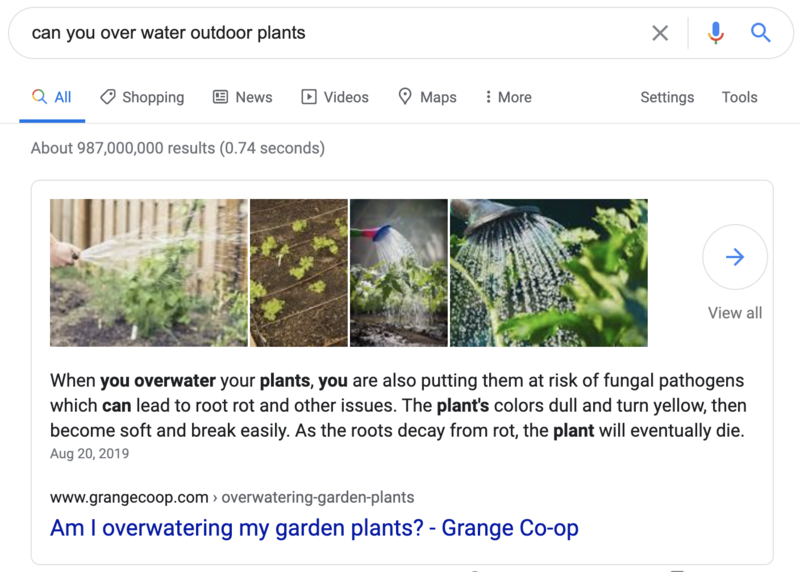
Google Quick Answers are highly-visible text snippet answers and links placed at the top of the Google SERPs and were observed to provide a huge boost in organic traffic. Quick Answers appear up to 40% of the time for some types of queries.

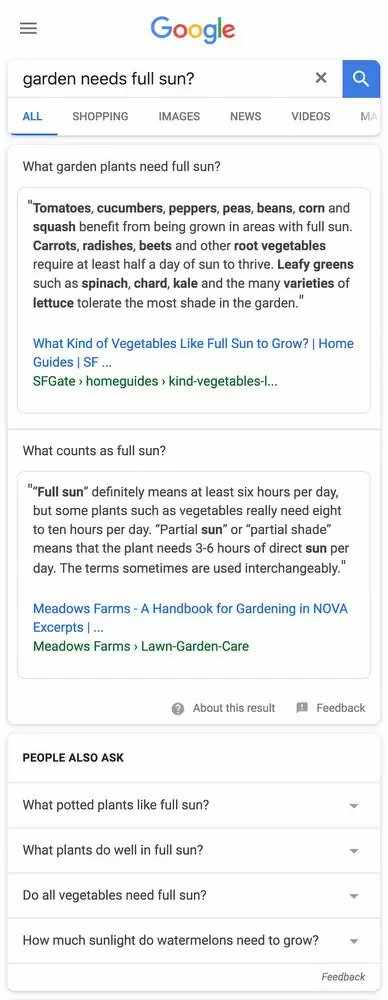
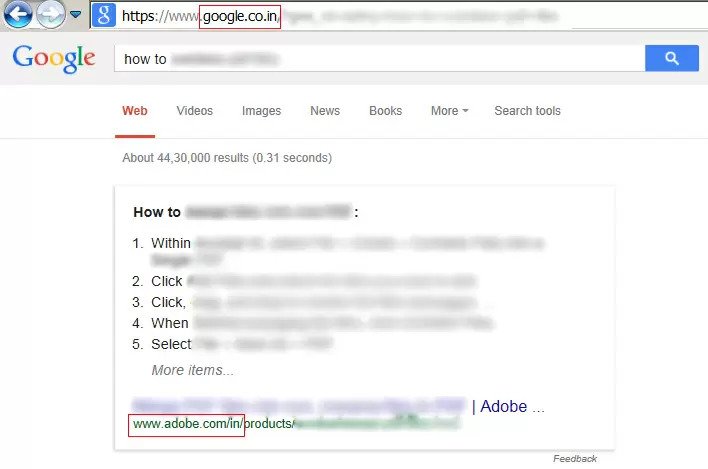
In September 2014 Google introduced a new method of presenting content relevant to “how to…” or “what is…” queries, where Google answer box takes content from specific web pages and features it in the “Quick Answers” box just above the first organic result in SERP and just below paid listings. 

In addition to the content, Google Answers also provides a link to the page with this content. In its 2018 reintroduction to featured snippets, among which it includes Quick Answers snippets, Google defined them as a tool to "help people more easily discover what they’re seeking, both from the description and when they click on the link to read the page itself." When users click on a featured snippet such as a Quick Answer, Google will take the user right to the answer text on the page.

In some instances, the answer box also adds an image or several images from the page.

Find How You Rank For Featured Snippets

Example of quick answer search result - brightedge

Appearing in Google Quick Answers

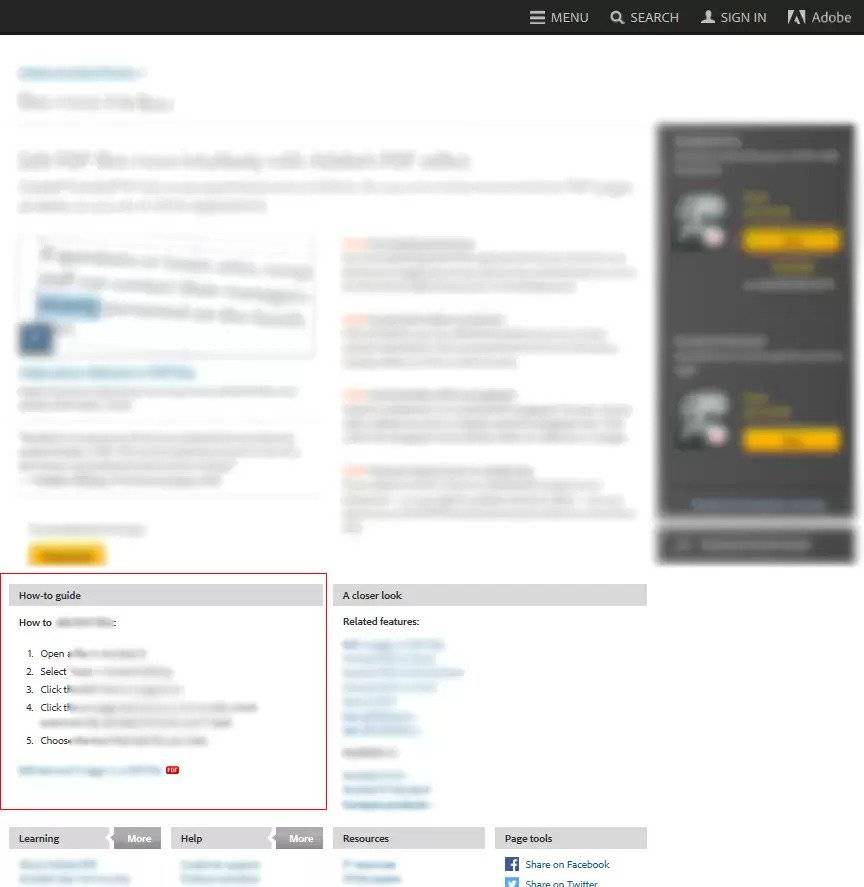
Pages that Google finds and selects for Quick Answers on our site are high authority pages with quality, well-structure content that is theme-relevant and optimized for a great user experience and answer specific questions closely matching the query for the Google answer box. Below is a sample page that is featured in Google Answers.

This page was created to answer specific questions that users might have about a particular feature and has variety of quality content relevant to the theme of the query. The page was optimized for a great user experience: a well-structured “How-To” guide (marked in red), a video tutorial, detailed explanation of the feature and its applications, links to related features, PDFs and other resources like help and support.

optimizing for google quick answers - brightedge

From the technical SEO standpoint, we need to ensure that page is a part of a site structure, is referenced from other pages with theme-relevant linking and is included in XML Sitemaps for better crawling (use HrefLang XML Sitemap if pages are present in multiple geos).

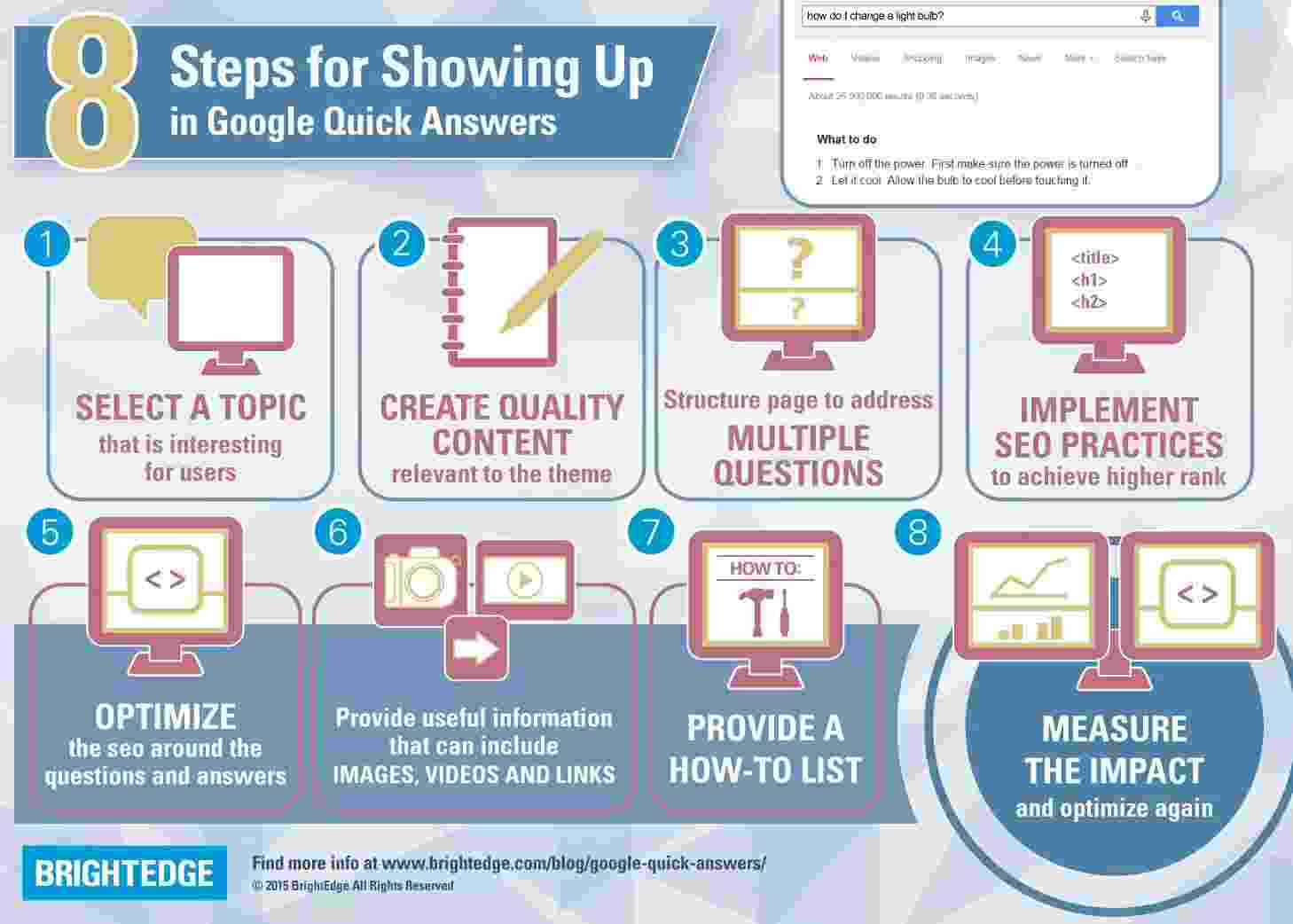
google quick answers infographic - brightedge

How high does the page need to rank in order to be featured in Quick Answers?

Usually a page that is ranking in the first position in organic results would also be featured in Quick Answers. However, we also observe instances when our pages are in the Google Answers box, even when these pages are not top ranking pages in Google and ranking on positions two to four.

In such cases our pages are preferred for Quick Answers listing when they compete with authority pages that don’t have theme-relevant content and are not well-structured. Google has recently noted that it plans to change the way featured snippets like Quick Answers work by introducing more than one featured snippet on a single SERP. This could potentially shift the strategy, as certain Quick Answer SERPs may now have several slots in which to appear, instead of just one. 

how to get google quick answers box - brightedge

Google Answers Geo targeting

Google Answers is making its way to Geos. Thus far we saw a rise in answer box appearing in countries with English as a primary language, for example, Canada, UK, India, Australia.

It’s interesting to note that when pages are positioned well for Geo targeting (with implementation of HrefLang Sitemaps and localization for local English), Quick Answers features content and local URLs in corresponding Geo SERPs.

how do i optimize for google quick answers - brightedge

Measuring the impact of Google Answer Box in BrightEdge

When Quick Answers were just introduced and we started to see our pages appearing there. We measured the impact in terms traffic and CTR from SERPs using Adobe web analytics and Google Webmaster Tools, and, not surprisingly, we saw solid increase for Google Answer box. What we needed to add was a more formal and easier tracking method that would allow us to understand how many of our keywords in the “how to” theme are ranking in Google Answers.

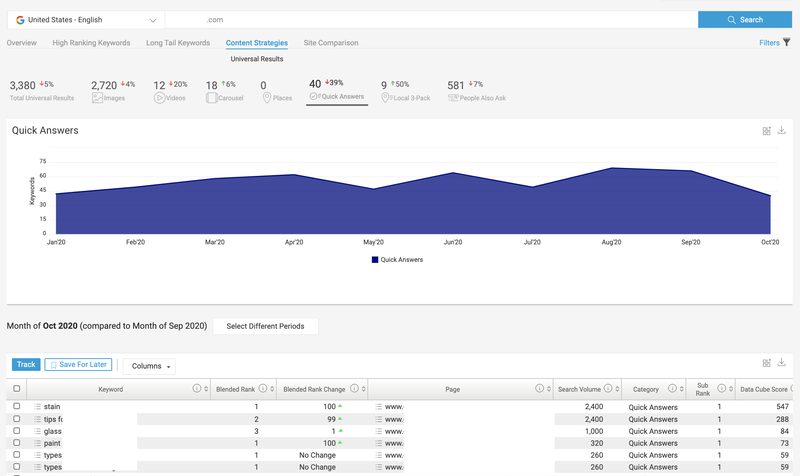
BrightEdge platform is now enabling us to do just that to score a Google Answer box or two. Quick Answers ranking report is now a part of the Keyword report, where we can measure aggregate rankings of a particular keyword group. The same report also provides details for each keyword in the group.

Google quick answer data from BrightEdge

How to optimize for and rank in Google Quick Answers:

  1. Select a topic that is interesting for your users. You can use Data Cube and Instant to find keywords with high search volumes that your audience is interested in learning more about. 
  2. Create quality content relevant to the topic. If your content doesn't answer the question the user is looking for, you're likely to miss out on the answer box.
  3. Structure the page with user experience in mind. If your page isn't easily accessible or doesn't load quickly, users will leave your page and move on. This is a signal to Google that your page isn't a quality page.
  4. Implement SEO best practices to achieve higher rank for Google Answers box.
  5. Provide useful information that can include videos, PDFs, details and links to other relevant topics. Don't leave your visitors hanging on one page. Offer other information throughout your page to drive them to remain on your site.
  6. Add a how-to list, a numbered list or bullet points. If your audience is searching how to complete a task, be sure to make the answer easy for them to understand with a short list of steps to take. An example is the list you're reading right here, right now!
  7. Measure the impact. Track your page rank with Page Reporting.

For more information, download the free BrightEdge white paper on Quick Answers.

Featured Snippets are Valued by Google and Customers

gregalbuto
gregalbuto
M Posted 6 years 3 months ago
t 9 min read

Over the past few years, we have seen a number of changes to Google’s SERP. The search engine giant has worked to create a universal search results page that accurately targets the user intent, with the goal being that the user finds the SERP so helpful that they continue to return to the search engine whenever they have new queries.

Marketers and searchers alike have noted the increase in quick answers, featured snippets, and other formats, such as shopping and image results. As Google continues to increase the number of features that help it target the user intent, site owners themselves begin to see an increasing number of chances to get their pages highlighted on the SERP. Marketers who want to take advantage of these opportunities have turned to using structured markup to draw attention to different parts of their site and to make sure that the content is eligible for rich snippets when possible.

Here is what we wanted to discuss with our community regarding the recent developments when referencing these structured markups, user reactions to them, and why we believe they are beneficial for people to pursue.

Customer response to Google’s rich snippet changes

As Google has increased the rate of inclusion of featured snippets and various on-page answers, understanding how customers respond to it has become an important concern.

Users appear to generally appreciate Google’s efforts to better target their user intent and include answers right on the SERP. The majority of users report that these features do help them find what they are looking for and improve their experience on the SERP.

The general appreciation of rich snippet answers is also supported by changes in how customers engage with the SERP. More than half of the searches made on Google through a mobile browser no longer include another click to other organic content. In other words, customers are getting an increasing amount of information directly in the browser. For example, Google now answers simple questions and queries such as weather, contact information, definitions, and dates without having to click on a link.

As featured snippet answers have changed user’s behaviors, marketers also need to consider how these answers will impact their strategies and ability to get out in front of the competition.

How brands can respond to this increase in rich answers

As brands consider the best methods for responding to these changes, they want to first articulate their goals for particular searches. As customers behaviors change, an increasing number do not click over to outside content. Therefore, brands will need to think about factors such as:

  • What potential gains can the brand achieve from gaining a featured snippet, even if they do not have traffic come to their site from the search. Do not forget the importance of building trust, brand awareness, and brand reputation, all of which can come from having your page featured in a snippet.
  • The potential losses the brand would experience if they did not optimize for the rich answer, but left the opportunity wide open for the competition to seize.

Given the potential build for brand reputation and to regularly outrank the competition, marketers should generally carefully consider the importance of optimizing for rich snippet answers, including the addition of structured data to their page.

Google’s support of rich snippet structured data

As Google appears to notice users’ appreciation of the featured snippet answers as well, they have made some movements to lend additional support to site owners who use structured markup.

Specifically, the search engine added to the Google Search Console a new report that provides users with additional information about their pages that have structured data for reviews or ratings. This report, known as the Review Enhancement Report, makes it easy for users to see any mistakes or corrections that need to be made.

If you spot an error through the report and correct it. You can also use the report to validate your changes, which will trigger Google to recrawl the content and note the corrected issue.

Users will also now have access to a Performance Report, which will specifically help you see the performance of the pages that have been marked up with ratings and reviews structured data. You can see the traffic and click through rates for these pages, as well as filtering and identifying the queries that bring your pages with the structured data the most traffic. This will make it easier to see how customers respond to the ratings and how they might help bring more leads to the site.

The ratings and reviews markup offers sites a considerable amount of value. As many as 90 percent of customers report that they will check online reviews before making a purchase. Featuring reviews and ratings with your brand online can easily boost credibility and encourage more people to click on your links.

Google’s support for this form of structured data also helps to indicate that the search engine appreciates these benefits offered to customers. The new report in the search console makes it easier for brands to ensure that they have the structured data set up correctly and ready to help customers.

Our recommendations for our community

With customers’ appreciation of rich snippet answers and Google’s additional support for them, we recommend that our community implement structured data whenever it would make sense for their site. Seizing opportunities on the SERP to build brand recognition and awareness through having featured snippets and other rich answers can help your organization thrive, even as search continues to change.

Google’s support for the review and ratings structured data may also indicate additional support and reports for more structured data options in the future.

The SERP and Google continue to change and mature with technology and user expectations. Organizations need to be cognizant of the importance of trust and reputation in buying behavior, and many of these changes provide opportunities for sites to capitalize on them. Brands that understand how to capture these windows will thrive as we see the continued importance of adaptation on the SERP.

Chris Bennett: The Value of Featured Snippets

Default avatar
Andy Betts
M Posted 9 years 7 months ago
t 9 min read

We sat down to speak with Chris Bennett about Featured Snippets at Share16.

We are in the middle of the exciting Share16 conference, and we had the chance to sit down with Chris Bennett - the CEO and founder of 97th Floor-- about marketing and featured snippets. His company is the Gold sponsor for this year's Share, helping to make the event as spectacular as it is. 97th Floor is responsible for some incredibly creative and innovative work in the world of digital marketing. We were glad they were able to find the time to understand featured snippets with chris bennett - brightedgechat with us and share some insights with our audience.

“There is no other technology on the market that gets us the data we need to dominate Google Quick Answers like the BrightEdge platform.” - Chris Bennett, 97th Floor

BrightEdge: What is the biggest trend in marketing as we approach the end of 2016?

Chris Bennett: I would say that Google Quick Answers is one of the biggest trends in search. They have appeared with increasing frequency on a variety of queries. Switching gears, in social media, I would say that SnapChat is the most important trend. It has been rising in popularity and we project it to be a great fertile ground for marketers.

BE: What is the biggest opportunity for marketers?

CB: I believe that Featured Snippets is the biggest opportunity right now, by far. It is like the Wild West right now with ample ability for brands to grow. Here is a quick tip for you: BrightEdge will tell you what Quick Answers you rank for. To take full advantage of this, you can go and optimize your content with images. You can also run a keyword rankings report and filter by words like “who,” “what,” “how,” and other terms that fit nicely with the Quick Answers terms. Find the ones where you do not already have featured snippets and then go and prepare your content to appear in this special space on Google.

BE: What is the biggest mistake you see marketers make?

CB: I believe that all marketers are faced with the age-old problem of just not having enough time in the day. Marketers need to be effective and efficient. Too many marketers also end up shooting in the dark when it comes to content development. They produce too much content without taking the time to back up their ideas with solid data. This plays back into the idea of needing to be efficient.

BE: What are your suggestions on how to elevate SEO and content marketing with executives?

CB: Marketers that want to elevate SEO and content marketing with executives need to show them the money. They need to tighten up their tracking and reporting so they can clearly show the progress they make through their efforts. Executives want to see real, measurable results from marketing spend, so that is what you need to show them. Another quick tip: while there are likely many KPIs that executives like to see, usually they care the most about one or two. For example, they might wake up every morning and check a certain keyword or metric. You should find out what they care the most about, and then blow that KPI out of the water. This will make it significantly easier to secure budget.

BE: What are your top two marketing tips?

CB: My top two marketing tips would be the following. First, use data throughout your marketing strategy. If you do not know what type of content to build or where to focus your efforts, then go out and gather more data. Guessing and using hunches will just result in you spinning your wheels. The second thing would be trying to grab featured snippets, even if another site has it already. Use HTML Roles in your markups, so if it is a list, add the list code to the role code in the HTML. Do this in all your content. Also pay attention to your H1, H2, and H3s. Adding the snippet phrase that you are targeting into these areas can be very helpful in gaining the featured slot.

BE: What will you speak about at Share? 

CB: At Share I will speak about the importance of gathering more data so you can have confidence in your content, even before you hit publish. I will focus specifically on Featured Snippets and how you can make sure your brand dominates in content creation.

BE: Do you have any fun facts or anecdotes that you would like to share about yourself? 

CB: I start out nearly every morning with about 2 tablespoons of grass-fed butter in a homemade cocoa tea that I make. It really helps turn my brain on and gets me ready to tackle the work ahead! It was great having the opportunity to catch up with Chris, and we look forward to hearing him speak on Wednesday. Everyone here for Share16 should come to the 4pm keynote on Wednesday to hear him speak! 

4 Must-Knows for Google’s New Rich Card Carousel

mkirchhoff
mkirchhoff
M Posted 10 years ago
t 9 min read

Google continues to invest in the user experience and expand the diversity of universal results above the traditional text results, so it is imperative that content marketers stay up-to-date and evolve their universal content capabilities and offerings. BrightEdge Research has clearly indicated that users find images engaging and useful. Tweets with images receive 5 times the engagement, Facebook posts with images receive 39 percent more interaction and articles with images have 94 percent more views than those without.

For certain queries that are more visually relevant, Google has been working over the past year to improve the user experience. Last summer they introduced a carousel display for particular queries on mobile. When announcing the change, the search engine specifically mentioned that those looking for results such as Houzz idea books, Food Network recipes, Vines and Pinterest pins would be able to easily scroll through the different options to find the results that were the most applicable to them. Google New Rich Card Carousel sample

On May 17, 2016 the search engine giantannounced another change in their display. They began to use rich cards in the carousel for certain queries. Right now, this change is impacting movies and recipes. It is initially rolling out on mobile, but some are appearing on desktop as well. The possibility of the changes being introduced for other queries also remains open in the future.>

What does this mean for marketers?

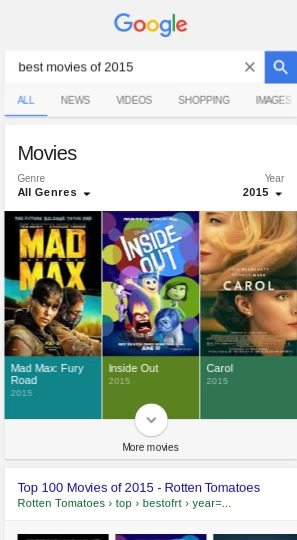
Rich cards help to create a visually appealing listing for brands, allowing them to prominently display certain features that will draw in users. A great example would be a delectable image of a dish for a certain recipe site. When rich cards are used correctly, they can be an excellent way to attract traffic. Google says that they are experimenting to find more ways for websites to create rich previews, so even if you do not deal directly with recipes or movies, you still want to pay attention to these developments. Google New Rich Card Carousel movies - brightedge Google has said that these changes will be initially rolling out over mobile, but that it is possible that they will be expanding to desktop.

This result for the best movies in 2015 was pulled off of desktop on May 24, 2016. The carousel on mobile covers the first 4 results on the SERP, which leaves only 1 regular result above the fold and will undoubtedly increase competition for this position. This forces brands to pay more attention to their optimization efforts, including their on-page optimization, content development process and distribution efforts. Organizations must again remember to prioritize data-driven content development strategies and the importance of having consumer value the primary focus of the entire optimization process.

Fact 1: The new display system also encourages brands to pay more attention to their rich markup. Using schema is a commonly overlooked opportunity, but with the increase in rich displays, brands need to make sure they do not neglect this step. If Google creates more rich displays in the future that are more applicable to your industry, doing the markup now will ensure that you are prepared and optimized from the first roll out.

How should marketers maximize their appearance in the rich card carousel?

All sites, but particularly those that deal with recipes and movies, need to maximize their schema. Google has issued guidelines to help brands who have recipe or movie-oriented sites optimize their appearance.

Fact 2: The search engine recommends that brands use JSON-LD in their markup to ensure that the data is properly understood and displayed.

Fact 3: They have also developed a new Search Console rich card checking tool that will help you see how many rich cards your site has been optimized for to ensure that you have done your markup correctly. If you have a recipe that you would like to have appear as a rich card, you need to follow Google’s system, which is explained here. You also want to make sure your markup includes a visually appealing image that will attract the desired attention when included on the carousel.

Fact 4: It is also important to note that Google has issued a few rules for website publishers to keep in mind when determining if their website would be eligible for this type of markup and rich card display:

  • The markup has to be for a single, specific dish-- general topics such as ‘party ideas’ or lists of recipes on a single page will not be displayed in this format.
  • If the recipe markup has a single review included, the quote must come from a real person or organization.
  • You will need to provide an Item List markup to create a summary of your recipes that are on the list if you want the recipes included in a host-specific list.
  • If you do have a host-specific site, then that site must include a summary page that has all the recipes in the collection. This is so that users who click on the summary link from the SERP can trust that they will see a page that includes all the recipes that are related to their search.

If you have a website that focuses on movies, Google currently only has the display host-specific carousel. You can markup your page for an ItemList, but this feature is still in experimental mode and will not currently show up on the SERPs. You should also note that Google currently wants links to sites that support autoplay. For more information about how to markup your site for a movie, visit the Google recommendations here.

Google continues to make changes and adjustments to the appearance of their search results in an effort to make results more relevant and attractive for their end user. The creation of the results carousel and the rich card is only the latest development in this process, although more are sure to come. Brands who want to ensure that their websites remain relevant and appealing to users should pay attention to these developments. Since the search engine is making it clear that they are paying attention to the visual appeal of rich markups, all websites should be taking advantage of the schema to make sure they are ready to maximize the appearance of their content whenever the opportunity arises. Learn more about SERPs and universal SERP elements in this post.

Google’s Structured Snippets: What You Need to Know

Default avatar
Andy Betts
M Posted 11 years 8 months ago
t 9 min read

A couple of weeks ago, Google formally introduced “structured snippets” as a means to incorporate more Web page data in its search results. In its announcement, Google explained this was just another step in its ever-evolving quest to improve the search results:

Google Web Search has evolved in recent years with a host of features powered by the Knowledge Graph and other data sources to provide users with highly structured and relevant data. Structured Snippets is a new feature that incorporates facts into individual result snippets in Web Search.

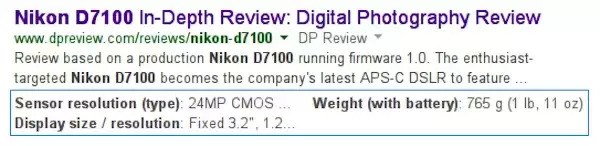
Structured snippets are relevant bits of information pulled from a Web page into a Web page’s search result listing in an effort to enhance that listing. Google cites a search result for Nikon’s D7100 as an example of how its structured snippets work, stating “interesting and relevant information is extracted from a page and displayed as part of the snippet for the query ‘nikon d7100’:”

discover what structured snippets look like - brightedge

Barry Schwartz reported in a Search Engine Land post that “the structured snippet part of this result are the factual elements,” meaning the information specifying the Nikon D7100’s sensor resolution (type), weight (with battery) and display size/resolution. Search Engine Watch noted in its coverage of the announcement that the snippets work by extracting information from data tables on a Web page and “pairing that with an algorithm to help determine the quality and relevance of which data to display in the snippet.”

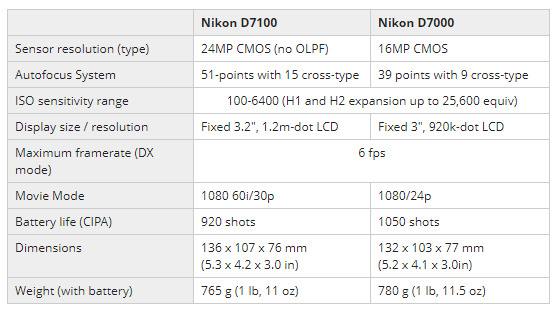
In other words, structured snippets work by using an algorithm that pulls what it believes to be relevant data from tables featured on a Web page. As BrightEdge CEO Jim Yu recently wrote at Search Engine Land, “The table aspect is perhaps less surprising when you read the announcement [from Google] that says structured snippets is a collaboration from Google Research and the WebTables research team, and Google Search.” Drawing on the Nikon D7100 search result example given by Google in its announcement, Jim showed the original product page from DPreview.com that was extracted by Google to display the snippet:

see an example of structured snippets - brightedge

At Search Engine Land, Schwartz experimented with the types of queries that trigger Google’s snippets in the search results, and with the exception of the Nikon D7100, his queries all returned structured snippets for Wikipedia. It’s not surprising that Wikipedia shows up with structured snippets often; as Jim noted, Wikipedia makes it very simple for the search engine to parse information out easily.

What do structured snippets mean for you?

Some have speculated that the snippets might cause a decrease in click-through rate from the search results even if it means a better experience for users. (That is, if the searcher sees all the key facts he or she needs from the Google search listings, why click through?) Other industry opinions diverge on this issue. In her interviews with SEOs, Amy Gesenhues at Search Engine Land reports on reactions ranging from concern over Google becoming more of a publisher than a search engine to the possibility of correctly formatted (yet poor) content surfacing to no concern whatsoever. As far as next steps go, there are a few considerations. For those in an ecommerce marketing position, Jim’s post at Search Engine Land (cited above) gives tips for e-commerce CMOs and their page-level strategy for creating and formatting product specifications. That includes:

  • Deciding what the most important specifications are about a product, and organizing the information in a nicely formatted table.
  • Considering the placement and grouping of the facts on a table, and testing to see if placing the most important facts together and first makes a difference in how structured snippets render.

And there could be even more considerations when it comes to responsive Web design (RWD). Keep in mind that because tables have a rigid structure, they’ve been harder to convert to responsive design. While some designers have decided to abandon tables in RWD, this new feature may require a second thought about that, including:

  • Re-evaluating and prioritizing the inclusion of tables in RWD. Do you need to do a multi-page redesign now, or can you make small tweaks to important pages within your mobile configuration?

It remains to be seen how Google’s structured snippets initiative will impact search results, click-through rates and mobile marketing; however, it’s safe to say that this new feature will be yet another item to put on the SEO’s page-level optimization checklist – at least for now.

,