NAP (Name, Address and Phone Number): A Complete Guide for Local Businesses

jordan.walman
jordan.walman
M Posted 4 years 3 months ago
t 9 min read

NAP is an acronym that stands for “Name, Address and Phone Number.” It’s a core concept in search engine optimization because Google uses NAP when ranking local results. 

If you operate a local business, either in the form of an independent outlet or a chain of local branches, it’s essential that your website and business profile are NAP-optimized. Failure to do so will result in lost rankings, traffic, and customers. 

In this guide, you’ll learn everything you need to know about NAP. We’ll define key terms, explain why NAP is important within the broader field of SEO, and show you how to optimize for NAP. 

What Is NAP?

In an SEO context, NAP refers to the information that local businesses include in their various listings across the web. If NAP references are consistent across different sources, Google knows that they are correct and can confidently display a company’s details to searchers. 

What Are Citations?

To leverage NAP ranking factors fully, it’s necessary to understand how the broader search process works. Local search results – also called the “Local Pack” – are shown in a dedicated section before generic search results. A map is displayed above local business listings. 

Google first determines if a keyword has geographical or “local” intent. That is, if the searcher is looking for a result tied to a particular location, such as a hair salon or bookshop. This is known as “geo-targeting.”

Google then algorithmically ranks business profiles in local results according to a range of local factors. These include keywords in an organization's Google Business Profile, past customer reviews, the user’s IP location, and NAP citations.

A citation is a business listing published on a third-party site. Nation-wide and global business directories like Yelp have extensive collections of business entries. But local online publications are also taken into account. 

Why Is NAP Important for Local SEO?

Google looks at two NAP-related factors (among a myriad of other ranking elements) when determining where to rank a local business: the number of citations and their consistency. Having a large number of consistent citations across the web is the ideal outcome from an SEO perspective. 

If Google finds discrepancies in data when comparing different sites and business listings, it can’t be sure of the information it displays to searchers. 

It’s also worth keeping in mind that NAP consistency is important from a user experience perspective. Customers often use third-party sites to check a company’s name, address, and phone number. A lack of consistency across listings creates confusion and interrupts the buyer journey. 

What Are the Consequences of Poorly Optimized NAP Listings?

Consumer behavior data shows that a typical customer will interact with a business across multiple online touchpoints—including its Google Business Profile, Google Maps, its company website, and third-party directories—before making an in-store purchase. 

To successfully complete their journey, a customer requires access to consistent information across all touchpoints. 

For example, let’s say an internet browser encounters your brand through an ad on a website. They then use Google Maps to check the location of the nearest store before visiting your website to browse products. 

Finally, they decide to visit your store to make a purchase, checking the address in your business listing in Yelp. If the addresses displayed in Google Maps and Yelp don’t match up, it is more difficult for the customer to make a purchase. This increases the likelihood that they will lose confidence, abandon the customer journey or report a low level of satisfaction. 

How to Optimize NAP for SEO:
A 5-Step Guide

Optimizing NAP information for SEO is both a straightforward and ongoing process. It’s important to ensure that current citations and new citations are correct and up-to-date. 

Take the following steps to optimize your NAP details for search:

1. Display information clearly and correctly on your “personal assets” 

First, check NAP information is visible and free of errors on your website and Google Business Profile (formerly known as Google My Business).

Use Google’s Structured Data Markup Helper to determine which Schema.org markup to use. 

2. Ensure that NAP citations are consistent across the web 

Google cross-references NAP citations on different websites, so ensure consistency across sources as best you can.

In particular, check popular business directories like Yelp, Yahoo Business Listings, Facebook, and so on, along with local listings in your area. Numerous tools can help to find your listings across the web.

3. Continue to add your business to directories 

NAP consistency is a key ranking factor. But it’s also essential to think about citation quantity. Continue to add your business to established directories to increase the number of citations around the web. This strategy will positively impact your local rankings. 

4. Follow best local SEO practices for multiple locations

If you manage multiple locations, follow best practices for local SEO, with separate site pages for each store and unique business profiles. 

5. Remember to update all listings if your NAP changes 

If you change your company’s name, address, or phone number, modify all listings across the web. Keep an up-to-date database of listings to streamline the process of updating NAP details. 

6. Avoid using different numbers for tracking purposes 

Sometimes, businesses will use unique phone numbers to track traffic from different directories. This approach is best avoided as it can result in Google treating each listing as a separate location. 

Related Resources from BrightEdge


Why an SEO Checker is Not Enough

maspillera
maspillera
M Posted 9 years 9 months ago
t 9 min read

An SEO checker, a tool that helps you analyze your website to see how well you are optimizing your content and remaining compliant with the best practices for the major search engines, is a valuable instrument in your digital strategy. It is important to note, however, that a checker alone is not enough to maximize your prevalence in the search engines.  

The importance of the digital world in commerce continues to grow. Ecommerce grew by nearly 15% in 2015. In the B2B world, 94% of people say that they perform research online before they make a purchase.

Given that more than half of the traffic to your website originates with organic traffic, there is no doubt that your SEO efforts and your visibility on the SERPs will directly impact the bottom line for your organization.

The better you understand how to maximize your usage of the SEO checker and how to leverage a platform that will take your SEO efforts further, the more return you will begin to see from your optimization efforts.  

Get A Concise SEO Evaluation of Your Site

What does an SEO checker do?

Running an SEO check will help you take a closer look at how your site is currently performing. Most SEO checkers will look at factors such as:

  • The usability of your site
  • Your site speed
  • Metadata
  • Your alt tags
  • Your social media interactions
  • Internal and external links

An SEO optimizing platform will help you evaluate how well your site adheres to SEO best practices. It will alert you to potential problems before they become an issue with your rankings and impact your site traffic.

Although this information is helpful, it does fall short in its ability to help you build a strong site that will maximize your appearance in search.

An SEO checker needs to be paired with suggestions

While it can be useful to have the insight about the shortcomings of your website, the information from an SEO check can only help you so much with maximizing the optimization of your brand. You need guidelines that will also help you improve your site.

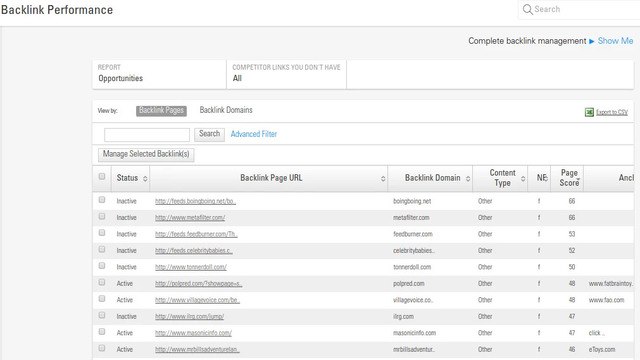
Not only do you want to know where you have made errors, but also where you may be overlooking opportunities to take your website results further. For example, the BrightEdge platform can offer insight and suggestions about backlinks.

Rather than just reporting on the sites that link to your page, you can also access recommendations that will offer suggestions about websites that might suitable for pursuing additional backlinks.  

The BrightEdge backlink opportunities amplify insights from a SEO checker, SEO check and optimizer

Similarly, you can analyze the pages that rank for particular keywords and receive insight that will let you see where you have the ability to outrank competitors. You will receive not only the SEO check, but also the suggestions about where keywords should be used while also looking at the top-ranking pages for that topic, which will help you understand what the search engines and users want to see.

You need to know what your competitors are doing

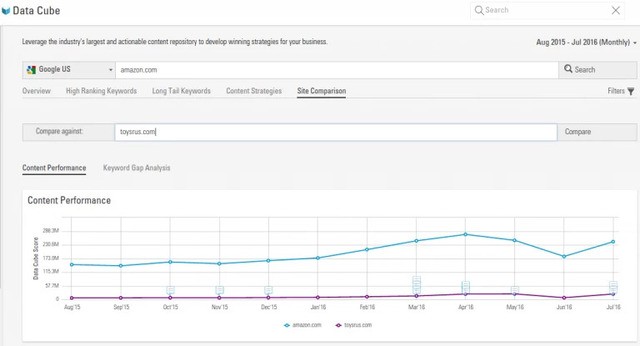
The BrightEdge platform will also help you look at your site next to competitors so that you can see keywords that they are ranking for that you are not, where they are having the most success, and where you need to improve.

It is important to remember that in the world of SEO, you are not only trying to rank well within the search engines, you are also trying outrank all of these competitors. That is how you can attract the attention your site needs.

When you have a full analytical platform, you will be able to gain valuable insights into the factors that are helping your competitors achieve their success, allowing you to find holes that will help you outrank them and improve your own reach and ROI. With BrightEdge you will be able to see:

  • Keyword gaps where competitors are ranking for particular terms that you are lacking
  • The high-ranking keywords and longtail keywords competing domains use
  • Their content performance in universal results and specialized results such as Quick Answers and the Local 3-Pack
  • Their content performance over time next to yours

Take your SEO checker further with competitor analysis. SEO check and SEO optimizer

BrightEdge Site Comparison will help you find gaps and opportunities.

This insight into what your competitors are doing and what helps them succeed can help you adjust your own strategies and better capture a larger portion of the share of voice.

You need to know how your SEO efforts impact the bottom line

While gains in SEO can be wonderful to see on your charts, in the end, the value of using an SEO optimizer is revenue. You want to build your site so that more people are attracted to your brand and thus convert.

Ranking highly on the SERPs will only help you if you attract the right audience. Looking at your site only through the eyes of a checker will tell you if you are optimizing your site, but not how well those optimization efforts attract people who are interested in your business.

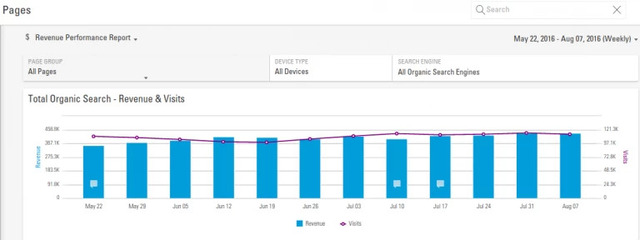
Working with a more complete platform, like BrightEdge, will allow you to analyze the impact your optimization process has directly on your revenue. You can group pages or keywords together and gauge their impact on conversions.  

Use page reporting for more insight than an SEO checker, SEO check and seo optimizer

Page Reporting on BrightEdge helps you gauge your impact on conversions and revenue.

You can also track different types of conversions over time to see the impact of various campaigns on the success of your website. You can even see the impact that your SEO has on different devices by comparing your progress in mobile SEO versus desktop. This can help you pinpoint the needs of your different audiences so that you are better able to tap into the growth of mobile internet use. 

BrightEdge StoryBuilder makes it easy to see progress by device.

An SEO checker can help you build a successful website, but it can only take you so far. For you to maximize the potential of your site, you need to combine a checker with a complete platform that will provide you with the insights you need to help your site stand out against the competition.  

,