Take Control of Content Changes Across Your Site

koleary
koleary
M Posted 8 years 9 months ago
t 9 min read

Remember those nights that you spent hours searching for the root cause of that mysterious dip in website traffic of your most valuable pages, only to learn that someone has made changes to the page title and meta description? If you had known this sooner, you could have saved precious time and prevented unnecessary loss to website visits and conversions. What if content changes could be flagged as soon as they’re made? And better yet, what if you could receive alerts about those changes with an email?

Catch changes that may impact website KPIs

To help you better manage content change audits, you need a solution that automatically tracks all content changes on your pages. That is precisely what BrightEdge just released: automated page events.  When on-page factors, such as H1 tag, are changed, the BrightEdge platform will create a page event tag for each of those changes. Any of the page-level trend charts within the BrightEdge platform will have a page event tag. There is also a page-group level overview of these automated page events within the Page Reporting module so you can easily review content change history on the pages that you care about the most.
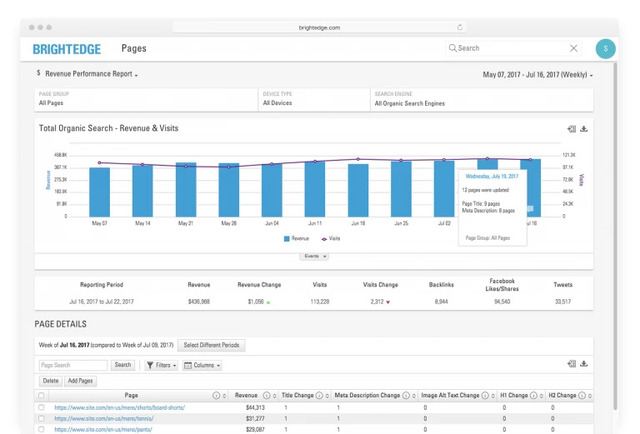
BrighteEdge automated page events in page reporting for content changes 

For example, if your CMS (Content Management System) user accidentally changes the page title of a webinar registration page, (from “Stock trading webinar” to “Futures trading webinar”, for instance), you'll see a corresponding page event tag, once the change is detected. You can also be alerted of these changes, even when you are not logged into the BrightEdge platform.

How to create alerts

BrightEdge Anomaly Detection allows you to set custom alerts based on your needs and goals. Because automated page events are natively integrated with Anomaly Detection, you can create an alert to stay informed, even when you are not logged into BrightEdge. Imagine you are currently working on optimizing a regional section of your domain, such as new landing pages for France. You want to make sure that the content you have developed for those pages keeps its integrity throughout the development process. You can create an Anomaly Detection alert by specifying if the page title is changed for those pages. Then if any page title is changed you will be notified.
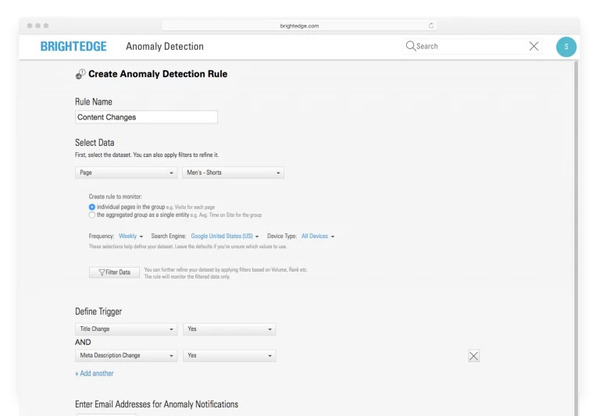
BrightEdge Anomaly Detection for Page Events During Content Changes

Correct content changes to improve site metrics

Once you are aware of a content change, you can triage the issue to determine the best course of action.  If the change is against SEO best practices, then immediately reverse the change. If you do not have access to your CMS,  create a task for your CMS owner or web developer to have them make the change. Once BrightEdge detects that the change has been implemented, you will see a new automated page event within your page-level charts. 

Reduce risky content changes by creating SEO awareness across your organization

Simply being informed of content changes is only one part of the puzzle. Trending a number of changes and correlating their impact to site metrics, such as visitors, conversions, and revenue helps to prove the ROI of SEO. And, help you promote SEO awareness across your entire organization. When more colleagues become SEO savvy, they are likely to become more conscientious of SEO and avoid making content changes that violate SEO best practices in the future. Using BrightEdge StoryBuilder, you can create a trended chart that shows changes relative to site conversions or site visitors. Also, you can create a trended chart to analyze what type of changes are happening more frequently. Or create a chart to help you identify which pages you and your team want to improve on in your content marketing workflow.
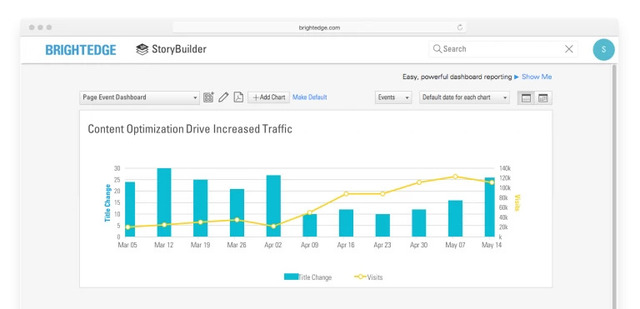
BrightEdge StoryBuilder Report for Site Visits and Content Changes

Get started

So why wait? Automated page events take away the guesswork, and put you in control - catching, correcting and reducing content changes that may jeopardize your hard work in your content marketing efforts. Ready to check out automated page events? Request a demo today!

Share your experience

How do you track content changes? Do you have a system in place to react quickly and make corrections? How do you report on your content optimization successes? We’d love for you to share your best practices with the BrightEdge community. Just include them below in the “Comments” section.
Adobe & The Search Impact Lifecycle - Driving Enterprise SEO

Kirill Kronrod
Kirill Kronrod
M Posted 11 years 12 months ago
t 9 min read

SEO managers are often asked about the biggest challenge that they face when running SEO programs in large enterprise environments. While there are many areas that are critical for driving success, it’s hard to pinpoint just one area in the search impact lifecycle that’s the most crucial.

Sure, focusing on producing quality content is important. Yes, stakeholder engagement is needed to get things done. Theme-relevant linking is helpful. Defining strategy and aligning with business units, training and evangelism, data-driven decision making, technical SEO, search localization, testing, social engagement, reporting, and communication – all are must-haves.

However, at the end of the day, I think what’s tying these pieces together is a well-defined process plus flawless execution on tactics.

Today, we’ll cover how Adobe leveraged the those search impact lifecycle steps to implement a successful enterprise SEO strategy that brought more than 20 million SEO visits to one section of the Adobe.com site, increasing these types of visits from 4 percent to more than 60 percent in the first three years of the ongoing project. 

Case Study: Search Impact Lifecycle in Action At Adobe

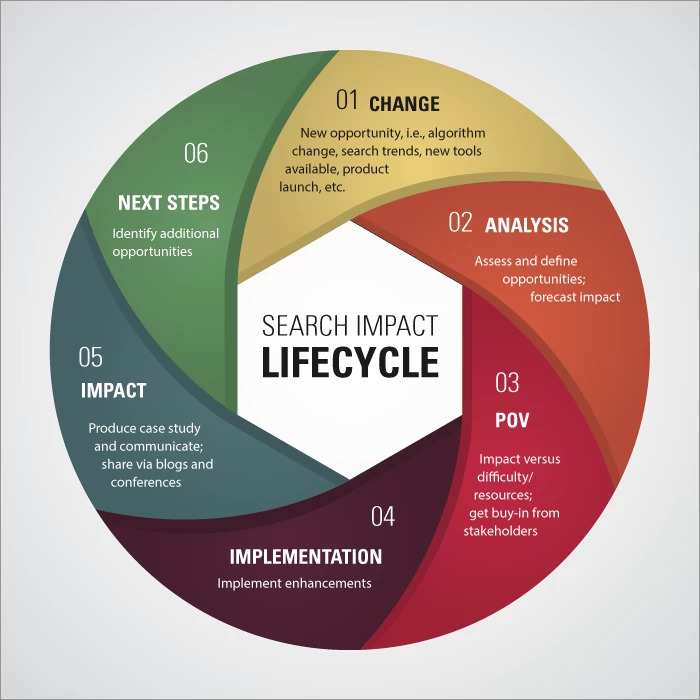
Changes in search patterns can influence SEO and a business’s content strategy. Here at Adobe, we identified a trend towards the use of non-branded keywords for one of our products. This suggested a need to create and optimize content focused on themes built around these new search terms – for example, topics about product features and functionalities - to maximize the search impact.search impact lifecycle graphic - brighetdge

To help steer the SEO program in a fast-changing environment, we implemented the 6 steps of the search impact lifecycle:

  • Change
  • Analysis
  • Point of view
  • Implementation
  • Impact
  • Next steps

1. Change. The change phase happens frequently in the world of SEO, and presents us with new opportunities. We encounter algorithm adjustments – some are larger like Google Penguin, Panda and Hummingbird, while others are smaller, like branded versus non-branded keywords. 

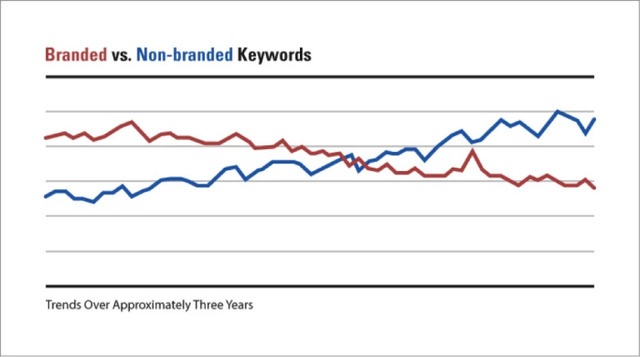
When we saw this particular change, we performed research to determine keywords that had high search demand, also adding conversion data to prioritize (at that time, keyword-level data was still available; with the new secure search, we can obtain this data from paid search programs).

The following graph is a representation of data for one top branded keyword and one top non-branded keyword, where the branded is red and non-branded is blue. The X-axis is time over approximately three years; the Y-axis is search demand.

Adobe Branded v Non Branded keywords with the search impact lifecycle - brightedge

2. Analysis. Next, we completed an analysis. The analysis of the change allows us to better define the opportunity and search impact based on external data or other sources/findings (i.e., testing), and forecast impact to help make a business case.

3. Point of view. Once we completed the analysis, we identified opportunity for the point of view (POV). The POV phase of the lifecycle is an opportunity to present a point of view, where we establish search impact versus difficulty of implementation (resources needed to enable certain enhancements).

At this time, the SEO team reaches out to various stakeholders in the organization to get buy-in, and rallies the forces behind the proposed enhancement.

Note: We often run a pilot to establish search impact more accurately before investing more resources into the project. Once the pilot proves successful, we expand. In this pilot, we created content for 15 pages focused on specific product features, targeting those high-value, non-branded keywords.

4. Implementation. The implementation phase was next. This is where we build the enhancement. In this instance, we optimized and published pages, ensuring that technical SEO was addressed such as page template coding, URL naming convention, page indexing and so on.

With a focus on user experience, the team validated with user groups that the messaging and presentation on the pages was adding value. We also tested and selected best-performing Title and Meta Description messaging to maximize click-through rate from search results, and worked on creating cross-links to these new pages from select theme-relevant pages to enhance user experience and help page indexing and theme.

Search engines indexed the new pages, established theme relevancy, and we started to see a steady progress over time for main SEO key performance indicators (KPIs). 

5. Impact. Now it was time to analyze the search impact, using Adobe Analytics tools and the BrightEdge SEO platform.

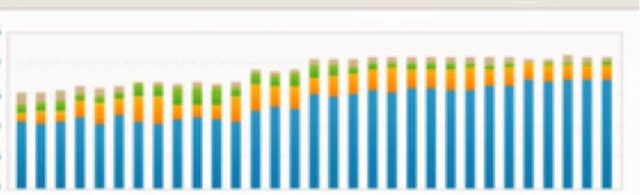
We looked at the visibility of target non-branded keywords with the BrightEdge platform. Specifically, we were interested in the progress of rankings of preferred landing pages on the first page of Google search results.

The following screenshot is from the BrightEdge platform and shows the progress of the more than 120 value non-branded keywords we were tracking over the course of the project. The blue area of the bar represent Page 1 positions; the yellow areas, Page 2 positions; and the green areas, Page 3:

BrightEdge tracks search impact of adobe's branded and non-branded keywords

We also tracked business SEO KPIs including visits, trials and units sold, using the Adobe Analytics platform. Pages dedicated to non-branded optimization started to contribute to the business with an increasing pace;

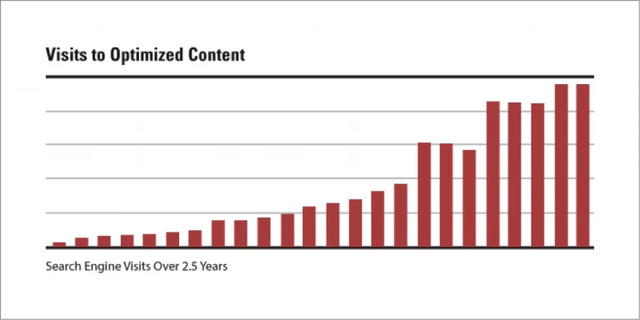
After the first year, they brought more than 1.2 million SEO visits. Contribution of these pages to the overall SEO of the project increased from about 4 percent of all SEO visits at the beginning of the pilot to more than 60 percent at the close.

The following graph shows SEO visits to optimized content for a specific section at Adobe.com over a period of 3 years. The X-axis is time and Y-axis represents search engine visits:

Visits to optimized content increased because of search impact lifecycle implementation - brightedge

The impact phase is where we have a chance to showcase the results of the project, and when we produce case studies, which help us get additional resources (to expand based on the pilot findings).

Impact analysis also allows our stakeholders to share success with extended teams, which helps us evangelize SEO throughout the company. We also share our case studies with industry peers and at conferences.

Based on the impact case study, we proceeded to identify additional opportunities and expanded content themes and optimization to cover more feature details, as well as expanded optimization to geo-targets.

6. Next Steps. As the next steps, we discovered additional opportunities, armed with the solid impact case study.

The Search Impact Lifecycle is a strategic framework for approaching SEO in a enterprise environment. Taking a methodical approach to how changes are made within the business’s Web marketing environment helps ensure the value of SEO is being realized every step of the way.

More...

In future posts, I’ll cover other case studies on how the Search Impact Lifecycle allows brands to steer SEO projects easier, including technical SEO, geo-targeting, SEO testing, and more.  

Talking to Your CMO About SEO

Nicole
Nicole
M Posted 12 years ago
t 9 min read

At BrightEdge our top value is customer success. Since our inception in 2007, we have dedicated ourselves to the SEO community by developing the most innovative SEO technology that increases visibility, uncovers competitive insights, and elevates SEO to a C-level imperative. Our customers have been able to successfully demonstrate SEO is the predominant digital channel for their organizations and advance their careers.

At Share13, we were proud to share stories of how several of our long-term customers have been promoted from SEO Specialist to SEO Director, and others from Director of SEO to VP of Customer Acquisition. At Share14, you can look forward to more inspiring stories, fantastic research, and networking opportunities.

SEO practitioners and digital marketers are truly our favorite people! The features in our latest release are designed to help our customers make an even bigger impact within their organizations.

Channel Reporting

With our new Channel Reporting, we’ve empowered you to up-level the communication to your CMO by showing the importance and strength of SEO in relation to other digital marketing channels, in a data driven way.

Gain Complete Visibility Across Your Marketing Channels

  • Communicate the importance of SEO – Highlight the contribution of organic search to your total business performance and make a case for additional investments
  • Track performance across multiple channels – Understand which channels are performing and how to best allocate resources
  • Analyze trended, comparative metrics in a single view – Gain a complete view into Organic, Social, Paid, Direct, and Other channel performance in a weekly, monthly, quarterly, or flexible date range view
  • Drill into pages driving performance - Analyze which pages are driving organic revenue, conversions, and traffic in a seamless reporting flow to Page Reporting

Content Optimizer

Also in this release we’re introducing new technology to help you partner with your content team more closely than ever. With the latest version of Content Optimizer, we bring the most powerful features and intelligence of the BrightEdge S3 platform seamlessly into Adobe Experience Manager through an enterprise ready integration. Be sure to check out our Press Release from Adobe Summit.

BrightEdge + Adobe

BrightEdge is an Adobe Accredited Application Partner, with a history of developing powerful integrated technology offerings. BrightEdge Content Optimizer brings the most powerful features and the intelligence of the BrightEdge S3 platform seamlessly into Adobe Experience Manager through an enterprise ready integration.

Content and editorial teams can leverage an out-of-the-box integration with Adobe Experience Manager (AEM), allowing them to easily create content that is optimized for maximum traffic, conversions, and revenue without breaking or slowing down their content creation flow.

Content Optimizer provides organizations with recommendations that evolve along with the search landscape and are compliant with the complex structure of large websites.

Key benefits for digital marketers:

  • Optimal Content Structure: SEO managers are now able to determine the optimal structure for effective content, set guidelines and policies within the BrightEdge S3 platform, and instantly share these guidelines in Adobe Experience Manager, connecting SEO know-how with the content creation process.
  • Policy Compliance Across an Organization: Manage policies with out-of-the-box support for multiple teams, templates, and SEO policies. Set SEO guidelines for all site-wide content and enforce compliance across multiple teams and templates.
  • SEO Checklist for Succes: Focus on what matters with up to 16 on-page recommendations that have the most impact on search performance. Access recommendations based on their rank, on-page elements, social media traction and backlink profile.

BrightEdge Global Data Cube

We’re also excited to announce that our Data Cube is Generally Available. For customers in the UK working with our London team, we’re happy to announce the BrightEdge Global Data Cube with UK coverage. With the Data Cube, customers now have access to the industry’s largest, most accurate and actionable SEO dataset. 

The Largest, Most Accurate Database

The BrightEdge Data Cube is a massive content repository, the industry’s largest data set made up of billions of pieces of information which includes: keywords, search terms, rich media, and content, along with its performance on the web.

BrightEdge processes over 100 terabytes of data each week. We do so because we realize today’s marketers need a massive data set to be able to understand their entire organic search footprint and take action off of that data.

Hear Our Story About the BrightEdge Data Cube

How the Data Cube Works

Within one centralized view, marketers may perform either URL-based or Keyword-based research in real-time. BrightEdge provides two ways to access the Data Cube. With Goal Based Research we help marketers quickly identify the data that matters most, aligning SEO with business outcomes. With Freeform Search marketers can enter in a keyword or URL in the same way a Google search is performed.

,